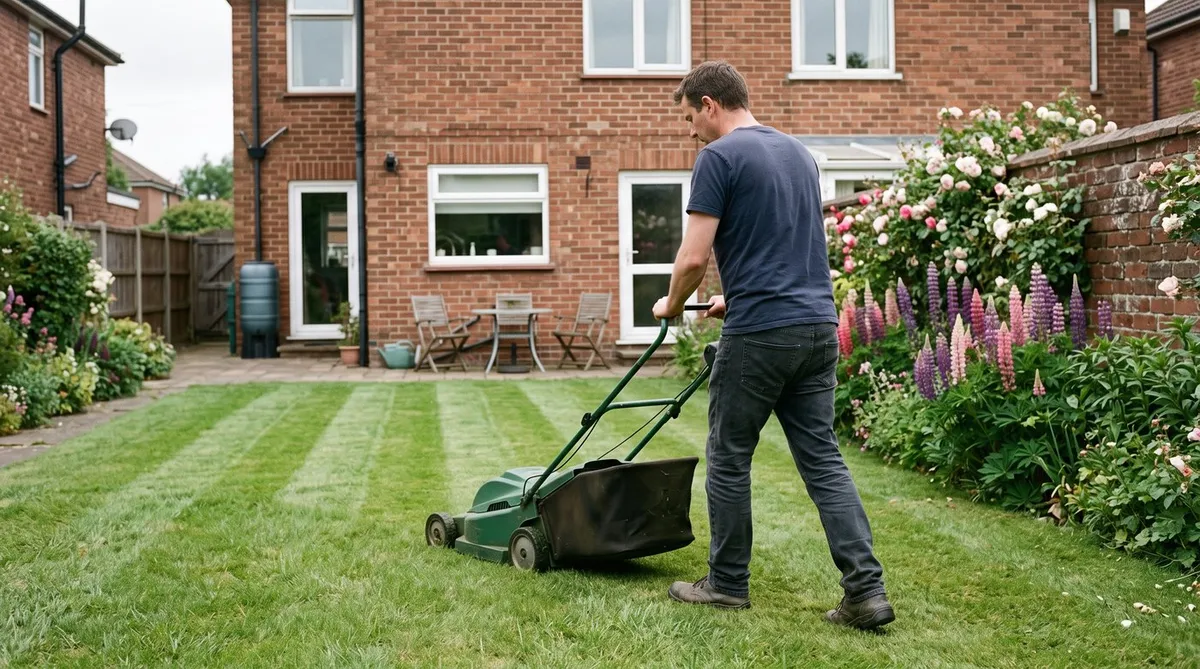
Key takeaways
- Most established UK lawns never need watering, as rain covers nearly all the year
- If you water, soak deeply every 7-10 days rather than sprinkling daily
- About 20 litres per square metre wets the soil 10-15cm down, where the roots are
- Water early in the morning, and skip it if rain is forecast
- New turf and grass seed need watering daily until they root in
- A brown lawn in drought is usually dormant, not dead
Most established UK lawns don’t need watering at all. Our rain does the job for nearly all of the year, and grass is much tougher than it looks. When a long dry spell does call for it, the answer is one deep soak every 7-10 days, not a sprinkle every evening.
This guide covers how often to water a lawn, how much to give it and how to tell when it really needs it. It also covers the big exception: new turf and grass seed, which need watering every day. For watering the rest of the garden in hot weather, see our heatwave watering guide.
Do established lawns need watering?
Usually not. A lawn that has been down for a year or more has roots deep enough to cope with all but the longest dry spells. If it does go brown, it nearly always comes back once the rain returns.
Watering too often can actually make things worse. Little and often only wets the top few centimetres, so the roots stay near the surface. Those shallow roots dry out within a day or two of dry weather, and the lawn ends up needing you more.
So who should water? People with new turf or fresh seed, and lawns on very sandy, free-draining soil in a long dry spell. Everyone else can usually leave the hose in the shed.
How often and how much to water a lawn
When a lawn does need water, soak it deeply and rarely. Give it about 20 litres per square metre every 7-10 days, which wets the soil 10-15cm down, right where the roots are.
Deep watering coaxes the roots to grow downwards after the moisture. That makes the lawn tougher in the next dry spell.
To check how much your sprinkler puts down, stand a few straight-sided tins or jam jars on the lawn. Run the sprinkler until they hold about 2cm of water. Time it once and you’ll know how long to run it every time.
Your soil makes a difference:
- Clay holds water for longer, so it needs watering less often. Water slowly, as it soaks in slowly.
- Sandy soil dries out fast, so it may need a soak more often in a long dry spell.
- Loam sits comfortably in the middle.
Mowing height matters too. A lawn cut short dries out much faster. Our guide on how low to mow your lawn explains why raising the blade in summer saves water.
When is the best time to water a lawn?
Water early in the morning if you can. It’s cool and calm, so less water is lost to evaporation, and the grass dries off during the day. A cheap tap timer makes an early start easy.
Evening is the next best choice. Try to water early enough that the grass isn’t wet all night, as damp grass is more prone to fungal diseases such as red thread. Avoid the middle of a hot day, when a lot of the water simply evaporates. Our guide to watering in the morning or evening explains the pros and cons for the whole garden.

Evening watering works well if you start early enough for the grass to dry before night.
How to tell if your lawn needs water
Check the lawn before reaching for the hose. These three free tests tell you all you need to know.
- Footprint test. Walk across the lawn and look back. If the grass springs back up, it’s fine. If your footprints stay flat, it’s short of water.
- Colour. A dull, grey-blue tinge shows up before the lawn turns brown.
- Screwdriver test. Push a long screwdriver into the lawn. If it slides in easily, there’s moisture down where the roots are. If it stops short in hard soil, the lawn is dry.

If the screwdriver slides in easily, leave the hose where it is. Hard, dry soil that stops it short means the lawn is thirsty.
How often to water new turf and grass seed
New lawns break all the rules above. Water new turf and freshly sown seed every day in dry weather, sometimes twice in hot spells, for the first few weeks.
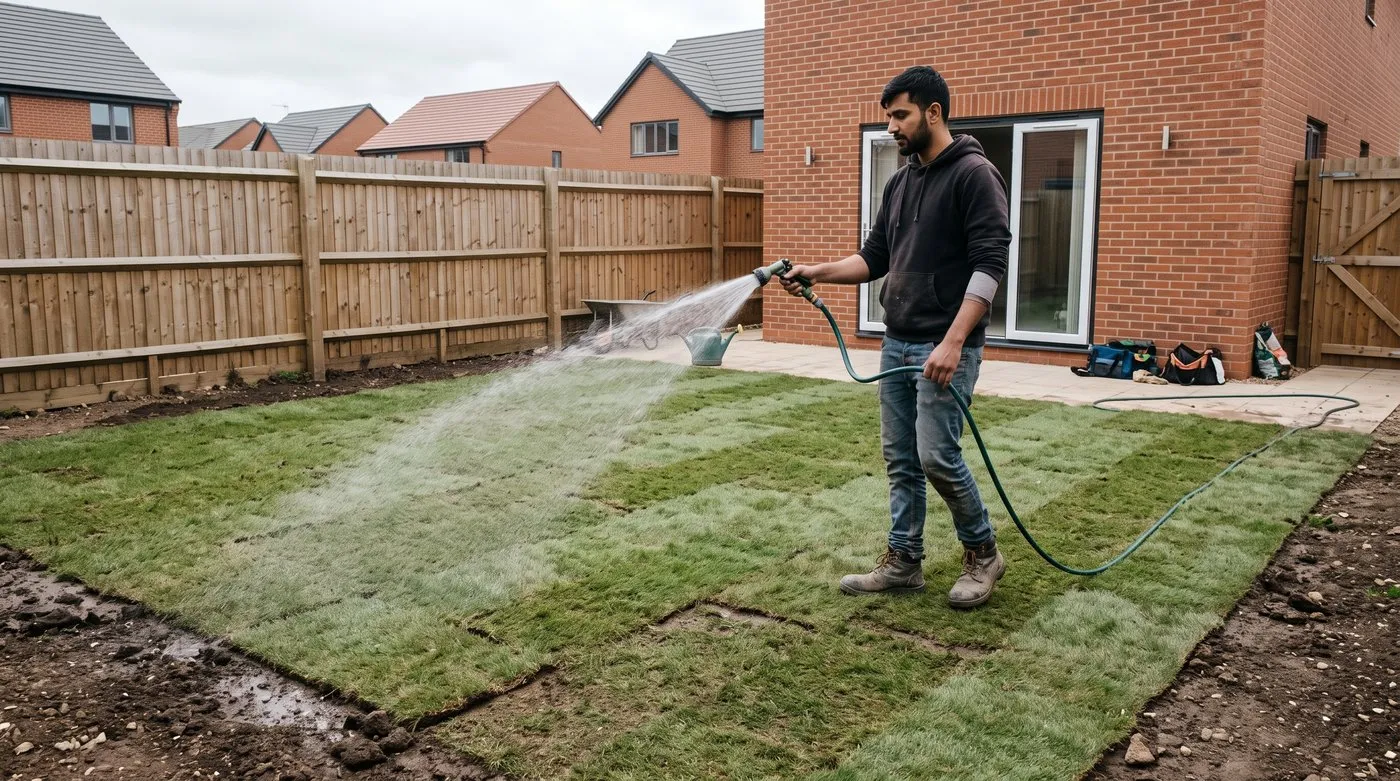
New turf can’t draw water from the soil until it roots in, so keep it moist every day in dry weather.
Grass seed sits in the top few millimetres of soil. If that layer dries out once seedlings have started to grow, they can die. Water lightly and often with a fine spray so you don’t wash the seed away, and keep the surface damp until the grass is up and growing well.
New turf has been cut from its roots, so it can’t draw water from the soil until it knits in. Water it straight after laying, then keep it moist. Lift a corner after a week. If the soil underneath is dry, give it more.
Once the grass has rooted in, usually after a few weeks, stretch the gaps between waterings. This encourages the roots to go down. Within a couple of months you can treat it like any other lawn. Our guide to sowing grass seed covers the first few weeks in more detail.
Should you let a lawn go brown in a drought?
Yes, for an established lawn, it’s usually the best thing to do. A brown lawn is dormant, not dead. The grass stops growing to save water and greens up again within a few weeks of steady rain.
While it’s brown, leave it alone as much as you can. Keep foot traffic down, don’t mow it short and don’t feed it. Dry grass is brittle and easily damaged.

It looks finished, but an established lawn this brown is just resting. It will green up again once proper rain arrives.
New grass is the exception. Seedlings and turf laid in the last few months haven’t built up the roots to survive, so keep watering those. Once rain returns, our lawn drought recovery guide explains how to help a tired lawn bounce back.
Watering a lawn in a hosepipe ban
During a hosepipe ban you can’t use a hose or sprinkler on the lawn. Bans are set by your water company, so check their website for the details. You can still use a watering can, or water from a water butt.
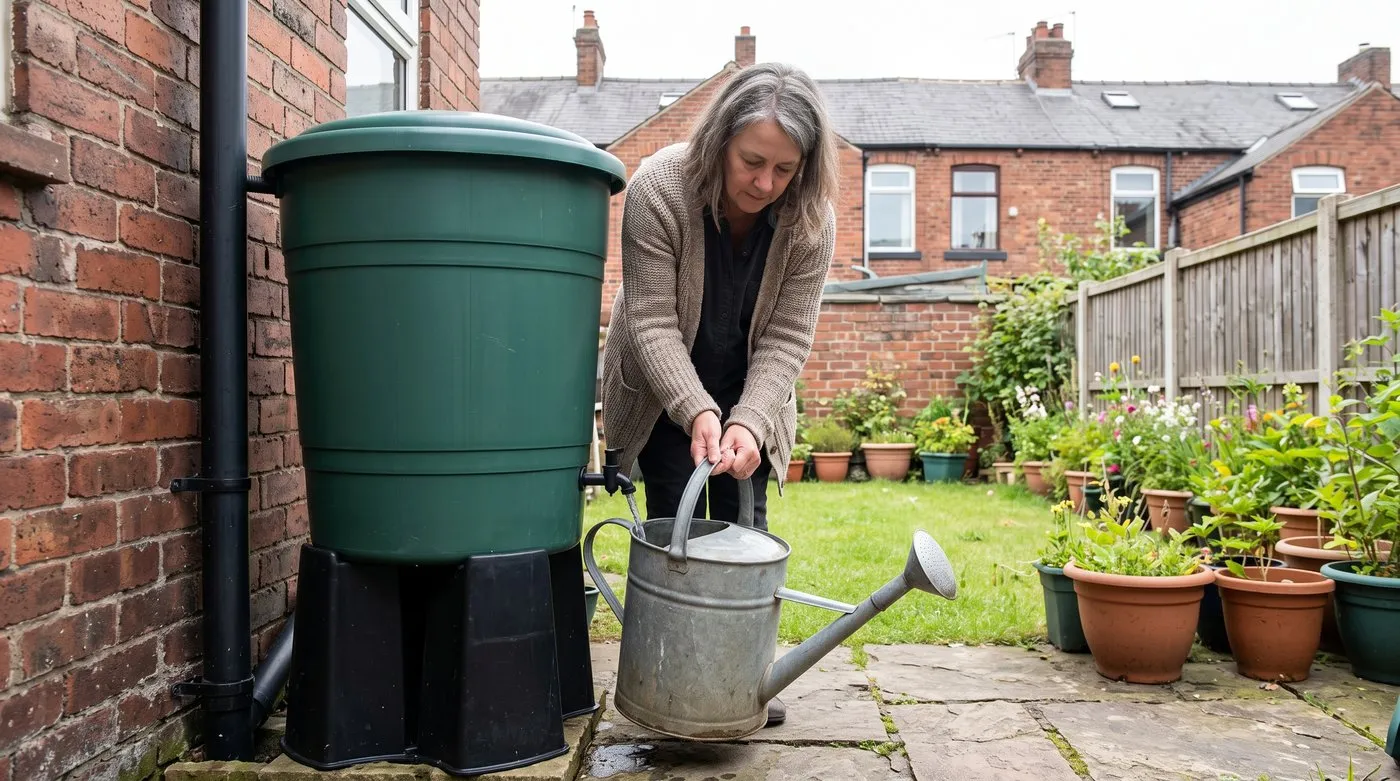
Water from a butt and a can is a handy standby in a ban. Save it for new grass and pots first.
In practice, let an established lawn go dormant and save your water for the things that need it most. Do new turf and seed first, then new trees and shrubs, then pots. The established lawn comes last, because it recovers on its own.
Grey water from the bath, shower or washing-up bowl is fine on an established lawn in moderation. Use it straight away rather than storing it, and spread it around rather than tipping it in one spot. Avoid water with bleach, strong cleaners or dishwasher salt in it. Our guide to gardening in a hosepipe ban has more.
Signs of overwatering and underwatering a lawn
Both can leave the grass off-colour, but the clues are different and the fixes are opposite.
| Sign | Underwatered | Overwatered |
|---|---|---|
| Colour | Grey-blue, then straw-brown | Yellowing in patches |
| Feel underfoot | Hard and crisp | Soft and spongy |
| Footprints | Stay flat | Spring back |
| Moss | Not spreading | Spreading |
| Soil | Hard and dry | Wet, may smell sour |
The fix for underwatering is one deep soak, not a daily sprinkle. For overwatering, stop watering and let the soil dry. If the lawn stays wet even without watering, it’s a drainage problem. Our guide to a waterlogged lawn helps you find the cause.

Thick, healthy grass like this comes from deep roots, and deep roots come from watering rarely but well.
When lawns need water through the year
| Season | What to do |
|---|---|
| Winter | No watering. Keep off frozen or waterlogged grass |
| Spring | Rarely needed. Water new seed and turf daily in dry spells |
| Summer | Only in long dry spells: one deep soak every 7-10 days, or let it go dormant |
| Autumn | Rarely needed. Water autumn-sown seed and new turf if it turns dry |
Common lawn watering mistakes
Watering a little every evening. It keeps the roots shallow. Soak deeply and rarely instead.
Watering in the heat of the day. Much of the water evaporates before it reaches the roots. Water early in the morning.
Watering when rain is forecast. Check the forecast first and save yourself the bother.
Forgetting new turf. New turf and seed dry out fast and can die in a few hot days. Check them every day.
Watering a lawn that’s already wet. Spongy, mossy grass needs less water, not more.
Frequently asked questions
How often should you water a UK lawn?
Most established UK lawns don’t need watering at all. Rain keeps them going for nearly all the year. In a long dry spell, one deep soak every 7-10 days is plenty. Skip it if rain is forecast.
How much water does a lawn need?
About 20 litres per square metre in each soak during a dry spell. That wets the soil 10-15cm down, where the roots are. Stand a straight-sided tin on the lawn and run the sprinkler until it holds about 2cm of water.
Should you water your lawn every day?
No, not an established lawn. Daily light watering keeps the roots shallow, so the grass dries out faster. Only new turf and fresh grass seed need watering every day until they have rooted in.
What time of day is best to water a lawn?
Early morning is best. It’s cool and still, so more water soaks in, and the grass dries through the day. Evening is the next best choice. Avoid the middle of a hot day, when much of the water evaporates.
Will my brown lawn recover after a drought?
Yes, an established brown lawn is usually dormant, not dead. Grass stops growing in dry weather and greens up within a few weeks of steady rain. New turf and seedlings can die in drought, so keep watering those.
How do I know if my lawn needs water?
Walk across it and look back at your footprints. If they stay flat instead of springing back, the grass is short of water. A dull, grey-blue tinge is another sign. Hard soil that a screwdriver won’t go into confirms it.
Now you know when your lawn really needs a drink, read our guide to rainwater harvesting to store free water for dry summers, or browse more lawn care guides.
Our team produces practical UK gardening guidance from source research, contributor records and established horticultural practice. Editorial standards are overseen by Matt W.