Key takeaways
- Hollow-tine aeration is the best first step on a soggy clay lawn
- Always core first, then brush sand or a sandy top-dressing into the holes
- Never spread a layer of sand over solid clay without coring, as it can make things worse
- September is the best month, and the job needs repeating each autumn for a few years
- Keep off the lawn when it's wet, and never roll clay
- Land drains are for ground that stays wet all winter, and usually a job for a contractor
To improve drainage in a clay soil lawn, hollow-tine aerate it each September and brush sharp sand or a sandy top-dressing into the holes. Repeat every autumn for a few years. Keep off the grass when it’s wet, and save land drains for ground that never dries.
Clay holds water because its tiny particles pack tightly together, leaving little room for air and water to move. Feet, mowers and builders’ machinery squash it further. The good news is that clay lawns improve steadily with the right yearly routine. If you’re not yet sure clay is your problem, the guide to diagnosing a waterlogged lawn helps you rule out a high water table and other causes first.
Why do clay lawns get waterlogged?
Clay soil drains slowly at the best of times. Three things make it worse under a lawn:
- Compaction. Feet, mowers and play squeeze the soil, closing up the gaps water would drain through.
- A hard pan. On new-build plots, heavy machinery often leaves a squashed, hard layer a spade’s depth down. Water sits on top of it.
- Thin topsoil. Builders sometimes spread a thin layer of topsoil over dense subsoil, so roots have little room.
The fixes below tackle each one. Coring opens the surface, sand keeps those holes open, and breaking a pan or adding drains gives trapped water somewhere to go.

Compacted clay comes out as a solid grey plug. Years of coring and top-dressing help it become darker and more crumbly.
How to check how badly your lawn drains
Dig a hole about a spade’s width and 30cm deep where the lawn floods worst. Fill it with water and let it drain. Then fill it again and see how long it takes to empty.
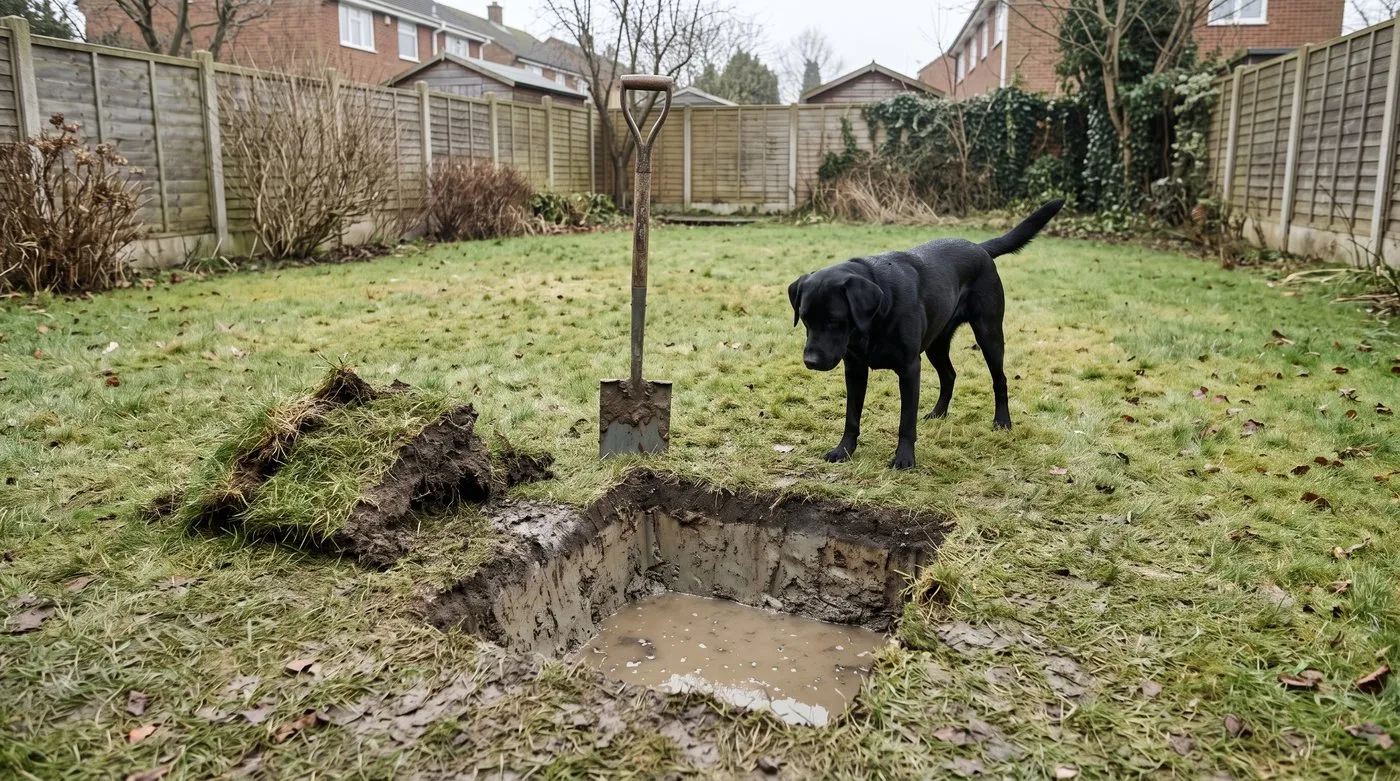
A simple test hole shows how slowly your lawn drains and how thin the topsoil is over the clay.
- Gone within a few hours: drainage is fine. Look at compaction or thatch instead.
- Still draining after half a day: typical slow clay. Coring and top-dressing will help.
- Still full the next day: serious drainage trouble. You may need land drains as well.
While the hole is open, look at the sides. Note where dark topsoil gives way to pale, dense clay. Then push a long screwdriver into the lawn in a few places. If it stops dead at the same depth each time, you’ve probably found a compacted pan.
Hollow-tine aeration: the best first step
Hollow-tine aeration pulls small plugs of soil out of the lawn, leaving open holes for air and water. It’s the single most useful job on a soggy clay lawn.
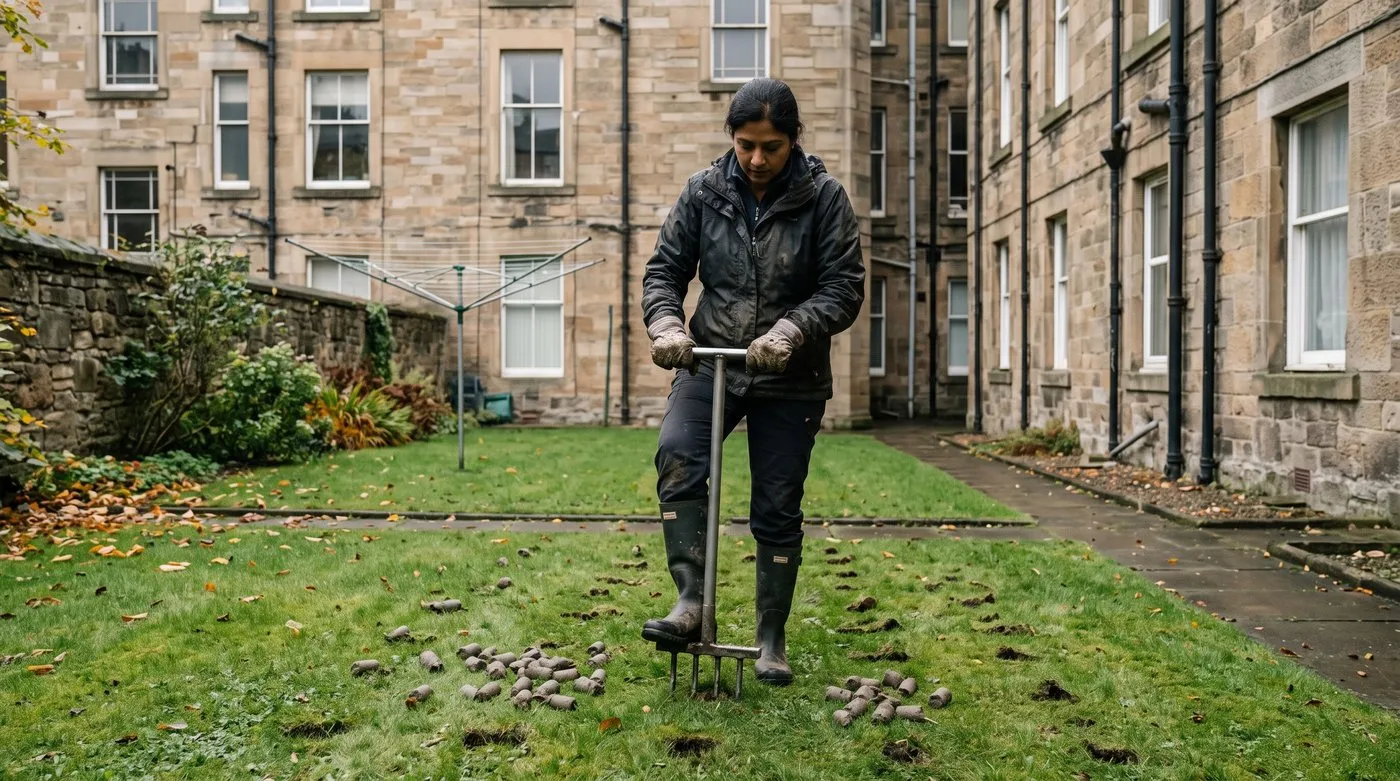
A hollow-tiner pulls plugs of clay right out of the lawn. Rake them up afterwards so they don’t refill the holes.
Solid spikes and garden forks just push soil sideways. On clay, that can squash the sides of the hole and achieve little. A hollow-tiner lifts the soil right out.
- Core in early autumn when the soil is moist but not sodden.
- Aim for holes about 7-10cm deep and a few centimetres apart.
- Hire a powered machine for a big lawn, or use a hand corer for a small one.
- Rake or sweep up the cores afterwards, or they’ll break down and fill the holes again.
The guide on how to scarify and aerate a lawn covers the kit and technique in more detail.
Top-dressing with sand after coring
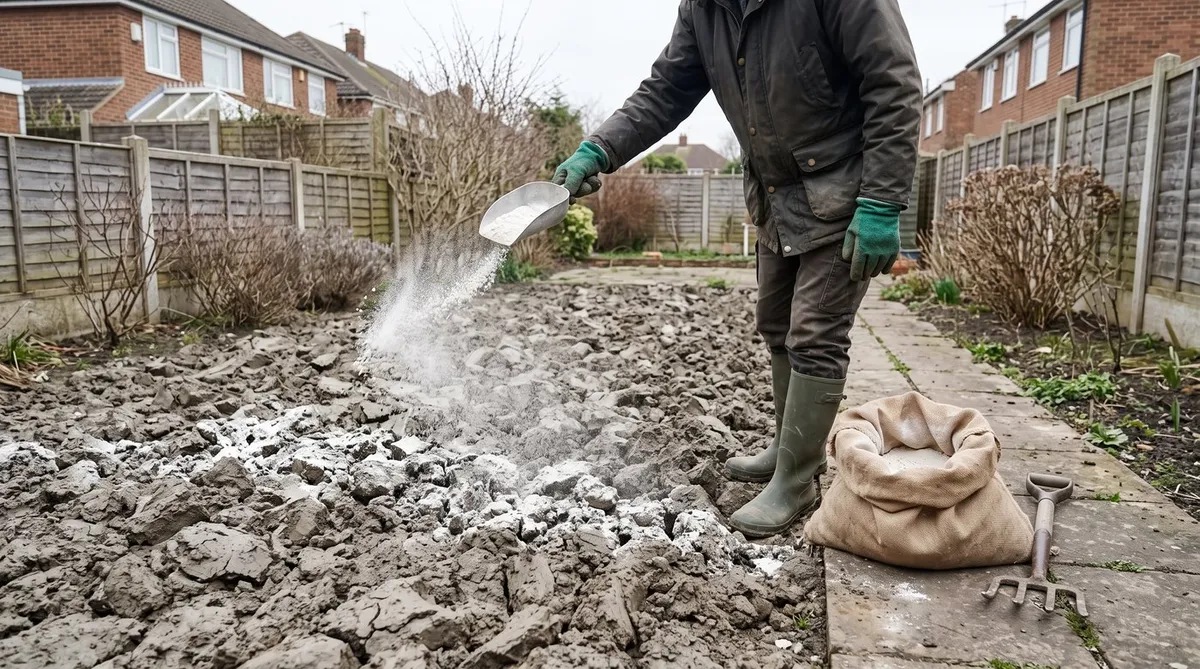
Straight after coring, spread sharp sand or a sandy lawn top-dressing and brush it into the holes. The gritty sand keeps the channels open long after the soil would have closed them. Each year, a little more of the lawn becomes free-draining.
- Use sharp, washed sand or lawn top-dressing, not soft builder’s sand or play sand.
- Spread a thin layer, just enough to fill the holes.
- Brush or lute it in so the grass blades still show through.
Warning: Never spread a layer of sand over solid clay without coring first. Water collects where the sand meets the clay, and the lawn can end up wetter than before. The sand needs to go down into the holes.
Mixing a little fine, sieved compost into the sand helps too. It feeds the worms, whose burrows act as natural drains. The guide on how to top-dress a lawn explains the different mixes.

Brush the sand down into the core holes with a lute or stiff broom, until the grass shows through again.
Breaking up a hard pan under the lawn
A compacted pan is a hard layer of squashed soil below the surface. Water sits on it however well you core the top. It’s common on new-build plots where machinery worked wet ground.
Ordinary coring can’t reach it. A deep-tine aerator, which you can hire or get a lawn care company to use, cracks the pan without turning over the lawn. On a full lawn renovation, a landscaper can break it up before new turf goes down. Once the pan is broken, your yearly coring starts to work properly.
Choosing grass that copes with wet clay
The right grass helps while the soil improves. Hard-wearing ryegrass mixes cope with heavy, damp ground better than very fine lawn grasses, which tend to thin out and let moss move in.
Overseed thin patches in early autumn, straight after coring and top-dressing. The seed drops into the sandy holes and gets a good start. Sow at the rate on the pack. The guide on fixing a patchy lawn covers overseeding step by step. If moss has moved in, rake it out before you sow.
When do you need land drains?
If the lawn still sits wet all winter after a few years of coring, the water needs a way out. Land drains are perforated pipes laid in gravel-filled trenches. They carry water to a soakaway (a rubble or crate-filled pit), a ditch or another suitable outlet.
It’s a big job, and most people use a drainage contractor. A few points are worth knowing before you get quotes:
- Pipes need a steady fall towards the outlet.
- A soakaway should be at least 5m from any building.
- Never connect garden drains to the foul sewer.
- If you want to drain into a ditch or stream, check with your local council first, as you may need permission.
A soakaway only works if the ground below it drains better than the clay above. In solid clay, it can simply fill up and stay full. Where that’s the case, a planted rain garden in the wettest corner is often a better answer.

A land drain is a perforated pipe in a trench of gravel, falling gently towards a soakaway or ditch.
Does gypsum help a clay lawn?
Rarely. Gypsum is often sold as a clay breaker, but it mainly helps salty, sodium-rich clays, which are uncommon in Britain. On most UK clay lawns, coring, sand and organic matter do far more. The guide to whether gypsum works on clay explains why.
Common mistakes on clay lawns
- Sanding without coring. A layer of sand on top of clay holds water rather than draining it.
- Walking or mowing on wet grass. It squashes the soil and closes the gaps. Wait until the surface firms up.
- Rolling the lawn. A roller compacts clay badly. Fix bumps by top-dressing instead.
- Doing it once. One coring helps for a few months. Clay needs the job repeated every autumn for a few years.
- Leaving the cores on the lawn. They break down and fill the holes you’ve just made.
Clay lawn drainage through the year
| Month | Task |
|---|---|
| January to February | Stay off the soggy lawn. Note where water sits longest |
| March | Do a drainage test once the soil is workable |
| April | Give a spring feed once the grass is growing |
| May to July | Mow regularly, not too short. Don’t core dry, hard ground |
| August | Hire a hollow-tiner and order sand for September |
| September | The main job: core, rake off the plugs, brush in sand |
| October | Overseed thin patches. Book land drains if needed |
| November to December | Keep leaves cleared. Lay a board if you must cross the lawn |
The lawn care calendar has the rest of the year’s lawn jobs.

The goal: a firm, green lawn that dries out within hours of rain, ready for the robin to hunt across.
Frequently asked questions
How do I fix a waterlogged lawn on clay soil?
Hollow-tine aerate in early autumn, then brush sharp sand into the holes. Rake off the cores first. Repeat every autumn for a few years. If the ground still stays wet all winter, you’ll need land drains.
Will sand alone improve drainage on a clay lawn?
No, and a layer of sand on top can make it worse. Water collects where the sand meets the clay. Sand only helps when it fills hollow-tine holes, linking the surface to the soil below.
When is the best time to aerate and sand a clay lawn?
Early autumn, usually September, is ideal. The soil is still warm, so grass recovers fast, and autumn rain washes the dressing in. Avoid dry summer ground and soggy winter clay.
Does gypsum work to break up clay soil under a lawn?
Rarely, on most UK clay. Gypsum mainly helps salty, sodium-rich soils, which are uncommon in Britain. Coring, sand and organic matter do far more for an ordinary clay lawn.
How long does it take to drain a waterlogged clay lawn?
Coring helps within days, but lasting change takes a few years. Each autumn of coring and top-dressing opens the soil a little more. Drains work faster but cost far more.
Can I walk on a waterlogged clay lawn?
Try not to, as feet squash the wet soil and make drainage worse. Wait until the surface firms up. If you must cross it, lay a plank or board to spread your weight.
Now your lawn is draining better, read the guide on how to improve clay soil for your beds and borders, or browse more lawn care guides.
Our team produces practical UK gardening guidance from source research, contributor records and established horticultural practice. Editorial standards are overseen by Matt W.