
Key takeaways
- Little and often works best, even 10 to 15 minutes of watering or weeding
- Simple, repetitive jobs like sowing and weeding help quieten a busy mind
- Gardening counts as gentle exercise and gets you outside in daylight
- Community gardens and allotments are a friendly way to meet people
- Your GP can refer you to gardening projects through social prescribing
- Gardening helps alongside professional care, not instead of it
Gardening is one of the simplest ways to look after your mind. Getting outside, using your hands and watching something grow can lift your mood and calm a busy head. You don’t need a big garden, special skills or much money to feel the benefit.
Why does gardening make us feel better?
It’s a mix of small, good things. You’re outside in daylight, you’re moving, and your attention is on the job in front of you rather than on your worries. Then there’s the quiet pleasure of a seed coming up or a tomato ripening.
 Getting your hands in the soil is a lovely way to switch off for a while.
Plenty of gardeners say a session in the garden leaves them calmer and happier. It’s not magic, and it won’t fix everything, but it is a gentle, reliable boost that’s there whenever you need it.
How does NHS social prescribing use gardening?
Your GP can refer you to a local gardening project through social prescribing. Social prescribing links people with community activities that help their health. A GP or mental health team puts you in touch with a link worker, who helps you find a local gardening group, allotment or green care project.
People are often referred for low mood, anxiety, loneliness or recovery from addiction. The projects are friendly, sociable and usually free.
It isn’t a replacement for treatment. It sits alongside medication and talking therapies, giving you a bit of routine, purpose and company. If you’d like to try it, ask your GP about social prescribing, or look for a local wildlife garden group or community growing space.
Is gardening good exercise?
Yes, gardening is proper exercise, even if it doesn’t feel like it. Digging, raking, mowing and carrying bags of compost get your heart going and work your arms, back and legs. Gentler jobs like planting, weeding and deadheading keep you moving without wearing you out.
Here’s a rough guide to how hard each job feels:
| Job | How hard it feels | What it works |
|---|---|---|
| Digging and turning soil | Hard | Shoulders, core, legs |
| Raking and hoeing | Medium | Arms, back, core |
| Planting and potting | Medium | Hands, arms |
| Weeding (kneeling) | Medium | Core, legs, grip |
| Mowing (push mower) | Hard | Legs, arms, shoulders |
| Watering and deadheading | Easy | Arms, grip |
| Carrying compost bags | Hard | Whole body |
For older gardeners, it’s a great way to stay strong and supple without the jolting of running. Our guide to raised bed gardening shows how to grow at a comfier height with less bending and kneeling.
What are 10 mindful gardening activities to try?
Mindful gardening simply means paying attention to what your hands are doing. Notice the feel of the soil, the weight of the trowel and the colour of the leaves. It’s not about getting jobs done or a perfect border. It’s about letting a simple task pull you into the moment.
Some easy ones to try: hand-watering, deadheading, sowing seeds, pricking out seedlings, weeding a small patch, potting on, sweeping the path, picking herbs, filling a bird feeder and simply sitting and listening for a few minutes.
On hard days, start with the easiest. Watering and deadheading need almost no decisions, you just do them. Save heavier jobs for days when you’ve got energy to burn.
 Sowing seeds needs just enough focus to quieten your thoughts, without any pressure.
How does the gardening year give you routine?
The garden gives you a gentle reason to get outside every month. You don’t have to rely on willpower, because the plants set the timetable. Seeds need sowing, crops need picking and pots need watering in dry spells.
Our seed sowing calendar lists jobs for every month, so you always have something small to do. On good days, dig and plant. On hard days, water what’s already there. Both count.
The RHS gardening calendar has more month-by-month ideas if you’d like them.
What is the difference between therapeutic gardening and horticultural therapy?
Therapeutic gardening is what you do yourself. Horticultural therapy is a programme led by a trained professional.
The charity Thrive runs horticultural therapy in the UK. A trained therapist uses gardening to help with set goals, like getting hand movement back after a stroke, rebuilding confidence after a mental health crisis, or building social skills.
Therapeutic gardening is what most of us do. You head outside, dig, plant, weed and water, and enjoy how it makes you feel. A sensory garden is designed to make the most of that.
Both are good. If you’re managing a diagnosed condition, horticultural therapy gives you a structured route with professional support. Thrive lists projects across the UK.
How do community gardens and allotments help mental health?
They give you friendly company as well as a place to grow. Loneliness can really drag your mood down. Community gardens and allotments give you regular, easy contact with people who share an interest.
You don’t need to be outgoing. Allotment chat tends to be short and practical: asking about someone’s beans, swapping spare courgettes, or warning about the badger digging up the plots. Over time those little chats add up to real friendships.
 Community gardens are a relaxed way to meet people while you grow.
To find a community garden near you, try the Social Farms and Gardens network, which keeps a directory of growing spaces across the UK.
What are 5 low-barrier projects for beginners with anxiety or depression?
You don’t need a garden, experience or money to start. The biggest hurdle is often feeling you must do it all properly, with all the right kit. You don’t.
These five projects are small, forgiving and give you something to see quickly.
1. Three herbs on the doorstep
Buy three herb plants, such as mint, parsley and chives, and pot them up by the back door. Water them each morning and pick a few leaves for cooking. You can start enjoying them the same week.
2. A windowsill seed tray
Fill a seed tray with compost and sow lettuce or radish seeds. Pop it on a sunny windowsill. They usually come up within a week, and you can start picking in four to six weeks.
3. A single container garden
Fill one big pot (at least 40cm across) with multipurpose compost and plant a tomato, a basil and a trailing nasturtium. Stand it somewhere sunny and water daily in summer. You get food, colour and scent all season. See our container gardening guide for more ideas.
4. A bird feeding station
Hang a bird feeder where you can see it from a window and keep it topped up. Watching the birds come and go is a calm way to start the day, and keeping it clean and filled gives you a small daily job.
5. A propagation project
Take cuttings from a friend’s plants. Mint roots happily in a glass of water, and fuchsia and geranium cuttings root well in small pots of gritty compost. You get new plants for free, and checking for roots becomes a small, hopeful ritual. Our propagation guide shows you how.
Which sensory plants help you relax?
Pick plants you’ll love to smell, touch, see and hear. Scented plants by a seat, soft leaves to stroke and grasses that rustle in the breeze all make a garden feel calming.
| Sense | Plants | Feel | Where to grow |
|---|---|---|---|
| Smell, calming | Lavender, chamomile, sweet peas | Relaxing | Beside seating, pots, borders |
| Smell, fresh | Rosemary, peppermint, lemon balm | Refreshing | Path edges, kitchen garden |
| Touch, soft | Lamb’s ear, fennel fronds | Soothing | Border edges |
| Touch, textured | Bark, moss, stone, gravel | Grounding | Paths, walls |
| Sound | Ornamental grasses, bamboo, water features | Peaceful | Boundaries, centre pieces |
| Sight, warm colours | Dahlias, sunflowers, crocosmia | Cheerful | Sunny borders |
| Sight, cool colours | Blue delphiniums, white roses, ferns | Restful | Shady corners |
Put calming plants near where you sit, and fresh-smelling herbs along paths so you brush past them. If you only grow one, make it lavender. It’s tough, copes with dry spells, bees love it and the scent is lovely.
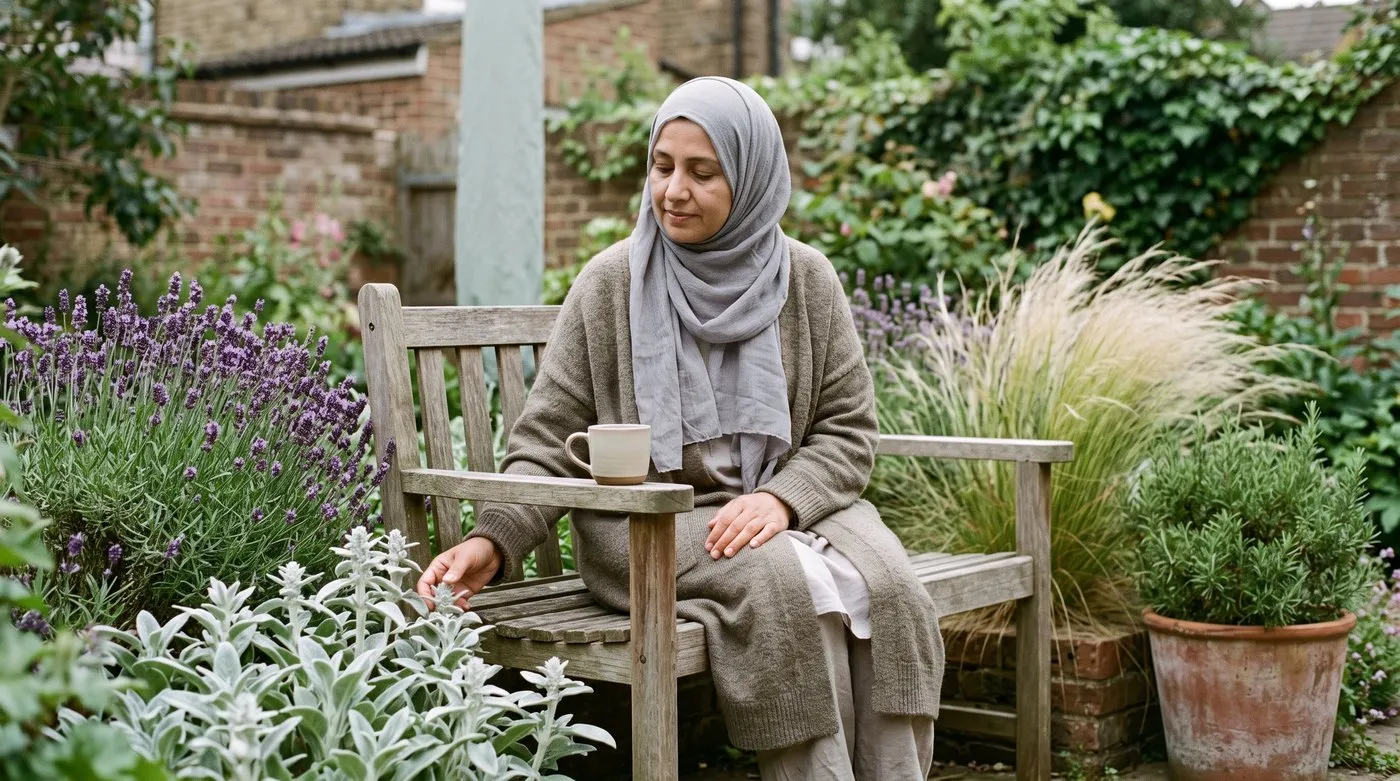
Put calming plants near where you sit. Lavender to smell, lamb’s ear to stroke and grasses that rustle in the breeze make a seat feel like a small retreat.
How much does gardening for wellbeing cost?
It can cost nothing at all. Cuttings, saved seed and home-made compost are all free. Compost is usually the biggest spend, and you can make your own from kitchen and garden scraps.
| Starting point | What you need | Cost | First result |
|---|---|---|---|
| Cuttings | Cuttings from a friend, a glass of water or small pot | Free | A few weeks |
| Seed saving | Seeds from this year’s plants | Free | Next season |
| Windowsill seeds | Lettuce seeds, a container, compost | A few pounds | About a week |
| Three herb pots | Three plants, three pots, compost | Low | The same week |
| Container garden | Large pot, compost, three plants | Low | A few weeks |
| Raised bed | Boards, screws, compost, seeds | Medium | A couple of months |
Social prescribing is free, and most community gardens are free or ask for a small donation. Allotment rents vary by council. You’ll feel the benefit as soon as you start, long before the garden is “finished”.
How to start gardening for mental health today
Pick one thing from this list and do it today. Not when you feel better, and not when you’ve got the right kit.
Five minutes: water a houseplant and watch it for half a minute.
Fifteen minutes: pull a few weeds from a crack in the paving. Notice the roots and the feel of the soil.
Half an hour: pop to a garden centre or supermarket, buy one herb plant and put it on your windowsill.
An hour: fill a pot with compost, sow some lettuce seeds, water them and set the pot somewhere sunny.
None of these need experience, money or a garden. All of them get your hands busy and your attention out of your head.
 A single pot of herbs and flowers is a cheerful, cheap way to start.
If you’re brand new to gardening, our gardening for beginners guide covers soil, tools and first plants. If you fancy growing food, our vegetable growing guide is a great next step.
If you or someone you know is struggling, Samaritans are there day and night on 116 123. Mind’s information line is on 0300 123 3393.
You can even be referred to gardening through the NHS; see our guide to gardening on prescription.
Frequently asked questions
Does gardening actually help with depression?
It can help ease low mood for many people. Being outdoors, moving about and seeing something grow all play a part. The NHS supports green social prescribing, which can include community gardening. Gardening works best alongside, not instead of, professional care for depression.
How much gardening do you need for mental health benefits?
Short, regular sessions are enough to help. Around half an hour can lift your mood, but even 10 or 15 minutes of watering or deadheading helps you switch off. Little and often tends to work better than an occasional long session.
What is the best type of gardening for anxiety?
Repetitive, hands-on jobs tend to help most. Weeding, sowing seeds, potting on and hand-watering need just enough focus to interrupt anxious thoughts, without becoming stressful. On difficult days, stick to easy jobs like deadheading or watering pots, and save tricky pruning for calmer days.
Can gardening replace therapy or medication?
No, gardening is not a replacement for professional treatment. It works best alongside therapy, medication or both. If you have persistent low mood, anxiety or suicidal thoughts, contact your GP. You can also call Samaritans free on 116 123 at any time.
What is horticultural therapy?
It is gardening led by a trained practitioner, with set health goals. The UK charity Thrive uses it to help people with disabilities, ill health or social disadvantage. Everyday therapeutic gardening is different, because it is informal and you do it yourself. Programmes run in community gardens, hospitals, prisons and care settings across the UK.
Is gardening good exercise for older adults?
Yes, it is lovely gentle exercise for older adults. Digging, raking and mowing get your heart going, and regular gardening helps keep your grip, balance and joints working well. Warm up first, swap between jobs and use raised beds or long-handled tools to save your back.
How do I start gardening if I have no experience?
Start small with a few pots of easy herbs. Put them by your back door with some peat-free compost and water them each morning. Once you have kept them going for a month, try a small raised bed or a few easy vegetables like salad leaves, radishes and courgettes.
Our team produces practical UK gardening guidance from source research, contributor records and established horticultural practice. Editorial standards are overseen by Matt W.


