
Key takeaways
- Plan for scent, touch, sound, taste and sight, with each plant covering one or two
- Plant scented herbs and lavender right beside paths so people brush past them
- Lamb's ear, ferns and grasses give lovely things to touch, even in winter
- Grasses, bamboo and a small bubble fountain bring gentle sound
- Raised beds and paths at least 1.2m wide make the garden easy for wheelchair users
A sensory garden is one you can smell, touch, hear and taste as well as look at. It’s a lovely idea for anyone, whatever their age or ability. Instead of planning just for looks, you add scent along paths, leaves to stroke, gentle sound, herbs to nibble and colour through the year.
What makes a sensory garden different from a standard garden?
Most gardens are planned for the eyes. A sensory garden is planned for all five senses, and each plant or feature should add at least one, ideally two or three.
The simple rule: wherever you stand, there should be something to enjoy without looking hard. Scent at nose height. Leaves within reach. The rustle of grass or the trickle of water. Herbs and fruit to taste. Colour and movement that catch your eye.
It overlaps with therapeutic gardening, which uses gardens to support health. The RHS has a page on gardening and mental health if you’d like to read more. A sensory garden makes those good feelings easy to reach, as nobody needs to kneel, dig or bend to enjoy it.
Plants for scent: building fragrance corridors
Scent is wonderful for stirring memories, which is why scented planting is so popular in care homes.
Layer scent at different heights. Put low herbs along path edges, lavender and roses at waist and chest height, and climbers like jasmine on arches overhead. That way you get fragrance all the way along as you walk.
 Lavender and thyme in a raised bed bring scent close to both seated and standing visitors.
Lavender ‘Hidcote’ is the classic sensory plant. It smells strongest on warm, sunny days, so plant it right beside a path. It flowers from June to August. Trim it after flowering in August to keep it neat and bushy.
Rosa ‘Gertrude Jekyll’ is a richly scented pink rose that flowers in flushes from June to October. It grows to about 1.5m as a shrub or taller on a support. Deadhead regularly for more flowers. For a real surprise, try chocolate cosmos, which smells of dark chocolate on warm afternoons.
For lots more ideas, our best scented plants guide covers fragrance for every season.
Plants for texture: the touch-first garden
Texture is the sense everyone can share. It’s great for blind and partially sighted visitors, for children and for anyone who likes to touch as they wander.
The trick is contrast within reach. Soft, velvety leaves beside rough bark. Feathery ferns beside broad, glossy leaves. Smooth stone next to spiky grass. It makes people want to explore, and the garden stays interesting even without flowers.
 Lamb’s ear with ferns and bark mulch gives plenty to touch, even in winter.
Lamb’s ear (Stachys byzantina) is the star texture plant. Its silvery leaves are soft as velvet, and children and adults love stroking them. It’s fully hardy and spreads into a low carpet about 40cm tall. Split clumps every three years to keep them strong.
Ferns feel completely different, with fine, feathery fronds. Male fern (Dryopteris filix-mas) is tough and happy in deep shade. Common polypody (Polypodium vulgare) is evergreen and grows on walls, rocks and tree bases. Plant ferns at the edges of raised beds so fronds hang within reach.
Bark and cobble paths do two jobs. They keep weeds down and make a sound underfoot. Bark gives a soft crunch, and cobbles make people slow down. Use different surfaces in different areas so the garden can be felt through your feet.
| Plant | What it feels like | Best season | Height | Good to know |
|---|---|---|---|---|
| Lamb’s ear | Soft velvet | All year | 40cm | Silvery leaves |
| Fountain grass (Pennisetum) | Feathery plumes | Late summer to autumn | 90cm | Some types are tender, so check the label |
| New Zealand flax (Phormium) | Stiff, leathery | All year | 1.5-2m | Sharp tips, keep away from faces |
| Male fern | Fine, feathery | Spring to autumn | 90cm | Happy in deep shade |
| Pampas grass | Coarse, sharp-edged | All year | 2-3m | Leaves can cut, wear gloves |
| Eryngium giganteum | Spiny, silvery | Summer | 90cm | Lovely next to soft plants |
| Himalayan birch | Smooth, papery bark | All year | 8-12m | Plant beside a path for stroking |
Sound in the garden: plants and water that work with UK wind
The UK is breezy, which makes it a great place for plants that rustle and sway. You’ll rarely get a truly still day.
Layer your sounds. Low grasses hiss in a light breeze, bamboo clicks and rustles at mid height, tall seedheads rattle, and water trickles whatever the weather.
 A trickling stone water feature surrounded by ferns and hostas gives gentle sound all day.
Black bamboo (Phyllostachys nigra) clicks and rustles in even a light breeze. Grow it in a large sunken pot or behind a 60cm-deep root barrier so it doesn’t spread. It reaches 3-4m. Our ornamental grasses and bamboo guide has full growing tips.
Giant oat grass (Stipa gigantea) has papery, oat-like seedheads that rustle and shimmer in the lightest air. It flowers from June and stands well into winter. It grows to about 1.8m and is fully hardy. Leave it standing until February.
Moving water is the most reliable sound, as it doesn’t need wind. A simple bubble fountain needs a small pump, a buried reservoir and a drilled stone. Plug it into an outdoor socket protected by an RCD. The sound gets louder the further the water falls.
Taste: edible plants in reach of every visitor
Taste is the most personal sense and often the one people come back for. Herbs are the easiest choice. They’re familiar, they don’t mind being picked and they grow back quickly. Alpine strawberries are perfect too, ripening a few at a time from June to October.
Grow edible plants in raised beds and label them clearly with weatherproof labels. That way people know what’s safe to taste and feel happy to join in.
Mint is a must. Everyone knows it, it’s full of flavour and it shrugs off handling. Grow it in a sunken pot to stop it spreading everywhere. Spearmint, peppermint and apple mint give three different flavours in a small space. Replace plants every two to three years as clumps get woody.
Nasturtiums have peppery leaves and flowers that are both edible. They climb or trail and flower in orange and yellow from summer into autumn. They often self-seed, so you may get them back next year.
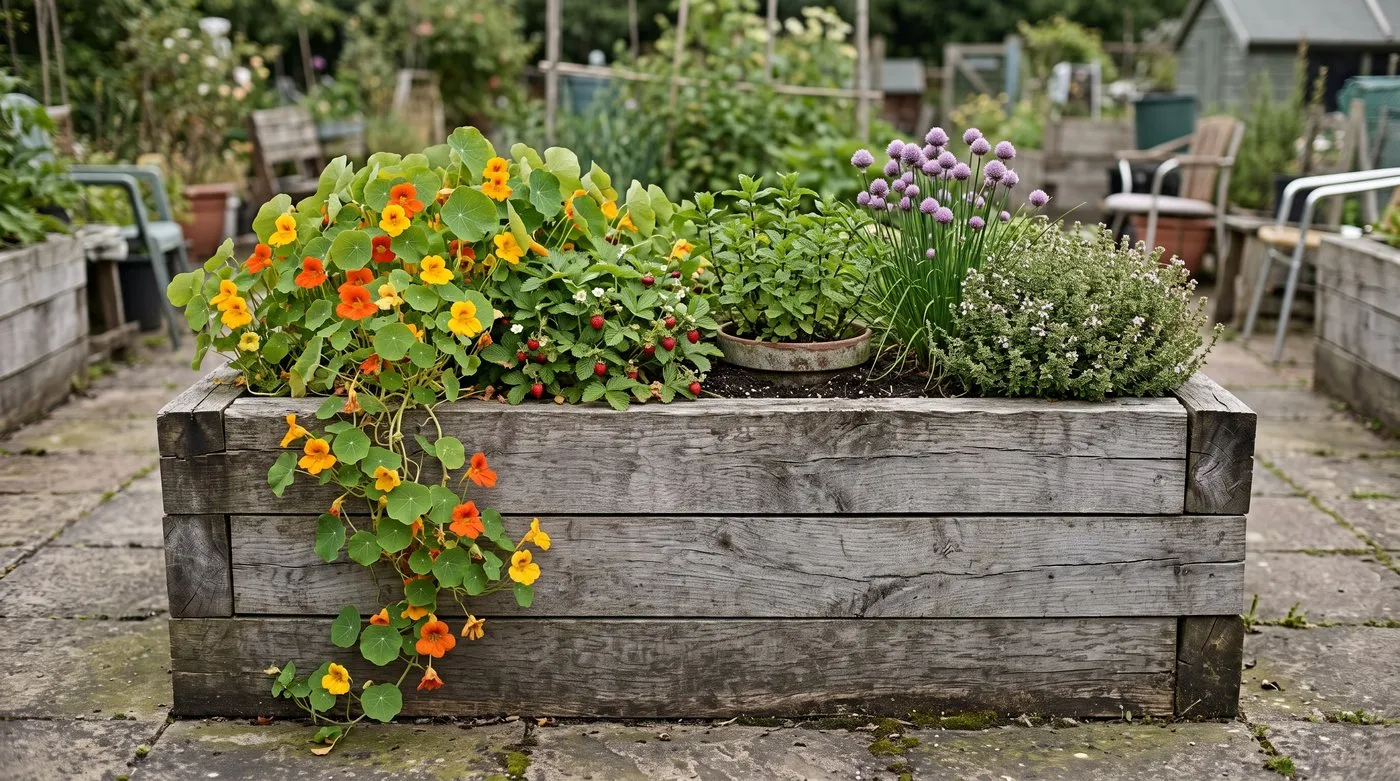
Herbs and alpine strawberries are perfect for a tasting bed. They don’t mind being picked, and something is always ready to nibble.
Sight: colour, form, and movement through the seasons
Most gardens already do sight well, but a sensory garden adds movement and change through the year. The aim is a garden that’s worth a visit every month, not just in June.
Grasses, tall flowers and light seedheads sway in the wind and keep things moving. Plan for colour from snowdrops in January to rudbeckia and asters in November. Our best plant combinations guide has lots of ideas for planting that flows through the seasons.
Crocosmia ‘Lucifer’ has arching stems to about 1.2m and fiery red flowers in July and August. It sways nicely in the breeze. It forms spreading clumps, so give it room or split it every few years.
Rudbeckia fulgida ‘Goldsturm’ has golden daisies from August to October, just as lots of other plants are fading. It grows to about 60cm, and its stiff stems and dark seedheads stay standing into winter.
Our lavender growing guide covers spacing, pruning and winter care for lavender in UK gardens.
Sensory garden design zones: a practical layout plan
A simple way to plan is to split the space into zones, each with a main sense, and let them blend into each other. It works in a whole garden, and you can shrink the idea down to a single raised bed.
| Zone | Main sense | What to include | Rough size |
|---|---|---|---|
| Scented walk | Scent | Lavender edging, a rose arch, herbs along the path | 2m wide, 6m long or more |
| Touch garden | Touch | Lamb’s ear, ferns, bark path, textured stones | Raised beds at 65-70cm |
| Sound corner | Sound | Bamboo, grasses, a water feature | About 3m by 3m, bamboo 1m from walls |
| Tasting bed | Taste | Herbs, alpine strawberries, nasturtiums | A raised bed of about 1.2m by 0.9m |
| Colour border | Sight | Crocosmia, rudbeckia, grasses, bulbs | A sunny border, any size |
| Quiet spot | All senses | Bench with scented plants behind, level ground, some shade | About 3m by 2m |
Accessibility and the Thrive approach
A sensory garden should be easy for everyone to get around. The UK charity Thrive uses gardening to help people with disabilities and has lots of practical advice on making gardens accessible.
Here are the main things to get right:
Paths: at least 1.2m wide for a manual wheelchair, and 1.5m for powered chairs or passing. Use firm, non-slip paving, not loose gravel, on the main routes. Keep slopes gentle, no steeper than 1 in 20.
Raised beds: build them 65-70cm high with a 10cm recess at the base so footrests slide underneath. A seated person can then pull right up close. Keep beds no more than 60cm deep if reached from one side, or 1.2m if you can reach from both.
Labels: use raised or Braille labels for key plants if blind or partially sighted visitors will use the garden. Put them at about 90-100cm, easy to read from a chair.
Seating: put a bench in each zone, with armrests and a firm seat. Leave a level paved space, about 1.5m by 1.5m, beside each bench for a wheelchair. Our accessible gardening guide has much more on this.
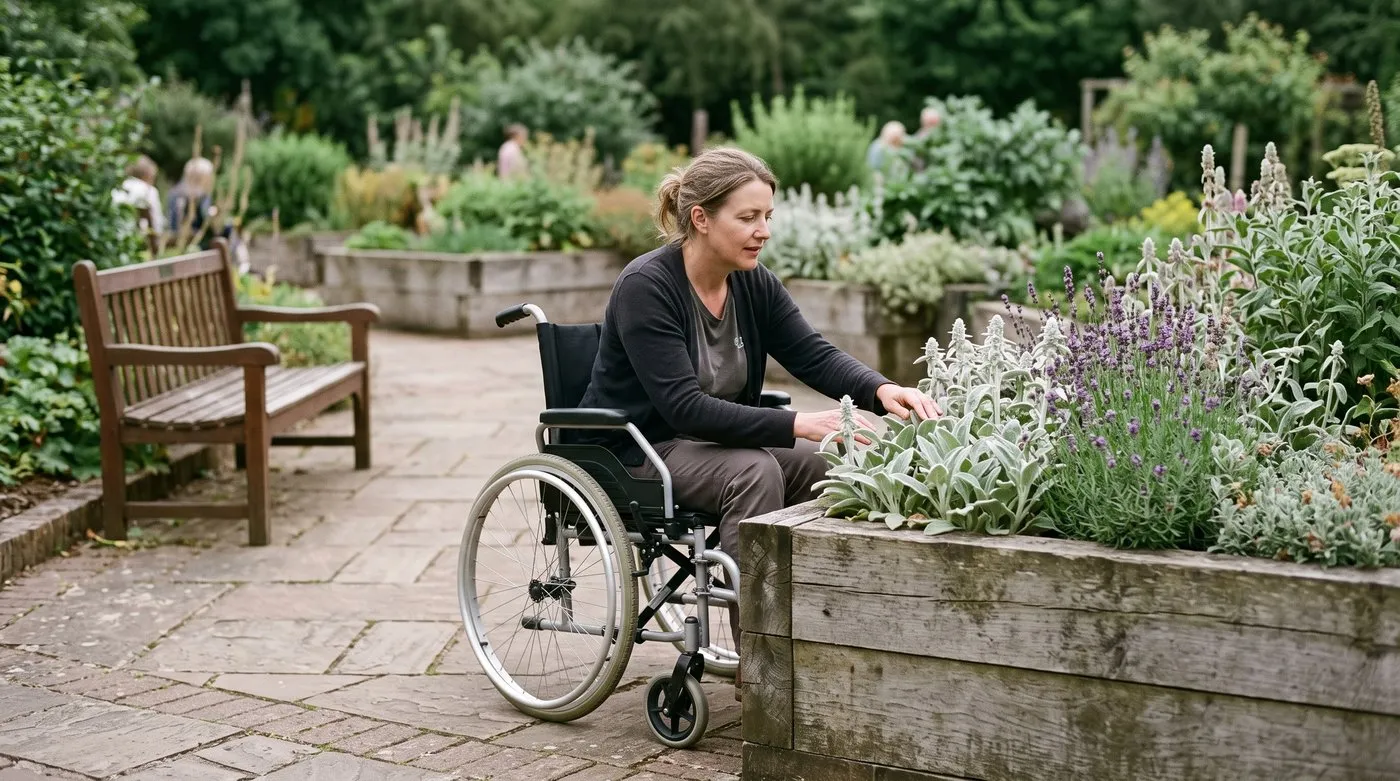
A recess at the bottom of a raised bed lets a wheelchair user pull right up close. Wide, firm paths make the whole garden easy to reach.
Therapeutic gardening and mental health
Sensory gardens aren’t only for people with disabilities. Spending time among scent, sound and greenery is calming for most of us.
Raised beds, scent at nose height and plants you can touch make that calm easy to reach. It works for people who would never call themselves gardeners.
For more on this, see our gardening for mental health and wellbeing guide.
Sensory gardens are especially popular in dementia care. Familiar scents like lavender and roses can bring back happy memories, and a garden gives residents a calm place to be.
Frequently asked questions
What plants are best for a sensory garden in the UK?
Lavender, lamb’s ear and grasses cover three senses straight away. Add Rosa ‘Gertrude Jekyll’ for scent and bamboo or Stipa gigantea for sound. Mint, thyme and alpine strawberries are great for taste. For colour, Crocosmia ‘Lucifer’ and Rudbeckia ‘Goldsturm’ brighten late summer.
How do you make a sensory garden accessible for wheelchair users?
Use raised beds and wide, firm paths. Build beds at 65-70cm with a 10cm recess at the base so footrests slide underneath. Make paths at least 1.2m wide with non-slip paving. Put scented plants up high, not at ground level, and leave a level space beside each bench.
How much does a sensory garden cost in the UK?
A single raised sensory bed costs roughly £200-£500. That covers materials and plants. A whole garden with several zones, paths and a water feature costs several thousand pounds, depending on size and how much hard landscaping you need.
What is the difference between a sensory garden and a therapeutic garden?
A sensory garden is planned to delight the five senses. A therapeutic garden is designed to support health and care, often in hospitals, care homes or rehab settings. It usually includes sensory planting as one part of the plan.
How do you create sound in a sensory garden?
Use grasses, bamboo and moving water. Black bamboo clicks and rustles in a light breeze. Stipa gigantea and quaking grass (Briza maxima) add a papery rustle. A small bubble fountain gives gentle sound even on still days.
Which scented plants work best near garden paths?
Lavender, thyme and chamomile are the best path-side plants. They release scent when you brush past. Plant them right at the path edge and repeat them along the way. A rose or jasmine on an arch adds scent at head height.
Can Thrive charity help with sensory garden design?
Yes, Thrive is a great place to start. It’s a UK charity that uses gardening to help people with disabilities and health conditions. It runs gardening programmes around the country and shares advice on accessible gardening on its website.
Further reading
- Accessible gardening for disabilities: bed heights, path widths and help with costs
- Gardening for mental health and wellbeing: how gardening can lift your mood
- Water feature ideas for UK gardens: rills, bubble fountains and ponds
- Ornamental grasses guide for UK gardens: plants for sound and movement
- How to create a herb garden: planting a tasting bed or kitchen herb patch
Our team produces practical UK gardening guidance from source research, contributor records and established horticultural practice. Editorial standards are overseen by Matt W.


