
Key takeaways
- White flowers and silver leaves glow at dusk, when reds and purples fade into the dark
- Plant night-scented stock, nicotiana, honeysuckle and jasmine close to where you sit
- Line the paths you use after dark with pale planting and pale gravel or paving
- Silver foliage such as artemisia and lamb's ear glows all season, flowers or not
- Soft, warm, low lighting helps; bright white floodlights spoil the effect and disturb wildlife
- A moon garden has nothing to do with sowing by the moon's phases
A moon garden is planted to come alive after dark. White flowers glow, silver leaves catch the last of the light and the air fills with scent the daytime garden never gives off. If you mostly see your garden in the evening after work, it’s one of the most rewarding ideas you can try.
This guide covers the plants, the layout and the lighting that make it work. For a daytime white garden in the Sissinghurst style, see the guide to a white garden planting scheme instead.
Why does a moon garden glow?
It comes down to how our eyes work in low light. As the light fades, our eyes pick up brightness far better than colour. Pale petals reflect what little light there is, from the moon, the afterglow of sunset or a soft lamp. Reds and deep purples turn dark first, while whites and silvers stay clear.
Scent is the other half of the magic. Many night-scented flowers release their perfume in the evening to attract moths. So a moon garden looks and smells its best just when you sit out after dinner.

White flowers and silver leaves still show up clearly in the blue light after sunset, long after colours have faded.
The best plants for a UK moon garden
Choose three kinds of plant: white flowers that glow, silver leaves that shine every night, and night-scented plants for perfume.
White flowers that glow:
- Cosmos bipinnatus ‘Purity’ for tall, airy white daisies from summer to the first frost.
- Nicotiana sylvestris and white Nicotiana alata, which glow and smell sweet at dusk. The nicotiana growing guide covers sowing.
- Japanese anemone ‘Honorine Jobert’ for late summer into autumn.
- Philadelphus (mock orange) for scented white flowers in early summer.
- White roses, ideally scented, on a fence or arch near the seat.
Night scent:
- Night-scented stock (Matthiola longipetala). The small lilac flowers look modest by day but smell wonderful at night. Sow a pinch near the back door.
- Honeysuckle and star jasmine on a fence or trellis beside the seat. See how to grow star jasmine.
- Evening primrose, whose pale yellow flowers open at dusk. The evening primrose guide has more.
- Sweet rocket (Hesperis matronalis) for evening scent in late spring.
Silver leaves: artemisia, lamb’s ear (Stachys byzantina), santolina and Senecio ‘Angel Wings’ glow every night, flowers or not.
Warning: White lilies smell lovely in the evening but are deadly to cats, even a little pollen. Nicotiana is also poisonous if eaten. Leave them out if you have pets that nibble plants.

Evening scent draws in moths like this hawk-moth. Put your most fragrant plants within reach of your nose.
Moon garden plants at a glance
| Plant | What it adds | When | Where to put it |
|---|---|---|---|
| Night-scented stock | Strong evening scent | Summer | Right beside the seat or door |
| Nicotiana sylvestris | Glow and scent | Summer to autumn | Near seats and paths |
| Star jasmine | Scent and white stars | Early to midsummer | On a fence by the seat |
| Honeysuckle | Evening scent | Summer | Over an arch or fence |
| Evening primrose | Opens at dusk | Summer | Mid-border, in groups |
| Cosmos ‘Purity’ | Tall white glow | Summer to first frost | Back of the border |
| Artemisia and lamb’s ear | Silver leaves | All season | Front edges and path sides |
How to lay out a moon garden for evening use
Put the pale planting, scent and seating along the routes and views you actually use after dark. A glowing border at the bottom of a plot you never visit at night is wasted.
- Start where you look out in the evening: the back door, kitchen window or patio.
- Trace the path to where you sit, and line it with white flowers and silver leaves so it reads as a glowing ribbon.
- Keep scent close. Perfume fades quickly over distance, so a jasmine beside your chair does far more than the same plant across the lawn.
- Use pale surfaces. Light gravel, pale paving or a cream-painted wall bounce back what light there is.
- Leave darker, leafy plants at the edges, where they fade into the night and frame the glow.
Gardener’s tip: Walk round your garden at dusk before you plant anything. Notice where the last light lingers. Those spots will reward white planting the most.

Pack the glow and scent around the place you sit. White flowers here stay visible long after the rest of the garden has gone dark.
Silver foliage: the secret weapon
Flowers come and go, but silver leaves glow every night from spring to autumn. Run them along the front of borders and the edges of paths. Artemisia, lamb’s ear and santolina all like sun and free-draining soil, and hate sitting wet in winter.

Silver leaves shine on every evening of the season, whether anything is in flower or not.
Lighting a moon garden
Keep it soft, warm and low. A few gentle pools of light look far better than bright white floodlights, which flatten the planting and spoil the mood.
- Wash a pale wall or silver shrub with a low, warm light.
- Put small path lights at ankle height to guide the way without glare.
- Hang warm-white string lights over a seat for a soft canopy.
- Solar lights need no wiring, though they fade through the night.
Less light is also kinder to wildlife. Bright lights confuse moths and disturb bats, which hunt those moths after dark. Use warm-coloured bulbs, point them downwards and put them on a timer. The guide to bat-friendly gardens explains more, and garden lighting ideas covers fittings.

A few low lights along a pale path are plenty. The white flowers and gravel do the rest.
Moon garden through the seasons
| Season | What’s glowing or scenting |
|---|---|
| Spring | White tulips and narcissi, sweet rocket. Sow night-scented stock and cosmos |
| Early summer | Philadelphus, star jasmine, honeysuckle, white roses |
| High summer | Nicotiana, cosmos, night-scented stock, evening primrose |
| Autumn | Japanese anemones, late cosmos, silver foliage |
| Winter | Silver stems and pale bark. Sarcococca adds winter scent by the door |
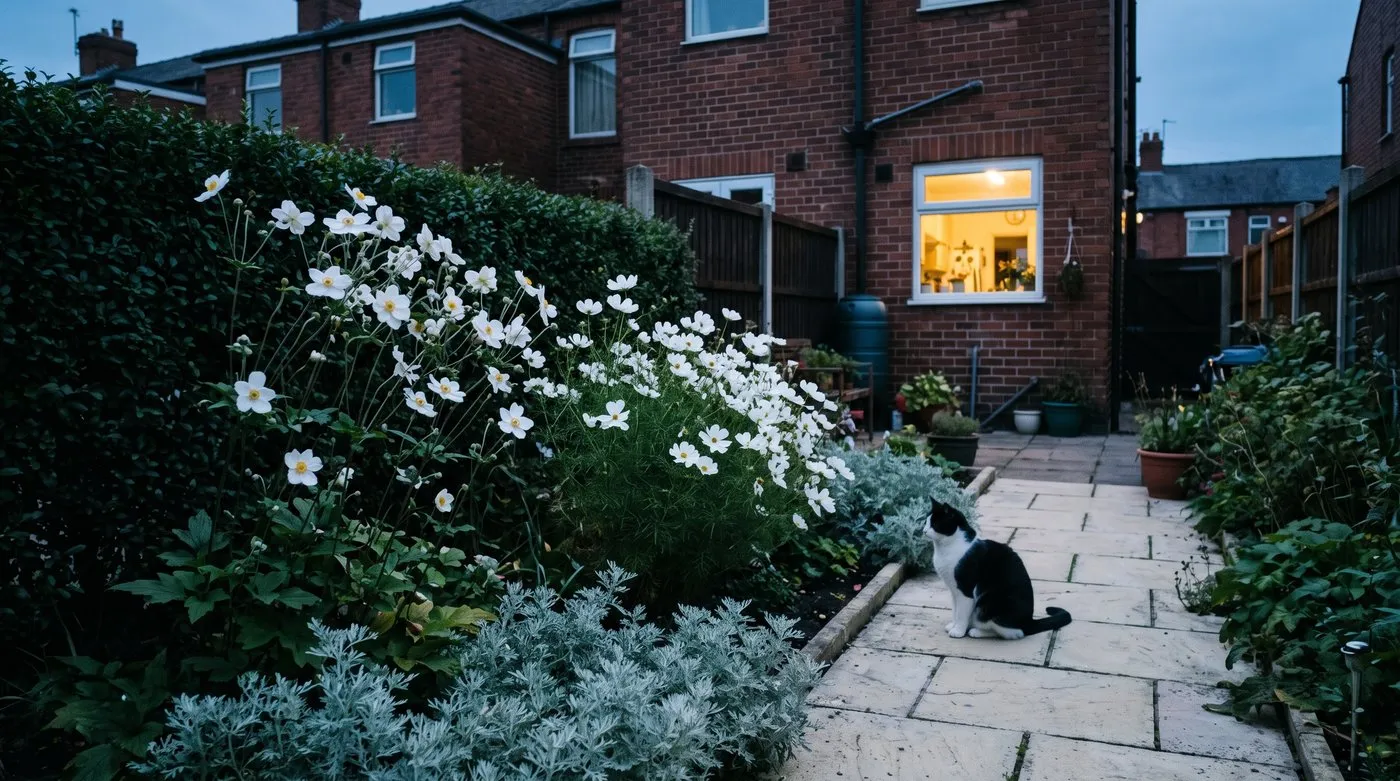
Japanese anemones and late cosmos keep the moon garden glowing well into autumn.
Does a moon garden mean planting by the moon?
No. The names sound alike, but they’re quite different ideas. Lunar gardening times sowing to the moon’s phases. It’s an old tradition, but there’s no good evidence it makes plants grow better. A moon garden is simply about design: pale, scented plants placed where you’ll enjoy them after dark. The guide to lunar gardening looks at the tradition in more detail.
Common moon garden mistakes
- Putting it where you never go at night. Plant around the seat and the path from the house.
- Planting scent too far away. Keep fragrant plants within a few steps of where you sit.
- Too much bright light. Floodlights kill the glow and disturb wildlife. Use a few soft, warm lights.
- Only white flowers. They come and go. Silver foliage keeps the glow going all season.
- Forgetting pets. Leave out lilies if you have cats.
For more fragrant plants to use, read the guide to the best scented plants for UK gardens next, or browse more garden design ideas.
Frequently asked questions
What is a moon garden?
It’s a garden designed to be enjoyed after dark. It uses white and pale flowers, silver leaves and night-scented plants. These catch the low evening light and release their perfume as it gets dark. The aim is a space that comes alive at dusk, just as an ordinary garden fades.
What plants are best for a moon garden?
White flowers, silver leaves and night-scented plants work best. Try night-scented stock, Nicotiana sylvestris, honeysuckle, star jasmine, evening primrose and white Cosmos ‘Purity’. For leaves, use artemisia, lamb’s ear and santolina. Plant the most scented ones next to where you sit in the evening.
Do white flowers really glow at night?
Yes, pale flowers stand out far more than coloured ones in low light. As light fades, our eyes pick out brightness better than colour. Reds turn dark first, while whites and silvers stay visible. That’s why a white scheme still shows up clearly after the rest of the garden has gone dark.
Does planting by the moon actually work?
There’s no good evidence that sowing by the moon’s phases helps plants grow. It’s an old tradition that many people enjoy. A moon garden is something different: its success comes from choosing pale, scented plants and putting them where you’ll enjoy them after dark.
How do you light a moon garden?
Use a few soft, warm, low lights rather than bright floodlights. Wash a pale wall with light, put low lights along a path, or hang warm string lights over a seat. Bright white lights flatten the planting and disturb moths and bats. Let the pale flowers do most of the work.
Are moon garden plants safe for pets?
Not all of them, so check before you plant. White lilies are popular for evening scent but are deadly to cats, even the pollen. Nicotiana is poisonous if eaten. Stock, cosmos and lamb’s ear are generally considered safe. Check the PDSA or ASPCA lists for anything else you’re unsure of.
Our team produces practical UK gardening guidance from source research, contributor records and established horticultural practice. Editorial standards are overseen by Matt W.


