Key takeaways
- Use a frost-proof pot at least 50cm wide and deep, with good drainage holes
- Fill it with loam-based compost such as John Innes No. 3 mixed with grit
- Combine one small evergreen, four perennials and layered spring bulbs
- Plant everything in autumn, perennials first, then bulbs in the gaps
- Feed from spring to late summer, and replace the top few centimetres of compost each spring
- Add a few fresh tulips each autumn, as they often flower less after the first year
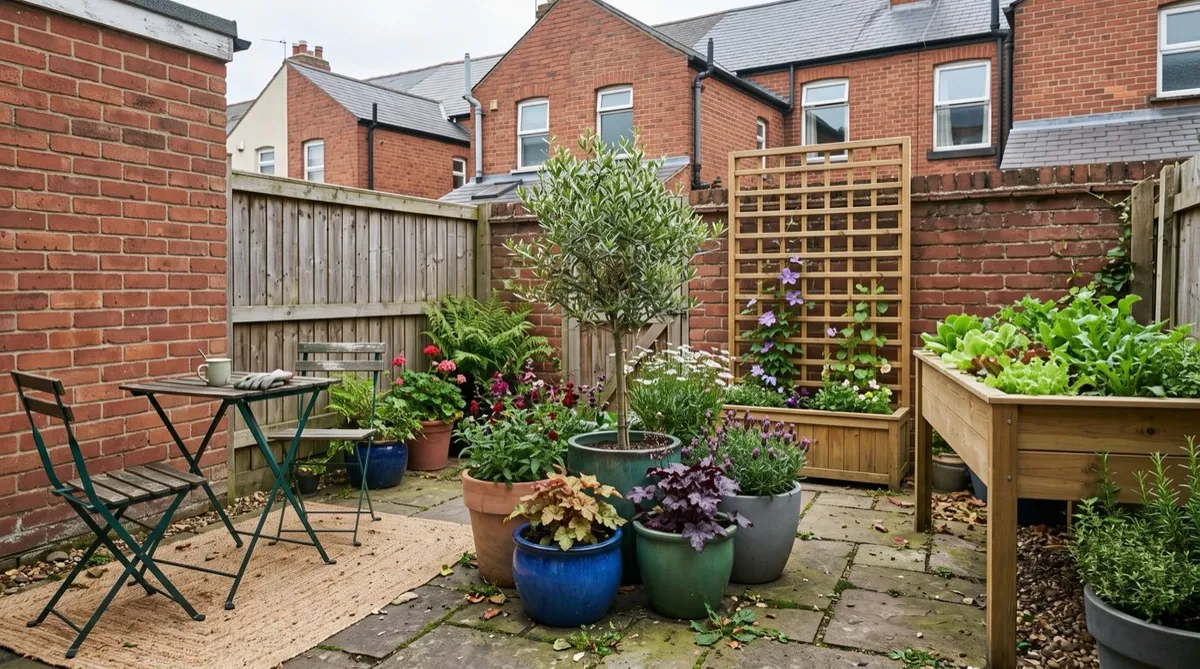
One big pot can give you something to look at every month of the year. The trick is to mix three things: a small evergreen for winter shape, a few long-season perennials for summer, and layers of bulbs for spring.
This is a single-pot recipe you can copy, with the pot, compost, plants and a month-by-month plan. If you’d rather choose your own plants, see the guide to the best plants for pots year-round.
Which pot works best for year-round planting?
A frost-proof pot at least 50cm wide and 50cm deep. Bigger pots hold more compost, which dries out more slowly in summer and keeps roots warmer in winter.
Material: frost-proof terracotta, glazed pots, heavy-duty plastic and fibre clay all work. Cheap terracotta that isn’t frost-proof can crack in a hard winter, so check the label.
Drainage: the pot must have drainage holes. Stand it on pot feet so water can escape, and a layer of crocks isn’t needed. A square of fine mesh over the hole stops compost washing out.
Position: a sunny or lightly shaded spot suits this plan. Put the pot in place before you fill it, as a full 50cm pot is very heavy. The guide to plant pot sizes helps if you’re converting between centimetres and litres.
What compost to use for a long-term pot
Use a loam-based compost such as John Innes No. 3, mixed with some peat-free multipurpose and a few handfuls of grit. Loam-based compost holds nutrients longer and doesn’t slump the way multipurpose does.
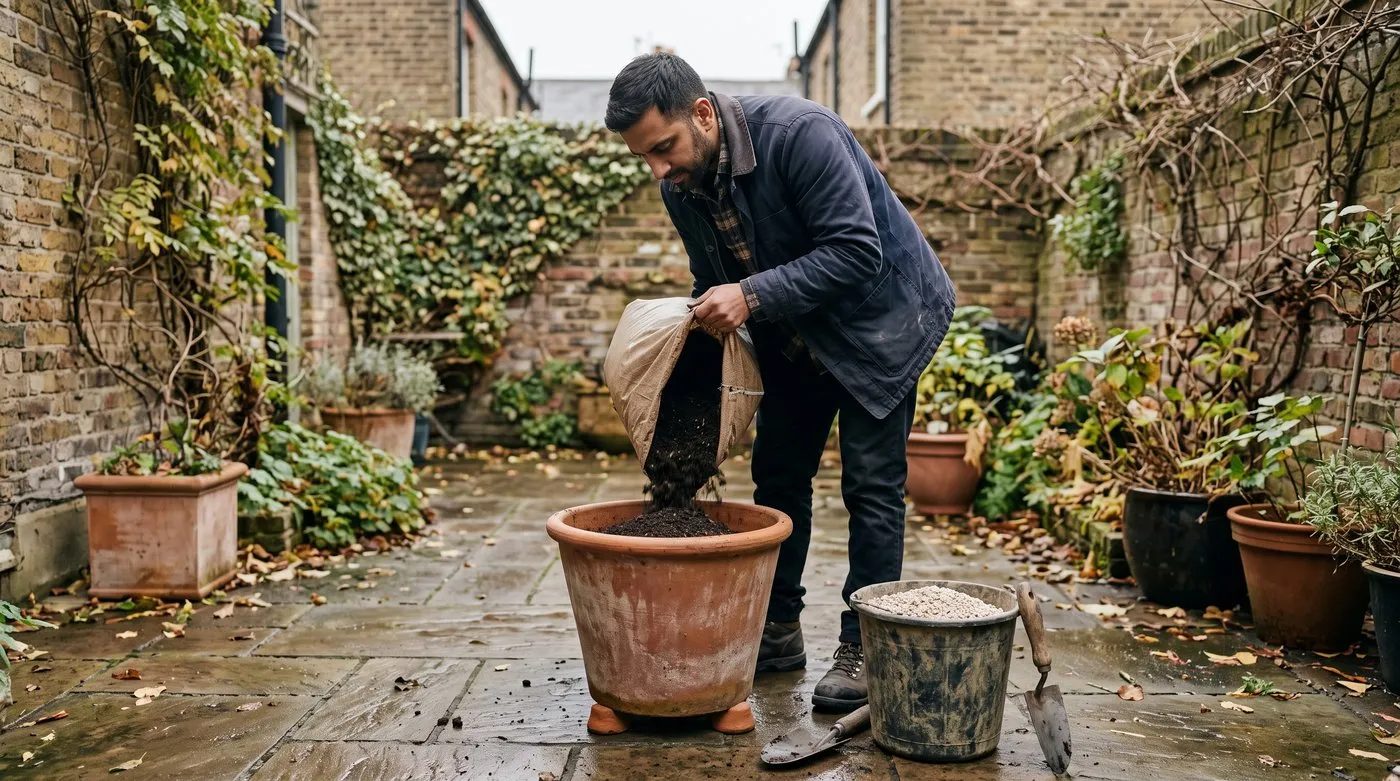
Put the pot in place first and raise it on feet. A full 50cm pot of loam-based compost is very heavy to move.
A good mix is roughly half John Innes No. 3, a third peat-free multipurpose and the rest horticultural grit. It’s heavy, which helps the pot stay put in the wind.
The plants: one evergreen, four perennials and bulbs
Plant everything in October or November. Put the evergreen and perennials in first, then tuck the bulbs into the gaps between them.
The evergreen
One small evergreen keeps the pot looking dressed in winter. Plant it towards the back.
- Box ball (Buxus sempervirens): the classic choice, but it can suffer from box blight and box tree caterpillar. Check it often in summer.
- Japanese holly (Ilex crenata): looks very like box and clips into a ball. See the guide to box alternatives for more.
- Dwarf mountain pine (Pinus mugo ‘Mops’): a slow, rounded little pine that needs no clipping.
The perennials
| Plant | What it gives | Season |
|---|---|---|
| Heuchera (such as ‘Lime Marmalade’ or a red-leaved type) | Bold coloured leaves | Most of the year |
| Black mondo grass (Ophiopogon planiscapus ‘Nigrescens’) | Spiky black leaves | All year |
| Geranium ‘Rozanne’ | Violet-blue flowers trailing over the edge | Early summer to autumn |
| Salvia ‘Hot Lips’ | Red and white flowers | Midsummer to autumn |
Plant the heuchera and mondo grass near the front where you can see their leaves. Put ‘Rozanne’ at the edge so it spills over. Salvia ‘Hot Lips’ goes towards the back. A compact catmint is a nice extra if you have room. In cold areas, move the pot somewhere sheltered in winter, as the salvia can be damaged by hard frost.
Heucheras in pots are a favourite of vine weevil grubs, which eat the roots. If a heuchera suddenly wilts and lifts out easily, check the compost. The vine weevil guide covers treatments, including nematodes.
The bulbs
Layer them between the perennials, biggest and deepest first. This is often called bulb lasagne.
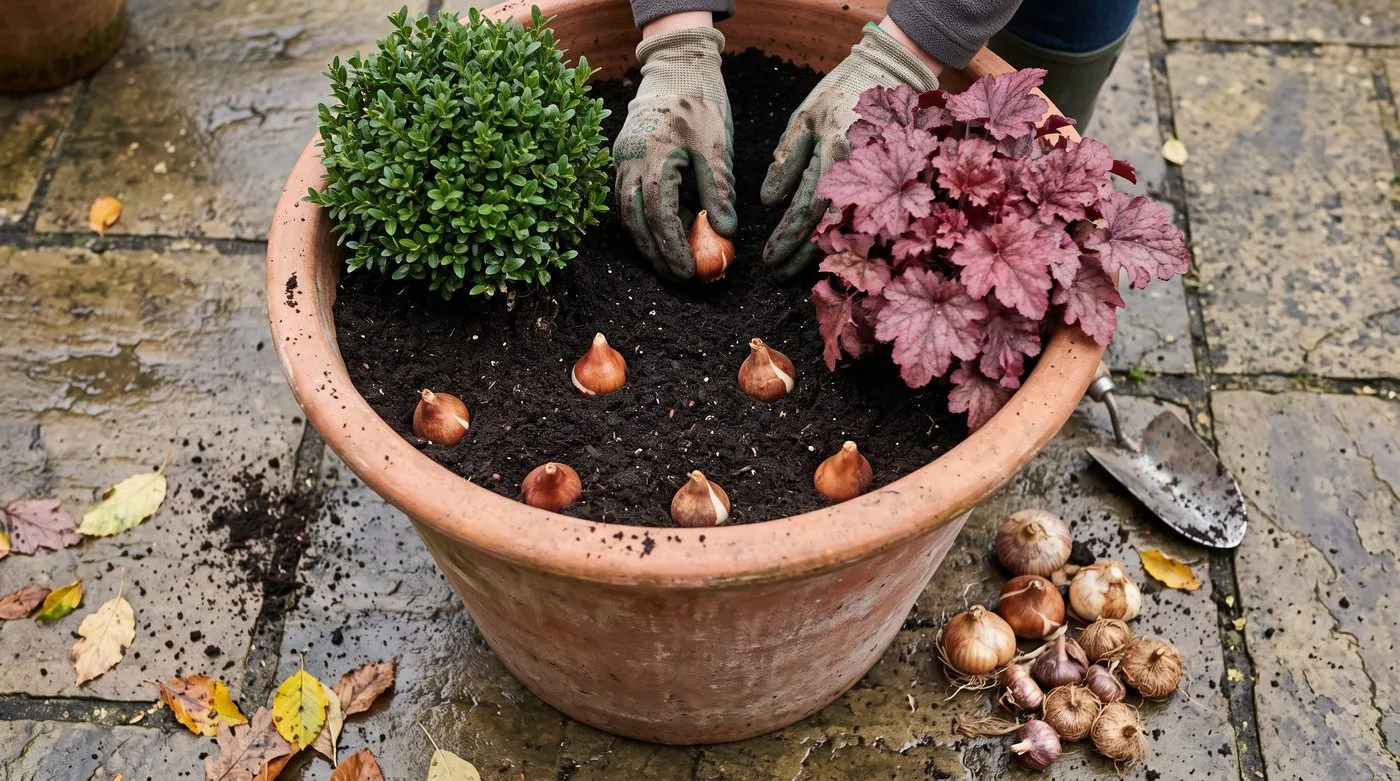
Plant the evergreen and perennials first, then tuck the bulbs into the gaps, tulips at the bottom.
- Bottom (about 20cm deep): 6 tulip ‘Ballerina’ and 6 tulip ‘Queen of Night’
- Middle (about 15cm deep): 5 Allium ‘Purple Sensation’
- Top (about 8-10cm deep): 12 crocus and 6 dwarf daffodil ‘Tête-à-tête’
Cover each layer with compost before adding the next. Shoots grow around the bulbs above them. The guide to bulb lasagne planting has more layering ideas.

Tulips ‘Queen of Night’ and ‘Ballerina’ in April. They come up through the perennials, which are only just waking up.
Pet note: Tulips, daffodils, crocus and alliums are toxic to dogs and cats, especially the bulbs. Catmint can also upset cats if they eat a lot. If you have a digger, cover the compost with grit or wire after planting.
What the pot looks like through the year
| Month | What’s showing |
|---|---|
| January | Evergreen ball, heuchera and black mondo grass |
| February | First crocus shoots and flowers |
| March | Crocus and ‘Tête-à-tête’ daffodils. Heuchera’s new leaves |
| April | Tulip ‘Ballerina’ opens |
| May | Tulip ‘Queen of Night’, allium buds rising |
| June | Allium ‘Purple Sensation’ flowers. ‘Rozanne’ starts |
| July | ’Rozanne’ and Salvia ‘Hot Lips’ in full flower |
| August | Salvia and ‘Rozanne’ carry on. Allium seedheads |
| September | Salvia and ‘Rozanne’ still going. Heuchera colours up |
| October | Last salvia flowers. Plant fresh bulbs |
| November | Allium seedheads, mondo grass and evergreen |
| December | Evergreen, mondo grass and heuchera leaves |

By July the bulbs have died back and Geranium ‘Rozanne’, Salvia ‘Hot Lips’ and catmint take over.

In autumn the allium seedheads and copper heuchera leaves keep things interesting. Leave the seedheads standing.
How to look after the pot each year
A few short jobs keep the pot going for several years.
| When | Job |
|---|---|
| March | Scrape off the top few centimetres of compost and replace with fresh. Add slow-release fertiliser. Cut back old salvia stems and tatty heuchera leaves |
| May to August | Water whenever the top of the compost is dry. Liquid feed every two weeks |
| June | Let bulb leaves die down naturally before tidying them away |
| July | Trim ‘Rozanne’ lightly if it gets straggly. Deadhead salvia |
| September to November | Stop feeding. Plant a few fresh tulips, as they often flower less after the first year |
| Winter | Raise the pot on feet. Water only if very dry. Check the box for blight |
After three or four years the pot will get crowded. In autumn, lift everything out, divide the perennials, refresh the compost and replant.

In winter the evergreen, heuchera and black grass hold the pot together while the bulbs sleep below.
Common mistakes with year-round pots
- Choosing a small pot. Under 50cm, compost dries out fast in summer and roots get colder in winter.
- Planting bulbs all at one depth. They flower together, then the show is over. Layer them.
- Overfilling. One evergreen and four perennials is plenty for a 50cm pot.
- Forgetting to water in winter and spring. Pots under eaves miss the rain. Check them even when it’s been wet.
- Feeding in autumn and winter. It pushes soft growth that frost damages.
Easy variations on the plan
- Shady spot: swap the salvia and ‘Rozanne’ for Brunnera ‘Jack Frost’ and a small hosta. Use Skimmia as the evergreen.
- For bees: keep ‘Rozanne’ and the salvia, and add a compact catmint.
- Kitchen pot: use a small bay as the evergreen, with thyme and chives around it.
- Winter colour: add cyclamen, pansies or violas in autumn for extra flowers. The guide to winter container planting has ideas.
Frequently asked questions
What size pot do I need for year-round planting?
Choose one at least 50cm wide and deep. A big pot holds more compost, so it dries out more slowly in summer and protects roots better in winter. Make sure it’s frost-proof and has drainage holes. Raise it on pot feet so water drains away freely.
How do I plant bulbs in layers in a pot?
Put the biggest bulbs deepest and the smallest near the top. Tulips go lowest, about 20cm down, then alliums, then crocus and dwarf daffodils about 8-10cm deep. Cover each layer with compost. The shoots find their way past each other and flower one after another.
Can I keep the same plants in a pot for years?
Yes, for a few years with a little care. Replace the top few centimetres of compost each spring, feed through summer and add fresh tulips in autumn. When the perennials get crowded, lift and divide them or repot the whole thing into fresh compost.
What perennials work best in a year-round pot?
Compact plants with a long season, like heuchera, black mondo grass and Geranium ‘Rozanne’. Salvia ‘Hot Lips’ gives late summer colour. Avoid big, deep-rooted perennials such as lupins and delphiniums. Pick evergreen or semi-evergreen plants to keep winter interest.
Do pots need feeding in winter?
No, feed from March to August only. Use a slow-release fertiliser in spring and a liquid feed every couple of weeks in summer for flowering plants. Feeding late in the year encourages soft growth that frost can damage.
How often should I water a large pot?
Check it every few days in summer and water when the top feels dry. Push a finger in, and if the top few centimetres are dry, it needs a drink. In hot spells that may be daily. In winter, water only if it’s very dry and never let it sit waterlogged. Rain often misses pots against a wall.
Once your first pot is planted, read the guide to grouping pots for impact to build a display around it. There are more ideas in the garden design hub.
Our team produces practical UK gardening guidance from source research, contributor records and established horticultural practice. Editorial standards are overseen by Matt W.