Key takeaways
- Only store sound, undamaged produce. Eat anything bruised or cut first
- Apples, pears and root crops like cool, slightly damp, frost-free places
- Onions, garlic and winter squashes need curing in the sun first, then a dry, airy store
- Keep potatoes in the dark, and keep apples away from potatoes and other veg
- Soft fruit, tomatoes and courgettes don't store, so freeze or preserve the surplus quickly
- Check every store regularly and pull out anything going soft
The secret to storing garden produce is simple: give each crop the conditions it likes. Some want cool and damp, some want cool and dry, and some won’t store at all and need freezing or preserving straight away.
This guide is your quick map of what keeps where, crop by crop. Each section links to a detailed guide if you want the full method for that crop.
Which crops store well and where?
Here’s the short answer for the most common UK crops.
| Crop | Store it | Conditions | Keeps for |
|---|---|---|---|
| Late apples and pears | Single layer on trays or racks | Cool, slightly damp, frost-free | Weeks to months, by variety |
| Carrots, beetroot, swede | Boxes of damp sand or compost | Cool, frost-free | Several months |
| Parsnips, leeks, kale | Leave in the ground | Lift as needed | Through winter |
| Maincrop potatoes | Paper or hessian sacks | Dark, frost-free, 5-10°C | Into spring |
| Onions, garlic, shallots | Strings, nets or slatted trays | Cool, dry, airy | Months once cured |
| Winter squashes | Dry shelf, not touching | 10-15°C, dry | Months once cured |
| Dried beans | Airtight jars | Cool, dark, dry | A year or more |
| Soft fruit, tomatoes, courgettes | Freeze or preserve | Within a day or two | Months frozen |
Two rules apply to everything. Only store perfect produce: bruised, cut or damp crops rot and spread trouble. And check your stores every week or two, pulling out anything going soft.
Apples and pears
Late apples and pears are the best fruit for storing. Early types such as Discovery don’t keep, so eat them fresh.
Store sound fruit in a single layer on slatted shelves or in shallow trays, not touching. Wrapping each apple in newspaper helps stop rot spreading. A cool, frost-free shed, garage or outhouse works well, ideally somewhere a little damp so the fruit doesn’t shrivel.
Keep apples well away from potatoes and other veg. They give off a ripening gas called ethylene, which can shorten the life of crops nearby. Pears need watching closely, as they go from hard to overripe quickly. The guide to storing apples and pears covers which varieties keep longest.

A single layer on slatted racks lets air move and makes it easy to spot a bad apple before it spreads.
Root vegetables
Carrots, beetroot, swede and turnips keep for months in boxes of damp sand or old compost in a cool, frost-free shed or garage. Twist off the leaves, leave the soil on, and lay the roots so they don’t touch.
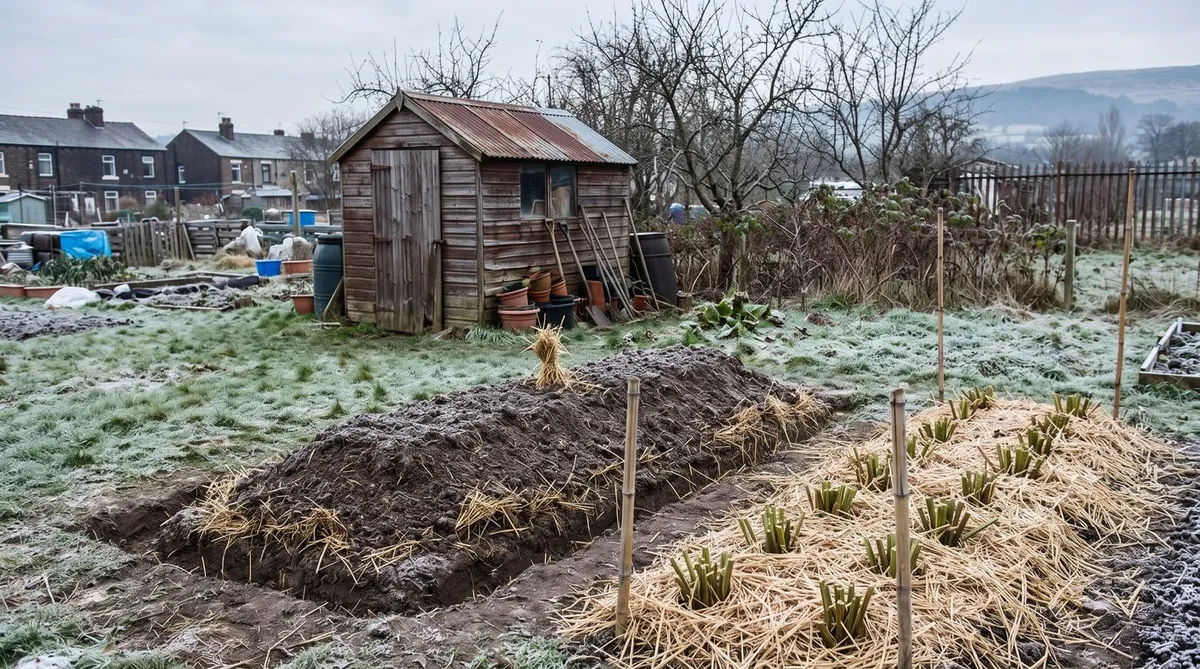
Parsnips and leeks are easier still. Leave them in the ground and lift them as you need them. Frost even sweetens parsnips. In very wet or cold areas, a thick layer of straw over the row makes lifting easier in a freeze.
For big crops, an outdoor clamp works too: a mound of roots layered with straw and covered with soil. The guide to storing root veg over winter shows how to build one and how to pack sand boxes.

A clamp is just straw and soil over a pile of roots. It’s cheap, and handy if you’ve grown more than the shed can hold.
Potatoes
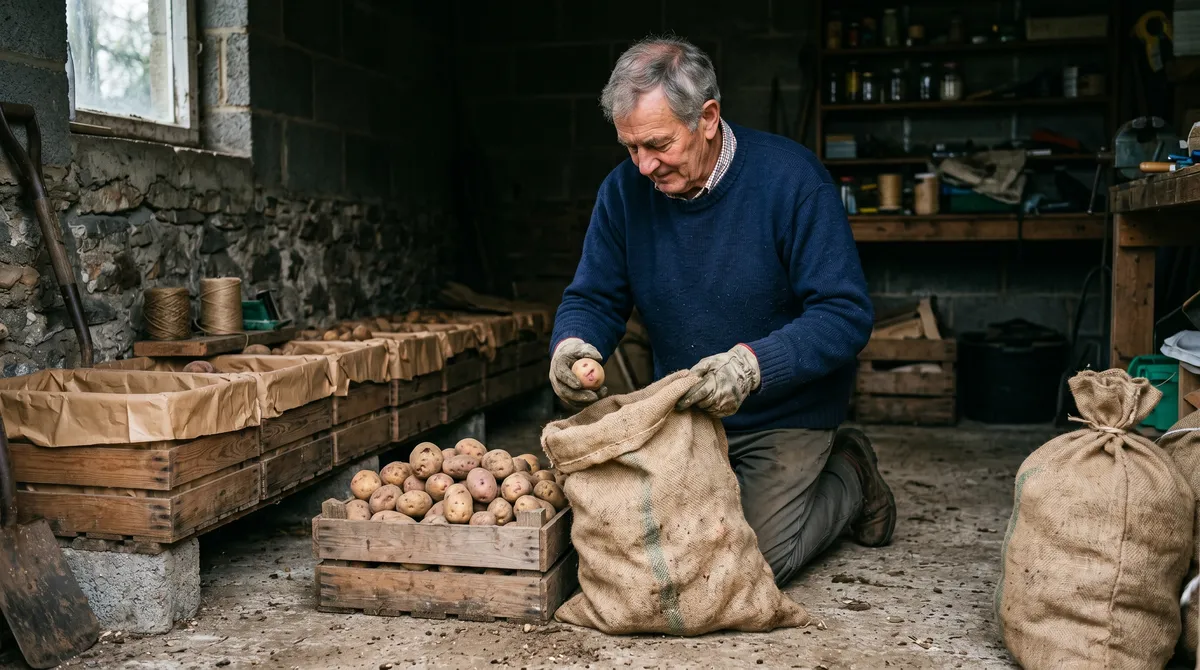
Maincrop potatoes keep into spring if they’re stored in the dark and kept frost-free. Light turns them green, and green potatoes are bitter and mildly toxic, so cut green bits off or throw them away.
Lift on a dry day and leave them on the surface for a few hours to dry. Sort out any damaged ones to eat first. Store the rest in paper or hessian sacks in a shed or garage at about 5-10°C. Too cold and they turn sweet; too warm and they sprout. Earlies don’t store well, so enjoy them fresh.
The full method, including which sacks work best, is in the guide to storing potatoes.
Onions, garlic and shallots
These keep for months, but only if they’re cured first. Curing means drying them until the necks are tight and the skins are papery.
Lay them out in the sun for a couple of weeks, or on a greenhouse bench or airy shelter if the weather turns wet. Then store them somewhere cool, dry and airy: plaited, in net bags, or in a single layer on slatted trays. A fridge or damp shed makes them sprout or rot.
Any with thick necks won’t keep, so use those first. The guide to storing onions, garlic and shallots covers curing, plaiting and which types keep longest.

Plaiting is a lovely way to store onions. They hang in the air and you can snip one off whenever you need it.
Winter squashes and pumpkins
Winter squashes such as butternut and Crown Prince store for months once cured. Summer squashes and courgettes don’t.
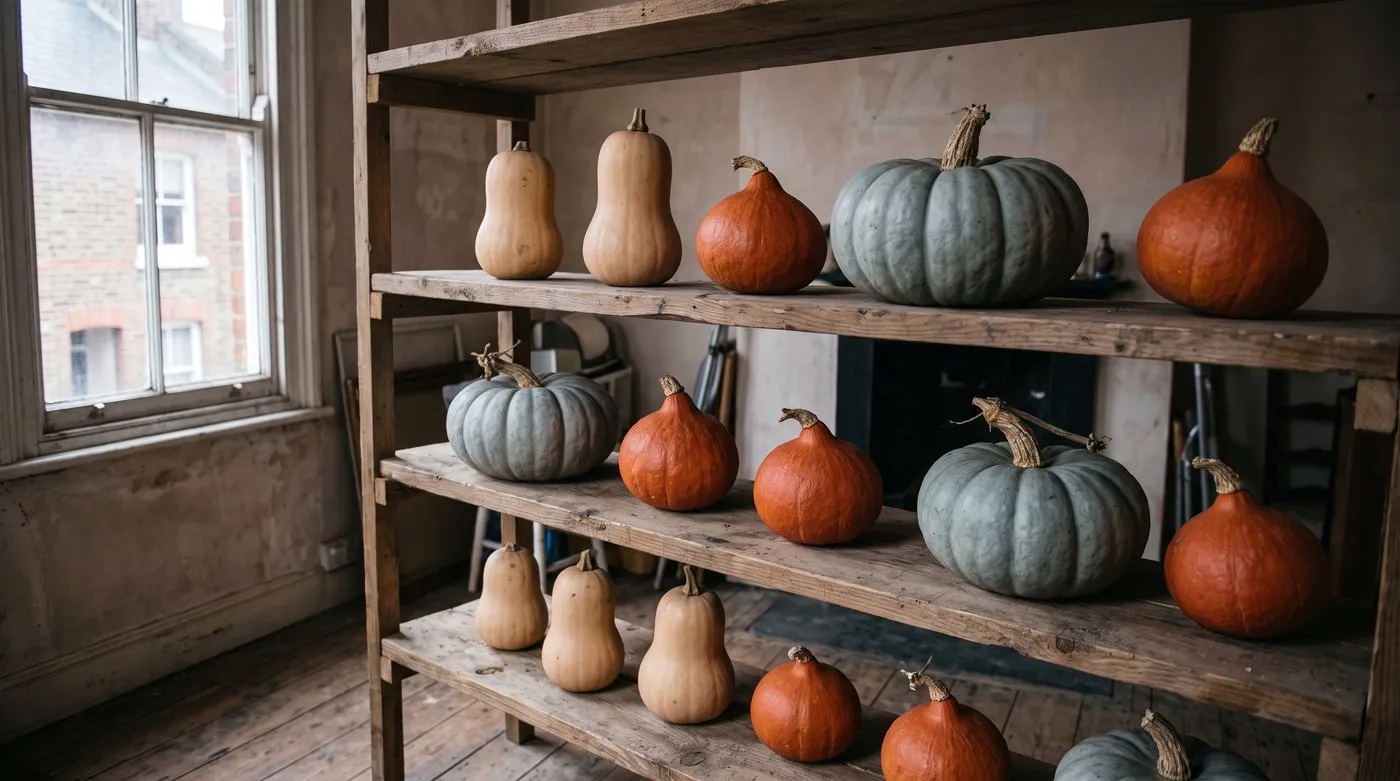
Cured squashes keep for months on a dry indoor shelf. Space them out so you can spot any soft patches.
Cut them with a few centimetres of stalk and leave them in the sun for about ten days, or in a greenhouse if the weather is wet. The skin hardens and should sound hollow when tapped. Then keep them on a dry shelf indoors, around 10-15°C, not touching each other. A spare room or dry hallway is ideal. A cold, damp shed is not.
Dried beans
Leave borlotti and other drying beans on the plant until the pods are papery and rattle. Pick them, finish drying the pods indoors, then shell the beans and dry them for another week or two. Store them in airtight jars somewhere cool and dark.
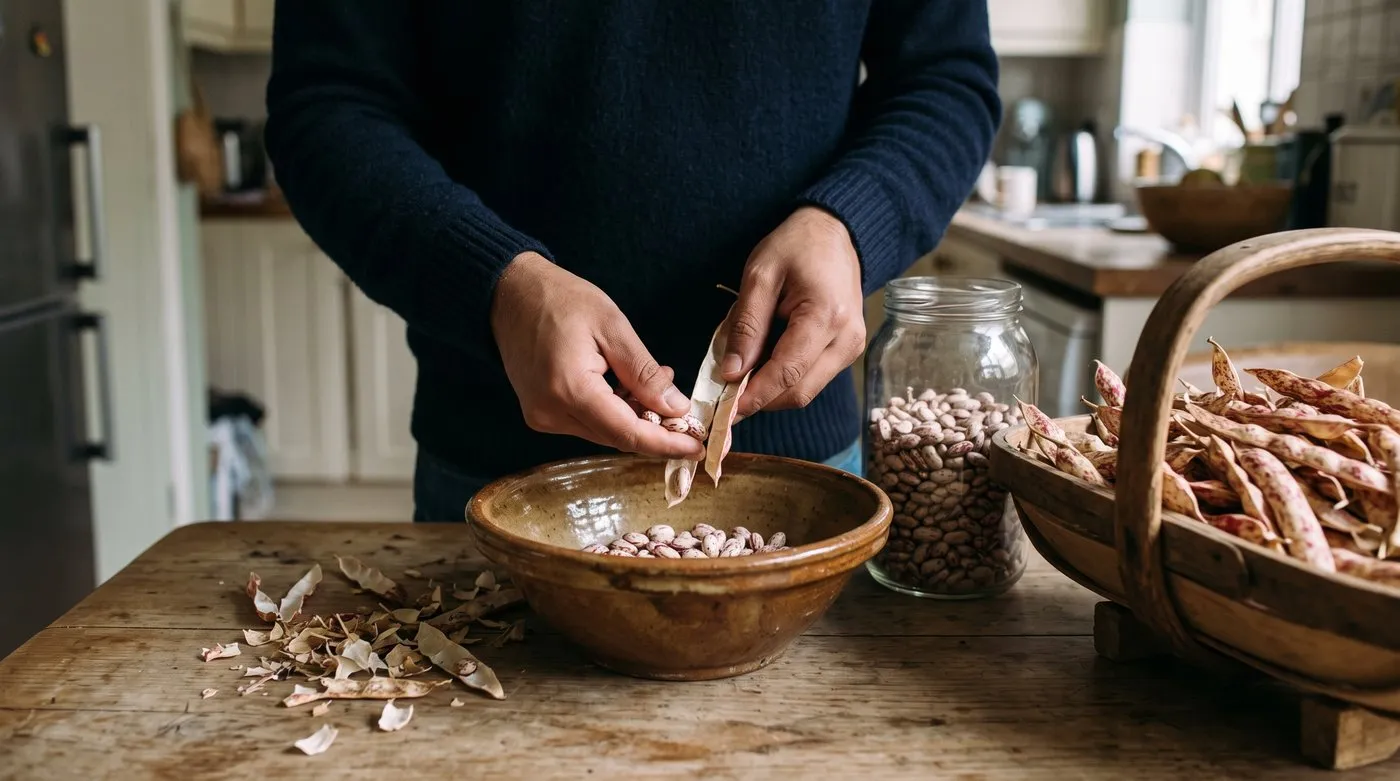
Once the pods are papery and rattle, borlotti beans shell out easily and keep for a year or more in a jar.
Safety: Soak dried borlotti and kidney beans, then boil them hard for at least 10 minutes before eating. Undercooked dried beans can make you ill.
The guide to drying beans and peas has the full method.
Brassicas and leafy crops
Most winter greens are best left growing. Kale, sprouts and winter cabbages stand in the ground for months, and you pick them as you go.
Firm white cabbages for storing can be cut in late autumn and kept in a cool, frost-free shed. Strip off loose outer leaves and set them on straw or slatted shelves, or hang them in nets. Check them often and peel off any leaves that start to rot.
Crops that need freezing or preserving
Some crops don’t keep fresh for long. Soft fruit, tomatoes, courgettes, runner and French beans, peas and sweetcorn are best eaten fresh or frozen within a day or two.
- Soft fruit such as raspberries can be spread on a tray, frozen, then bagged.
- Beans, peas and sweetcorn need a quick blanch first. The guide to freezing vegetables has blanching times.
- Tomatoes freeze well as sauce or whole for cooking.
- Jams, chutneys and pickles use up the rest.
Bottle fruit, jam and pickles only. Plain low-acid vegetables aren’t safe bottled at home in a water bath, so freeze them instead. The guide to preserving fruit and vegetables covers the safe methods.
Where to store produce at home
Most homes have a few useful spots. Match the crop to the space.
- Garage or brick shed: cool and frost-free in most winters. Good for apples, roots and potatoes. Watch it in hard frosts.
- Unheated spare room or hallway: dry and a bit warmer. Good for squashes and onions.
- Cold, damp shed: fine for roots in sand, not for onions or squashes.
- Fridge: short-term only, for a few days of salad, fruit or beans.
- Freezer: for everything that won’t store fresh.

A quick list of what’s stored where helps you eat things in the right order, before anything goes over.
Common storage mistakes
- Storing damaged produce. One soft apple or nicked potato can spoil those around it. Eat the damaged ones first.
- Washing before storing. Brush off soil instead. Wet skins rot.
- Skipping the curing. Onions and squashes that aren’t cured go soft within weeks.
- Mixing apples with veg. Keep them apart so the veg lasts longer.
- Forgetting to check. A quick look every week or two catches problems early.
Frequently asked questions
What is the best temperature for storing garden produce in the UK?
It depends on the crop, but most like it cool and frost-free. Apples, pears and roots like it just above freezing. Potatoes like about 5-10°C in the dark. Squashes prefer somewhere a bit warmer and dry, around 10-15°C.
Should I wash vegetables before storing them?
No, brush off loose soil and store them unwashed. Damp skins rot faster, and scrubbing can damage the skin. Wash them when you’re ready to cook.
How long will stored garden produce keep?
From a few weeks to several months, depending on the crop. Late apples, maincrop potatoes, onions and winter squashes can last well into winter or spring. Early varieties of most crops store poorly, so eat those first.
Can I store apples and onions together in the same shed?
It’s best to keep them apart. Apples give off a ripening gas that can shorten the life of nearby crops. Onions can also taint the flavour of apples. Use separate shelves at opposite ends, or separate stores.
Can I store vegetables in the fridge?
Only for a short time. A fridge is fine for a few days of salad, soft fruit or beans. Onions, garlic, squashes and potatoes keep better in their own cool stores.
What is the easiest way to preserve a glut?
Freezing is the easiest place to start. Most veg just need a quick blanch in boiling water, then a cold plunge before bagging. Soft fruit can go straight into the freezer.
Got more than you can store? Read our guide on how to use up a garden glut for quick ideas, and find more jobs in the how-to hub.
Our team produces practical UK gardening guidance from source research, contributor records and established horticultural practice. Editorial standards are overseen by Matt W.