Key takeaways
- Grow French tarragon for flavour; Russian tarragon is coarse and nearly tasteless
- Tarragon seed is almost always Russian, so buy French tarragon as a plant
- Sharp drainage matters most, as wet winter soil rots the roots
- Plant in spring in full sun, about 45cm apart, or in a gritty pot
- Cut whole stems to pick, and never take more than a third at once
- Lift and divide every three years or so to keep it vigorous
French tarragon is the tarragon to grow for cooking. It has a warm aniseed flavour that suits chicken, eggs, fish and creamy sauces. The catch is that there are two tarragons, and the one sold as seed is the one you don’t want.
This guide is about growing French tarragon well: spotting the real thing, giving it the sharp drainage it needs, getting it through a wet British winter and keeping the flavour strong. For an overview of other herbs, see the guide on how to grow herbs in the UK.
French or Russian tarragon: which should you grow?
Grow French tarragon. It has smooth, narrow, dark green leaves with a strong aniseed flavour and a faint numbing tingle when you chew a leaf. It rarely flowers or sets seed in Britain, so you have to buy it as a plant.
Russian tarragon is taller and coarser, with paler leaves. It’s very tough and seeds freely, but it tastes of almost nothing. Nearly all tarragon seed for sale is Russian.
| Feature | French tarragon | Russian tarragon |
|---|---|---|
| Flavour | Strong, warm aniseed | Very mild |
| Leaves | Smooth, narrow, dark green | Paler and coarser |
| Height | Medium, up to about 90cm | Taller |
| Seed | Rarely sets seed | Seeds freely |
| How to get it | Buy a plant, divide or take cuttings | Seed or plants |
| Toughness | Dislikes wet winters | Grows almost anywhere |
To check a plant before you buy, rub a leaf. French tarragon smells clearly of aniseed. Russian smells faintly grassy.

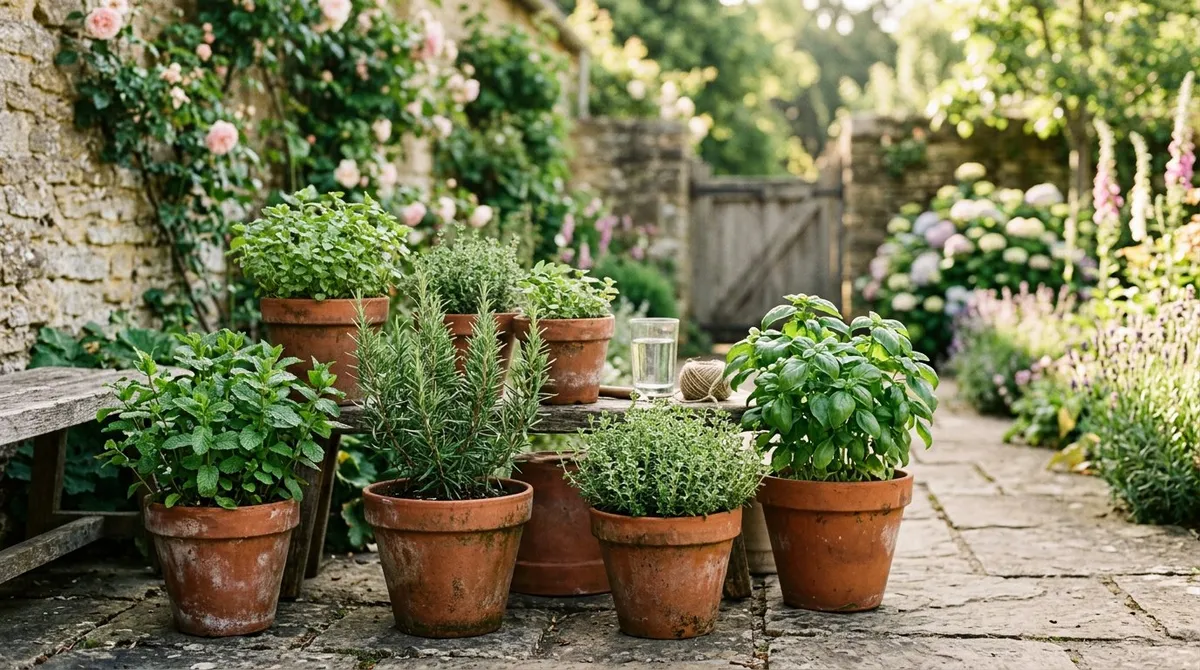
French tarragon (left) is neater and darker. Russian (right) is taller and paler, and has far less flavour.
Where to plant tarragon
Full sun and free-draining soil are what matter most. Tarragon copes with British cold far better than with wet roots. Soggy winter soil kills more plants than frost does.
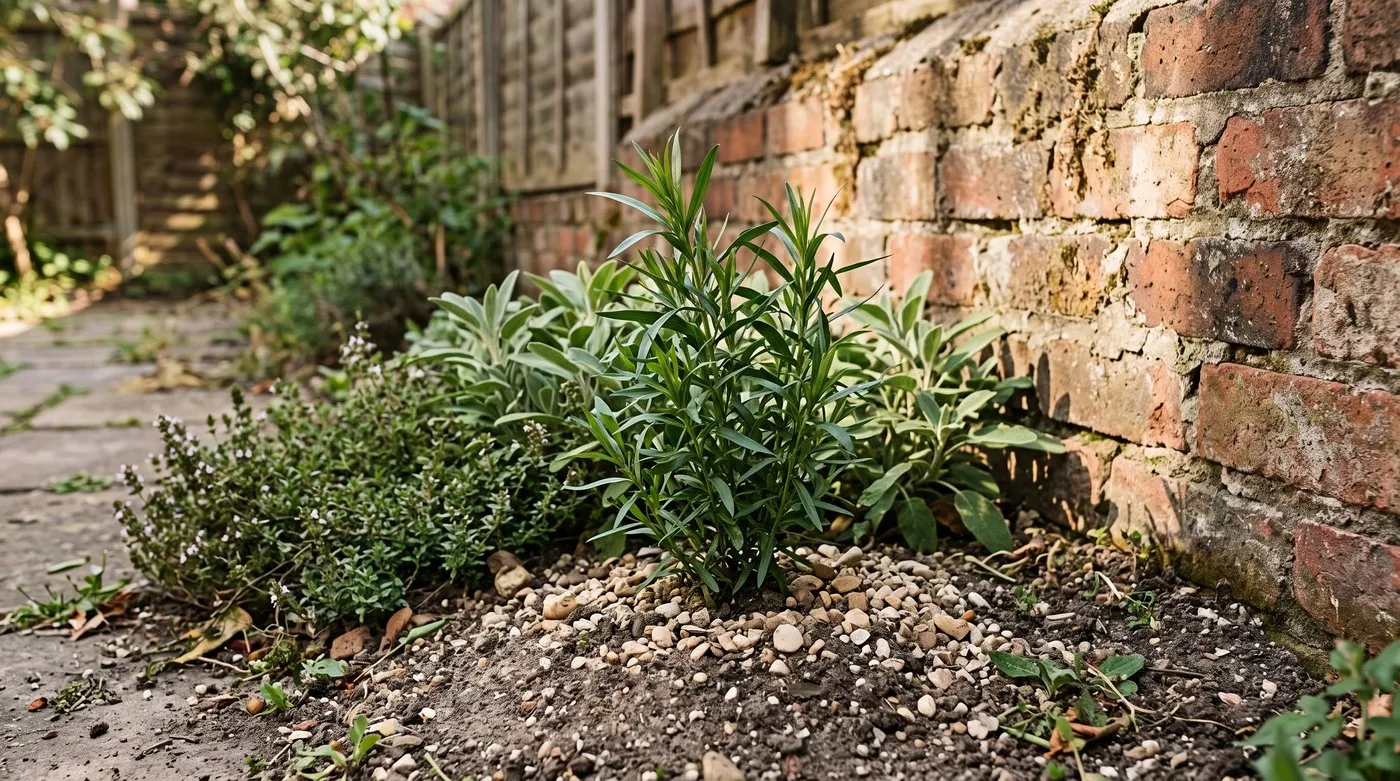
A sunny wall and a gritty mound keep tarragon’s roots warm and dry. That’s what gets it through winter.
Pick the sunniest spot you have, ideally against a warm wall. On heavy clay, plant in a raised bed or on a low mound with plenty of grit dug in. Or grow it in a pot.
Keep the soil lean. Rich, heavily composted ground gives big, soft leaves with less flavour. That makes tarragon a better fit for a sunny herb bed with thyme and sage than for a rich veg plot. Space plants about 45cm apart so air can move between them.
How to plant and look after tarragon
Plant in spring, from April to May. Water the pot well first. Plant at the same depth it was growing, firm gently and water in.
Water young plants in dry spells until they settle in. After that, tarragon needs little watering in the ground. Water only in long dry spells, and err on the dry side.
Feed lightly, if at all. A little general fertiliser in spring is plenty. Heavy feeding gives lush, bland growth.
A gravel or grit mulch round the base keeps weeds down and the crown dry. Avoid thick, wet mulches piled against the stems. The guide to what mulch is and how to use it explains the different types.
In autumn, once the stems die back, cut them down to near ground level.
Growing tarragon in a pot
A pot is often the easiest way to grow tarragon, especially on clay. You control the drainage and can move it somewhere sheltered for winter.
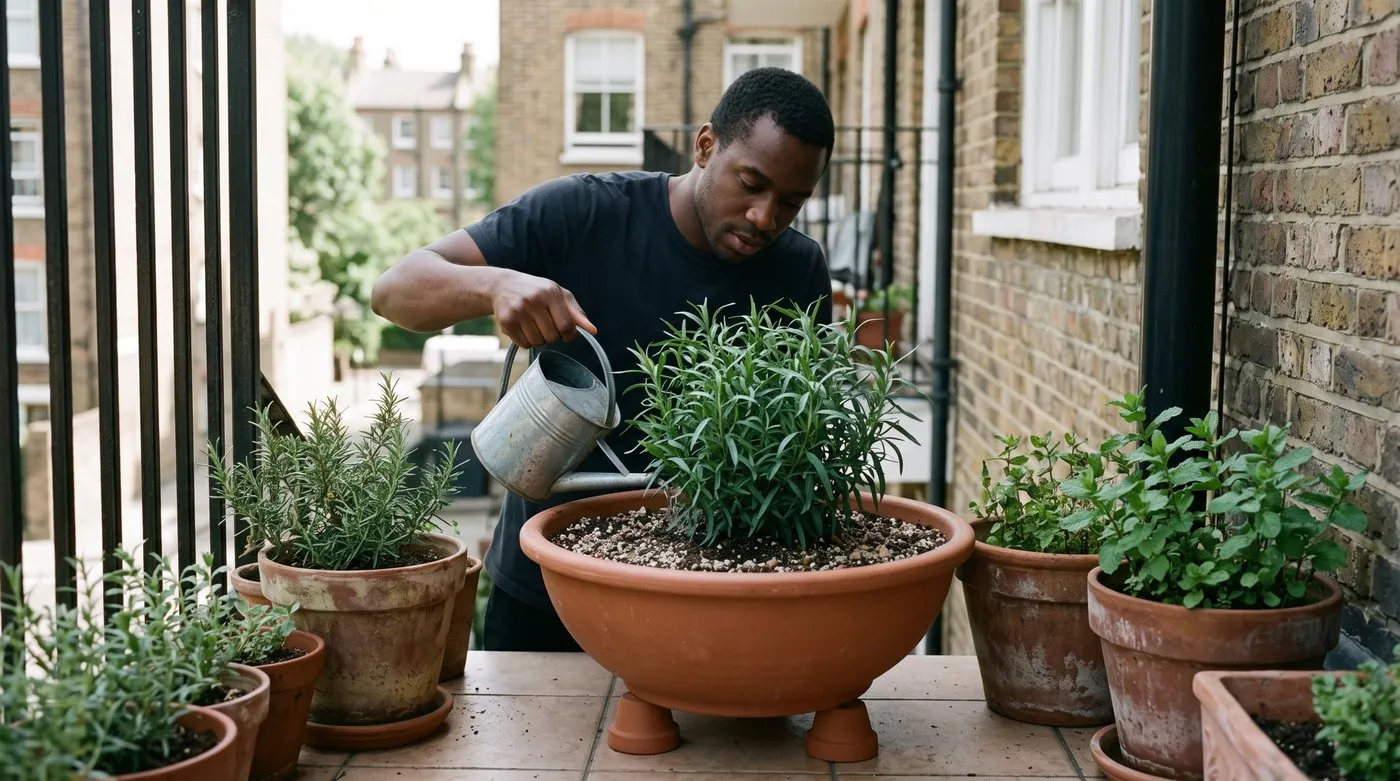
Pot feet let water drain away freely. Tarragon in a gritty pot is happy on a sunny balcony.
Use a pot at least 30cm wide with drainage holes. Fill it with peat-free compost mixed with plenty of horticultural grit. Terracotta is a good choice because it dries out between waterings. Water when the top few centimetres are dry, and feed lightly once or twice in summer if growth looks pale.
Stand the pot on pot feet so it never sits in water. Divide or repot every two or three years.
How to divide and propagate tarragon
Divide French tarragon every three years or so. Old clumps get crowded and lose vigour and flavour. Dividing them freshens the plant and gives you spares.
Divide in spring as new shoots appear. Lift the clump with a fork and pull it into pieces by hand, each with several shoots and good roots. Throw away the tired, woody centre. Replant the pieces at the same depth and water them in.

Pull the clump apart in spring so each piece has a few shoots and plenty of roots. Pot or plant them straight away.
You can also take softwood cuttings in late spring or early summer. Take short, non-flowering shoot tips, strip the lower leaves and push them into pots of gritty compost. Cover with a clear bag, keep them out of direct sun and they root in a few weeks. The guide to propagation by cuttings and division covers the method in more detail.
How to get tarragon through a UK winter
Keep the crown dry. French tarragon handles normal UK cold well in dry soil. It’s cold and wet together that kills it.
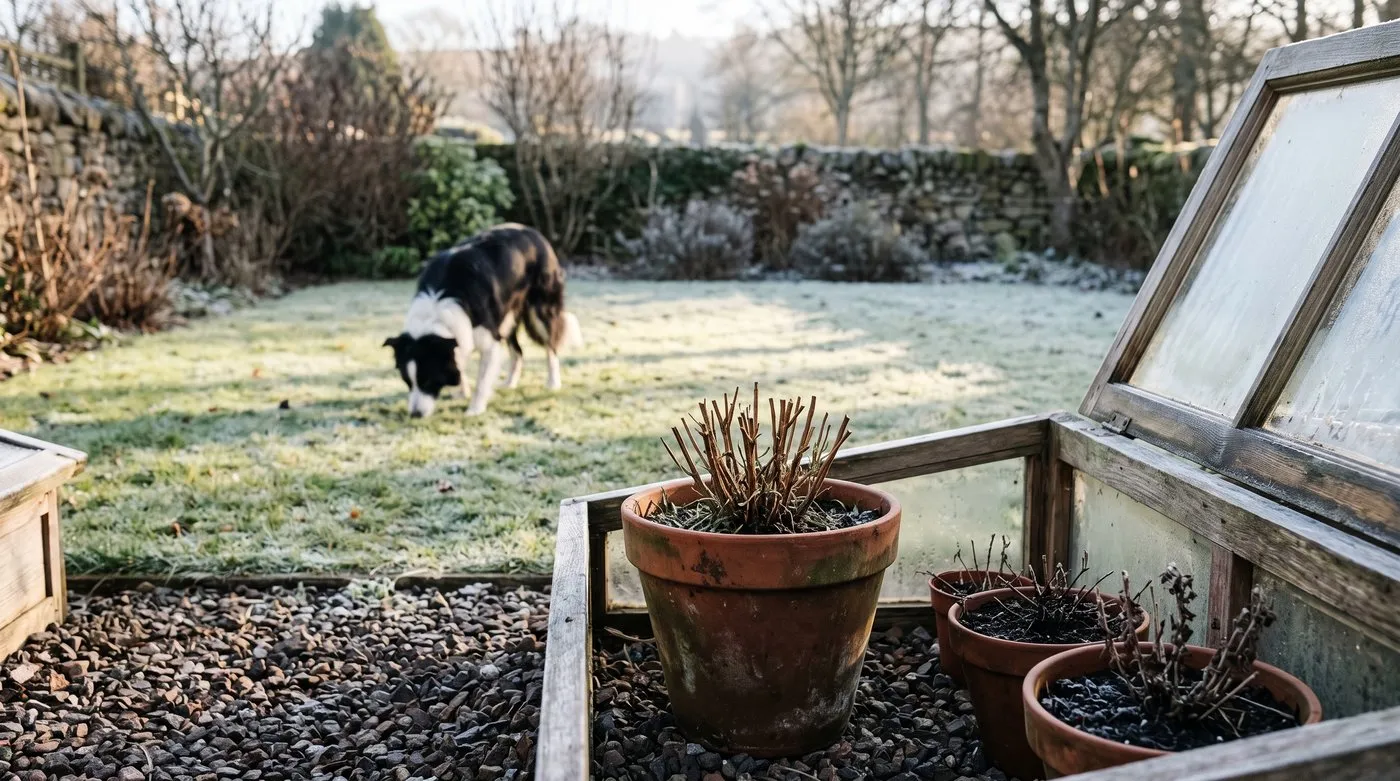
A cold frame keeps the rain off a potted tarragon over winter, which matters more than keeping it warm.
- In the ground: make sure the soil drains freely. On clay, grow it on a raised mound of gritty soil so the crown sits above standing water. In a hard cold spell, a loose layer of straw or fleece over the crown helps.
- In pots: move them against a sunny house wall, or into a cold frame or unheated greenhouse. Raise them on pot feet and water very little until spring.
The same “drainage first” rule helps lavender, rosemary and thyme survive wet winters too.
How to harvest tarragon
Pick from late spring to early autumn. Cut whole stems rather than stripping individual leaves. This keeps the plant bushy. Never take more than a third of it at once.
The young leaves at the stem tips have the best flavour. Ease off picking in early autumn so the plant can build up for winter.

Snip whole stems rather than single leaves. Regular picking keeps the plant bushy and full of fresh shoots.
How to use and store tarragon
French tarragon is one of the classic French fines herbes, alongside chervil, chives and parsley. Try it in béarnaise sauce, with roast chicken, in egg dishes, or chopped into a vinaigrette. It’s strong, so start with a little.
Tarragon loses much of its flavour when dried. Freezing keeps it better. Chop the leaves, pack them into ice cube trays, top up with water and freeze. The guide to freezing fresh herbs has other methods. You can also steep a few fresh sprigs in white wine vinegar for a couple of weeks to make tarragon vinegar.
Tarragon through the year
| Month | Task |
|---|---|
| March to April | Divide old clumps as shoots appear. Take the winter protection off |
| April to May | Plant new French tarragon. Start pots outside |
| May to June | Start picking. Take softwood cuttings |
| July to August | Keep picking whole stems. Water pots in dry spells |
| September | Ease off picking. Freeze the last leaves |
| October to November | Cut stems down once they die back. Move pots to shelter |
| December to February | Keep crowns dry. Cover with straw or fleece in hard frost |
Common tarragon problems and mistakes
Most tarragon problems come down to wet soil or the wrong plant.
- Buying seed: you’ll almost certainly get Russian tarragon. Buy a French plant instead.
- Root rot: yellowing, wilting and mushy roots in wet soil. Improve drainage before planting; once rot sets in, the plant rarely recovers.
- Rich soil and heavy feeding: big leaves, weak flavour. Keep it lean.
- Rust: orange-brown spots on the leaves in summer. Pick off affected leaves, thin crowded stems and water the soil, not the leaves.
- Slugs and snails: they go for young spring shoots. The guide to getting rid of slugs covers safe controls.
- Aphids: sometimes cluster on soft tips. Squash them or wash them off with a jet of water.
Unlike mint, which loves damp soil, tarragon wants to stay on the dry side. Group it with thyme and sage instead.
Frequently asked questions
What is the difference between French and Russian tarragon?
French tarragon tastes strongly of aniseed; Russian tarragon tastes of very little. French has smooth, narrow, dark green leaves and rarely sets seed. Russian is taller and coarser, with paler leaves, and seeds freely. For cooking, grow French.
Can I grow French tarragon from seed in the UK?
No, French tarragon rarely sets seed. Packets sold as tarragon seed are almost always Russian tarragon. Buy French tarragon as a young plant from a herb nursery or garden centre, and rub a leaf to check for that aniseed scent.
When should I plant tarragon in the UK?
Plant in spring, from April to May, once the worst frosts are over. Plants settle in well as the soil warms. Autumn planting is riskier, because a young plant can rot over a wet first winter.
How do I protect tarragon over winter?
Keep the crown dry above all. Grow it in very free-draining soil, on a gritty mound or in a pot. Move pots against a sunny wall or into a cold frame or unheated greenhouse. In cold spells, a loose layer of straw or fleece helps.
Why has my tarragon lost its flavour?
Old, congested plants and rich soil both dull the flavour. Divide the clump every three years or so and grow it in lean soil without heavy feeding. If it never had much flavour, it may be Russian tarragon.
How do I harvest tarragon without killing the plant?
Cut whole stems rather than stripping leaves. Never take more than a third of the plant at once. Regular picking from late spring keeps it bushy. Ease off in early autumn so the plant can build up for winter.
Can I grow tarragon in a pot?
Yes, and it’s often the best way on heavy soil. Use a pot at least 30cm wide with drainage holes, filled with compost mixed with plenty of grit. Water when the top few centimetres are dry, and keep it on the dry side in winter.
Once your tarragon is settled, read our guide on how to create a herb garden to plan a sunny bed around it, or browse more growing guides.
Our team produces practical UK gardening guidance from source research, contributor records and established horticultural practice. Editorial standards are overseen by Matt W.