Key takeaways
- Bay sucker is a tiny sap-sucking insect that only feeds on bay
- Curled, thickened, yellow leaf edges with white fluff inside are the giveaway
- It attacks soft new growth from late spring to late summer
- The damage looks bad but rarely harms a healthy bay
- Pick off curled leaves from May and bin them, not compost them
- Good light, moving air and natural predators keep numbers down
Bay leaves that curl over at the edges, go thick and turn yellow are almost always the work of bay sucker. It’s a tiny sap-sucking insect, a type of jumping plant louse, that lives only on bay. It looks alarming, but it rarely does a healthy plant any real harm.
If you grow a clipped bay in a pot by the door, you’ve probably met it. Here’s how to be sure, how to tell it from frost damage, and how to keep it in check without sprays.
What is bay sucker?
Bay sucker (Trioza alacris) is a small insect, about 2mm long, that feeds on bay sap. The pale greenish adults hold their wings like a little roof over their back and jump when disturbed. They’re easy to miss.
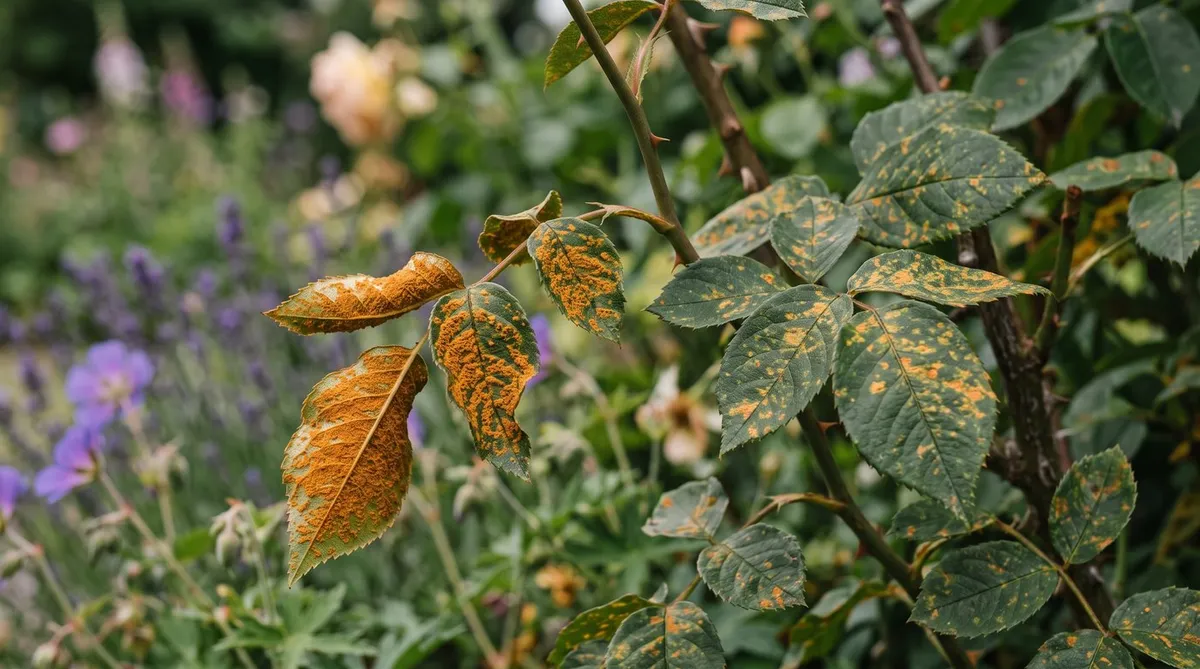
The young, called nymphs, do the damage. They feed on soft, new leaves, which makes the edges grow unevenly. The margin thickens, rolls over and turns yellow. Fold back a curled edge and you’ll find the nymphs, flat and cream-coloured, hidden under white waxy fluff.

The adult bay sucker is tiny and jumps when disturbed. You’re far more likely to notice the curled leaves than the insect.
How to identify bay sucker damage
Look for curled, thickened, pale yellow leaf edges on new growth, with fluff and nymphs underneath. Often only one side of a leaf is affected, giving it a lopsided look. Later in the season the curled parts dry out and go brown.
The damage shows on the soft spring and summer growth at the tips, not on the tough older leaves lower down. A bay that’s ragged at the tips in July but fine further in is a classic sign.
Bay leaves go wrong in several ways, so check this table before you act.
| What you see | Most likely cause | When | Clue |
|---|---|---|---|
| Curled, thick, yellow leaf edges and white fluff | Bay sucker | Late spring to late summer | Nymphs and fluff inside the curl |
| Brown leaves or tips, no curling | Frost or cold wind | Winter and early spring | No insects, worst on the exposed side |
| Brown tips and edges, leaves dropping | Too dry or too wet at the roots | Any time | Compost bone dry or soggy |
| Sticky leaves, black mould, brown bumps on stems | Scale insects | Spring to autumn | Bumps that don’t move |
| White fluff in leaf joints | Mealybug | Mostly indoors or under glass | Fluff in joints, not leaf edges |
| Yellowing all over, oldest leaves first | Hunger or poor drainage | Spring and late summer | Even yellowing, no curling |

Open up a curled edge and you’ll find the nymphs sheltering under white fluff. That’s how you know it’s bay sucker.
Is it bay sucker or frost damage?
Season and leaf shape tell them apart. Frost and cold, drying winds brown bay in winter and early spring. Leaves go brown at the tips or all over, worst on the side facing the wind. The leaf stays flat, and there’s nothing living on it. Cold damage often shows up a few weeks after the cold snap, which catches people out.
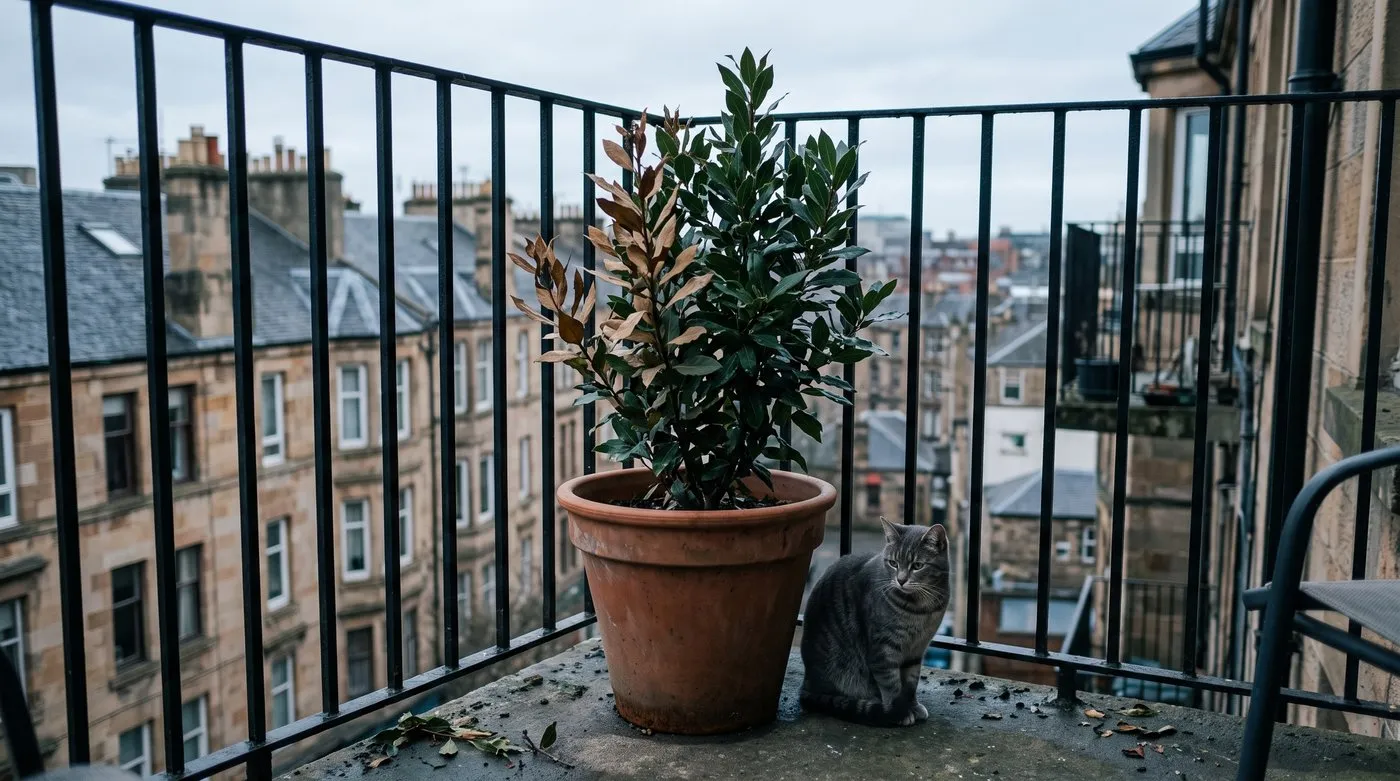
Frost and cold wind turn bay leaves brown and flat on the exposed side in late winter. No curling and no fluff means it isn’t bay sucker.
Bay sucker is a warm-weather pest. It needs soft new growth, so it appears from late spring. The edges curl and pucker rather than simply browning, and the fluff and nymphs are there if you look.
If your bay browned over winter, give it more shelter next year. Our guide on how to overwinter plants explains how.
How to control bay sucker without sprays
Picking off the curled leaves is the best control, and it costs nothing. The nymphs live inside the curl, so removing the leaf removes them.
- Pick and snip from May. Take off curled, fluffy leaves and the worst shoot tips. Check every week or so in early summer.
- Bin the leaves. Don’t compost them, or the nymphs may find their way back.
- Give it light and air. Move pots out of still, shady corners into a brighter, breezier spot. Turn the pot now and then.
- Feed gently. Lots of fertiliser pushes soft, sappy growth that bay sucker loves. A light feed in spring and summer is plenty.
- Welcome predators. Ladybirds, lacewings, small parasitic wasps and birds all eat bay suckers.
If you’re shaping a standard, clip off damaged tips as part of a normal trim. Our guide on how to trim topiary covers bay.
Sprays are rarely worth it. Many insecticides aren’t approved for herbs you’ll cook with, and they kill the helpful insects too. The same easy-going approach works for aphids and many other sap-suckers.

Picking off the first damaged leaves in May removes the nymphs before they build up.
How to keep a potted bay healthy
A bay growing strongly in good light is far less troubled than a stressed one in deep shade. Good container care is most of the battle.
- Repot every two or three years in spring, using a loam-based compost such as John Innes No. 3 with extra grit.
- Stand the pot on feet so winter wet drains away.
- Water evenly in summer so the compost never dries out or stays soggy.
- In autumn, clear fallen leaves from the pot and saucer, where adults like to shelter over winter.
Our guide on how to grow bay trees has the full picture on potting, feeding and winter care.

Good light and moving air, like this open courtyard, keep a bay strong enough to shrug off a few curled leaves.
Should you worry about bay sucker?
Almost never. On an established bay, it’s a seasonal nuisance that comes and goes, and the plant carries on growing. Pick early, keep the plant well grown and accept a few curled leaves in midsummer.
It’s worth more effort on a very young plant or a prized clipped standard, where damage stands out. The RHS page on bay sucker has more pictures if you want to compare.
Common mistakes with bay sucker
- Mistaking it for frost. Frost browns leaves in winter. Curled, yellow edges in summer are bay sucker.
- Composting picked leaves. Bin them instead.
- Feeding hard to “help” the plant. Soft, sappy growth makes things worse.
- Spraying a culinary bay. It’s rarely needed, and it harms the predators that help.
- Leaving the pot in a still corner. Better air and light make a real difference.
For more ways to deal with garden pests, browse our pest control hub.
Frequently asked questions
What does bay sucker damage look like?
Leaf edges curl over, thicken and turn pale yellow. Inside the curl you’ll find small cream nymphs and white waxy fluff. The curled parts later dry to brown. It shows on new growth at the shoot tips.
Will bay sucker kill my bay tree?
No, it very rarely harms a healthy bay. It spoils the look of the new leaves but doesn’t usually weaken the plant. A well-watered, well-fed bay grows through it.
How do I get rid of bay sucker?
Pick off and bin curled leaves as soon as you see them. Snip out badly affected tips, move potted bays into brighter, airier spots and avoid heavy feeding. Ladybirds, lacewings and birds eat the nymphs.
Is it bay sucker or frost damage?
Look at the season and the leaf edges. Bay sucker curls and yellows leaf edges in summer, with fluff inside. Frost and cold wind brown whole leaves or tips in winter and early spring, with no curling and no insects.
Why does my potted bay get bay sucker every year?
Sheltered, still spots suit it best. The adults overwinter close by and move onto new growth each spring. Better light and airflow, picking early and clearing fallen leaves in autumn all help.
Can I still cook with bay leaves that have bay sucker?
Use clean, undamaged leaves. Bay sucker doesn’t make bay unsafe, but curled leaves are tough and messy. Pick the healthy older leaves, and avoid any plant you’ve sprayed with a product not approved for edible crops.
Now you can spot bay sucker, read our organic pest control guide for more gentle ways to protect your plants.
Our team produces practical UK gardening guidance from source research, contributor records and established horticultural practice. Editorial standards are overseen by Matt W.