Key takeaways
- Black streaks on stems and white spores under leaves, with no insects, mean box blight
- Silk webbing, droppings and green-and-black caterpillars mean box tree moth
- Box blight can't be cured, only managed by cutting out, clearing leaves and better airflow
- Box tree moth can be beaten if you catch it early and check every couple of weeks
- No pests or spores? Look at drainage, root rot, drought, wind and dogs instead
- If the hedge fails two seasons running, replacing it with a box lookalike is often wiser
Most box hedges that are dying in UK gardens have box blight, box tree moth, or both. From the path they look alike, with brown, thinning patches. Up close they’re very different, and they need different fixes.
This guide is about working out what is wrong. It walks you through a one-minute check, the less obvious causes like wet roots and scorch, and when it’s time to give up and replant. Once you know the cause, you can act fast and stop wasting a season on the wrong treatment.
Box blight or box tree moth? The one-minute check
Look at the stems and the undersides of the leaves. That single check tells the two main causes apart.
Box blight is a fungal disease. Look for:
- Brown or bronze patches of dead leaves, often starting low down or deep inside
- Bare, straw-coloured twigs where leaves have dropped
- Dark brown to black streaks running along the green stems
- White fuzzy spores on leaf undersides after warm, wet weather
- No insects, no webbing, no droppings
Box tree moth is a caterpillar pest. Look for:
- Green caterpillars with black stripes and shiny black heads, up to about 4cm long
- Fine white silk webbing binding the twigs together
- Crumbly yellow-green droppings caught in the webbing
- Leaves chewed to skeletons rather than browned evenly
- Very fast damage, sometimes a whole plant stripped within weeks
Caterpillars or webbing mean the moth. Black stem streaks and white spores with no insects mean blight. A badly hit hedge can have both at once, so check for each.

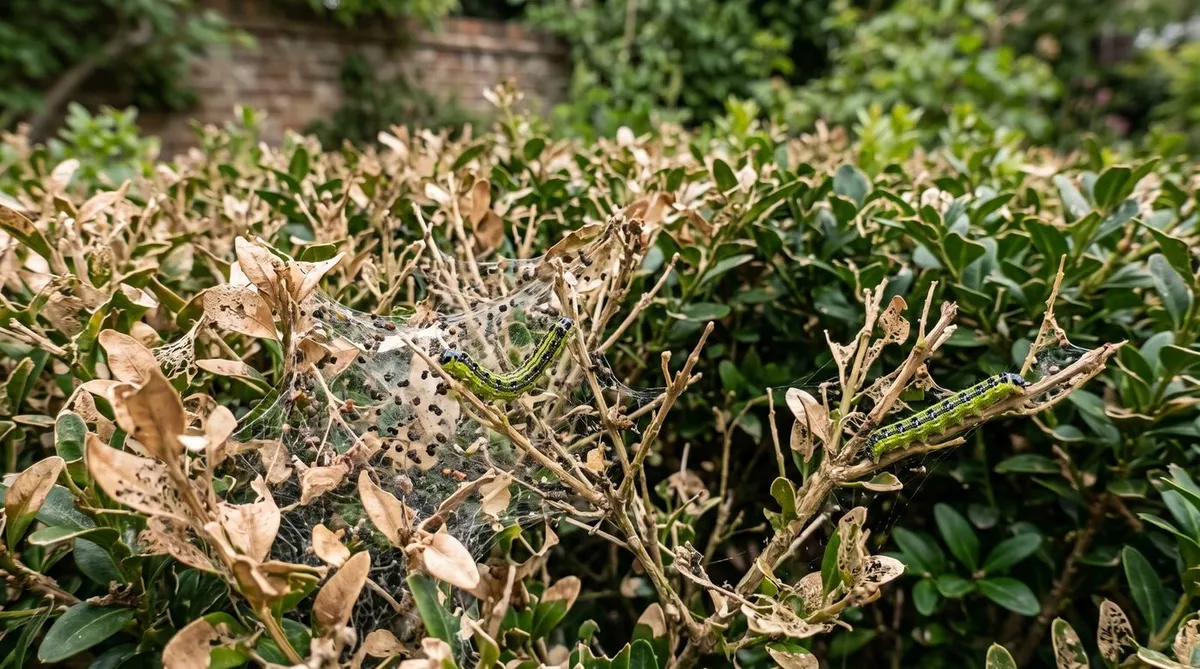
Blight on the left, moth on the right. Blight browns the leaves evenly, while the moth chews them away and wraps the twigs in silk.
How to recognise box blight
Box blight usually starts as brown leaves low down or inside the hedge, where air moves least. It spreads fastest in warm, humid weather from May to September.
Leaves fall and leave bare twigs behind. Look along an affected green stem for dark streaks. After a muggy night, turn a leaf over and look for white spores. Those two signs separate blight from ordinary winter damage.
Spores spread on rain splash, wind, shears, boots and new plants. They can survive in fallen leaves for several years. That’s why tight, dense, formal box that stays damp inside suffers most.
| Sign | Box blight | Winter cold damage |
|---|---|---|
| When it shows | May to September, warm and wet | After hard frost or cold wind |
| Stems | Black streaks | No streaks |
| Leaf undersides | White spores in damp weather | Nothing |
| Pattern | Spreads through the plant | Worst on exposed faces |
| Recovery | Often comes back | Usually reshoots in spring |
The RHS box blight page has more photos to compare against your plant.

Black streaks on a green stem are the giveaway for box blight. Winter scorch browns leaves but leaves the stems clean.
How to spot box tree moth damage
You’ll rarely see the adult moth, a white moth with a brown edge to its wings. You’ll see the caterpillars and their webbing instead.
They feed inside the bush, so part the outer leaves and look in. They eat the leaves first and then strip the green bark, which kills whole stems. There are two or three broods a year, so damage can appear from spring right through to autumn. Webbing and droppings give them away even when the caterpillars are hiding.
For trapping, picking, nematodes and timing, read the full box tree moth treatment guide.

Part the outer leaves and look inside. Caterpillars hide deep in the webbing, often with piles of droppings around them.
Other reasons a box hedge goes brown
Not every dying box hedge has blight or moth. If you find no caterpillars, no webbing, no stem streaks and no spores, check these.
Waterlogging. Box hates wet feet. Sodden clay drowns the roots, and the whole plant browns evenly from the base up. It often shows after a wet winter. The guide to improving clay soil helps if this is the cause.
Phytophthora root rot. This soil-borne disease rots the roots, so the plant wilts and browns from the bottom. Dead roots are dark and soft. There’s no cure, so remove the plant and fix the drainage. The Phytophthora root rot guide explains the signs.
Drought and wind scorch. New plants and exposed faces brown in dry, windy spells. The damage sits on the windward side, not deep inside. Water well and they often recover.
Dog urine. A favourite spot browns one low end of a hedge, usually beside a path or gatepost.

One brown patch at dog height beside a path points to urine or scorch, not blight. Blight tends to spread through the plant.
What to do once you know the cause
Match the fix to the diagnosis. Each one needs a different approach.
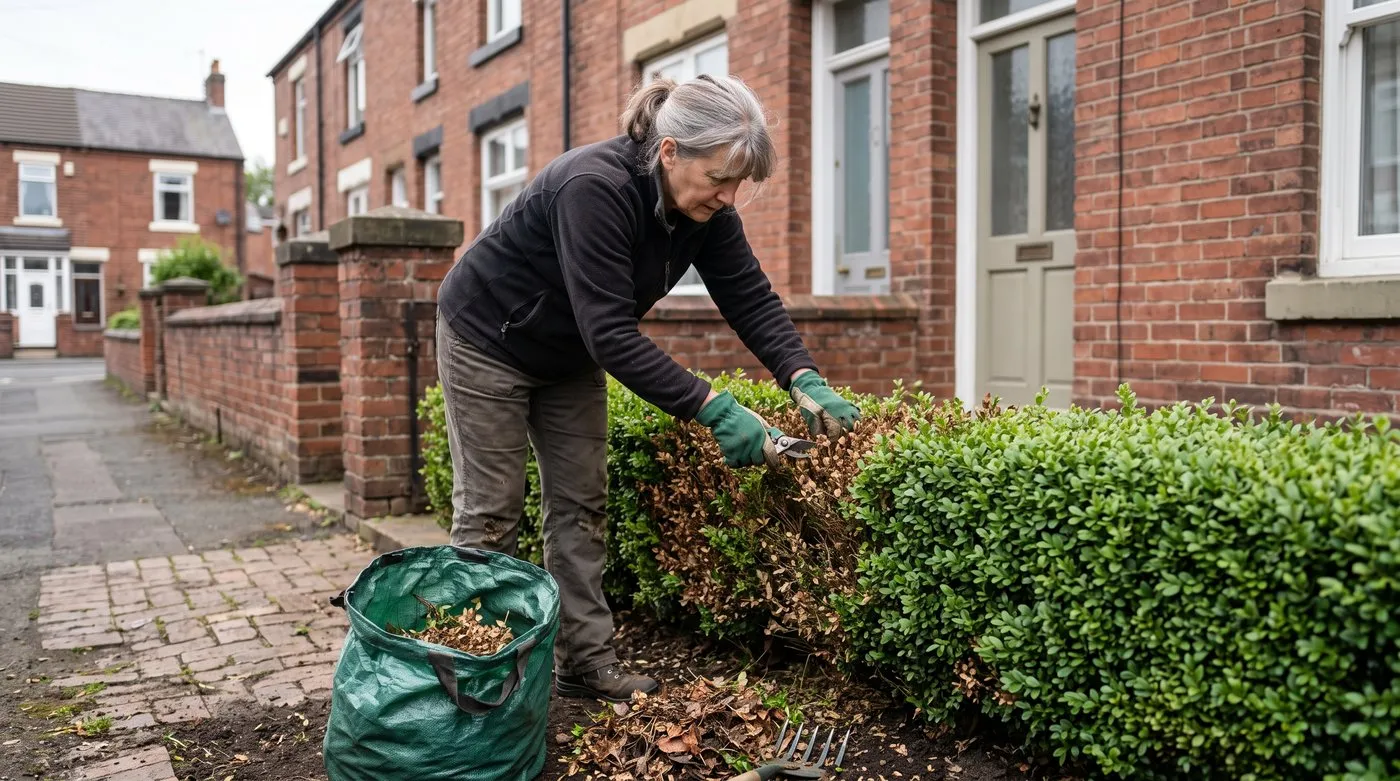
Cut back into healthy green wood on a dry day and bag every clipping. Blighted bits on the compost heap just spread the spores.
For box blight:
- Cut out affected growth in dry weather, back into healthy green wood
- Rake up and bin every fallen leaf from under the hedge
- Bag the clippings for the council green bin, never the compost heap
- Clean your shears with garden disinfectant between plants
- Thin the hedge a little so air moves through and leaves dry faster
- Clip less tightly, as a looser hedge dries quicker
For box tree moth:
- Check inside the hedge every couple of weeks from spring to autumn
- Pick off caterpillars by hand and squash them
- Cut out and bag heavily webbed sections
- Use a pheromone trap from spring to show when moths are flying
Warning: Before cutting out big sections in spring or summer, check for nesting birds. Disturbing an active nest is an offence.
If you’d rather use a product, choose one approved for box tree moth or box blight on ornamental plants and follow the label exactly.
When to give up on box and replant
Treat a single mild attack caught early. Replace the hedge after repeated failures.
If blight comes back two seasons running, or the moth keeps returning despite regular checks, the odds are against you. Blight spores linger in fallen leaves for years, so new box in the same spot often fails too. Ilex crenata is the closest lookalike and isn’t affected by either problem. The guide to box hedge alternatives compares eight options for different soils and looks.
How to keep a healthy box hedge healthy
A simple routine gives box its best chance. Clip in a settled dry spell, never in damp weather, and clean your tools between plants.
Feed in spring with a balanced fertiliser and mulch to hold moisture, keeping the mulch off the stems. Clear fallen leaves from the base, where blight spores overwinter. Check inside the hedge for caterpillars every couple of weeks from spring. The guide to growing box covers soil, planting and feeding, and the topiary trimming guide explains clipping times.

This is what you’re aiming for. Dense, glossy green right through, with no brown patches or bare twigs inside.
Common mistakes with a dying box hedge
Treating before diagnosing. Moth and blight need opposite fixes, so check stems and webbing first.
Clipping in wet weather. Fresh cuts on damp foliage are an open door for blight.
Leaving fallen leaves. Spores overwinter in the leaf litter and reinfect the hedge next summer.
Composting clippings. Diseased clippings spread blight around the garden. Bag them instead.
Replanting box in the same spot. After blight, choose a different plant there.
Box hedge problem calendar
| Month | What to check or do |
|---|---|
| January | Check for waterlogging after heavy rain |
| February | Look for winter scorch on exposed faces |
| March | Clear fallen leaves from the base |
| April | Start checking inside for caterpillars. Put out a pheromone trap |
| May | Watch for blight in warm, wet spells |
| June | Clip in dry weather after checking for nests. Pick off caterpillars |
| July | Peak blight risk. Cut out infected growth on dry days |
| August | Check for the next moth brood and fresh webbing |
| September | Final dry-weather clip. Keep checking for caterpillars |
| October | Clear all fallen leaves and debris from the base |
| November | Mulch the roots, keeping it off the stems |
| December | Plan replacements where problems keep coming back |
Frequently asked questions
Why is my box hedge going brown and dying?
Usually box blight or box tree moth caterpillars. Blight gives brown patches, bare twigs and black streaks on the stems, with white spores under leaves in humid weather. The moth strips leaves fast and leaves fine webbing and green droppings. Check the stems and leaf undersides to tell them apart.
How do I tell box blight from box tree caterpillar?
Look for webbing and caterpillars. Box tree moth leaves silk webbing, green-and-black caterpillars and crumbly green droppings among the stems. Box blight has no insects at all, just brown leaves, black stem streaks and white spores on leaf undersides after warm, wet spells.
Can box blight be cured?
No, but you can often keep it in check. Cut out affected growth in dry weather, clear fallen leaves, open up the hedge so it dries faster and clean your shears between plants. Badly hit hedges that keep getting reinfected are usually best replaced.
Should I replace my box hedge or try to save it?
Try to save it after one mild attack; replace it after repeated failures. If blight comes back two seasons running, or the moth keeps returning despite regular checks, the odds are against you. Ilex crenata gives a similar clipped look and isn’t troubled by blight or the moth.
What is killing my box if there are no caterpillars or spots?
Most likely wet roots, root rot, drought or scorch. Sodden soil and Phytophthora root rot brown the whole plant from the base. Drought, cold wind and dog urine brown foliage in patches. Check drainage and exposure before blaming a disease.
Will a box hedge grow back after going brown?
Often yes, if the stems are still green under the bark. Scratch a stem with a thumbnail. Green means alive, so cut back to that point and feed in spring. Brown, brittle stems are dead and won’t regrow.
Ready to replant with a lookalike? The hedge planting guide takes you through spacing, soil prep and aftercare. For other garden troubles, browse the problems hub.
Our team produces practical UK gardening guidance from source research, contributor records and established horticultural practice. Editorial standards are overseen by Matt W.