Key takeaways
- The moths lay eggs on pea plants from about June to mid-August
- Peas flowering outside that window usually escape, so sow early or late
- Fine insect mesh over flowering peas stops the moths laying eggs
- Peas pollinate themselves, so covering them doesn't harm the crop
- Pheromone traps show when the moths are flying, rather than stopping them
- Move peas to a new bed each year, as the caterpillars spend winter in the soil
Pea moth is the reason you sometimes pop open a pod and find a small caterpillar and its droppings instead of a row of sweet peas. The moth lays eggs on the plants in summer, and the caterpillars feed inside the pods. The fix is all about timing: sow so your peas flower before or after the moths fly, or cover them with fine mesh.
This guide shows you how to recognise pea moth, when it’s about, and the simple ways to keep it out. Choosing the right pea varieties for early and late sowings is half the battle.
How to spot pea moth damage
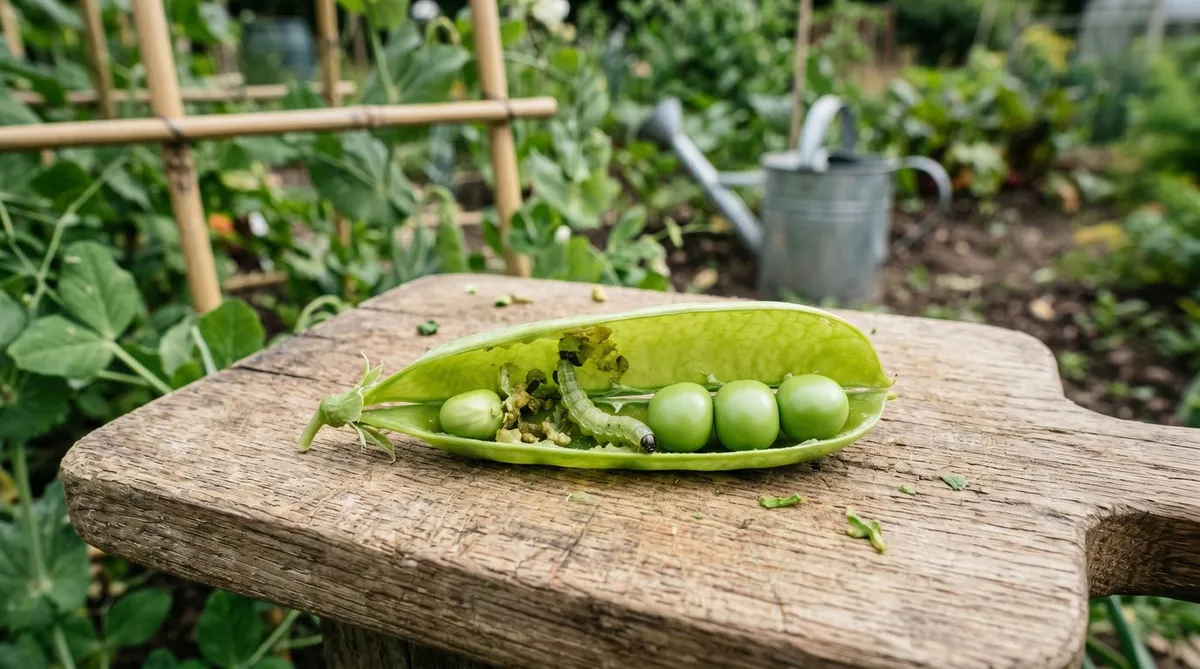
Pea moth damage hides inside the pod. From the outside the pod usually looks fine. Inside, you find one or two small creamy-yellow caterpillars with dark heads, a few chewed peas and little piles of droppings (called frass).
Sometimes there’s a small round exit hole in the pod wall, where a caterpillar has already left. The rest of the peas in the pod are often fine.
The adult moth is small and grey-brown. It flies on warm summer evenings, so you rarely notice it.
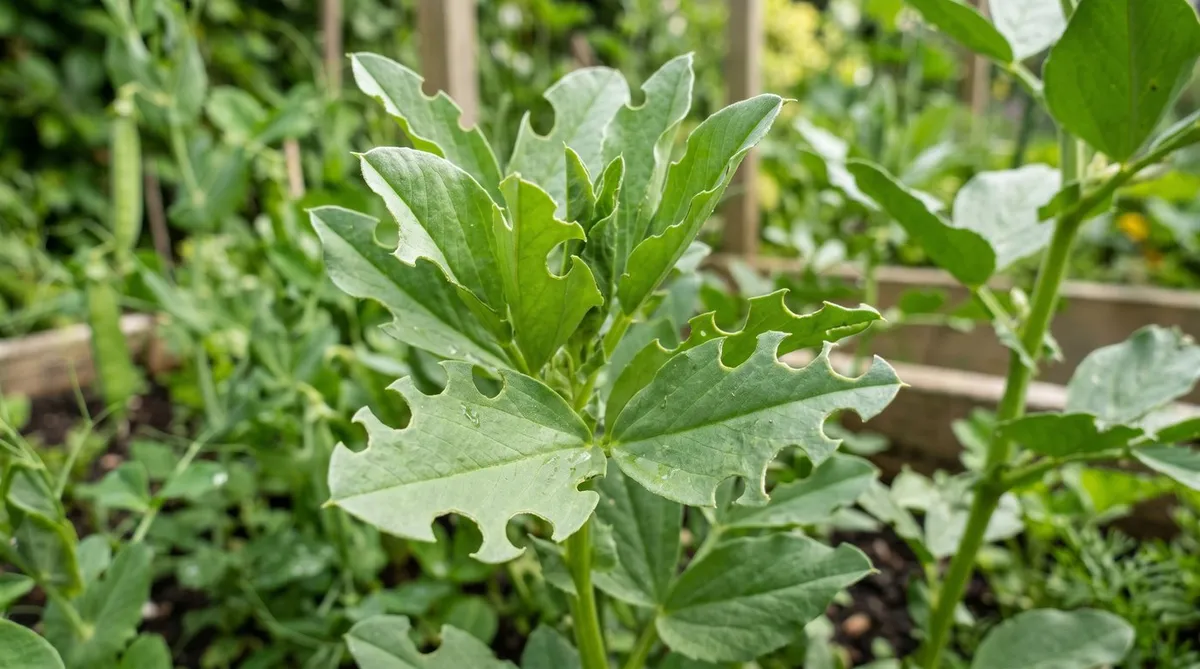
Don’t confuse it with the pea and bean weevil, which notches the edges of leaves with neat U-shaped bites. Pea moth damage is only inside the pods.
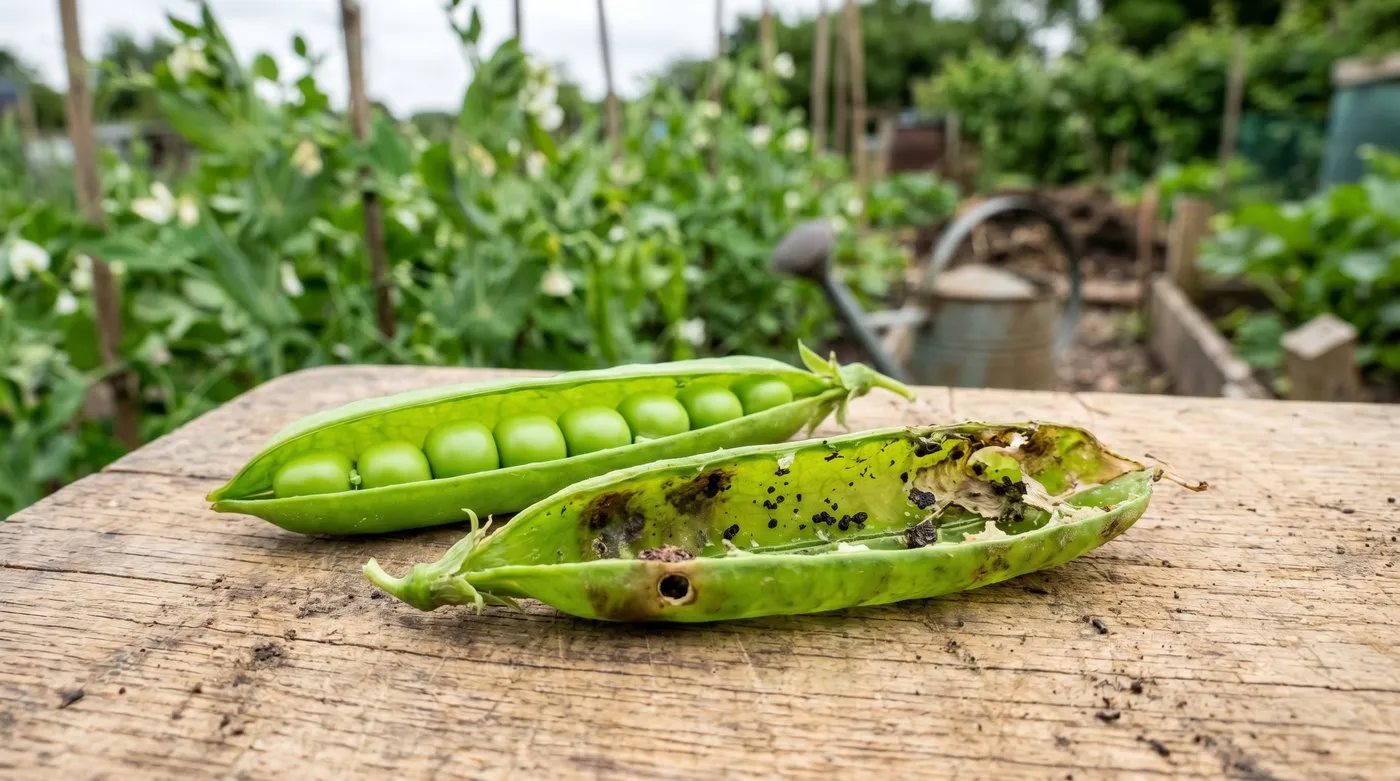
A clean pod next to a pea moth pod. Dark droppings, chewed peas and a little exit hole are the tell-tale signs.
When does pea moth lay eggs?
The moths fly and lay eggs from about June to mid-August. They come out of the soil where last year’s peas grew, then look for peas in flower.
The eggs go on the leaves and flowers. The tiny caterpillars that hatch bore into young pods and feed for a few weeks. When fully fed, they leave the pod, drop to the ground and spend the winter in a cocoon in the soil. The next summer, they come out as moths.
So the peas at risk are the ones in flower and setting pods between June and mid-August. Peas that flower earlier or later usually escape.
Sow early or late to dodge pea moth
Timing your sowings is the easiest and cheapest defence. It costs nothing.
Early sowings: March. Sow a quick, hardy early pea such as Feltham First, Meteor or Kelvedon Wonder. Use cloches if the soil is cold. These flower in late spring and are usually picked before the moths get going.
Late sowings: June. Sow a quick pea in June and it flowers from mid-August, after most egg-laying has finished.
Midsummer peas need cover. Main crop peas sown in April and May flower right in the danger window. If you want them, cover them with mesh (see below).
In colder northern areas, everything runs a little later, so keep an eye on your own plants. The guide to growing peas has sowing depths and spacing.
| Month | What to do |
|---|---|
| March | Sow early peas such as Feltham First or Meteor, under cloches if cold |
| April to May | Sow main crop peas only if you can cover them during flowering |
| June | Sow quick peas for a late crop. Put mesh over any peas flowering now |
| July | Keep mesh on flowering peas. Check pods as you pick |
| August | Mesh can come off flowering peas from mid-month. Late sowings start flowering |
| September to October | Clear old plants and fork over the bed |
| Winter | Plan to grow peas in a different bed next year |
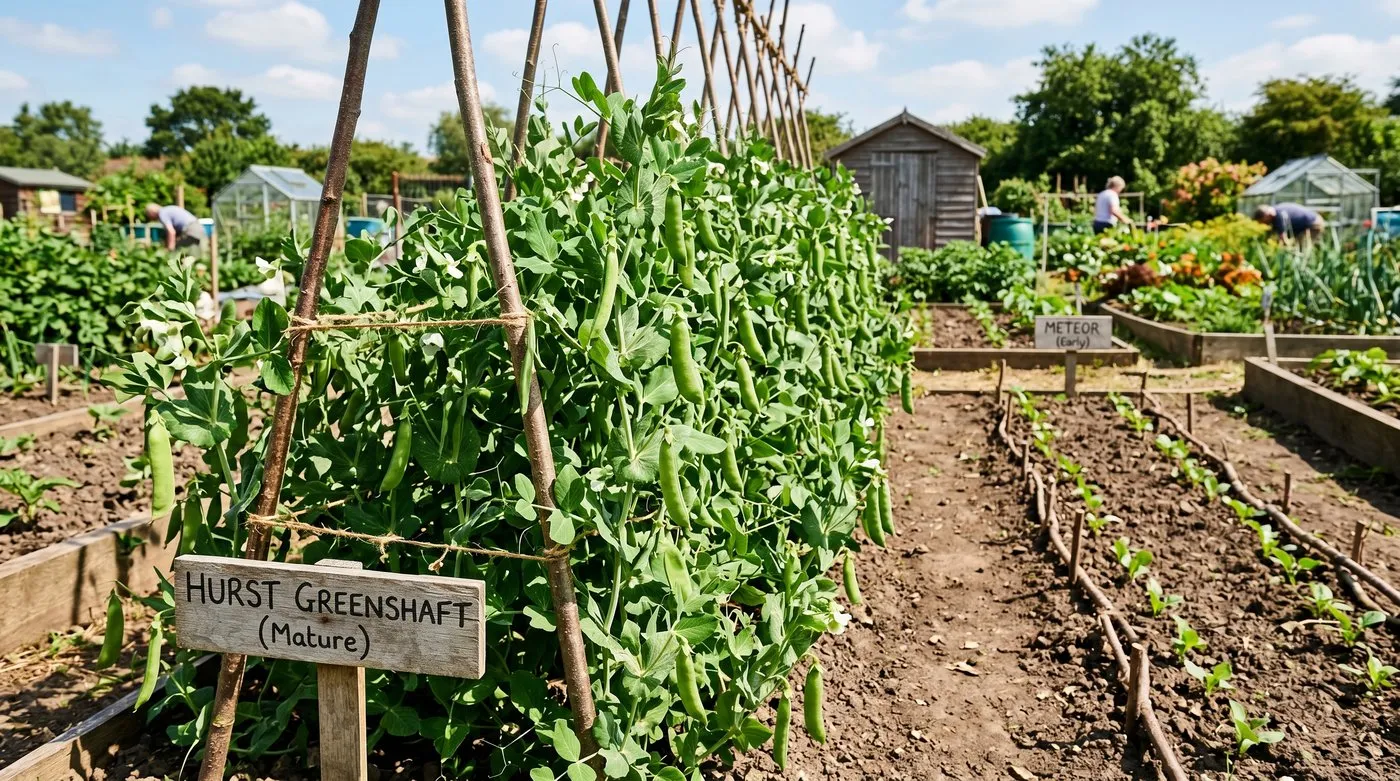
Two sowings either side of midsummer give you peas twice, and both can dodge the moths.
Cover midsummer peas with fine mesh
If your peas flower between June and mid-August, cover them with fine insect mesh or fleece while they’re in flower. The moths can’t reach the plants to lay eggs.
- Put hoops or canes along the row, tall enough to keep the mesh off the top of the plants.
- Cover the row when the first flower buds show.
- Bury or weigh down all the edges with soil or bricks. Moths will find any gap.
- Leave it on until the pods are well formed, or until mid-August.
Peas pollinate themselves inside the flower, so you don’t need to let bees in. Use proper insect mesh, not bird netting, which has holes far too big. If you already grow under mesh for other crops, the same kit works here.
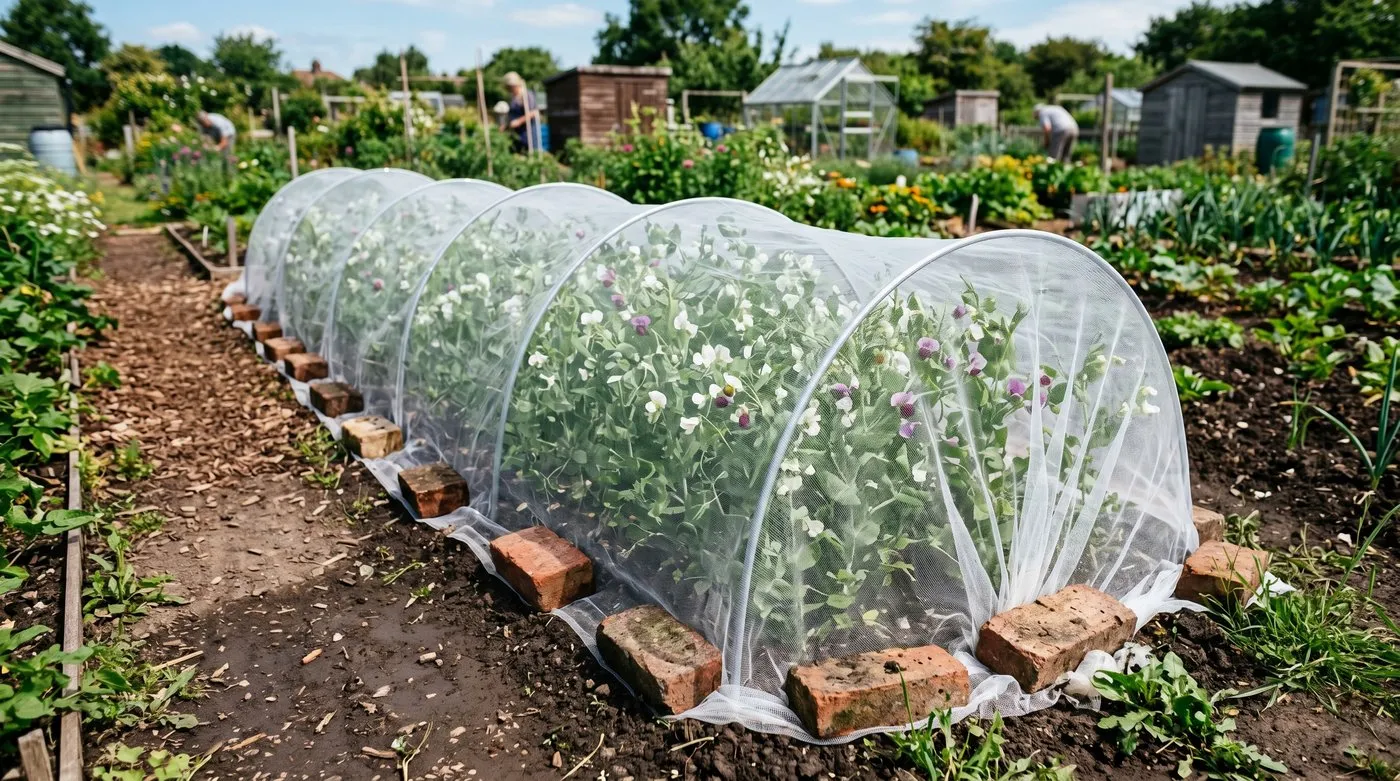
Fine mesh on hoops, weighed down with bricks. Peas pollinate themselves, so they’ll still fill their pods.
Do pheromone traps work for pea moth?
Pheromone traps use a scent that attracts male moths onto a sticky card. They catch some males, but not enough to protect a crop on their own.
They’re most useful for showing when the moths are flying. Hang one in or near the pea bed in late May. When moths start turning up on the card, check your mesh is on and sealed. It also tells you whether your early or late sowings really missed the moths in your garden.
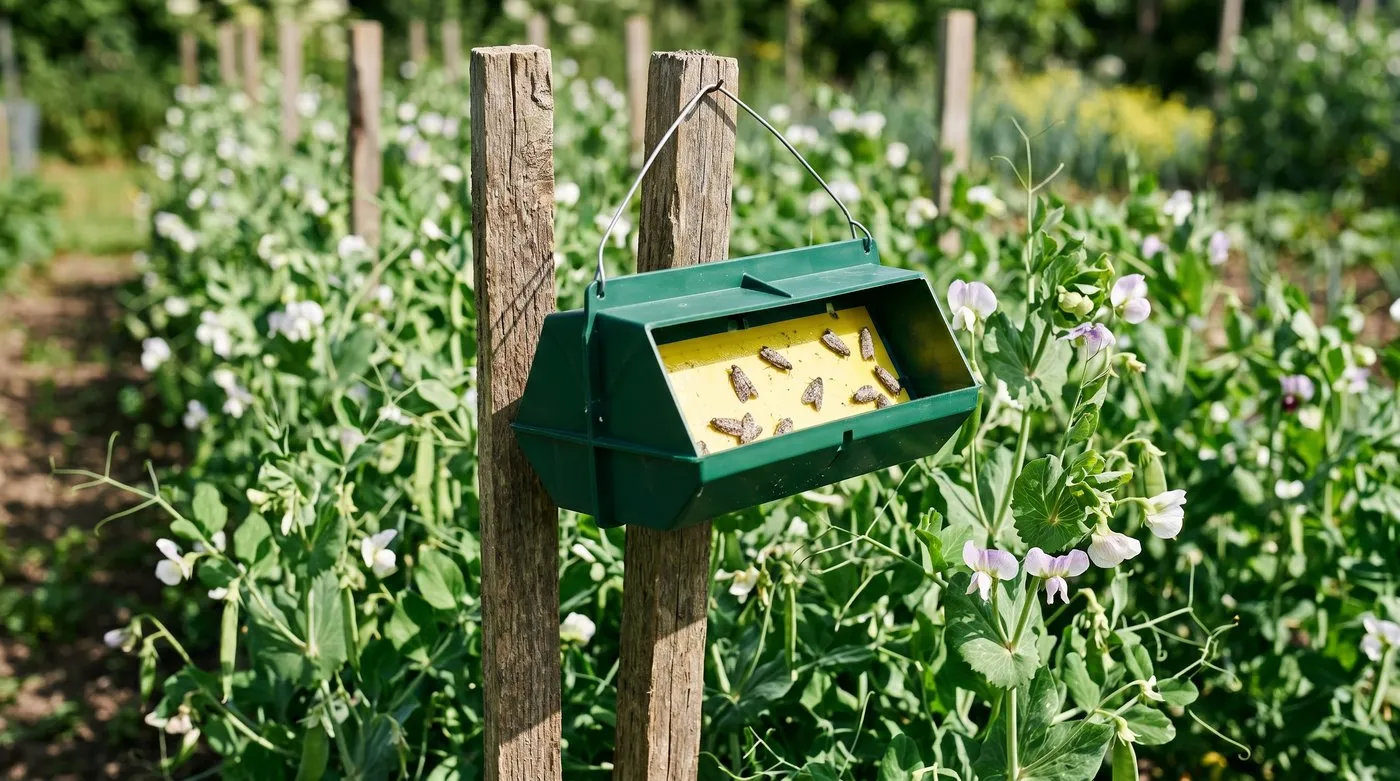
A pheromone trap shows you when the moths are about, so you know when your mesh matters most.
Rotate and clear up to break the cycle
Pea moth caterpillars spend the winter in the soil where the peas grew. Move peas to a different bed each year so the moths that hatch next summer don’t find a meal on their doorstep. The crop rotation planner makes this easy to plan.

Clearing old plants and forking over the bed lets birds pick off pea moth cocoons hiding in the soil.
After the last picking, clear the old plants and fork over the bed. This brings some cocoons to the surface where birds can find them.
Pick pods regularly too. Check any you open, and bin pods with caterpillars rather than leaving them on the plot.
Common mistakes with pea moth
Sowing main crop peas in spring without cover. They flower right when the moths are busiest. Either sow early or late, or use mesh.
Using bird netting. The holes are far too big to stop moths. Use fine insect mesh or fleece.
Worrying about pollination under mesh. Peas pollinate themselves, so cover them with confidence.
Growing peas in the same bed every year. The moths emerge from that soil each summer, right next to your new crop.
Relying on a pheromone trap to protect the crop. It’s a timing tool, not a cure.
Frequently asked questions
How do I prevent pea moth caterpillars in peas?
Sow so your peas flower before June or after mid-August. Peas that flower in midsummer need fine insect mesh over them while in flower. Move peas to a new bed each year as well.
When does pea moth lay eggs in the UK?
Mostly from June to mid-August. The moths lay eggs on the leaves and flowers. The tiny caterpillars then bore into the young pods to feed.
Are peas with pea moth safe to eat?
Yes, they’re safe. Pick out the caterpillar and any damaged peas, and use the rest as normal. The caterpillars don’t harm people, they just aren’t appetising.
Do pheromone traps stop pea moth?
Not on their own. They catch male moths and show you when the moths are flying. Use them to time your mesh or check whether a sowing date dodged the moths.
What variety of peas is most resistant to pea moth?
No pea variety resists pea moth. Timing is what helps. Quick early peas such as Feltham First, Meteor and Kelvedon Wonder can be sown in March and flower before the moths arrive.
Will covering peas with mesh stop them being pollinated?
No, peas pollinate themselves inside the flower. Bees aren’t needed to set pods, so you can leave mesh on through flowering.
Find more veg pests in the problems hub. If you’d like another pea crop to plan around the same dates, read the guide to growing mangetout and sugar snaps.
Our team produces practical UK gardening guidance from source research, contributor records and established horticultural practice. Editorial standards are overseen by Matt W.