Key takeaways
- U-shaped notches around leaf edges are the sign of pea and bean weevil
- On healthy, established plants the damage is only cosmetic, so leave it be
- Small seedlings in a cold spring are the ones that need protecting
- Fleece over young plants is the best way to keep weevils off
- Warm soil and good compost help plants grow faster than the weevils can eat
- The grubs nibble root nodules underground but rarely do real harm in gardens
You sow a neat row of broad beans or peas, the seedlings pop up, and within days the leaf edges look like someone has been at them with a tiny hole punch. Neat U-shaped bites run all round the edges. Meet the pea and bean weevil, a pest that worries a lot of new veg growers.
Here’s the good news straight away: most of the time it doesn’t matter. Below you’ll learn how to spot it, when it’s worth acting and how to protect the few plants that need it. No spray required.
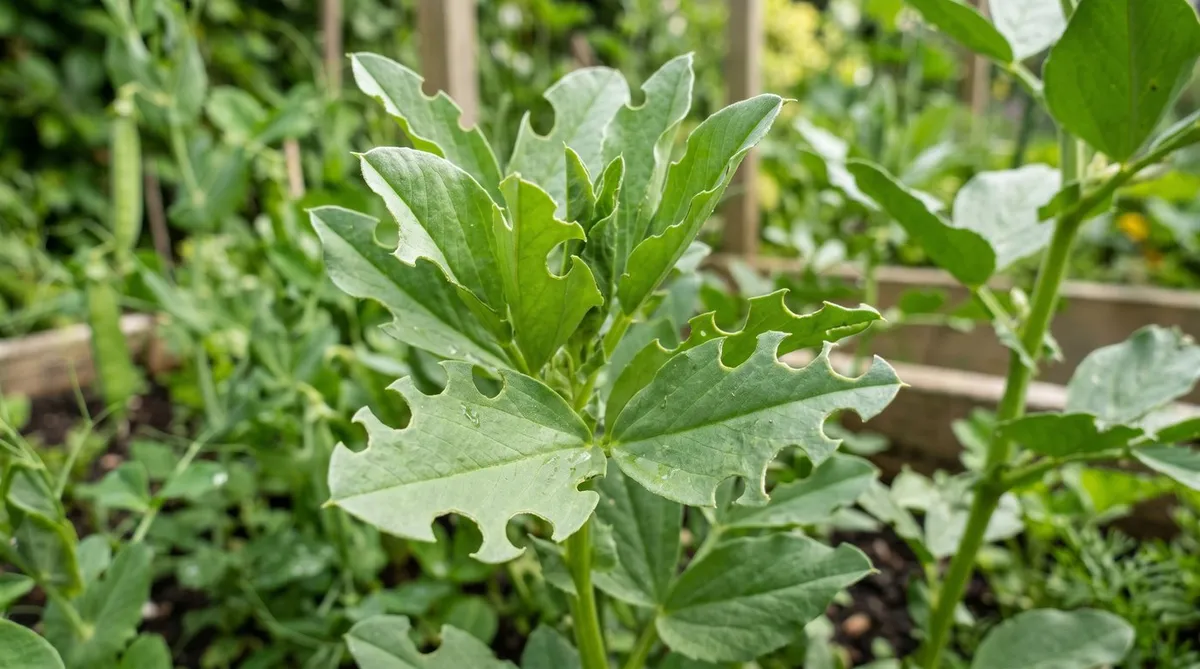
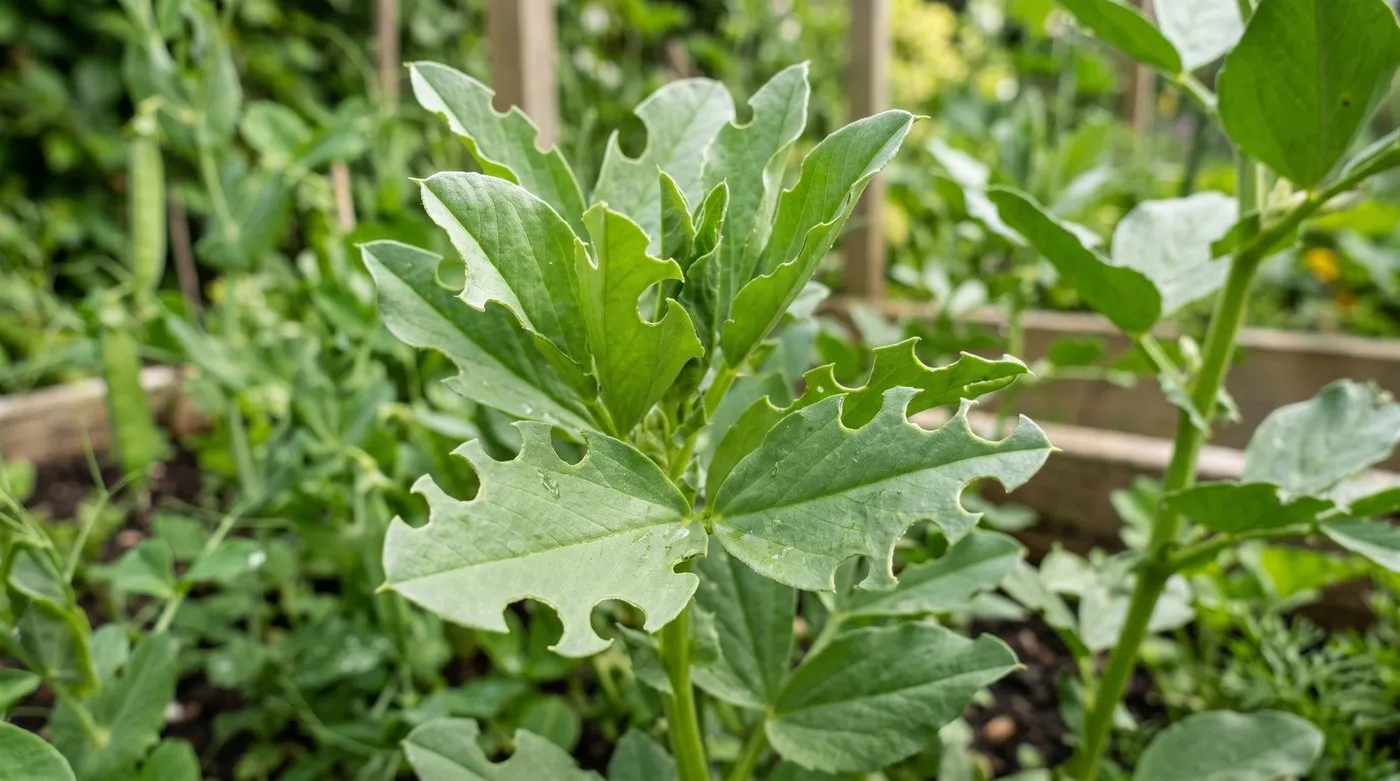 The classic sign: neat U-shaped bites taken from the edges of broad bean and pea leaves in spring.
How to identify pea and bean weevil damage
You’ll spot the damage long before you spot the weevil, and once you know it, you can’t mistake it.
The U-shaped leaf notches
The adult weevil (Sitona lineatus) nibbles the edges of leaves, biting neat half-moon notches inwards. A badly nibbled leaf looks scalloped all round, like a doily. It only ever eats the edge, never the middle. That’s how you tell it apart from slugs and caterpillars, which make holes in the middle of the leaf.
It goes for peas and broad beans most of all, though French and runner bean seedlings get a nibble too. You’ll see it in spring, just as seedlings are getting going.
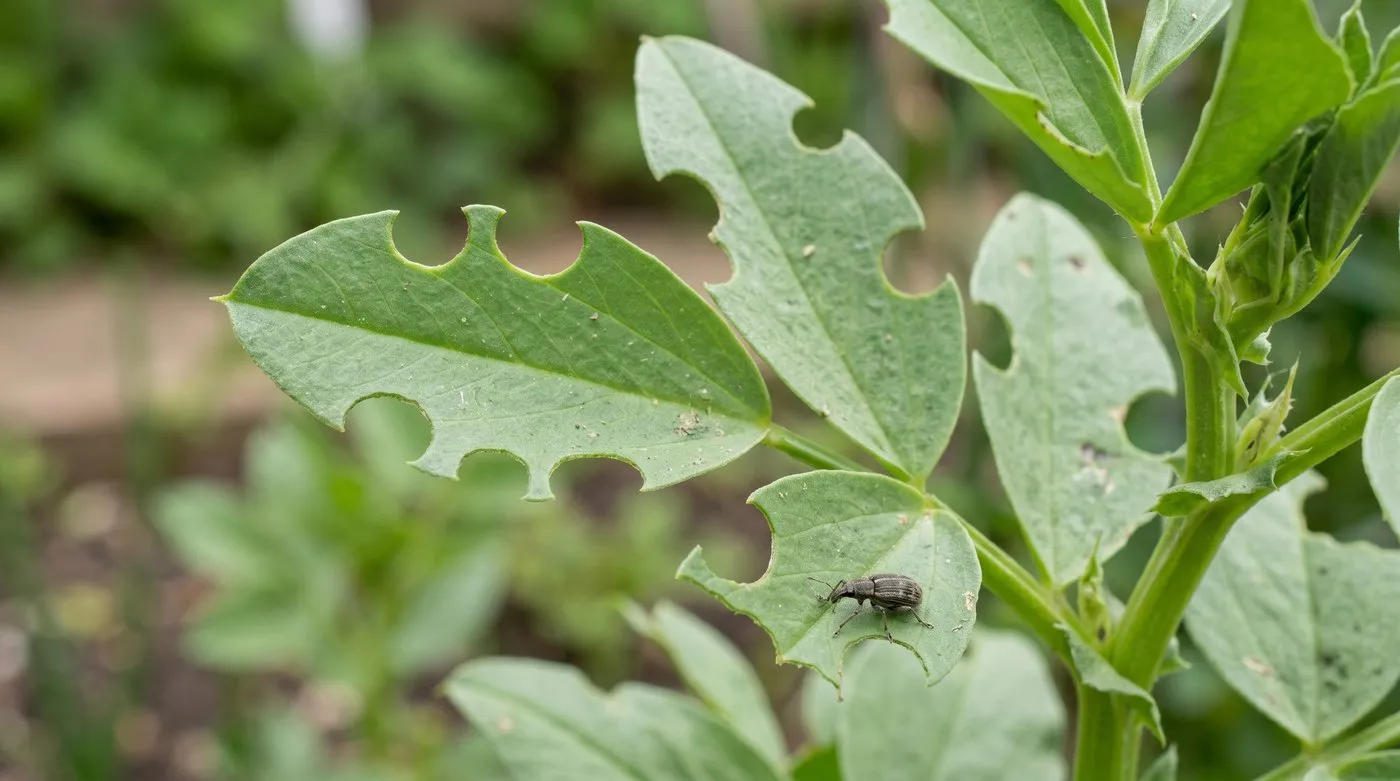 Neat U-shaped notches bitten in from the edge. The middle of the leaf is left alone.
The weevil itself
You’ll rarely catch it in the act. The adult is a small greyish-brown weevil about 4-5mm long, with faint pale stripes down its back and a short snout. It feeds mostly at night and drops to the ground playing dead when disturbed. The notched leaves tell you it’s there, so you don’t need to find the beetle.
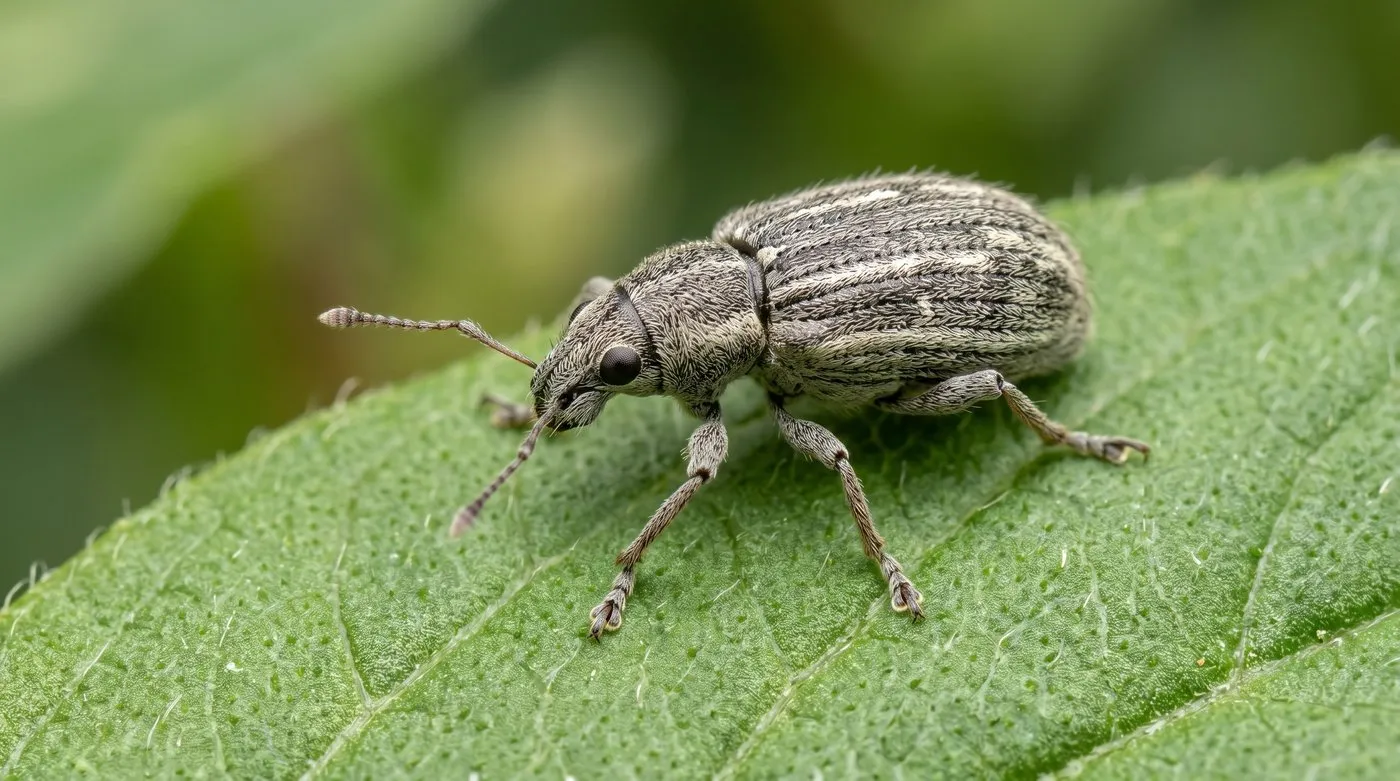 The adult weevil is tiny and greyish-brown, and plays dead when disturbed. The notched leaves give it away first.
Why the damage usually does not matter
The plant simply grows past it. New leaves appear faster than the weevils can nibble them, and by flowering time the early damage makes no difference to your crop. If your plants are up, green and growing, the weevil is a curiosity, not a crisis.
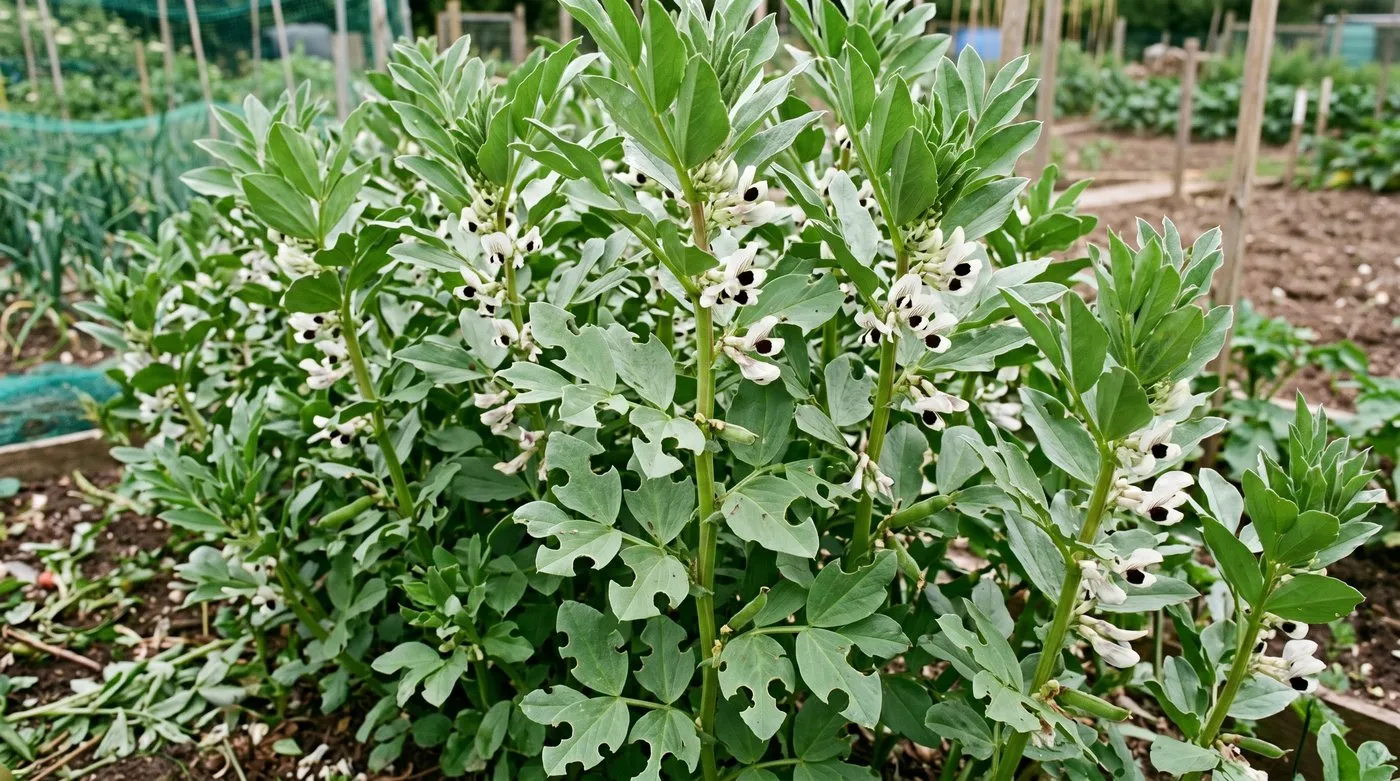 Strong plants carry on flowering and cropping even with scalloped lower leaves.
It’s a similar story underground. The grubs feed on the little root nodules that help peas and beans make their own nitrogen. It sounds worrying, but a healthy plant barely notices. For the diseases that really can hurt a bean crop, see our guide to common bean diseases.
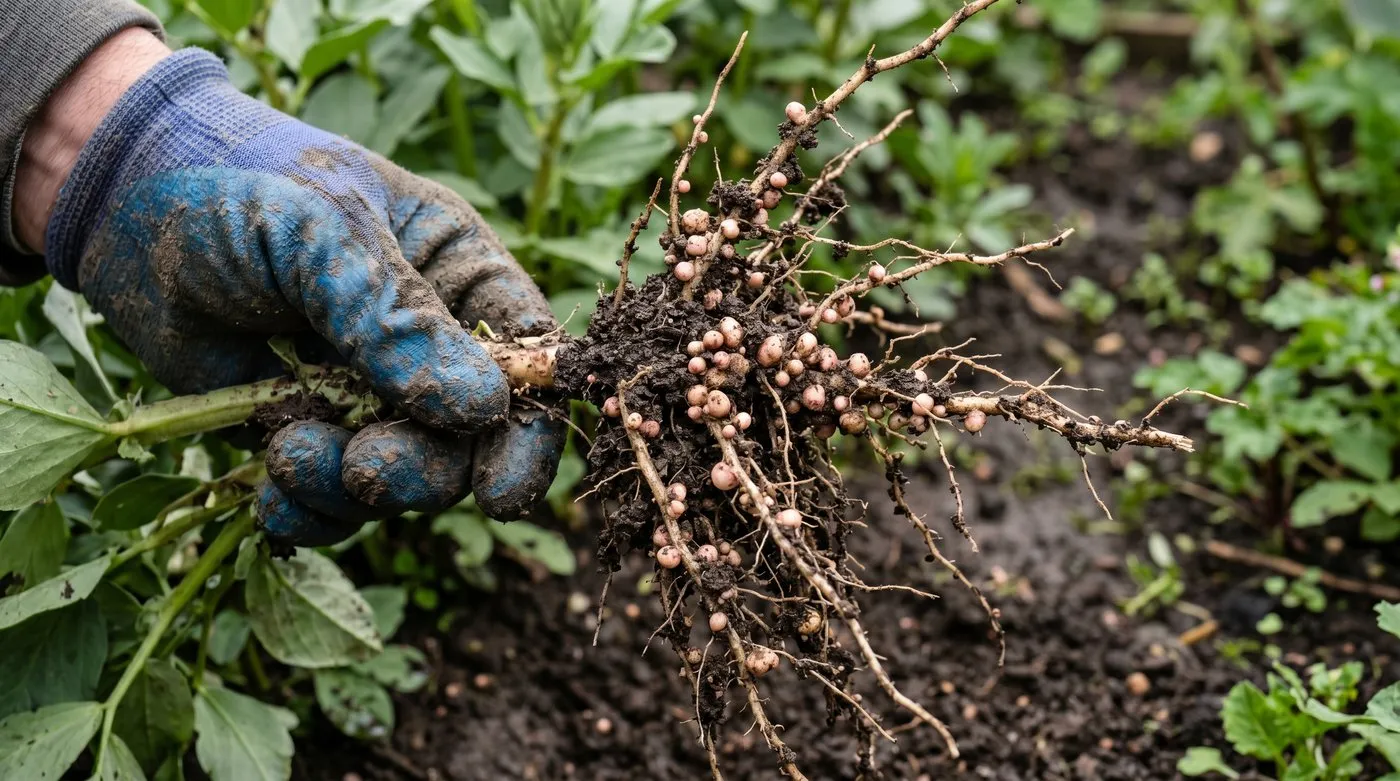 The grubs feed on these pinkish root nodules. It looks alarming on a dug-up root, but established plants shrug it off.
When pea and bean weevil is a real threat
There’s just one time to worry: small seedlings in cold weather.
A seedling only an inch or two tall, sitting in cold spring soil, has hardly any leaf to spare. A lot of nibbling can stop it in its tracks, and a tiny seedling can even be killed. The cold stops it growing, so it can’t grow past the damage.
So it’s really a race. Can the seedling grow faster than the weevil can eat? In warm weather a strong plant wins easily. In cold weather a weak one can lose. Everything below is about helping your plants win.
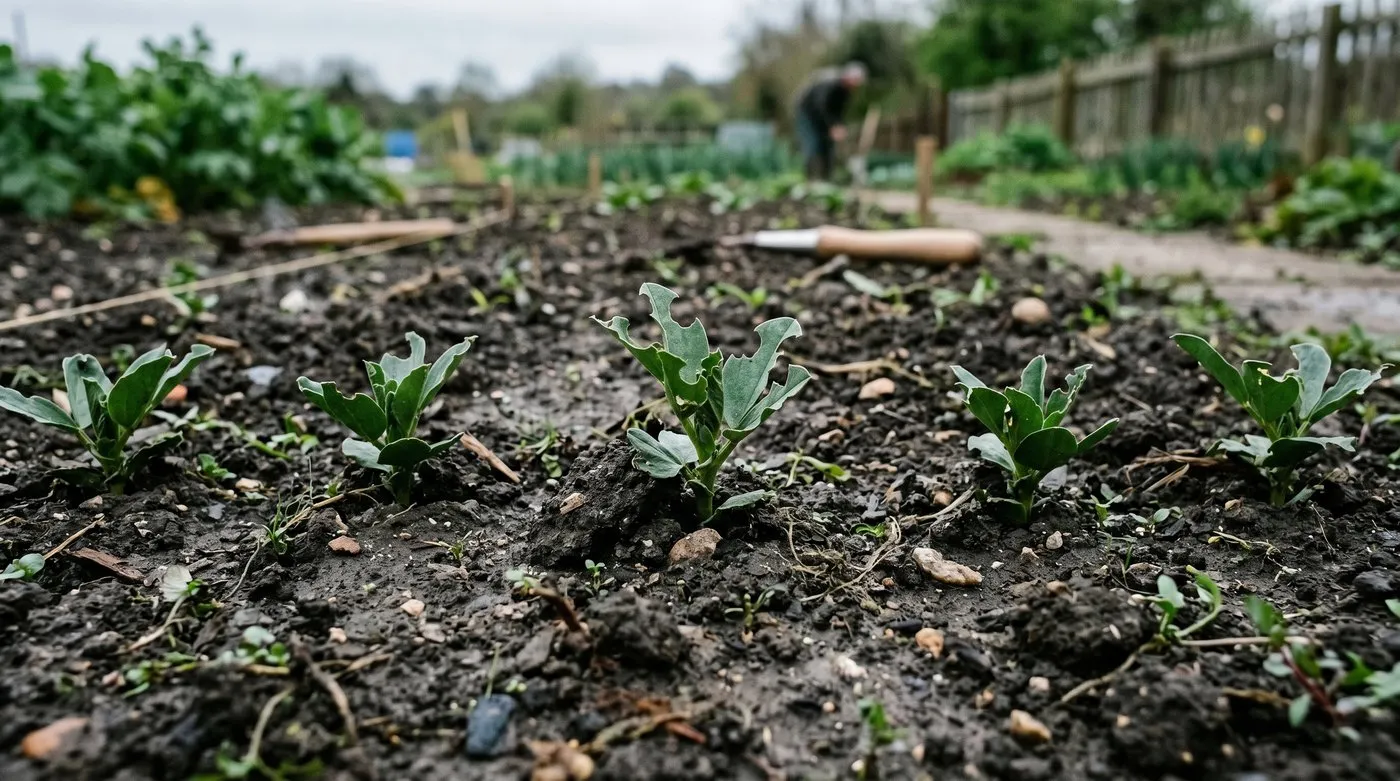 The one real risk: small seedlings in cold soil, growing too slowly to keep ahead of the nibbling.
How to protect your seedlings
As only young seedlings are at risk, protecting them is simple and needs no chemicals.
Fleece is the single best tool
Cover seedlings with horticultural fleece as soon as you sow or plant out. Leave it on until they have several true leaves and are growing strongly, usually about three weeks. The weevils can’t get through it, and it keeps the soil a little warmer so plants grow faster. Tuck the edges down well so nothing crawls underneath.
Push fast, strong growth
Anything that helps a seedling grow quickly helps it beat the weevil:
- Warm the soil before sowing, or start plants in modules under cover and plant them out when they’re sturdy.
- Sow into good ground with plenty of compost so growth never stalls.
- Don’t sow too early into cold soil. A slightly later sowing into warm soil often catches up with an early one that sat and sulked.
Encourage natural predators
Ground beetles and other garden predators eat weevils and their grubs for free. Log piles, untidy edges and ground cover give them somewhere to live. Our organic pest control guide explains how to bring them in. You can read about biological controls like nematodes too, though for this pest you shouldn’t need them.
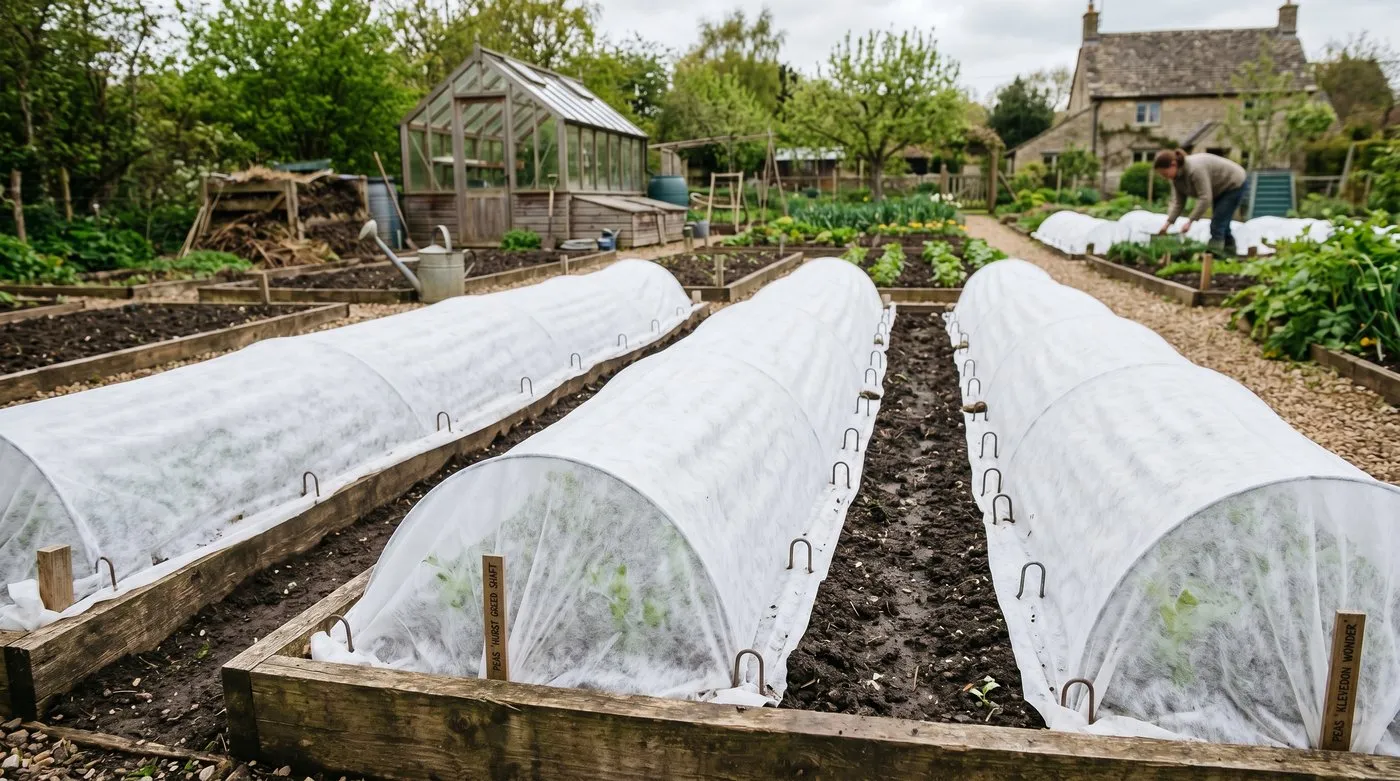 Fleece does two jobs at once: it keeps weevils off and keeps seedlings warm so they grow through the risky stage faster.
Pea and bean weevil controls ranked
Here’s what’s worth doing, from most useful to least.
| What to do | How it helps | Worth it? |
|---|---|---|
| Fleece over seedlings | Keeps weevils off and keeps plants warm | Yes, the best thing you can do |
| Warm soil and module-raised plants | Plants grow fast and outpace the nibbling | Yes |
| Rich, well-fed soil | Keeps growth steady from the start | Yes |
| Ground beetles and other predators | Eat weevils and grubs over time | A nice bonus |
| Leaving established plants alone | The damage is only cosmetic | Yes, the right call |
| Spraying | No garden spray worth using, and more weevils fly in | No |
In short, fleece plus fast growth does the job. It protects the seedling instead of chasing a pest that keeps coming back.
The root cause most people miss
Most people see the notches and think they need to kill the weevil. But the notches aren’t really the problem. The real problem is a seedling growing too slowly, and that’s about growing conditions, not bugs.
Kill the weevils you can see and more just fly in from nearby gardens and fields. Help the seedling grow fast and the weevil stops mattering. Look after the plant, not the insect.
Check it’s the right pest: Slugs and caterpillars make holes in the middle of leaves. Black bean aphid clusters on stems and shoot tips. Neat U-shaped notches on the edges are the weevil.
Common mistakes with pea and bean weevil
These are the slip-ups that waste effort or, now and then, cost a crop.
Panicking over cosmetic damage
The most common one. Notched leaves on a strong, growing plant need nothing at all. Save your effort for seedlings.
Leaving seedlings unprotected in cold springs
This is the one that actually costs crops. Fleece spring seedlings until they’re growing well.
Sowing too early into cold soil
Early sowings sit cold and slow for weeks. Wait for warmer soil, or start plants under cover and plant them out strong.
Chasing the adult weevil
Picking off or trying to kill the adults is a losing game, as more always arrive. Protect and grow the plant instead.
Ignoring soil and feeding
A hungry seedling in poor soil grows slowly and stays at risk. Add compost so plants get off to a flying start. Strong plants also cope better with the aphids that follow.
Get your beans through those first few weeks and the rest of the season is easy. For growing the crops themselves, see our guides to growing broad beans and growing dwarf French beans. The RHS page on pea and bean weevil is a handy extra read.
Frequently asked questions
What is eating the edges of my broad bean leaves?
Almost certainly pea and bean weevil. The adults bite neat U-shaped notches around the edges of pea and broad bean leaves in spring. It looks dramatic, but on healthy, established plants it’s only cosmetic and needs no treatment.
Does pea and bean weevil damage need treating?
Rarely. Strong, growing plants shrug it off and crop as normal. Only small seedlings in a cold spring are at risk, as heavy feeding can hold them back or kill them. Protect those with fleece and help them grow fast. There’s no garden spray worth using against it.
How do I protect pea and bean seedlings from weevil?
Cover them with horticultural fleece. Put it on at sowing or planting out and leave it until plants have several true leaves and are growing well, usually about three weeks. The weevils can’t get through, and the fleece warms the soil so plants grow faster.
What does pea and bean weevil look like?
It’s a small greyish-brown weevil about 4-5mm long. It has faint pale stripes down its back and a short snout. It feeds mostly at night and drops to the ground playing dead if disturbed, so you’ll usually spot the notched leaves long before the weevil.
Do the larvae harm pea and bean plants?
Not much in a garden. The grubs live in the soil and nibble the little root nodules that help peas and beans feed themselves. Established plants cope with this easily. It only matters when plants are already small, cold and struggling.
When is pea and bean weevil active in the UK?
Mainly in spring, from about March to May. That’s just when pea and bean seedlings are at their most tender. New adults turn up again in late summer, but by then your plants are big enough to cope. Those few spring weeks are when protection counts.
Our team produces practical UK gardening guidance from source research, contributor records and established horticultural practice. Editorial standards are overseen by Matt W.