Key takeaways
- Seedlings bitten through at soil level overnight are a classic cutworm sign
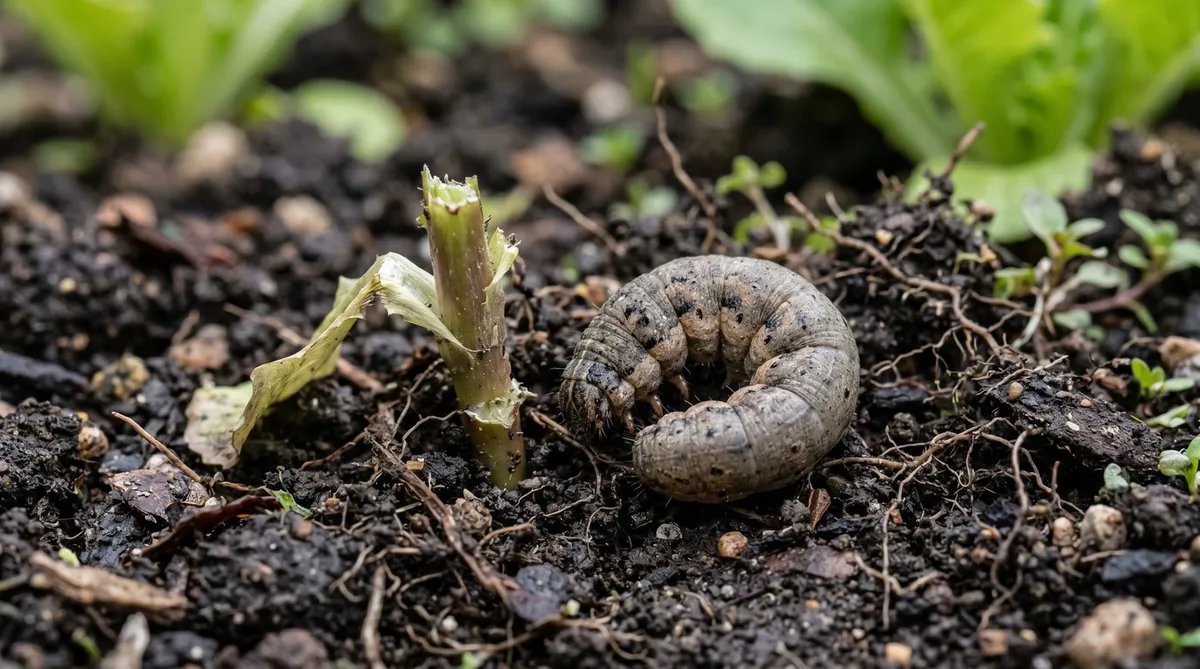
- The fat grey-brown caterpillar curls into a C shape in the soil nearby
- Scrape back the soil around damaged plants and remove any caterpillars you find
- Collars cut from card tubes or plastic bottles protect new transplants
- Nematodes sold for cutworms can be watered into warm, moist soil
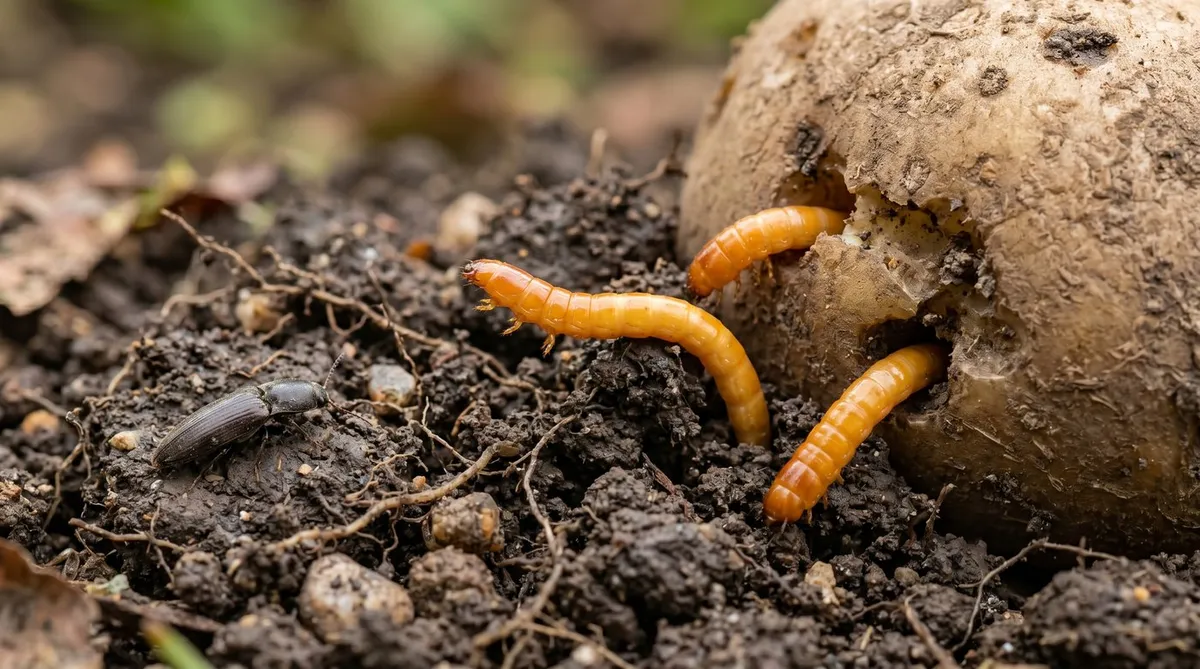
- Cutworms can also hollow out roots and potatoes, unlike the tiny holes of wireworm
You plant out a row of healthy lettuces in the evening. By morning, several are lying flat, bitten clean through at ground level. That is the classic sign of cutworms. The culprits are fat, grey-brown caterpillars hiding in the soil just a few centimetres away.
The good news is that cutworms are easy to find once you know where to look. Simple collars, regular hoeing and a little night-time searching keep most of the damage at bay. This guide covers how to identify cutworms, how to tell them from wireworm and slug damage, and how to protect your seedlings. For other soil pests, see the wireworm guide.
How to identify cutworm damage
Cutworms bite through young stems at or just below soil level at night. In the morning you find plants lying flat, often with the top part looking perfectly healthy.
Signs to look for:
- Seedlings or transplants felled overnight, cut through at ground level
- No slime trail and no ragged holes in the leaves
- Wilting plants where the caterpillar has eaten the roots or stem just below the surface
- Holes or cavities in potatoes, carrots and other roots later in the season
Lettuce, brassicas, leeks, beetroot and young flowers such as dahlias are common targets. Once plants have a thicker, tougher stem, they are much less at risk.
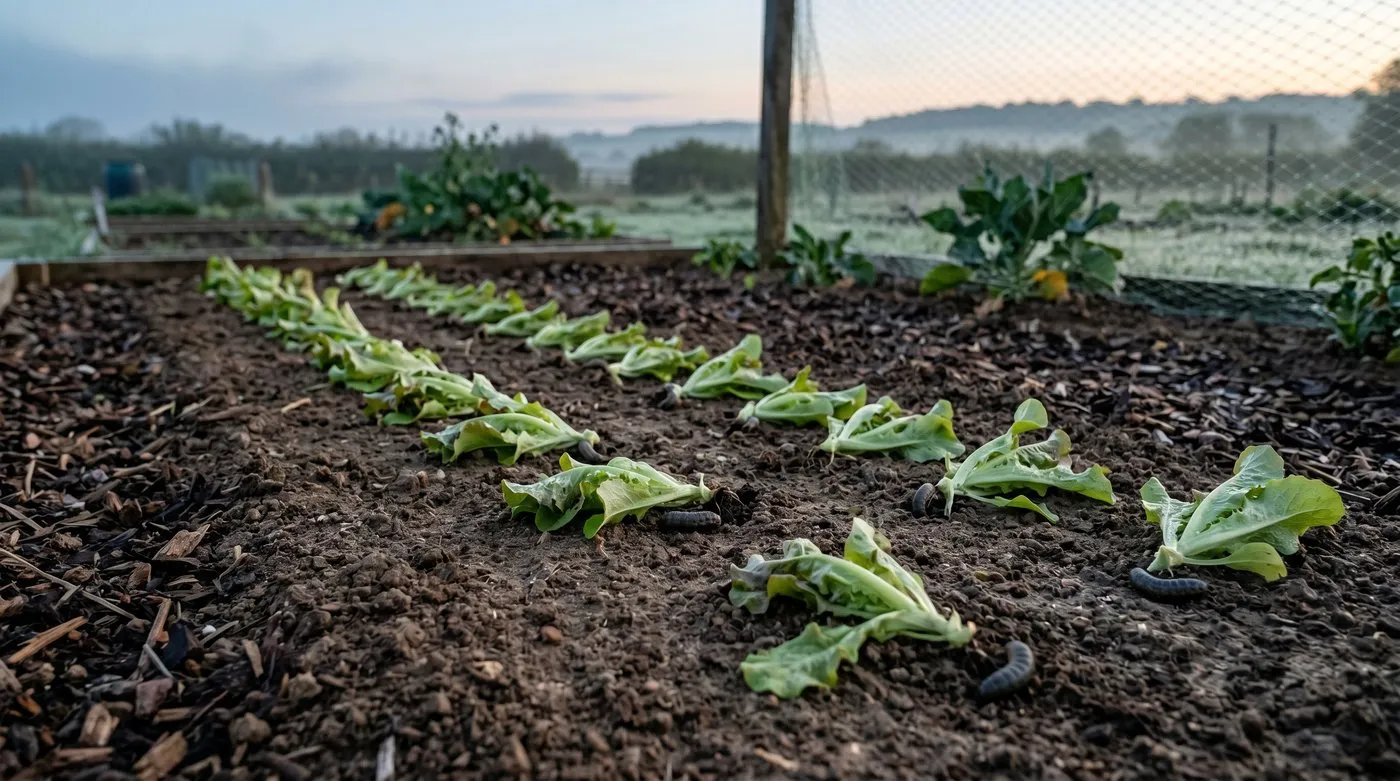
A row of transplants felled overnight is a classic cutworm sign. The culprits are usually curled in the soil close by.
What does a cutworm look like?
A cutworm is a fat, soft caterpillar, usually grey-brown, greenish or creamy-brown. Fully grown ones can be up to about 4-5cm long. When disturbed, it curls up into a tight C shape.
By day, cutworms hide in the top few centimetres of soil. Scrape back the soil gently around a damaged plant and you’ll often find one there.
Cutworms are the caterpillars of several common night-flying moths. These include the turnip moth, heart and dart and large yellow underwing. You may see the adult moths around lit windows on summer nights. The moths themselves don’t harm plants.
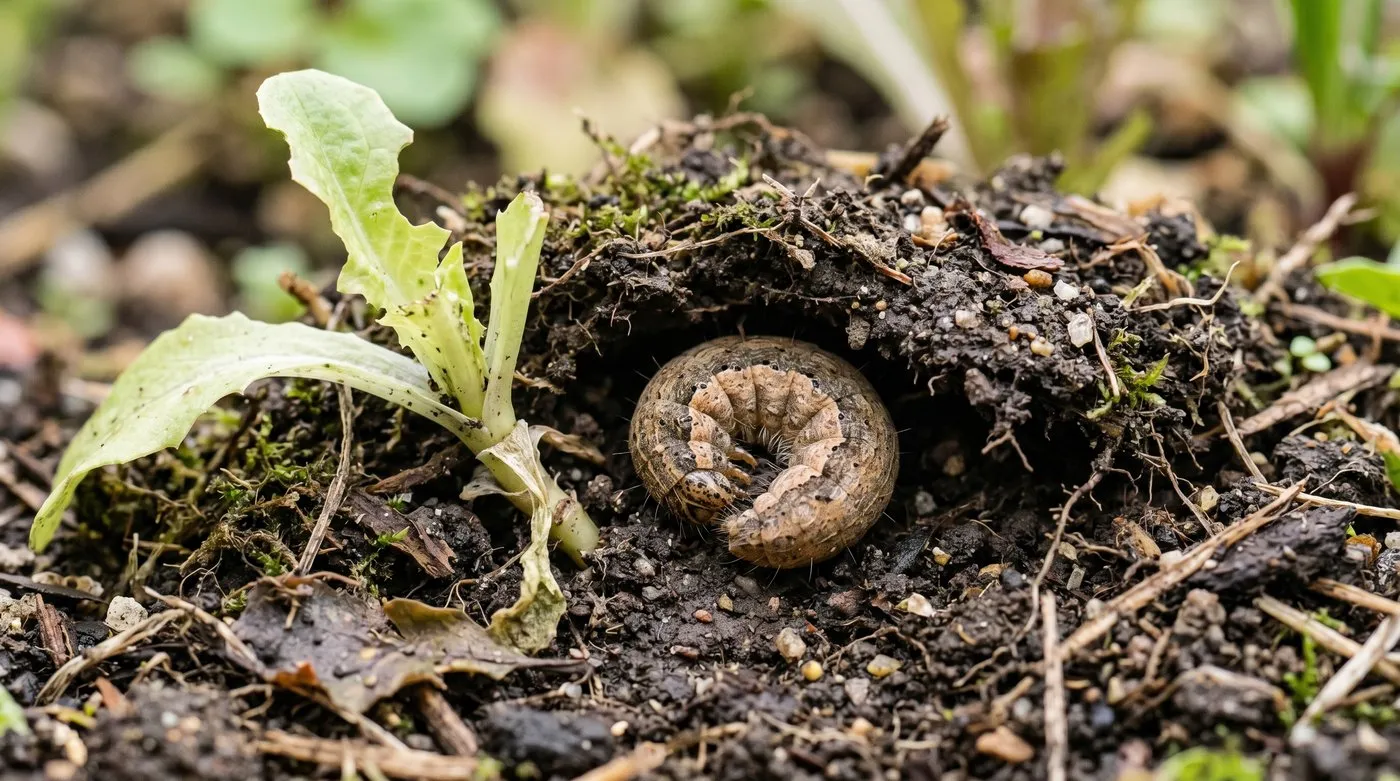
Scrape back the soil around a felled seedling and you’ll often find the curled-up caterpillar within a few centimetres.
Cutworm, wireworm or slug damage?
Several pests attack seedlings and roots. This table helps you tell them apart.
| Pest | What it looks like | Damage |
|---|---|---|
| Cutworm | Fat, soft grey-brown caterpillar, curls into a C | Stems bitten through at soil level, large holes in roots |
| Wireworm | Thin, shiny, stiff, orange-brown larva | Small, neat round holes bored into potatoes and roots |
| Slug | Soft, slimy, no legs | Ragged holes in leaves, slime trails, seedlings grazed away |
| Leatherjacket | Grey-brown, legless, tough-skinned grub | Roots eaten, mainly in lawns and grassy ground |
For slugs, see the guide to getting rid of slugs naturally. For lawns, see the guide to leatherjackets.
How to get rid of cutworms
There’s no single magic fix. A mix of simple methods works best.
Search at dusk or after dark. Go out with a torch and look around damaged plants. Gently scrape back the top few centimetres of soil within a hand’s width of each felled seedling. Pick out any caterpillars you find and put them on the bird table or squash them.
Hoe regularly. Hoeing the surface brings cutworms up where robins, blackbirds and thrushes can find them. Keeping weeds down also helps, as moths like to lay eggs on weedy ground.
Use nematodes. Tiny parasitic worms called nematodes are sold to control cutworms, often in mixed packs for vegetable pests. Water them into moist soil when it is warm enough, following the pack. Keep the soil moist for a couple of weeks afterwards. The guide to biological pest control with nematodes explains how they work.
Water in dry spells. Cutworm damage is often worse in hot, dry summers. Keeping beds evenly moist helps young plants grow away quickly.
Avoid broad insecticides. They can kill ground beetles and other predators that help keep cutworms down. If you ever do use a product, it must be approved for that use and applied following the label.

Water nematodes into moist, warm soil with a coarse rose, then keep the bed damp so they can find the caterpillars.
How to make cutworm collars for transplants
Collars stop cutworms reaching the stem of a young plant. They are free, quick to make and work well for lettuce, brassicas and other transplants.
- Save cardboard tubes from kitchen or toilet rolls, or cut rings from plastic bottles.
- Cut them into rings about 8-10cm tall.
- Slit one side so you can wrap the ring round the stem without damaging the leaves.
- Place a ring round each plant at planting time.
- Push it a few centimetres into the soil, leaving most of it above ground.
- Water in well.
Cardboard collars rot down over the summer, by which time plants have toughened up. Fit them before you see damage, as they protect but don’t cure.
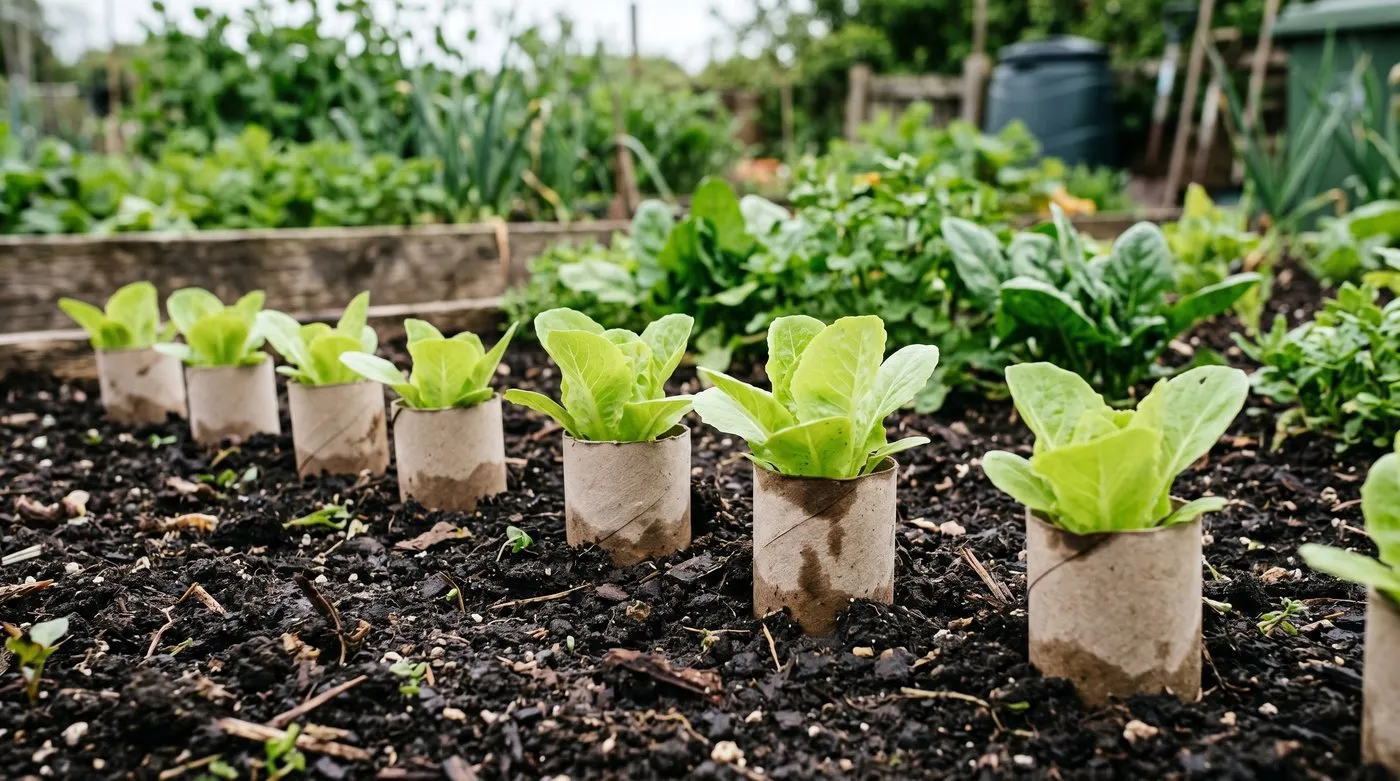
Cardboard collars round each transplant keep cutworms off the stems. They rot away as the plants grow up.
When are cutworms a problem?
Cutworms feed from late spring into autumn. Young caterpillars hatch from eggs laid by moths in early summer, and older caterpillars can keep feeding into autumn.
The damage that hurts most is to young transplants in late spring and summer. Established plants with thicker stems usually shrug them off. Later in the season, cutworms can eat into potatoes, carrots and other roots.
To keep ahead of them:
- Spring: Hoe and weed beds before planting. Fit collars at planting time.
- Summer: Check felled plants at dusk. Water in dry spells. Use nematodes if damage continues.
- Autumn: Dig over or hoe empty beds to expose caterpillars to birds.
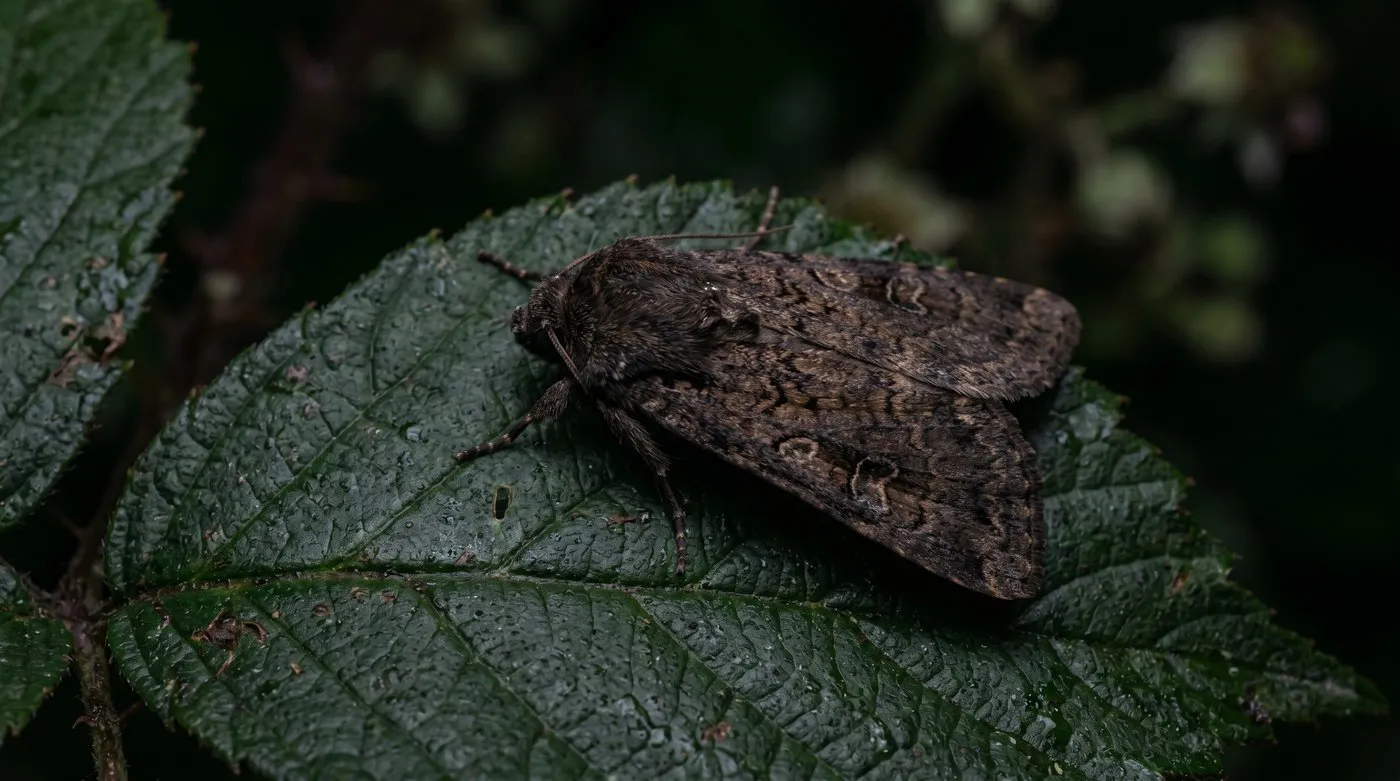
The turnip moth is one of the moths whose caterpillars are cutworms. The adults are harmless to plants.
Common mistakes with cutworms
- Blaming slugs. No slime trail and a clean cut at soil level point to cutworms.
- Waiting for damage before fitting collars. Collars work best from planting day.
- Only looking in daylight. Cutworms hide by day, so search at dusk or scrape back the soil.
- Using nematodes in cold or dry soil. They need warm, moist conditions to work.
- Leaving weedy ground. Weeds give moths places to lay eggs.
Frequently asked questions
What is a cutworm and what damage does it cause?
A cutworm is the caterpillar of certain night-flying moths. It lives in the soil and feeds at night, biting through young stems at or just below ground level. You find plants lying flat in the morning. Cutworms also eat into roots, potatoes and carrots.
How do I get rid of cutworms in the UK?
Search, protect and use nematodes. Scrape back the soil round damaged plants and remove any caterpillars you find. Fit collars round new transplants. Hoe regularly so birds can find them, and water in nematodes sold for cutworms when the soil is warm and moist.
When are cutworms most active in UK gardens?
From late spring to autumn, feeding at night. Damage is most noticeable on young transplants and seedlings. It is often worse in hot, dry summers.
What does cutworm damage look like?
Seedlings bitten through at soil level and lying flat by morning. There is no slime trail, and the top of the plant is usually untouched. The caterpillar is often curled in the soil within a few centimetres of the damaged plant.
Will nematodes really control cutworms?
They can help, if the soil is warm and moist. Buy a nematode product sold for cutworms and follow the pack for timing and soil temperature. Water them in well and keep the soil moist afterwards. Use them alongside collars and hand-picking.
What is the difference between cutworms and wireworms?
Cutworms are fat, soft caterpillars that bite through stems. Wireworms are thin, shiny, orange-brown larvae of click beetles. They bore small, neat holes into potatoes and roots rather than felling plants.
For a wider look at chemical-free pest control, read the organic pest control guide. For more garden pests, browse the pest control hub.
Our team produces practical UK gardening guidance from source research, contributor records and established horticultural practice. Editorial standards are overseen by Matt W.