Key takeaways
- Mangetout are picked flat and young. Sugar snaps are picked plump and eaten whole
- Sow straight into the ground from March to June, every three or four weeks
- Put supports in when you sow, so tendrils can grab hold straight away
- Oregon Sugar Pod and Sugar Ann are easy choices for beginners
- Pick every couple of days to keep plants flowering
- Fine mesh over flowering plants keeps pea moth out of the pods
There’s nothing quite like the snap of a sugar snap pea picked straight off the plant. Shop-bought ones lose so much flavour on the way to the shelf. Grow your own once and you’ll be hooked.
Mangetout and sugar snaps are kinds of garden pea where you eat the whole pod, not just the peas. That means no shelling, no waste and more to eat from each plant than ordinary peas. For shelling types too, see our pea variety comparison.
What is the difference between mangetout and sugar snap peas?
Everyone asks this first, and the answer is simple.
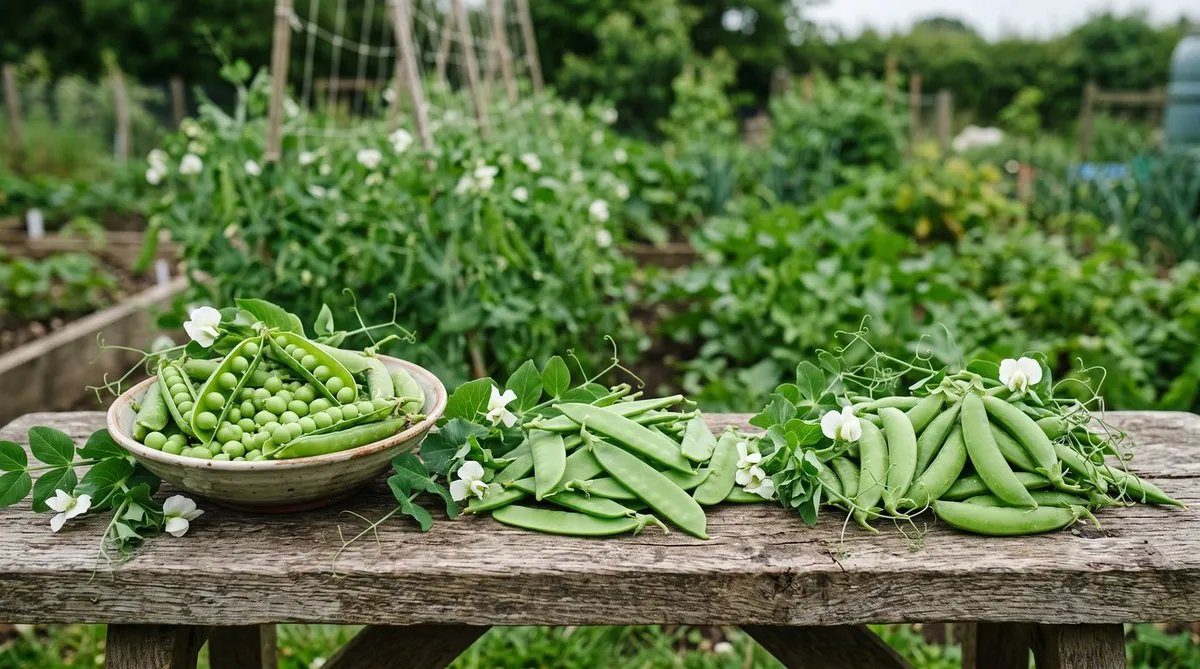
Mangetout (French for “eat all”) are flat pods picked before the peas inside swell. They’re thin, crisp and mildly sweet, and are sometimes sold as snow peas. Pick them young, when the pod is flat and you can just see tiny peas through it. Leave them too long and they go tough and stringy.
Sugar snaps are plump, rounded pods eaten whole once the peas inside have filled out. The pod is thick and sweet, so you get the crunch of mangetout plus the sweetness of fresh peas. Children usually love them. Pick when the pods are fat, round and firm.
Both climb, both need support and both like the same soil and weather. The only real difference is when you pick them. Plenty of people grow both side by side.
Mangetout are picked flat, sugar snaps once they’re plump and round. The only real difference is when you pick them.
Best mangetout and sugar snap varieties for UK gardens
These six cover everything from pots to allotment rows.
Oregon Sugar Pod is the classic mangetout. It grows about 1m tall and gives heavy crops of wide, flat pods. It’s reliable, copes with cool weather and keeps cropping for a long time. A great choice for beginners.
Shiraz is a purple mangetout. The pods are deep violet and turn green when cooked. It grows about 1.5m, so needs tall supports. The colour makes the pods easy to spot when picking, and it tastes just as good as green ones.
Carouby de Maussane is an old French mangetout with very big, broad pods. It grows about 1.5m. Pick the pods promptly before they toughen.
Sugar Ann is the best dwarf sugar snap, at about 60cm tall. It needs very little support and has sweet, crunchy, stringless pods. It’s perfect for pots, small gardens and raised beds. The easiest sugar snap to start with.
Delikett is often called the sweetest sugar snap. It grows about 1.5m on vigorous vines, with thick, stringless pods that are lovely raw. It needs tall netting or canes.
Sugar Bon sits in the middle, at about 75cm. It’s sweet and needs only medium-height supports.
| Variety | Type | Height | Pods | Sweetness | Support |
|---|---|---|---|---|---|
| Oregon Sugar Pod | Mangetout | About 1m | Medium, flat | Mild | Short sticks or net |
| Shiraz | Mangetout | About 1.5m | Medium, purple | Mild | Tall net or canes |
| Carouby de Maussane | Mangetout | About 1.5m | Very large, flat | Mild | Tall net or canes |
| Sugar Ann | Sugar snap | About 60cm | Small, round | Sweet | Short sticks |
| Delikett | Sugar snap | About 1.5m | Medium, round | Very sweet | Tall net or canes |
| Sugar Bon | Sugar snap | About 75cm | Medium, round | Sweet | Medium sticks |
When to sow mangetout and sugar snap peas
Sow from March to June. Two or three small sowings work better than one big one.
Early March: Sow under cloches or fleece in milder areas to get going early. Peas cope with cold better than most veg, and seedlings shrug off a light frost. These give the first pods in June.
April: The best month across most of the UK. The soil is warming, days are getting longer and seeds come up quickly. This sowing usually gives the biggest crop.
Late May to mid-June: These sowings stretch the harvest into September. Choose a quick variety like Sugar Ann.
Sow straight where they’re to grow, as peas don’t like being moved. Make a flat-bottomed trench about 4-5cm deep and 15cm wide. Space seeds 5-7cm apart in two staggered rows, cover and water well. They should come up in one to two weeks.
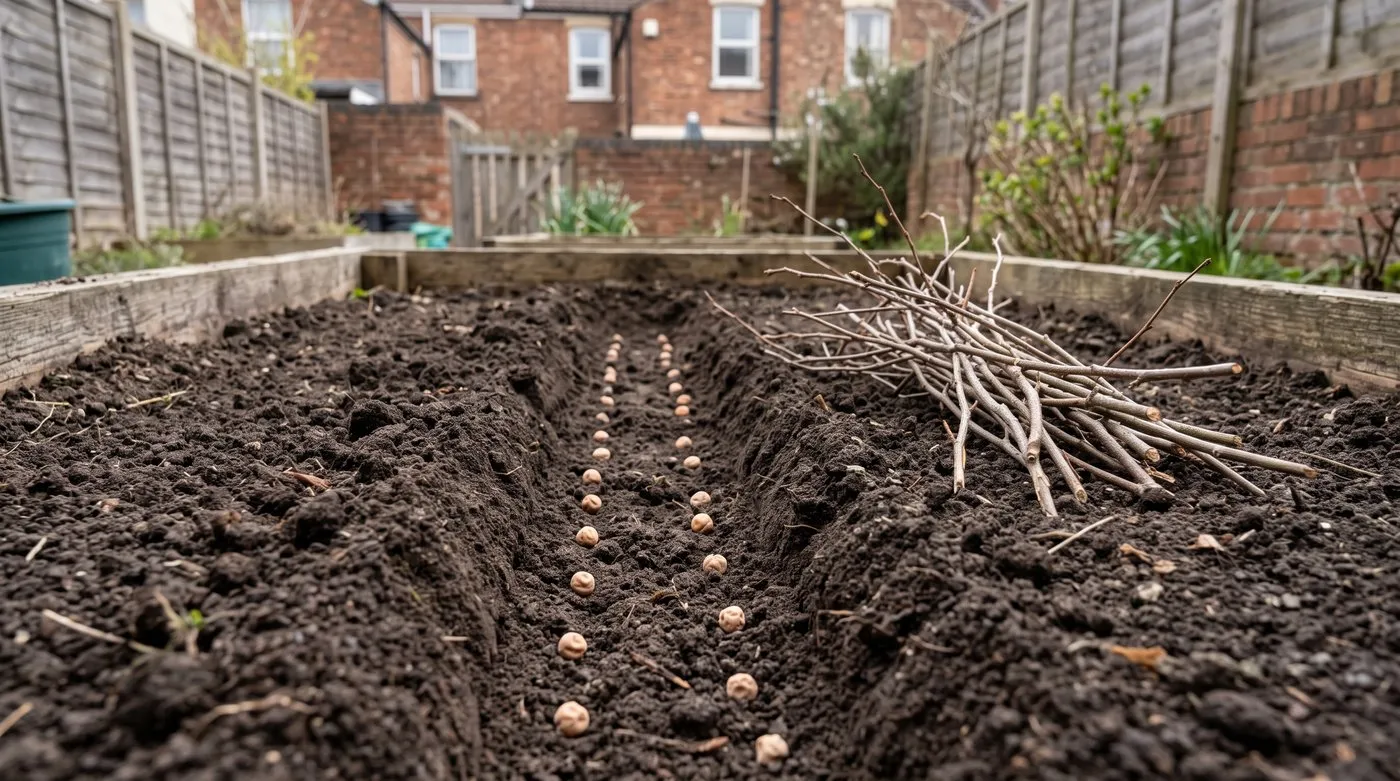
Sow in a wide, flat trench with the seeds in two staggered rows. Two or three small sowings beat one big one.
How to support mangetout and sugar snap peas
Every variety needs support. Even dwarf ones flop over without it. Put supports in when you sow, not once the plants are sprawling.
Pea sticks (twiggy hazel branches) are the traditional way and still one of the best. Push them firmly into the soil along both sides of the row. The tendrils have hundreds of twigs to grab. Store them dry and you can use them again.
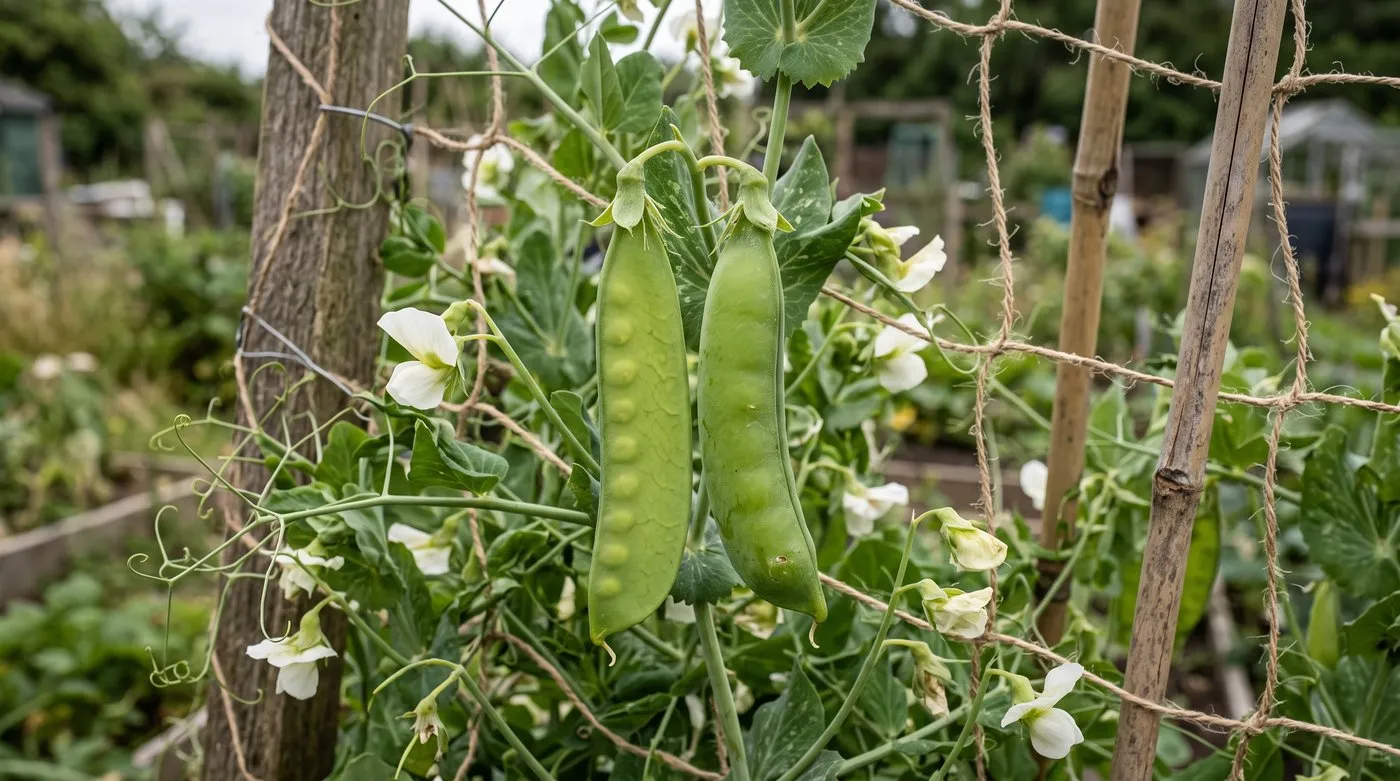
Netting between posts suits tall varieties. Use pea and bean netting fixed about 1.5-2m high for Shiraz and Delikett. Make sure the bottom reaches the soil so young plants find it.
Wigwams of bamboo canes suit sugar snaps. Push six to eight canes into a circle and tie them at the top. Sow two or three seeds at the foot of each cane. It saves space and looks great in a kitchen garden.
Wire mesh panels on walls or fences suit small gardens. Peas against a sunny south-facing wall crop a little earlier.
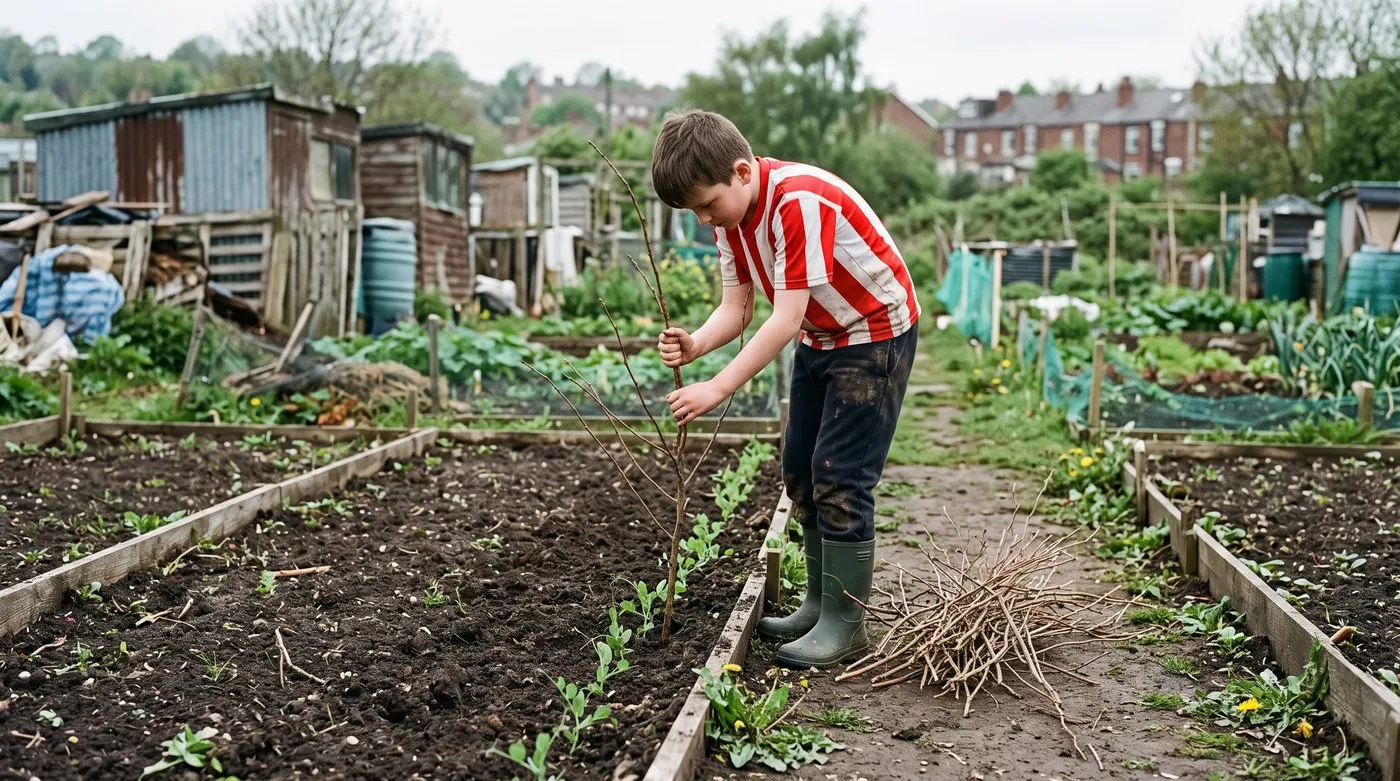
Put supports in at sowing time, before the plants sprawl. Twiggy hazel gives the tendrils hundreds of places to grab.
Growing mangetout and sugar snap peas through the season
Once they’re sown and supported, they need very little.
Watering
Water well at sowing and keep the soil moist until seedlings appear. After that, watering matters most when they’re flowering and making pods. Dry soil then means fewer pods. A good soak twice a week in dry weather beats a daily sprinkle. Mulching around the plants helps hold in moisture.
Feeding
Peas make their own nitrogen, so they don’t need a nitrogen feed. A tomato feed once flowering starts can help but isn’t essential.
Weeding
Keep weeds away from young plants, as they don’t compete well. Weed gently by hand so you don’t disturb the shallow roots. Once the plants fill out, weeds slow down.
How to avoid pea moth damage
Pea moth is the most annoying pea pest. The moths lay eggs on flowering plants in June and July, and the little caterpillars burrow into the pods to eat the peas.
Fine mesh is the surest fix. Cover plants with insect mesh while they’re in flower so the moths can’t get to them, then take it off when flowering ends.
Timing helps too. Very early or very late sowings are less likely to be in flower while the moths are about. The RHS pea moth page explains the timing in more detail.
Mangetout usually escape lightly, because you pick them before the caterpillars have time to grow. Sugar snaps, picked later, are more likely to be hit. Our guide to growing peas has more on pea moth.
How to harvest for the longest cropping season
How often you pick matters more than anything else. It’s the one rule that makes the difference.
Pick mangetout when the pods are flat and see-through. You should just make out tiny peas inside. They’ll be about 6-8cm long and snap crisply. If the peas are swelling, you’ve left them too long.
Pick sugar snaps when the pods are plump, round and firm. A good one snaps cleanly and is sweet enough to eat standing in the garden. If the pod is going pale and bumpy, it’s past its best.
Pick every couple of days. If pods are left to ripen, the plant stops flowering. Keep picking and it keeps cropping for weeks longer. Hold the stem with one hand and snap the pod off with the other, as yanking can damage the plant.
Fresh pods keep for a few days in the fridge but taste best the day you pick them. To freeze, blanch for a minute, plunge into iced water, drain and freeze flat on a tray before bagging. Sugar snaps keep their crunch better than mangetout.
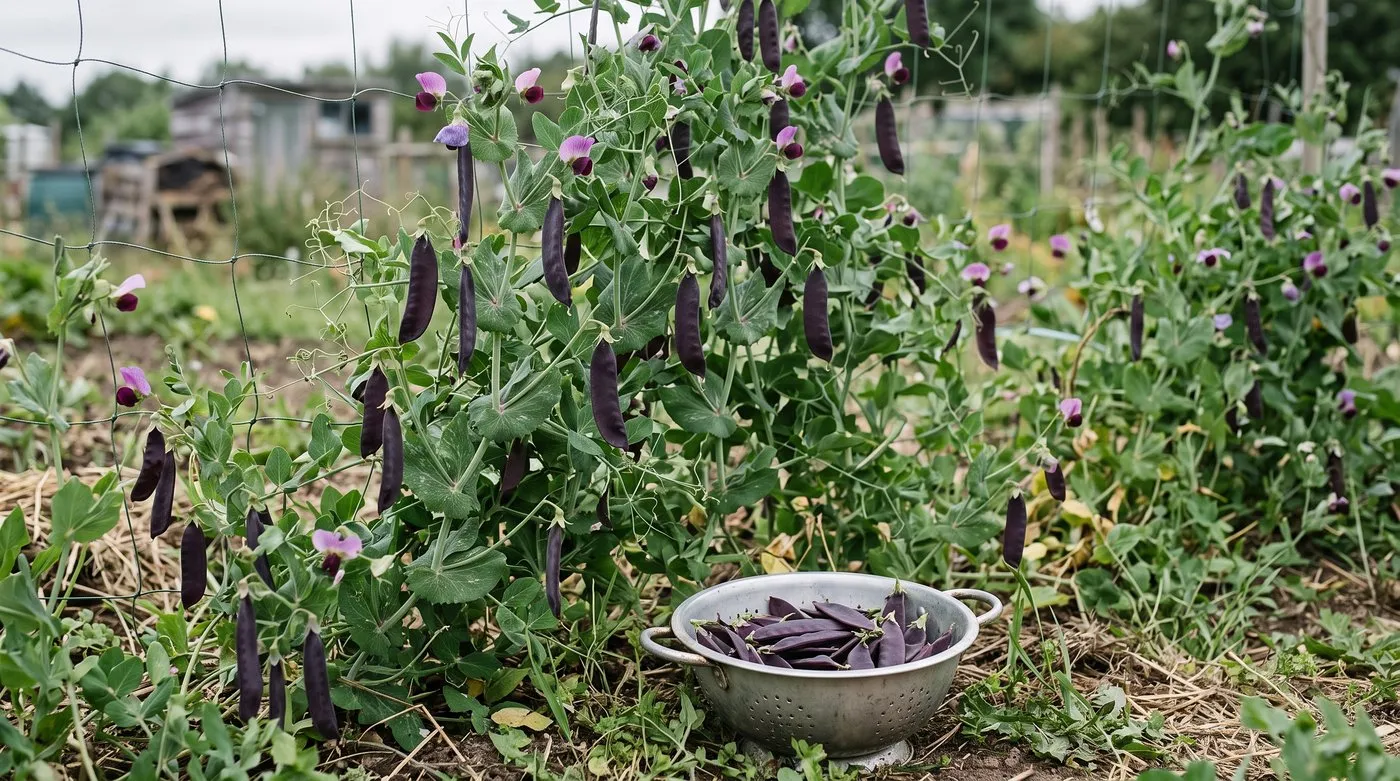
Pick every couple of days and the plants keep flowering for weeks. Purple pods like Shiraz are easy to spot among the leaves.
What to do with pea plants after harvest
When the plants stop cropping, cut the stems at ground level and leave the roots in the soil. As they rot down, they give back a little nitrogen to the next crop. That’s why peas are often followed by hungrier crops such as cabbages, lettuce and sweetcorn.
Pop the stems on the compost heap. They rot down quickly, especially mixed with cardboard and dry leaves.
If there’s still time, sow a quick crop of salad leaves, spring onions or radishes in the same spot.
Frequently asked questions
What is the difference between mangetout and sugar snap peas?
Mangetout are flat pods picked before the peas swell. Sugar snaps are plump, rounded pods eaten whole once the peas inside have filled out. Mangetout are crisp and mildly sweet. Sugar snaps are sweeter and juicier, with a lovely snap. Both are types of garden pea.
When should I sow mangetout and sugar snap peas?
Sow outdoors from March to June, once the soil has warmed. Early March sowings under cloches give the first pods in June. Sow a little more every three or four weeks for pods through to September. Late June is about the last chance.
Do mangetout and sugar snaps need support?
Yes, every variety needs something to climb. Dwarf types like Sugar Ann need short pea sticks or a low net. Tall ones like Shiraz and Delikett need netting or canes about 1.5m high. Put supports in when you sow so the tendrils can grab them straight away.
How often should I pick mangetout pods?
Every couple of days once pods start forming. If pods are left to ripen, the plant thinks its job is done and stops flowering. Regular picking keeps the crop coming for weeks longer. Hold the stem with one hand and snap the pod off with the other.
Why are there maggots inside my sugar snap pea pods?
They’re pea moth caterpillars. The moths lay eggs on flowering peas in June and July, and the caterpillars burrow into the pods. Cover plants with fine mesh while they’re in flower to keep the moths off. Very early or very late sowings are less likely to be hit.
Can I grow mangetout in containers?
Yes, dwarf varieties do well in big pots. Sugar Ann and Oregon Sugar Pod are good choices for a pot at least 30cm deep and 40cm wide. Fill with multipurpose compost, sow 5cm apart and 4cm deep, and add some support. Water regularly, as pots dry out quickly.
What is the sweetest sugar snap pea variety?
Delikett is often said to be the sweetest. Its thick, stringless pods are lovely eaten raw straight off the plant. It grows to 1.5m and needs tall supports. Sugar Ann is nearly as sweet and only 60cm tall, so it suits small spaces and pots.
Our team produces practical UK gardening guidance from source research, contributor records and established horticultural practice. Editorial standards are overseen by Matt W.