Key takeaways
- Plant saffron crocus corms in July or August, 10-15cm deep and about 10cm apart
- Give them full sun and gritty, free-draining soil, a raised bed or a deep pot
- Flowers open in October and November; pick the three red stigmas from each
- It takes about 150 flowers to make a gram, so plant plenty of corms
- Leave the grassy leaves until they yellow in late spring, then keep corms dry
- Don't mix it up with Colchicum, the poisonous autumn flower also called meadow saffron
Saffron is surprisingly easy to grow in a UK garden. It comes from the saffron crocus, a pretty purple autumn flower. Plant the corms in summer, keep them dry while they rest, and you can pick your own red threads every autumn.
The plant follows a simple cycle. It flowers in autumn, feeds itself with grassy leaves over winter, then rests underground through summer. Get the drainage right and a small bed pays you back for years. This guide covers planting, the summer wet problem, harvesting and drying.
What is saffron and why is it so precious?
Saffron is the dried red stigma of the Crocus sativus flower. Each flower has just three, and every one is picked by hand. It takes about 150 flowers to make a gram of dried saffron, which explains the price in the shops.
Saffron crocus sets no seed, so you can’t grow it from a seed packet. Every plant comes from a corm, a swollen underground stem a bit like a bulb. If you’re unsure of the difference, the guide to bulbs, corms, tubers and rhizomes explains it simply.
Saffron also has deep roots in Britain. The Essex town of Saffron Walden takes its name from the crop once grown there.
Gardener’s tip: Buy the biggest corms you can find. Small corms often spend their first year bulking up instead of flowering.
Saffron crocus or meadow saffron?
Don’t confuse saffron crocus with Colchicum, often sold as “autumn crocus” or “meadow saffron”. Colchicum flowers at the same time and looks similar, but every part is poisonous to people and pets. Saffron crocus has three stamens and three long red stigmas. Colchicum has six stamens. Only harvest from corms sold as Crocus sativus. The guide to growing colchicum shows what it looks like.
When and how to plant saffron corms
Plant saffron corms in July or August, as soon as they are on sale. This lets them root before flowering in autumn. Corms planted much later may flower poorly or skip their first year.
Pick a spot in full sun. Saffron comes from hot, dry places and wants a warm, dry summer rest. Plant each corm 10-15cm deep and about 10cm apart, pointed end up. Shallow corms tend to flower less and split into lots of small ones.

Set each corm pointed end up, 10-15cm deep. Plenty of grit in the soil helps them through a wet British summer.
Growing saffron in pots
Saffron grows well in deep pots, which is handy on heavy clay. Use a pot at least 20cm deep and mix about one part grit to two parts peat-free compost. Plant at the same depth and spacing. In a wet summer, move the pot somewhere dry, such as under the eaves or into a cold greenhouse.
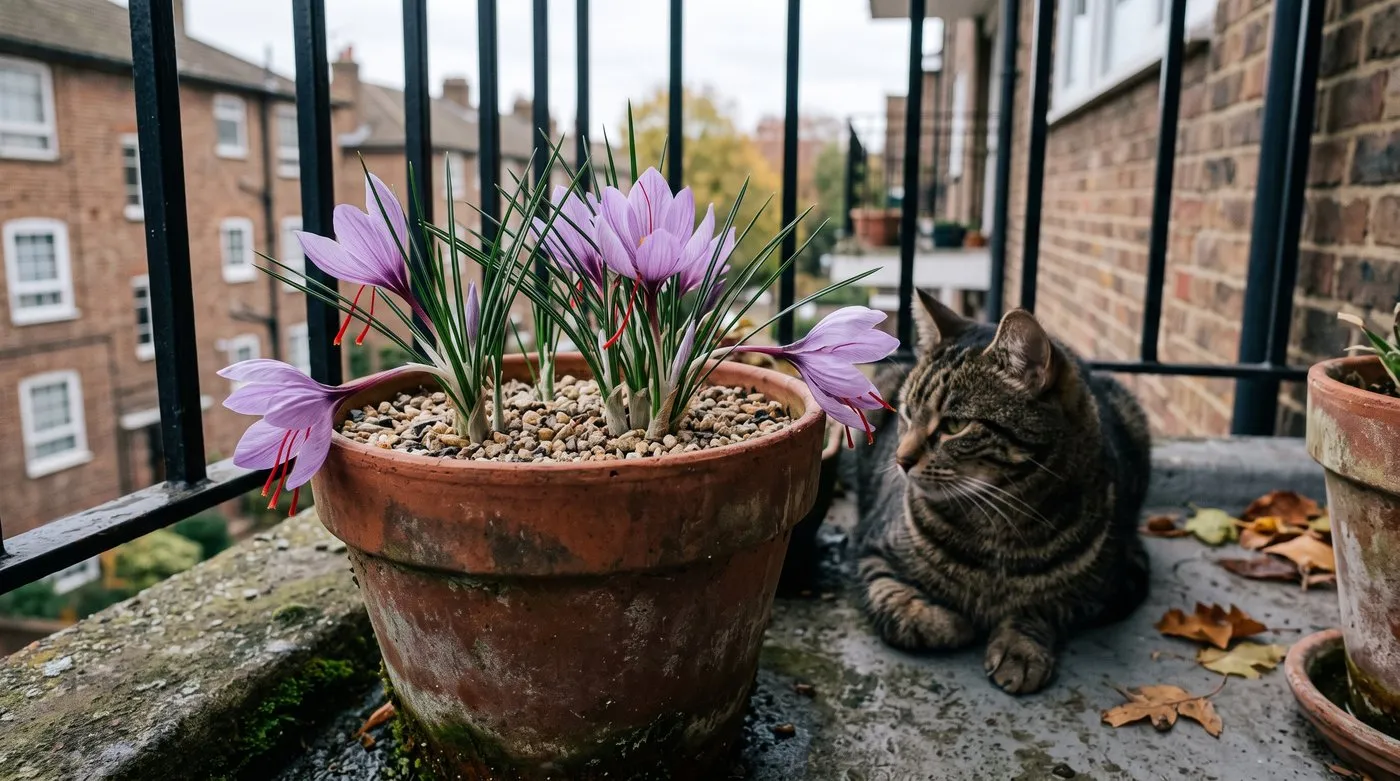
A deep pot of gritty compost works well on a balcony, and you can move it out of the rain in a wet summer.
The saffron year, stage by stage
Knowing the cycle tells you when to act and when to leave the corms alone. Most failures come from watering or disturbing them at the wrong time.
- Flowering, October to November. Purple flowers push up, often with or just before the leaves. Each one lasts only a few days.
- Leaves, November to spring. Narrow, grassy leaves with a pale stripe stay green all winter and feed the corm. Don’t cut them while they’re green.
- Die-back, late spring. The leaves turn yellow and wither. Stop any watering now.
- Resting, June to August. The corm sleeps underground and needs to stay warm and dry. This is the tricky part in the UK.
Why most UK saffron crops fail
Cold is rarely the problem. Wet soil in summer is. While the corm rests from June to August, saturated soil makes it rot to soft brown mush.
Sort out the drainage before you plant. A raised bed at least 20cm high works well, or mix plenty of horticultural grit into the planting area. A gravel garden in full sun suits saffron perfectly. In a very wet garden, lift the corms in June once the leaves have died back. Store them in a paper bag somewhere cool and dry, then replant in late July.
Warning: Don’t mulch saffron with bark or compost over summer. A damp mulch holds rain against the resting corms and invites rot.

A gravel-topped raised bed keeps the corms dry while they rest, which is the main secret to a reliable crop.
How to harvest saffron stigmas
Pick on a dry morning, once the flowers have opened. Check the bed every day during flowering, because each flower only lasts a few days.
Pick each flower, or pluck the stigmas straight from the plant. Take only the three deep red threads with your fingers or fine tweezers. Leave the yellow parts behind, as they add nothing to the flavour.

Fine tweezers make light work of picking the three red threads. Leave the yellow stamens behind.
How to dry and store saffron
Drying turns fresh stigmas into a spice that keeps. Spread them in a single layer on paper or a fine sieve. Leave them somewhere warm, dry and dark, such as an airing cupboard, until they are brittle. This usually takes a day or two. Properly dried threads snap rather than bend.
Store the dried threads in a small airtight jar in a dark cupboard. Use them within a year or so for the best colour and flavour.

Dry the threads until they snap, then tip them into a small jar. Keep it in the dark so the colour lasts.
Lifting and dividing saffron corms
After three or four years the corms get crowded and flowering drops off. Lift the clump in June, once the leaves have died back. Ease the corms out gently with a fork so you don’t spear them.
Pull the corms apart and throw away any that are soft or damaged. Let the healthy ones dry in an airy, shady spot for a week. Replant the biggest in late July or August, about 10cm apart, in fresh gritty soil. Spare corms can start a second bed for free. The guide to storing flower bulbs covers keeping them sound until planting time.
Saffron growing calendar for the UK
| Month | What to do |
|---|---|
| July | Plant or replant corms 10-15cm deep in full sun and gritty soil |
| August | Finish planting; keep soil on the dry side |
| September | Water once if the soil is bone dry, to help flowering |
| October to November | Flowers open; pick stigmas on dry mornings and dry them |
| December to March | Leave the grassy leaves to feed the corms |
| April to May | Leaves yellow and die back; stop watering |
| June | Corms rest; keep dry; lift and divide crowded clumps |
Saffron goes in at the same time as many other autumn-flowering bulbs. The ordinary garden crocus guide covers the spring-flowering kinds grown purely for show.
Common saffron mistakes to avoid
- Heavy, wet soil. Corms rot while resting. Use raised beds, gravel or gritty pots.
- Planting too shallow. Shallow corms flower less. Plant 10-15cm deep.
- Cutting the leaves early. They feed next year’s flowers. Wait until they yellow.
- Watering in summer. Resting corms need a dry break. Keep the bed dry from June to August.
- Leaving flowers too long. Pick the stigmas soon after the flowers open, before they spoil.
Frequently asked questions
Can you grow saffron in the UK climate?
Yes, as long as the soil drains well. Saffron crocus copes with UK winters and flowers in autumn. The real problem is wet soil in summer, when the corms are resting. Raised beds, gravel or gritty pots solve it.
How many saffron flowers do you need for 1g?
About 150 flowers make a gram of dried saffron. Each flower has three red stigmas, all picked by hand. A small bed gives enough for a few special dishes each year, and the harvest grows as the corms multiply.
When do you plant saffron corms in the UK?
Plant saffron corms in July or August. That gives them time to root before flowering in October and November. Set them 10-15cm deep and about 10cm apart in full sun. Late-planted corms may flower poorly in their first autumn.
Why is my saffron not flowering?
The usual causes are small corms, shallow planting, shade or overcrowding. Plant large corms 10-15cm deep in full sun. If an old clump has stopped flowering, lift and divide it in early summer. Small corms often need a year to bulk up before flowering.
Do saffron corms come back every year?
Yes, they come back and multiply if kept dry in summer. Each corm makes new corms beside it, so the clump and the harvest grow over the first few years. In soggy soil they rot while resting.
How do you dry saffron at home?
Dry the stigmas somewhere warm and dark until they are brittle. Spread them on paper or a fine sieve, or use an airing cupboard. Dried threads snap rather than bend. Store them in a small airtight jar in the dark.
Is saffron crocus the same as meadow saffron?
No, meadow saffron is Colchicum, which is poisonous. It flowers at the same time and looks similar. Saffron crocus has three long red stigmas and three stamens, while Colchicum has six stamens. Only ever harvest from corms sold as Crocus sativus.
Now you can grow your own red threads, read the guide to growing Indian and Eastern spices in the UK to fill out your spice rack, or find more projects in the growing hub.
Our team produces practical UK gardening guidance from source research, contributor records and established horticultural practice. Editorial standards are overseen by Matt W.