Key takeaways
- Keep beds 1.2m wide or less, or 60cm if you can only reach from one side
- Leave 45-60cm for main paths so you can get a barrow and watering can through
- Put tall crops on the north side so they don't shade shorter ones
- Fast, high-value crops like salad, beans, beetroot and herbs earn their space
- Resow every gap as soon as it clears to keep small beds busy all season
A small vegetable garden can feed you well if the layout is right. The rules are simple: beds you can reach across, paths you can actually use, and tall crops placed where they won’t shade the rest. Get those right and even a corner of a back garden will give you salad and veg all summer.
Below are five layouts that suit small UK gardens, plus the crops that earn their space. For bigger plots, the guide to kitchen garden design and layout goes into larger sizes, fruit areas and compost bays.
How wide should a vegetable bed be?
Make beds no wider than 1.2m. Most people can comfortably reach about 60cm, so you can work the middle from either side without stepping on the soil. Treading on beds squashes the soil and makes life harder for roots.
If a bed sits against a wall or fence, you can only reach it from one side. Keep those beds to about 60cm wide. Length is up to you. Beds of about 2.4m are handy because timber often comes in that length.
Height matters less than width. A raised bed of 15-30cm suits most crops, though carrots and parsnips like deeper, loose soil. The guide to raised bed gardening for beginners covers building and filling them.

Mark your beds out with string and canes first. It’s much easier to move a string line than a bed full of soil.
Paths and sun: getting the layout right
Paths are what make the beds usable. Leave 45-60cm for main paths, enough for a wheelbarrow and your boots. Paths you only stand on to reach into a bed can be narrower, about 30cm.
Sun decides how well everything grows. Pick the sunniest part of the garden. Run beds north to south if you can, so both sides get even light. If they have to run east to west, put the tallest crops along the north edge.
Gardener’s tip: Before you build, walk the paths with a loaded wheelbarrow and a full watering can. If it feels tight now, it will feel worse in July.

Three beds with gravel paths between them fit neatly into a typical back garden, with room left for a lawn and patio.
Raised beds or growing in the ground?
Both work. Raised beds suit most small gardens, especially on heavy clay. They drain well, warm up sooner in spring and give a clear no-tread growing space. The downside is the cost of filling them, and they dry out faster in summer, so keep a water butt close.
In-ground beds cost almost nothing and suit good, free-draining soil. Containers are best for patios, courtyards and renters.
| Option | Good for | Watch out for |
|---|---|---|
| Raised beds | Heavy or wet soil, a tidy defined space | Cost of filling, drying out in summer |
| In-ground beds | Good soil, a tight budget | Waterlogging on clay |
| Containers | Patios, courtyards, renters | Frequent watering |
Five small vegetable garden layout plans
Pick the plan that matches your space, then add or remove beds to suit.
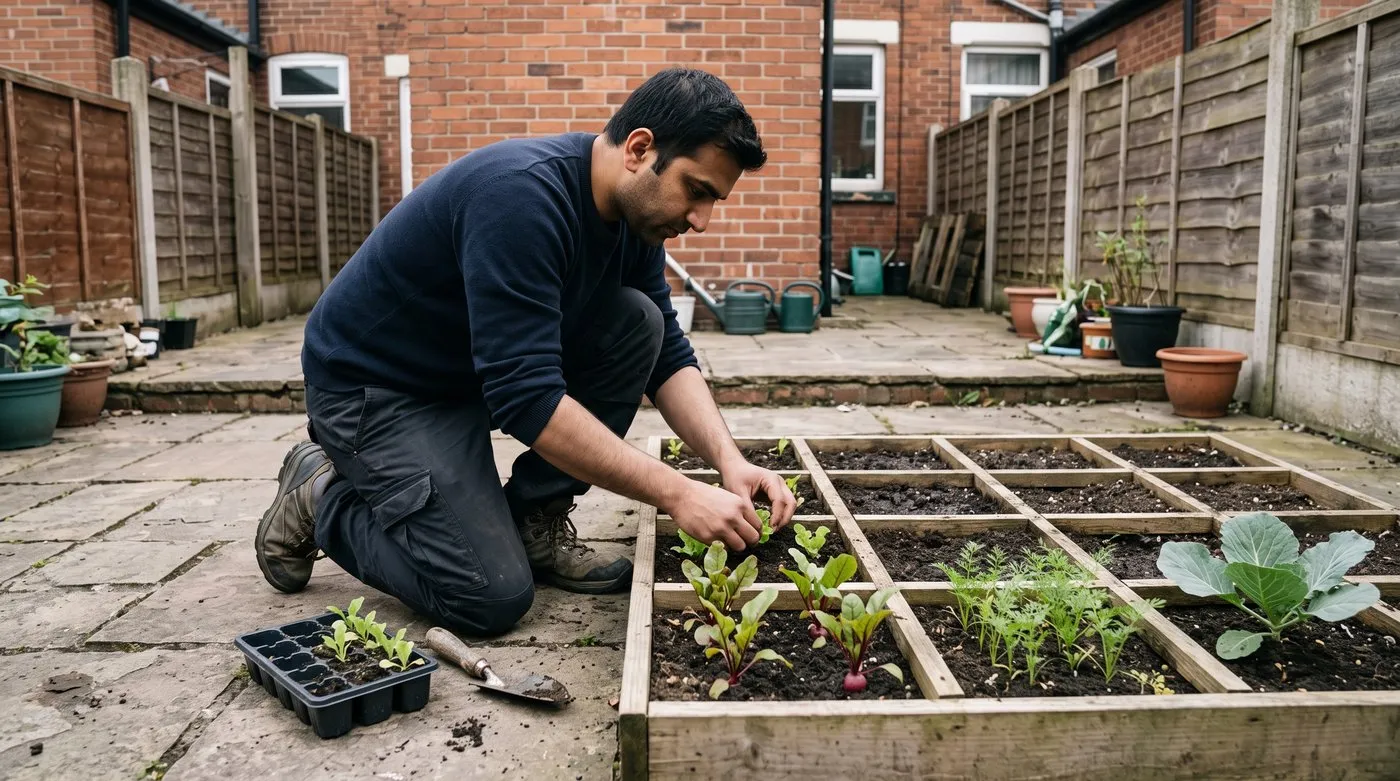
A grid makes spacing easy. Each square gets its own crop, and you resow it as soon as it clears.
Plan 1: One raised bed to start
One bed of about 1.2m by 2.4m is the best place to begin. It fits beside a patio, along a fence or on a patch of lawn. Grow salad leaves and radishes at the front, beetroot and carrots in the middle, and dwarf beans or one courgette at the back. Resow as you pick and it keeps going from spring to autumn.
Plan 2: Four beds in rotation
Four beds of about 1.2m by 2.4m, with a main path down the middle and narrow paths between. Give each bed one crop group, then move each group along one bed every year. This is the classic small-garden kitchen plot and makes crop rotation easy. It needs a fair bit of space, so it suits a medium back garden.
Plan 3: A square-foot grid
One or two beds divided into a grid of 30cm squares with string or thin battens. Each square holds a set number of plants, for example 1 cabbage, 4 lettuces, 9 beetroot or 16 carrots. When a square clears, you resow it straight away. The square foot gardening guide has the full planting counts.
Plan 4: An L-shaped corner
Two narrow beds meeting at a right angle along two fences, each about 60cm wide. This suits an awkward corner or a garden where you want to keep the middle as lawn or patio. Climbing beans and cordon tomatoes go against the fence, with low salads in front.
Plan 5: A potager of veg and flowers
A potager mixes vegetables and flowers in the same bed. Marigolds, calendula and nasturtiums sit among the lettuces and beans. It looks like a pretty border, so it works in a front garden. The flowers bring in pollinators and pest-eating insects. See the guide to potager gardens for planting ideas.

One well-planted bed can give lettuce, chard and beans at the same time. Keep resowing gaps and it stays productive for months.
Crop rotation in a small plot
Crop rotation means growing each crop family in a different bed each year. It helps stop soil pests and diseases, such as clubroot in brassicas, building up.
A common four-group system uses:
- Potatoes
- Legumes, such as peas and beans
- Brassicas, such as cabbage, kale and broccoli
- Roots and onions, such as carrots, beetroot, onions and garlic
Move each group one bed along every year. With only two or three beds, combine groups and keep the key rule: don’t grow the same family in the same spot two years running. The 4-year crop rotation plan explains it step by step.
Making the most of every square
A small garden works hardest when soil is never left bare. Succession sowing means sowing little and often, then resowing as soon as a crop is picked. Sow a short row of lettuce every two to three weeks rather than all at once.
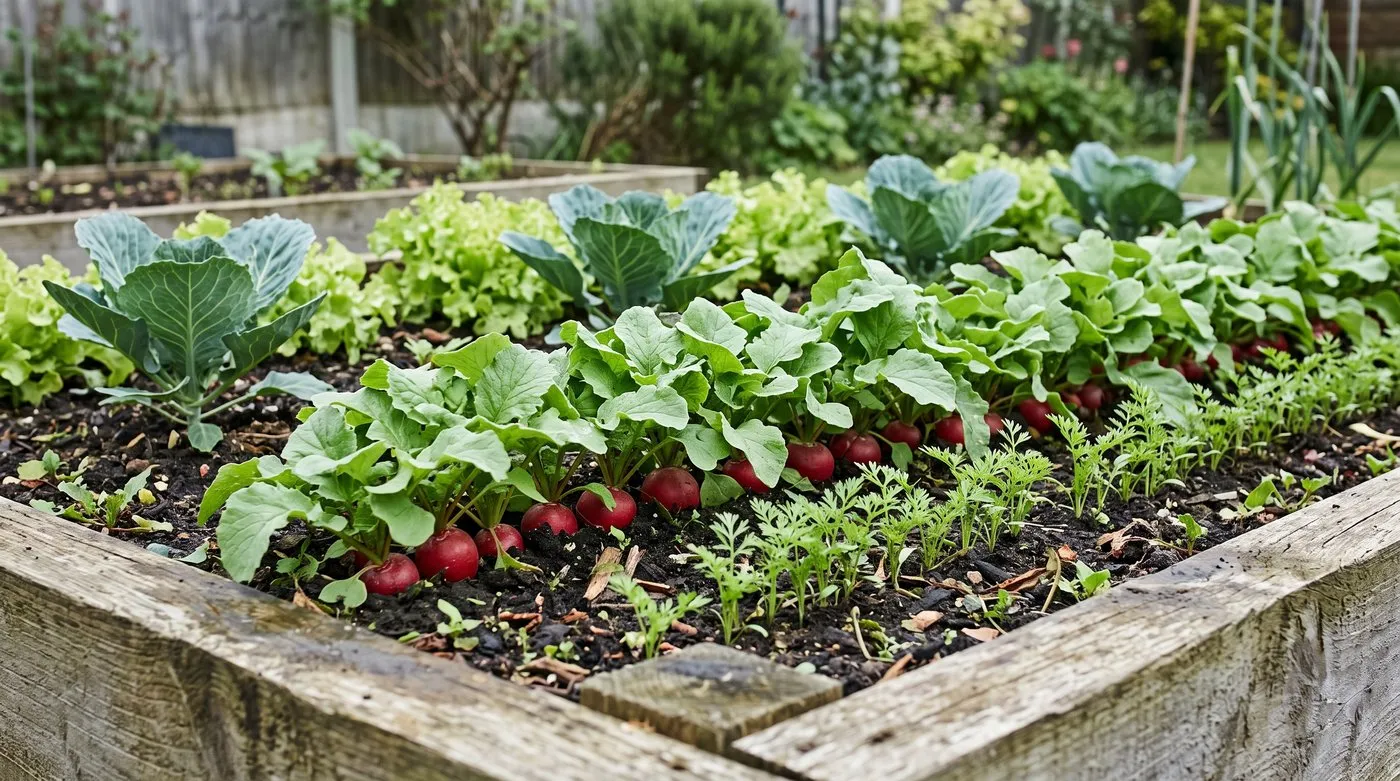
Fast radishes and lettuce fill the gaps between slower crops and are picked before the space is needed.
Intercropping puts a fast crop between slow ones. Radishes sown between parsnip rows are pulled long before the parsnips need the room. Lettuce fits between young cabbages and is cut before they spread. The succession planting guide has more timings.
Growing up to save space
When the ground runs out, grow upwards. Climbing French and runner beans on a cane wigwam give far more beans for the floor space than dwarf types. Cordon tomatoes trained up a single cane do the same.
A trellis on a sunny wall can carry cucumbers and peas. Keep tall crops on the north side of a bed, or they will shade everything behind them by midsummer.

Beans on a wigwam and cucumbers up a trellis use height instead of floor space. Pots of herbs fill the gaps below.
Best vegetables for a small garden
Choose crops that are fast, pricey to buy or much better fresh. These give the most for the space.
| Crop | Why it suits a small garden |
|---|---|
| Cut-and-come-again salad | Fast, and you pick it for weeks |
| Dwarf French beans | Compact and heavy cropping |
| Climbing beans | Lots of beans from a small footprint |
| Beetroot | Quick, and you can eat the leaves too |
| Herbs | Cheap to grow and used every day |
| Courgette | One or two plants are plenty |
| Chard | Picks for months from one sowing |
Maincrop potatoes, pumpkins and Brussels sprouts take a lot of room for a long time. Leave them out unless you have space to spare. Short on ground altogether? The guide to container vegetable gardening shows what grows well in pots.
Small veg garden calendar
This is a simple year for a small plot. In the north, things usually run a week or two later.
| Month | What to do |
|---|---|
| February | Plan your beds and order seed. Mark out new beds with string |
| March | Sow peas and early carrots under cloches. Plant first early potatoes |
| April | Sow beetroot, carrots and salad. Plant onion sets |
| May | Sow French and runner beans after the last frost. Plant out courgettes and tomatoes late in the month |
| June | Keep sowing salad every few weeks. Thin roots and pinch out tomato side-shoots |
| July | Pick beans and courgettes often. Sow autumn salads and more beetroot |
| August | Sow winter salads and spring cabbage. Lift onions to dry |
| September | Harvest and clear finished crops. Sow a green manure in empty beds |
| October | Plant garlic and autumn onion sets. Mulch empty beds with compost |
Common small veg garden mistakes
Beds too wide. If you have to step on the soil to reach the middle, the bed is too wide. Stick to 1.2m, or 60cm against a fence.
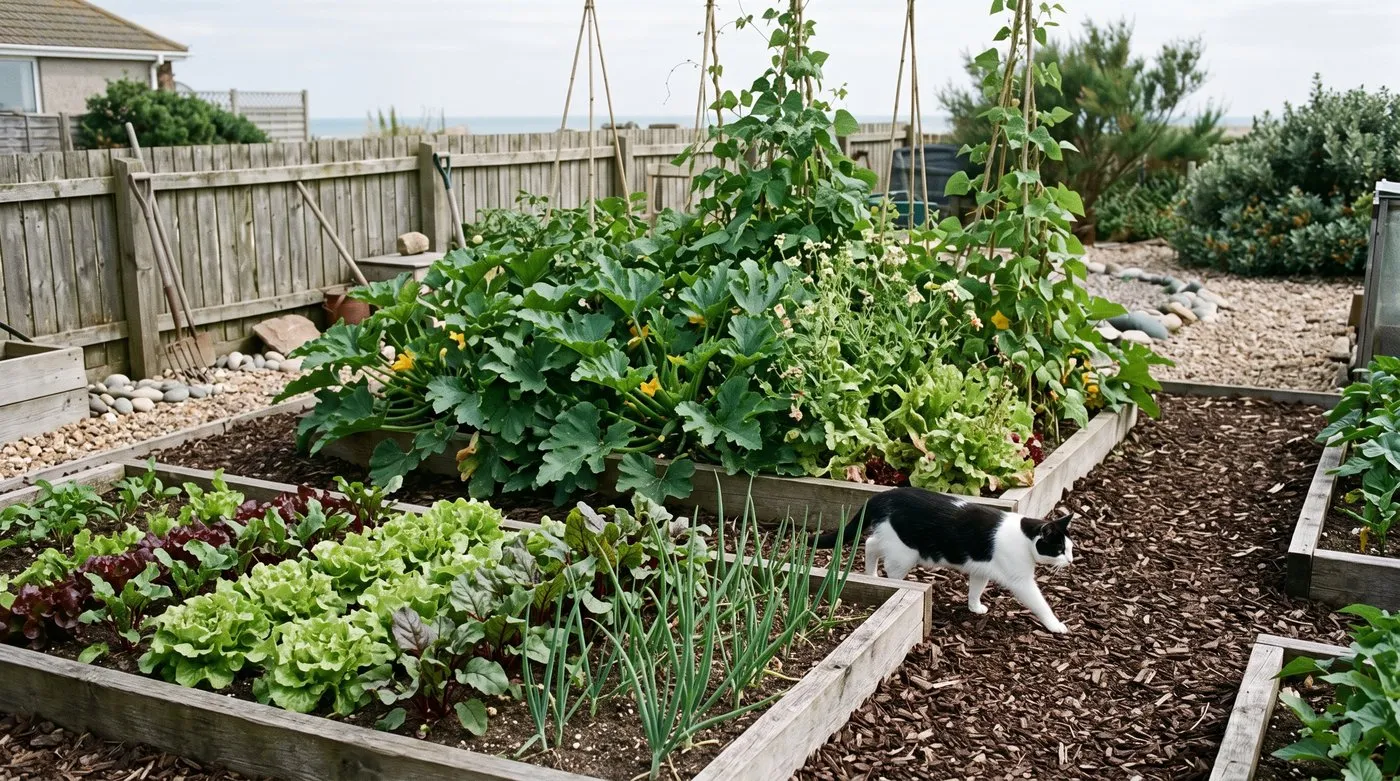
Well-spaced rows are easy to reach, weed and pick. An overcrowded bed soon turns into a tangle.
No proper paths. Beds packed edge to edge leave nowhere to kneel or wheel a barrow. Leave 45-60cm for main paths.
Tall crops in the wrong place. Beans or sweetcorn on the south side shade everything behind. Put them on the north side.
Growing space-hungry crops. A few maincrop potatoes can fill half a small garden for months. Choose quick, compact crops instead.
Leaving soil bare. An empty patch grows weeds. Resow it the day it clears.
Frequently asked questions
How wide should a small vegetable bed be?
No wider than 1.2m if you can reach it from both sides. That lets you work the middle without stepping on the soil, which squashes it. If a bed sits against a wall or fence, keep it to about 60cm wide.
What can you grow in a small vegetable garden?
Fast, high-value crops like salad leaves, dwarf beans, beetroot and herbs. They give the most food for the space. Climbing beans and cordon tomatoes use height well. Maincrop potatoes, pumpkins and sprouts take a lot of room for a long time.
How many raised beds fit in a small garden?
Most small back gardens fit two to four beds of 1.2m by 2.4m. Allow 45-60cm for the main paths between them. In a narrow garden, run beds end to end along the sunniest fence.
Do you need to rotate crops in a small garden?
Yes, where you can, even in a small plot. Moving crop families to a different bed each year helps stop soil pests and diseases building up. With two or three beds, a simple rotation of the main groups still helps.
Are raised beds better than growing in the ground?
In most small gardens, raised beds are easier. They drain well on heavy clay, warm up sooner in spring and give a clear no-tread growing area. Growing in the ground costs less and suits good, free-draining soil.
Which way should vegetable beds face?
Run beds north to south if you can, so both sides get even sun. If they run east to west, put the tallest crops along the north edge. Either way, pick the sunniest spot in the garden.
Ready to build? The guide to raised bed garden design ideas covers materials, sizes and filling, and there’s plenty more in the growing guides.
Our team produces practical UK gardening guidance from source research, contributor records and established horticultural practice. Editorial standards are overseen by Matt W.