Key takeaways
- Coriander, methi and mustard are the easiest, growing outdoors or on a windowsill
- Chillies need an early start under heat and a greenhouse or sunny windowsill to ripen
- Turmeric and ginger grow from grocer rhizomes with plump buds, planted in spring
- Curry leaf and lemongrass live in pots and must come indoors before frost
- Cardamom, black pepper, cloves, nutmeg and cinnamon won't crop in a UK greenhouse
You can grow a surprising number of Indian and Eastern spices in the UK. Coriander, methi and mustard grow happily outdoors in summer. Chillies, turmeric and ginger need some extra warmth. Curry leaf and lemongrass make good pot plants that come inside for winter.
This guide is an overview of what works, what needs a greenhouse and what isn’t worth trying. Each crop has its own detailed guide linked below.
Which Indian spices grow well in the UK?
The table sorts them from easiest to most demanding.
| Spice | Where to grow | When to start | What you harvest |
|---|---|---|---|
| Coriander | Outdoors, pots, windowsill | March to August | Leaves, then seed |
| Fenugreek (methi) | Outdoors, pots, windowsill | April to August | Leaves, sometimes seed |
| Mustard (Brassica juncea) | Outdoors, pots | March to September | Leaves, then seed |
| Chillies | Greenhouse, conservatory, sunny windowsill | January to March | Fresh or dried pods |
| Turmeric | Warm greenhouse, conservatory or indoors | Spring | Rhizomes, leaves |
| Ginger | Warm greenhouse, conservatory or indoors | Spring | Rhizomes |
| Curry leaf | Pot plant, indoors in winter | Buy a young plant | Fresh leaves |
| Lemongrass | Pot plant, indoors in winter | Spring, from shop stems | Stems |
Others are worth a try if you have a warm, sunny greenhouse. Cumin needs a long, hot summer to set seed, as our guide to growing cumin under glass explains. Holy basil (tulsi) grows like ordinary basil in a warm, sunny spot.
Easy leafy spices for pots and beds
These three grow fast in ordinary UK summer weather. A sunny windowsill, patio pot or raised bed suits them all.
Coriander
Coriander gives you fresh leaves and, later, the seeds used in spice blends. Sow straight into pots or beds from March to August, a short row every three weeks. It runs to seed fast in hot, dry weather, so a spot with a little afternoon shade helps leaf crops last longer.
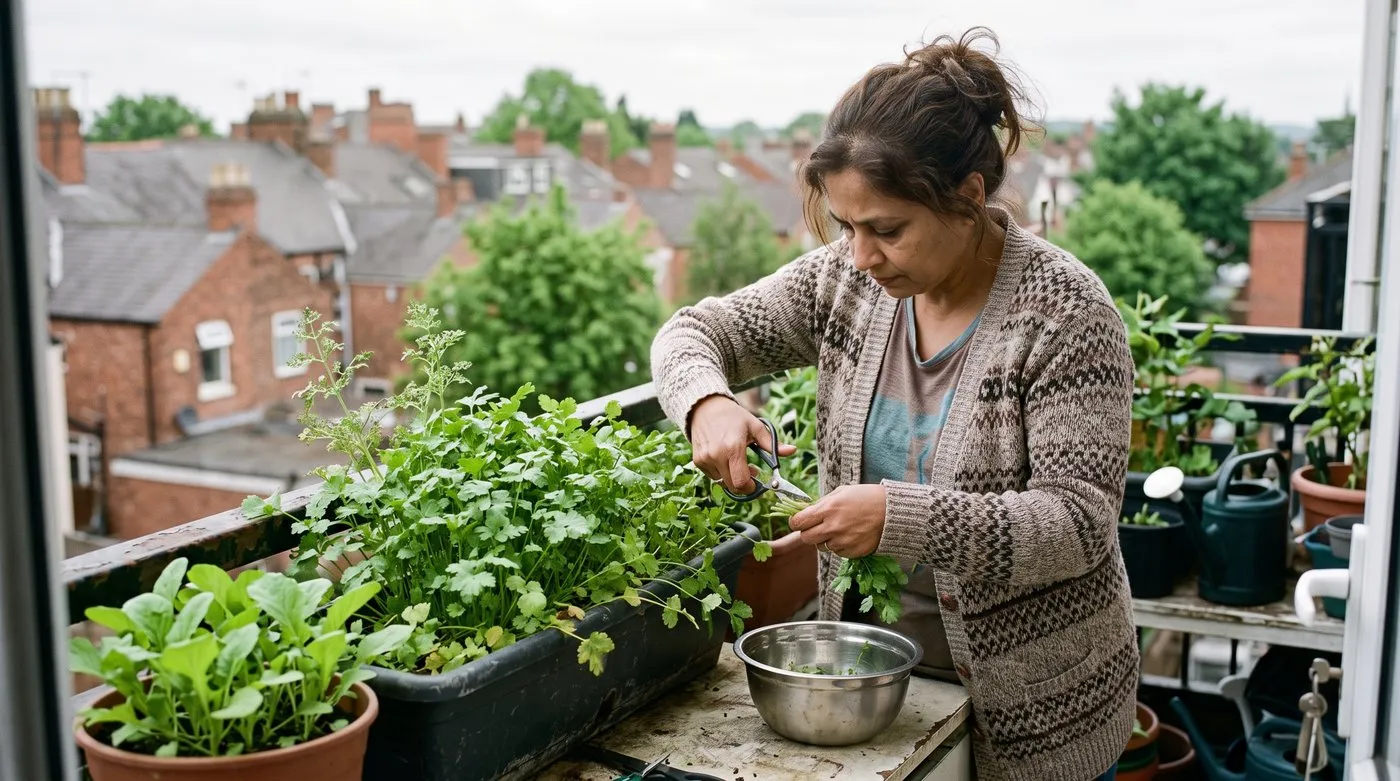
A trough of coriander on a balcony gives fresh leaves for weeks. Sow another every few weeks to keep it coming.
For seed, let some plants flower. Cut the heads when the seeds turn brown, dry them indoors, then rub the seeds free.
Fenugreek (methi)
Methi is easy and quick. Sow thickly in pots, trays or a bed from April to August, once the weather has warmed. Cut the leaves young, after a few weeks, when they’re mild and tender. Sow again every few weeks for a steady supply. Seed takes a long, warm summer to ripen, so it’s easier to buy fenugreek seed for cooking.
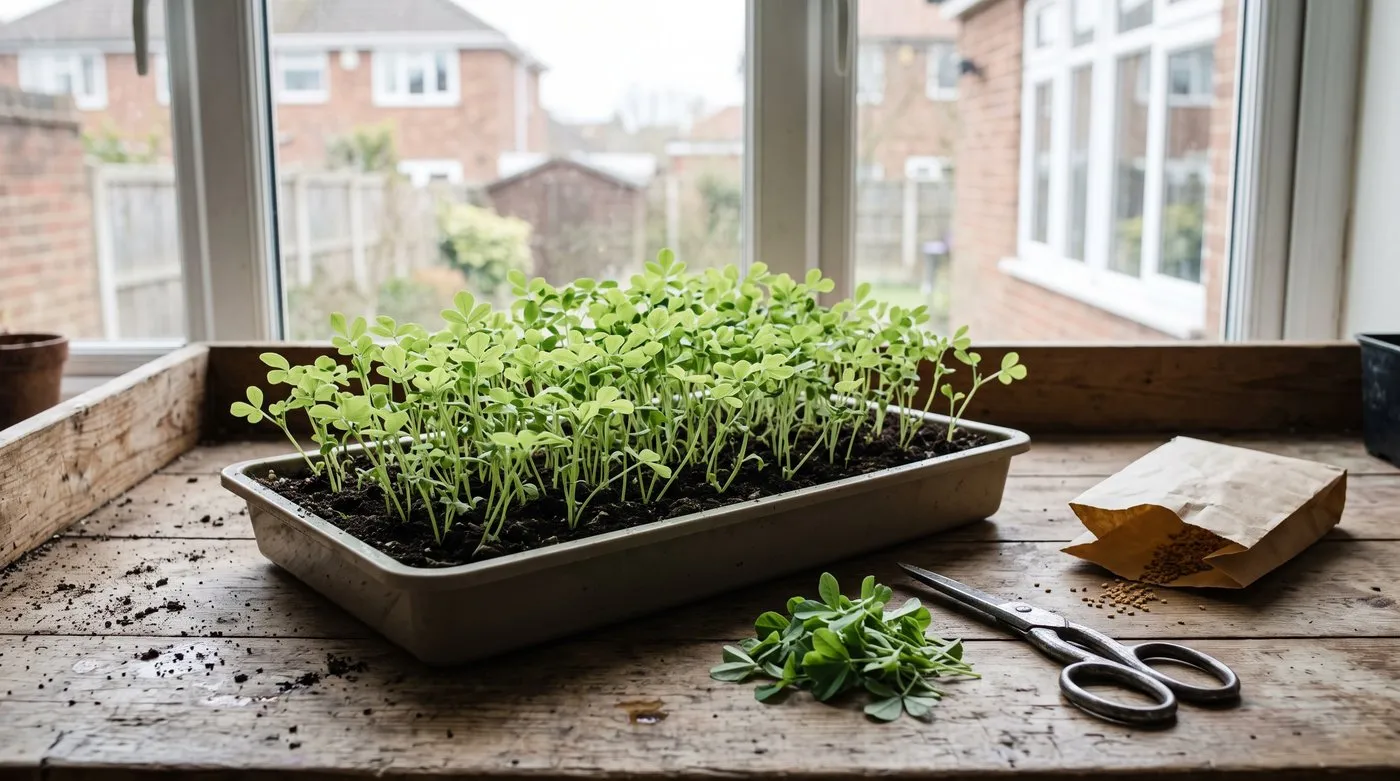
Methi is ready to cut just a few weeks after sowing. Snip it young while the leaves are mild and tender.
Mustard greens
Mustard greens give peppery leaves for saag and, if you let them flower, the brown mustard seed used in tempering. Sow from March to September. Pick leaves young for a milder bite. Plants bolt in hot weather, which is handy if you want seed. See our guide to growing mustard greens for varieties.
Heat-loving spices for the greenhouse
Chillies, turmeric and ginger come from hot climates. They need a greenhouse, conservatory or warm, bright room to do well in most of the UK.
Chillies
Chillies are the most rewarding spice to grow here. Long, thin ‘Pusa Jwala’ is a classic for Indian cooking. Kashmiri types are milder and grown for colour. Very hot types such as Bhut Jolokia are slow and need the longest season.
Sow from January to March, earliest for the hottest types. A heated propagator helps, as chilli seed is slow to come up in the cold. Pot on as the plants grow and keep them in your warmest, brightest spot. Pick from late summer into autumn. Our guide on how to grow chilli peppers covers it step by step.

Long, thin chillies such as ‘Pusa Jwala’ are just right for Indian cooking. A warm greenhouse ripens them from late summer.
Turmeric
Turmeric grows from a rhizome, the knobbly root you can buy fresh at Asian grocers. Pick plump pieces with small buds showing. Plant them shallowly in a pot of multipurpose compost in spring and keep them warm and just moist until shoots appear.
Grow them on somewhere warm and bright through summer. The leaves can be used in cooking too. Lift the rhizomes in autumn when the leaves turn yellow. Expect a modest harvest in the UK, but fresh turmeric is a treat. Our guide on how to grow turmeric has the details.

Choose plump pieces with little buds showing and plant them just below the surface. Warmth gets them going.
Ginger
Ginger is grown in the same way as turmeric. Plant plump pieces with buds in spring, keep them warm and moist, and lift in autumn when the leaves fade. Ginger likes humid air, so a misting now and then helps in a dry greenhouse. Keep a good piece back to plant again next spring. Our guide on how to grow ginger at home covers watering and winter care.
Curry leaf and lemongrass: pot plants for the kitchen
Curry leaf
Curry leaf (Murraya koenigii) is a small tree, grown in the UK as a pot plant. Buy a young plant, as seed is hard to find fresh and slow to grow. It can go outside on a warm, sheltered patio in summer, but it isn’t hardy. Bring it indoors to a bright windowsill before the nights turn cold.
In winter it grows slowly and may drop some leaves. Water sparingly until spring. Our guide to curry leaf plant care explains how to keep it happy indoors.

A healthy curry leaf plant on a bright windowsill. Pick a few sprigs at a time and it keeps on growing.
Lemongrass
Lemongrass is used in Thai, Vietnamese and Indian cooking. You can root it from fresh shop stems: stand them in a glass of water on a sunny windowsill until roots appear, then pot them up. Grow it outside in a sunny spot in summer and bring it into a frost-free, bright place for winter. Cut stems at the base when you need them. Our guide to lemongrass in pots has more.

Lemongrass makes a big, handsome clump in a pot. Bring it under cover before the first frost.
Which spices won’t grow in the UK?
Some favourite spices come from tropical plants that won’t crop in a UK home or greenhouse.
- Cardamom: The plant can grow as a houseplant, but it rarely flowers here, so you won’t get pods.
- Black pepper: A tropical climbing vine that needs steady heat and humidity all year.
- Cloves: The spice is the flower bud of a tropical tree.
- Nutmeg and mace: Both come from the fruit of a tropical tree.
- Cinnamon: The spice is the bark of a tropical tree.
Buy these and put your growing space into the crops that work.
Indian spice growing calendar
| Month | What to do |
|---|---|
| January to February | Sow the hottest chillies under heat |
| March | Sow other chillies. First coriander and mustard sowings |
| April | Plant turmeric and ginger rhizomes indoors. Sow methi and more coriander. Pot on chillies |
| May | Root lemongrass stems. Keep sowing leafy spices every few weeks |
| June | Move curry leaf and lemongrass outside to a warm spot. Keep sowing leafy spices |
| July to August | Pick leaves and chillies. Let some coriander and mustard run to seed |
| September | Collect coriander and mustard seed. Bring curry leaf and lemongrass back indoors before cold nights |
| October to November | Lift turmeric and ginger when the leaves yellow. Bring chilli plants indoors if overwintering |
| December | Order seed and plan next year |
Common mistakes when growing Indian spices
- Sowing chillies too late. Hot types need a long season. Sow by March at the latest.
- Cold nights. Chillies, turmeric and ginger sulk in a chilly greenhouse. Keep them in your warmest spot.
- Lifting turmeric and ginger too early. Wait until the leaves turn yellow in autumn.
- Leaving curry leaf or lemongrass out too long. Neither is hardy. Bring them in before the first frost.
- One big coriander sowing. It bolts quickly in heat. Sow little and often instead.
You’ll find more crop guides in our growing section.
Ready to start? The easiest first step is our guide on how to grow coriander without bolting.
Frequently asked questions
Can you grow Indian spices in the UK?
Yes, quite a few grow well here. Coriander, fenugreek and mustard grow outdoors in summer. Chillies, turmeric and ginger need a greenhouse or warm room. Curry leaf and lemongrass grow in pots that come indoors for winter.
What is the easiest Indian spice to grow in the UK?
Coriander is the easiest, closely followed by fenugreek (methi). Both grow from seed in pots or beds and give leaves within weeks. Sow little and often from spring to late summer, as coriander runs to seed quickly in hot weather.
How do I grow chillies for Indian cooking in the UK?
Sow them early, from January to March, somewhere warm. A heated propagator helps them germinate. Grow them on in a greenhouse, conservatory or sunny windowsill, as they need warmth to ripen. Long, thin types such as ‘Pusa Jwala’ suit Indian cooking.
Can I grow turmeric and ginger in the UK?
Yes, in pots in a greenhouse, conservatory or warm room. Plant plump grocer rhizomes with visible buds in spring and keep them warm and moist. Lift them in autumn when the leaves yellow. Harvests are smaller than in the tropics, but fresh rhizomes taste wonderful.
Which Indian spices will not grow in the UK?
Cardamom, black pepper, cloves, nutmeg and cinnamon won’t crop here. They come from tropical trees and vines that need steady heat and humidity all year. You can keep some as houseplants, but don’t expect a harvest.
How do I keep a curry leaf plant alive in winter?
Bring it indoors before the nights turn cold and keep it in a bright spot. Water sparingly in winter, as it grows slowly then. It may drop some leaves but usually sprouts again in spring.
Our team produces practical UK gardening guidance from source research, contributor records and established horticultural practice. Editorial standards are overseen by Matt W.