
Key takeaways
- Pick baby leaves about three weeks after sowing, or let them grow on for bigger leaves
- Sow a little every two or three weeks from March to September
- 'Red Giant' has deep purple leaves and a real mustard kick
- 'Green in Snow' is very hardy and keeps cropping through winter
- Cover with fine mesh netting from sowing day to stop flea beetles
- Mustard microgreens are ready in about a week on a windowsill
Mustard greens are the impatient gardener’s best friend. Sow a pinch of seed today and you’ll be cutting spicy baby leaves in about three weeks. While your cabbages are still tiny seedlings, mustard greens are already on your plate.
Mustard greens have been grown across Asia for a very long time and are just as happy in a British raised bed. The leaves bring real heat to salads and stir-fries. Not the gentle pepperiness of rocket, but a proper wasabi-style punch that wakes you up. If your salads have got a bit boring, these will sort that out.
Which mustard green varieties grow best in the UK?
Five varieties cover everything from mild baby leaves to tough winter greens.
Red Giant is the one most UK gardeners try first. Big, broad leaves flushed deep purple-red with green veins, and a strong mustard heat that gets hotter as the leaves grow. It looks great in the garden and on the plate, but bolts quickly in summer heat.
Green in Snow is the cold-weather champ. Narrow, jagged, bright green leaves with a medium heat. Sow it in August or September and it keeps cropping through winter. It lives up to its name.
Golden Streaks has finely cut, frilly leaves like green lace. It’s mild when young and stronger when bigger, and slower to bolt than Red Giant. It makes a pretty salad garnish.
Osaka Purple has broad, rounded leaves with deep purple colouring. It’s milder and more rounded than Red Giant, and does well in pots and window boxes.
Pizzo has finely cut leaves with a mild mustard bite. It’s fast and slow to bolt, so it’s great for microgreens and cut-and-come-again baby leaves.
| Variety | Leaves | Heat | Slow to bolt? | Best for |
|---|---|---|---|---|
| Red Giant | Broad, purple | Hot | No | Stir-fries, salads |
| Green in Snow | Narrow, jagged | Medium | Yes | Winter picking |
| Golden Streaks | Frilly, fine | Mild to medium | Fairly | Salad garnish |
| Osaka Purple | Broad, rounded | Medium | Fairly | Baby leaf salads, pots |
| Pizzo | Finely cut | Mild | Yes | Microgreens, baby leaves |
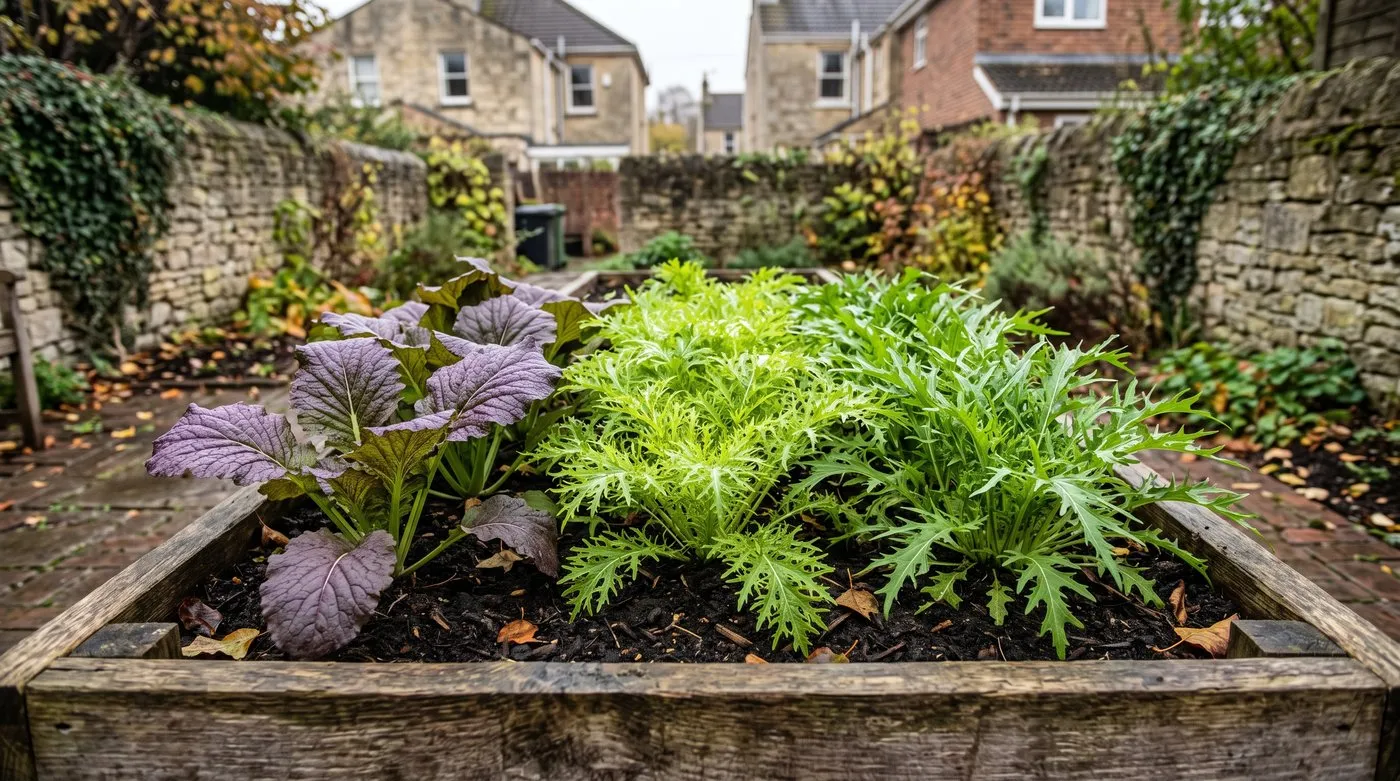
Red Giant brings the heat and the colour, while Green in Snow keeps cropping through winter. Golden Streaks is slower to bolt in summer.
When to sow mustard greens for the longest season
With a few sowings and the right varieties, you can pick mustard greens for most of the year.
March to May is the easiest time. Sow every two or three weeks for a steady supply. Seeds come up within a week once the soil warms. Start even earlier, from late February, under cloches or fleece.
June to August is trickier, as heat makes them bolt. Sow in light shade and pick slow-bolting types like Golden Streaks or Pizzo. Water often in dry spells. Treat summer sowings as baby leaves only, and pick them at 10-15cm before flower buds form.
September sowings of Green in Snow give you winter leaves from late autumn. Sow into beds cleared of summer crops. The plants settle in before the cold slows them down, then keep giving leaves through frosty weather.
How to sow and grow mustard greens
Mustard greens are one of the easiest crops you can grow.
Direct sowing
Sow seeds 1cm deep in rows about 20cm apart, or scatter them over a patch and rake them in lightly. Thin seedlings to 5cm apart for baby leaves or 15cm for big plants. In dry weather, water the row before sowing and keep the soil moist until seedlings appear.
Soil and position
Any garden soil will do. Mustard greens aren’t fussy and grow in clay, sand and everything in between. Full sun gives the quickest growth in spring and autumn. Light shade is better in summer to slow bolting. A raised bed suits them well, but an open plot is fine too.
Watering and feeding
Water regularly in dry weather. Thirsty plants bolt fast and get more flea beetle damage. A liquid seaweed feed every couple of weeks speeds things up but isn’t needed for baby leaves. Bigger plants like a sprinkle of general fertiliser after about three weeks.
How to deal with flea beetle on mustard greens
Flea beetles are the main problem with mustard greens and other leafy brassicas. These tiny beetles nibble lots of little round holes in the leaves, so they look like they’ve been hit by buckshot.
Prevention is the key. Cover the crop with fine mesh netting from the day you sow. Insect-proof mesh stops the beetles getting to the leaves. Bury or weigh down the edges, as the beetles can crawl as well as hop. Don’t wait until you see holes, as by then they’ve moved in.
Keep the soil moist. Flea beetles go for dry, stressed plants, and well-watered mustard suffers much less. The RHS page on flea beetles helps you spot them.
If a few get through, don’t worry too much about bigger plants. They grow fast enough to outpace light nibbling. Baby leaves show the damage more, which is why netting is so worthwhile.
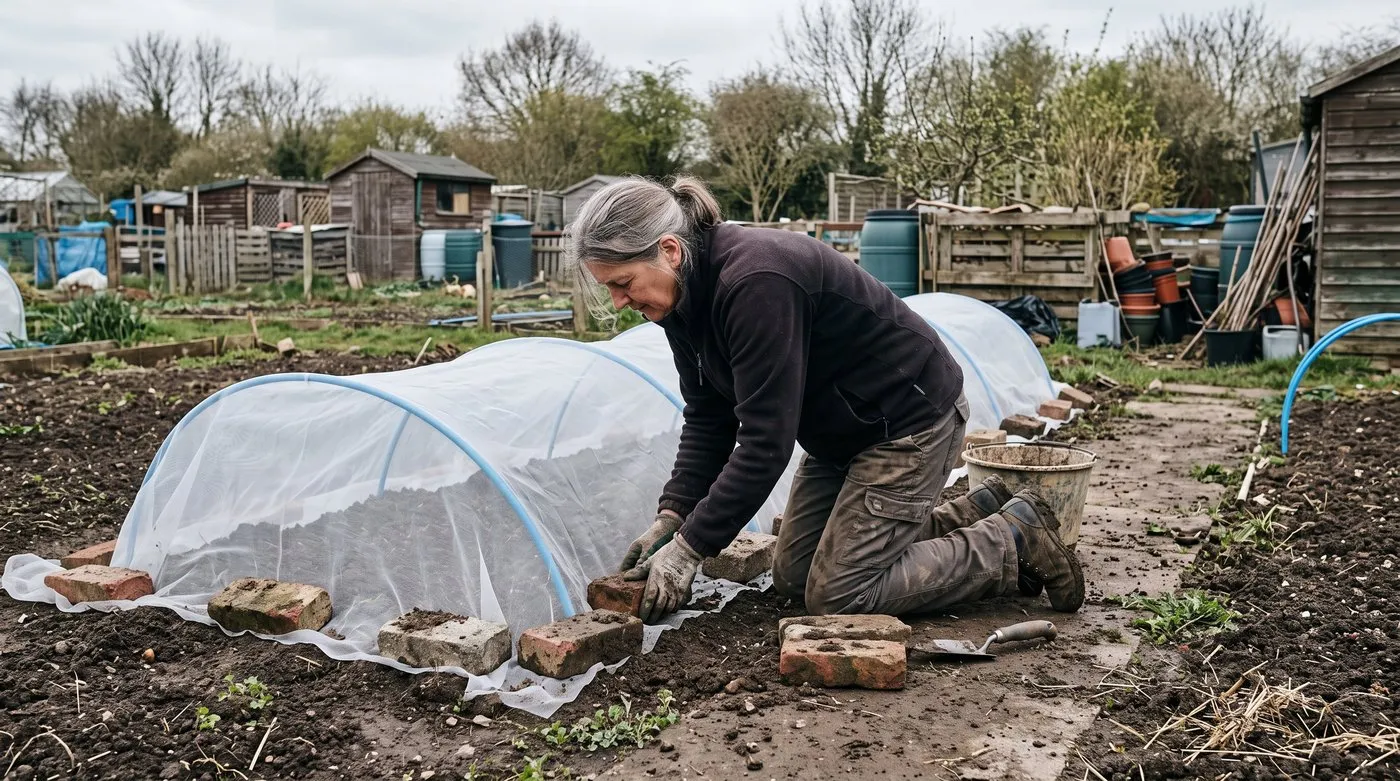
Cover the crop on the day you sow, not once holes appear. Weigh down the edges, as flea beetles crawl as well as hop.
Growing mustard greens as microgreens
Mustard is one of the most popular microgreens, and for good reason. The seed is cheap, comes up in a couple of days and gives you tasty shoots in about a week.
Scatter seed thickly over a shallow tray of damp compost or kitchen paper. Press it gently into the surface without covering it. Stand it on a bright windowsill and mist daily. Snip with scissors when the first true leaves appear, at around 3-5cm tall.
Mustard microgreens have a clean, sharp heat that’s brilliant in sandwiches and wraps or scattered over soup. Sow a new tray every week or so for a steady supply, whatever the weather outside.
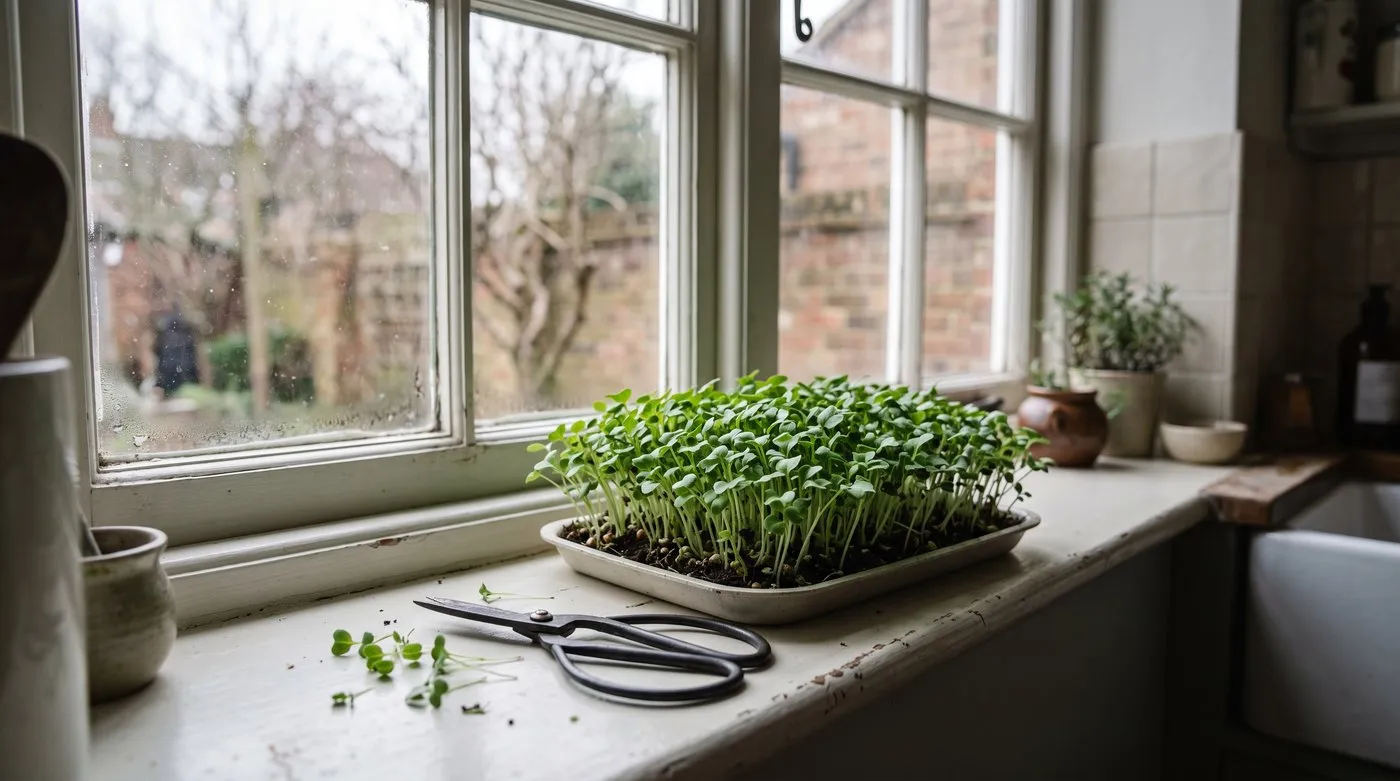
Mustard microgreens are ready in about a week. Sow a new tray every week or so for a steady supply.
Cooking with mustard greens
Baby mustard leaves are great raw in salads. Mix them with milder leaves like butterhead lettuce to balance the heat. Red Giant’s purple leaves make any salad bowl look special.
Bigger leaves are best cooked. Cooking softens the heat and brings out a rich, savoury flavour. Stir-fry with garlic, ginger and soy for a couple of minutes, or stir into ramen, soups and curries at the end. The pak choi and Asian greens family is just as handy in the kitchen. For a British twist, fry them with bacon and onions.
Mustard greens go brilliantly with pork. You can also pickle them with rice vinegar, sugar and chilli and keep the jar in the fridge. Or toss them through pasta with olive oil, garlic and parmesan for a quick weeknight supper.
Companion planting with mustard greens
Mustard greens grow so fast that they’re perfect for filling gaps and covering bare soil before weeds move in.
Sow mustard between rows of slower crops like broccoli or Brussels sprouts. You’ll have picked it before the bigger plants need the space. It’s a simple way to get more from a small bed, and it fits right in with succession planting.
Mustard also makes a quick green manure. Sow it thickly on bare soil in late summer or autumn, let it grow for a few weeks, then dig it in before it flowers. It adds organic matter to the soil. Remember it’s a brassica, so count it as part of your cabbage family when you plan your rotation. Garden Organic has more on using green manures.
Frequently asked questions
When should I sow mustard greens in the UK?
Sow mustard greens outdoors from March to September. For the earliest pickings, start some on a windowsill from February. Sow a little every two or three weeks for a steady supply. Skip the hottest weeks of July unless you have some shade, as heat makes them bolt. Sow Green in Snow in late summer for winter leaves.
How fast do mustard greens grow?
Baby leaves are ready about three weeks after sowing. Full-size leaves take around six or seven weeks. As microgreens on a windowsill, mustard is ready in about a week.
Do mustard greens survive frost?
Green in Snow is the hardiest and copes with hard frosts. Red Giant and Golden Streaks handle light frosts but struggle in long cold spells. For winter leaves, sow Green in Snow in August or September. A cloche gives you nicer leaves but isn’t essential.
Why do my mustard greens bolt so quickly?
Heat, dry soil and long summer days make them bolt. Grow them in light shade from June, water regularly and pick often to slow down flowering. Green in Snow and Golden Streaks are slower to bolt than Red Giant in summer.
Can I eat mustard greens raw?
Yes, baby mustard leaves are lovely in salads. They’re milder when young and add a peppery kick to mixed leaves. Bigger leaves are better cooked. Stir-fry them for a couple of minutes with garlic and soy, or wilt them into soups and curries. Cooking tames the heat.
How do I stop flea beetles on mustard greens?
Cover plants with fine mesh netting from sowing day. Insect-proof mesh stops the tiny beetles reaching the leaves. Bury or weigh down the edges so they can’t crawl underneath. Keep plants well watered, as dry, stressed plants get hit harder.
What is the best mustard green variety for beginners?
Red Giant is a great first variety for UK beginners. It grows fast, looks dramatic with its purple leaves and has plenty of flavour for salads and stir-fries. Sow a short row every three weeks from April.
Our team produces practical UK gardening guidance from source research, contributor records and established horticultural practice. Editorial standards are overseen by Matt W.


