
Key takeaways
- Baby leaves are ready to pick in about three weeks
- Sow a little every two or three weeks from March to September
- Sow pak choi from late July to mid-September for the best heads
- Keep the soil moist and avoid disturbing roots to stop bolting
- Cover plants with fine mesh from day one against flea beetles
- Mizuna is the easiest place to start
Pak choi is one of the fastest veg you can grow. Baby leaves are ready in about three weeks, and full heads in a month or two. That makes Asian greens perfect for filling gaps between slower crops, for growing on a patio or balcony, and for fresh stir-fries without the supermarket price tag.
There’s lots more than pak choi to try. Mizuna, tatsoi, komatsuna, mibuna and choy sum all love our cool, damp climate. Several cope with frost, most are happy in part shade and a few will even grow on a windowsill.
Which Asian greens can you grow in the UK?
Six Asian greens do well in British gardens. Growing a mix gives you different flavours and textures through the year.
Pak choi
Pak choi is the best known. It makes an upright clump of dark green leaves on thick, crisp white or pale green stems. It tastes mild, a bit mustardy and sweeter than cabbage. Baby types like Mei Qing Choi are quickest. Bigger types like Joi Choi take a little longer. Pak choi is the most likely to bolt, so timing matters.
Mizuna
Mizuna makes a big clump of frilly, feathery leaves with a mild peppery bite. It’s the most forgiving Asian green for beginners. It comes up in days, copes with cold and heat, and regrows after cutting so you get several pickings. Eat it raw in salads or wilt it into stir-fries. Purple mizuna adds a splash of colour.
Tatsoi
Tatsoi makes a flat rosette of dark, spoon-shaped leaves, pretty enough for a flower border. It tastes mild and creamy, more like spinach than mustard. It’s tough in cold weather, which makes it a great winter salad crop.
Komatsuna
Komatsuna (Japanese mustard spinach) is the toughest of the lot. It copes with frost and poor soil and is slower to bolt than pak choi. The big, rounded leaves taste like a mild mix of spinach and mustard. If you only grow one Asian green for a long season, make it this one.
Mibuna
Mibuna is a cousin of mizuna, with long, narrow strap-like leaves instead of frilly ones. It tastes mild and peppery and is lovely in salads. It’s slow to bolt and keeps giving leaves for weeks if you pick little and often.
Choy sum
Choy sum (Chinese flowering cabbage) is grown for its tender flowering shoots. The stems, leaves and little yellow buds are all edible, with a sweet, broccoli-like taste. It likes it warmer than the others, so grow it from May to September.
Asian greens at a glance
| Variety | How quick | Copes with cold | Bolting | Best time to grow |
|---|---|---|---|---|
| Pak choi | Quick | Fairly well | Bolts easily | August to October |
| Mizuna | Very quick | Well | Slow to bolt | March to November |
| Tatsoi | Quick | Well | Medium | March to November |
| Komatsuna | Quick | Very well | Slow to bolt | March to December |
| Mibuna | Quick | Well | Slow to bolt | March to November |
| Choy sum | Quick | Not well | Bolts easily | May to September |
 Pak choi seedlings in module trays. Plant them out with the root ball intact to help stop bolting.
How do you sow pak choi and Asian greens?
All Asian greens come up fast in cool soil, and you sow them all in much the same way.
Sowing in modules (best for pak choi)
Sow two or three seeds per cell in module trays of seed compost. Cover with 1cm of compost and water gently. Keep them on a windowsill or in a propagator. They come up in under a week. Thin to one seedling per cell once the first true leaves appear. Sowing in modules indoors avoids disturbing the roots later, which really matters for pak choi.
Harden them off for about a week, then plant out when they have three or four true leaves, usually two or three weeks after sowing. Handle the root ball gently and water in straight away.
Sowing outdoors
Sow thinly in drills 1cm deep. Space rows 30cm apart for full-sized plants or 15cm for baby leaf. Thin to 15-20cm apart for heads, or 5-10cm for baby leaves. Mizuna, tatsoi, mibuna and komatsuna are all easy to sow direct. Pak choi and choy sum can be too, but thin them early while the seedlings are small.
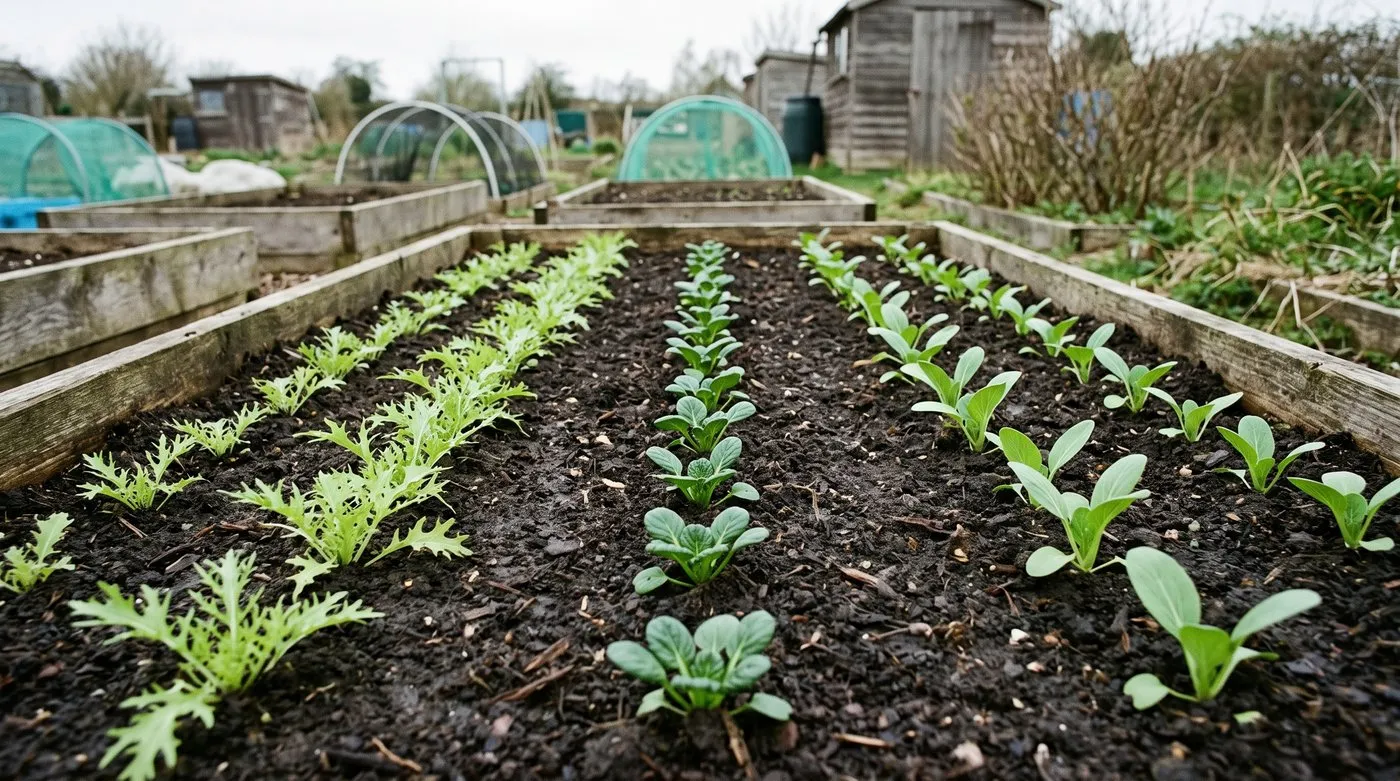
Thin direct sowings early, while the seedlings are small. Pak choi in particular sulks if its roots get disturbed later on.
Spacing guide
| Type | Baby leaf | Full heads | Between rows |
|---|---|---|---|
| Pak choi | 5cm | 20-25cm | 30cm |
| Mizuna | 5cm | 15-20cm | 25cm |
| Tatsoi | 5cm | 15-20cm | 25cm |
| Komatsuna | 5cm | 20-25cm | 30cm |
| Mibuna | 3cm | 15cm | 25cm |
| Choy sum | 5cm | 20-25cm | 30cm |
When is the best time to sow Asian greens?
Timing is everything, especially for pak choi. The year splits into three windows.
Spring (March to May): Sow indoors in March and plant out under fleece from mid-April. Pick bolt-resistant varieties like Joi Choi. Spring pak choi bolts easily if a cold snap is followed by warm weather.
Summer (June to July): The trickiest time. Long, warm days make pak choi and choy sum bolt. Stick to mizuna, mibuna, tatsoi and komatsuna in midsummer. If you do sow pak choi, choose bolt-resistant baby types and give them afternoon shade.
Late summer and autumn (August to October): The sweet spot. Shorter, cooler days give the best pak choi of the year. Sow every two weeks from late July to mid-September.
Succession sowing, a short row every two or three weeks, means you never run out.
How do you stop pak choi bolting?
Bolting, when the plant rushes into flower, is the biggest problem with pak choi. Know what sets it off and you can avoid it.
Up-and-down temperatures. A spell of cold followed by warmth tells pak choi that winter’s over and it’s time to flower. Protect early sowings with fleece and don’t plant out too soon.
Long days. From mid-May to late July, the long days push pak choi towards flowering. Sow bolt-resistant varieties then, or grow mizuna and tatsoi instead.
Disturbed roots. Sow direct or in modules, and plant out module plants with the whole root ball. Don’t pull up and replant bare-rooted seedlings, and thin direct sowings early.
Dry soil. Drought makes it bolt fast. Keep the soil moist but not soggy, and mulch with a layer of garden compost. Water in the morning rather than the evening, which also means fewer slugs.
Variety. Joi Choi and Mei Qing Choi are bred to be slow to bolt. Look for “bolt resistant” on the packet for spring and summer sowings.
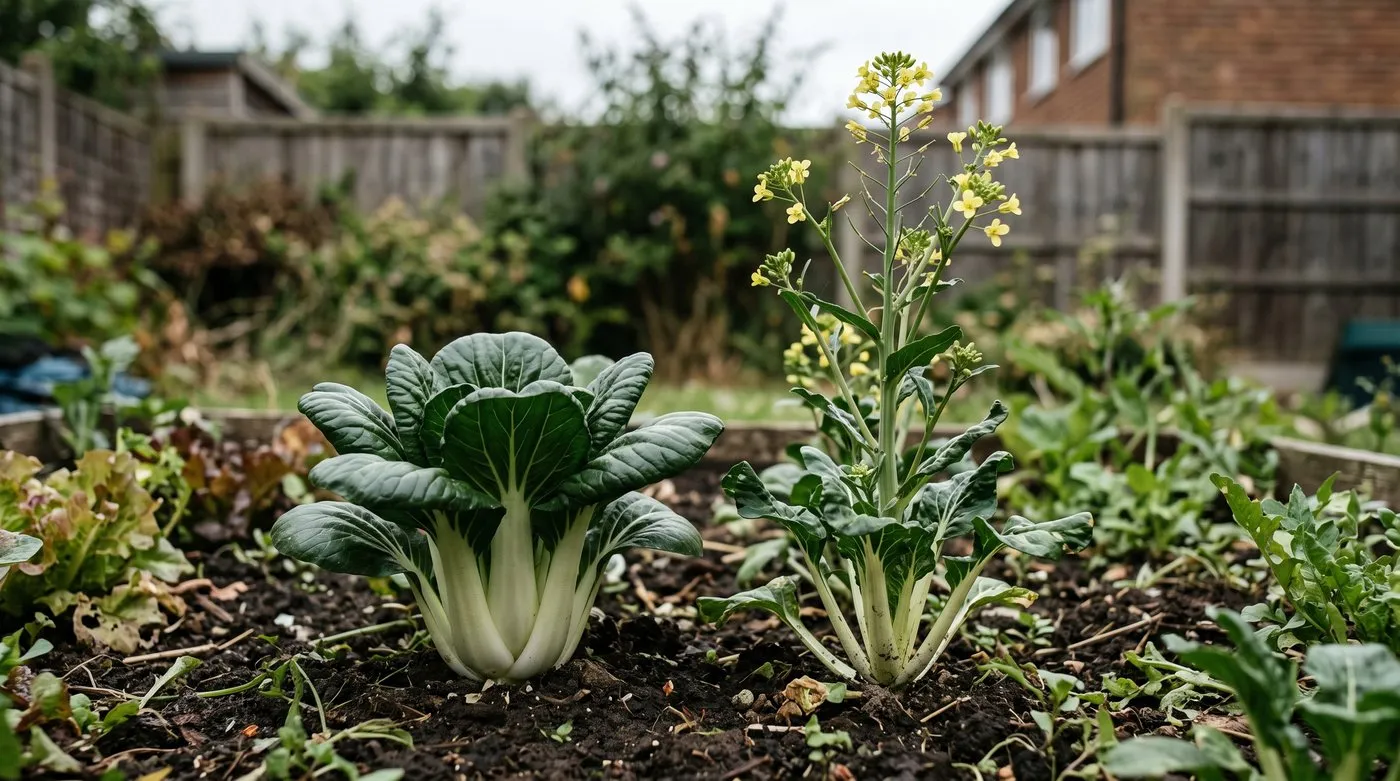
The plant on the right has bolted and its leaves turn tough and bitter. Late summer sowings, steady watering and bolt-resistant types help avoid this.
Can you grow Asian greens in containers?
Yes, they’re some of the best veg for container growing. Shallow roots, a neat habit and fast growth make them perfect for patios, balconies, doorsteps and even windowsills.
 Mizuna, tatsoi and pak choi are all happy in pots. Keep the compost moist.
Pot size: Baby leaves grow in anything at least 10cm deep. Full-sized pak choi needs 15-20cm. A 30cm pot holds three or four full-sized plants or a thick patch of baby leaves. Window boxes, grow bags and recycled containers all work.
Compost: Peat-free multipurpose is fine. Asian greens aren’t fussy, but they do need steady moisture. Don’t use heavy garden soil in pots, as it packs down and drains badly.
Feeding: Give a dilute liquid seaweed feed every two weeks once plants have four or five leaves. Avoid high-nitrogen feeds, which make soft, floppy growth that greenfly love.
Position: Full sun in spring and autumn. Some shade in summer to cut bolting and scorch. Pots on wheels make it easy to move them about.
Watering: Check daily, as pots dry out faster than the ground. Water when the top couple of centimetres feel dry. Don’t leave pots standing in saucers of water.
How do you grow pak choi in a greenhouse?
A greenhouse or polytunnel stretches the season at both ends, so you can pick from February to November. The shelter also means faster growth and fewer pests.
Early spring (February to March): Sow pak choi and mizuna in a propagator in the greenhouse. Plant into greenhouse beds or big pots in March. Open the vents on sunny days so it doesn’t overheat. Our greenhouse growing calendar has timings for your area.
Summer (June to August): Skip pak choi under glass in midsummer, as greenhouses get too hot and it bolts. Mizuna and komatsuna cope better with warmth. Open all the vents and doors and use shade netting in hot spells.
Autumn and winter (September to November): This is when a greenhouse really pays off. Sow pak choi in September for heads in October and November. Tatsoi and komatsuna keep growing into December in an unheated greenhouse. Close the vents at night from October and add fleece on the coldest nights.
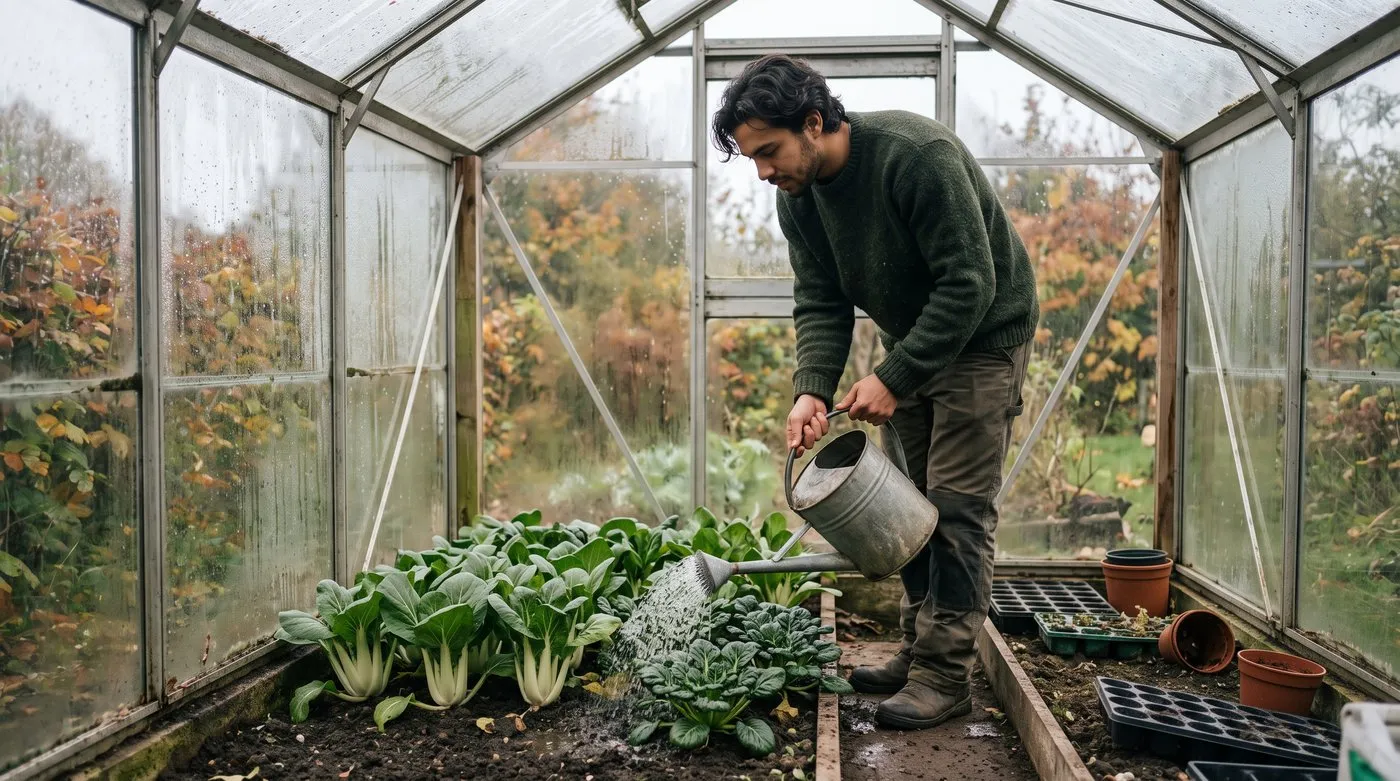
Autumn is when a greenhouse really pays off for Asian greens. Close the vents at night from October and tatsoi will keep going into December.
What pests and diseases affect Asian greens?
Asian greens are in the cabbage family, so they get the same pests as cabbages and sprouts. The good news is that they grow so fast you can often pick them before pests do much harm.
Flea beetle
Flea beetles are the main pest. These tiny black beetles chew lots of small round holes in the leaves, especially in dry weather from April to June. A bad attack can kill seedlings. Fine insect mesh over plants from the day you sow is the only reliable answer. Leave it on until you pick. Keep the soil moist, as flea beetles like it dry.
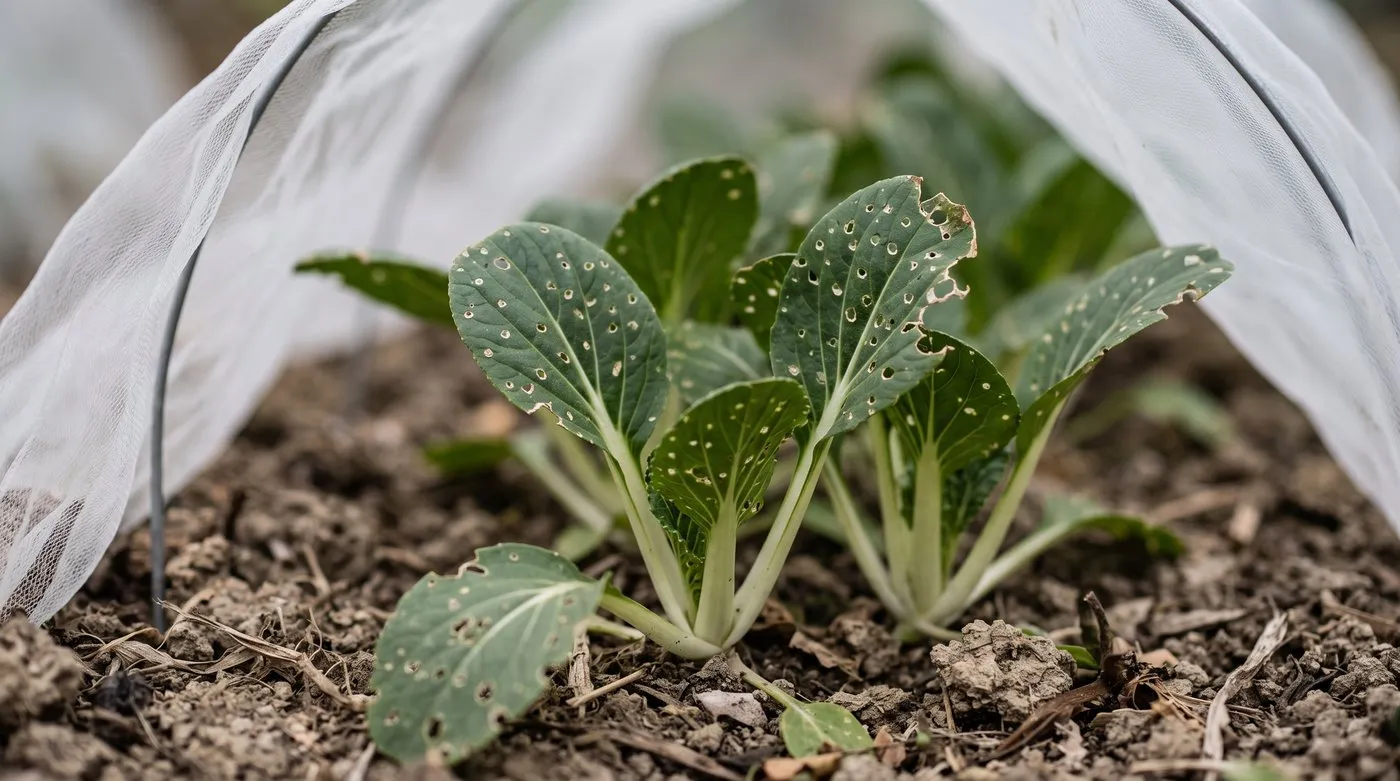
Lots of tiny round holes is the classic flea beetle sign. Fine mesh from the day you sow is the most reliable way to keep them off.
Slugs and snails
Slugs go for young plants, especially in wet springs. Nematodes, a natural biological control watered onto the soil, help in spring. Evening torch patrols and picking them off by hand work well, and beer traps catch plenty. It’s the same battle you face when growing lettuce.
Cabbage white caterpillars
These munch leaves down to the stalks. Fine mesh stops the butterflies laying eggs. Check plants weekly and rub off the yellow egg clusters under the leaves, and pick off any caterpillars.
Clubroot
Clubroot is a soil disease that makes roots swollen and lumpy and plants stunted. Once it’s in the soil, it stays for many years. Adding garden lime to make the soil less acid helps, and moving cabbage-family crops to a new bed each year is important. If your soil has it, grow Asian greens in pots of fresh compost.
Downy mildew
Yellow patches on top of the leaves with greyish fuzz underneath. Space plants properly so air can move, water the soil not the leaves, and pick off affected leaves. It’s worst in cool, damp autumn weather.
How do you harvest pak choi and Asian greens?
How you pick depends on whether you want baby leaves, a few leaves at a time or whole heads.
 Cut pak choi whole at the base. Pick the outer leaves of mizuna and tatsoi for repeat harvests.
Baby leaves: Snip whole plants with scissors when they’re 5-8cm tall, leaving a short stump. Most regrow for another cut or two. It’s the quickest way from seed to plate.
Cut-and-come-again: Pick outer leaves from mizuna, mibuna, tatsoi and komatsuna, leaving the middle to keep growing. You’ll get several pickings from one sowing. Always leave a few inner leaves so the plant can recover.
Whole heads: Cut pak choi and choy sum at the base with a sharp knife when the heads are firm and upright. Pick in the morning when they’re crisp. Whole heads keep for several days in the fridge wrapped in a damp cloth.
Flowering shoots: Pick choy sum when the flower buds appear but before they open, cutting stems about 15-20cm long. Once the yellow flowers open, the stems go woody and bitter.
How do you cook Asian greens?
They’re brilliant in the kitchen, and each one suits different dishes.
Stir-frying is the classic. Cut pak choi into quarters lengthways. Put the thick stems into a hot wok with sesame oil first, then add the leaves for the last half minute. Finish with soy sauce, garlic and ginger.
Steaming suits pak choi and tatsoi. Steam baby pak choi whole for a few minutes and drizzle with oyster sauce and toasted sesame seeds.
Raw in salads: Mizuna, mibuna and baby tatsoi make great salad leaves. Mix them with lettuce and spinach for a peppery kick. Baby pak choi is lovely raw in slaw.
Soups: Shred pak choi or komatsuna into ramen, miso soup or any broth. Add it for the last couple of minutes so it wilts but stays green.
Quick pickles: Slice pak choi stems and pickle them in rice vinegar, sugar and salt for a quick side dish.
Month-by-month calendar for Asian greens
| Month | What to do |
|---|---|
| January | Order seeds. Clean pots and module trays. |
| February | Sow pak choi and mizuna indoors in a propagator. |
| March | Sow everything indoors. Plant out under fleece from mid-March. |
| April | Sow outdoors from mid-April. Plant out module seedlings. |
| May | Sow a little every two or three weeks. Put mesh over against flea beetles. |
| June | Skip pak choi. Sow mizuna, tatsoi, mibuna and komatsuna. Give some shade. |
| July | Stick to bolt-resistant types. Water daily in dry spells. |
| August | The best time for pak choi. Sow every fortnight for autumn heads. |
| September | Last outdoor sowings. Sow in the greenhouse for late autumn. |
| October | Pick autumn pak choi. Cover with fleece from mid-month. |
| November | Pick greenhouse crops. Close the vents at night. |
| December | Pick the last tatsoi and komatsuna under glass. Plan next year. |
Quick-start checklist
Here’s the fast route from seed packet to plate.
- Pick a variety. Mizuna for beginners, pak choi for stir-fries, tatsoi for winter.
- Sow in modules. Two or three seeds per cell, 1cm deep, then thin to one.
- Harden off for about a week. Out by day, in at night.
- Plant out with the root ball intact. 15-20cm apart for heads, 5cm for baby leaves.
- Cover with mesh straight away before the flea beetles find them.
- Keep them watered. Check daily, mulch with compost and never let the soil dry out.
- Sow little and often. A short row every two or three weeks keeps you supplied.
- Pick baby leaves after about three weeks. Pick outer leaves for repeat harvests.
Where to find advice and seeds
Most garden centres now sell pak choi and mizuna seed, and specialist seed companies stock a much wider range of Asian greens. The RHS has a handy guide to oriental vegetables, and Garden Organic has good advice on growing them without chemicals.
Frequently asked questions
When should I sow pak choi in the UK?
Sow from spring to early autumn, but late summer sowings work best. You can start earlier in modules indoors. Spring and early summer sowings tend to bolt as the days get longer and warmer. Sowings from mid-July to early September usually give the best heads, growing on in cooler autumn weather.
Why does my pak choi bolt before forming heads?
It bolts when it’s stressed. Long days, heat, cold snaps, dry soil or disturbed roots can all set it off. Sowing too early in spring makes it much more likely. Choose bolt-resistant varieties such as ‘Joi Choi’ for spring and summer, sow in modules or direct, keep the soil moist and give some shade in hot weather.
Can I grow pak choi in pots and containers?
Yes, in a container at least 15cm deep. A pot about 30cm wide holds three or four plants. Use peat-free multipurpose compost and keep it evenly moist, as dry compost makes it bolt. Baby-leaf pak choi is happy in shallower window boxes. Feed every couple of weeks and give some shade in summer.
How do I stop flea beetles eating my pak choi?
Cover plants with fine insect mesh from the day you sow. Flea beetles love young cabbage-family plants, including pak choi. They like hot, dry weather, so keep the soil moist. Plants growing quickly usually outgrow light damage.
What is the difference between pak choi and bok choy?
They’re the same plant with two spellings. Pak choi is the usual spelling in the UK and Europe. Bok choy is more common in the US and Australia. In British seed catalogues, you’ll nearly always see pak choi.
Can I grow Asian greens through winter in the UK?
Yes, several of them carry on through winter. Mizuna, mibuna, tatsoi and komatsuna are the toughest and cope with light frosts. Sow them in late summer or early autumn for winter pickings. Pak choi is less hardy and does best under a cloche, cold frame or polytunnel.
Which Asian greens are best for beginners?
Mizuna is the easiest place to start. It comes up fast, gives baby leaves within a few weeks and copes with cold. It’s also slower to bolt than pak choi and regrows after cutting. Tatsoi is another easy one. Try these before moving on to pak choi, which needs more care with timing and watering.
Further reading
- How to grow lettuce and salad leaves: mizuna and tatsoi are great in a salad mix
- Succession planting guide: the little-and-often sowing that keeps Asian greens coming
- Container vegetable gardening: growing Asian greens on patios and balconies
- How to grow spinach: a good partner crop for komatsuna
- How to grow radishes: another speedy crop to sow alongside
Our team produces practical UK gardening guidance from source research, contributor records and established horticultural practice. Editorial standards are overseen by Matt W.


