Key takeaways
- Tatsoi is very frost hardy and gives fresh leaves from spring into winter
- Baby leaves are ready in about 3 weeks, full rosettes in about 7
- Sow a little every 3 weeks from March to September for a steady supply
- It copes with part shade, so it's handy for shadier beds
- Flea beetle is the main pest, and fine insect mesh keeps it off
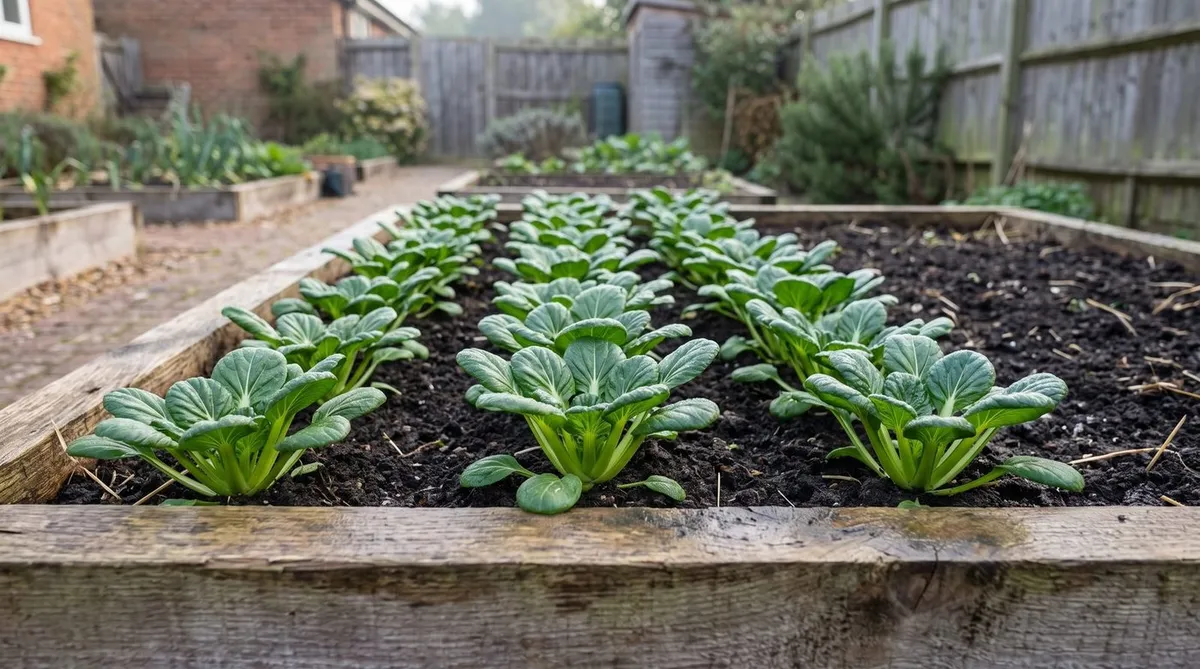
Tatsoi is a tough little Asian green that gives you fresh leaves from early spring right into winter. It copes with frost, grows in part shade and gives baby leaves about three weeks after sowing. Speedy, hardy and easy: what’s not to like?
It makes a flat rosette of dark green, spoon-shaped leaves with a mild, creamy taste somewhere between spinach and pak choi. Best of all, it rarely bolts in cool weather, so it’s brilliant for stretching your harvest into late autumn and winter.
What is tatsoi and why grow it in the UK?
Tatsoi is a low, flat rosette of glossy, spoon-shaped leaves, about 20-30cm across. It’s in the cabbage family alongside pak choi, mizuna and mustard greens, but it’s tougher than all three.
Our cool, damp springs and autumns suit it well. It’s happy in conditions that make lettuce rot and pak choi bolt, and it grows in clay, sandy or chalky soil as long as you add some compost. The RHS oriental salads guide covers it alongside other Asian greens.
Why give it a go:
- Very frost hardy, and tougher still under fleece.
- Quick: baby leaves in about 3 weeks, full rosettes in about 7.
- Happy in part shade: a few hours of sun a day is enough.
- Cut-and-come-again: several pickings from each plant.
- No special kit: grows in the ground, raised beds, pots and cold frames.
If you already grow pak choi and Asian greens, tatsoi is a lovely next step for winter.
Tatsoi vs pak choi vs mizuna: which Asian green for UK gardens?
For cold-season growing, tatsoi wins. Here’s how the three compare.
| Tatsoi | Pak choi | Mizuna | |
|---|---|---|---|
| Shape | Flat rosette | Upright, with thick stalks | Loose and feathery |
| Frost | Very hardy | Least hardy | Fairly hardy |
| Speed | Quick | Medium | Quick |
| Bolting | Slow in cool weather | Bolts easily in heat | Middling |
| Shade | Copes well | Prefers sun | Copes well |
| Taste | Mild, creamy, slight mustard | Mild, juicy, crunchy | Peppery |
| Best use | Salads, stir-fries, soups | Stir-fries, steaming | Salads, garnish |
| Winter growing | Excellent under cover | Needs good protection | Good under cover |
When to sow tatsoi in the UK
Sow from March to September for fresh leaves for most of the year. In warm soil, seedlings pop up in under a week. In cooler soil they’re slower but still come up.
| When | How | Tips |
|---|---|---|
| March to April | Indoors in modules | Harden off and plant out after the last frost |
| April to May | Sow outside | Wait until the soil has warmed a little |
| June to July | Sow outside in part shade | Bolts easily in a heatwave |
| August to September | Sow outside or in modules | The best time for winter leaves |
| October | Under cover only | Slow growth, but plants overwinter |
Succession sowing a short row every 3 weeks keeps leaves coming. Sow a last batch in early September under cloches or in a cold frame for winter.
 Tatsoi seedlings ready to plant out. Module-grown plants get going faster in early spring.
How to sow tatsoi from seed
The seed is small but comes up reliably. Cover it with a thin layer of compost or soil.
Indoors in modules: Fill module trays with peat-free seed compost. Sow 2-3 seeds per cell, 1cm deep. Water gently and keep somewhere warm, such as a propagator or windowsill. Thin to the strongest seedling. Our guide to sowing seeds indoors runs through the basics.
Outdoors: Rake the soil until it’s fine and crumbly. Make a shallow drill 1cm deep and sow thinly, about 2cm apart. Cover, firm gently and water with a fine rose.
Thinning: Thin to 15cm apart for full rosettes, or 10cm for baby leaves. Eat the thinnings in salads.
Multi-sowing: Sow 4-5 seeds per module and plant out the whole clump without thinning. Each clump gives a cluster of smaller rosettes, perfect for picking leaves. Our multi-sowing guide explains more.
What soil does tatsoi need?
Moist, fertile soil with plenty of compost.
- Heavy clay: Dig in 5-7cm of compost or well-rotted manure. If your clay soil puddles after rain, use a raised bed instead.
- Sandy soil: Add plenty of compost to help hold water, as tatsoi hates drying out.
- Chalky soil: Tatsoi copes, but add compost to keep it moist and well fed.
Rake in a general fertiliser such as blood, fish and bone before sowing, at the rate on the box. A no-dig approach with a 5cm layer of compost each year gives it all it needs.
How to grow tatsoi in containers
Tatsoi is one of the best Asian greens for pots. Its neat, flat rosettes fit nicely into pots, troughs and window boxes. It’s a great one to try if you’re new to container vegetable gardening.
- Depth: at least 15cm, as the roots are shallow.
- Space: about 20cm per plant. A 40cm window box holds 2-3.
- Compost: peat-free multipurpose with some perlite mixed in.
- Position: sun or part shade. A north-facing balcony is fine.
Watering: check daily in warm weather. Tatsoi wilts fast when dry and bolts if it stays thirsty. Water when the top 2cm feels dry.
Feeding: give a liquid seaweed feed every 2 weeks once plants are about a month old. If the leaves look pale, switch to a balanced liquid feed.
Rosettes in pots are a bit smaller than in the ground, but they’re just as good for baby leaves.
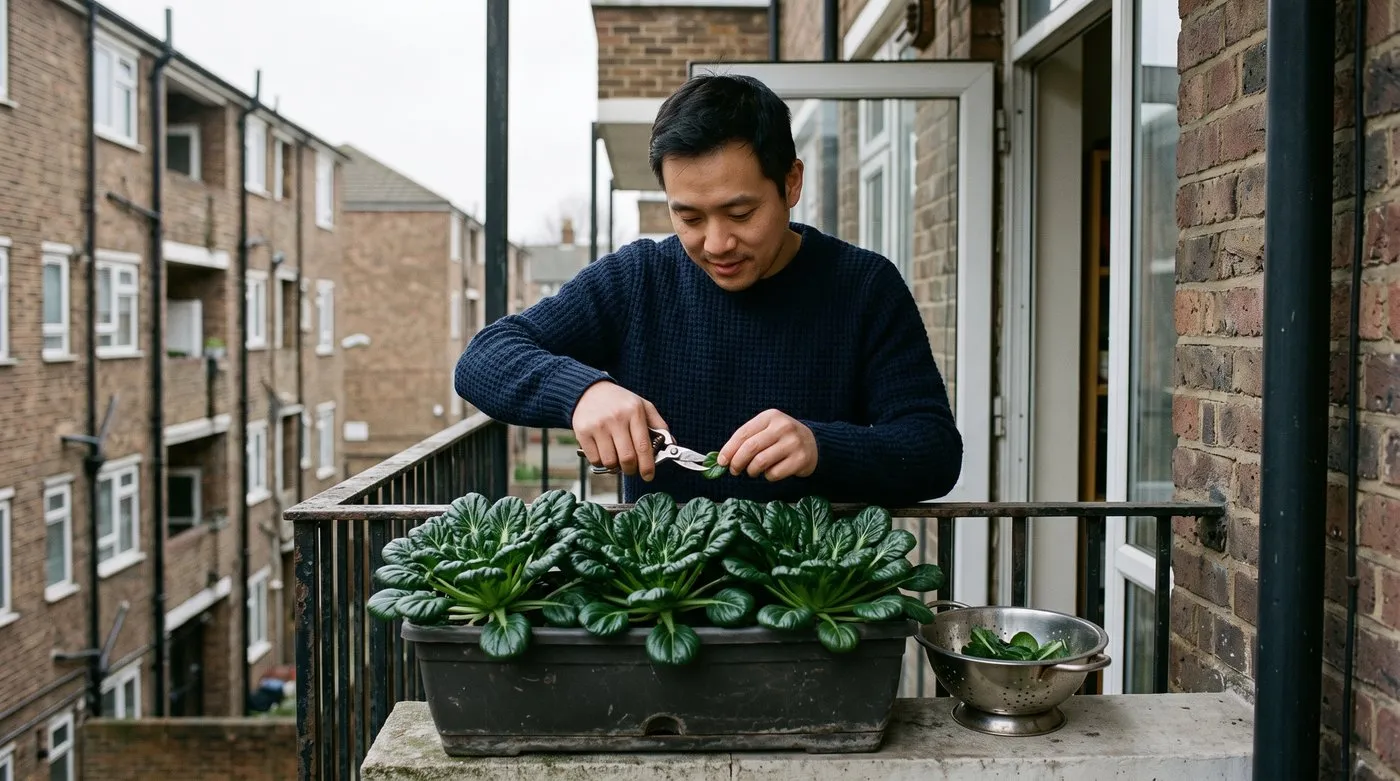
Tatsoi is happy on a north-facing balcony. Check the compost daily in warm weather, as dry pots make it bolt.
Month-by-month tatsoi growing calendar
| Month | What to do |
|---|---|
| January | Pick overwintered plants under cover. Order seed |
| February | Sow an early batch indoors. Check fleece on outdoor plants |
| March | Keep sowing indoors. Sow outside from mid-March in mild areas |
| April | Plant out hardened-off seedlings. Sow outside. First baby leaves from March sowings |
| May | Sow a little every 3 weeks. Start outdoor sowings in the north |
| June | Pick often to stop bolting. Sow in part shade. Water in dry spells |
| July | Don’t sow in a heatwave. Keep picking. Cover with mesh against flea beetle |
| August | Start sowing again for autumn and winter |
| September | Last outdoor sowing, under cloches. Fleece August sowings in the north |
| October | Pick autumn sowings. Cover remaining plants with fleece or move to a cold frame |
| November | Pick as needed. Growth slows, but the leaves hold well |
| December | Little growth. Pick lightly and plan next year |
Pair this with our UK vegetable planting calendar to plan the whole veg patch.
 Tatsoi under a cloche in autumn. A little cover keeps the leaves coming into December and beyond.
How to deal with flea beetle on tatsoi
Flea beetle is the main pest. These tiny black beetles jump when disturbed and chew small round holes in the leaves. They’re worst in warm, dry weather from April to June.
Keep them off from the start:
- Cover new sowings with fleece or fine insect mesh, tucked in at the edges.
- Keep the soil moist, as flea beetles love dry conditions.
- Sow in late summer, when there are fewer about.
If they’re already there:
- Water regularly to help plants grow away from the damage.
- Hang yellow sticky traps to see how many there are.
- Pick and use the leaves young, before the damage builds up.
Don’t make home-made sprays such as garlic water. They aren’t approved as pesticides in the UK, so stick to covers and good growing. Our vegetable pests and diseases guide has more help. Slugs can attack young seedlings too, and our slug control guide covers wildlife-friendly ways to deal with them.
Other problems to watch for:
| Problem | What you’ll see | What to do |
|---|---|---|
| Flea beetle | Small round holes in leaves | Fleece or fine mesh, keep plants watered |
| Slugs | Ragged holes, slime trails | Nematodes, evening slug hunts |
| Clubroot | Swollen roots, wilting | Lime acid soil, and don’t grow cabbage-family crops in the same spot every year |
| Downy mildew | Yellow patches on top, grey fuzz below | Space plants out, water the soil not the leaves |
| Bolting | A flower stem from the middle | Water evenly, sow in cool seasons, use part shade |
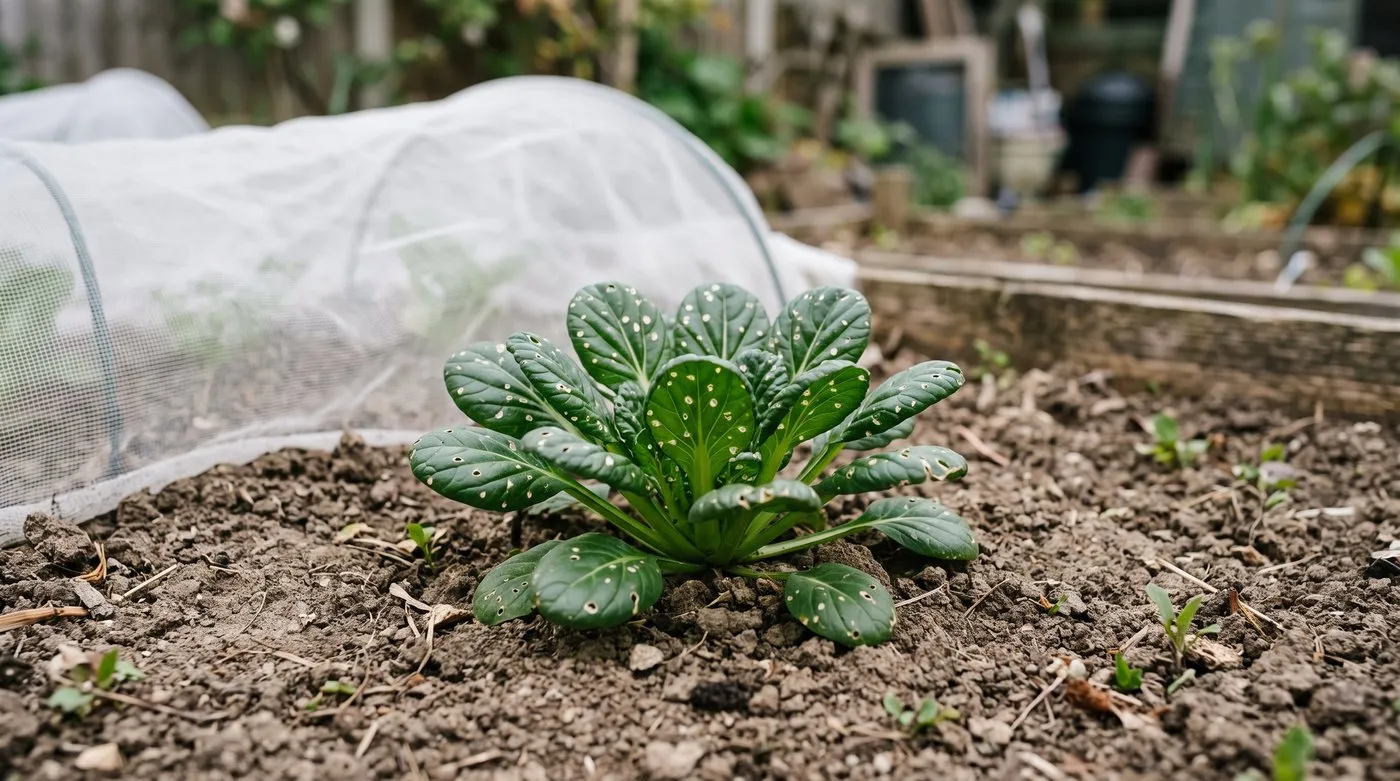
Lots of tiny round holes in spring means flea beetle. Fine mesh tucked in from sowing and moist soil are the best defence.
How to harvest tatsoi
Pick baby leaves from about 3 weeks, or whole rosettes from about 7 weeks. Leaves 8-12cm long are the mildest. Bigger leaves taste stronger and are better cooked.
Cut-and-come-again: snip outer leaves 2-3cm above the base with scissors, leaving the centre alone. You’ll get several pickings from each plant.
Whole rosettes: cut the whole plant at soil level. Handy when you want to clear a bed.
When to pick: in the morning, when leaves are crisp. They wilt quickly in afternoon sun. Keep them unwashed in a bag in the fridge for a few days, and wash just before eating.
 Freshly picked tatsoi. It tastes best picked young, at 8-12cm.
How to cook and use tatsoi
Eat baby leaves raw and cook the bigger ones quickly. The thick stems stay crisp in a stir-fry.
Raw: toss baby leaves into salads with rocket, lettuce and spinach. Its mild flavour balances peppery leaves.
Stir-fried: add to a hot wok with sesame oil, garlic and ginger for a minute or so. It wilts down a lot, like spinach.
Soups: drop whole rosettes into miso soup or ramen for the last 2 minutes. They hold their shape better than spinach.
Steamed: steam for 2-3 minutes and dress with soy sauce and rice vinegar.
Growing tatsoi through winter
Tatsoi is one of the best winter greens you can grow. With a little cover, you can keep picking well into the new year. It’s great for the hungry gap alongside other winter salad leaves.
Without cover: it copes with frost. Growth stops in the cold, but the leaves stay on the plant and you can still pick them. Frost makes them taste sweeter.
Under fleece: a layer of fleece keeps plants growing slowly through November and December in most of England.
In a cold frame: plants keep growing for longer than in the open. Open the lid on sunny days to stop it getting damp and stuffy.
In an unheated greenhouse: the cosiest option. A September sowing in the greenhouse border or a grow bag gives leaves through to March. Ventilate well, as damp winter air brings grey mould.
For more on growing under cover, see our greenhouse growing calendar.
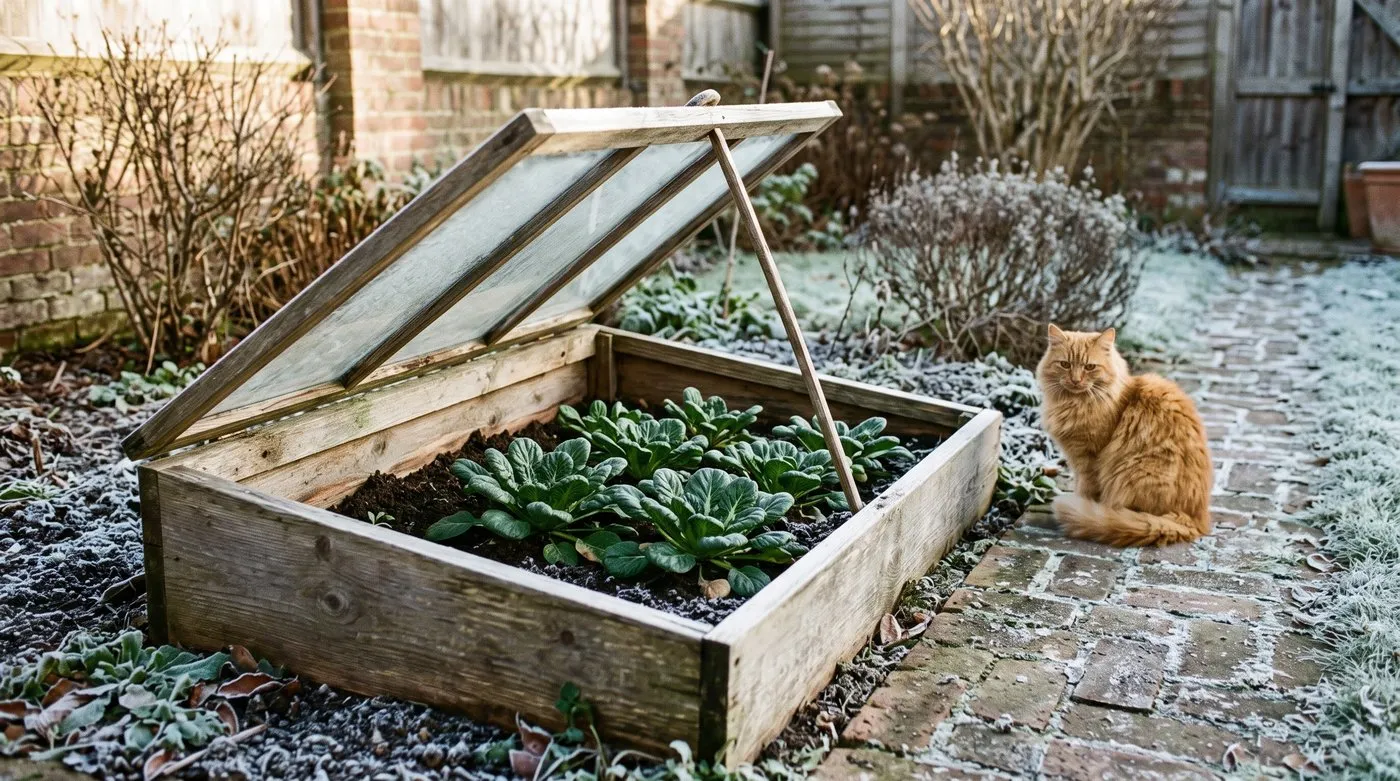
A cold frame keeps tatsoi growing well into winter. Prop the lid open on sunny days so it doesn’t get damp and stuffy.
Companion planting with tatsoi
Tatsoi’s low rosettes make it a handy crop to tuck under taller veg. See our companion planting guide for more ideas.
Good neighbours:
- Runner beans and sweetcorn: their shade helps stop summer bolting.
- Dill and coriander: their flowers bring in hoverflies and lacewings, which eat aphids.
Not so good:
- Other cabbage-family crops such as cabbage, broccoli and kale share the same pests and diseases. Don’t grow tatsoi where they grew in the last few years.
- Strawberries: they compete for water at the same root depth.
Tatsoi also makes a nice living mulch under kale plants for a short spell. Its flat rosettes cover the soil and keep weeds down.
Tatsoi is a lovely change from the usual lettuce and spinach. For more ideas, read our guide to unusual crops to grow in the UK, or try microgreens for year-round growing on a windowsill.
Frequently asked questions
What does tatsoi taste like?
Mild and creamy, a bit like spinach with a gentle mustard kick. Baby leaves are the sweetest. Older leaves taste a little stronger, especially in hot weather, and frost makes them sweeter. Use baby leaves raw in salads and bigger ones in stir-fries, soups and steamed dishes.
Can I grow tatsoi in winter in the UK?
Yes, it’s one of the best winter greens you can grow. It copes with frost on its own and does even better under fleece or in a cold frame. Sow in August or September for winter picking. Growth slows right down in the cold, but the leaves hold well and it picks up again in late winter.
How often should I water tatsoi?
Water when the top 2cm of soil feels dry. In spring and autumn that’s often every few days, and in a dry summer it may be daily. Dry plants bolt faster, so keep the soil evenly moist and mulch with compost. In winter, water the soil rather than the leaves.
Is tatsoi the same as pak choi?
No, though they’re close relatives. Tatsoi makes a flat rosette of round, spoon-shaped leaves. Pak choi grows upright with thick white or green stalks. Tatsoi is hardier, copes better with shade and is slower to bolt.
Why is my tatsoi bolting?
Usually because of heat, dry soil or long summer days. To avoid it, sow in spring (March to May) or late summer (August and September), and skip the hottest weeks. Keep it watered, mulch the roots and give summer sowings some shade. If it does flower, the flowers are edible and the bees love them.
Does tatsoi grow back after cutting?
Yes, if you leave the centre of the plant alone. Cut the outer leaves 2-3cm above the base, and new ones grow from the middle. You’ll get several pickings from each plant, with fresh leaves about every couple of weeks.
Can I grow tatsoi in pots and containers?
Yes, it’s a great pot plant. Use a pot at least 15cm deep, allowing about 20cm per plant. Fill with peat-free multipurpose compost with some perlite mixed in. Feed every two weeks with liquid seaweed once plants are about a month old, and check the compost daily in warm weather.
Our team produces practical UK gardening guidance from source research, contributor records and established horticultural practice. Editorial standards are overseen by Matt W.