Key takeaways
- Baby leaves are ready to cut about three weeks after sowing
- Sow outdoors from March to September, or under cover from February to October
- It shrugs off frost, so it's one of the best winter salads you can grow
- Cut leaves above the base and each plant gives you several more crops
- Sow in late summer for winter leaves, as midsummer sowings bolt quickly
- Fine mesh netting keeps flea beetles and caterpillars off
Mizuna is one of the quickest and toughest salad leaves you can grow in the UK. This Japanese leaf gives you baby leaves about three weeks after sowing, laughs off frost and keeps growing back after each cut.
The feathery, jagged leaves have a mild, peppery bite that softens when cooked. It’s fast, hardy and you can pick it again and again, which makes it a real bargain from one packet of seed.
Which mizuna variety should I grow?
There are two main types: green mizuna and purple mizuna. Both grow the same way.
Green mizuna is the classic. It has bright green, jagged leaves on thin white stems and a mild, peppery taste. It grows the fastest and gives you the most leaves.
Purple mizuna (sold under names like ‘Red Knight’) has dark red-purple leaves with green undersides. The colour deepens in cooler weather. The taste is a little stronger. It’s lovely mixed with green leaves in a salad.
| Green mizuna | Purple mizuna | |
|---|---|---|
| Looks | Bright green, white stems | Dark red-purple, green undersides |
| Speed | Fastest | A little slower |
| Taste | Mild and peppery | Stronger mustard flavour |
| Hardiness | Copes well with frost | Copes well with frost |
| Best for | Salads, stir-fries | Adding colour to salads |
| Easy to find? | Yes, very | In most good seed catalogues |
How to sow mizuna from seed
Mizuna is easy to sow and comes up fast, usually within a week in mild weather.
 Mizuna seedlings come up quickly. These are just a few days old in module trays in an unheated greenhouse.
Sowing outdoors (March to September): Rake the soil until it’s fine and crumbly. Make shallow drills 1cm deep and 15-20cm apart. Sow thinly, cover lightly and water with a fine rose. For baby leaves, thin to 2-5cm apart. For bigger plants, thin to 15-20cm.
Sowing indoors: Fill module trays or small pots with multipurpose compost. Sow two or three seeds per module, 1cm deep. Keep them on a bright windowsill or in an unheated greenhouse. Thin to one seedling per module once proper leaves appear. Plant out after three or four weeks.
It’s just like sowing seeds indoors for any other cabbage-family crop, and mizuna moves from modules happily.
Month-by-month mizuna growing calendar
| Month | What to do |
|---|---|
| January | Pick winter plants under cover. Order seed. |
| February | Sow under cover in a cold frame or greenhouse. In the mild south, try a first outdoor sowing. |
| March | Main outdoor sowing starts. Cover with fleece if frost is forecast. |
| April | Sow a little every three or four weeks. Pick the first baby leaves from March sowings. |
| May | Great growing weather. Thin seedlings. Look out for flea beetles. |
| June | Sow in light shade to slow bolting. Pick often. |
| July | Avoid sowing in full sun. Keep picking spring-sown plants. |
| August | Sow again for autumn and winter leaves. A great month for winter crops. |
| September | Last outdoor sowings by late September for winter picking. |
| October | Cover autumn sowings with fleece or cloches. Keep picking. |
| November | Pick from cold frames and covered beds. Growth slows down. |
| December | Pick lightly from winter plants. They grow slowly in the cold. |
Use it alongside our seed sowing calendar to plan your whole year.
How to grow mizuna in winter
Mizuna is a winter star. While lettuce, rocket and basil give up at the first hard frost, mizuna keeps going and gives you fresh leaves through the coldest months.
 Green and purple mizuna growing side by side. The purple leaves get darker as the weather cools.
Unheated greenhouses are perfect. Mizuna keeps growing through autumn and picks up again in February. Grow it with other cold frame crops like winter lettuce, lamb’s lettuce and claytonia for a winter salad mix.
Fleece outdoors gives extra protection in hard frosts. Drape it over hoops rather than straight onto the plants, so the leaves don’t stay damp and go mouldy.
Winter mizuna helps fill the hungry gap between the last autumn crops and the first spring ones.
Cut-and-come-again harvesting
This is what makes mizuna so generous. One sowing gives you several harvests over a couple of months.
First cut: Start when the leaves are 10-15cm tall, around three weeks after sowing. They’re tender and mild then, perfect for salads. Leave them longer and you get bigger, slightly tougher leaves for stir-fries and soups.
How to cut: Use sharp scissors or a knife. Snip all the leaves a few centimetres above the base, leaving the centre to regrow. Don’t pull leaves, as the shallow roots come up easily. Pick in the morning when the leaves are crisp, as they wilt quickly in afternoon heat.
When the leaves get tough or the plants start to flower, pull them up and sow again. Fresh plants always do better than tired ones.
Pests and problems
Mizuna is in the cabbage family, so it shares its pests. Because it grows so fast, most trouble happens in the first few weeks.
Flea beetles are the main pest. These tiny black beetles nibble lots of little round holes in the leaves. They’re worst in warm, dry spells in spring and early summer. Fine mesh netting over the crop keeps them off.
Slugs love young seedlings, especially in damp weather. Our guide to getting rid of slugs has lots of ideas. Nematodes (sold as Nemaslug) are a good natural option, and a torchlit evening hunt helps too.
Cabbage white caterpillars can turn up from late spring to early autumn and strip leaves fast. Netting stops the butterflies laying eggs. If your plants aren’t covered, check them weekly and pick off caterpillars. Our cabbage white butterfly control guide has more.
Bolting, or running to flower, is the main headache. Hot weather and long summer days trigger it, so June and July sowings bolt fastest. Sow in light shade in summer, keep the soil moist and pick often. Spring and autumn sowings are much more relaxed.
Downy mildew shows as yellow patches on top of the leaves with greyish fuzz underneath. It likes cool, damp, still air. Space plants out, avoid watering over the leaves in the evening, and remove affected leaves.
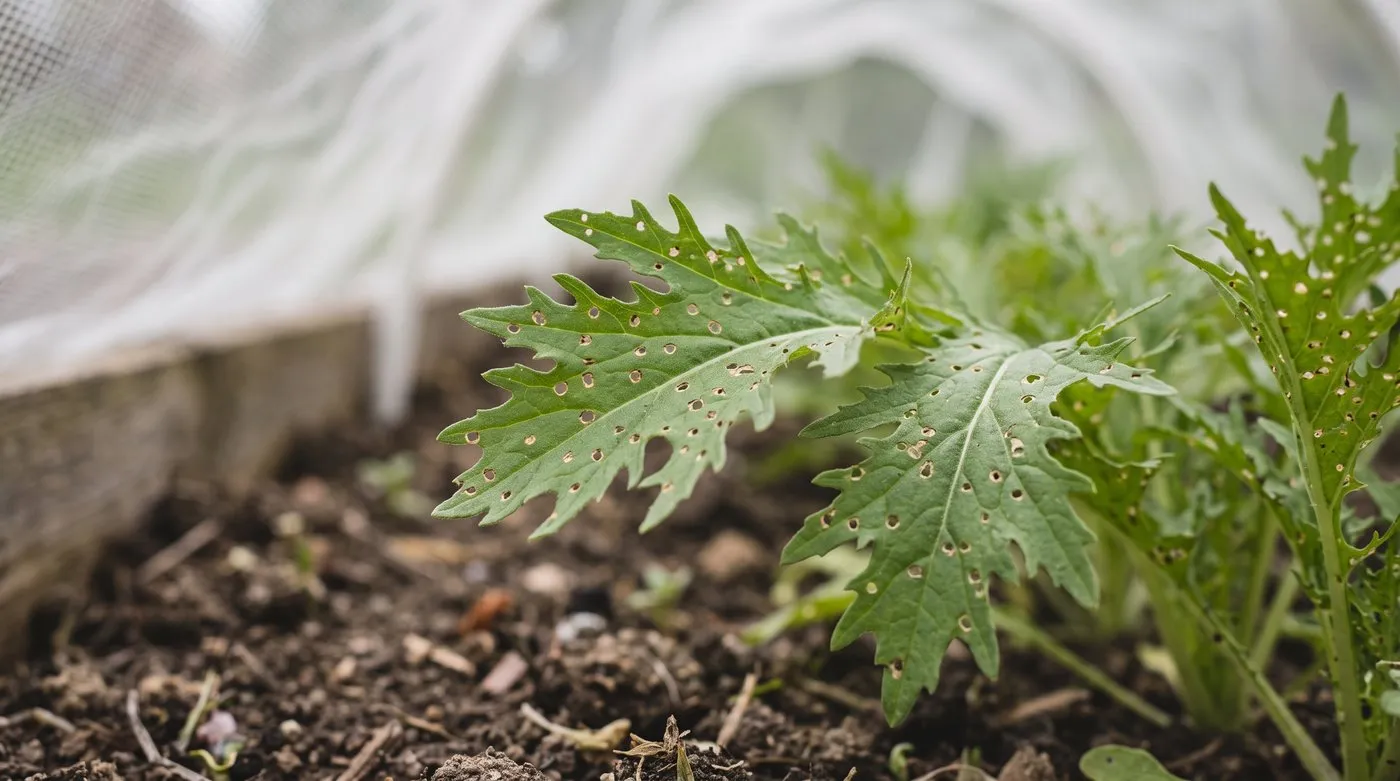
Lots of tiny round holes mean flea beetles. Fine mesh from sowing day and moist soil keep the damage down.
Growing mizuna in containers and raised beds
Mizuna is perfect for container vegetable gardening and raised beds. Its roots are shallow, so it’s happy in small spaces.
 Picking mizuna baby leaves into a trug. Leaves 10-15cm long are the mildest and most tender.
In pots: Any container at least 15cm deep with drainage holes will do. Window boxes and balcony troughs are ideal. Fill with multipurpose compost. Sow thinly across the surface for baby leaves, or put three or four plants in a 25cm pot for bigger ones. Water every few days in warm weather, and daily in hot spells. A liquid seaweed feed now and then keeps it going.
In raised beds: Mizuna grows well in raised beds on any soil. Sow in blocks rather than rows to fit more in. A small bed can keep you in salad leaves for weeks.
On a windowsill: Sow thickly in a shallow tray on a bright windowsill. Cut as microgreens after about a week, or let it grow on to baby leaves. It works all year, even with no outdoor space. See our guide to growing microgreens for more.
Squeezing it in: Mizuna grows so fast you can tuck it between slower crops like spring onions, beetroot or young cabbage plants. You’ll have picked it before the main crop needs the space.
Cooking and using mizuna
Mizuna is easy to use. Eat it raw in salads, wilt it as a cooked green, or stir it into soups and stir-fries right at the end.
In salads: Baby leaves are the mildest. Mix them with rocket, lettuce and spinach for a lively bowl. The feathery leaves look pretty and add a peppery kick.
Stir-fried: Toss bigger leaves into a hot wok for the last minute. They wilt fast and soak up soy, garlic and sesame. Don’t overcook them or they go slimy. The stems stay crunchy for longer.
In soups: Mizuna is a classic in Japanese hot pots. Drop whole leaves into miso soup, ramen or any clear broth just before serving.
Good for you: Like most leafy greens, mizuna is a handy source of vitamins. The RHS guide to oriental salads has more on mizuna and its cousins.
Companion planting with mizuna
Mizuna is in the cabbage family, so plan it in with your other brassicas.
Good neighbours:
- Lettuce and other salads like the same conditions and are picked in the same way
- Dill and coriander flowers bring in hoverflies, which eat aphids
- Nasturtiums can tempt some pests away from your salad
Not so good:
- Other cabbage-family crops (cabbage, kale, broccoli) share the same pests. Avoid sowing mizuna where brassicas grew last year
Follow a crop rotation plan that moves mizuna and other brassicas to a new bed each year. This helps stop pests and diseases like clubroot building up, as clubroot can linger in soil for many years.
For more good pairings, see our companion planting guide.
Now you know how to grow mizuna, try our guide to pak choi and other Asian greens to build a whole oriental salad bed.
Frequently asked questions
When should I sow mizuna in the UK?
Sow outdoors from March to September. Sow straight into the ground or pots once the soil has warmed up a little. Under a cold frame, cloche or in an unheated greenhouse you can sow from February to October. Sow a little every three or four weeks for a steady supply.
Can I grow mizuna in winter in the UK?
Yes, mizuna is one of the toughest winter salads. It copes well with frost. Under fleece or in a cold frame, it keeps giving you leaves through December, January and February, just more slowly. Sow by late September for winter picking.
How do I harvest mizuna without killing the plant?
Snip the leaves a few centimetres above the base. Use scissors or a knife rather than pulling, which can yank up the shallow roots. Start when the leaves are 10-15cm tall, about three weeks after sowing. Leave the centre alone and it regrows for several more cuts.
Why is my mizuna bolting?
Hot weather and long summer days make it flower. Midsummer sowings in June and July bolt fastest. In summer, sow in light shade, keep the soil moist and pick often as baby leaves. Spring and autumn sowings are much less likely to bolt.
What is the difference between mizuna and mibuna?
Mizuna has feathery, jagged leaves while mibuna’s are smooth and strap-like. They’re close Japanese cousins. Mizuna is milder and peppery, and mibuna is a little stronger. They grow in exactly the same way, and mizuna is easier to find from UK seed suppliers.
Does mizuna grow well in containers?
Yes, mizuna is great in pots. Use a container at least 15cm deep with drainage holes. A window box gives you plenty of baby leaves for salads. Thin to about 5cm apart for baby leaves or 15cm for bigger plants, and water every few days in warm weather.
Is mizuna safe for pets and children?
Mizuna is an everyday salad leaf that’s fine for people to eat. It’s in the cabbage family, and the leaves, flowers and young seed pods are all edible. If you’re unsure about a pet nibbling it, check with your vet. Bees and hoverflies love the flowers.
Our team produces practical UK gardening guidance from source research, contributor records and established horticultural practice. Editorial standards are overseen by Matt W.