
Key takeaways
- Sow a short row every three weeks from March to September for a steady supply
- True spinach bolts in long, hot days, so grow perpetual or New Zealand spinach in summer
- Medania and Giant Winter are reliable true spinach varieties
- Sow in August or September for winter pickings under fleece
- Spinach likes rich, moist soil with plenty of compost dug in
- It shrinks a lot when cooked, so grow more than you think
Spinach is a lovely, quick leafy crop for UK gardens. It sprouts in a week or two, gives you leaves to pick in about six weeks and loves our cool springs and autumns. The tricky bit is summer, which is why it helps to know the different types.
The problem with true spinach is bolting. Long days and warm soil send it straight to flower before you’ve filled a colander. The fix is simple. Grow true spinach in spring and autumn. Fill the summer gap with perpetual or New Zealand spinach. Sow in late summer for a winter crop under fleece. Sow a little every three weeks and you can pick spinach almost all year.
Which types of spinach can you grow?
Three quite different plants are sold as “spinach” in UK seed catalogues. They look, taste and behave differently. Knowing which is which saves a lot of frustration.
True spinach
True spinach (Spinacia oleracea) is the classic dark green leaf you see in the shops. It has a rich flavour and goes silky when cooked. It’s the tastiest of the three.
The catch is bolting. Once the days get long, from around mid-May, it switches from making leaves to making flowers. Hot weather speeds this up. So true spinach has two good seasons here: spring (March to May) and autumn (August to October).
Perpetual spinach
Perpetual spinach isn’t really spinach. It’s a leaf beet, a close relative of chard and beetroot. The leaves are bigger and thicker, with a milder, slightly earthy taste. It rarely bolts and keeps cropping for months from one sowing.
For most UK gardeners, it’s the practical choice. It fills the summer gap and copes with heat, dry spells, poor soil and light frost. Sow in April, keep picking, and it can crop from early summer right through to the next spring. If you only grow one type, make it this one.
New Zealand spinach
New Zealand spinach isn’t related to the other two. It’s a sprawling, ground-hugging plant with thick, triangular leaves and a mild, slightly salty taste. It loves hot, dry weather that makes true spinach bolt within days.
Sow it indoors in April and plant out after the last frost in late May. It starts slowly, then spreads wide. Pick the tips often to keep it bushy. It’s the only “spinach” that really enjoys summer heat, but frost kills it.
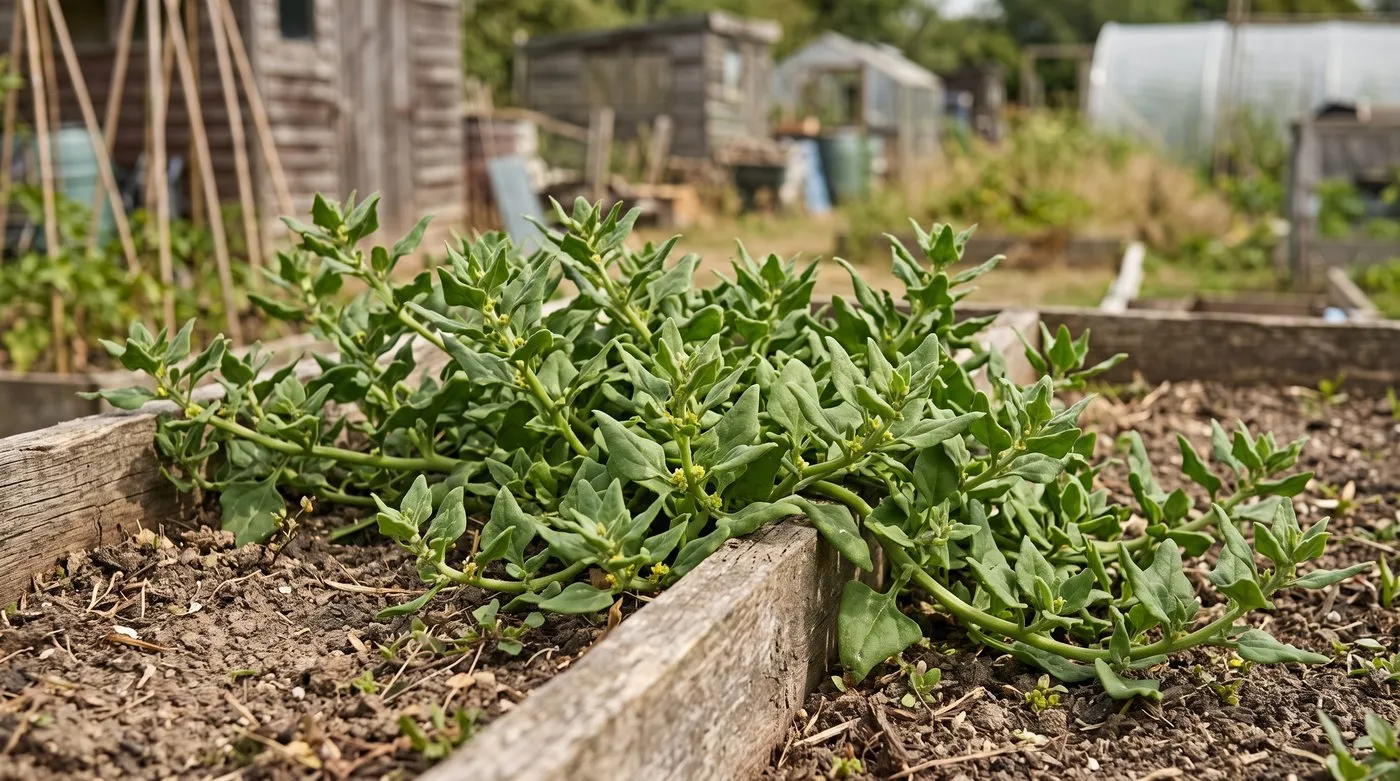
Thick, triangular leaves on low, spreading stems make New Zealand spinach easy to tell apart. Pick the tips often to keep it bushy.
Spinach types at a glance
This table helps you pick the right type for when you want to harvest.
| True spinach | Perpetual spinach | New Zealand spinach | |
|---|---|---|---|
| Leaves | Smooth or crinkled, dark green | Large, thick, mid-green | Small, thick, triangular |
| Flavour | Rich | Mild, earthy | Mild, slightly salty |
| When to sow | March-May, Aug-Sept | April-July | April, indoors |
| Picking season | A few weeks per sowing | Many months | June-October |
| Bolting | Bolts easily | Rarely bolts | Rarely bolts |
| Cold | Hardy | Hardy | Killed by frost |
| Best season | Spring and autumn | Most of the year | Summer |
| Best for | Flavour | Easy, reliable picking | Hot, dry summers |
Handy tip: Grow all three for spinach almost all year. True spinach for flavour in spring and autumn, perpetual spinach for bulk, and New Zealand spinach for the summer weeks when everything else bolts.
The best spinach varieties for UK gardens
These are reliable, easy-to-find choices from UK seed suppliers.
True spinach varieties
Medania is a go-to for spring sowing. It’s good at resisting bolting, with dark green, slightly crinkled leaves. Ready to pick in six to eight weeks.
Giant Winter is made for autumn sowing and winter picking. Sow in August or September for big, thick leaves from November to March. Its flavour is strong and great for cooking.
Bloomsdale (also sold as Bloomsdale Long Standing) has very crinkled leaves and a strong flavour. It’s an old American variety that does well here in spring and is a little slower to bolt than some.
Palco F1 is a modern variety that’s slow to bolt and quick growing. Its smooth leaves are easy to wash. It’s a good choice if you want to sow true spinach a little later in spring.
Perpetual spinach varieties
Perpetual Spinach is usually sold under just that name. Sow in April and it crops on and on until the next spring. Big upright leaves with white stems. Very easy.
Erbette is an Italian leaf beet with narrower leaves and thinner stems. It tastes closer to true spinach, does well in pots and looks pretty enough for a flower border.
Varieties at a glance
| Variety | Type | When to sow | Bolting | What’s special |
|---|---|---|---|---|
| Medania | True spinach | March-May | Slow to bolt | Reliable in spring |
| Giant Winter | True spinach | Aug-Sept | Good for cold months | Winter picking |
| Bloomsdale | True spinach | March-May | Medium | Strong flavour, crinkly leaves |
| Palco F1 | True spinach | March-late May | Slow to bolt | Smooth leaves |
| Perpetual Spinach | Leaf beet | April-July | Rarely bolts | Crops for months |
| Erbette | Leaf beet | April-July | Rarely bolts | Tastes close to true spinach |
When and how to sow spinach
Spinach sprouts best in cool soil and usually comes up in one to two weeks. The seeds are round and easy to handle, so sowing is simple.
Sowing indoors
Start the earliest sowings indoors on a windowsill or in a propagator from late February. Sow one seed per cell in module trays of peat-free seed compost, 2cm deep. Keep them somewhere cool but frost-free. After three or four weeks, harden them off for a week and plant out from mid-March.
Modules are much better than open trays for spinach. Each seedling gets its own root ball, so it settles in better when planted. Handle seedlings gently and plant them at the same depth.
Sowing outdoors
From March, sow straight into the ground. Make drills 2cm deep and 30cm apart. Water the drill, then drop seeds 2-3cm apart. Cover and firm gently. When seedlings have four proper leaves, thin them to 15cm apart and eat the thinnings in salads.
For baby leaves, sow more thickly in bands about 15cm wide and don’t thin. Cut the whole band when it’s 5-8cm tall, then sow again.
See our UK vegetable planting calendar for sowing dates by region.
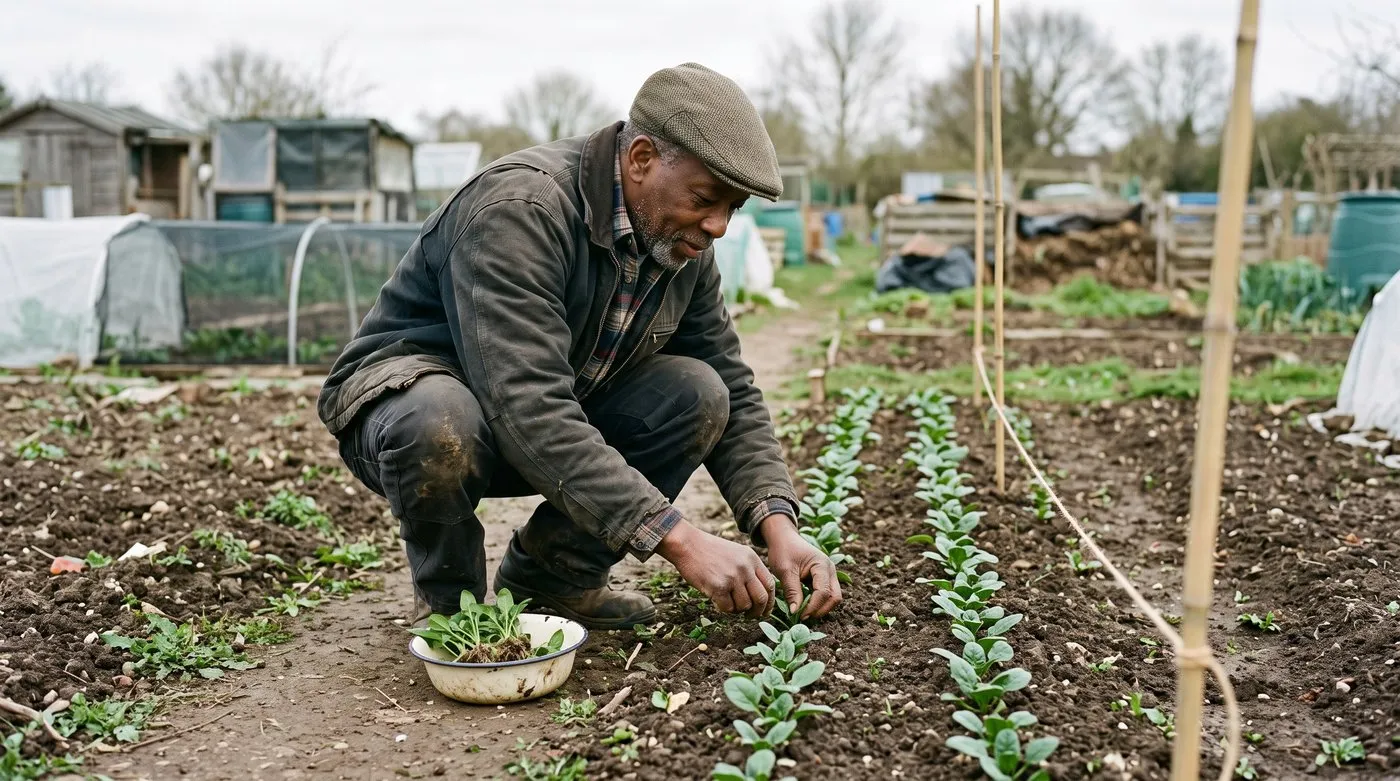
Thin to 15cm once seedlings have four proper leaves. The thinnings are perfect in a salad, so nothing goes to waste.
Sow a little, often
Sow a short row every three weeks from March to September. This is the secret to a steady supply. Each sowing of true spinach gives you a few weeks of picking before it bolts. Sow it all at once and you get a glut, then nothing.
A 1m row gives two people plenty of baby leaves for a few weeks. Sow more for a bigger household. Set a phone reminder, as sowing regularly matters more than sowing a lot.
Spacing
- True spinach (full-size leaves): 15cm between plants, 30cm between rows
- Perpetual spinach: 30cm between plants, 40cm between rows, as it grows much bigger
- New Zealand spinach: 60cm each way, as it sprawls
- Baby leaves: sow thickly in 15cm bands, no thinning
Spinach month by month
This covers all three types. In Scotland and northern England, shift things a week or two, as spring comes later and autumn earlier.
| Month | Sow | Pick | Notes |
|---|---|---|---|
| January | - | Winter spinach under fleece | Order seeds |
| February | Indoors: true spinach in modules | Winter spinach | Start on a bright, cool windowsill |
| March | Outdoors: true spinach under fleece | Winter spinach, early indoor sowings | First outdoor sowings once the soil warms a little |
| April | Outdoors: true and perpetual spinach | First spring sowings | Main sowing month. Sow New Zealand spinach indoors |
| May | Outdoors: perpetual spinach | True spinach from March | Last true spinach sowing |
| June | Perpetual spinach only | True spinach finishing, perpetual starting | True spinach bolts from now |
| July | Perpetual spinach | Perpetual and New Zealand spinach | New Zealand spinach in full swing |
| August | True spinach for autumn, perpetual | Perpetual and New Zealand spinach | Key month for winter sowings |
| September | True spinach for winter | Autumn true spinach starts | Last sowings for winter |
| October | - | Autumn true spinach, perpetual | Cover winter sowings with fleece |
| November | - | Winter spinach under cover | Use cloches or fleece tunnels |
| December | - | Winter spinach under cover | Pick lightly so plants keep going |
How to stop spinach bolting
Bolting is the biggest headache with true spinach. The plant shoots up a tall flower stalk, and the leaves shrink, toughen and turn bitter. Once it starts, there’s no going back, so prevention is everything.
What makes spinach bolt
Two things. The first is long days. From around mid-May, the long daylight tells the plant to flower. The second is heat. Warm soil and hot spells speed it up, and dry soil makes both worse.
How to prevent it
- Sow at the right time. Grow true spinach in spring (March to early May) and late summer (August to September). Skip late May to July.
- Choose slow-bolting varieties. Medania and Palco F1 hold on a little longer than older types.
- Give it afternoon shade. From May, grow spinach where taller crops like runner beans, sweetcorn or peas shade it in the afternoon. Shade netting over the row works too.
- Keep the soil moist. Dry soil is a big bolting trigger. Mulch with garden compost and water every two or three days in dry spells.
- Switch types for summer. Don’t fight it. Grow perpetual or New Zealand spinach from June to August.
Handy tip: If you see a central stem starting to stretch up from the middle, pick the whole plant straight away. The leaves are still good now, but they’ll soon turn bitter.
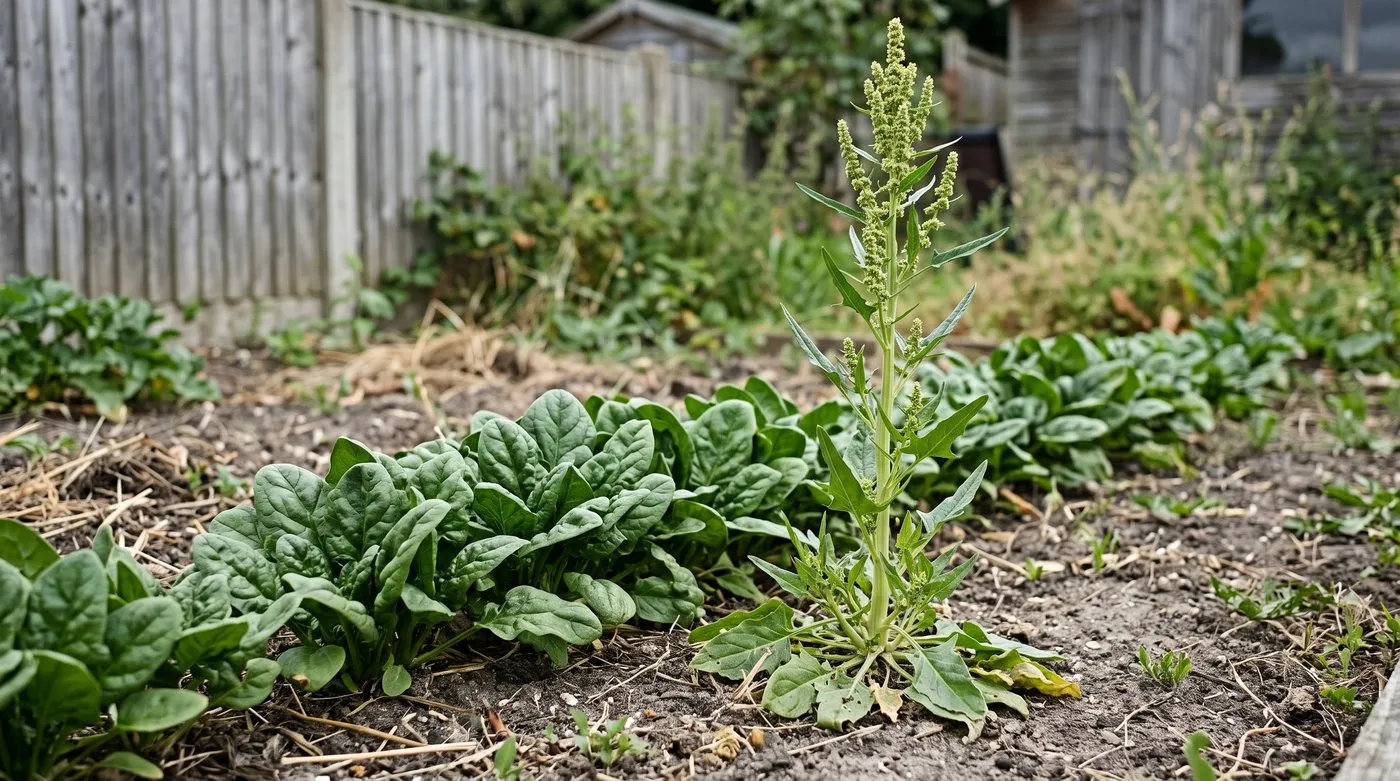
Once a stalk shoots up from the middle, the leaves soon turn bitter. Pick the whole plant then and sow a slow-bolting type next time.
Giving spinach rich, moist soil
Spinach is hungry and thirsty. Good soil is the biggest thing you can do for tasty, tender leaves.
Getting the soil ready
Spinach loves rich soil that holds moisture, and it isn’t fond of very acid soil. Dig in plenty of garden compost or well-rotted manure a few weeks before sowing, about a barrowful for every few square metres.
Heavy clay holds water but needs organic matter to open it up. Sandy soil drains too fast and needs extra compost to hold water. Either way, the answer is more organic matter. Our guide to making compost shows you how.
Watering
Water every two or three days in dry weather. Spinach shows thirst quickly, and leaves that wilt and recover still end up tougher and stronger tasting.
- Water in the morning so the leaves dry during the day
- Water at the base to keep the leaves clean
- Mulch between rows to hold moisture in
- In hot weeks, push a finger into the soil each day to check
Feeding
Soil with plenty of compost gives spinach all it needs. If growth slows or the leaves go pale, give a weak liquid feed every couple of weeks. A balanced or high-nitrogen feed suits leafy crops better than tomato feed.
Perpetual spinach enjoys a top-up of compost around each plant in midsummer to keep it going through the second half of the season.
Picking spinach: cut-and-come-again
Cut-and-come-again picking gets the most from your plants. You get several harvests from each sowing and it helps delay bolting.
How to do it
- Wait until leaves are 5-10cm tall, about four to six weeks after sowing for true spinach
- Snip the outer leaves first with sharp scissors, 2-3cm above the soil
- Leave the middle of the plant and a few inner leaves alone
- Water well, and give a weak liquid feed now and then
- New leaves grow back in a couple of weeks
- Repeat a few times until the plant tires or bolts
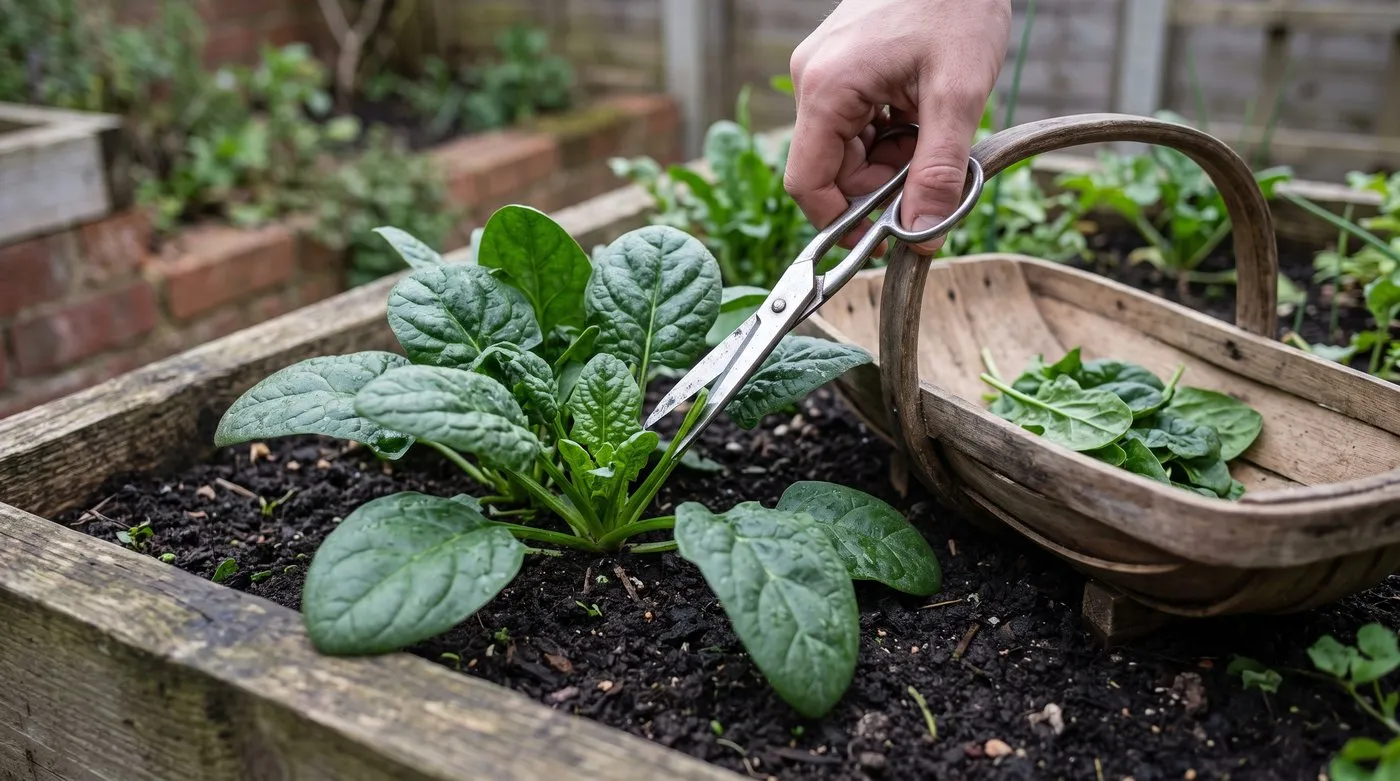
Take the outer leaves and leave the heart alone. New leaves will be ready to pick again in a couple of weeks.
Bigger leaves
For big leaves, let plants grow for six to eight weeks. Snap off outer leaves at the base, working around the plant and always leaving the middle. This suits perpetual spinach well.
Baby leaves
Sow thickly in bands and cut the whole lot at 5-8cm with scissors. The stumps regrow once. Then clear the bed and sow again. Baby leaves are lovely raw and ready in about four weeks.
Handy tip: Pick in the early morning when leaves are crisp. Wash in cold water, spin dry and keep in a sealed bag in the fridge. Home-grown spinach keeps for several days this way.
Growing spinach over winter
Winter spinach is a real treat. One sowing in late summer gives you fresh leaves from November to March, just when shop spinach is pricey.
When to sow
Sow Giant Winter or Medania in August or September. Plants need a good few weeks of growing weather to build a rosette of leaves before the cold arrives. Early August sowings go into winter bigger. Mid-September sowings are smaller but still crop well.
Keeping it snug
Cover plants with fleece or cloches from November. Winter spinach is hardy, but cover keeps the leaves clean and free of mud splashes, and helps them grow in mild spells.
A simple fleece tunnel costs very little and makes a real difference. Lift it to pick and put it back after. Open it up on mild days so the plants don’t get damp and mouldy.
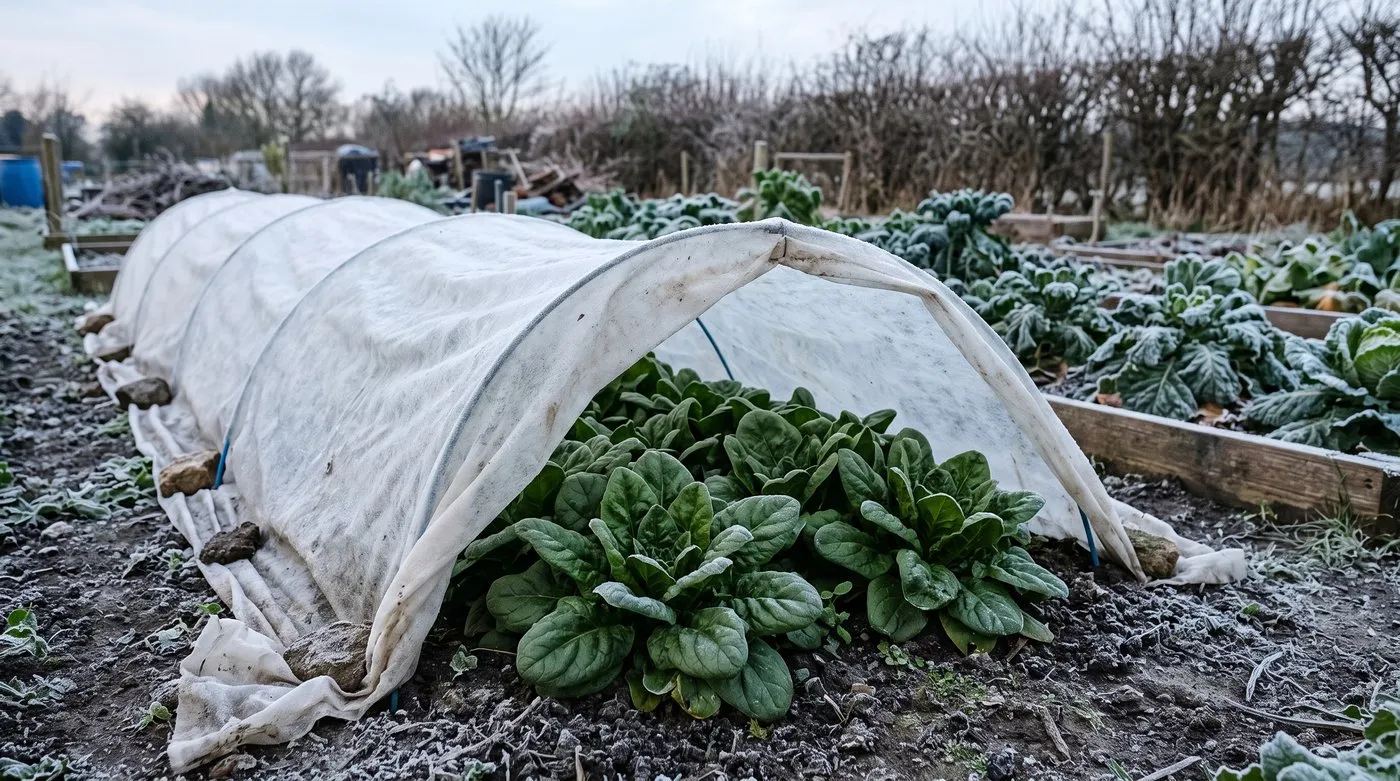
A simple fleece tunnel keeps winter spinach clean and growing in mild spells. Lift it on milder days to let air in.
Picking in winter
Pick outer leaves only, leaving the middle alone. Winter spinach grows slowly, so take just two or three leaves per plant a week. In a mild winter, you may get a weekly pan of spinach until spring sowings are ready.
The RHS spinach growing guide has more on winter growing. Spinach also features in our winter salad harvesting guide, with lots of other leaves for cold months.
Growing spinach in pots
Spinach is great in pots. It has shallow roots, grows fast and doesn’t need full sun. A few pots on a balcony, patio or doorstep can keep you in leaves for months.
What you need
- Pots: At least 30cm wide and 20cm deep, for three or four full-size plants or a thick sowing of baby leaves
- Window boxes: About 15cm deep, best for baby leaves
- Grow bags: A standard bag holds six to eight plants
- Troughs: Long planters are great for sowing a section at a time
Fill with peat-free multipurpose compost with some garden compost mixed in to hold moisture, which really matters for spinach in pots.
Looking after pots
Water daily from May to September, as pots dry out much faster than the ground. In hot weather, check twice a day. Feed every couple of weeks with a balanced liquid feed.
Keep pots in part shade from May to August. Morning sun and afternoon shade is ideal, like by a north-facing wall or in the shadow of a fence. Full sun on a hot patio makes it bolt quickly.
Perpetual spinach is the best type for pots because it crops for months. True spinach bolts fast on a warm patio. In winter, move pots to a sheltered, sunny spot for more light.
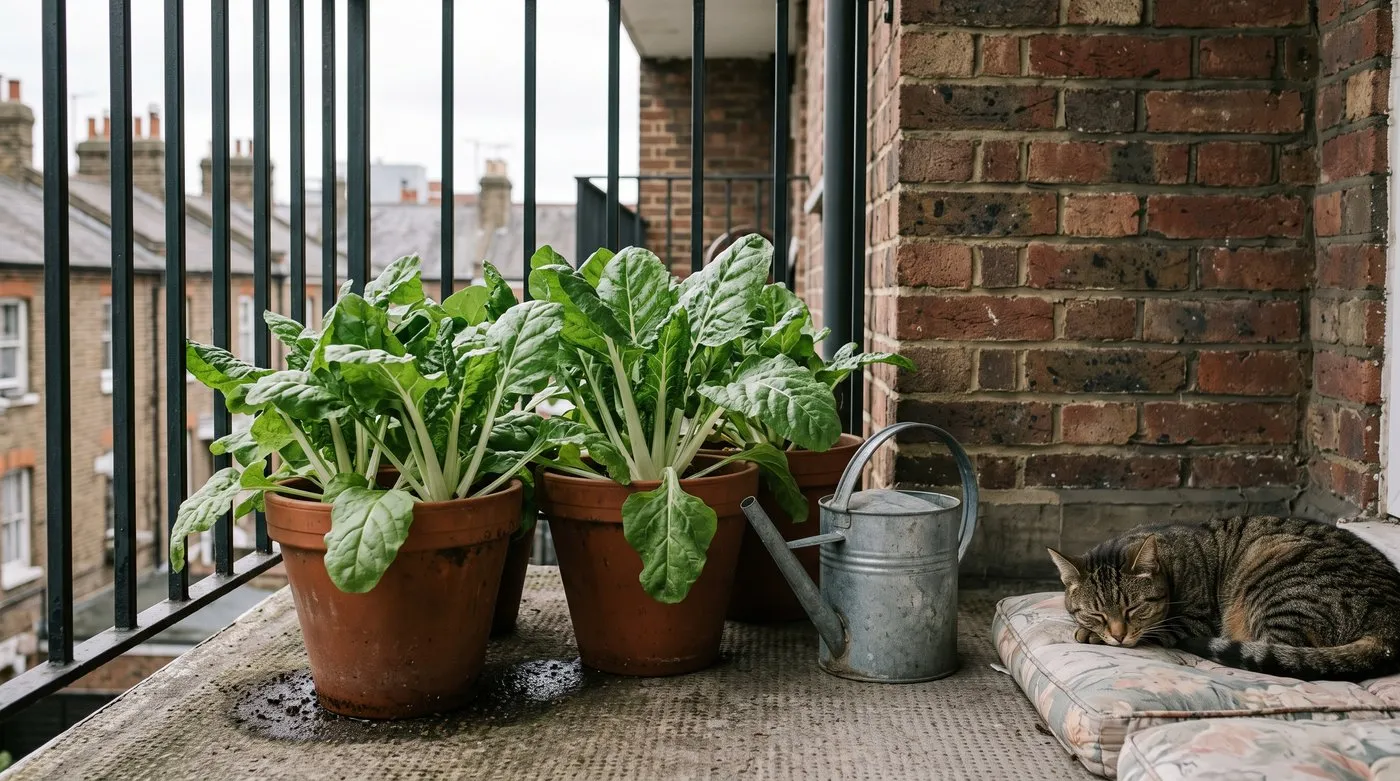
A spot with morning sun and afternoon shade keeps potted spinach leafy for longer. Check the compost every day in summer.
Why spinach shrinks so much when cooked
It catches everyone out. You pick a big bowl of spinach, cook it, and it shrinks to almost nothing.
Raw spinach is mostly water, and cooking drives it off. A big bag of leaves wilts down to a small portion on the plate.
So grow more spinach than you think you need. Perpetual spinach gives more per plant and is the practical choice if you cook it often. Allow a couple of metres of row per person for cooking, or more if you eat it a lot.
Baby leaves for salads go much further, as you eat them raw. A 1m row of cut-and-come-again leaves keeps two people in salads for a few weeks.
Common spinach mistakes
Sowing true spinach in midsummer
The most common mistake. True spinach sown in June or July bolts within weeks, often before you’ve picked a leaf. Grow perpetual or New Zealand spinach then, and save true spinach for spring and autumn.
Watering on and off
Spinach likes steady moisture. Dry for days then soaked gives tough, bitter leaves and more bolting. Mulch with compost and water every two or three days in dry weather. Pots need a check every day.
Sowing too much at once
A long row sown in one go gives far more than you can eat, and half of it bolts. Sow short rows every three weeks instead. Less waste, and always young plants coming on.
Skipping soil prep
In poor, dry or packed soil, spinach gives small, pale, bitter leaves. Add compost before each sowing. If you’re starting a new patch, a raised bed filled with good topsoil and compost suits spinach perfectly.
Picking too hard
Stripping every leaf kills the plant. Always leave the middle and a few inner leaves, and take outer leaves first. Little and often beats one big harvest.
Pests and diseases
Spinach is fairly trouble-free. A few problems turn up, and all are easy to manage.
Downy mildew
Yellow patches on top of the leaves with grey-purple fuzz underneath, mostly in damp seasons. Thin plants to the right spacing so air can move, water the soil not the leaves, and pick off affected leaves. If it’s a regular problem, look for mildew-resistant varieties.
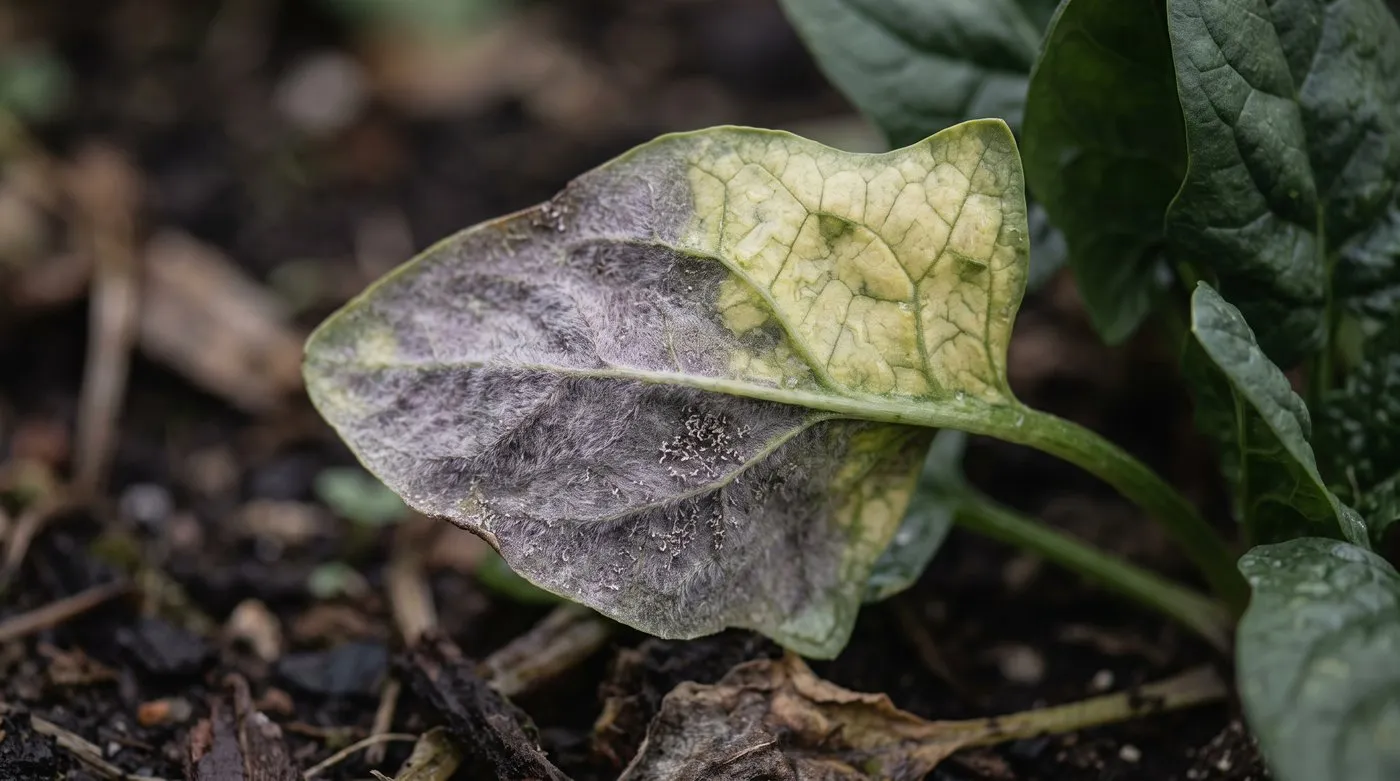
Yellow patches on top plus grey-purple fuzz underneath means downy mildew. Pick those leaves off and give the plants more room for air.
Slugs and snails
Young seedlings are most at risk in their first few weeks. Nematodes watered onto the soil when it’s warm enough help. Go out with a torch after dark and pick slugs off. Cut-down plastic bottles over seedlings make handy mini cloches.
Leaf miners
Tiny grubs tunnel inside the leaves, leaving pale trails. Pick off affected leaves. Covering rows with fine insect mesh from sowing stops the flies laying eggs and is the best way to keep them off.
Aphids
Greenfly and blackfly sometimes turn up in warm, dry weather. A strong jet of water knocks them off. Flowers nearby bring in ladybirds and hoverflies to help. Only bad attacks spoil the crop.
Next, try growing chard, a close cousin that gives you colour and plenty of leaves through the same seasons.
Frequently asked questions
When should I sow spinach in the UK?
Sow true spinach from March to May, then again in August and September. Spring sowings crop before summer heat makes them bolt. Late summer sowings carry on through winter under fleece. Avoid sowing true spinach in June and July. Grow perpetual spinach for summer instead.
Why does my spinach keep bolting?
Long days and warm weather make spinach run to flower. Dry soil makes it worse. Sow bolt-resistant varieties like Medania in spring, give plants afternoon shade from May and keep the soil moist. For summer, switch to perpetual spinach, which rarely bolts.
What is the difference between true spinach and perpetual spinach?
True spinach has dark, rich-tasting leaves but bolts easily. Perpetual spinach is actually a leaf beet, a close cousin of chard. Its leaves are bigger, thicker and milder. It copes with heat and dry spells much better and crops for months from one sowing.
Can I grow spinach in pots and containers?
Yes, use a pot at least 20cm deep and 30cm wide. Fill it with peat-free compost mixed with some garden compost to hold moisture. Water daily in warm weather and give it part shade in summer. Baby leaves grow happily in window boxes. Perpetual spinach is the best pick for pots.
Can I grow spinach over winter?
Yes, winter spinach is one of the easiest cold-weather crops. Sow Giant Winter or Medania in August or September so plants are a good size before the cold. You can pick leaves from November to March. Cover with fleece or cloches from November and pick outer leaves only.
How do I harvest spinach without killing the plant?
Pick the outer leaves first and work inwards. Leave the middle and a few inner leaves alone. Snip stems with scissors or snap them off at the base. New leaves soon grow back. Never strip all the leaves at once, as the plant won’t recover.
How much spinach should I grow for a family?
More than you think. Spinach shrinks to a fraction of its size when cooked, so a big bag of leaves makes a small portion. For a family who eats it often, sow a 2m row every three weeks. Perpetual spinach gives more per plant and is better value for keen cooks.
Our team produces practical UK gardening guidance from source research, contributor records and established horticultural practice. Editorial standards are overseen by Matt W.


