Key takeaways
- Choose firm, plump supermarket turmeric with visible buds
- Start it in February or March, as it needs most of the year to grow
- Keep it warm, ideally 20°C or more, until shoots appear
- Don't overwater before shoots show, or the rhizome rots
- Grow it on in a large pot in a greenhouse, conservatory or warm room
- Harvest once the leaves have fully died back, usually November or December
You can grow turmeric from a piece bought at the supermarket. A plump, fresh rhizome will sprout into a tall plant with broad, lush leaves, and give you a clump of fresh orange turmeric by winter.
The catch is time and warmth. Turmeric (Curcuma longa) needs most of the year to grow, so start it in late winter and harvest in late autumn or early winter. This guide covers choosing a piece, sprouting it, summer care and lifting your crop. If you’d like to grow its cousin too, the method is very similar to growing ginger at home.
How to pick a supermarket rhizome that will sprout
Choose pieces that are firm, plump and have visible buds. Supermarket turmeric is sold for cooking, so quality varies.
- Firm and heavy: a good piece feels hard, like fresh ginger. Soft, light or wrinkled pieces have dried out and rarely grow.
- Visible buds: look for small rounded points along the knuckles, often pale yellow or pinkish. These become the shoots.
- A decent size: a piece with a few branches and several buds gives a stronger plant.
Some shop turmeric may have been treated to stop sprouting. Organic turmeric is often a safer bet, and soaking a piece in lukewarm water overnight can help wake it up.

The plump piece on the left has clear buds and should sprout. The dry, shrivelled one on the right probably won’t.
How to sprout turmeric indoors
Warmth is what gets turmeric going. Cold, wet compost is the main reason supermarket pieces fail.
- Soak the rhizome in lukewarm water overnight.
- Fill a small pot with moist, free-draining compost or coir. It should feel damp, not wet.
- Lay the rhizome flat, buds facing up, and cover with about 5cm of compost.
- Keep it warm, ideally 20°C or more. A heated propagator or a warm spot indoors works well.
- Water sparingly until shoots appear. Just keep the compost from drying out completely.
Shoots usually show within a few weeks, though it can take longer. Be patient and resist watering on a schedule. Too much water before the roots grow is what makes rhizomes rot.
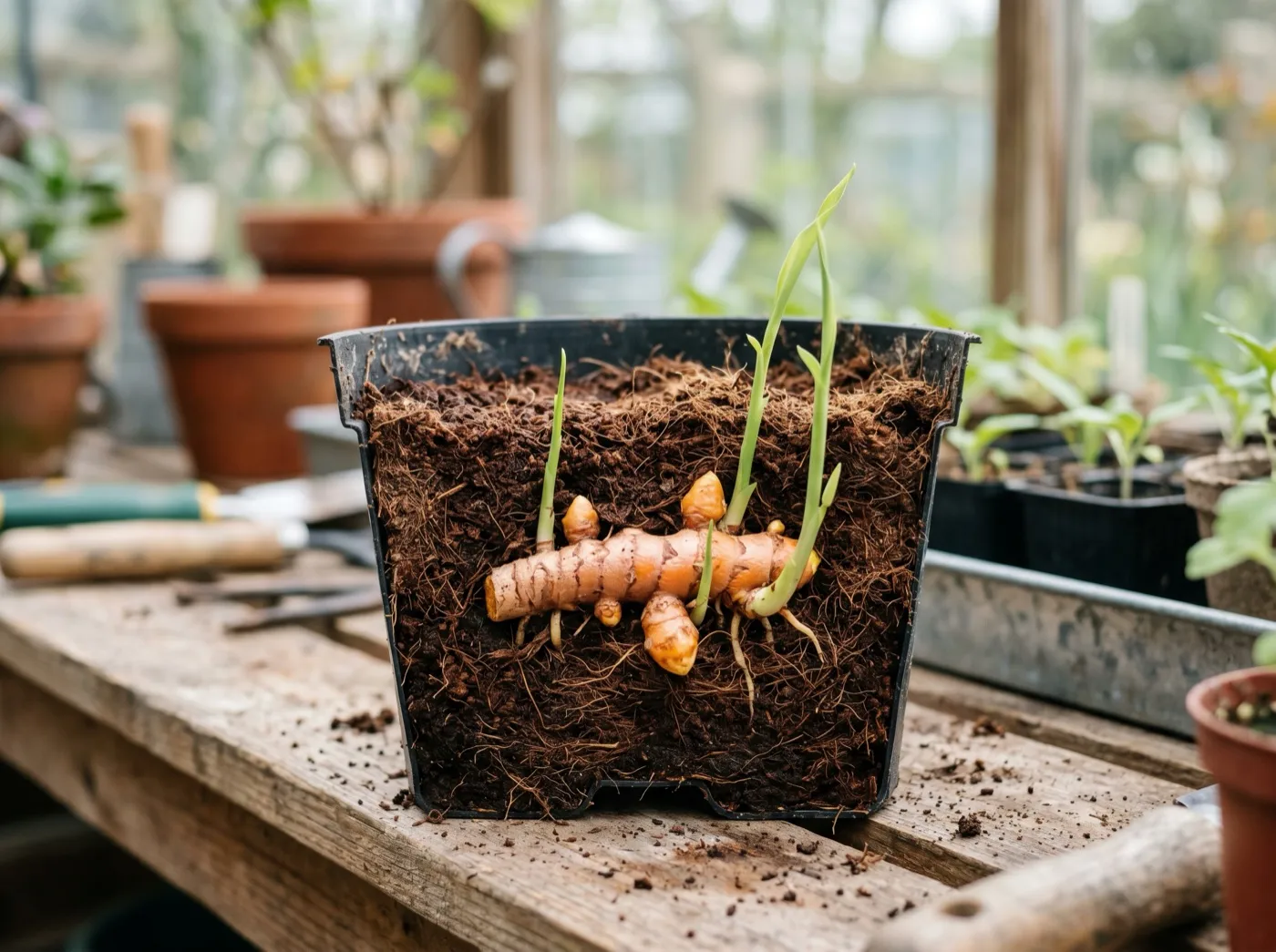
Lay the rhizome flat with the buds facing up. Once green shoots appear, you can start watering a bit more.
Potting turmeric on into a bigger pot
Once the shoots are a few centimetres tall, move the plant into a large pot. Turmeric makes a dense clump of new rhizomes and needs room to spread. A wide pot of about 10 litres or more is a good size.
Use peat-free multipurpose compost mixed with some perlite or coir for drainage. Plant the rhizome about 5cm deep, firm gently and water in.
Keep the pot warm and bright, but out of fierce midday sun through glass, which can scorch young leaves. Several leafy stems usually grow from one rhizome. Many other heat-lovers are grown in a similar way, such as chilli peppers.
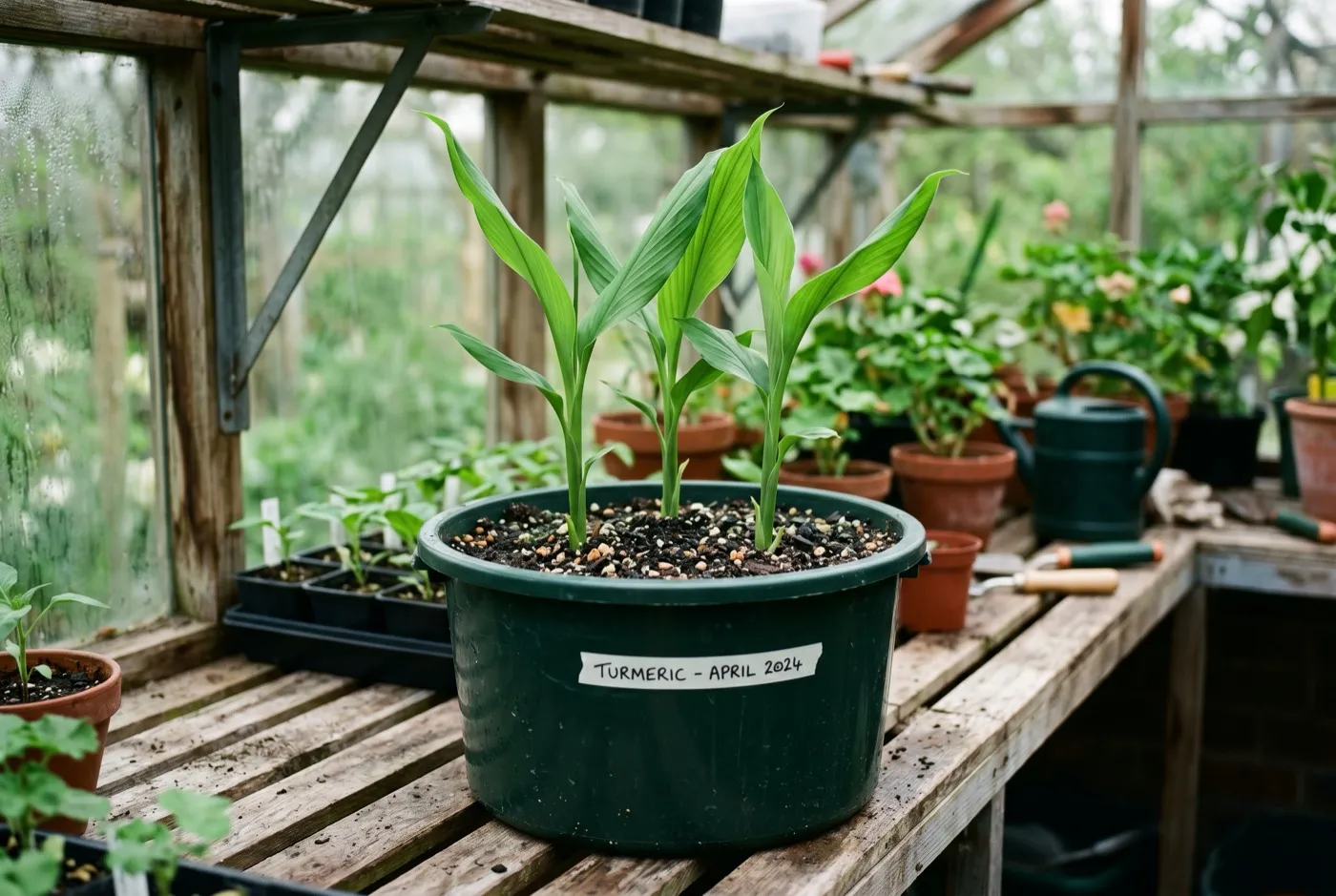
Move young plants into a big pot so the clump has room to grow over summer.
Where to grow turmeric in the UK
Turmeric needs warmth and humidity all summer, which most British gardens can’t give outdoors.
| Where | How it does | Notes |
|---|---|---|
| Heated greenhouse | Best | Steady warmth and humidity |
| Conservatory | Very good | Warm, bright and frost-free |
| Bright, warm room | Fair | Warm enough, but drier air and less light |
| Outside | Poor | Only warm enough in high summer in most areas |
A pot can sit outside in a warm, sheltered spot during a hot spell. Bring it back under cover well before nights turn cool. The guide to heating a greenhouse has ideas for keeping spring nights warm enough.
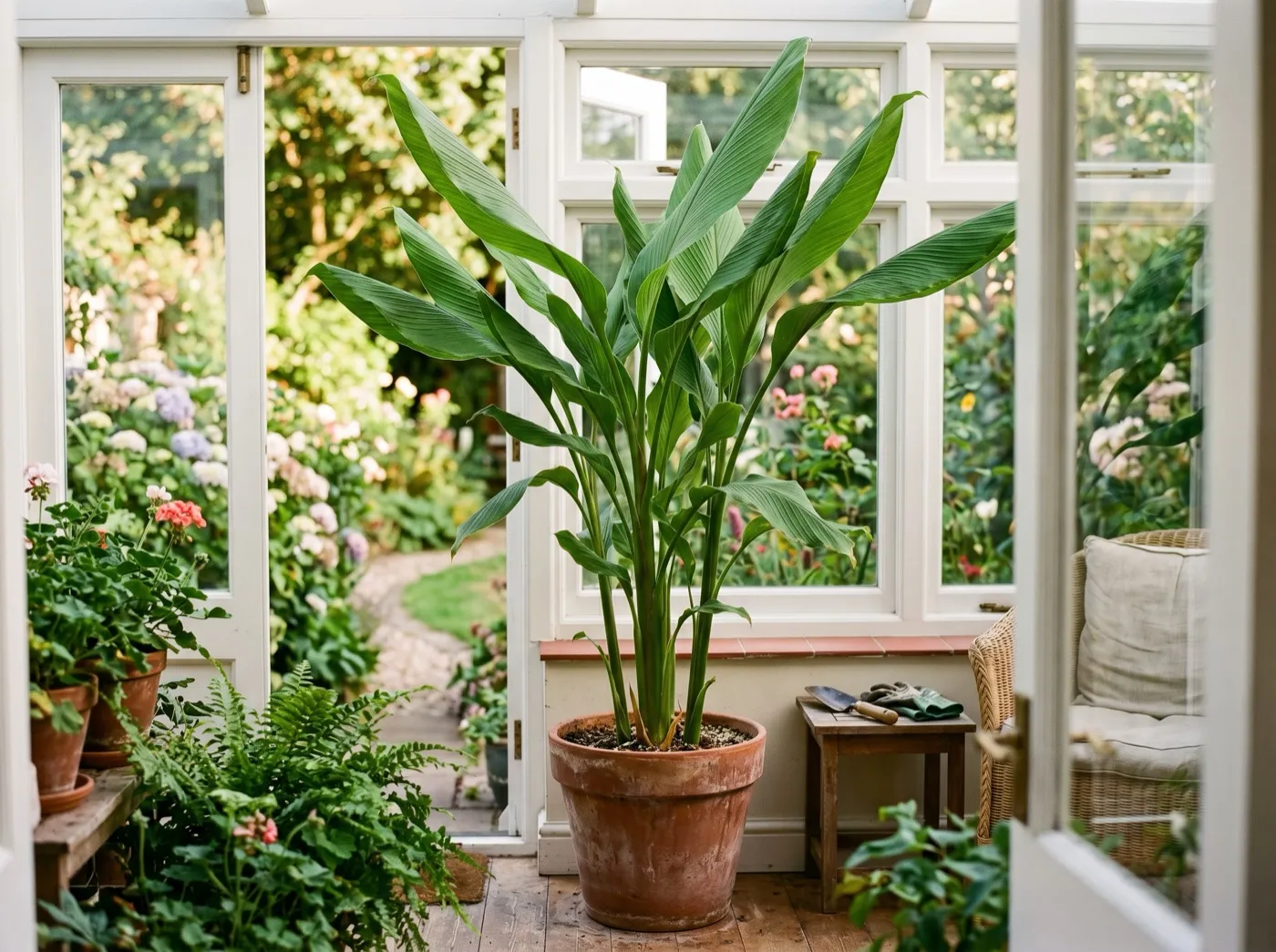
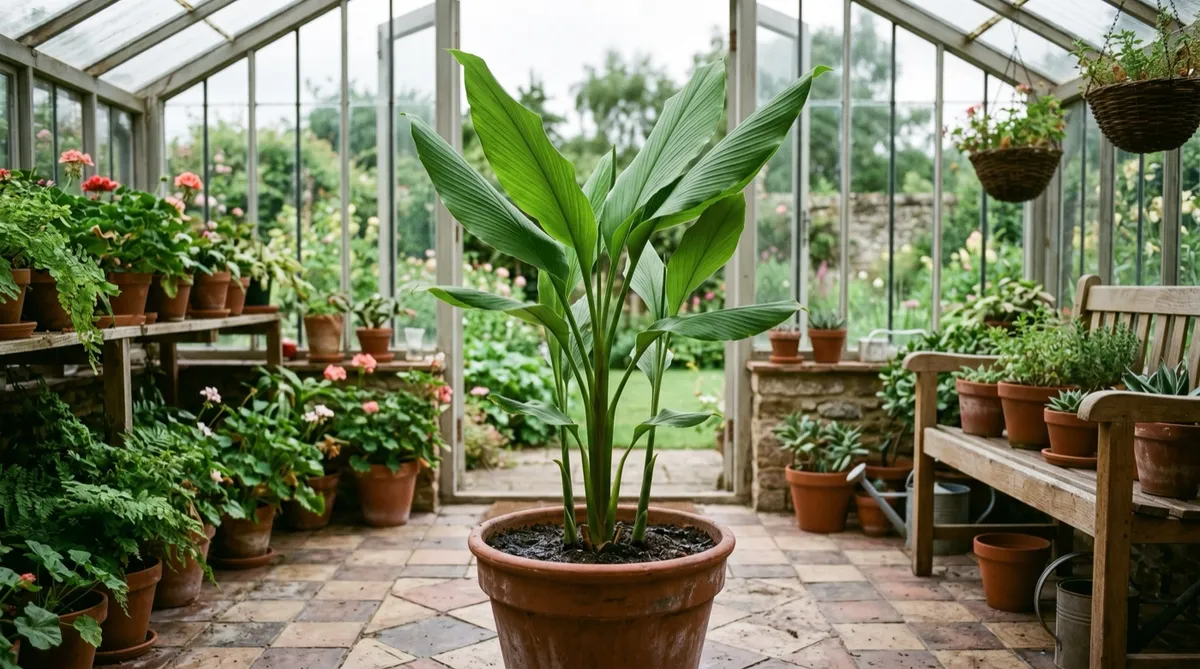
A warm, bright conservatory suits turmeric well. By late summer the leaves can reach about a metre tall.
Watering, feeding and humidity in summer
Once the plant is leafy, it grows fast and needs regular care.
Water to keep the compost evenly moist, never bone dry and never soggy. In a hot conservatory that can mean every day or two.
Humidity helps. Turmeric likes moist air, so stand the pot on a tray of damp gravel or mist the leaves on hot mornings. Dry air can brown the leaf edges.
Feed every couple of weeks through summer with a liquid feed, such as a tomato feed, following the label. Stop feeding in autumn as growth slows.
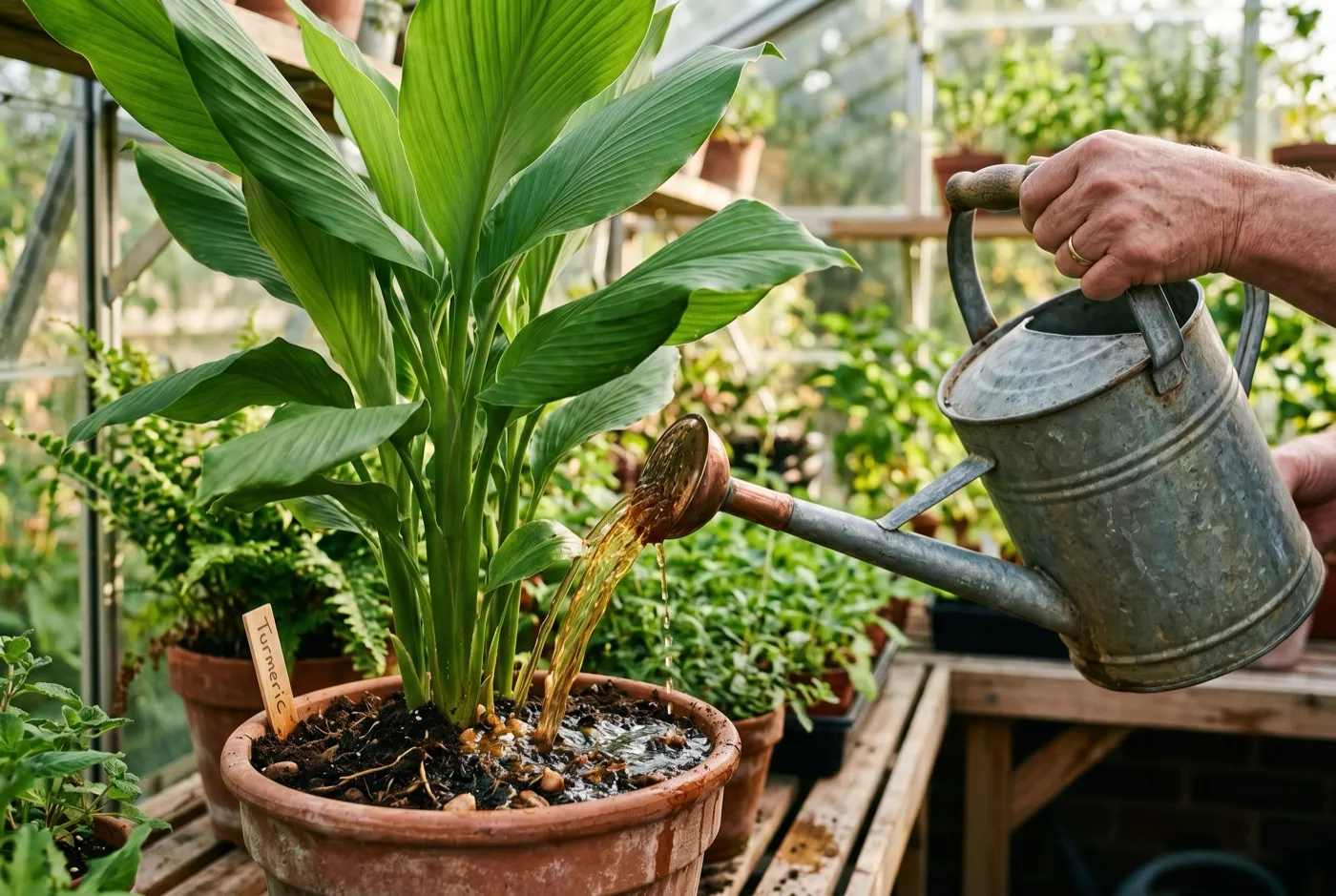
Turmeric is thirsty in summer. Keep the compost evenly moist and feed every couple of weeks.
How to harvest and store turmeric
Wait until the leaves have fully died back, usually in November or December. Yellowing leaves in autumn are normal. The plant is moving its energy down into the rhizomes, which carry on swelling.
Once every leaf has yellowed and flopped, stop watering for a week or so. Then tip the pot out, shake off the compost and lift the clump. You should find a cluster of knobbly orange rhizomes, much bigger than the piece you planted.
Storing: keep unwashed pieces in the fridge and use them within a few weeks. For longer, freeze them whole or grated in small portions. Turmeric stains, so wear gloves when you peel or grate it.
Saving pieces for next year: keep a few of your plumpest, best-budded rhizomes. Store them dry in a cool but frost-free place indoors over winter, then start them again in February. It saves buying new pieces.
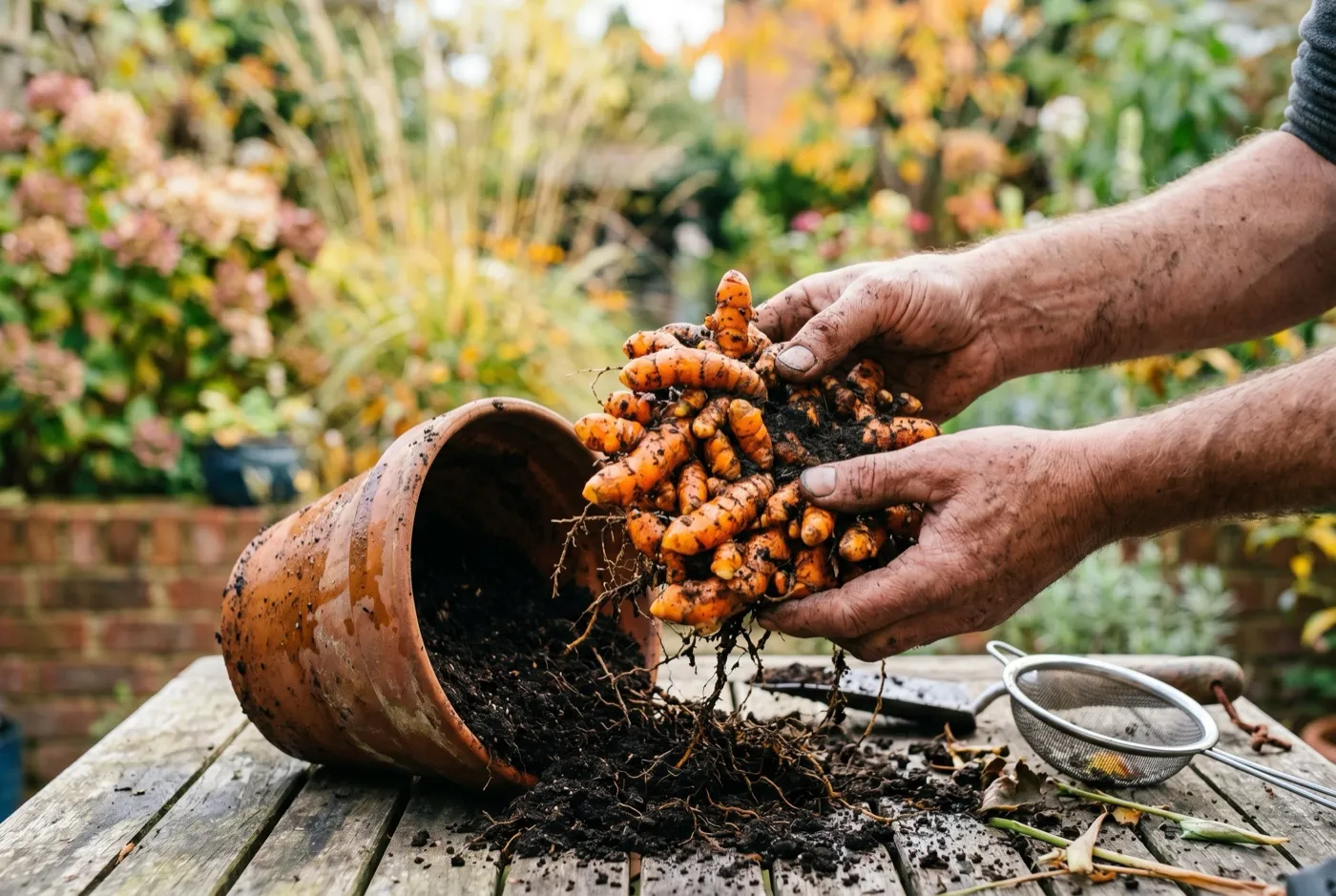
Tip out the pot once the leaves have died back and you’ll find a clump of fresh turmeric.
Turmeric month by month
| Month | What to do |
|---|---|
| January | Check saved rhizomes. Throw away any soft ones |
| February | Soak and start rhizomes somewhere warm |
| March | Keep sprouting. Pot on any with shoots a few centimetres tall |
| April | Grow on somewhere warm and bright. Water lightly |
| May | Water more as leaves grow |
| June | Start feeding every couple of weeks. Raise humidity |
| July | Main growth. Water and feed regularly |
| August | Keep watering and feeding |
| September | Growth slows. Feed less |
| October | Leaves start to yellow. Stop feeding and water less |
| November | Stop watering once leaves die back. Start lifting |
| December | Harvest the rest. Store some and save a few pieces for next year |
Common turmeric mistakes
- Starting too late: a May start leaves too few warm weeks for the rhizomes to swell. Start in February or March.
- Cold nights: turmeric stalls when nights get chilly. Keep it somewhere that stays warm at night in spring.
- Overwatering before sprouting: cold, wet compost rots the rhizome. Keep it just moist until shoots appear.
- Harvesting too early: lifting at the first yellow leaf cuts the crop short. Wait until all the leaves have died back.
Frequently asked questions
Can you grow turmeric from supermarket rhizomes in the UK?
Yes, if you choose fresh, plump pieces with visible buds. Look for firm rhizomes with small knobbly buds. Plant them in moist compost somewhere warm and shoots usually appear within a few weeks. Shrivelled pieces rarely grow.
How long does turmeric take to grow in the UK?
Most of the year, usually around nine or ten months. Start indoors in February or March. The plant grows leaves through summer and dies back in autumn. Harvest in late autumn or early winter, once the leaves have yellowed.
When do you harvest turmeric grown in a pot?
Harvest once the leaves have fully died back, usually in November or December. Don’t lift at the first yellow leaf, as the rhizomes are still growing. Tip out the pot and lift the clump.
How much turmeric do you get from one rhizome?
A healthy plant gives a clump several times the size of the piece you planted. An early start and steady warmth give the best results. A late or cool start gives a much smaller crop.
Can turmeric grow outdoors in Britain?
Not really, as most of the UK is too cool. A pot can go outside in a warm, sheltered spot in high summer, but bring it back in before nights turn cool. A greenhouse or conservatory gives far better results.
Why has my turmeric rhizome rotted before sprouting?
Usually too much water while it was too cold. A rhizome in cold, wet compost rots before it roots. Keep the compost just moist and the pot warm. Water more only once shoots appear.
Enjoyed turmeric? Read our guide to growing Indian and Eastern spices for more to try, or the guide to lemongrass in pots. Browse more unusual crops in our growing guides.
Our team produces practical UK gardening guidance from source research, contributor records and established horticultural practice. Editorial standards are overseen by Matt W.