Key takeaways
- Oyster mushrooms are the easiest for beginners, and a kit is the simplest way in
- Kits usually fruit within a couple of weeks and give two or three crops
- Mushrooms need no sun, just a normal room, damp air and a little fresh air
- Shiitake logs take six to twelve months to get going, then crop for years
- Mould is the main problem, so keep hands, tools and kit clean
Growing mushrooms at home is one of the most fun food-growing projects around, and you don’t need a garden or even a sunny windowsill. Mushrooms are happy in cool, shady spots that most plants would hate. A spare kitchen shelf, a shady corner of the garage or a patch under trees is all you need.
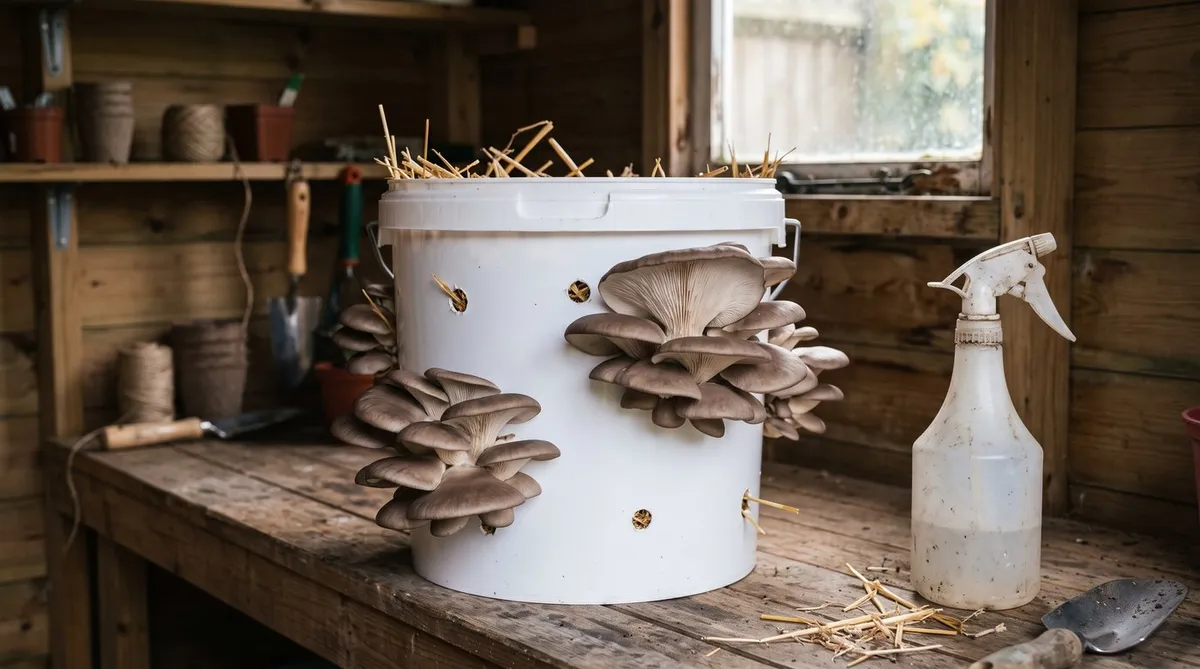
Oyster mushrooms are the easiest to start with, grown in a bucket of pasteurised straw, as our guide to growing oyster mushrooms explains.
Below are four types that suit the UK, three ways to grow them, and what each costs in plain terms. If you already compost kitchen waste, see our guide to making compost for what to do with spent mushroom blocks.
Which mushrooms can you grow at home in the UK?
Four types grow well in UK homes and gardens. Each has its own taste and needs.
| Mushroom | Ease | How long | Flavour | Best way to grow |
|---|---|---|---|---|
| Oyster | Easy | A couple of weeks from a kit | Mild, velvety | Kit or straw bucket |
| Shiitake | Medium | 6-12 months on a log | Rich, savoury | Hardwood log |
| Lion’s mane | Medium | A few weeks | A bit like crab or lobster | Kit or sawdust block |
| King oyster | Medium | A few weeks | Meaty, firm | Kit, straw or sawdust |
Oyster mushrooms are the ones to start with. They grow fast, cope with temperature swings and give generous crops. Grey and blue oysters are the toughest for UK conditions. Pink and yellow oysters like it warmer, so they suit summer or a heated room.
Shiitake are the long-term project. A hardwood log plugged with spawn takes a while to get going, but then crops for several years with almost no work.
How do mushroom growing kits work?
Kits are the quickest way to your first mushrooms. A kit is a block of sawdust or grain that’s already full of mushroom “roots”, called mycelium. You cut an opening in the bag, mist it twice a day, and mushrooms usually appear within a couple of weeks.
UK suppliers sell oyster, shiitake, lion’s mane and king oyster kits. You’ll usually get two or three crops from one kit. After that, crumble the spent block into your compost bin or use it as mulch.
Kits are perfect for beginners because the tricky, mould-prone stages are already done for you. Keep the kit out of direct sun and away from radiators, in a normal room. A north-facing kitchen windowsill or utility room is ideal. Mist the opening with a clean spray bottle morning and evening to keep the air around it damp.
 An oyster mushroom kit giving its first crop on a kitchen shelf.
How do you grow mushrooms in buckets of straw?
A bucket of straw is the cheapest DIY way to grow oyster mushrooms. You need a bucket with holes drilled in the sides, some straw and some grain spawn (grain already full of mushroom mycelium).
Step-by-step process:
- Drill holes about 1cm wide all over the sides of a clean bucket with a lid.
- Chop the straw and pasteurise it by soaking it in hot water (around 70C) for about an hour. This kills off most competing moulds.
- Drain the straw and let it cool completely.
- With clean hands, pack the straw into the bucket in layers, sprinkling grain spawn between each layer.
- Put the lid on and keep it somewhere warm and dark while the white mycelium spreads through the straw. This usually takes a few weeks.
- Once it’s white all through and baby mushrooms appear at the holes, move it somewhere cooler with some light and mist it twice a day.
A bucket usually gives two or three crops. Between crops, soak the straw block in cold water for a few hours to rehydrate it. Our oyster mushroom guide goes into more detail.
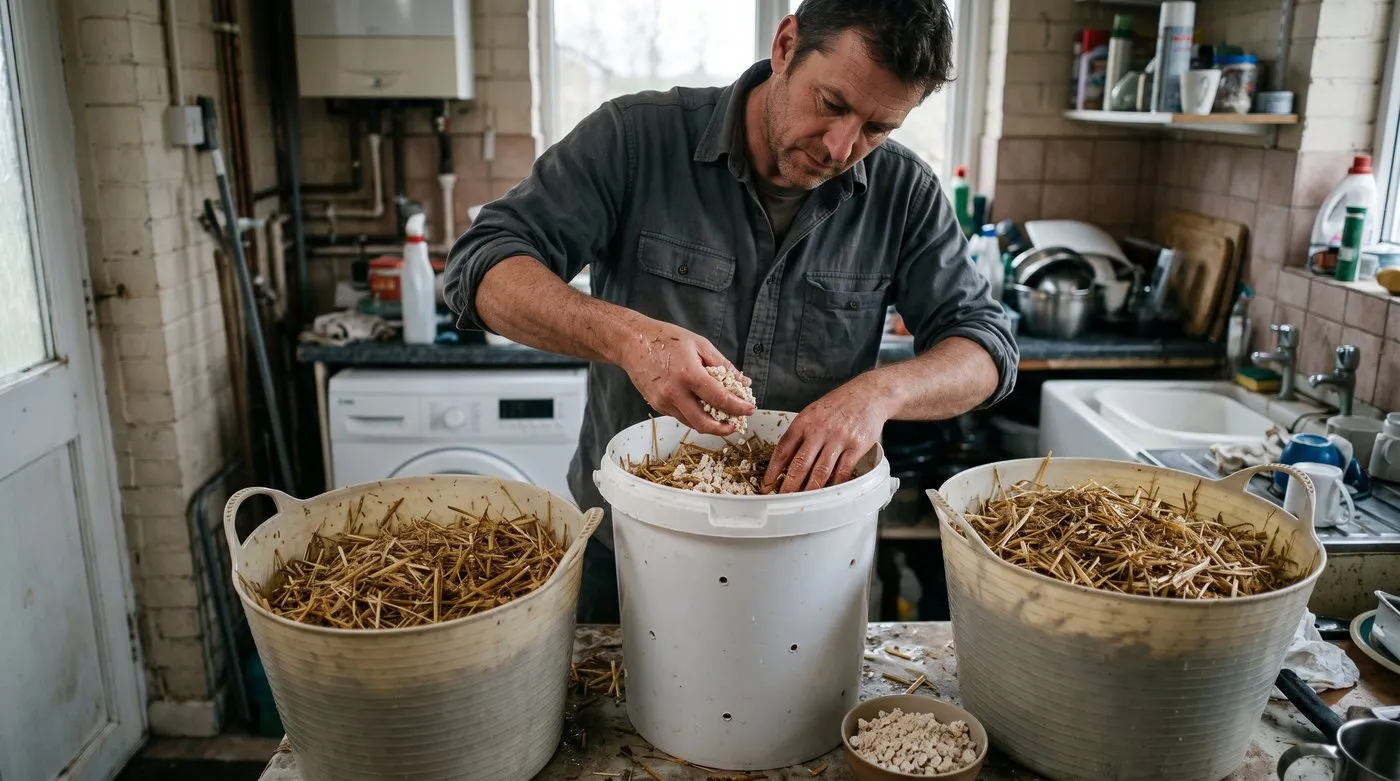
Pack the straw in layers with spawn sprinkled between each one. Clean hands and well-pasteurised straw help keep mould away.
How do you grow shiitake mushrooms on logs?
Logs are the traditional outdoor way to grow shiitake in a UK garden. You drill holes in freshly cut hardwood logs, fill them with dowel spawn (little wooden plugs full of mycelium), seal them with wax and leave them in the shade for six to twelve months.
What you need:
- Freshly cut hardwood logs, ideally oak, beech or birch, about 10-15cm across and around 1m long, cut within the last few weeks
- Shiitake dowel spawn
- A drill and a bit to match your dowels
- Cheese wax or beeswax
- A shady spot outdoors that gets rain
Drill holes about 15cm apart in a diamond pattern along the log. Tap in the dowels and seal each hole with melted wax. Stack the logs in the shade, raised off the ground on bricks or a pallet. A north-facing fence or under trees works well. Rain keeps them moist, so don’t cover them.
After six to twelve months, white mycelium shows on the cut ends. To get them fruiting, soak the whole log in cold water for a day. Little mushrooms usually appear within a week. Logs fruit mainly in spring and autumn and keep going for several years.
 Shiitake mushrooms popping out of oak logs in a shady garden corner.
What temperature and humidity do mushrooms need?
Mushrooms grow in two stages, and each likes slightly different conditions.
Stage one, spreading: The white mycelium spreads through the straw or sawdust. It likes warmth and darkness at this stage. Too cold and it stalls. Too hot and moulds can take over.
Stage two, fruiting: A drop in temperature often tells the mycelium to make mushrooms. A normal UK room in spring or autumn is about right. The air around the mushrooms needs to stay damp, so mist twice a day. A clear plastic bag with holes poked in it makes a handy humidity tent over a single kit.
Fresh air matters too. If mushrooms grow long thin stems with tiny caps, they need more fresh air. Open a window for a few minutes twice a day, but don’t let them dry out.
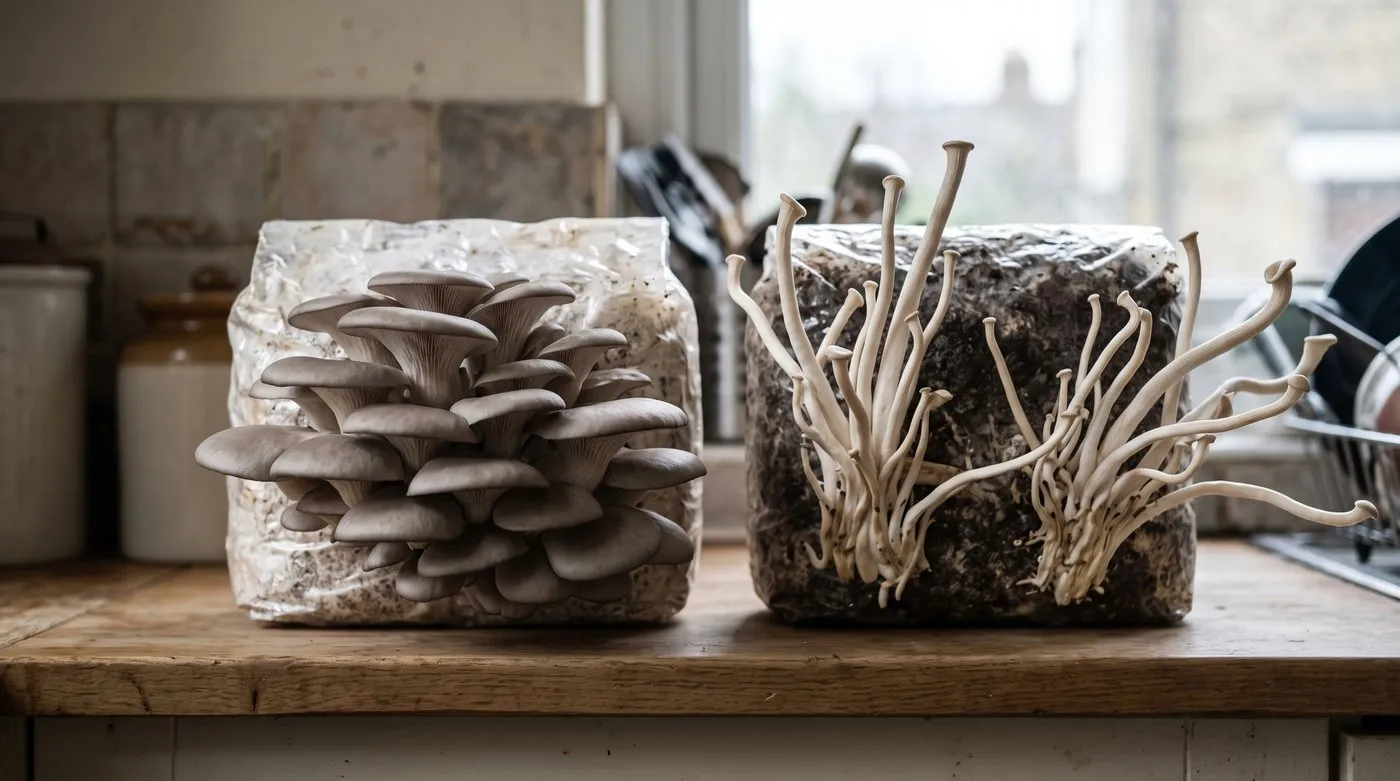
Long stems and tiny caps mean the mushrooms need more fresh air. Open a window twice a day, but keep misting so they don’t dry out.
What are the most common mushroom growing problems?
Nearly every failure comes down to mould, drying out or the wrong conditions. Each has an easy fix.
Green mould is the most common problem. It shows as bright green patches and spreads fast. It usually comes from straw that wasn’t pasteurised properly, dirty hands, spores in the air or old spawn. Keep everything clean, wash your hands first and buy spawn from a good UK supplier. Just as with organic pest control in the garden, prevention is far easier than cure. If mould spreads across the block, put it in the garden waste bin.
Drying out kills more mushroom crops than mould. Mist exposed surfaces twice a day. Squeeze a handful of straw: it should feel like a wrung-out sponge. If it crumbles, soak the whole block in cold water for a few hours.
Long stems and tiny caps mean too little fresh air. Open a window or move the mushrooms out of a closed cupboard.
No mushrooms at all usually means the temperature is wrong or the block is worn out. If the block is white all through but nothing has happened for a few weeks, try a cold shock: pop it in the fridge for a day, then bring it back out.
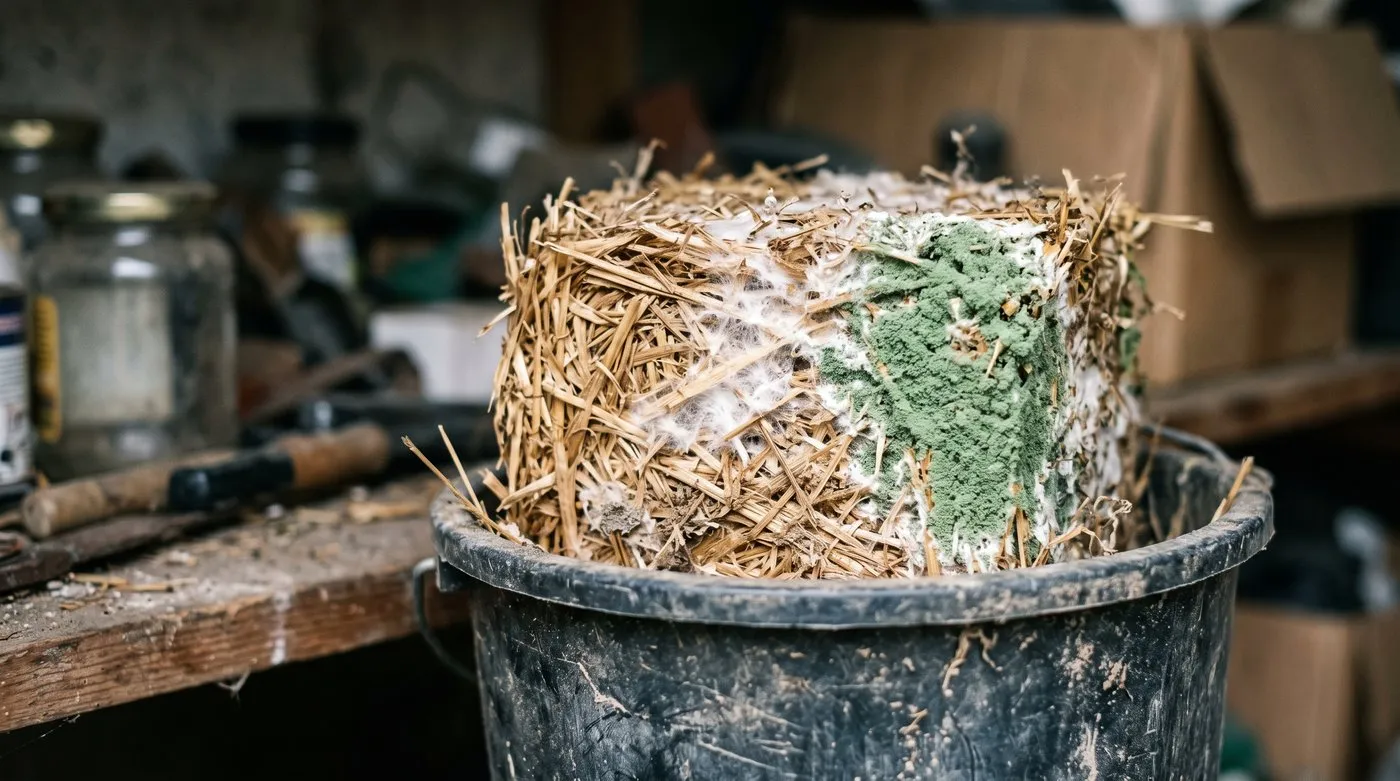
Bright green patches mean mould has got in. If it spreads across the block, put it in the garden waste bin and start again.
How do you harvest and store home-grown mushrooms?
Pick mushrooms when the cap edges are still slightly curled under, before they flatten out. Twist and pull the whole cluster off in one go. Cutting leaves a stump that can rot.
Check often. Oyster mushrooms grow incredibly fast once they start. A small cluster at breakfast can be ready by tea time. Pick the whole cluster at once.
Storing: Keep fresh mushrooms in a paper bag in the fridge and eat them within a few days. Plastic bags make them slimy. Oyster and shiitake mushrooms dry well in a dehydrator or a very low oven with the door ajar. Keep dried mushrooms in an airtight jar and soak them in warm water before cooking.
Shiitake taste even richer dried. Lion’s mane is best eaten fresh, sliced and fried in butter until golden.
 Lion’s mane growing as a shaggy white ball from a sawdust block.
How much does it cost to grow mushrooms at home?
Growing your own is cheap compared with buying fancy mushrooms in the shops, especially once you go DIY.
| Method | Setup | Running cost | Good for |
|---|---|---|---|
| Ready-made kit | Low | Buy a new kit each time | Beginners, quick results |
| DIY straw bucket | Low (bucket and drill) | Very cheap per batch | Regular oyster crops |
| Shiitake log | Low (spawn and wax) | Almost nothing for years | Long-term outdoor growing |
| Sawdust block | Medium | Medium | Lion’s mane, keen growers |
For DIY growers, grain spawn is the main ongoing cost. Straw is cheap from farm shops and horse suppliers, and hardwood sawdust pellets come from wood fuel suppliers.
The cheapest in the long run is shiitake on logs. Once the spawn is in, there’s nothing more to buy. Start a log or two every year and you’ll soon have something cropping most seasons from a shady corner that grows nothing else.
When is the best time to start growing mushrooms in the UK?
Indoors, any time of year. Normal room temperatures suit most kinds all year. Spring and autumn are slightly easier, as the air is damper and temperatures are steadier.
For shiitake logs, February to April is best. Logs cut in winter are full of the sugars that feed the mycelium. Summer-cut logs dry out faster. If you’re clearing trees to make space, our no-dig gardening guide has ideas for using the ground afterwards.
A simple year for UK mushroom growers:
- January-February: Order spawn and kits. Get fresh hardwood logs for shiitake.
- March-April: Plug shiitake logs. Start your first indoor oyster kit or bucket.
- May-August: Indoor mushrooms grow fast in warm weather. Mist more often, as they dry out quickly.
- September-November: Soak shiitake logs for an autumn crop. Start lion’s mane or king oyster indoors.
- December: Keep indoor kits going in a cool room.
King oysters like it cooler and do well in autumn and winter, so they’re a nice swap for oysters in summer. For more seasonal ideas, see our seed sowing calendar.
Where do you buy mushroom spawn in the UK?
Buy from a well-reviewed UK supplier. Spawn that’s been stored too long or sat somewhere warm in the post can arrive with mould already in it.
Good spawn should be white all through, with no green, black or orange patches. Keep unused spawn in the fridge and use it within a few weeks. The RHS guide to growing mushrooms suggests starting with a kit before trying DIY.
For outdoor growing, wine cap mushrooms are fun to try. They grow in a thick layer of wood chip spread on garden beds. Plant the spawn in spring and pick in autumn. They pair well with raised bed gardening, as the wood chip breaks down into lovely rich soil.
Can you grow mushrooms in a greenhouse?
Yes, a greenhouse is great for mushrooms from autumn to early spring. It’s cool, damp and shady then, which mushrooms love. In summer it’s usually too hot, unless you shade it heavily.
Put your kits or bags under the staging where it’s darkest. Mushrooms in direct sun get dry, cracked caps. A closed greenhouse stays nicely damp, but open the vents for a while each day for fresh air.
Lion’s mane and king oyster do especially well in a greenhouse, as the temperature is steadier than in a garage or shed. See our greenhouse growing calendar for what else to grow alongside them. Getting greenhouse ventilation and humidity right helps stop condensation problems too.
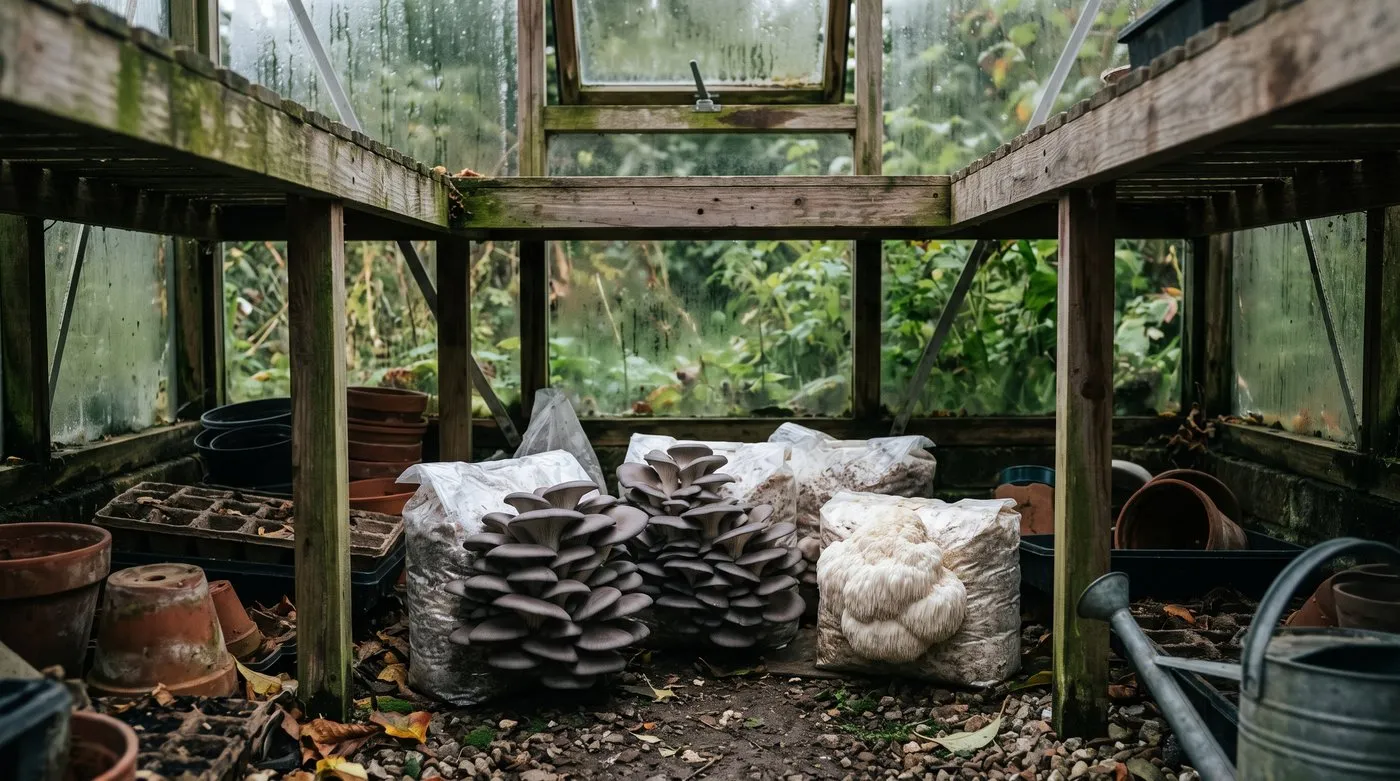
The darkest spot under the staging suits mushrooms best. Open the vents for a while each day for fresh air.
How do you grow lion’s mane mushrooms at home?
Lion’s mane is the one every keen grower wants to try. It tastes a bit like crab or lobster and grows as a shaggy white ball instead of the usual cap and stem.
The easiest way is a ready-made lion’s mane kit. Treat it just like an oyster kit: cut a slit in the bag, mist twice a day and keep it out of direct sun. A big white ball forms over a week or two.
To grow it yourself, it needs hardwood sawdust mixed with wheat bran, sterilised in a pressure cooker before adding spawn. That’s a step up from oyster mushrooms on straw, so it’s best tried once you’ve had a few successes.
When you’re done, add the spent blocks to your wormery or dig them into garden beds. They’re great for soil where you’ll grow herbs and salads next season.
Is it safe to eat home-grown mushrooms?
Yes, mushrooms grown from bought spawn of a known edible type are safe to eat. You know exactly what you planted, so there’s none of the guesswork that comes with foraging.
The thing to watch is mould. Green, black or orange patches on the block mean it’s contaminated. Don’t eat mushrooms from a mouldy block. If the block is clean and white and the mushrooms look and smell normal, you’re fine. Outdoors, wild fungi can pop up on logs and wood chip too, so only eat the ones you’re sure you grew.
Keep picked mushrooms in a paper bag in the fridge and eat within a few days. Cook shiitake well, as raw or undercooked shiitake can cause an itchy rash in some people.
Frequently asked questions
What is the easiest mushroom to grow at home in the UK?
Oyster mushrooms are the easiest for UK beginners. They cope with a range of temperatures, grow fast and fight off mould better than most. Grey, blue, pink and yellow oysters all grow well indoors. A ready-made oyster kit usually fruits within a couple of weeks with little more than a misting twice a day.
Can you grow mushrooms indoors all year round?
Yes, you can grow them indoors in any season. Most edible types are happy at normal room temperature. They don’t need sunlight, just some everyday light. Start a new kit every few weeks for a steady supply.
How much does it cost to grow mushrooms at home?
A kit is the simplest option and costs about the same as a takeaway. DIY growing in a bucket of straw is much cheaper per batch once you have a bucket and some spawn. Shiitake logs cost a little to set up, then keep cropping for years.
How long does it take to grow mushrooms from scratch?
An oyster kit usually fruits within a couple of weeks. A DIY straw bucket takes a few weeks from start to first crop. Shiitake logs need six to twelve months before the first mushrooms, then crop for several years. Lion’s mane takes a few weeks on the right sawdust mix.
Why do my mushroom growing kits keep getting green mould?
Green mould means other moulds have beaten your mushrooms to it. It often comes from dirty hands, spores in the air, or a kit kept too long before opening. Wash your hands before touching a kit, mist with clean water and keep kits away from compost bins and fruit bowls. If green mould spreads across the kit, throw it out.
Can you grow mushrooms on coffee grounds?
Yes, but mixed with other stuff rather than on their own. Fresh grounds are clean from brewing, but they go mouldy quickly. Mix a small amount with pasteurised straw and use them fresh. Oyster mushrooms are the ones that cope best with coffee grounds.
What is the best substrate for growing mushrooms at home?
Pasteurised straw is the best all-rounder for home growing. It’s cheap, easy to get from farm shops and suits oyster mushrooms. Hardwood sawdust pellets suit shiitake and lion’s mane. For outdoor shiitake, fresh hardwood logs are best.
Our team produces practical UK gardening guidance from source research, contributor records and established horticultural practice. Editorial standards are overseen by Matt W.