
Key takeaways
- Chervil likes light shade and cool, moist soil, unlike most herbs
- Sow direct from March to September, as it hates being moved
- Sow a short row every three or four weeks for a steady supply
- Start picking about six to eight weeks after sowing
- Hot sun and dry soil make it bolt, so water well and pinch out flower stems
- Let a couple of plants flower and they'll self-seed for next year
Chervil is a pretty, lacy herb with a soft aniseed taste. It’s hard to find in shops but easy to grow, and it’s happy in the shady corners where most herbs sulk. Sow it direct, keep it cool and moist, and you can pick it from spring to autumn.
This guide covers where to grow chervil, when to sow, how to stop it bolting and how to use it in the kitchen.
What is chervil?
Chervil is a fast-growing annual herb in the carrot family. It grows to about 30-45cm tall, with soft, finely cut leaves like a paler, lacier parsley. The flavour is mild, with a hint of aniseed.
It’s a cool-weather plant. Spring and autumn suit it best. In hot, dry summer weather it soon runs to flower, which is called bolting.

The soft, lacy leaves are chervil’s trademark. Pick the outer stems first and the plant keeps growing from the middle.
Warning: Chervil belongs to the same family as poisonous hemlock and fool’s parsley, which can look similar. Only eat plants you sowed yourself, or self-sown seedlings you’re sure of.
Where to grow chervil
Chervil likes light shade and cool, moist soil. A spot with morning sun and afternoon shade is ideal. In full summer sun it bolts quickly, and in deep shade it grows weak and floppy.
Good places include:
- The east side of a fence or wall
- Under the light shade of taller plants
- Between rows of taller crops such as broad beans or runner beans
- A shady windowsill box or pot
Dig in some compost before sowing so the soil holds moisture. Chervil isn’t fussy about soil type, as long as it doesn’t dry out. The guide to the best vegetables for shade has more crops for the same kind of spot.

Tall crops such as broad beans make handy shade. Sow chervil in the gaps and it stays cool and leafy for longer.
When and how to sow chervil
Sow chervil direct from March to September. It has a long taproot and doesn’t like being moved, so skip the seed trays.
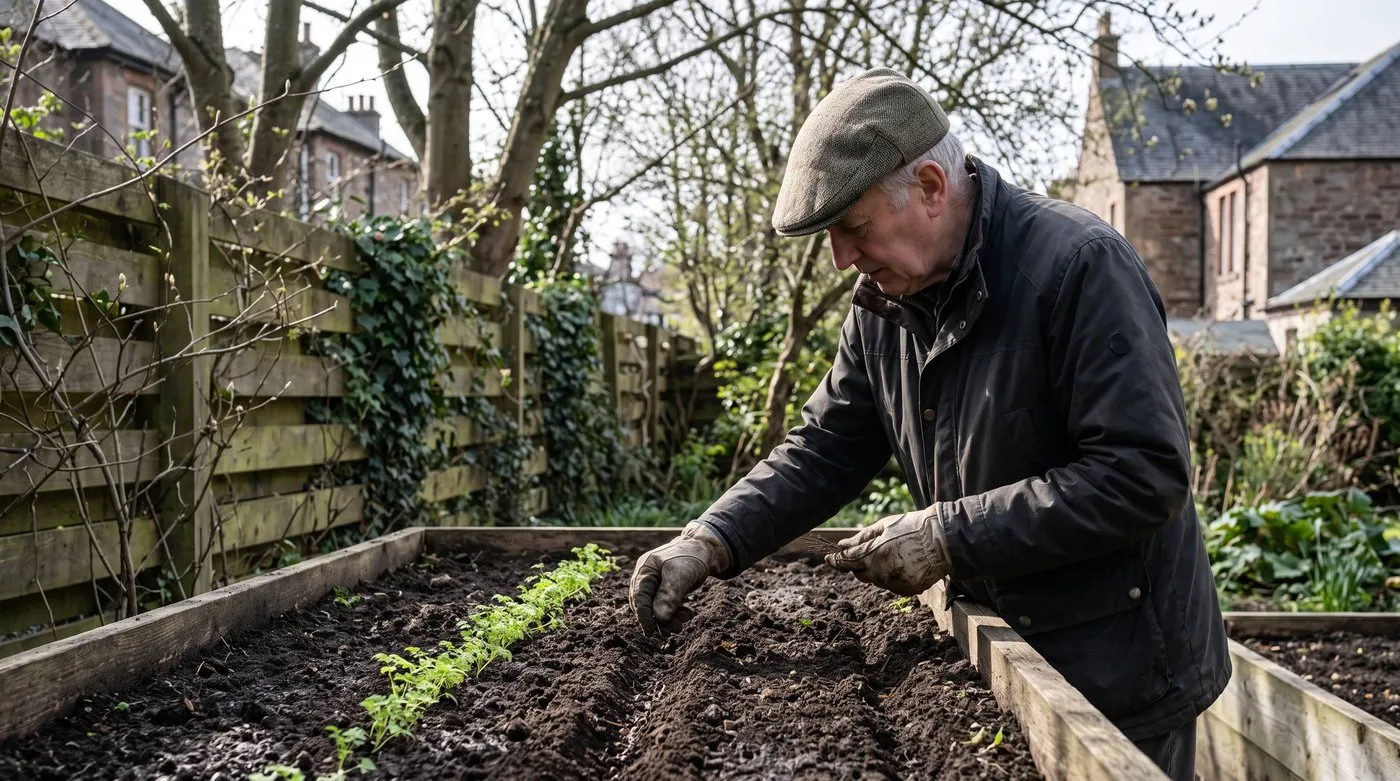
Sow chervil straight into a shallow drill where it’s going to grow. A short row every few weeks keeps the leaves coming.
- Rake the soil to a fine surface and water it if dry.
- Make a shallow drill about 1cm deep.
- Sow the seed thinly along the drill.
- Cover lightly with fine soil and water with a fine rose.
- Thin seedlings to 15-20cm apart once they’re big enough to handle. Eat the thinnings.
- Keep the soil moist while the seedlings come up.
For a steady supply, sow a short row every three or four weeks. One sowing gives you leaves for a few weeks before it starts to flower. Late summer sowings can be covered with a cloche or grown in a cold frame for leaves through winter.
How to grow chervil in pots
Chervil grows happily in a pot in a shady spot, which makes it handy for balconies and yards. Use a pot at least 20cm wide and deep, filled with peat-free multipurpose compost.
Sow straight into the pot, then thin to three or four plants. Keep the compost moist, as pots dry out fast. Move the pot into shade in hot weather. If you like having herbs by the back door, the guide to creating a herb garden has more ideas.
How to pick chervil
Start picking about six to eight weeks after sowing, once plants are about 10-15cm tall. Snip the outer stems near the base with scissors. Leave the centre to keep growing.
- Pick little and often rather than stripping a plant.
- Pinch out any flower stems as soon as you see them.
- Pick in the cool of the morning when leaves are crisp.
Fresh chervil wilts fast. Keep it in the fridge wrapped in damp kitchen paper and use it within a day or two. Drying loses most of the flavour, but chopped leaves freeze well in ice cube trays. The guide to freezing fresh herbs shows how.
How to use chervil in the kitchen
Chervil is best fresh, added at the very end of cooking. Heat soon kills its delicate flavour.
- Fines herbes: the classic French mix of chopped chervil, parsley, tarragon and chives. Stir it into omelettes, scrambled eggs and sauces for fish.
- Soups: scatter it over leek and potato soup or a fresh pea soup.
- Salads: toss whole sprigs into green salads.
- Butter: mix chopped chervil into softened butter and keep it in the fridge for new potatoes or fish.

Fines herbes is just four soft herbs chopped together. Stir it into eggs right at the end of cooking.
Pests, problems and bolting
Chervil is pleasingly trouble-free. The main problems are bolting, slugs and the odd aphid.
- Bolting: caused by heat, dry soil and full sun. Grow in light shade, water in dry spells and sow little and often.
- Slugs: they love young seedlings. Check at dusk on damp evenings. The guide to getting rid of slugs has more ideas.
- Aphids: greenfly sometimes cluster on young shoots. Squash them or wash them off with a jet of water.
Saving seed and self-seeding
Let one or two plants flower at the end of a sowing. The small white flower heads bring in hoverflies. Long, thin seeds follow and drop to the ground. Self-sown seedlings often pop up the next spring.
To save seed, cut the seed heads once they turn brown and dry them on paper indoors. Store the seed in a paper envelope somewhere cool and dry. It’s best sown within a year or two.

Leave a couple of plants to flower. Hoverflies visit, and the long seeds that follow often self-sow for next year.
Chervil growing calendar
| Month | Job |
|---|---|
| March | First sowing outdoors in a sheltered spot |
| April | Sow again. Thin earlier seedlings |
| May | Start picking March sowings. Sow again in light shade |
| June | Sow in shade only. Pinch out flower stems |
| July | Keep well watered. Sow in shade for autumn leaves |
| August | Sow again for autumn and winter picking |
| September | Last outdoor sowing. Let a plant or two set seed |
| October to February | Pick from late sowings under a cloche or in a cold frame |
Common chervil mistakes
- Growing it in full sun. It bolts fast. Choose light shade.
- Sowing in trays. Chervil hates being moved. Sow it where it will grow.
- One big sowing. It all bolts at once. Sow a little every three or four weeks.
- Letting it dry out. Dry soil makes it flower early. Water in dry spells.
- Drying the leaves. The flavour fades. Use it fresh or freeze it.
Frequently asked questions
What is chervil and how does it taste?
Chervil is a delicate leafy herb with a gentle aniseed flavour. It looks like a lacy, paler parsley. It’s one of the classic French fines herbes, with parsley, tarragon and chives. Use it fresh in eggs, soups, salads and with fish, adding it at the end as heat kills the flavour.
When should I sow chervil in the UK?
Sow chervil direct outdoors from March to September. Sow a short row every three or four weeks so you always have young plants to pick. Midsummer sowings need a shady spot. Late summer sowings can carry on into winter under a cloche or in a cold frame.
Why does my chervil keep bolting?
Heat, dry soil and full summer sun are the usual causes. Chervil is a short-lived annual, so it flowers quickly when stressed. Grow it in light shade, water in dry spells and pinch out flower stems as they appear. Sowing little and often means a fresh batch is always coming on.
Does chervil grow well in shade?
Yes, chervil is one of the few herbs that prefers light shade. A spot with morning sun and afternoon shade suits it well. In deep shade it gets weak and leggy. You can also tuck it between taller crops, which shade it in summer.
Can chervil be dried or frozen?
Drying loses most of its flavour, so freeze it or use it fresh. Chop the leaves and freeze them in ice cube trays with a little water. Fresh leaves keep a day or two in the fridge, wrapped in damp kitchen paper.
Can I grow chervil in a pot?
Yes, chervil grows well in a pot in a shady spot. Use a pot at least 20cm wide and deep, filled with peat-free multipurpose compost. Sow straight into the pot, thin to a few plants and keep the compost moist. A shady windowsill box works too.
Now you’ve got chervil growing, try another quick herb that bolts in heat with the guide on growing coriander without bolting, or find more in the growing section.
Our team produces practical UK gardening guidance from source research, contributor records and established horticultural practice. Editorial standards are overseen by Matt W.


