Key takeaways
- One method builds three projects: a low wall, a garden seat and a raised bed
- Use angular stone of 100-200mm, always bigger than the mesh holes, at about 1.5 tonnes per cubic metre
- Low walls under 1m need no concrete, just 100-150mm of compacted MOT Type 1
- Any retaining wall over about 1m needs a footing and advice from a structural engineer
- Bracing wires tied front to back as you fill stop the cage bulging
- A seat at about 45cm high with a timber top makes a no-fuss garden bench
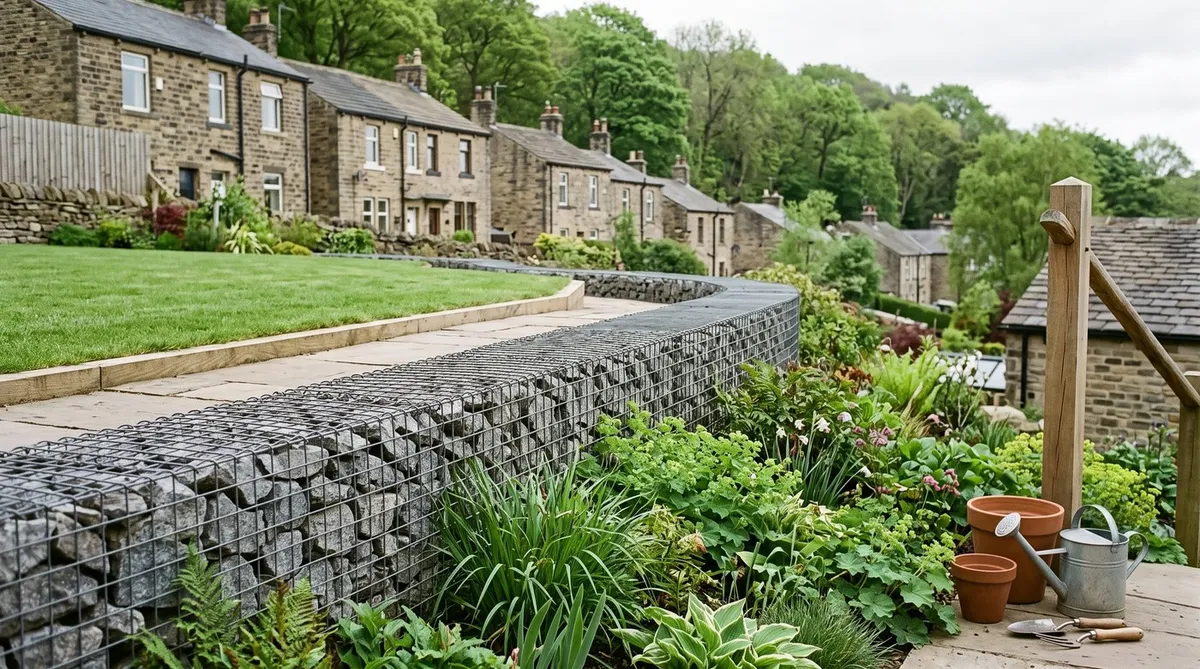
A garden gabion is a wire cage packed with stone, and one simple method builds three useful things: a low wall, a solid garden seat and a raised bed. There’s no mortar, no bricklaying and no waiting for concrete to set. Gabions drain freely and shrug off frost, so they suit British weather well.
This guide covers choosing baskets and stone, building a firm base, and the bracing that keeps the faces flat. Then it shows how to turn the same cages into each project. If you’re working on a slope, our guide to garden steps and retaining walls covers other ways to hold back soil.
What is a garden gabion?
A gabion is a rectangular steel mesh cage filled with hard stone and closed with a wired-down lid. The name comes from the Italian for “big cage”. Engineers use them on river banks and road cuttings, and they work just as well in a garden.
The cage flexes a little, so a gabion copes with slight ground movement that would crack a brick wall. That makes it a good choice on slopes and on made-up ground. The usual garden size is 1m long by 0.5m wide by 0.5m high, and you build up and along from there.
Welded or woven: which gabion baskets to buy
For most garden projects, choose welded mesh with a Galfan or PVC coating. It gives the crisp, square face most people want for a seat or a wall.
Welded mesh is a stiff grid of wires welded where they cross. It gives clean, sharp lines. Woven mesh is a flexible net of twisted hexagons. It bends with the ground, so it suits taller retaining runs on ground that may move.
The wire coating decides how long the cage lasts. Galvanised wire has a zinc coating. Galfan is a zinc-aluminium coating that lasts longer for a small extra cost. PVC-coated wire has a plastic skin and copes best with salty seaside air.
| Basket | Look | Best for |
|---|---|---|
| Welded, Galfan coated | Crisp and square | Walls, seats and raised beds |
| Welded, PVC coated | Crisp, coloured finish | Seaside gardens |
| Welded, galvanised | Crisp and square | Budget low walls |
| Woven hexagonal | Softer, flexible | Taller retaining runs on moving ground |
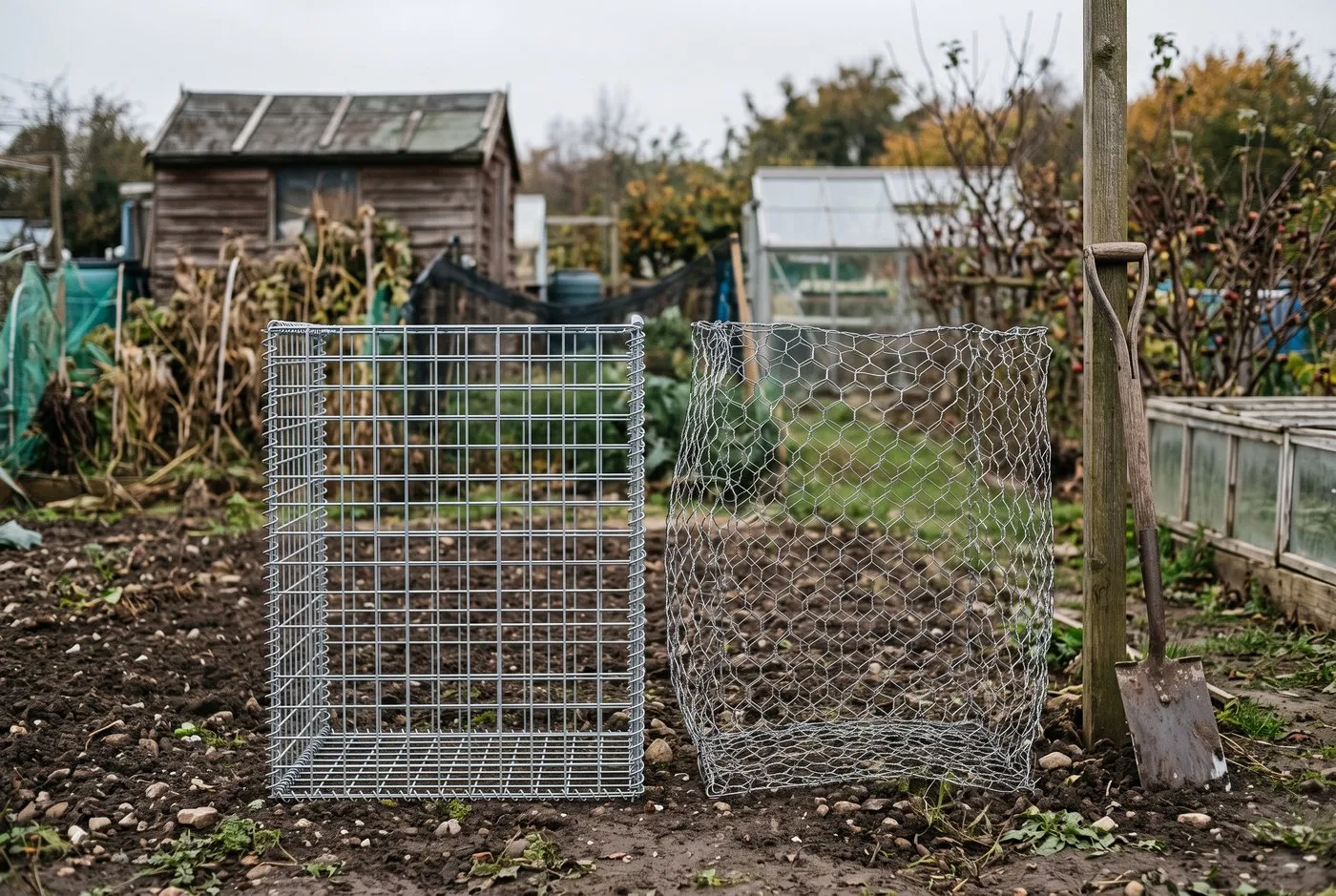
Welded mesh on the left keeps a crisp, square shape. Woven mesh on the right flexes with the ground.
How much fill stone do you need?
Allow about 1.5 tonnes of stone per cubic metre. A 1m by 1m by 0.5m cage holds half a cubic metre, so roughly 0.75 tonnes. Order a little extra so you can pick out flat pieces for the faces.
The stone must be bigger than the mesh holes so it can’t fall through. For 75mm mesh, 100-200mm stone is the usual choice. Always use angular rock, never rounded cobbles. Angular pieces lock together and hold a flat face. Round stones roll and push the mesh outwards.
Granite, limestone, gritstone and recycled concrete all work. To save money, keep the good stone for the faces you can see and fill the hidden middle with cheaper hardcore.
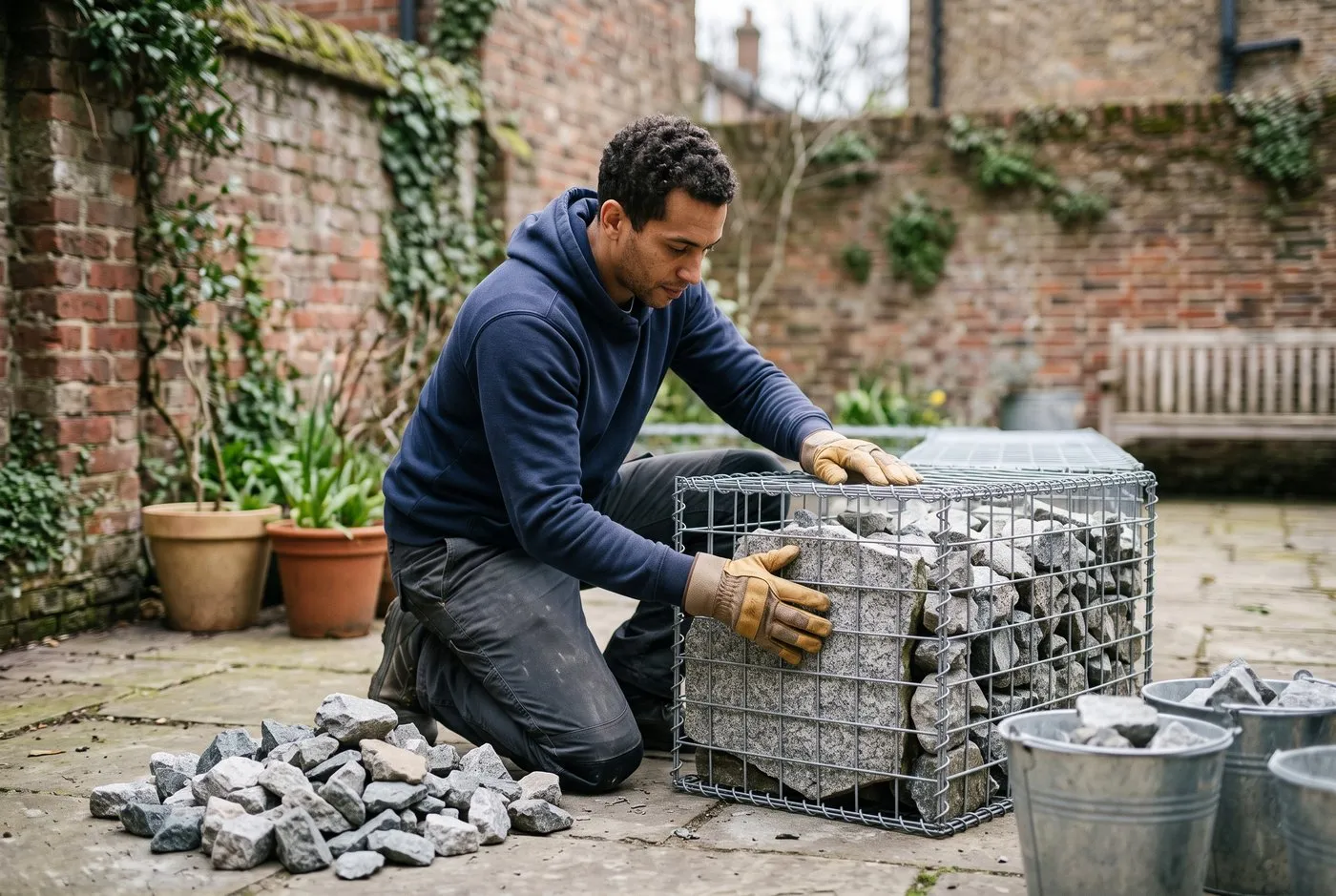
Hand-pack the best flat stones against the mesh for a neat face. Nobody sees the cheaper hardcore in the middle.
How to build a gabion base that won’t tilt
The base matters more than anything above it. A cage on soft or sloping ground tilts and never recovers.
- Strip the topsoil down to firm subsoil along the line of the run.
- Lay 100-150mm of MOT Type 1, a crushed stone sub-base, and compact it in two layers with a hired plate compactor.
- Check it is level with a spirit level and a straight edge.
- Assemble the cages on flat ground. Join the edges with helical spirals, C-rings or lacing wire, and keep every corner square.
- Stand the cages on the base, butt them tight and wire neighbours together along every touching edge.
This is the same groundwork you’d do for paving, so our guide on how to lay a patio is handy if you’ve not used a plate compactor before. On wet, heavy ground, read up on soil drainage and structure first, because a soggy base lets even a well-built cage sink.
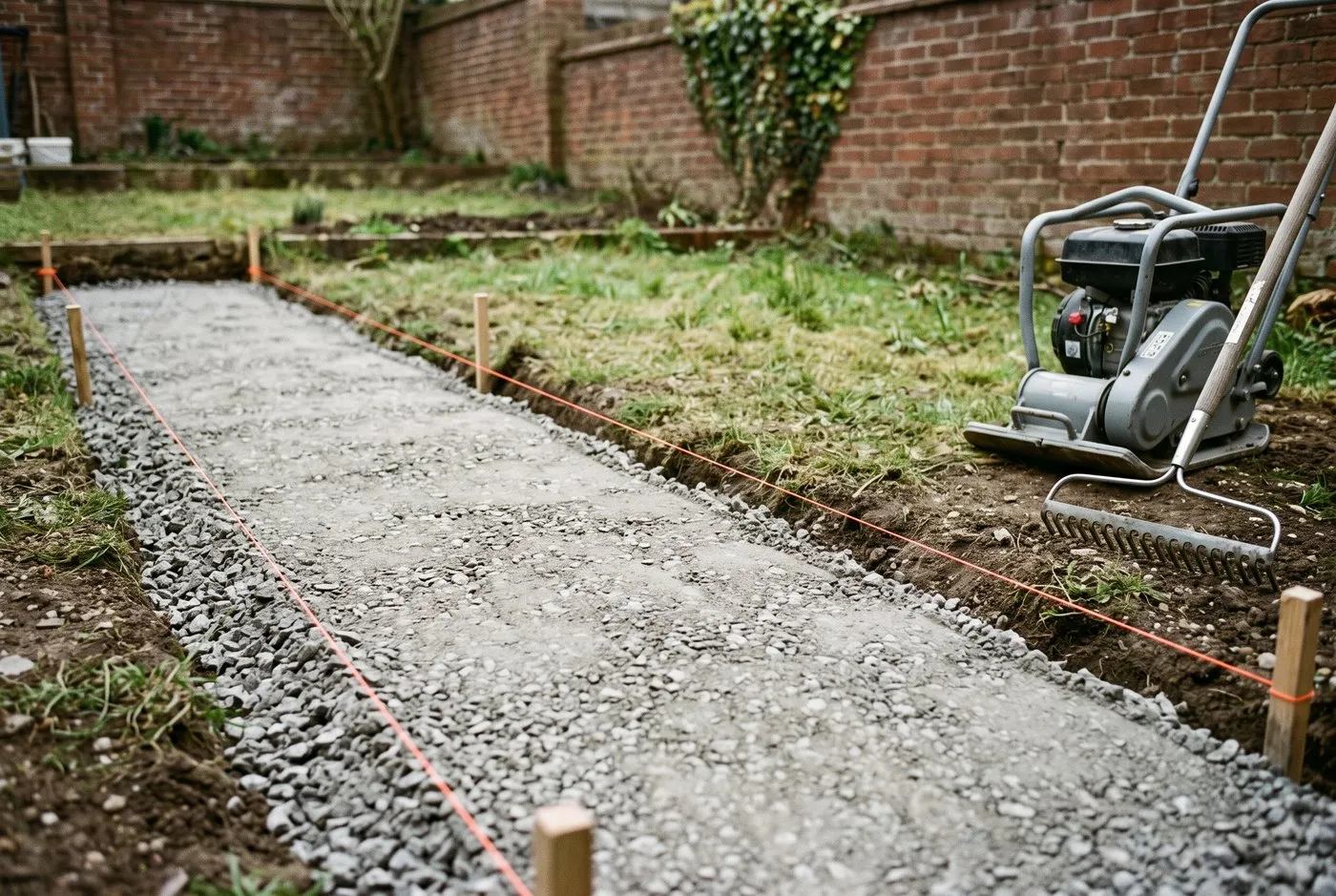
A flat, well-compacted base set to a string line stops the finished gabion tilting.
How to stop a gabion bulging
Fit bracing wires as you fill. These galvanised ties run from the front face to the back and stop the two faces bowing apart as the stone settles. Missing bracing is the main reason gabion faces belly out.
Follow the spacing in your supplier’s instructions. For a 1m-high cage, that usually means one row of braces when it’s a third full and another at two-thirds. Fill in shallow layers and keep the faces level as you go.
Two more habits keep the face flat:
- Keep the cage square while you build, so the load spreads evenly.
- Hand-pack the face tightly with flat, angular stone, instead of tipping stone in loose.
Fill each cage slightly proud, then close the lid and wire it down tight all round. The lid presses on the stone and stops it shifting.
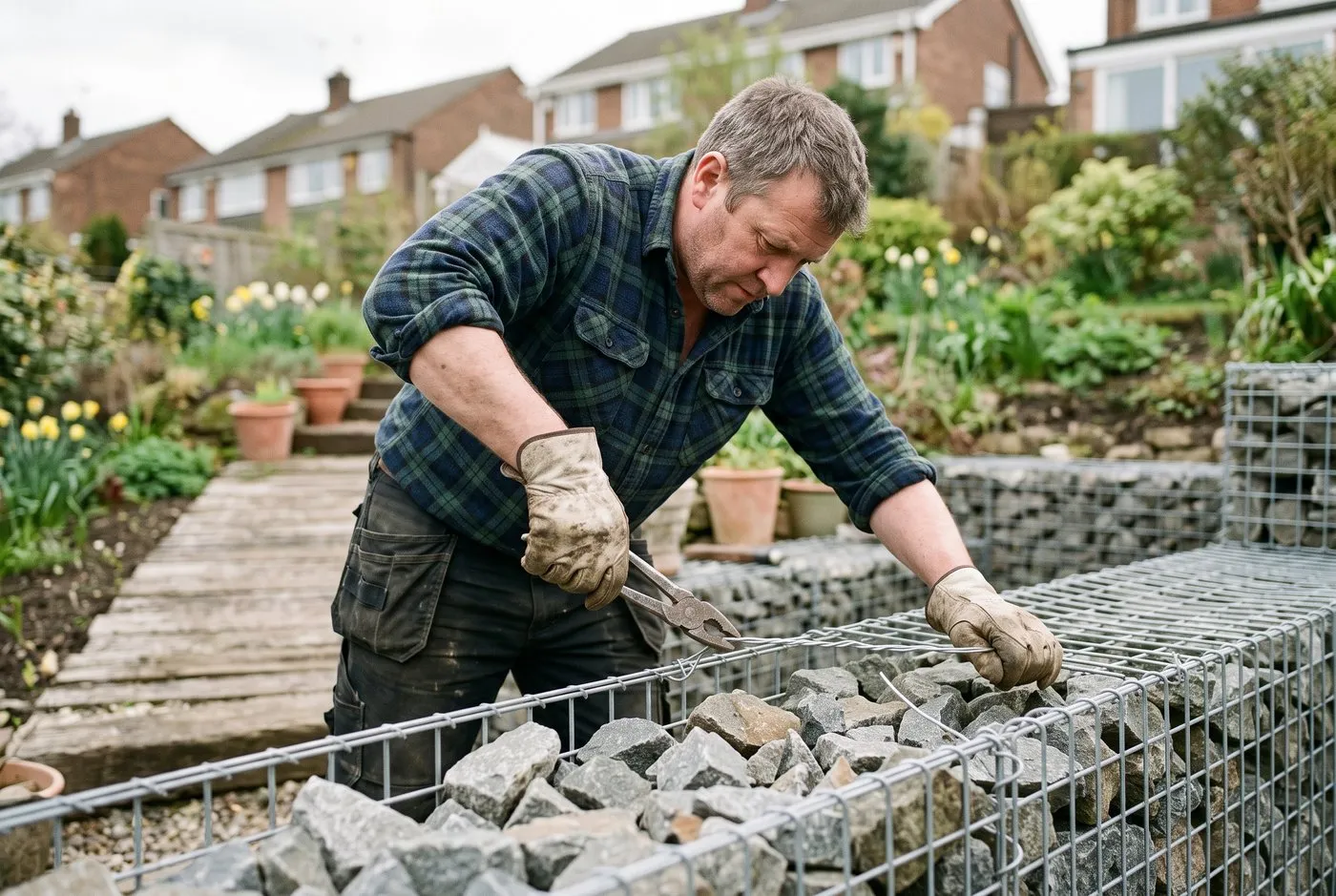
Bracing wires tied front to back as you fill are what keep a gabion face flat for years.
Gardener’s tip: Run a tight string line along the finished face and check it each spring for the first couple of years. Any bulge shows up as a gap against the string.
Building a gabion wall
For a low boundary or freestanding wall under 1m, build straight onto the compacted base with no concrete. Stack courses of cages and wire each course to the one below.
Holding back soil is a different job. Soil gets heavy when wet and pushes hard. For any retaining wall over about 1m, or one near a house, path or boundary, get advice from a structural engineer before you build. Step the courses back slightly into the slope for extra stability.
Warning: A retaining wall that fails can hurt people and damage your neighbour’s property. Don’t guess on anything tall.
Planning rules apply to walls too. In England, a new wall over 1m high next to a road, or over 2m elsewhere, normally needs planning permission. The Planning Portal guide to fences, gates and garden walls explains the details. If you’d rather build in brick or block, see our guide on how to build a garden wall.
Building a gabion garden seat
A gabion makes a sturdy, no-fuss bench, and it’s the quickest of the three projects. Build the base to about 45cm high, a comfortable seat height, and around 40-45cm deep. A 1.2m-long seat comfortably sits two.
For the top, bolt a treated timber frame to the mesh, then fix boards across it. Thick decking boards or a single oak sleeper cut to length both work. Leave a small gap between boards so rain drains through. Let the timber overhang the stone by a couple of centimetres to keep drips off the face. For more ways to add places to sit, browse our outdoor seating ideas.
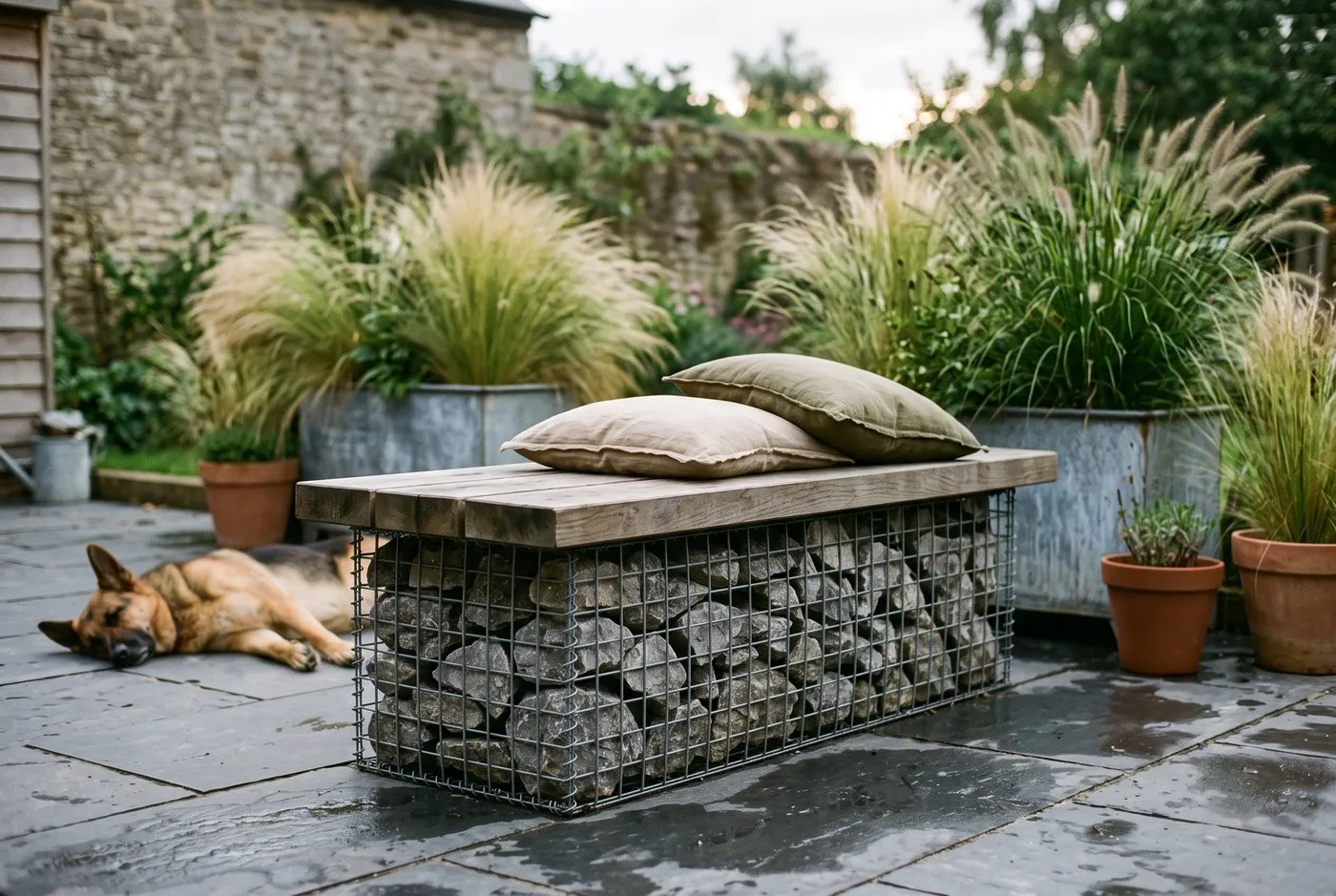
A gabion bench needs no care at all, apart from the odd coat of oil on the timber top.
Building a gabion raised bed
A gabion raised bed gives you a sturdy, free-draining growing space with a stone edge. Build a ring of cages to your chosen height. Around 60cm lets you work without much bending. Wire the corners tight, because wet soil pushes outwards.
Line the inside face with a woven geotextile membrane so soil doesn’t wash out between the stones. Use a permeable membrane, never solid plastic, or the bed will waterlog. For a deep bed, put coarse rubble in the bottom for drainage, then fill the top 30cm or more with good topsoil mixed with compost.
Gabion beds drain well, which helps on heavy clay, but they dry out faster in summer. Plan to water more often in July and August. Our raised bed gardening guide for beginners covers what to grow and how to fill a bed without spending a fortune.
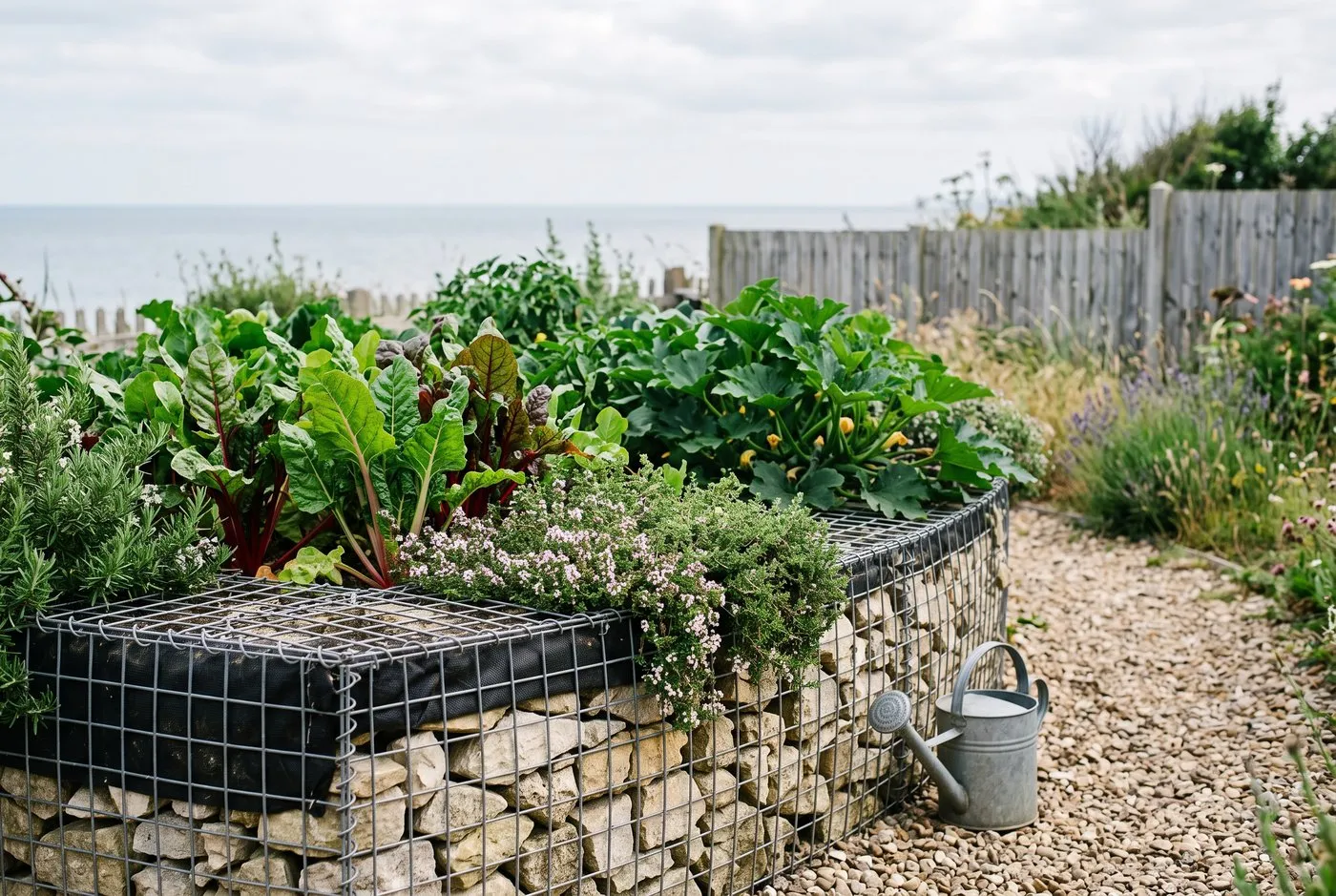
Line the inside of a gabion bed with geotextile so the soil stays in and the water drains out.
Planting pockets and lighting
A gabion doesn’t have to be bare stone. Planting pockets soften the face. Leave a gap in the face stones, line it with a scrap of geotextile and fill with gritty compost.
Choose plants that love sharp drainage: sempervivums, sedums, thyme, Mexican fleabane (Erigeron karvinskianus) and aubrieta. Sedum and fleabane flowers are popular with bees and hoverflies.
For lighting, tuck outdoor-rated, low-voltage lights into the stone as you build and run the cable through the hidden core before closing the lid. Uplighting picks out the texture of the stone after dark. Have any mains-powered parts fitted by a qualified electrician.
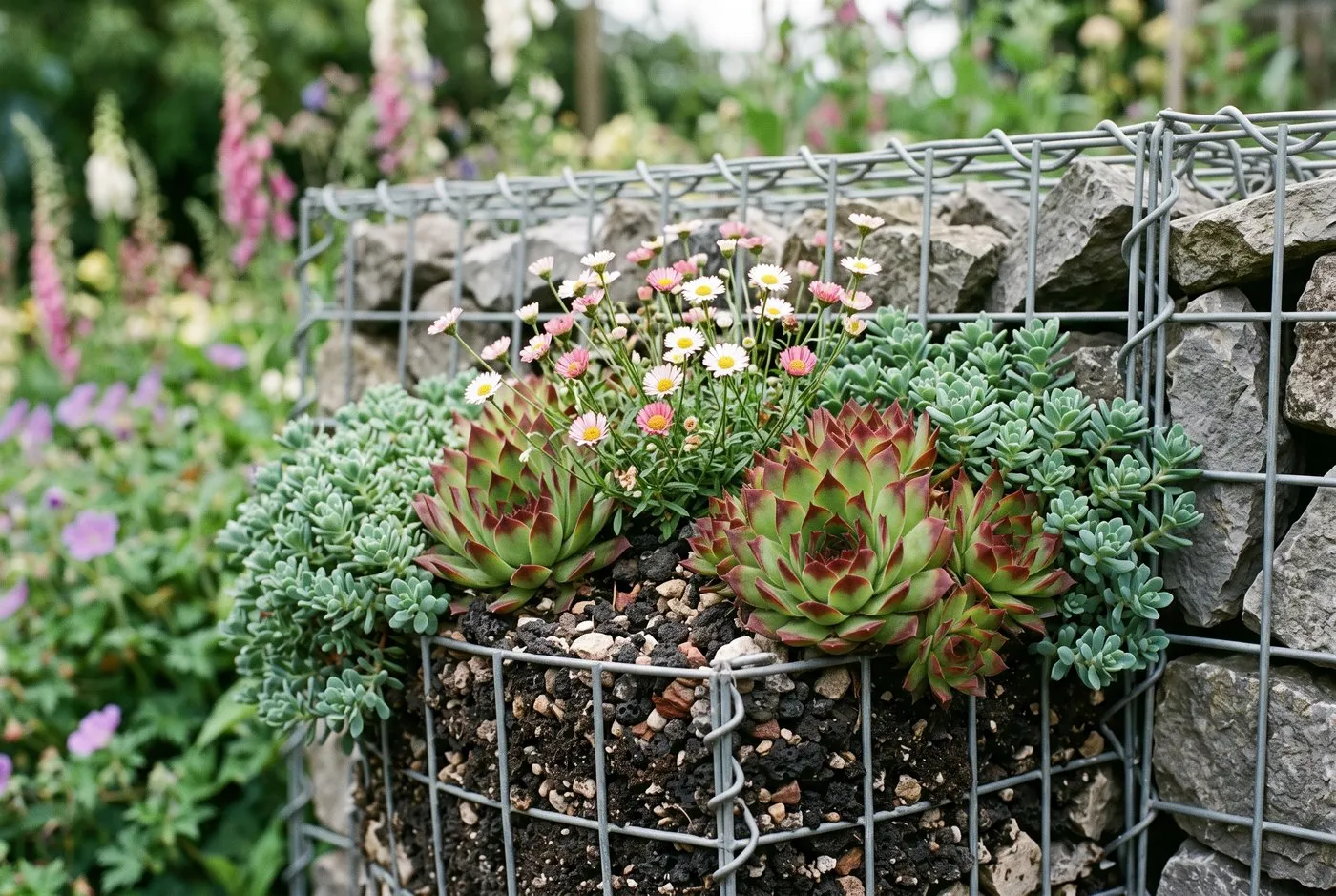
A planting pocket of houseleeks, sedum and fleabane turns a stone wall into a living feature.
When is the best time to build a gabion?
Late spring to early autumn is easiest. The ground is workable, stone is dry to handle and a plate compactor works well on firm ground.
Avoid building on frozen or waterlogged ground in winter. Use the quiet months to plan the run, measure up and order baskets and stone. A few weeks after building, check whether the stone has settled under the lids and top up if needed.
Common mistakes when building a gabion
- Skipping the bracing wires. The cage looks fine when full, then the face bulges over the first winter. Fit braces as you fill.
- Stone smaller than the mesh. It trickles out and leaves gaps. Buy by size, not just price.
- Building tall retaining walls without advice. A garden feature can quietly become a structural job. Get an engineer’s advice for anything over about 1m holding soil.
- Rushing the base. A cage on soft ground tilts for good. Compact and level the sub-base before any cage goes down.
- Tipping stone in loose. A tipped face looks gappy and pushes the mesh out. Hand-pack every visible face.
For more ideas for structures and hard landscaping, browse our garden design guides. Now you’ve got the method, read our sloped garden ideas for terracing and drainage to see where gabions fit on a slope.
Frequently asked questions
Do gabion walls need a foundation?
Low walls under 1m need a compacted sub-base, not concrete. Lay and compact 100-150mm of MOT Type 1 on firm subsoil and level it. Taller walls, or any wall holding back soil, need a proper footing and advice from a structural engineer.
How much stone do you need to fill a gabion?
Allow about 1.5 tonnes of stone per cubic metre of cage. A 1m by 1m by 0.5m cage holds half a cubic metre, so about 0.75 tonnes. Order a little extra so you have spare flat pieces for the faces.
What size stone goes in a garden gabion?
Use angular stone 100-200mm across, always bigger than the mesh holes. Angular rock locks together and holds a flat face, while rounded cobbles roll and push the mesh out. Keep the best flat pieces for the visible faces.
How long do gabion baskets last?
Coated steel baskets last for decades, and the stone lasts for ever. How long depends on the wire coating. Galfan (a zinc-aluminium coating) lasts longer than plain galvanised, and PVC-coated wire copes best with salty seaside air.
Can you make a garden seat from a gabion?
Yes, a gabion about 45cm high with a timber top makes a solid bench. Bolt a treated timber frame to the mesh and fix boards across it. Leave small gaps between the boards so rain drains away.
Do gabions need planning permission?
Usually not for low walls and features inside your garden. In England, a new wall over 1m high next to a road, or over 2m elsewhere, normally needs permission. Check with your council if your wall is near those heights.
How do you stop a gabion bulging?
Fit bracing wires front to back as you fill. They stop the faces bowing apart as the stone settles. Keeping the cage square, hand-packing the face tight and using angular stone all help too.
Our team produces practical UK gardening guidance from source research, contributor records and established horticultural practice. Editorial standards are overseen by Matt W.


