Key takeaways
- Use three hard materials or fewer, such as porcelain, render and corten steel
- Large-format paving with narrow joints gives the flush, clean floor the style depends on
- Pick six or seven plants for shape and texture, then repeat them in blocks
- Leave plenty of open paving or gravel on purpose, as empty space is part of the design
- Match paving and render tones to the house so inside and out feel connected
- Keep running bamboo in a deep root barrier or container from day one
Modernist garden design strips a garden back to its bones: strong geometry, clean lines and a short list of good materials used with confidence. It grew out of modernist architecture and treats the garden as an outdoor room. Shape comes first, with colour and variety taking a back seat.
Done well, the look is calm, bold and easy to look after. Done badly, it feels cold and hard. The difference is discipline: how few materials you use, how much empty space you leave and how tightly you edit the planting. If you like clean lines but want a softer, more natural feel, the guide to Scandinavian garden design is a gentler take.
The key principles of a modernist garden
Modernist gardens rest on a few simple ideas that work together.
- Strong geometry. Rectangles, squares and grids, with paths, walls and pools set at right angles or along one bold diagonal.
- Clean lines. Crisp paving edges, flush joints and sharp corners on steps and walls.
- Flat planes. A rendered wall is a plane. So is a stretch of paving. Make the joins between them deliberate.
- Repetition and rhythm. The same plant, pot or paving unit repeated at regular intervals leads the eye through the space.
Why fewer materials make a better design
The biggest decision is what to leave out. Use three hard materials or fewer, and six or seven plants repeated in blocks.
It goes against instinct. Most of us collect: a new climber here, a bargain slab there, a different pot every summer. A garden of porcelain, one render colour and corten steel looks planned. The same garden with brick, block paving, timber, slate and gravel looks like an accident.
Every extra material asks the eye to work harder. Strip them back and what’s left gains impact. A single corten planter against a plain wall stands out far more than the same planter lost among five other finishes.
How to use empty space on purpose
Negative space is the open ground in a design: bare paving, plain gravel, still water or lawn. In a modernist garden it isn’t leftover space. It’s as important as any planting.
Beginners fill every corner. Modernist design leaves wide areas of one material alone, so the eye can rest and the planted moments count for more. A sweep of pale porcelain with one multi-stem tree set off-centre says more than a busy border.
Gardener’s tip: Before you plant, live with the empty hard landscaping for a couple of weeks. Walk it, sit in it and look at it at different times of day. You’ll almost always want fewer plants than you first thought.
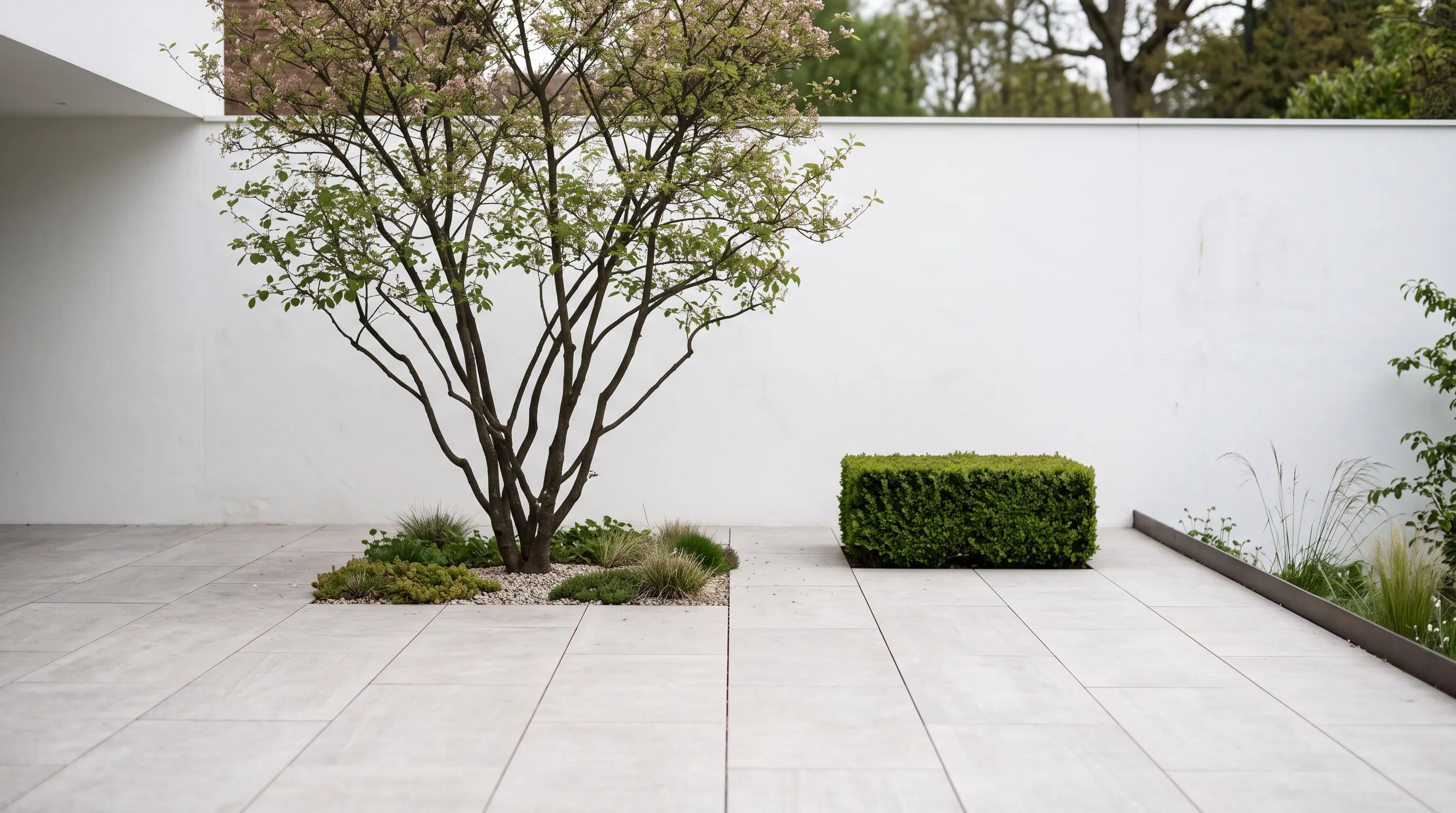
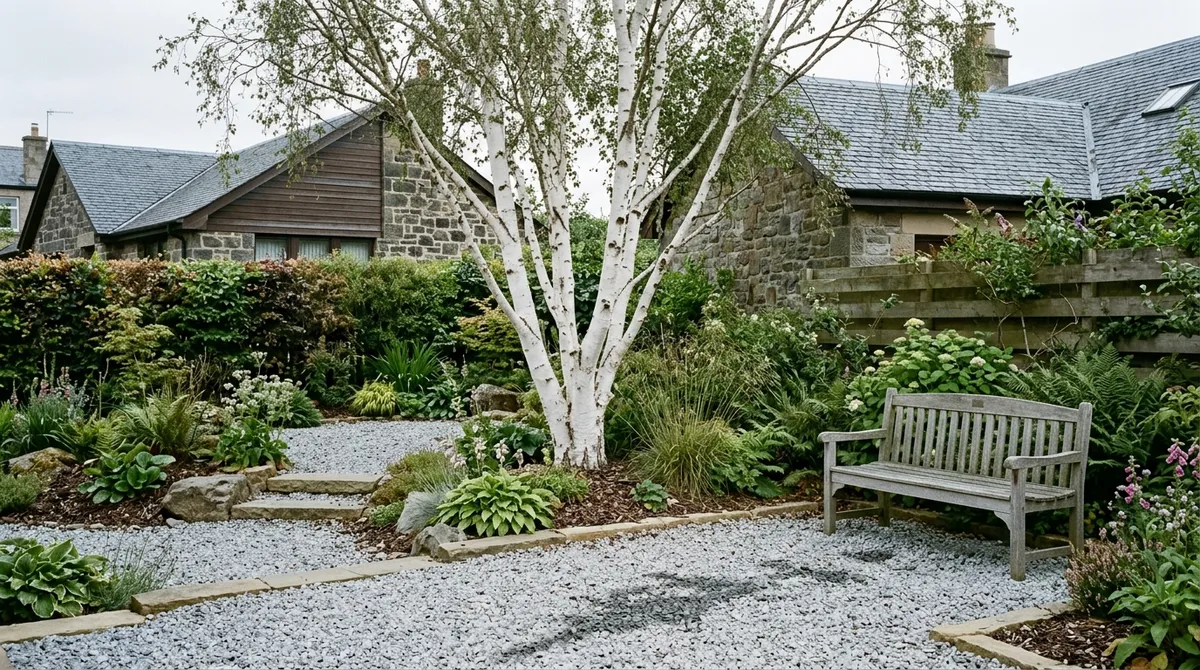
One multi-stem tree, one clipped block and lots of open paving. The empty space is what makes it feel calm.
Hard landscaping materials for a modernist garden
Hard landscaping does most of the work in this style. Choose materials with a clean finish and honest texture.
| Material | Look | Good to know |
|---|---|---|
| Large-format porcelain | Flush, matt, precise | Frost and stain resistant, no sealing needed |
| Board-marked concrete | Solid, with timber grain texture | Very hard-wearing; fine hairline cracks are normal |
| Corten steel | Warm rust colour | Run-off can stain pale paving while the rust layer forms |
| Rendered blockwork | Smooth painted wall | Needs repainting every few years |
| Composite decking | Warm, wide boards | No yearly oiling |
| Gravel | Quiet, loose, free-draining | Cheap; needs a rake and an occasional top-up |
Large-format porcelain is the modern default, laid with narrow joints for an almost unbroken floor. Concrete gives a solid, architectural surface; the guide to landscaping with concrete has ideas. Corten steel is the signature modernist material for planters, edging, screens and water features. The guide to steel and corten in garden design covers how it weathers and where to use it.
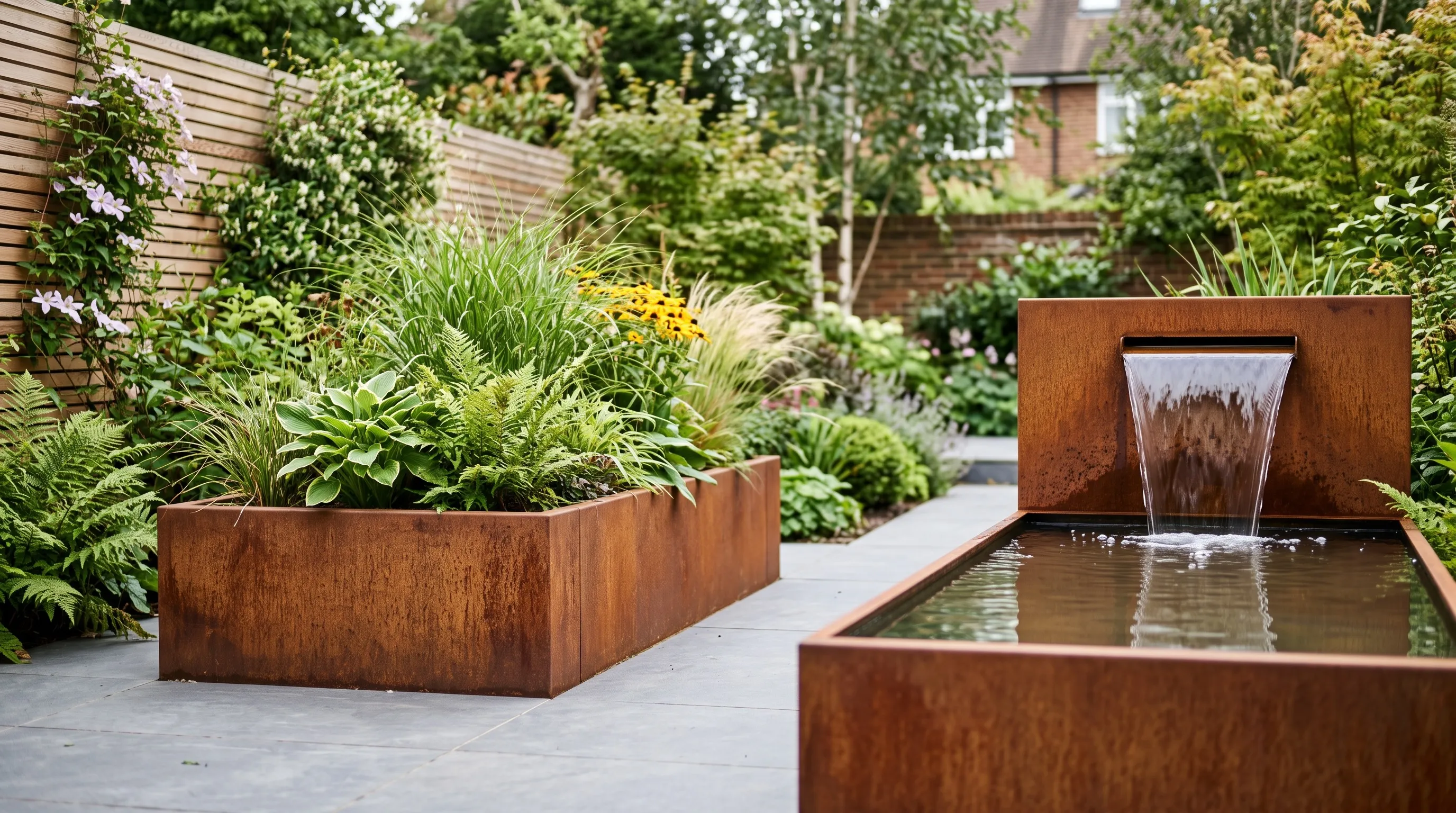
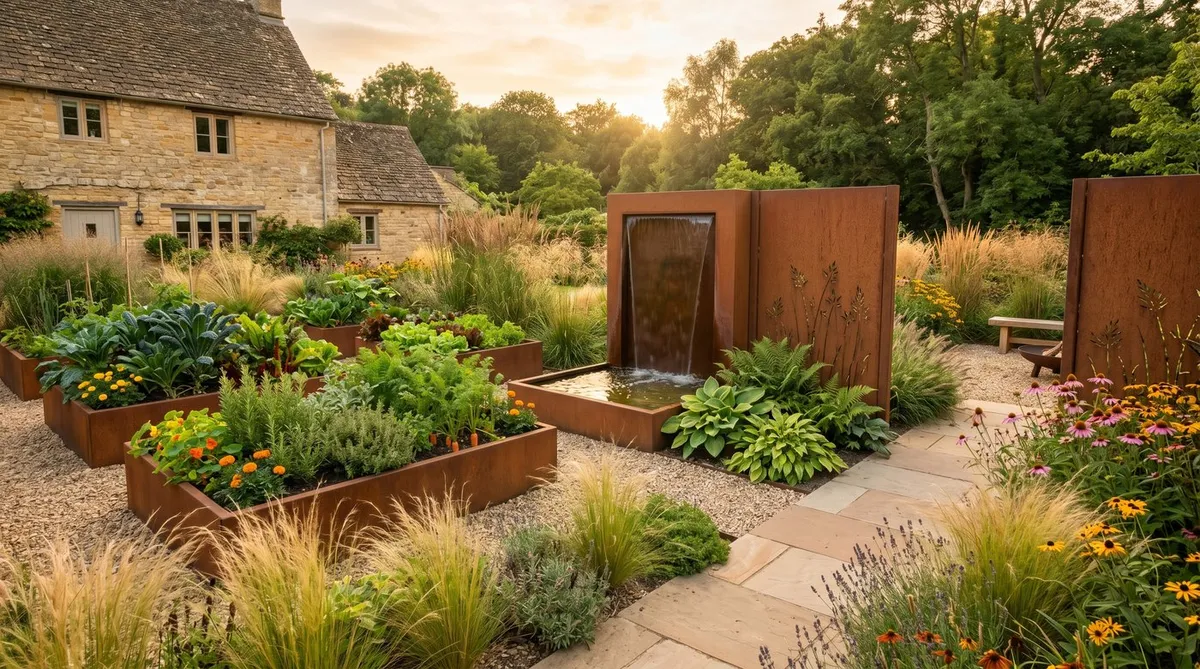
Corten steel used for a planter and a spill water feature. Its rusty colour warms up cool porcelain and render.
Architectural planting placed like sculpture
In a modernist garden, choose plants for shape, structure and texture rather than flowers. Think of each one as a sculpture set against the walls and paving.
- Multi-stem trees give height and a focal point. Amelanchier lamarckii or the white-stemmed Himalayan birch, Betula utilis var. jacquemontii, look wonderful against a plain wall. See the best trees for small gardens for more.
- Clipped evergreen blocks give year-round structure. Use yew, or Ilex crenata instead of box, which suffers from box blight and box tree caterpillar.
- Upright grasses such as Calamagrostis ‘Karl Foerster’ add height and movement.
- Bold foliage, such as Fatsia or Trachycarpus, adds drama in sheltered spots.
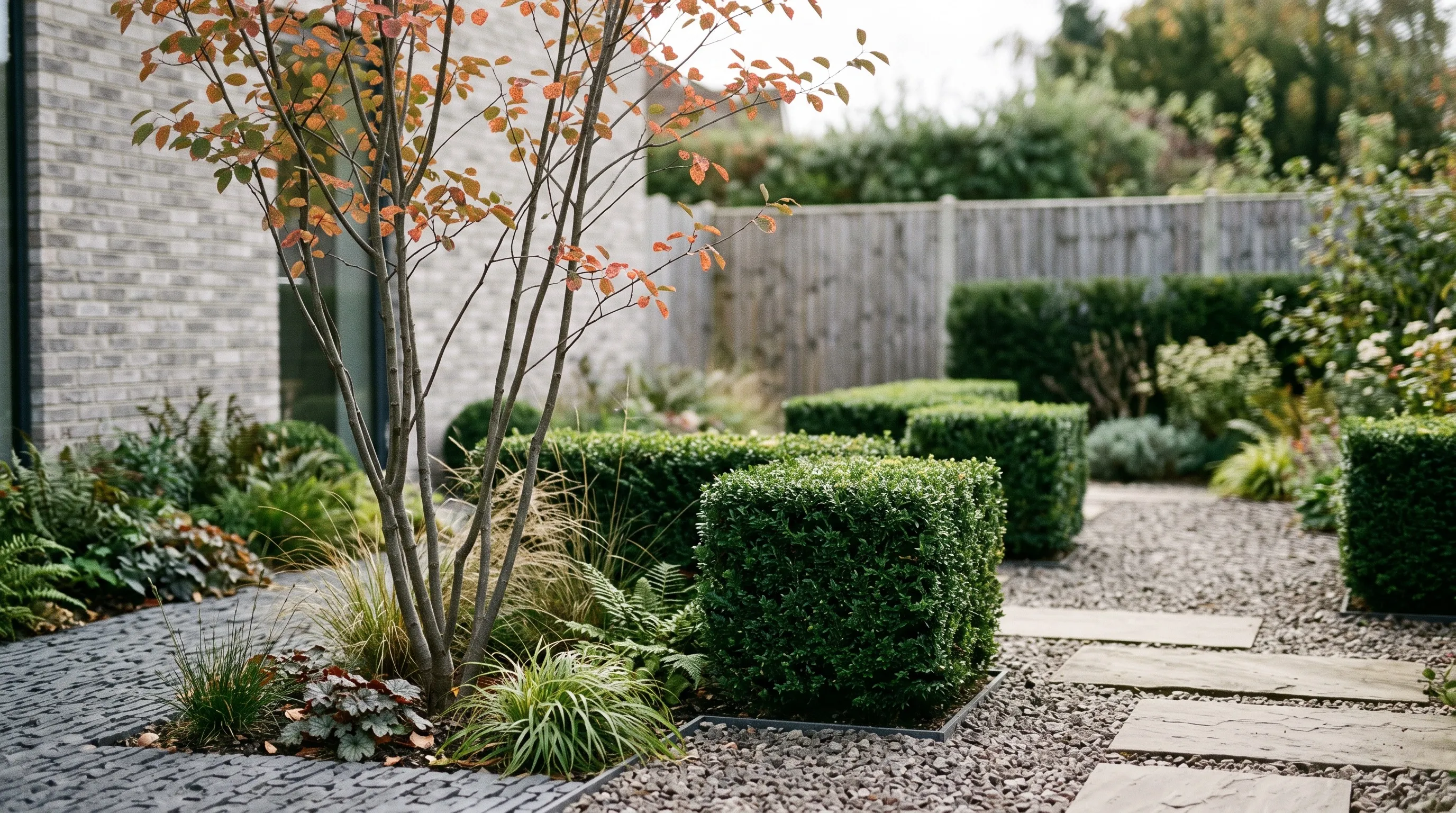
Repeated clipped blocks give the garden shape all year, while the multi-stem tree adds height and seasonal colour.
The guide to architectural plants for easy gardens lists more bold shapes that need little care.
Black bamboo and other clean screens
Black bamboo against a dark rendered wall is a classic modernist screen. The dark canes look almost graphic, and the leaves cast moving shadows on the wall behind.
Phyllostachys nigra is a running bamboo, so it can spread underground. Plant it in a root barrier sunk at least 60cm deep, or in a large raised planter. Never plant running bamboo straight into open ground near a boundary or house. The guide to bamboo alternatives for privacy has non-spreading options.
Other clean screens include slatted timber or composite panels with even gaps, and single-species hedges such as yew or hornbeam kept flat and tight. Use one screening material throughout, not a patchwork.
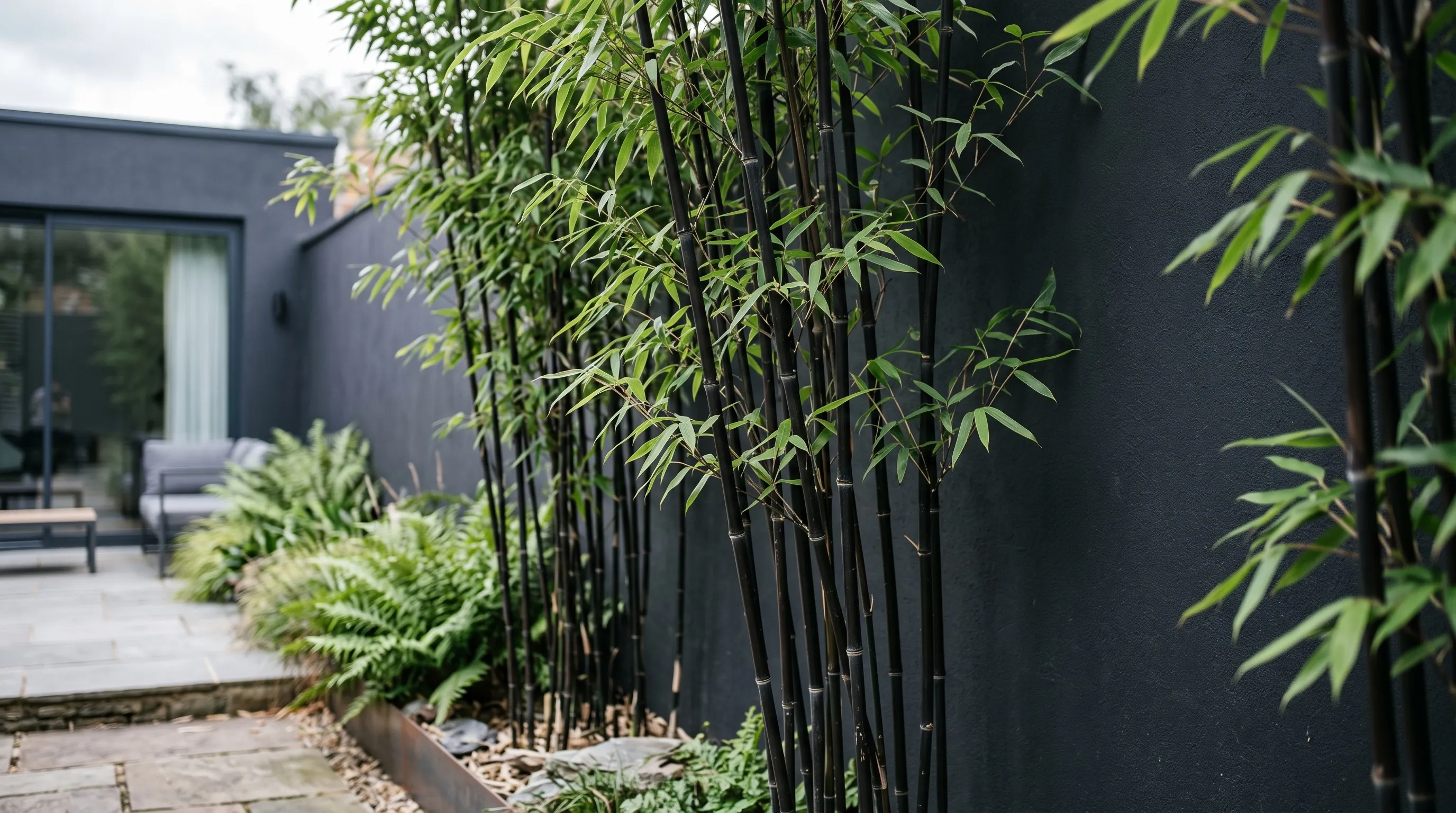
Black bamboo looks striking against a dark wall. Keep running types in a deep root barrier or container.
Still water, lighting and flow from the house
Three details lift a modernist garden from tidy to designed.
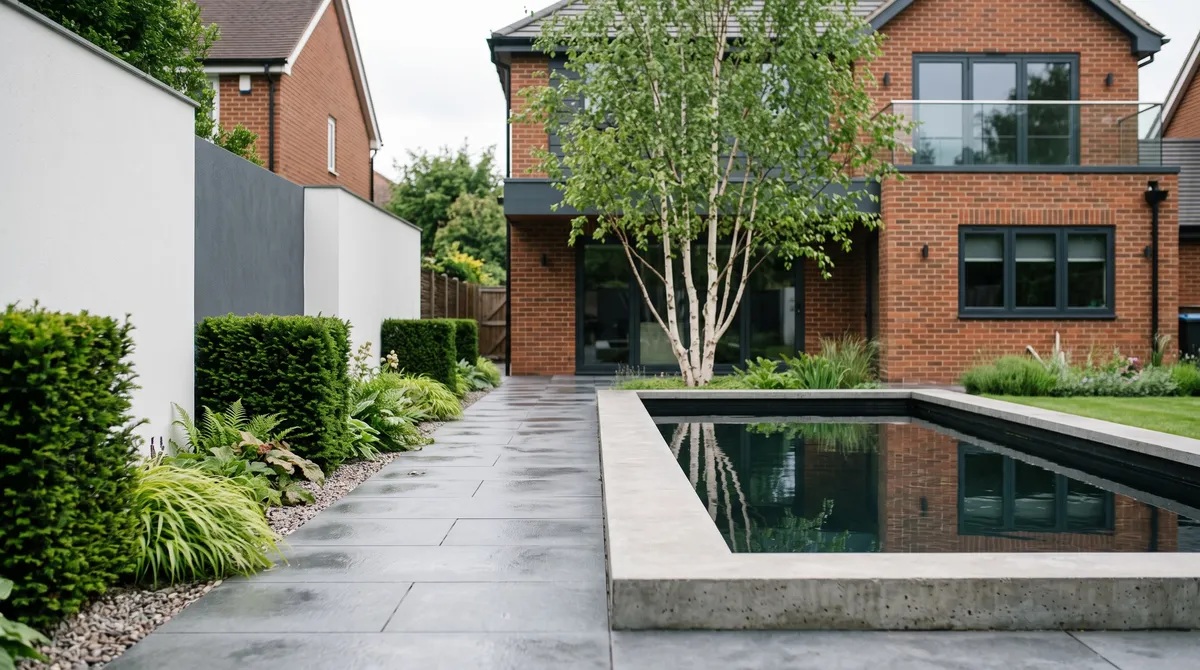
Still water suits the style better than splashing fountains. A shallow rectangular pool or a narrow rill mirrors the sky and planting. A dark base makes the surface read like a mirror. The guide to water rill design explains how to build one.
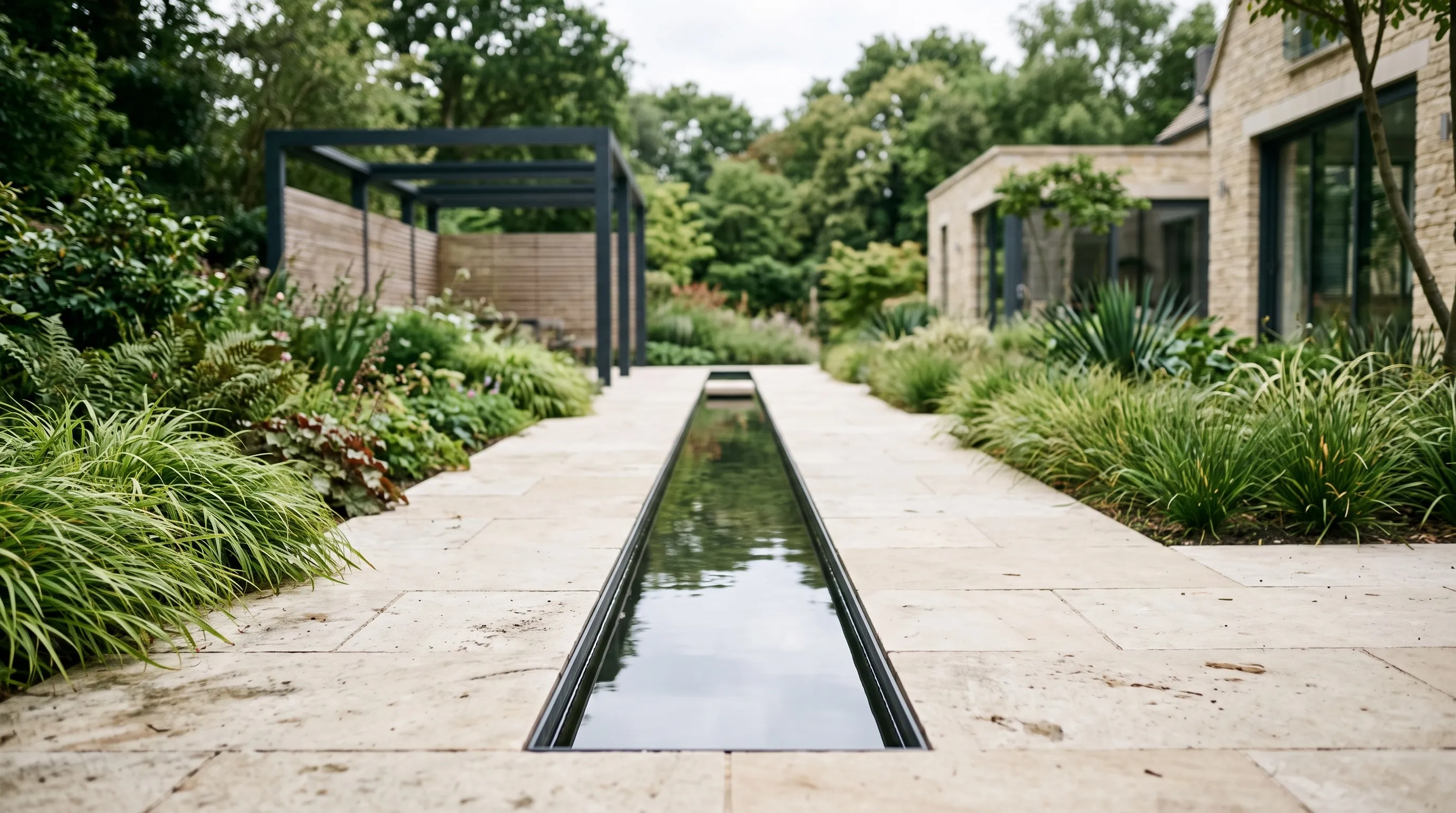
A narrow rill set flush into the paving reflects the sky and adds calm without noise.
Lighting turns the garden into an evening room. Use low wall washers to graze rendered walls and hidden uplighters under multi-stem trees. Warm white light suits render and timber. Show the effect, not the fittings.
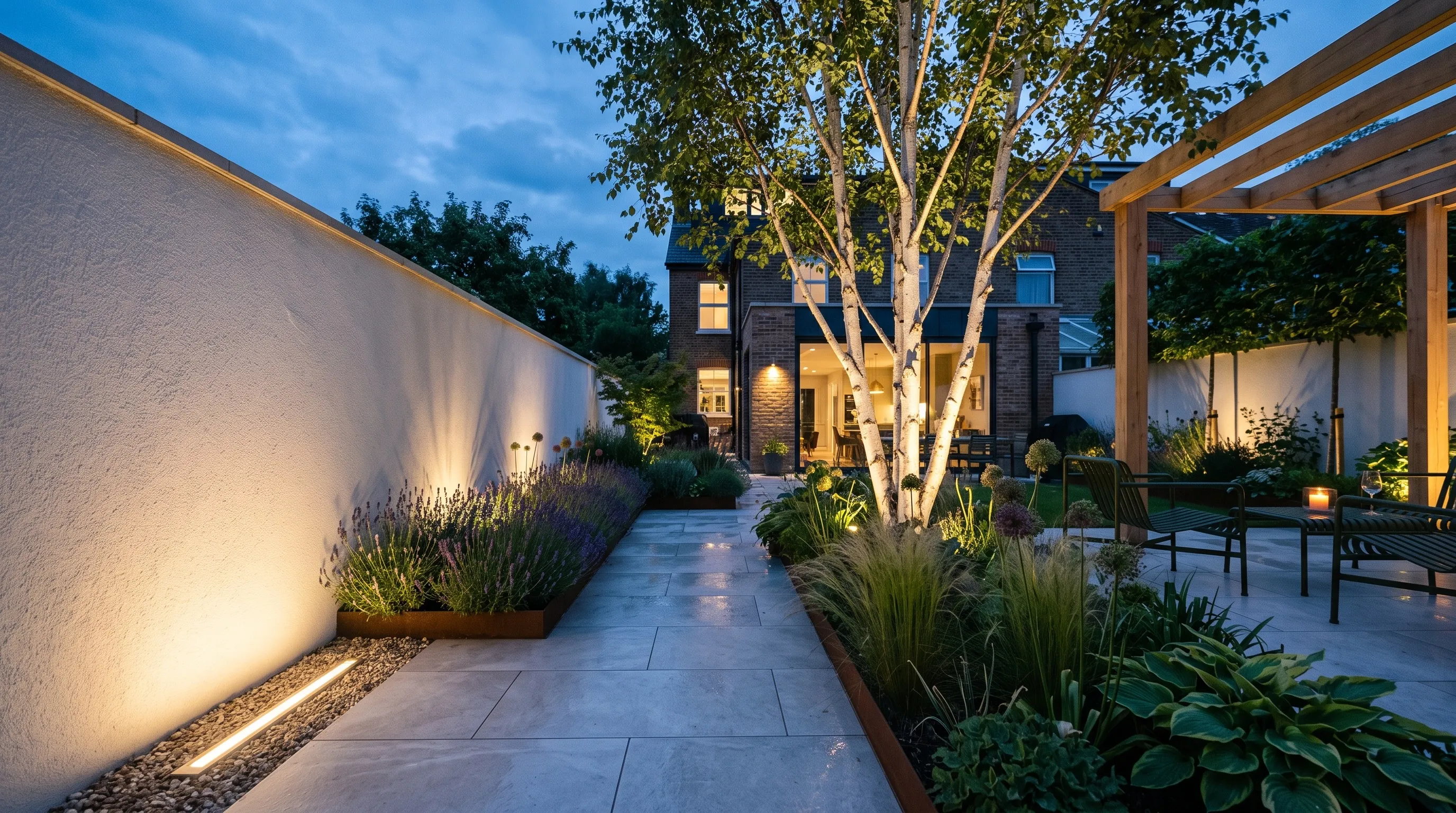
Low lights grazing the wall and a hidden uplighter under the birch turn the garden into a room after dark.
Flow from the house ties everything together. Large glazed doors, paving that matches the inside floor tone and a level threshold all blur the line between inside and out.
Levels and raised beds
Flat sites can feel dull, so modernist gardens use changes of level. Even one or two steps create zones and define a seating area. Rendered block or corten retaining walls keep the edges crisp.
Raised beds suit the style well. Build them in render or corten at seat height, so they double as extra seating. Keep them rectangular and lined up with the paving grid. One long raised bed looks better than several small ones.
Seasonal care for a modernist garden
| Season | Main jobs |
|---|---|
| Spring | Cut back grasses if not done in late winter. Top up gravel. Check the lighting |
| Summer | Clip yew and Ilex crenata, checking first for nesting birds. Water raised beds in dry spells |
| Autumn | Final hedge trim in early autumn. Sweep leaves off pale paving before they stain it |
| Winter | Cut grasses back in late winter. Wash paving and render |
Porcelain is the easiest paving to keep: a rinse with plain water and a stiff brush lifts most dirt.
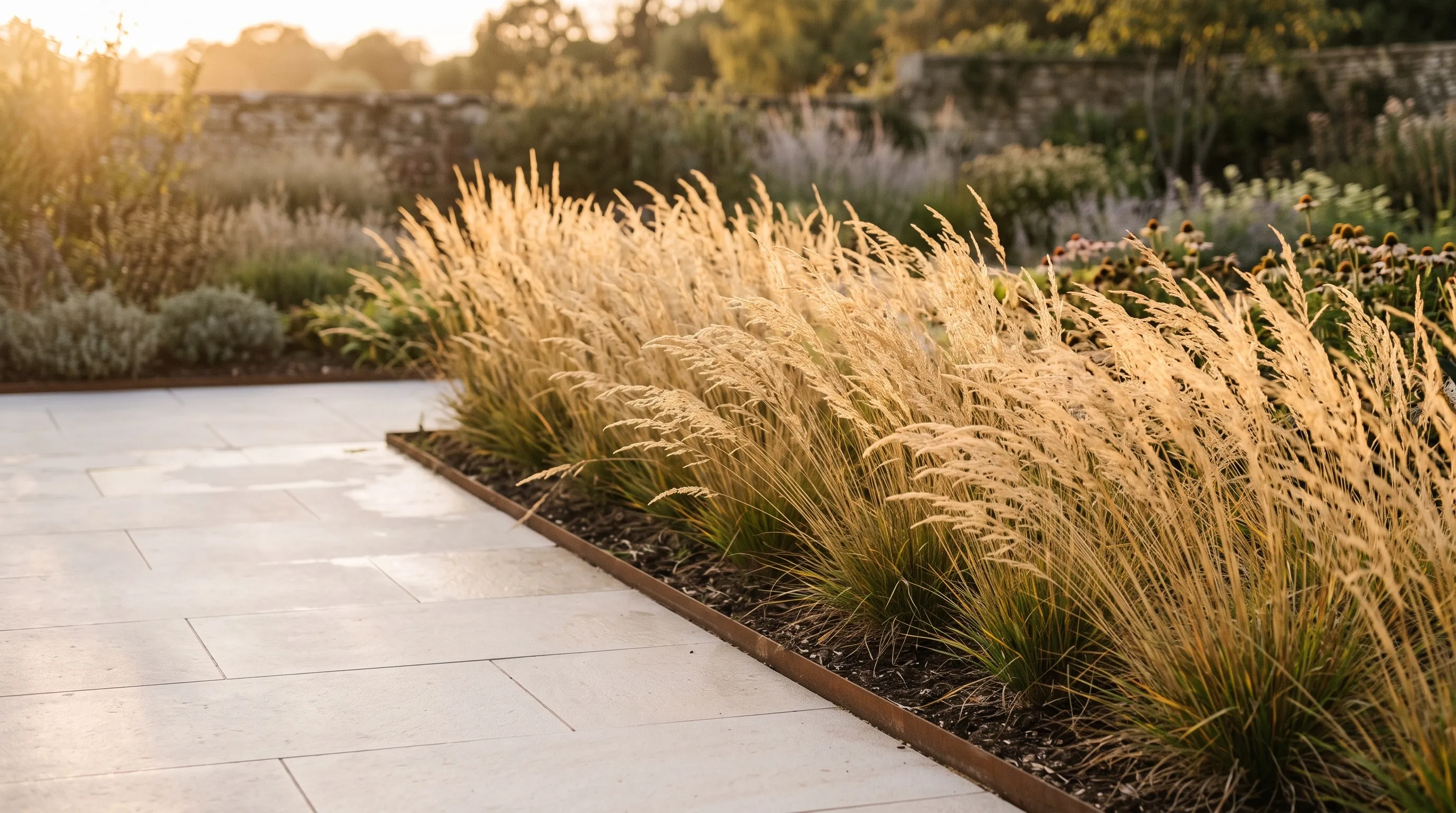
A single drift of grass softens a big stretch of paving and catches the low evening light.
Common mistakes in modernist garden design
- Filling every surface. Too many pots, plants and ornaments crowd out the empty space the style depends on. Plan the open areas first, and take one thing out of every group.
- Too many materials. Porcelain, brick, timber, slate and gravel together look like a sample board. Pick three at most and repeat them.
- Ignoring the house. A sleek modernist garden can jar against a period cottage. Pick up the brick tone, window colour or render from the house.
- Unchecked bamboo. Running bamboo without a barrier can push under fences and paving. Contain it from day one.
Want the look on a smaller scale? Read the guide to making a small garden look bigger for tricks that work hand in hand with modernist design. More ideas are in our garden design section.
Frequently asked questions
What is modernist garden design?
It’s a garden style built on geometry, restraint and empty space. Modernist gardens use clean lines, a short list of materials and bold plants placed like sculpture. Shape and structure come first, with colour and variety taking a back seat. The result looks calm in every season.
How many materials should a modernist garden use?
Three hard materials or fewer, ideally two plus one feature. Too many finishes make a garden look busy and bitty. A common mix is porcelain paving, one rendered wall and a corten or timber feature. Keeping to a tight palette matters more than spending more.
Are modernist gardens low maintenance?
Yes, once established, though not completely work-free. Large paved areas, gravel and clipped evergreens cut the weekly jobs right down. Clipped hedges need one or two trims a year, and grasses need one cut-back in late winter. Paving needs an occasional clean.
What plants work in a contemporary minimalist garden?
Plants with strong shapes, repeated in blocks, work best. Multi-stem amelanchier or birch, clipped yew, Ilex crenata, black bamboo and upright grasses such as Calamagrostis ‘Karl Foerster’ all suit the style. Choose for shape and texture rather than flower colour. A few plants repeated look better than a mixed collection.
What is the best paving for a modern garden?
Large-format porcelain in a matt finish suits most modern gardens. It resists stains, algae and frost and doesn’t need sealing. Lay it with narrow joints for a flush, clean look. Poured concrete and sawn natural stone also suit the style.
How do I make a small garden look modern?
Simplify the hard landscaping, cut back the plant list and use big paving units. Fewer, larger materials make a small space feel calmer and bigger. Repeat one or two plants, add a single rendered wall or corten planter, and leave some space empty. Avoid fussy borders, mixed paving and lots of pots.
Our team produces practical UK gardening guidance from source research, contributor records and established horticultural practice. Editorial standards are overseen by Matt W.