
Key takeaways
- Corten rusts to a protective orange-brown coat and needs no paint or coating
- The rust colour develops over months and settles over the first year or two
- Rusty run-off stains pale paving, so keep a strip of gravel or planting between them
- It needs to dry out between showers, so avoid spots that stay wet all the time
- Use stainless steel fixings and follow the supplier's guide for thickness and depth
- Large panels are heavy, so plan for two or more people to move them
Corten steel is the rusty orange metal you see in so many modern gardens. It’s a weathering steel that rusts on purpose. The rust forms a tight, protective coat that slows further corrosion, so it needs no paint, oil or coating.
It looks wonderful with grasses and green leaves, and it’s tough. But it has a few quirks, the biggest being rusty run-off that stains pale paving. This guide covers where Corten works in a UK garden, how the colour develops and the mistakes to avoid. If you’re weighing up timber, see our guide to railway sleeper edging for comparison.
What is Corten steel?
Corten (also sold as weathering steel) is a steel with small amounts of other metals added. When it gets wet and dries out over and over, it forms a dense, well-stuck layer of rust. That layer protects the steel beneath, slowing further rusting a great deal.
Corten was developed by US Steel in the 1930s, and the name comes from “corrosion resistance” and “tensile strength”. UK suppliers use “Corten” and “weathering steel” for much the same thing.
How it differs from ordinary mild steel:
- The rust protects it. Mild steel keeps rusting until it fails, unless it’s painted or galvanised.
- The colour settles. Corten darkens over its first year or two, then holds a steady orange-brown.
- No coatings needed. You simply let it weather.
How the rust patina develops
The rust layer, or patina, forms through repeated wetting and drying. New Corten arrives a dull grey-blue. After a few weeks of rain it turns orange, then deepens over the following months.
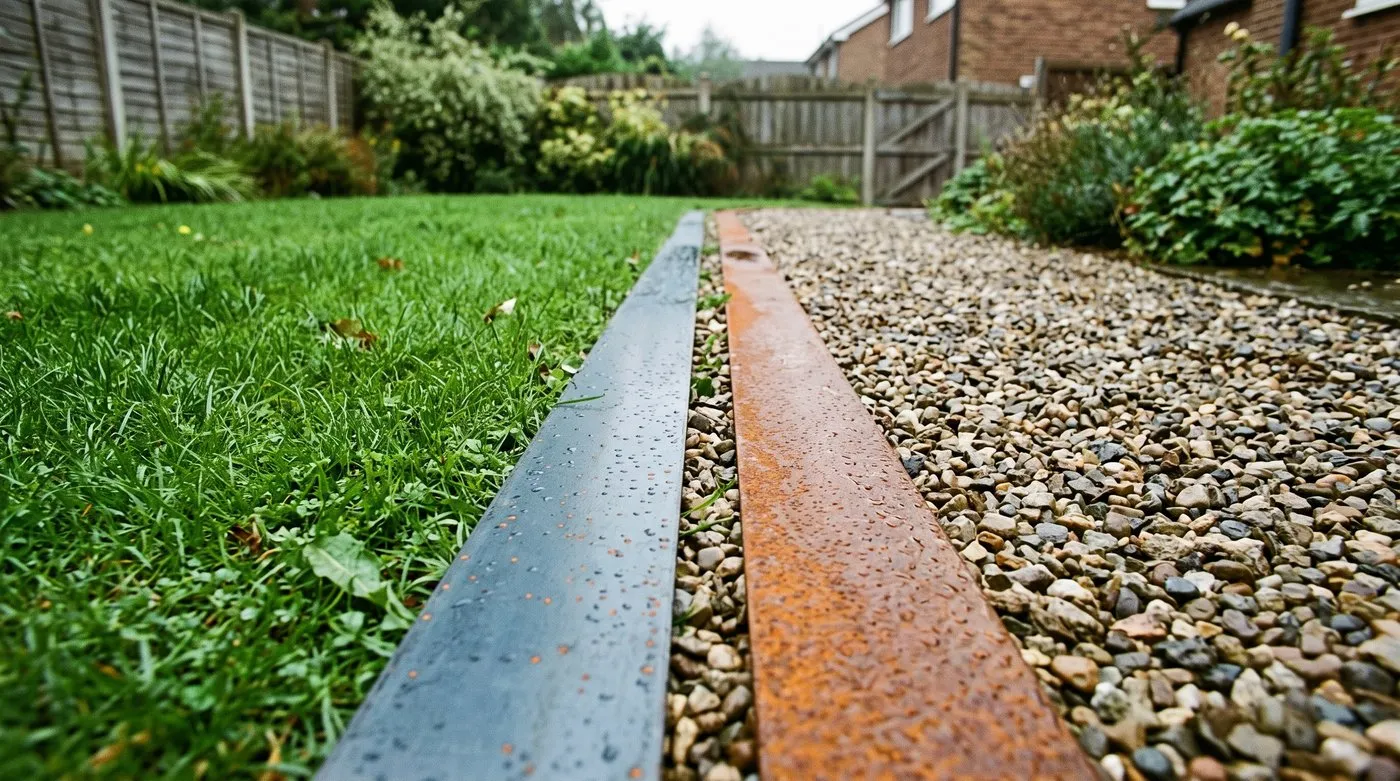
New Corten arrives a dull grey, then rusts to a warm orange-brown over its first months outdoors.
Most pieces settle into a steady orange-brown over the first year or two. Damp and coastal gardens tend to change faster. The early months are when it sheds the most rusty run-off, so that’s when to watch nearby paving.
Gardener’s tip: Before ordering a big project, buy one short length of edging and leave it in your garden for a few months. You’ll see the colour it turns in your conditions, and whether drips mark nearby surfaces.
Corten edging
Edging is the most popular way to use Corten. It gives a crisp, thin line between lawn, gravel and beds that lasts far longer than timber.
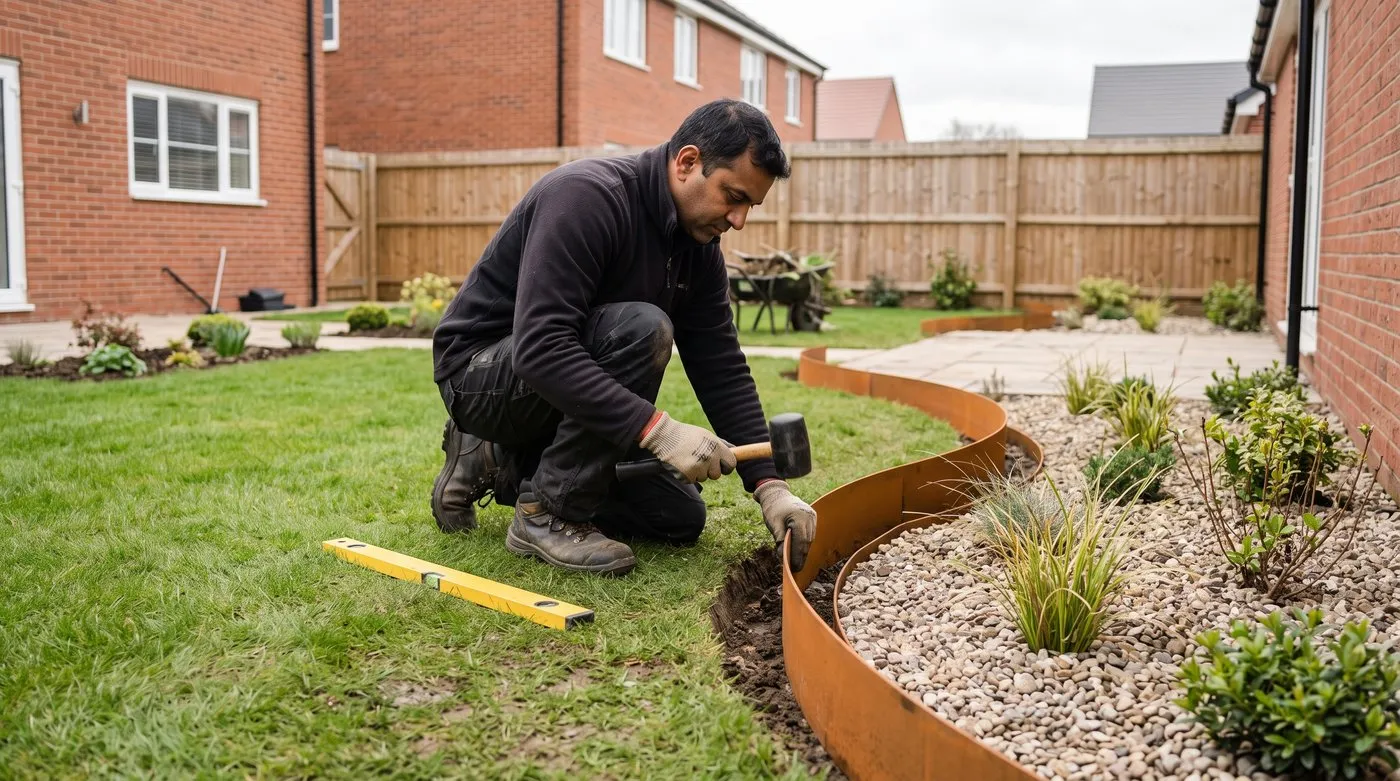
Bury a good part of the edging and firm the ground behind it, so it stays upright through the winters.
- Thickness: Around 2-3mm suits most edging. Go thicker for tall edging or anything holding back soil.
- Depth: Bury a good part of the height so it stays upright. Follow the supplier’s guide.
- Backfill: Firm the ground well behind it, or use a compacted sub-base, so it doesn’t lean over the winters.
- Joins: Sections usually bolt or slot together. Leave small gaps at the joins if the supplier recommends them.
Our guide to garden edging ideas compares Corten with stone, brick and timber.
Corten raised beds
Corten raised beds are tough, stay square for years and look great in a modern kitchen garden. They’re widely used for vegetables. The rust is mainly iron oxide, which isn’t a concern for food crops.
- Lining: Some people line the inside with a permeable membrane to reduce soil staining while the patina forms. It’s optional.
- Drainage: Set beds on free-draining ground, or add a drainage layer at the base of tall beds.
- Space behind: Leave a gap between the bed and a pale wall or timber fence, as early run-off can stain them.
- Height: Taller beds are easier on the back and suit wheelchair users. See our accessible gardening guide for heights and layouts.
Most come flat-packed with bolted corners. For filling and planting tips, see raised bed gardening for beginners.

Corten beds set on gravel. The gravel catches any rusty drips and keeps the paths tidy.
Corten screens and dividers
A Corten screen divides the garden, hides a compost corner or breaks the wind without the bulk of a fence. Laser-cut patterns let air and light through and cast lovely shadows.
- Fix them firmly. A tall panel catches a lot of wind. Bolt it to sturdy posts set in concrete, or use the supplier’s own base.
- Mind the weight. A large panel can weigh over 100kg. Plan for two or more people to move it.
- Plant around the base. A strip of planting or gravel at the foot catches drips before they reach paving.
Climbers and grasses soften the edges beautifully. Our guide to patio privacy screen ideas has other options.

Laser-cut screens let light through and cast leafy shadows. Set them in a planted strip so drips don’t reach pale paving.
Corten water features
A Corten water wall or bowl makes a striking focal point. Water sheeting down rusty steel looks fantastic against green planting.
There’s one catch. Corten does best when it can dry between showers, and steel that stays wet all the time keeps slowly rusting. Many water features deal with this by coating or lining the reservoir. Ask the supplier how theirs is protected.
- Expect brown-tinged water at first. Change it a few times while the surface settles.
- Keep it away from pale paving, so splashes land in gravel or planting.
- Match the pump to the height of the feature, following the maker’s guide.
For simpler options, see our guide to low-maintenance water features.

A Corten water wall looks dramatic among grasses and verbena. Check how the reservoir is protected before you buy.
Corten compared with other materials
| Material | Coating needed? | Look | Upkeep |
|---|---|---|---|
| Corten steel | No | Warm rust orange-brown | None, just let it weather |
| Mild steel | Yes, paint, powder coat or galvanise | Any colour you paint it | Touch up or recoat over time |
| Galvanised steel | Already coated | Silvery grey | Little until the coating wears |
| Stainless steel | No | Bright, cool silver | Occasional clean |
| Oak or hardwood | Optional oil | Warm wood, silvers with age | Oil if you want to keep the colour |
Corten suits modern and minimalist gardens. Our guide to modernist garden design shows how it fits with clean lines and bold planting.
When not to use Corten
- Right next to pale paving. Run-off stains limestone, sandstone and pale concrete. Leave a gravel or planted strip between them.
- Spots that never dry. Corten needs wet and dry spells to form its patina. In a permanently damp, sheltered corner it keeps rusting unevenly.
- Things you touch a lot. Fresh Corten rubs orange onto hands, clothes and pets. Avoid it for seats, gates and handrails until it has settled.
- Traditional settings. It can look out of place in a cottage or period garden, where painted metal or timber may sit better.
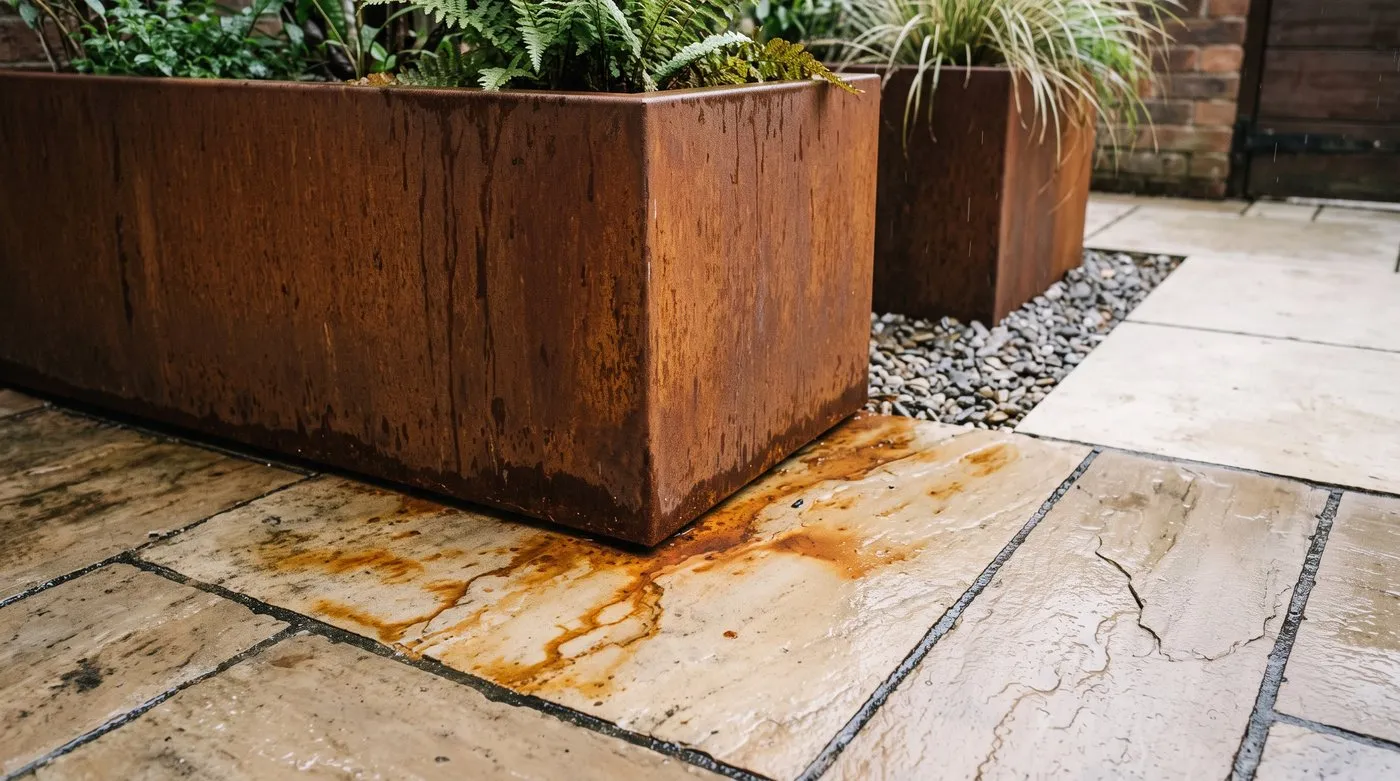
This is why a buffer matters. Rusty drips mark pale stone, while a gravel strip catches them.
Common Corten mistakes
- Buying sheet that’s too thin. It bends and dents. Follow the supplier’s guidance for the job.
- Using the wrong fixings. Ordinary steel screws and bolts rust and stain. Use stainless steel fixings.
- Forgetting the paving. Plan a buffer strip before you lay anything.
- Underestimating the weight. Big panels need several people and careful handling. Wear gloves, as cut edges can be sharp.
- Trying to speed up the rust. Home-made rusting mixes can give a flaky finish. Patience gives the best result.
Frequently asked questions
What is Corten steel and how is it different?
It is a weathering steel that forms its own protective rust layer. The orange-brown coat slows further rusting, so it needs no paint. Ordinary mild steel keeps rusting until it fails unless it is coated.
How long does Corten steel take to rust?
It starts to turn orange within weeks of wet weather. The colour then deepens over the following months. Most pieces settle into a steady orange-brown over the first year or two. Damp or coastal sites tend to change faster.
Will Corten steel stain my patio?
Yes, rusty run-off can stain patios, especially early on. Pale concrete, limestone and sandstone mark most easily, and the stains are hard to shift. Leave a strip of gravel, soil or planting between Corten and pale paving to catch the drips.
Is Corten steel safe for vegetables?
Yes, Corten raised beds are widely used for growing food. The rust is mainly iron oxide, which isn’t a concern in a veg bed. Some people line the sides with a permeable membrane to reduce staining of the soil, but it’s optional.
How thick should Corten steel garden edging be?
Around 2-3mm suits most garden edging. Thinner sheet is cheaper but bends and dents more easily. Use thicker steel for tall edging or edging that holds back soil, and follow the supplier’s guidance for your height.
Can I weld Corten steel myself?
Yes, if you have the kit and the skills. Use a weathering-grade filler wire so the welds rust to match. Many DIY projects use bolted joints instead, which need no welding and can be taken apart.
Is mild steel cheaper than Corten in the long run?
Mild steel is cheaper to buy but can cost more over time. It needs galvanising, painting or powder coating to stop it rusting through, and coatings need touching up. Corten needs no coating at all.
Planning beds in Corten? Read our raised bed garden design ideas for layouts, or browse more garden design ideas.
Our team produces practical UK gardening guidance from source research, contributor records and established horticultural practice. Editorial standards are overseen by Matt W.


