Key takeaways
- Pondless features hide the water underground, so there's little algae or leaf clearing
- A millstone or bubbling bowl suits most gardens; a cascade needs a slope and more space
- A bigger buried reservoir means fewer top-ups in summer
- Rinse the pump's sponge filter in spring and autumn to make it last
- Use an RCD-protected outdoor socket, and an electrician for any new wiring
- No open water makes them much safer for children, but the lid must be strong and secure
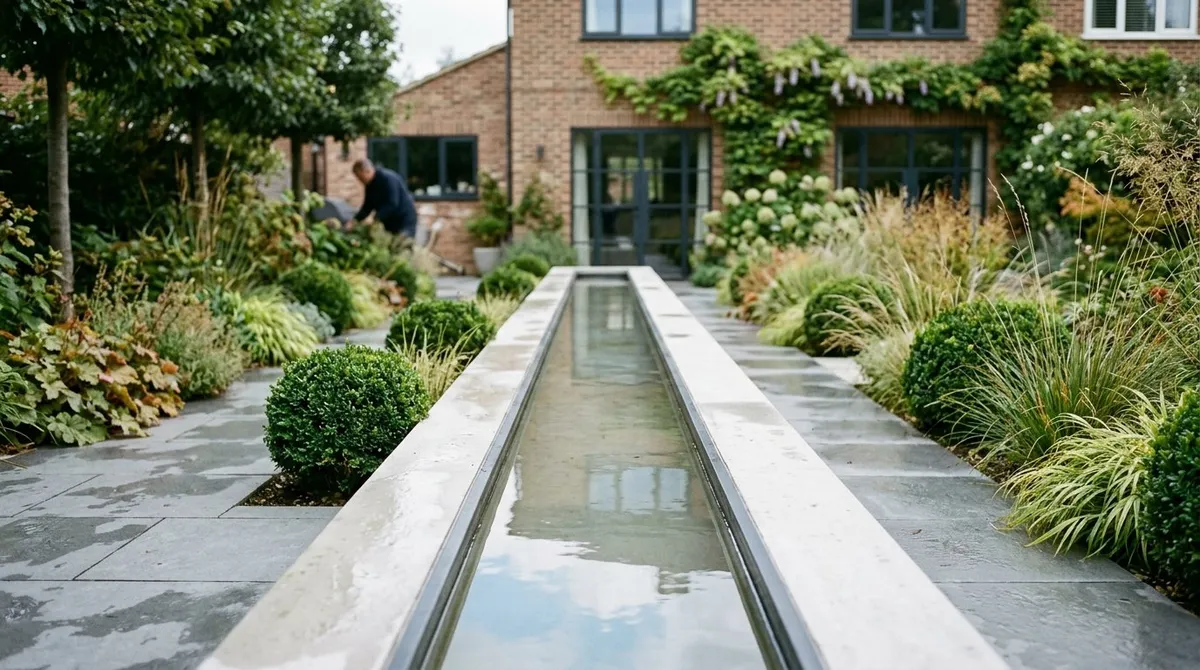
The easiest water features to live with are pondless. The water sits in a buried reservoir, hidden under a grid and pebbles, and a small pump sends it bubbling up through a stone, bowl or cascade. With no open pond, there’s little algae, no fish to look after and hardly any leaves to fish out.
This guide covers the five easiest designs and how to keep them running with a few short jobs a year. Looking for a wildlife pond or a bigger feature instead? The guide to water feature ideas covers every type.
What makes a water feature low-maintenance?
A water feature is easy when there’s no open standing water. Every pondless design works the same way:
- A buried reservoir holds the water out of sight.
- A strong grid or lid sits over it, covered with pebbles.
- A submersible pump in the reservoir pushes water up through the feature.
- The water runs back down through the pebbles into the reservoir.
Because the reservoir is dark and covered, algae struggles to grow and leaves stay on top of the pebbles. You lose a little water to evaporation and splash, so it needs topping up in dry spells. Compare that with the regular jobs in looking after a garden pond.
There’s no open pool, which makes these much safer for young children than a pond. Make sure the grid is strong, fixed down and can take an adult’s weight.
Which pondless design suits your garden?
| Design | What it looks like | Best for |
|---|---|---|
| Millstone | Water bubbles up through a flat round stone and runs over its edge | Most gardens and styles |
| Recirculating bowl | A basin that overflows gently around its rim | Patios, courtyards, small gardens |
| Pondless cascade | A little stream over rocks into hidden gravel | Sloping sites, natural-style gardens |
| Sealed rill | A narrow, formal channel of moving water | Modern and formal gardens |
| Bubbler | A single bubble over pebbles, often in a barrel | Balconies, tiny spaces, rented homes |
Millstone water features
A millstone is the most popular pondless feature. Water rises through the hole in the middle and runs gently across the surface and over the edge. The sound is a soft ripple, not a loud splash, so it suits small gardens near the house. Natural stone lasts longest. Reconstituted stone is cheaper and lighter.

A millstone sits on a grid over the hidden reservoir. Switched on, water bubbles up through the centre and runs over the edge.
Recirculating bowls
A recirculating bowl is the simplest design and takes the least space. Water overflows the rim into a hidden reservoir below. Granite, basalt and slate bowls last for years outdoors. Glazed ceramic can crack if water freezes in it, so empty it or bring it in for winter. Choose the pump to suit the look: a gentle pump gives a smooth sheet of water over the rim.
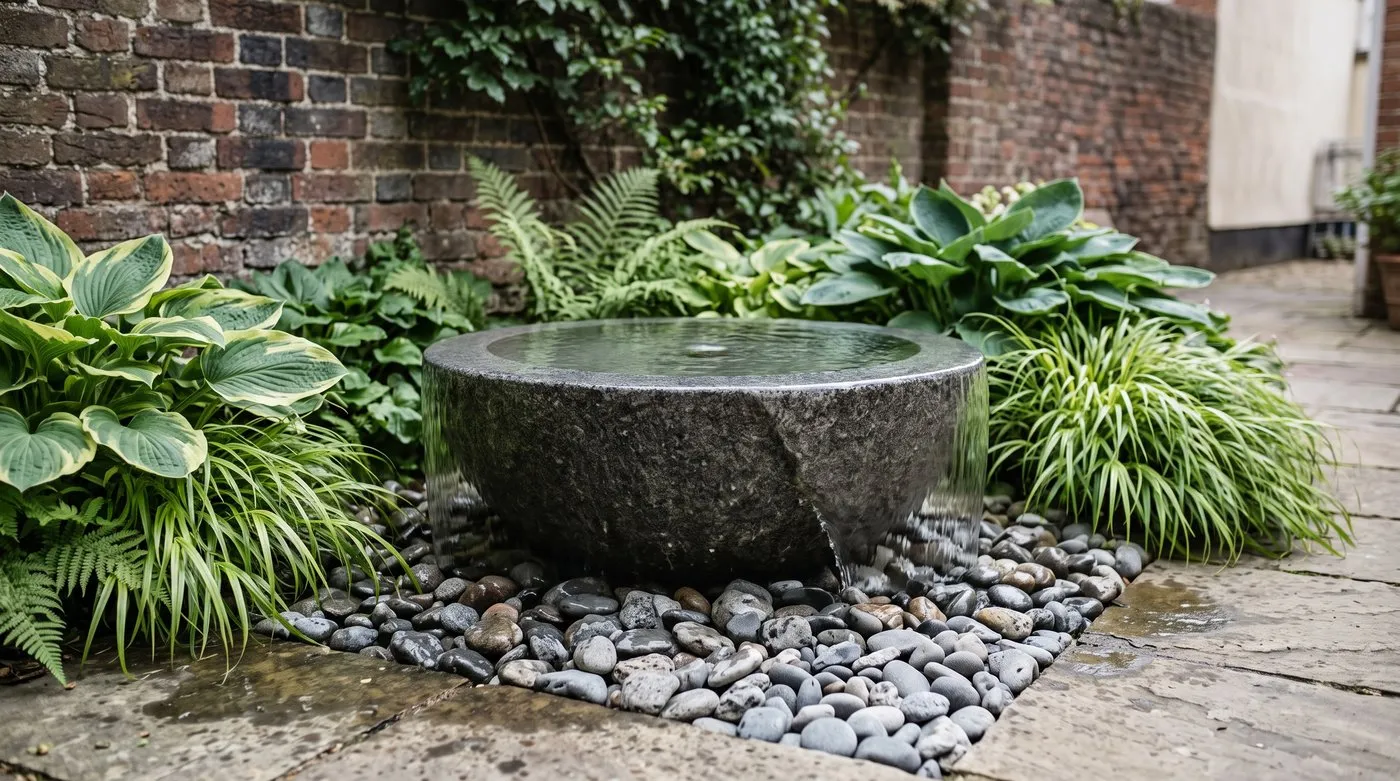
A bowl that overflows into hidden pebbles fits even a tiny courtyard, and there’s no open pond to clean.
Pondless cascades
A pondless cascade is a little stream running over stones into a gravel-filled reservoir. It gives the look and sound of a brook with no open water. It needs a slope, or a raised bank, and more digging than the other designs. Keep drops fairly low: big drops throw water out of the catchment and empty the reservoir faster.

A pondless cascade gives the sound of a stream with no open pool. Birds love the shallow water at the bottom.
Sealed rills
A rill is a narrow, shallow channel of water running along a path or terrace. A sealed version pumps water from a hidden reservoir at one end and returns it there. Rills suit modern, formal and Mediterranean gardens, but can look out of place in a cottage border. The guide to water rill design covers building one.
Bubblers for balconies and small spaces
A bubbler is the smallest format: a single bubble of water over pebbles, often in a half barrel or large pot. It can be lifted and moved, so it’s ideal for renters, and fits well with other rental garden ideas. On a balcony, check the weight a full container adds before you start. For more ideas, see container ponds for small gardens.
Where to put a low-maintenance water feature
Part shade is the best spot. Full sun dries the water faster and warms it, while deep shade under trees fills the pebbles with leaves.
- Keep it away from overhanging trees that drop leaves and seeds.
- Put it near an outdoor socket to keep cable runs short.
- Place it where you’ll hear it from the house or a seat.
- Make sure the ground is firm and level for the reservoir.
Choosing a pump and powering it safely
Choose a pump rated for continuous outdoor use and fully submersible. Match the flow to the feature: a small bowl or bubbler needs only a gentle pump, while a cascade needs a stronger one to lift water up the slope. An oversized pump throws water out of the catchment.
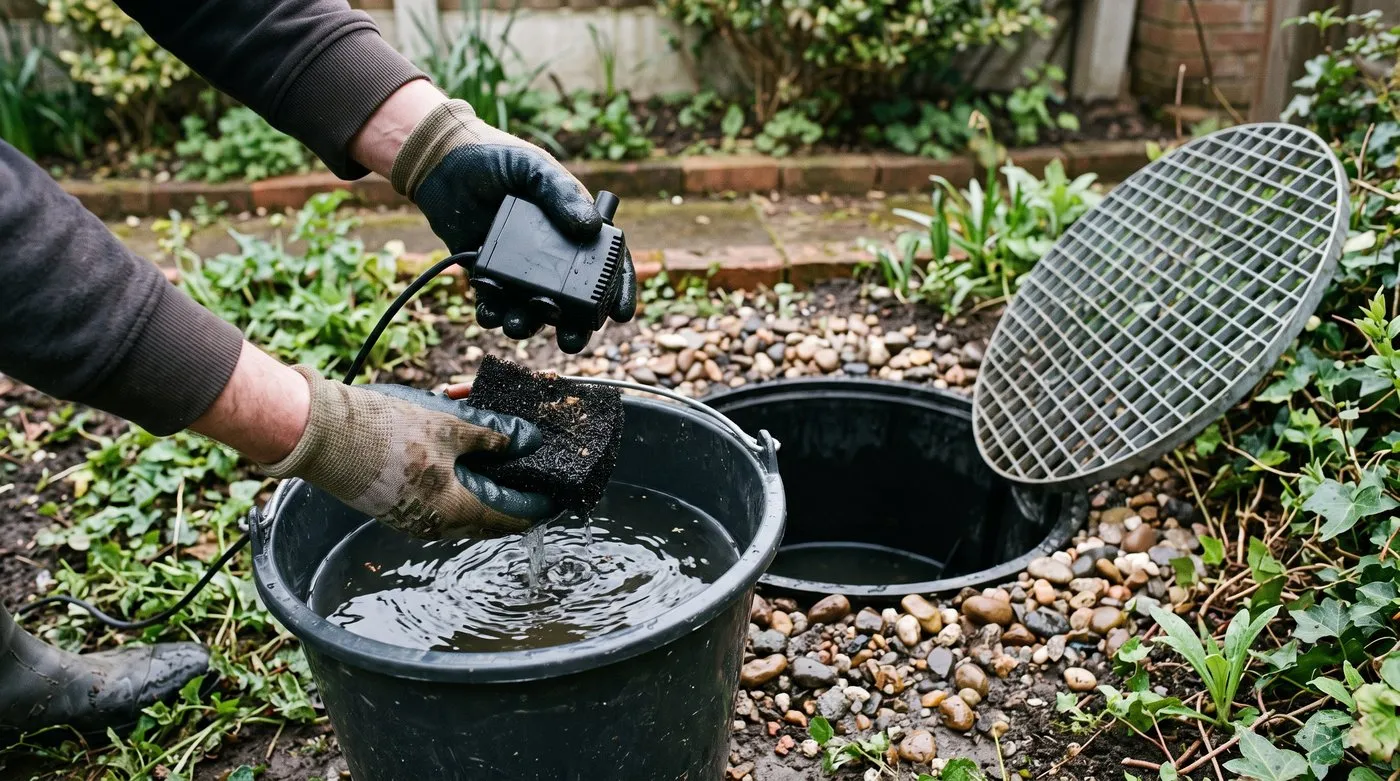
A quick rinse of the sponge filter in spring and autumn keeps grit out of the pump and helps it last.
Fit a sponge pre-filter on the pump intake. It catches grit and leaves before they reach the pump, which helps it last.
Warning: Plug outdoor pumps into an RCD-protected outdoor socket. If you need a new outdoor socket or cable run, use a qualified electrician.
Solar pumps avoid wiring altogether. They work well for small bubblers in a sunny spot, but they only run in good light unless they have a battery.
How to build a millstone water feature
- Mark the spot near power, on firm ground in part shade.
- Dig a hole a little bigger than your reservoir and level the base.
- Set the reservoir in and backfill around the sides with sand or fine gravel.
- Put the pump in the middle, fit the pre-filter and attach a flexible hose.
- Lay the grid over the reservoir. It must be strong enough to carry the stone.
- Lower the stone onto the grid, threading the hose up through the centre hole. Trim the hose flush.
- Fill the reservoir with water, ideally rainwater.
- Cover the grid with pebbles so it’s hidden.
- Switch on and adjust the flow until water runs evenly over the stone.
- Top up the next day, as the pebbles soak up some water at first.
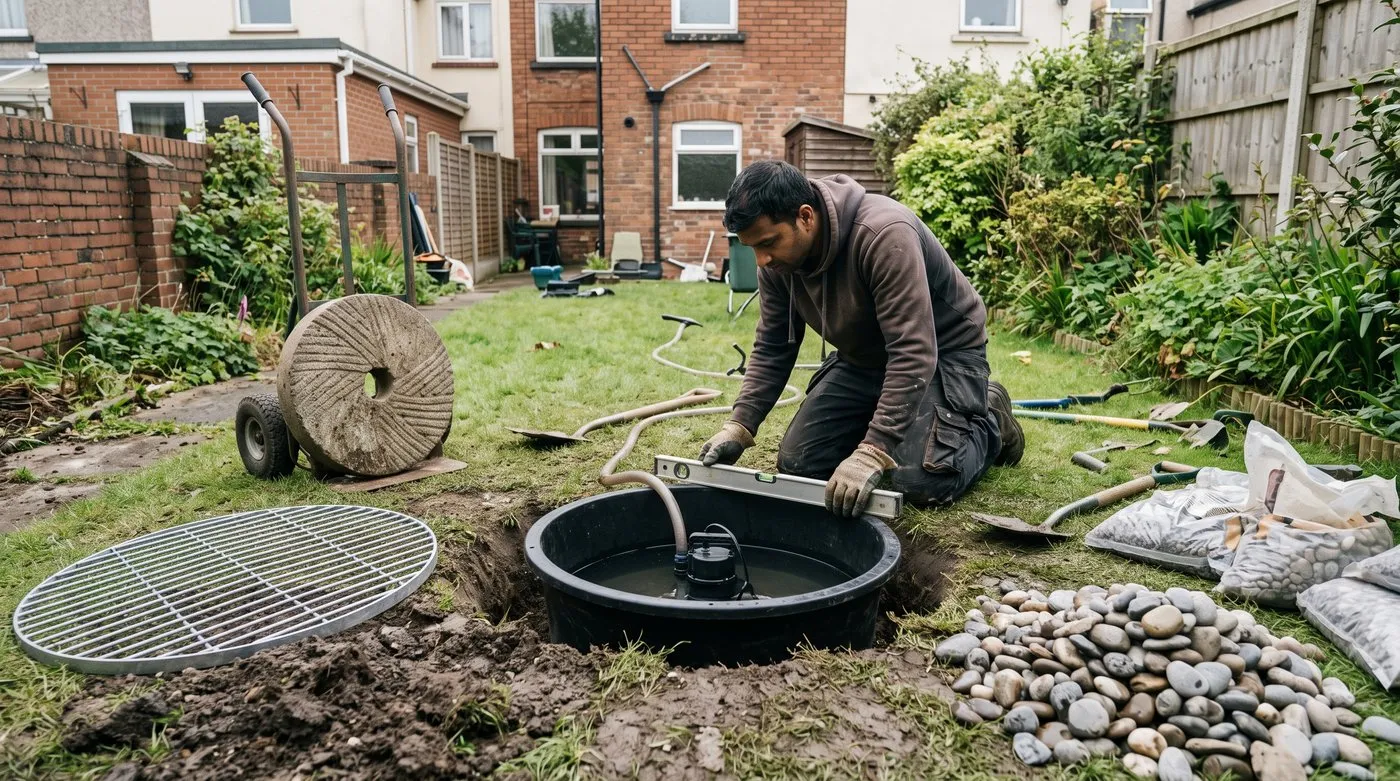
The hidden part of a millstone feature: a level reservoir, the pump and a strong grid to carry the stone.
Run the cable through a protective duct, buried where a spade won’t hit it.
Yearly care routine
| When | Job |
|---|---|
| March to April | Refit the pump if you stored it. Rinse the sponge filter. Fill up |
| Summer | Check the water level weekly and top up. Trim plants that drop leaves into it |
| October to November | Clear leaves off the pebbles. Rinse the filter |
| Before hard frosts | Switch off, lift the pump out, clean it and store it frost-free |
Rinse filters in plain water, never with soap or detergent. If the reservoir smells or looks murky after a few years, lift the pebbles and give it a full clean-out in spring.

Shallow moving water is a magnet for garden birds. Keep it topped up in summer and they’ll visit every day.
Common mistakes to avoid
- Letting it run dry. A pump running without water soon burns out. Check the level weekly in summer.
- A reservoir that’s too small. It needs topping up constantly. Go as big as your space allows.
- No pre-filter. Grit and leaves wear out the pump. A sponge filter is a cheap fix.
- Siting it under trees. Falling leaves clog the pebbles and the pump. Choose a clear spot.
- Leaving it running in a hard freeze. Ice can crack stone and ceramic and damage the pump. Switch off and lift the pump for winter.
- A flimsy lid. Children and pets will walk on it. Use a strong, fixed grid.
Want a feature that also helps wildlife? Read the guide to building a wildlife pond next, or keep birds happy with a well-kept bird bath. There are more ideas in our garden design section.
Frequently asked questions
What is a low-maintenance water feature?
It’s one with no open pond, usually called a pondless feature. The water sits in a buried reservoir hidden under pebbles. A small pump sends it up through a stone, bowl or cascade, and it drains back down. With no open water, there’s very little algae or leaf clearing to do.
What is the easiest water feature to build yourself?
A bubbling bowl or small millstone is the easiest DIY water feature. You need a buried reservoir, a strong grid over it, a small pump, a stone or bowl and pebbles. Most people can build one in a day. The fiddliest part is getting power to it safely.
How often does a recirculating water feature need topping up?
Check it weekly in summer and top up when the level drops. It loses water to evaporation and splash, most of all on hot, windy days. A bigger reservoir needs topping up less often. Use rainwater from a water butt if you can, as it leaves less limescale on the stone.
Are pondless water features safe around children and pets?
They’re much safer than ponds, because there’s no open pool. The water sits under a grid and pebbles. Make sure the grid is strong enough to stand on and fixed in place. Still keep an eye on toddlers around any water.
How long does a water feature pump last?
A good pump should last several years with simple care. Pumps die early when leaves clog the intake or the reservoir runs dry. Fit a sponge pre-filter, rinse it twice a year and never let the water level drop below the pump. Buy one rated for continuous outdoor use.
Should I turn my water feature off in winter?
Yes, in most UK gardens it’s best to switch off for winter. Lift the pump out, clean it and store it somewhere frost-free. Ice can crack stone bowls and damage the pump. In milder areas you can run it through winter, but turn it off in a hard freeze.
Our team produces practical UK gardening guidance from source research, contributor records and established horticultural practice. Editorial standards are overseen by Matt W.