Key takeaways
- Keep spring tidying light, as frogs, toads and newts are breeding
- Top up with rainwater in summer, as tap water feeds algae
- Twist out blanketweed by hand and leave it on the edge overnight so creatures can escape
- Net the pond from September to stop leaves rotting in the water
- Do bigger clear-outs in autumn, never a full drain and scrub
- In winter, stop feeding fish and melt a hole in ice gently, never smash it
Garden pond care is mostly little jobs at the right time of year. Tidy gently in spring, top up and weed in summer, keep leaves out in autumn and keep a hole in the ice in winter. Do that and the pond largely looks after itself.
This guide walks through the year season by season, for both wildlife ponds and fish ponds. If you’re still planning a pond, start with our guide on how to build a garden pond. If something’s already gone wrong, our guide to pond problems like algae and murky water helps you work out what and why.
Spring pond care (March to May)
Spring is about a gentle tidy and getting plants growing. Frogs, toads and newts are breeding, so keep disturbance to a minimum.
March: a light tidy. Scoop out floating dead leaves with a net, working around any frogspawn. Cut dead stems of marginal plants such as iris and rushes back to just above the water. Save any big clear-out for autumn.
Check the pump and filter. If you have a pump, restart it. Rinse filter sponges in a bucket of pond water, not tap water, so you keep the helpful bacteria that clean the water.
April: divide and plant. April and May are the best months for planting. Lift overgrown clumps of iris, marsh marigold or water mint, split them and replant in aquatic baskets with aquatic compost. Ordinary garden compost is too rich and feeds algae. Add new oxygenators, marginals and lilies now.
Fish feeding. If you have fish, start feeding again lightly once they’re active and the water has warmed up, usually in April. Little and often is best.
May: expect some green water. A short spell of green water in spring is normal. Plants haven’t grown enough yet to compete with the algae. It usually clears on its own within a few weeks.

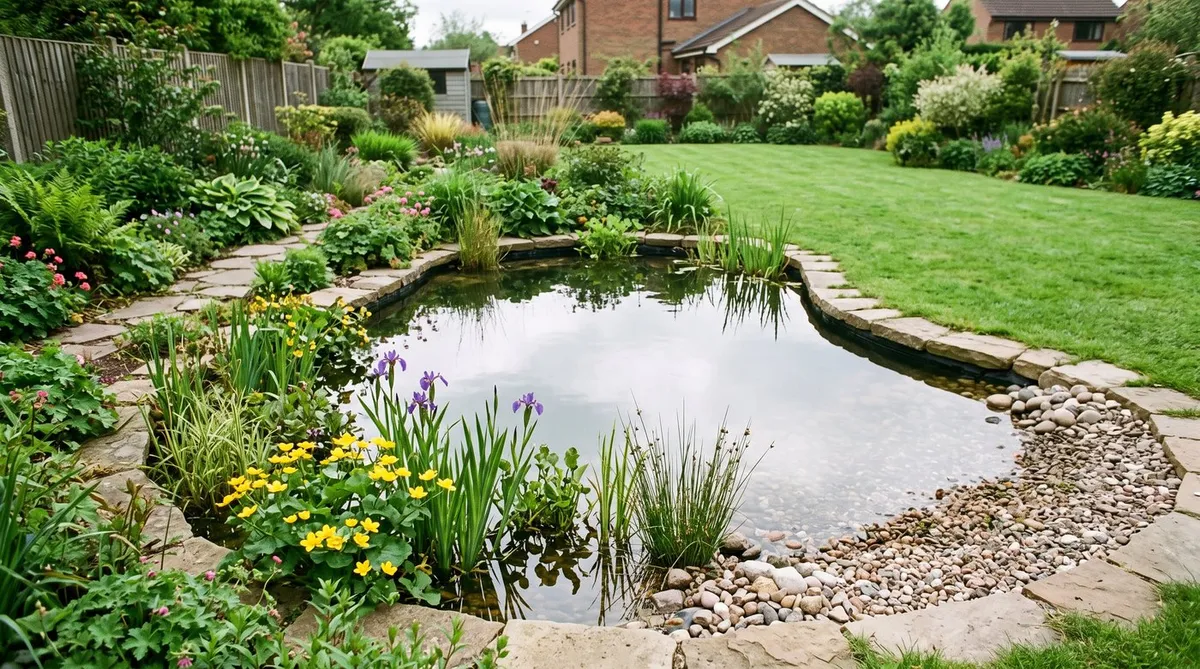
A gentle spring tidy: scoop out floating leaves and cut back dead stems, but leave the bottom alone while frogs are breeding.
Summer pond care (June to August)
Summer is about water levels, blanketweed and keeping enough oxygen in the water.
Topping up the water
Ponds lose a lot of water in hot spells. Top up with rainwater from a water butt where you can. Tap water carries nutrients that feed algae. If you have to use it, add a little at a time and use a dechlorinator if you keep fish.
Removing blanketweed
Blanketweed is the stringy green algae that forms mats in summer. Twist it around a stick or rake, like spaghetti on a fork, and lift it out. Leave it on the edge overnight so trapped creatures can crawl back into the water, then compost it.
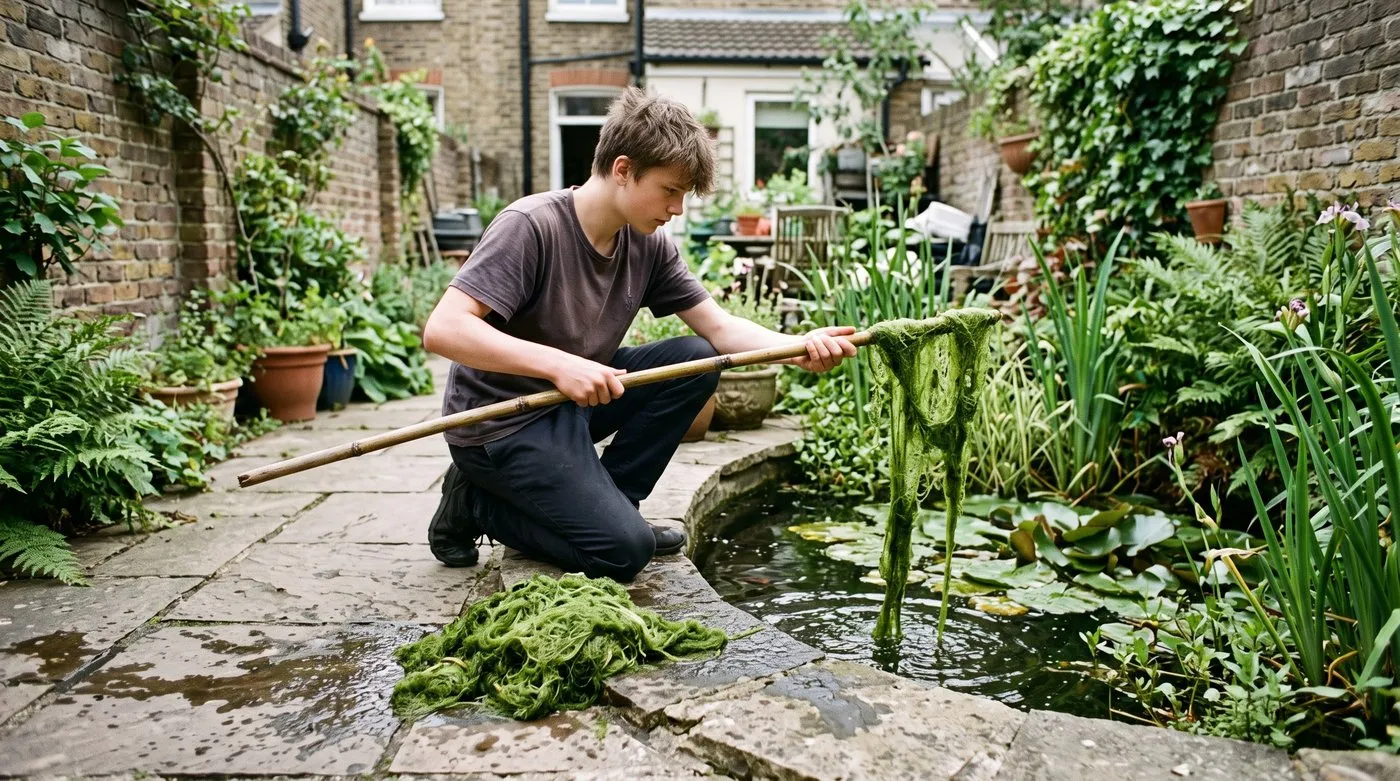
Twist it round a cane like spaghetti, then leave it on the edge overnight so any creatures can crawl home.
The long-term fix is fewer nutrients and more plants. Grow plenty of submerged oxygenators, and let lily pads and floating plants cover about a third to a half of the surface. They shade the water and use up the nutrients algae need. Our guide to the best oxygenating pond plants has good choices.
Oxygen on hot days
Warm water holds less oxygen. If fish gasp at the surface on a hot, still day, run a fountain or pump to stir the surface. Plenty of oxygenating plants help too.
Plant care
Snip off faded flowers and dead leaves. Thin vigorous plants like water mint before they crowd out the rest. Water lilies that have outgrown their baskets flower less, so lift, divide and repot them. Our guide on planting a water lily shows how.

Lily pads covering a good part of the surface keep the water cool and shaded, which helps it stay clear.
Autumn pond care (September to November)
Autumn is about keeping leaves out and doing any bigger tidy while wildlife is quieter.
September: net the pond. Stretch fine netting over the pond before the leaves start falling. Fix it with pegs or bricks so it stays clear of the water. Empty the leaves off it regularly. Leaves that rot on the bottom feed algae the following year.
October: the main clear-out. Autumn is the best time for a bigger tidy. Thin out overgrown plants, scoop some silt and leaves from the bottom and cut back dying foliage. Only take out a bit at a time, and leave everything on the bank overnight so creatures can return. Never drain the whole pond unless you’re repairing it.
Fish feeding. Feed fish less as the water cools, and stop altogether once it’s cold.
November: get ready for winter. Switch off fountains and waterfalls, or raise the pump nearer the surface. Leave some hollow stems of rushes and irises standing, as they give insects somewhere to shelter. Remove the netting once the trees are bare.

Netting the pond in September is one of the most useful jobs of the year. Empty the leaves off it every week or so.
Winter pond care (December to February)
Winter is quiet, but a couple of jobs matter, especially if you have fish.
Stop feeding fish
Fish slow right down in cold water and can’t digest food. Uneaten food rots and fouls the water. Don’t worry, they’ll be fine without it until spring.
Keep a hole in the ice
If the pond freezes over for days, gases from rotting leaves can build up under the ice. A small hole lets them escape.
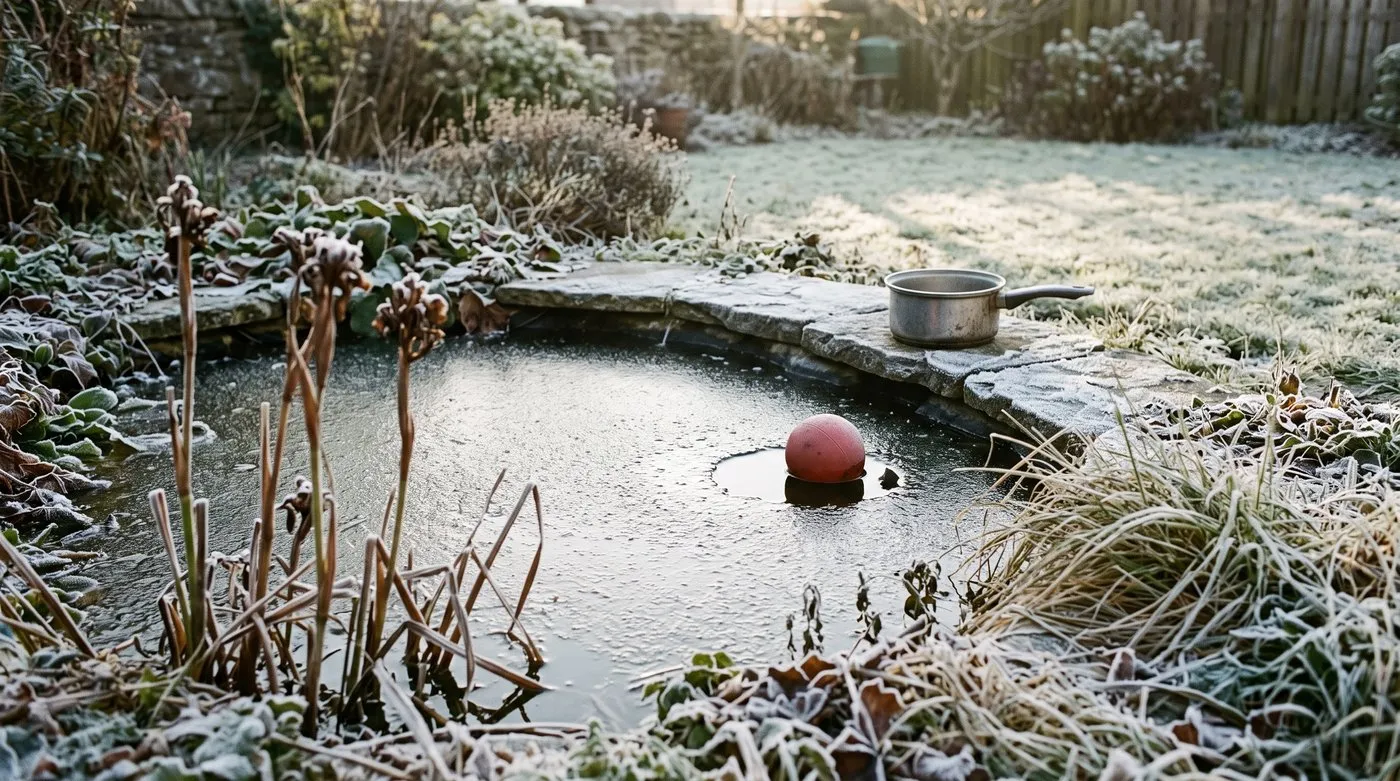
A floating ball keeps a small patch of water open. Lift it out, or melt the ice gently with a pan of hot water.
Never smash the ice. The shock can harm fish and other pond life. Instead:
- Float a ball on the water before a freeze. Lift it out to leave a hole.
- Stand a pan of hot water on the ice to melt a hole gently.
- Use a floating pond heater made for the job, if you keep fish.
Check the edges
Frost and ice can push edging stones loose. Check the water level after dry, cold spells, and make sure no liner is left exposed to the sun.
Pond care calendar
| Month | Main jobs |
|---|---|
| January to February | Keep a hole in the ice. Don’t feed fish |
| March | Light tidy around frogspawn. Cut back dead stems. Restart the pump |
| April | Divide marginals. Add new plants. Start feeding fish lightly |
| May | Expect some green water. Start pulling blanketweed |
| June to August | Top up with rainwater. Remove blanketweed. Deadhead plants |
| September | Net the pond against falling leaves |
| October | Main clear-out. Feed fish less |
| November | Switch off fountains. Remove netting once trees are bare. Stop feeding fish |
| December | Float a ball to keep a hole in ice |
Common pond care mistakes
Draining and scrubbing the pond. It wipes out wildlife and the helpful bacteria that keep water clear. Tidy a bit at a time instead.
Topping up with lots of tap water. It feeds algae. Use rainwater wherever you can.
Overfeeding fish. Leftover food rots and fuels green water. Feed only what they eat in a few minutes.
Cleaning out in spring. That’s when frogs, toads and newts are breeding. Save the big jobs for autumn.
Smashing ice. The shock harms pond life. Melt a hole gently instead.
Other common pond problems
Herons. Netting is the most reliable fix. Deep water and plenty of plants give fish places to hide.
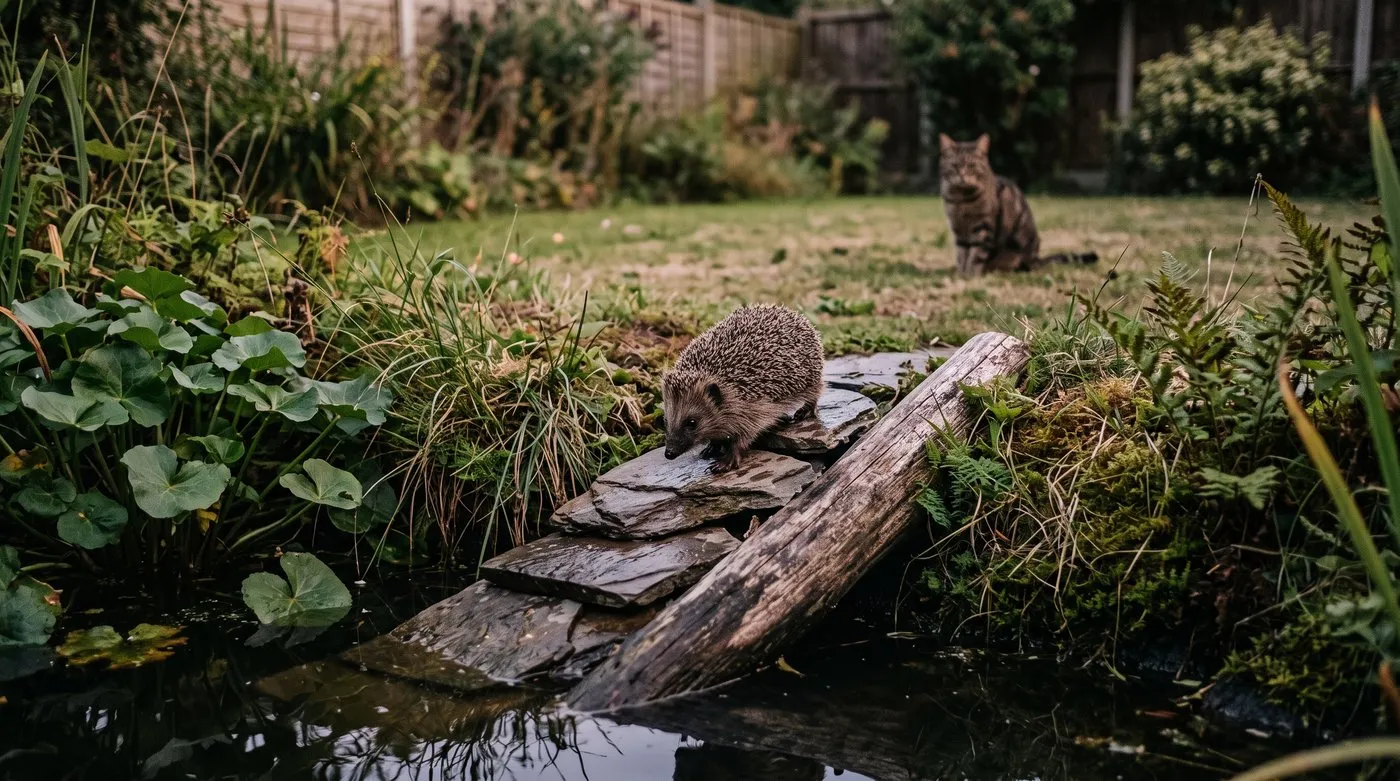
A simple ramp of stones means a hedgehog that tumbles in can always climb back out.
A falling water level. In hot weather it’s usually evaporation. If it keeps dropping, let it fall until it stops. The leak is usually at that level. Patch it with a liner repair kit made for your liner type.
Ponds without an easy way out. Hedgehogs can drown in steep-sided ponds. Add a ramp of stones or a half-sunk log. Our guide to building a wildlife pond shows how to make easy-access edges.
Green water that won’t clear. See our guide on how to clear green pond water for the next steps.
Frequently asked questions
How often should I clean a garden pond?
Little and often, with a bigger tidy only every few years. Remove leaves, dead foliage and excess weed as you see them. Don’t drain and scrub the pond, as that harms wildlife and the helpful bacteria that keep water clear. Do bigger jobs in autumn.
How do I get rid of blanketweed in a pond?
Twist it out by hand with a stick or rake. Leave it on the edge overnight so trapped creatures can crawl back. Add more submerged plants, top up with rainwater and don’t overfeed fish, so there are fewer nutrients for it to feed on.
Should I leave my pond pump on in winter?
Many people switch fountains and waterfalls off in winter. Strong flow mixes cold surface water into the warmer deep water where fish rest. If you run a filter, raise the pump nearer the surface. Wildlife ponds don’t need a pump at all.
Why is my pond water green?
Tiny floating algae, fed by nutrients and sunlight. It’s common in spring before plants get going. Add oxygenating plants, shade about a third of the surface with lily pads and top up with rainwater. It often clears by itself as plants grow.
Do I need to feed pond fish in winter?
No, stop feeding once the water turns cold in late autumn. Fish slow right down and can’t digest food. Uneaten food rots and fouls the water. Start again gradually in spring when they become active.
How do I stop leaves falling into my pond?
Stretch fine pond netting over it before leaf fall starts. Fix the edges with pegs or bricks and keep it clear of the water. Empty leaves off it regularly, then remove it once the trees are bare.
When is the best time to clean out a pond?
Autumn is best, from about October. Fewer animals are breeding, and tadpoles and young newts have left. Leave anything you take out on the bank overnight so creatures can find their way back.
For more ways to fill your pond with life, read our guide to the best pond plants for UK gardens, or explore more on the wildlife hub.
Our team produces practical UK gardening guidance from source research, contributor records and established horticultural practice. Editorial standards are overseen by Matt W.