Key takeaways
- Use loam-based aquatic compost at £6-9 a bag; multipurpose floats, clouds the water and feeds algae
- Lower a new lily in 15cm stages every 2-3 weeks, starting with pads within 20cm of the surface
- Feed one aquatic tablet per 4 litres of compost monthly from April to August for 20-40 blooms
- Lilies sulk in moving water, in less than 6 hours of sun, and when dropped to full depth on day one
- Plant late April to June once water passes 10C; first flowers arrive in 8-12 weeks
What depth does a water lily need?
Why aquatic compost and a lattice basket are non-negotiable
Loam-based aquatic compost costs £6-9 for a 20-litre bag. It is heavy, sticky and low in soluble nutrients, which is exactly what you want. The weight holds the rhizome down, and the lily takes its feed from tablets pushed into the compost rather than from the water.
The basket matters too. A lattice-sided aquatic basket lets water reach the roots and lets feeder roots grow out through the mesh into the pond. A solid bucket stagnates. Size up generously: a 23cm basket holding around 10 litres suits a small or medium lily for 2-3 years before division, while vigorous varieties want a 30cm basket of 15 litres or more. Baskets cost £3-7. Fine-mesh modern baskets need no liner; older wide-mesh types need a hessian square, about £1, to stop compost washing through.
How to plant a water lily step by step
The whole job takes 20 minutes and is best done on a still day in May or June, once the water is above 10C. Cold hands are the only hardship.
- Soak the compost first. Fill the basket two-thirds with aquatic compost and pour pond water through until it is saturated mud. Dry compost erupts in a cloud of silt the moment it goes under.
- Set the rhizome at 45 degrees. Place the cut end of the rhizome against the basket side and angle the growing tip upward so it sits just proud of the compost surface. Burying the tip, called the crown, is the fastest way to rot it.
- Firm, then top with gravel. Press the compost down around the rhizome and spread a 2cm layer of 10mm washed pea gravel over the whole surface, leaving the growing tip clear. The gravel stops compost lifting and stops fish rooting through it.
- Push in feed tablets. One aquatic tablet per 4 litres of compost, pushed 5cm down. A 10-litre basket takes two or three tablets, costing roughly 30-50p each.
- Water the basket again, then lower it slowly. Tilt it slightly as it goes under so trapped air escapes. Lower at an angle over 20-30 seconds, not dropped flat, or the splash dislodges the gravel.
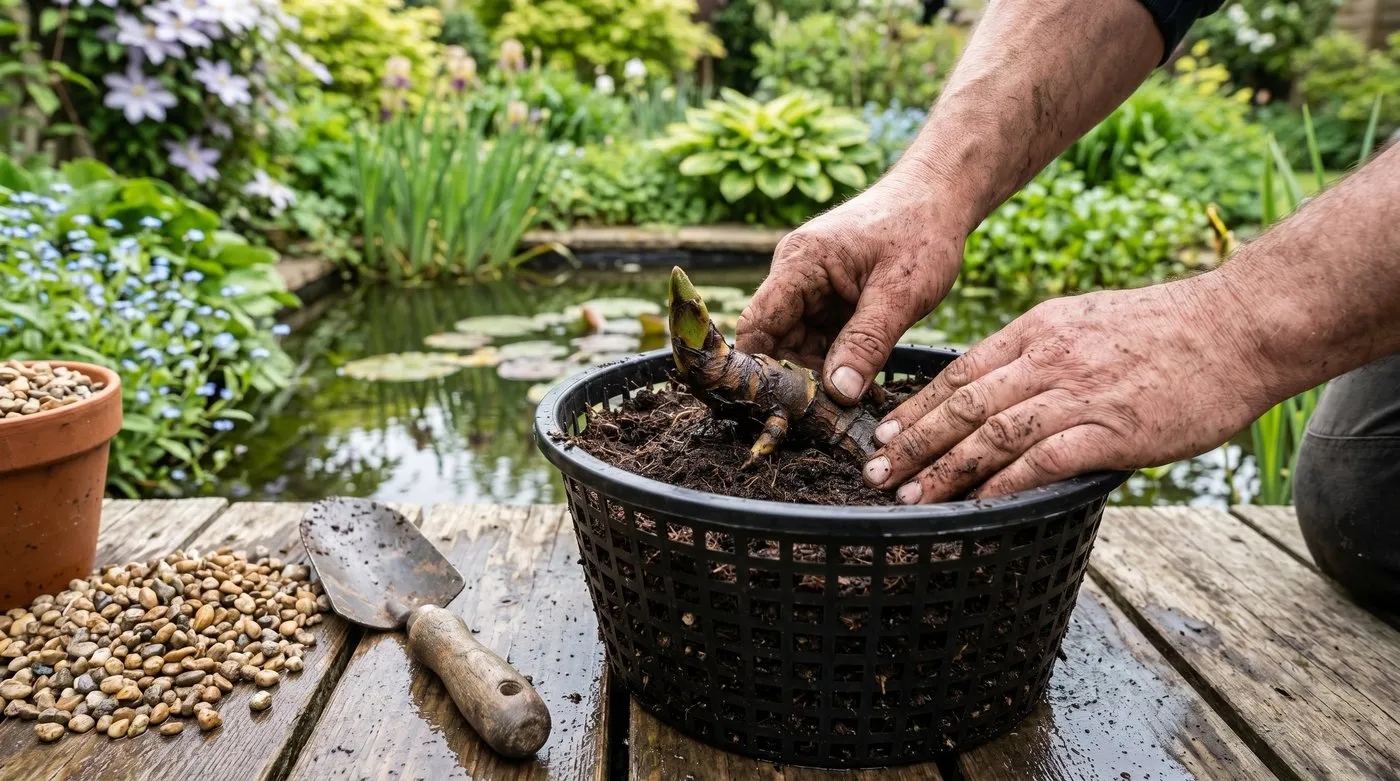 Set the rhizome at 45 degrees with the growing tip just proud of the compost, then top with 2cm of washed gravel.
How deep should a new water lily go at first?
A newly planted lily should start with its pads within 15-20cm of the surface, whatever its final depth. The leaves need light to fuel root growth, and a rhizome with three or four pads cannot reach up through 60cm of water. Stand the basket on a stack of bricks, an upturned crate or a second empty basket to hold it high.
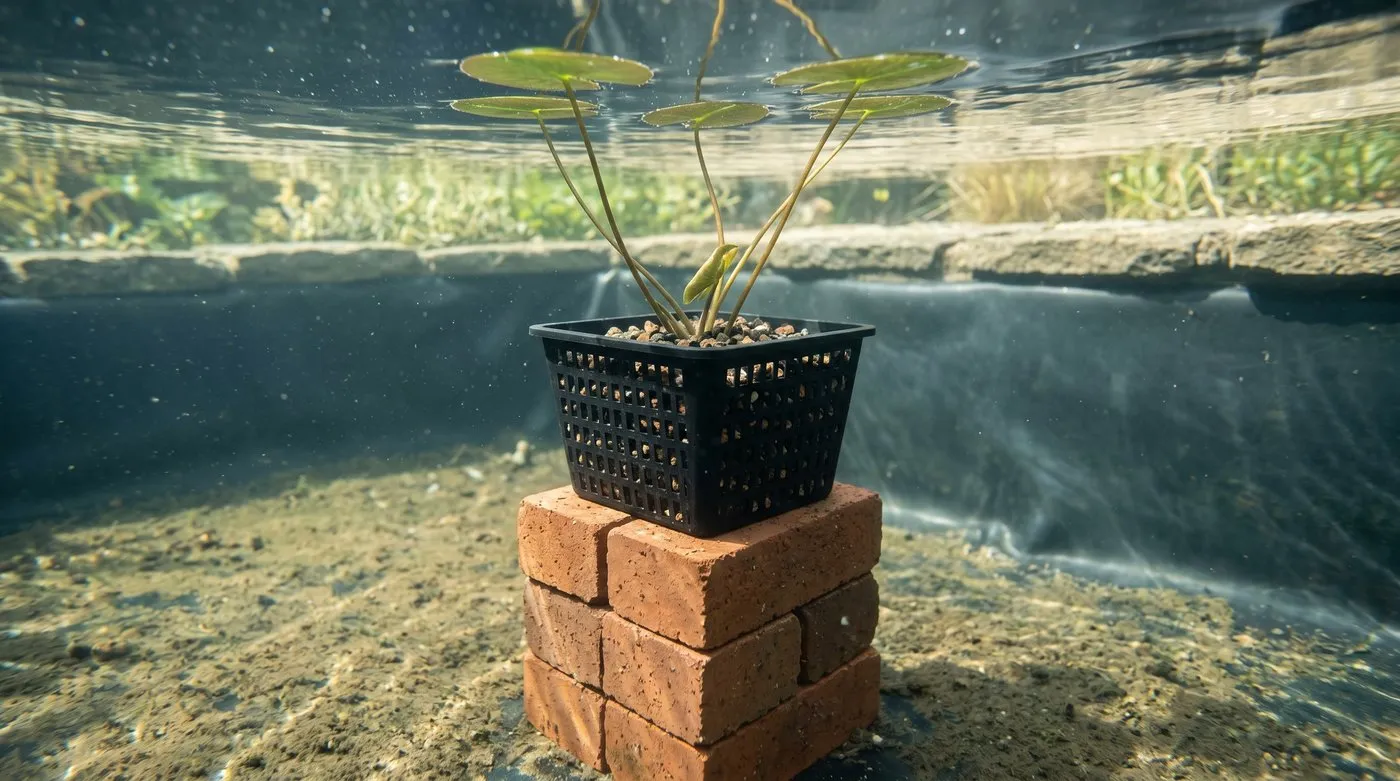 Staged lowering in practice: this basket starts on four bricks, and one layer comes out every 2-3 weeks.
When and how to feed a water lily
Feed monthly from April to August with slow-release aquatic tablets, one per 4 litres of compost. Push each tablet 5cm into the compost with a finger and re-cover the hole with gravel, or the feed disperses into the water instead of the roots. A season’s feeding for one medium lily costs £2-4.
Never tip liquid feed or lawn fertiliser anywhere near a pond. It cannot be targeted, so it feeds the algae first, and in a wildlife pond it can wipe out the invertebrates. If frogs and dragonflies are your priority, our guide to creating a wildlife pond explains why lean water is the goal.
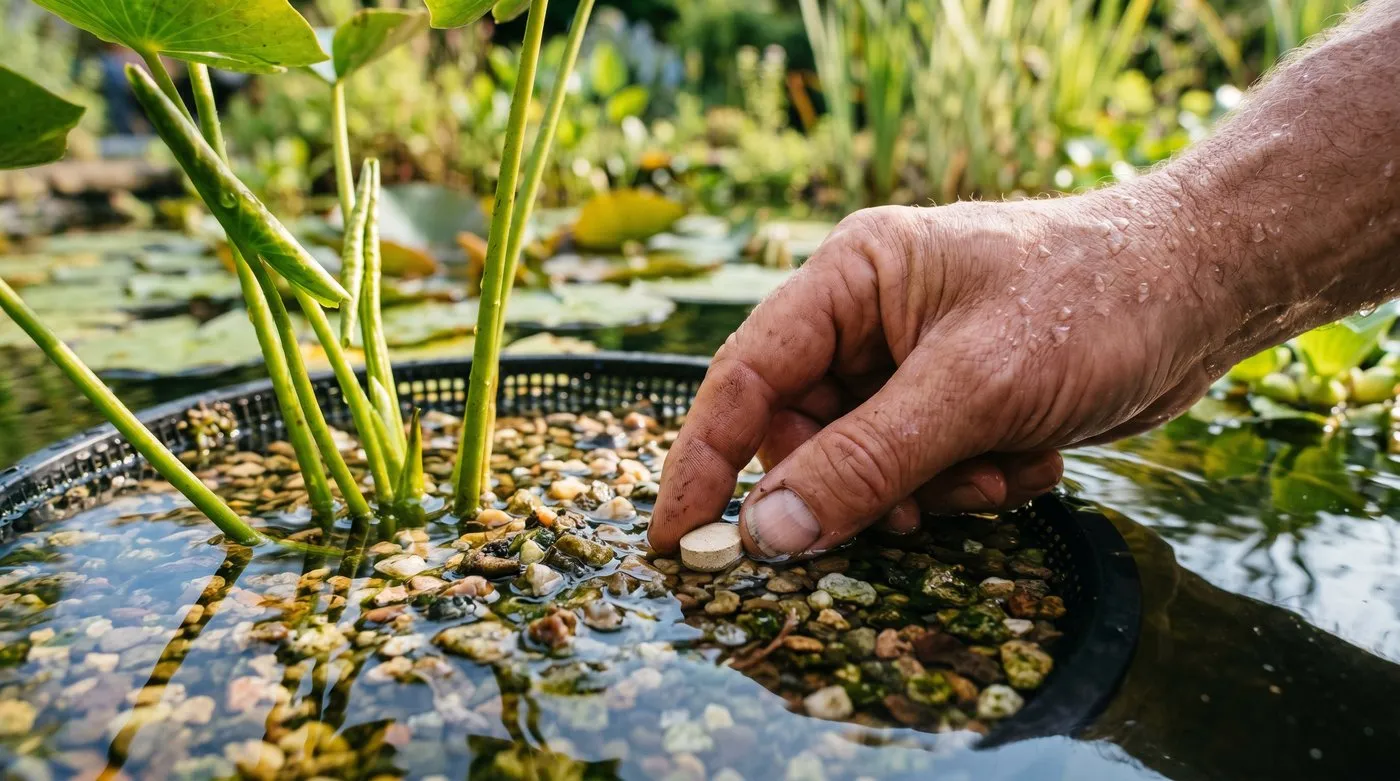 One tablet per 4 litres of compost, pushed 5cm down and re-covered: a season of feeding costs £2-4 per lily.
Why is my water lily not flowering?
A sulking lily is nearly always answering one of five conditions, and all five are fixable.
Moving water. Lilies evolved in still backwaters. A fountain or waterfall splashing the pads keeps them permanently wet on top, and wet pads rot at the edges within 2-3 weeks. Site the lily at least 1.5m from any moving water, or run the fountain only when you are sitting out.
Too much shade. Six hours of direct sun is the working minimum for free flowering. At four hours you get pads and the odd bloom; at two hours you get pads only. An overhanging shrub that has grown since the pond went in is a common silent culprit.
Too deep too soon. Covered above, and the most common cause with new plants. The cure is to raise the basket onto bricks now, whatever the calendar says, and lower it again in stages.
Fish disturbance. Large koi and big goldfish uproot young lilies and eat the soft new shoots. The 2cm gravel topping deters them; for koi over 30cm you may need a 5cm cobble layer instead.
Common water lily planting mistakes
Frequently asked questions
What depth should a water lily be planted at?
Can I use multipurpose compost for a water lily?
No, multipurpose compost fails underwater in three separate ways. It is too light, so it floats out of the basket and clouds the pond. Its peat-free bark fragments rise for weeks. And its soluble nutrients leach straight into the water, feeding algae rather than the lily. Use loam-based aquatic compost at £6-9 a bag.
Why is my water lily not flowering?
The usual causes are too much shade, moving water or excessive depth. Lilies need 6 hours of direct sun and still water, and pads constantly splashed by a fountain rot rather than bloom. A lily dropped to full depth on day one often sulks for a whole season. Congested clumps over 3-4 years old also stop flowering until divided.
When is the best time to plant a water lily in the UK?
Late April to June, once pond water holds above 10C. The lily then has a full growing season to root before winter. Planted in this window, most varieties show first flowers within 8-12 weeks. Avoid autumn planting, because the rhizome sits dormant in cold water with no roots to anchor it.
Do water lilies need feeding?
Yes, monthly from April to August with aquatic feed tablets. Push one tablet per 4 litres of compost about 5cm down, then re-cover with gravel. Aquatic compost holds few nutrients, so an unfed lily produces fewer and smaller blooms. Never use liquid feed, which disperses into the water and turns it green.
Will a water lily grow in a small container pond?
Yes, if you choose a pygmy variety such as ‘Pygmaea Helvola’. It needs only 15-30cm of water over the crown and spreads 30-60cm, so a 45cm-wide tub holds one comfortably. A pygmy costs £15-25 and flowers from June to September. Vigorous varieties swamp a container within one season.
Our team produces practical UK gardening guidance from source research, contributor records and established horticultural practice. Editorial standards are overseen by Matt W.