Key takeaways
- Green water is tiny floating algae, a different problem from stringy blanketweed
- A UV clarifier sized for your pond is the fastest fix for fish ponds
- Cover about half the surface with plants to shade the water
- Oxygenating plants use up the nutrients algae feed on
- Feed fish lightly and net leaves out in autumn to cut nutrients
- Don't empty and refill the pond, as it usually makes things worse
Pea-soup green water is one of the most common pond problems. It’s caused by tiny floating algae that bloom when there’s plenty of food, sun and warmth. The quickest fix for a fish pond is a UV clarifier. The lasting fix is plants, shade and fewer nutrients.
This guide is about cloudy green water. If you have long green threads clogging the pond instead, that’s blanketweed, and our guide to pond algae and blanketweed fixes covers it.
Green water or blanketweed?
Green water is billions of microscopic algae floating in the water. The whole pond looks like pea soup and you can’t see more than a few centimetres down. There’s nothing to pull out.
Blanketweed is long, stringy algae that forms hairy mats on stones, plants and pumps. You can twist it out on a stick.
The difference matters because the fixes differ. A UV clarifier treats water flowing past it, so it clears floating algae well. It does little for blanketweed clinging to surfaces.
Why ponds turn green
Green water needs three things: nutrients, light and warmth. Cut any one and the bloom fades.
The nutrients come from fish waste, uneaten fish food, rotting leaves, dead plants on the bottom and garden fertiliser washing in. Sun and warm water from late spring onwards let the algae multiply fast. That’s why blooms often appear in May and June.
New ponds often go green for a few weeks after filling. There aren’t enough plants yet to use up the nutrients, and any filter is still maturing. Give it time, and add plants, before reaching for fixes.

This is the goal: clear water you can see the bottom through, with plants shading part of the surface.
How to clear green pond water fast
For a fish pond with a pump and filter, a UV clarifier is the quickest fix. Water runs past a UV lamp, which damages the algae so they clump together. The filter then catches the clumps. Most ponds clear within a week or two.
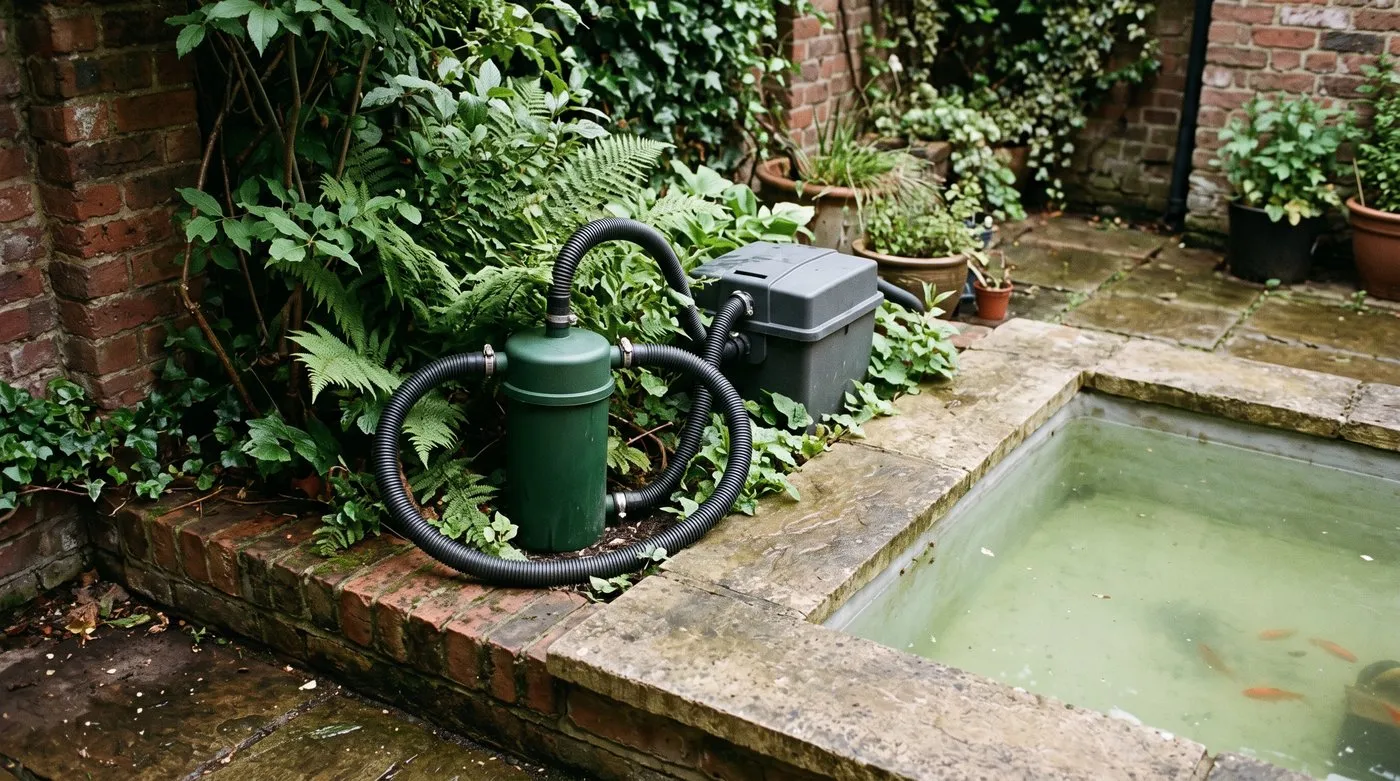
A UV clarifier sits between the pump and the filter. Size it for your pond and change the bulb each spring.
Get these right:
- Size it for your pond. Follow the maker’s guide for your pond volume and fish. Too small a unit only partly clears the water.
- Match the flow. Water needs to pass the lamp slowly enough. Use a pump within the clarifier’s stated flow range.
- Replace the bulb each spring. UV bulbs lose strength long before they stop glowing.
- Switch off and unplug before any cleaning or maintenance.
A UV clarifier is a quick fix, not a cure. Without plants and fewer nutrients, the water goes green again when it’s switched off.
Planting a pond to stay clear
Plants are the long-term answer. They shade the water and use up the nutrients algae need. A well-planted pond rarely stays green for long.
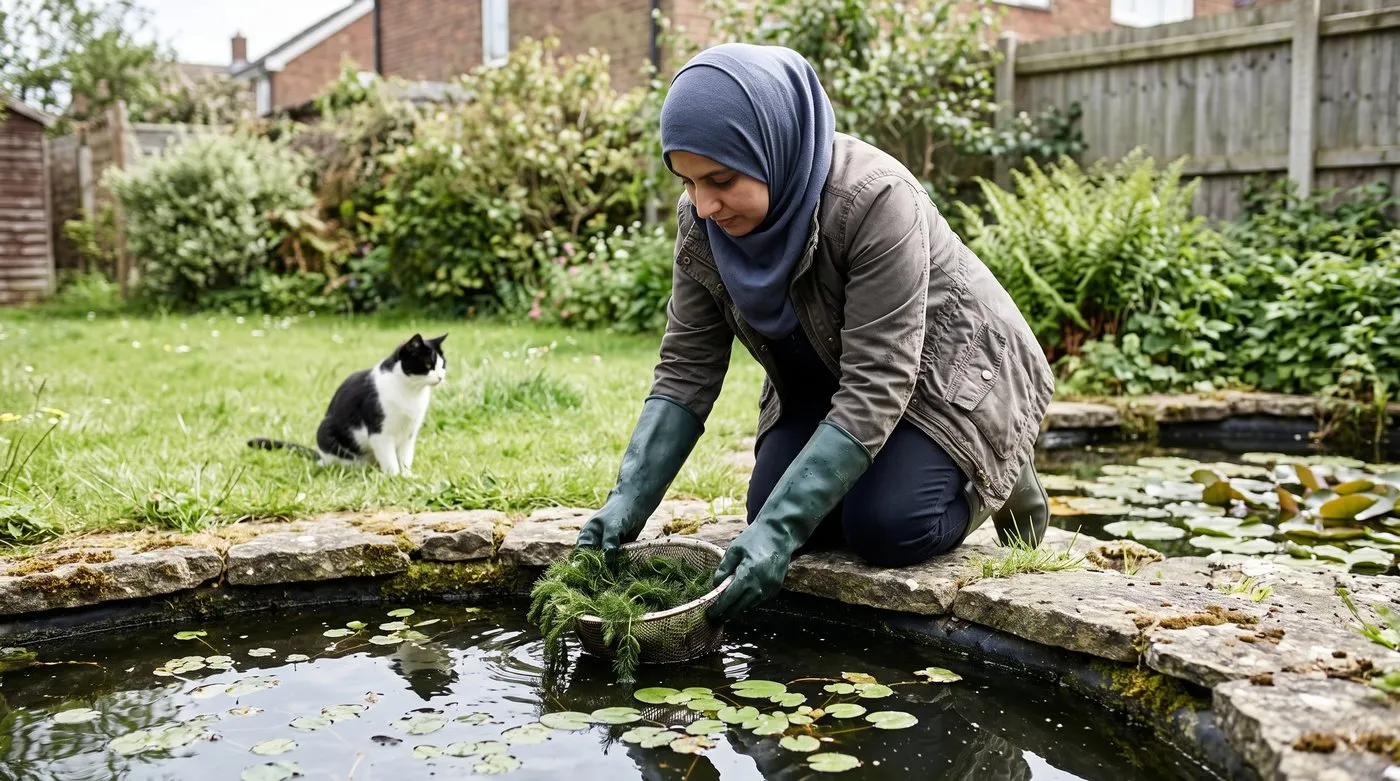
Oxygenators like hornwort soak up the nutrients that green algae feed on, while floating leaves shade the water.
Aim to cover about half the surface by summer, using three types of plant:
- Oxygenators grow underwater and soak up nutrients. Try hornwort, water starwort or spiked water-milfoil. Our guide to the best oxygenating pond plants explains how many you need.
- Floating plants shade the surface fast. Native frogbit and water soldier are good choices.
- Water lilies cast deeper shade with their broad pads. See how to plant a water lily for depth and basket tips.
Avoid buying non-native floating plants such as water fern or water hyacinth. Some are invasive and can’t legally be sold or planted.
Cut the nutrients feeding the algae
This is the free fix most people miss.
- Feed fish less. Give only what they eat in a couple of minutes. Stop feeding in winter when the water is cold.
- Don’t overstock. Too many fish make more waste than plants and filters can handle.
- Clear leaves in autumn. Lay a net over the pond, and scoop out leaves and dead foliage before they sink and rot.
- Keep fertiliser away. Don’t feed lawns or borders right up to the water’s edge.
- Top up with rainwater rather than tap water where you can.

Fewer fish and lighter feeding mean less waste, and less food for green algae.
Does barley straw work on green water?
It can help prevent algae, but slowly. As barley straw rots in the water, it seems to hold back new algae growth. It won’t clear a bloom that’s already there.
Put a loose bag or net of barley straw in the pond in early spring, before the water warms. Place it near the surface, where there’s oxygen and some water movement. Replace it after about six months. The RHS guide to pond algae has more detail.

Barley straw works slowly, over weeks. Add it in early spring, before the water warms up.
Why a full water change makes it worse
Emptying a green pond and refilling it seems obvious, but it usually backfires. Tap water can carry the nutrients algae love, so the bloom often comes back quickly. A big change also upsets the helpful bacteria and can stress fish.
If you must change water, swap only a small amount at a time. Use rainwater, or treat tap water with a pond dechlorinator.
Pond chemicals that kill algae are a last resort. Dead algae rot and use up oxygen, which can harm fish in warm weather. If you do use one, choose a product sold for ponds, follow the label and keep a pump running.
Clear water pond calendar
| Month | What to do |
|---|---|
| January to February | Don’t feed fish. Clean the filter. Order a new UV bulb |
| March | Fit the new UV bulb. Add barley straw |
| April | Start light feeding as fish become active. Divide and replant oxygenators |
| May to June | Watch for green water as it warms. Run UV. Build up plant cover |
| July to August | Keep water moving in heatwaves. Top up with rainwater. Thin oxygenators |
| September | Cut back dying plants before they sink. Feed less |
| October to November | Net the pond. Scoop out leaves. Stop feeding as water cools |
| December | Float a ball in frosty weather to keep a hole open. Never smash the ice |
Common mistakes that keep ponds green
Overfeeding fish. Uneaten food rots and feeds the algae. Little and often, and none in winter.
Emptying and refilling. It resets the pond and the bloom returns. Stick to small top-ups with rainwater.
Too little shade. A sunny pond with bare water will go green every summer. Plants aren’t optional.
Skipping the autumn clear-up. Rotting leaves feed next year’s bloom. Net the pond and scoop them out.
An old UV bulb. It still glows but no longer works. Change it every spring.

Scooping leaves out in autumn stops them rotting on the bottom and feeding next summer’s bloom.
Frequently asked questions
What is the fastest way to clear green pond water?
A UV clarifier sized for your pond is the fastest fix. It makes the algae clump so the filter can catch them, usually clearing the water within a week or two. Plants and lighter feeding then keep it clear.
Is green pond water the same as blanketweed?
No, they are different kinds of algae. Green water is tiny algae floating in the water. Blanketweed is long green threads that tangle on plants and stones. A UV clarifier helps green water but not blanketweed.
Should I do a water change to clear green pond water?
No, avoid emptying and refilling the pond. Tap water can carry nutrients that feed a fresh bloom, and a big change upsets the pond’s balance. Top up with rainwater instead.
Why does a new pond turn green?
New ponds often go green for a few weeks after filling. Plants haven’t grown yet and the filter isn’t mature. It usually clears on its own once plants establish.
Does barley straw clear green pond water?
It can help prevent algae, but it works slowly. Put a loose bag in the water in early spring, before algae get going. It won’t clear an existing bloom quickly.
How many plants do I need to keep pond water clear?
Aim to cover about half the surface with plants by summer. Lily pads and floating plants shade the water. Underwater oxygenators use up the nutrients algae need.
Is green pond water harmful to fish?
Green water rarely harms fish directly. But a heavy bloom can use up oxygen at night in hot weather. Run a pump or fountain in warm spells to keep the water moving.
Can I use a UV clarifier in a wildlife pond?
It’s usually not needed in a wildlife pond. Plants alone tend to clear the water over time. UV also kills some tiny creatures that pond wildlife feeds on.
Find more water garden help on the wildlife hub. For year-round upkeep, read our guide on how to maintain a garden pond, or see how to build a wildlife pond if you’re starting afresh.
Our team produces practical UK gardening guidance from source research, contributor records and established horticultural practice. Editorial standards are overseen by Matt W.