Key takeaways
- Stick to greys, whites, soft black and green, with almost no bright colour
- A multi-stem white-barked birch is the signature tree
- Repeat a short plant list in blocks rather than mixing lots of different plants
- Use untreated larch, Douglas fir or oak and let it weather to silver-grey
- Light the garden with warm white lights for long winter evenings
- The style suits cool, shady and damp UK gardens, especially in the north and west
Scandinavian garden design is a calm, pale style that suits UK gardens beautifully. It comes from Sweden, Denmark and Norway, where light is low and summers are short. The UK shares that soft grey light and those cool springs, so the look feels at home here, especially in the north and west.
Think white birch bark, pale gravel, silvered timber and a short list of grasses and ferns. This guide covers the colours, the plants, the materials and the lighting. If you mostly want fewer plants and more space, our guide to the sparse garden focuses on that approach.
What makes a garden look Scandinavian?
A Scandinavian garden looks calm, pale and uncluttered. Three things create that feeling:
- A tight colour palette: greys, whites, soft black and green, with almost no bright colour.
- A short plant list: a handful of plants repeated in blocks, never a crowded mixed border.
- Pale natural materials: silvered timber, grey gravel and white birch bark.
Function matters too. A bench faces the low evening sun. A path takes the simplest line. Nothing is added just for show. The look is close to the light, airy Nordic interiors many people already love indoors.
The grey light UK gardeners often grumble about is exactly the light this style was made for. Pale surfaces and white flowers glow on a dull day.
The Scandinavian colour palette
Keep everything muted, pale and light-reflecting. Get the palette right and a garden looks Nordic even on a small budget.
Hard surfaces stay grey or off-white: grey granite gravel, silvered larch, off-white render and soft black metal. Planting stays green, silver and white, with the odd rust or plum tone for depth. A block of Astrantia or white Geranium ‘Kashmir White’ lifts the scheme without breaking the calm.
You give up the bright summer colour of a cottage border. In return you get a garden that looks good all year and takes less work.

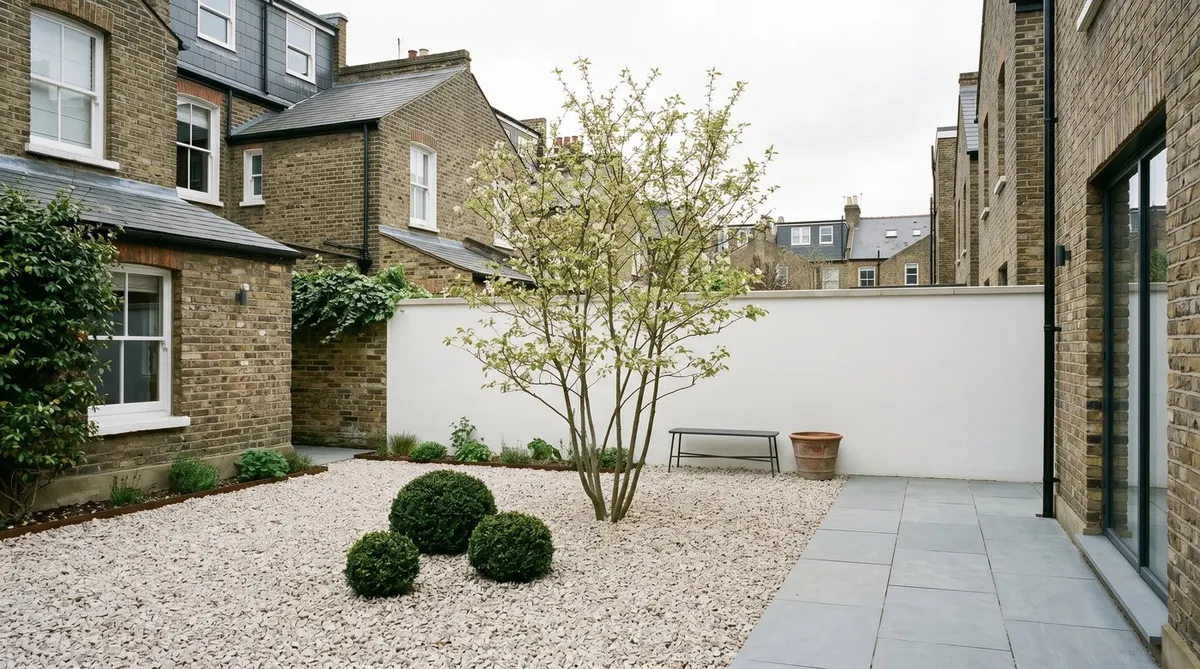
Pale gravel and a white wall bounce light into a shady city courtyard. It looks calm rather than gloomy.
Best plants for a Scandinavian garden in the UK
Trees: birch leads the way
Birch is the signature tree. For the whitest bark, choose Betula utilis var. jacquemontii, ideally as a multi-stem for that airy, layered look. Our native silver birch, Betula pendula, is cheaper and lovely too, though its bark is greyer. Our guide to growing silver birch covers planting and care.
| Plant | Rough height | Role in the scheme |
|---|---|---|
| Betula utilis var. jacquemontii | 8-12m | White bark, the main feature |
| Betula pendula | 15m+ | Native birch with greyer bark |
| Amelanchier lamarckii | 4-6m | White spring blossom, autumn colour |
| Pinus mugo ‘Mops’ | Around 1m | Low evergreen mound for winter shape |
Grasses and ferns: the movement layer
Grasses give the garden movement and winter shape. Hakonechloa macra forms soft, flowing mounds and loves cool, damp part-shade. Deschampsia cespitosa ‘Goldtau’ and Molinia ‘Transparent’ give taller, see-through plumes from summer into winter. The ornamental grasses guide covers spacing and when to cut them back.
For ferns, Polystichum setiferum (soft shield fern) and Dryopteris affinis hold their shape through mild winters. Our guide to hardy UK ferns has more to choose from.

A birch, one grass and one fern, repeated. That really is the whole recipe.
Evergreens and pale flowers
Add a few clipped evergreen domes, such as Ilex crenata, for winter shape. Then choose two or three pale flowers, such as astrantia, white hardy geraniums and silver-leaved Stachys byzantina (lamb’s ears), and plant each in a generous block.

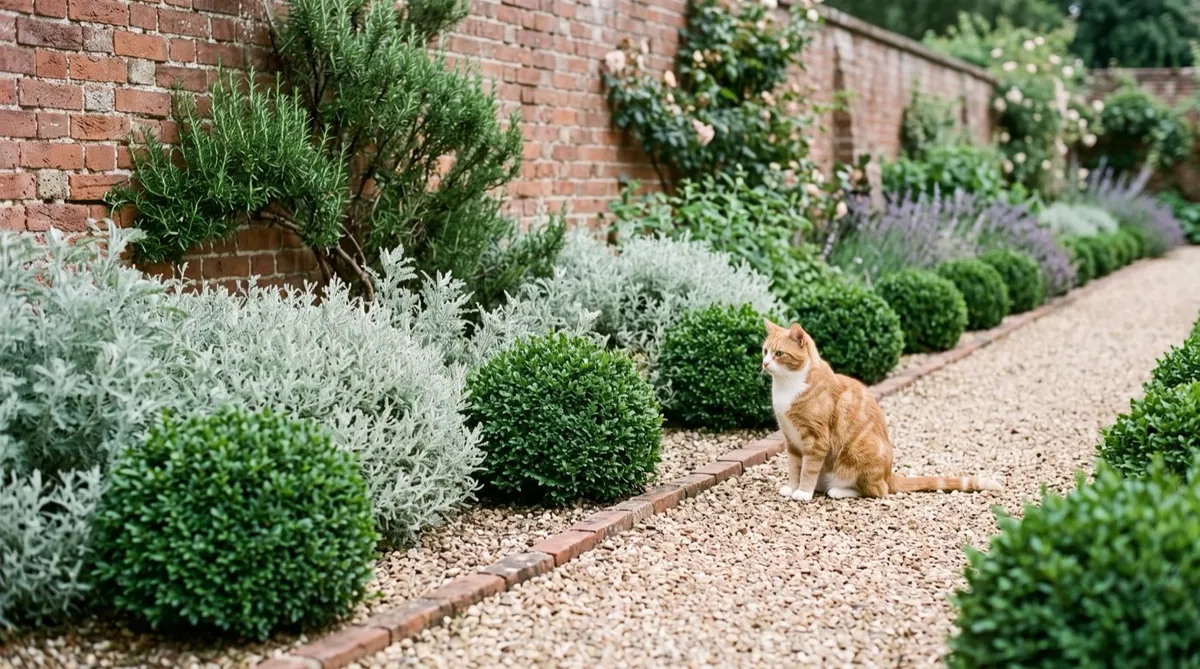
White, silver and green, planted in blocks. Each plant repeats along the border instead of appearing once.
Gravel, timber and metal: the hard materials
Hard materials set the tone as much as the plants. Keep everything pale and matt.
Gravel: Choose angular grey granite chippings, about 8-12mm, laid around 5cm deep over a weed membrane. Rounded buff pea gravel rolls underfoot and its warm colour fights the palette. Our guide on how to create a gravel garden explains the groundwork.
Timber: Let it silver, not darken. Untreated larch and Douglas fir weather to a soft grey within a couple of years. Oak silvers too and lasts longer, but costs more. Avoid orange treated softwood and dark brown stains. For an instant grey, use a translucent grey wood stain. Charred timber also suits the look.
Metal: Choose soft black finishes. Bright galvanised steel and shiny stainless fight the muted look.
Gardener’s tip: Edge gravel with a steel or timber strip that sits a little proud of the surface. Without it, gravel creeps onto lawns and beds and you lose the crisp lines.

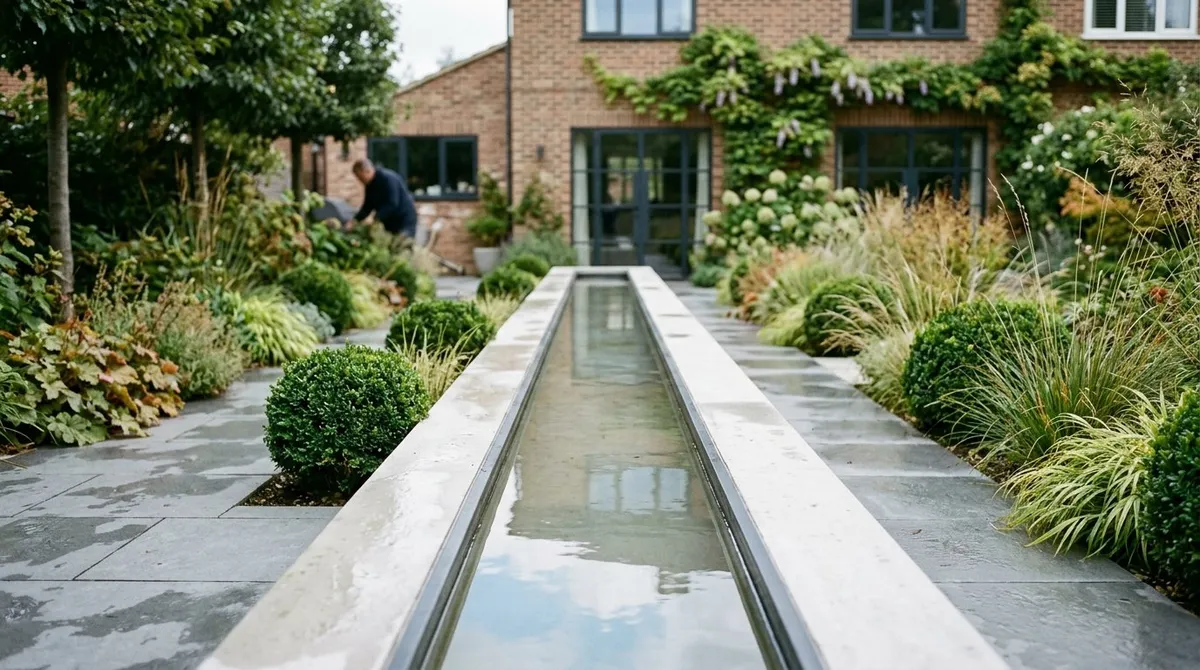
Untreated timber fades to a soft silver-grey. Put the bench where it catches the evening sun.
How to plan a small plot the Scandinavian way
Small gardens suit this style well, because restraint looks deliberate rather than bare. Plan in layers.
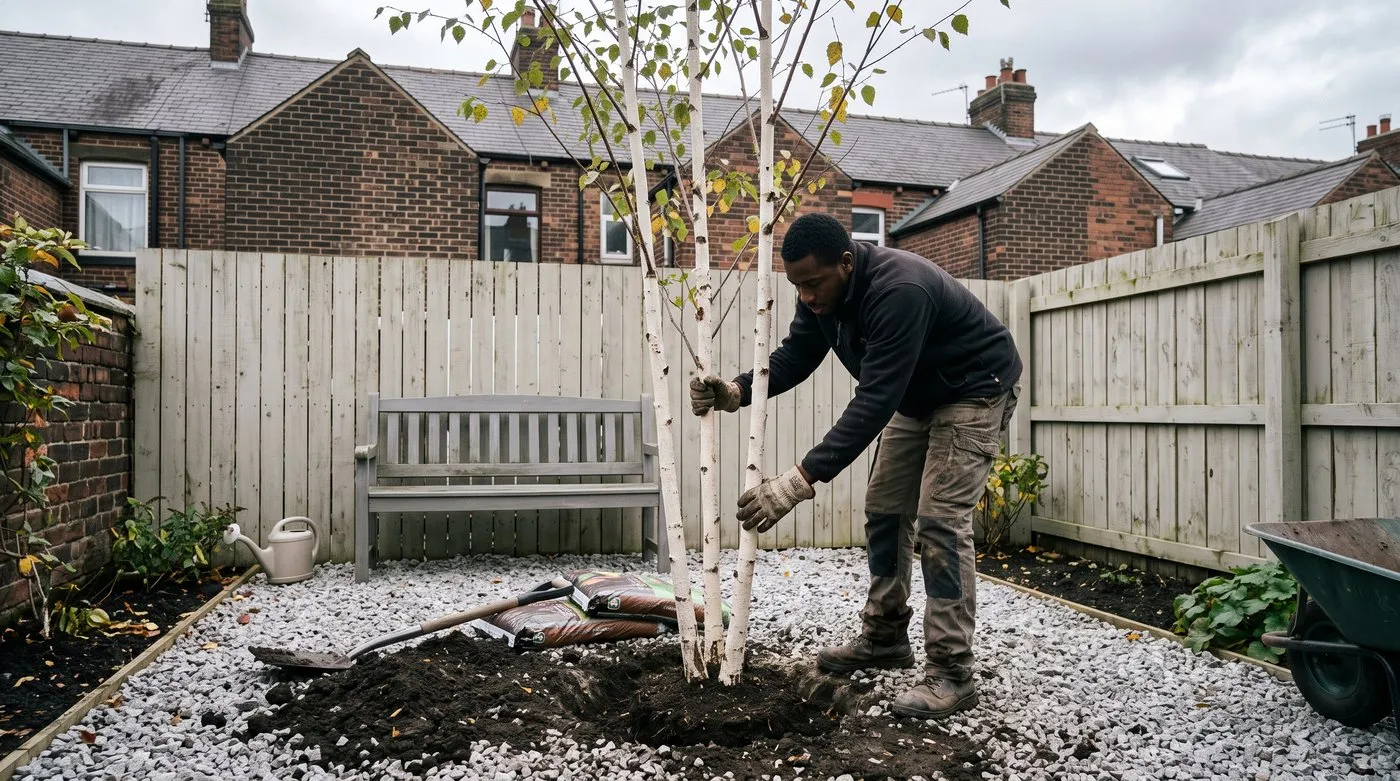
One birch, placed off-centre, gives a small plot its shape. Everything else is planned around it.
- Start with the floor. Decide where gravel, paving or decking go, and where planting goes. A good share of hard surface is part of the look and keeps work down.
- Place one tree. Put a single multi-stem birch off-centre, never dead centre, so it anchors the space.
- Add a seat. Face it towards the evening light.
- Fill in with blocks. Plant your grasses, ferns and pale flowers in repeated groups.
Then stop. Resisting the urge to add more is the hardest part. For more on keeping work to a minimum, see our low-maintenance garden guide.
Lighting a Scandinavian garden for winter evenings
Lighting matters a lot in this style, because UK winter evenings are long and dark. Nordic gardens answer with warm, low, layered light.
Choose warm white bulbs, around 2,700-3,000K. Cold blue-white light kills the cosy feel. Use three kinds of light: low path lights, one uplight on the birch to make the white bark glow, and a soft wash on a wall or screen.
Don’t overdo it. A few well-placed lights are plenty for a small garden, and the dark between them is part of the charm. Our garden lighting ideas guide covers fittings and placement.

One warm uplight on white bark carries the garden through a long winter evening.
Suiting the style to your soil and aspect
The style copes with most UK soils. Birch grows on a wide range of soils, including clay. On wet clay, plant it on a slight mound so the base of the trunk stays drier.
Hakonechloa and ferns like moist soil and part shade, which makes this a great choice for north-facing and shady gardens that struggle with sun-lovers. On dry, sandy plots in the south and east, swap Hakonechloa for Deschampsia and Stipa tenuissima, which cope better with drought.
Common Scandinavian garden mistakes
- Too many different plants. This is the big one. Pick three structural plants and three ground plants and repeat them across the plot.
- Bright colour. One hot red or orange breaks the calm. If a plant shouts, move it elsewhere.
- Orange or dark timber. Treated softwood and brown stains look like a suburban fence. Let the wood silver.
- Warm buff gravel. Rounded buff gravel fights the palette. Use angular grey chippings.
- Cold white lighting. Blue-white light feels harsh. Stick to warm white and fewer lights.
Frequently asked questions
What is Scandinavian garden design?
It is a calm, pale and simple style based on Nordic gardens. It uses a short plant list, natural materials and very little bright colour. Birch, grasses, pale gravel and weathered timber set the look.
Does Scandinavian garden design work in the UK climate?
Yes, the cool, damp UK climate suits it well. Birch, Hakonechloa, ferns and grasses grow happily in cool, moist, part-shaded spots. Northern and western gardens suit it best. In hot, dry gardens, swap in tougher grasses such as Stipa.
What plants are used in a Scandinavian garden?
Birch, ornamental grasses, ferns and a few evergreens are the core. A white-barked birch such as Betula utilis var. jacquemontii is the signature tree. Hakonechloa, Deschampsia and Molinia add movement. White flowers such as astrantia and hardy geraniums are repeated in blocks.
How much does a Scandinavian garden cost in the UK?
It depends on the size of the plot and how much you hire in. The biggest costs are usually gravel, timber decking or seating, a multi-stem birch and lighting. Using fewer plants often makes it cheaper than a packed border.
What colours are used in Scandinavian garden design?
Greys, whites, pale greens and soft black, with very little bright colour. Hard surfaces stay pale, such as grey stone and silvered timber. Planting is mostly green and white, with the odd rust or plum tone. Leave out strong reds, oranges and hot pinks.
What timber suits a Scandinavian garden in the UK?
Untreated larch, Douglas fir or oak that weathers to silver-grey suits it best. Larch and Douglas fir turn soft grey within a couple of years. Oak lasts longer but costs more. For an instant grey look, use a translucent grey wood stain.
How do you keep a Scandinavian garden low maintenance?
Use a gravel mulch and a short, repeated plant list. Gravel over a membrane cuts down weeding. Most grasses need just one cut a year, in late winter. Birch needs very little care once settled.
Like the calm of Nordic style? Read our guide to hygge garden ideas to make your plot feel cosy too, or browse more garden design ideas.
Our team produces practical UK gardening guidance from source research, contributor records and established horticultural practice. Editorial standards are overseen by Matt W.