Key takeaways
- A sparse 29m² courtyard needs 25-30 plants; a dense scheme of the same size swallows 130 or more
- Weekly summer upkeep fell from 3 hours 20 minutes to 35 minutes after our March 2025 redesign
- Plant costs roughly halve: £706 for 28 specimen-led plants against £1,680 for dense planting
- Plant 30-40% of the ground; the rest is gravel, stone and deliberate empty space
- One multi-stem tree at £250-350 anchors a courtyard better than ten £30 shrubs
- 14mm angular gravel costs £75-90 a bulk bag and covers about 12m² at 40mm deep
What is a sparse garden?
A sparse garden plants 30-40% of the ground and treats the remaining space as a finished surface. Compare that with a traditional cottage border, where plants cover 80-90% of the soil and touch at the shoulders. In a sparse scheme the gaps are gravel, stone, smooth paving or raked sand, and they are doing a job: framing each plant so it reads as a deliberate object rather than one voice in a crowd.
Sparse does not mean austere. The plants that remain are bigger, better grown and placed with intent. The budget that bought 134 small pots now buys one £285 tree and 27 supporting players.
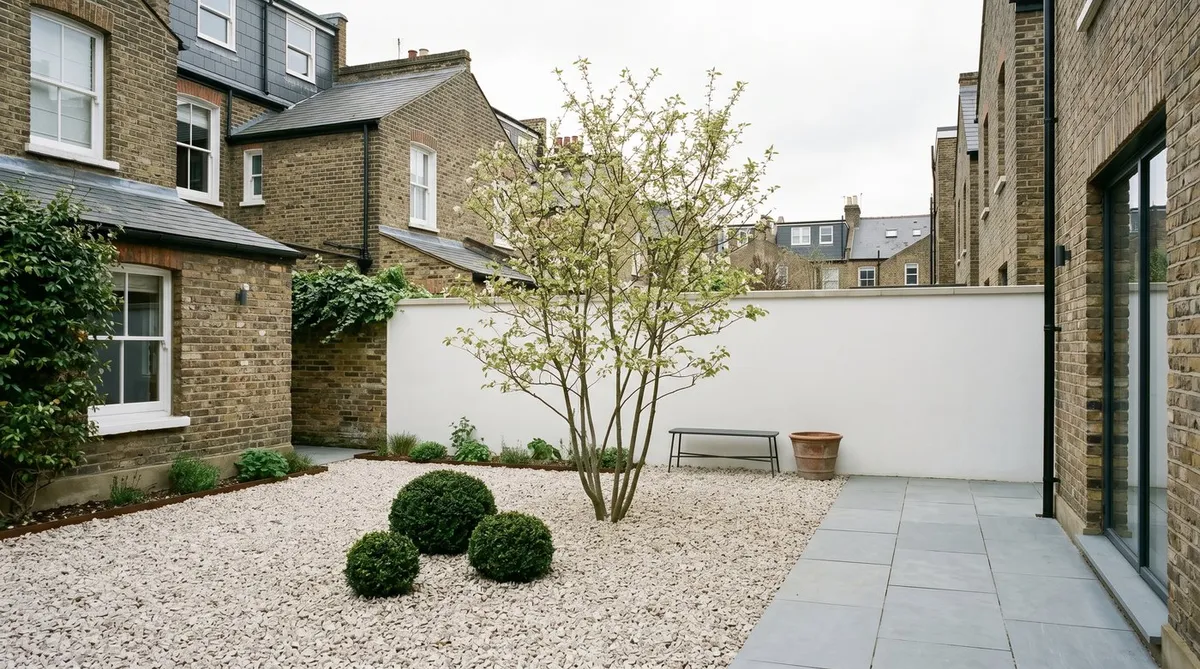
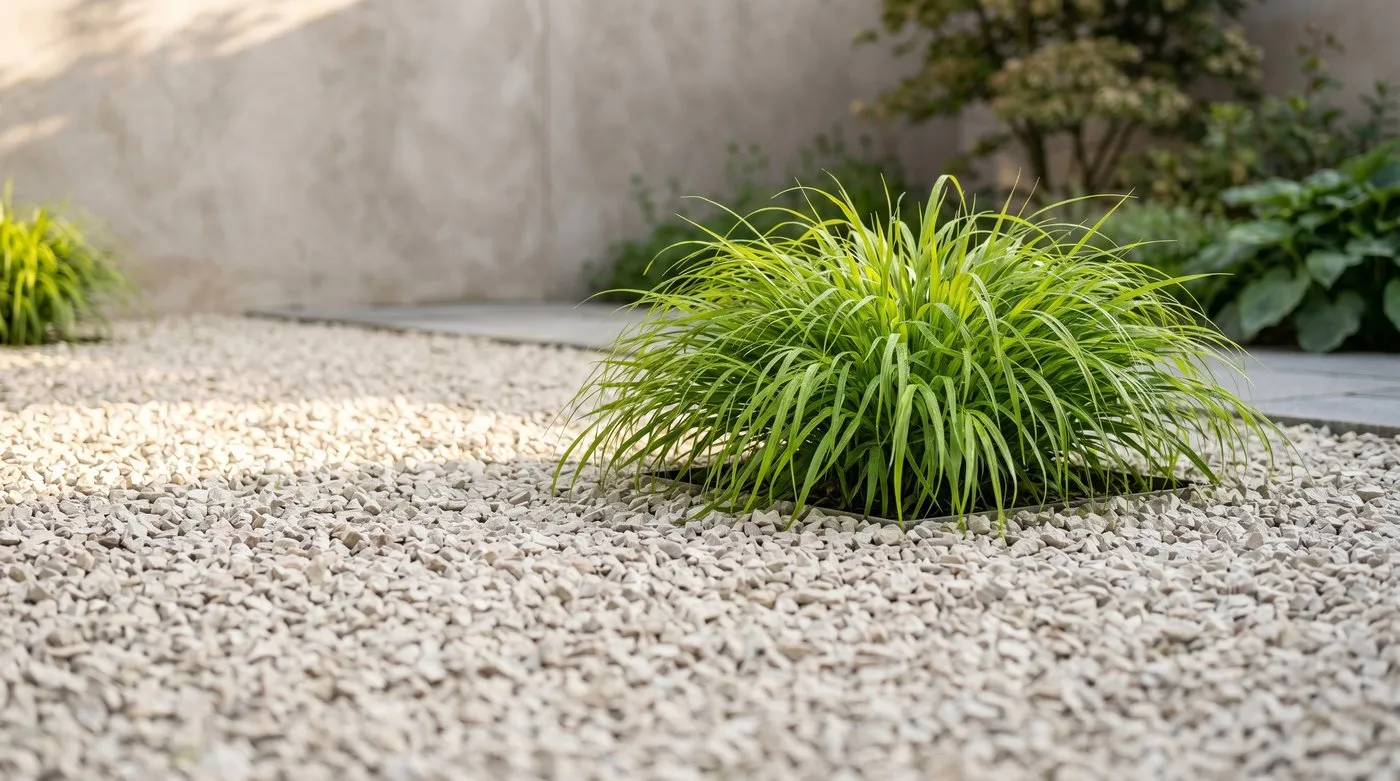 The ground plane does the framing: 14mm angular gravel at 40mm deep, with each Hakonechloa clump given a clear metre of space.
Why are gardeners planting less in 2026?
Three pressures pushed the sparse look from design studios into ordinary plots. The first is time. Surveys put average UK gardening time at 2-4 hours a week, and a densely planted 30m² garden in June wants all of it. Our dense courtyard demanded 3 hours 20 minutes weekly for deadheading, staking, tying-in and edging. The sparse version takes 35 minutes. That gap, roughly 110 hours a year against 26, is the single biggest reason clients give.
The third is cost. A 9cm perennial that sold for £4.50 in 2020 now lists at £7-9. Filling a border at 7-9 plants per square metre has become a £60-80 per metre habit. Buying 28 plants instead of 134 changes the arithmetic completely, even when one of them costs £285. The wider 2026 garden design trends point the same way: fewer inputs, less turnover, more permanence.
The nine-plant palette that carried a whole courtyard
Nine varieties furnished our 29m² courtyard for £706, and every one earns its place across at least two seasons. That rule did the editing for us. A plant with one good fortnight, however lovely, did not make the list. Here is the full planting order from March 2025.
| Plant | Quantity | Size bought | Cost | What it does |
|---|---|---|---|---|
| Amelanchier lamarckii, multi-stem | 1 | 2.5m | £285 | Blossom in April, berries in June, fire-red leaves in October |
| Pinus mugo ‘Mops’ | 2 | 5L | £84 | Evergreen mounds, zero pruning, winter anchor |
| Ilex crenata domes | 3 | 30cm balls | £108 | Clipped structure, box look without box blight |
| Hakonechloa macra | 8 | 2L | £88 | Flowing grass skirt for the tree, gold from September |
| Stipa gigantea | 2 | 3L | £32 | 1.8m see-through flower spikes, June to February |
| Dryopteris erythrosora | 3 | 2L | £36 | Copper fern for the shaded corner, semi-evergreen |
| Liriope muscari | 4 | 2L | £36 | Violet spikes in September, evergreen edging |
| Erigeron karvinskianus | 3 | 9cm | £21 | Self-seeds softly into gravel, flowers May to November |
| Verbena bonariensis | 2 | 2L | £16 | Height and bees, July to October |
The pattern matters more than the names. One tree as the anchor. Two evergreens for winter bones. Two grasses for movement, chosen from our ornamental grasses rankings. Then four supporting perennials, no more. Most of the palette shrugs off dry spells too, and the same logic applies if you swap in other drought-tolerant plants for a hotter, south-facing plot.
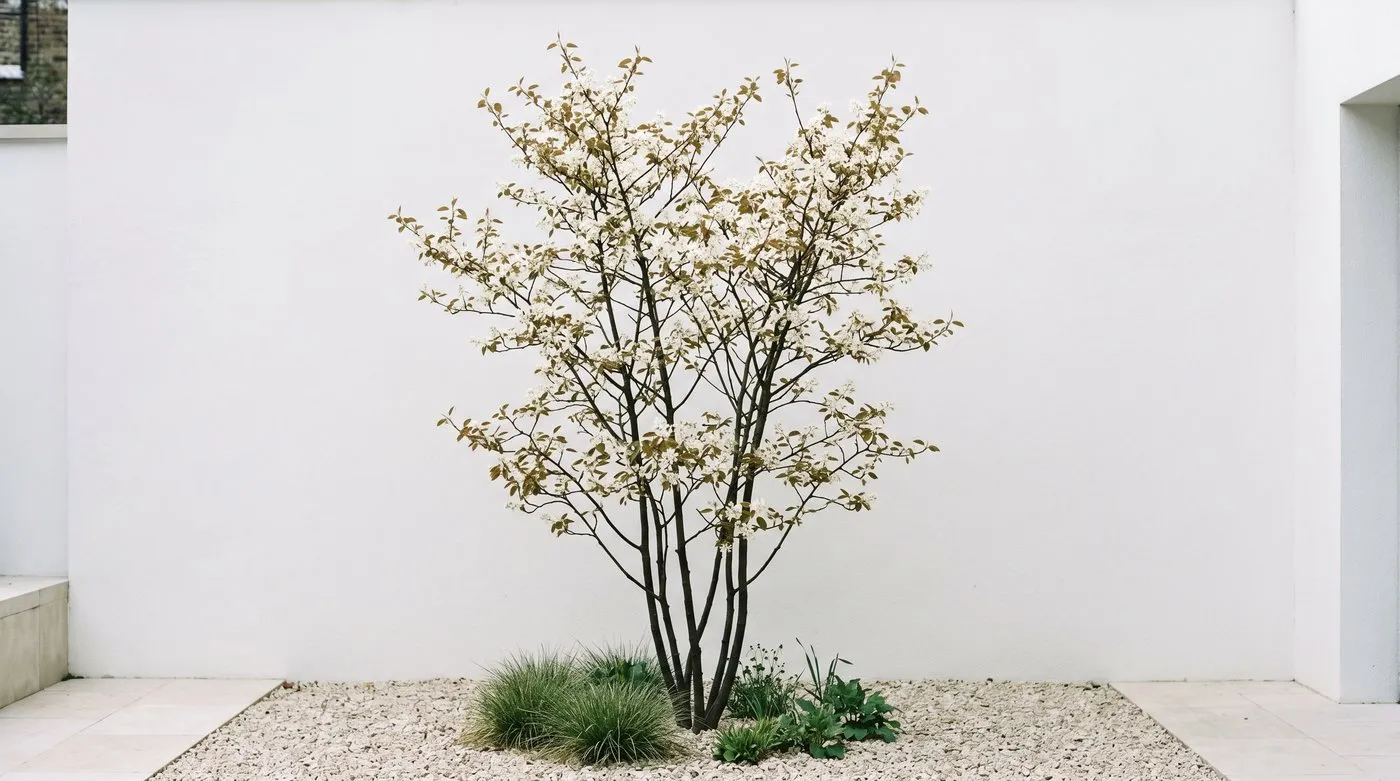 One £285 multi-stem amelanchier anchors the whole 29m² plot. It flowered three weeks after planting in March 2025.
How much does a sparse garden cost compared with dense planting?
A sparse garden costs roughly half as much to plant and a quarter as much to run. The table below sets our 2025 receipts against the dense scheme the courtyard carried before, costed at 2025 prices for a fair comparison.
| Cost item | Dense planting, 29m² | Sparse garden, same plot |
|---|---|---|
| Plants | 134 plants, 41 varieties: £1,680 | 28 plants, 9 varieties: £706 |
| Ground finish | Bark mulch: £96 every year | Gravel + membrane: £206, once |
| Year-one replacements | 10-15% losses: £170-250 | 2 plants lost: £22 |
| Weekly upkeep, June | 3 hours 20 minutes | 35 minutes |
| Upkeep over a year | Roughly 110 hours | Roughly 26 hours |
| Watering, first summer | 2-3 sessions a week | 8 sessions total |
Ground textures: gravel, stone and the space between
Large-format paving forms the seating area. Four 600mm x 600mm porcelain slabs read as one calm plane, where a patchwork of small units would fight the planting for attention.
A 150mm band of black basalt setts separates gravel from paving. Edges are where sparse gardens are won. A crisp line between two textures looks designed; a blurred one looks abandoned.
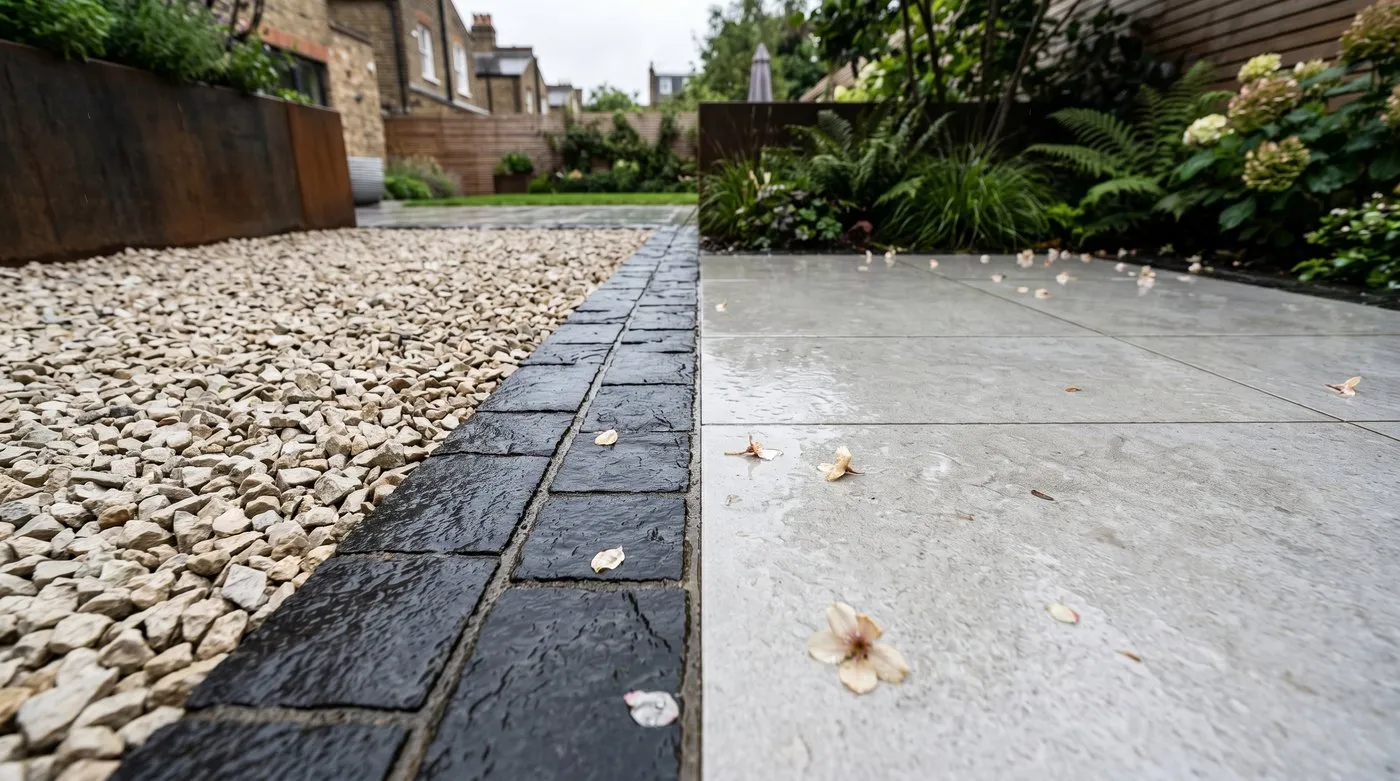 Three surfaces, one rule: every junction is a straight, crisp line. The basalt sett band cost £48 for 4 linear metres.
How do you stop a sparse garden looking empty?
Scale and repetition stop restraint reading as neglect. The single most effective move is one oversized anchor. Our 2.5m amelanchier cost £285, more than a third of the plant budget, and it was the right call. Ten £30 shrubs would have filled more ground and said far less. Visitors mention the tree first, every time.
Repetition does the rest. Eight Hakonechloa in a single sweep look intentional; one each of eight different grasses looks like a clearance-sale trolley. We repeated every variety except the tree, in groups of two, three, four or eight. Odd numbers are not sacred. Rhythm is.
Lighting earns its keep here too. Two £35 spike spots grazing the amelanchier bark double the garden’s hours of use from October onward, and shadows on a plain rendered wall are the cheapest artwork going.
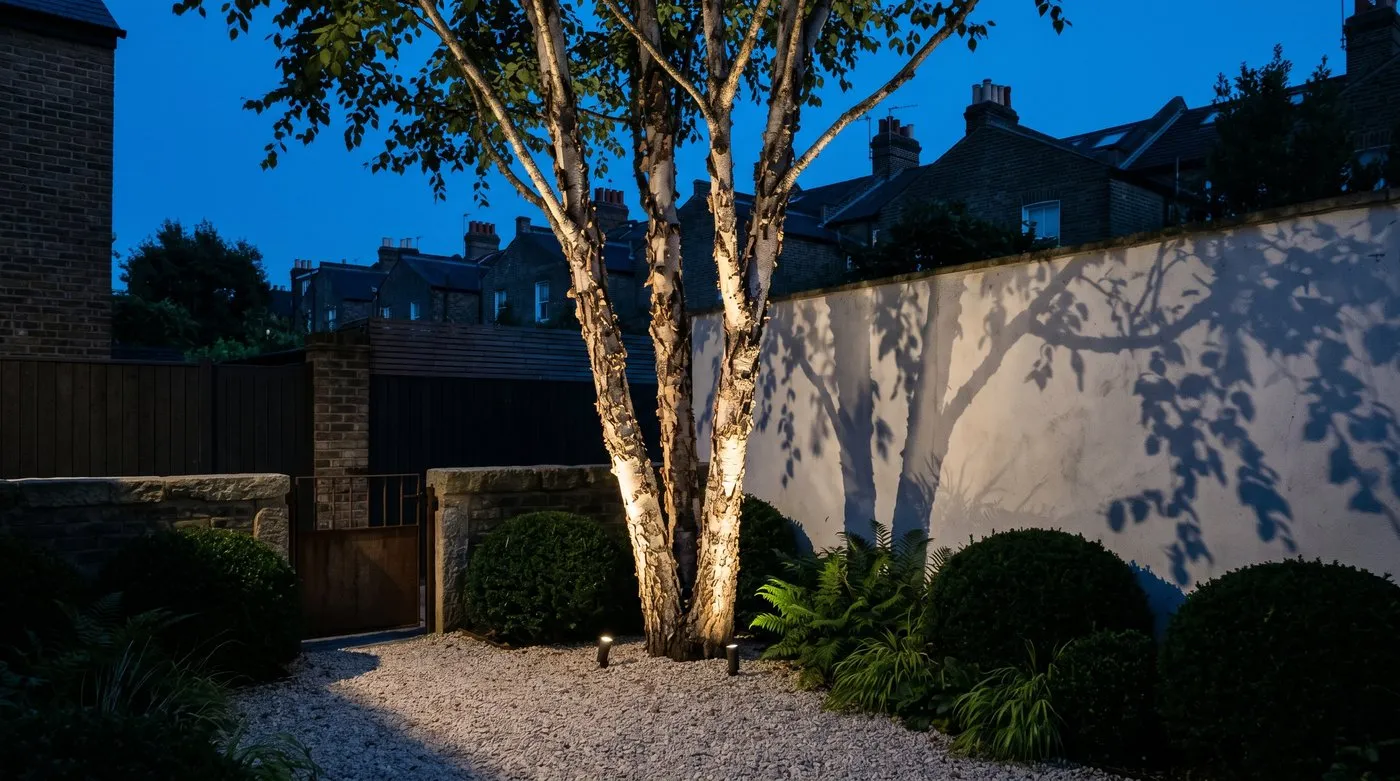 Two £35 spike lights at dusk: the empty wall becomes the display surface, which is the negative-space idea in one image.
Common sparse garden mistakes
- Buying many small plants instead of few large ones. Twenty £8 perennials scattered across gravel look lost for two years. Spend the same £160 on one 10L specimen grass and three big evergreens. In a sparse scheme, plant size is the design.
- Laying gravel straight onto soil. Without a permeable membrane, annual weeds colonise the whole surface within one season. Membrane costs £35 for 30m² and saves an hour of weeding a week by midsummer. Cut crosses through it for planting pockets.
- Spacing plants in an even grid. Equal gaps everywhere read as a car park. Cluster the planting into two or three groups, let the groups breathe, and leave at least one run of 2m completely empty.
- Ignoring winter from the start. If under half your palette holds evergreen leaves or standing stems, the plot collapses to bare stone in November. Audit the palette by month on paper before you order anything.
- Going sparse-ish. Cutting 40 varieties to 25 delivers the worst of both styles: still hours of upkeep, no calm. Be ruthless. Nine varieties furnished our 29m²; twelve is plenty for most small gardens.
- Skipping establishment watering. Sparse plantings are drought-tolerant once rooted, not before. Water every specimen weekly for its first 8-10 weeks, 10 litres a time, then stop.
Frequently asked questions
What is a sparse garden?
A sparse garden uses few, larger plants with deliberate open space between them. Planting covers 30-40% of the ground rather than the 80-90% of a packed cottage border. The gaps are finished in gravel, stone or bare paving and treated as part of the design, not as failure.
Is a sparse garden cheaper than dense planting?
Yes, plant costs roughly halve because you buy fewer, better specimens. Our 29m² courtyard cost £706 in plants against £1,680 for the dense scheme it replaced. Gravel added £206 as a one-off, where bark mulch on the old beds cost £96 every year. Replacement losses fall too, from 10-15% of a dense scheme to 2 plants in our first year.
How many plants does a sparse garden need?
Aim for roughly one plant per square metre of plot. Our 29m² courtyard holds 28 plants from 9 varieties. A dense scheme of the same size would use 130 or more. Spend the saving on size: one 2.5m multi-stem tree does more work than ten small shrubs.
Is a sparse garden really low maintenance?
Yes, our courtyard takes 35 minutes a week in high summer. The old dense planting took 3 hours 20 minutes for the same plot in June 2024. Fewer plants means less deadheading, no staking and almost no dividing. The gravel needs a weed pull once a fortnight and a rake twice a year.
Does a sparse garden look bare in winter?
Not if half the palette is evergreen or holds winter structure. Our nine varieties include clipped Ilex crenata, two dwarf pines and grasses that stand until February. The amelanchier carries berries into July and fiery leaf colour in October. Bare gravel between strong shapes reads as calm in winter, not empty.
What plants work best in a sparse garden?
Multi-stem trees, clipped evergreens and ornamental grasses carry the style. Each plant must earn its place across at least two seasons. Amelanchier, Pinus mugo, Ilex crenata, Hakonechloa and Stipa gigantea are the backbone of our 9-variety palette. Avoid anything that needs staking, weekly deadheading or lifting in autumn.
Our team produces practical UK gardening guidance from source research, contributor records and established horticultural practice. Editorial standards are overseen by Matt W.