Key takeaways
- Hygge is a feeling of cosy comfort, so focus on one snug corner rather than the whole garden
- Shelter from the wind comes first, as a cold draught kills the cosy feeling fastest
- A fire bowl or chiminea adds heat, light and somewhere to gather
- Warm-white string lights and lanterns set the mood, not bright floodlights
- Keep cushions and blankets in a waterproof box by the seat so they're always dry
- Evergreens and winter seedheads keep the corner looking alive when borders are bare
Hygge is the Danish idea of cosy contentment, and it works brilliantly in a UK garden. The idea is simple: make one small, sheltered, warmly lit corner you actually want to sit in when the evenings draw in. Get that right and the garden stops being a summer-only room.
You need four things: shelter, heat, soft light and comfy seating. The planting matters less than you’d think. If you’d like the whole garden to have a Nordic look too, the guide to Scandinavian garden design covers the pale palette, birch and grasses. This guide is about the cosy feeling, mug in hand, blanket over your knees.
What makes a garden feel hygge?
A hygge garden is built around comfort and warmth, not a look. The seating, lighting and heat matter far more than the borders.
Think of the times a garden already feels cosy. A sheltered bench in low evening sun. A fire crackling as the light fades. Fairy lights glowing on a dark night. Each one has warmth, soft light and a sense of being tucked in. Hygge design just makes those moments happen on purpose, and more often.
Keep it small. One snug corner works far better than spreading cushions and lights thinly across the whole garden. A corner by the back door is ideal, as you’re more likely to use it on a cold night.

A bench tucked against a warm brick wall, with cushions and a blanket ready. This is the kind of corner that pulls you outside.
Start with shelter from the wind
Deal with the wind first, because nothing kills the cosy feeling faster than a cold draught. A sheltered corner stays usable for weeks longer than an exposed one. Wind also makes a fire hard to keep going.
Pick a spot with at least one solid side already, such as a house wall, fence or hedge. Then add shelter on a second side with a trellis panel, a slatted screen or a group of tall pots. You want to slow the wind, not stop it dead. A screen that lets some air through works better than a solid wall, which can cause swirling gusts on the other side.
Spend an evening noticing where the wind comes from before you choose your spot. The most sheltered corner isn’t always the prettiest, but comfort beats the view once it’s cold. For windy plots, the guide to windbreak ideas for exposed gardens has more options.

A slatted screen on one side and evergreen shrubs on another take the edge off the wind without boxing you in.
Add a safe heat source
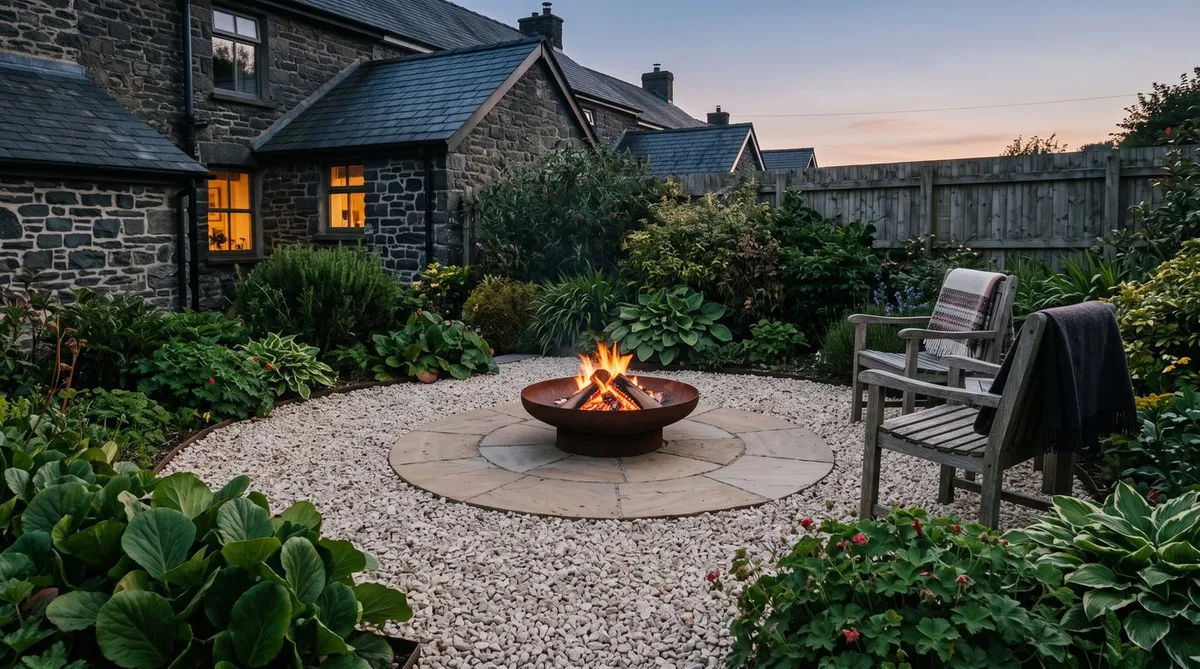
A fire bowl or chiminea turns a fair-weather corner into one you’ll use into winter. A real fire adds light and gives people something to gather round. A patio heater gives warmth without smoke, but no flicker.
Site any fire safely:
- Keep it at least 1m clear of fences, sheds, furniture and overhanging branches
- Never light it under a gazebo, parasol or canopy
- Set it on paving or a heatproof base, not on decking or grass
- Burn dry, seasoned logs or kiln-dried wood, which smoke less
- Keep a bucket of water or a lid to hand, and never leave a fire unattended
Smoky fires annoy the neighbours, and you mustn’t let smoke become a nuisance. Check which way the wind is blowing before lighting up. The guides to choosing a fire pit and fire-safe planting around fire pits cover kit and layout in more detail.

A fire bowl gives heat, light and a natural place to gather. Set it on paving with plenty of space around it.
Layer in warm, soft lighting
Soft, warm, low lighting sets the mood more than anything else. Lots of small pools of gentle light beat one bright source. Avoid bright white floodlights, which feel like a security light, not a snug.
Warm-white string lights overhead create a glowing ceiling. Lanterns and candles at table height bring the light down to where you sit. Battery LED candles are safer near blankets than real ones. Solar lights need no wiring and are easy to move while you find the right spot.
Look for “warm white” on the box, or about 2700K or lower. That gives a firelight glow rather than an office feel. Keep lights low and aimed down, and switch them off when you go in, which is kinder to bats and moths. The guide to garden lighting ideas explains solar, plug-in and mains options.

String lights overhead and lanterns on the table give a soft glow. Nothing harsh, just enough to see your mug.
Hygge garden ideas ranked by how much they help
Not every idea pulls the same weight. If you’re starting from scratch, work down this list.
| Idea | What it adds | Cost | Do it |
|---|---|---|---|
| Wind shelter | Comfort, keeps heat in | Low to medium | First |
| Warm string lights and lanterns | Mood | Low | Early on |
| Blankets and cushions in a dry box | Warmth and texture | Low | Early on |
| Fire bowl or chiminea | Heat, light, a focal point | Low to medium | When the corner is sheltered |
| Comfy seat | Somewhere to linger | Medium to high | When budget allows |
| Outdoor rug | Warmth underfoot | Low | Nice extra |
| Evergreen planting | A green frame all winter | Medium | Over time |
Blankets, cushions and finishing touches
Texture is what makes people settle in and stay. Weatherproof cushions, wool blankets and an outdoor rug turn a hard bench into somewhere you linger after dark.
Keep blankets in a waterproof storage box by the seat, so they’re always dry and to hand. Bring cushions in when it rains, or choose outdoor fabric that dries quickly. An outdoor rug softens cold paving and makes the corner feel like a room. A small side table for a mug or a bowl of soup finishes the scene.

A knitted blanket and soft cushions are what make you stay out that bit longer. Keep them in a dry box, ready for chilly evenings.
Plants for a cosy winter corner
Choose planting that frames the seat rather than fills the garden. It should look good from October to March, when you’ll use the corner most.
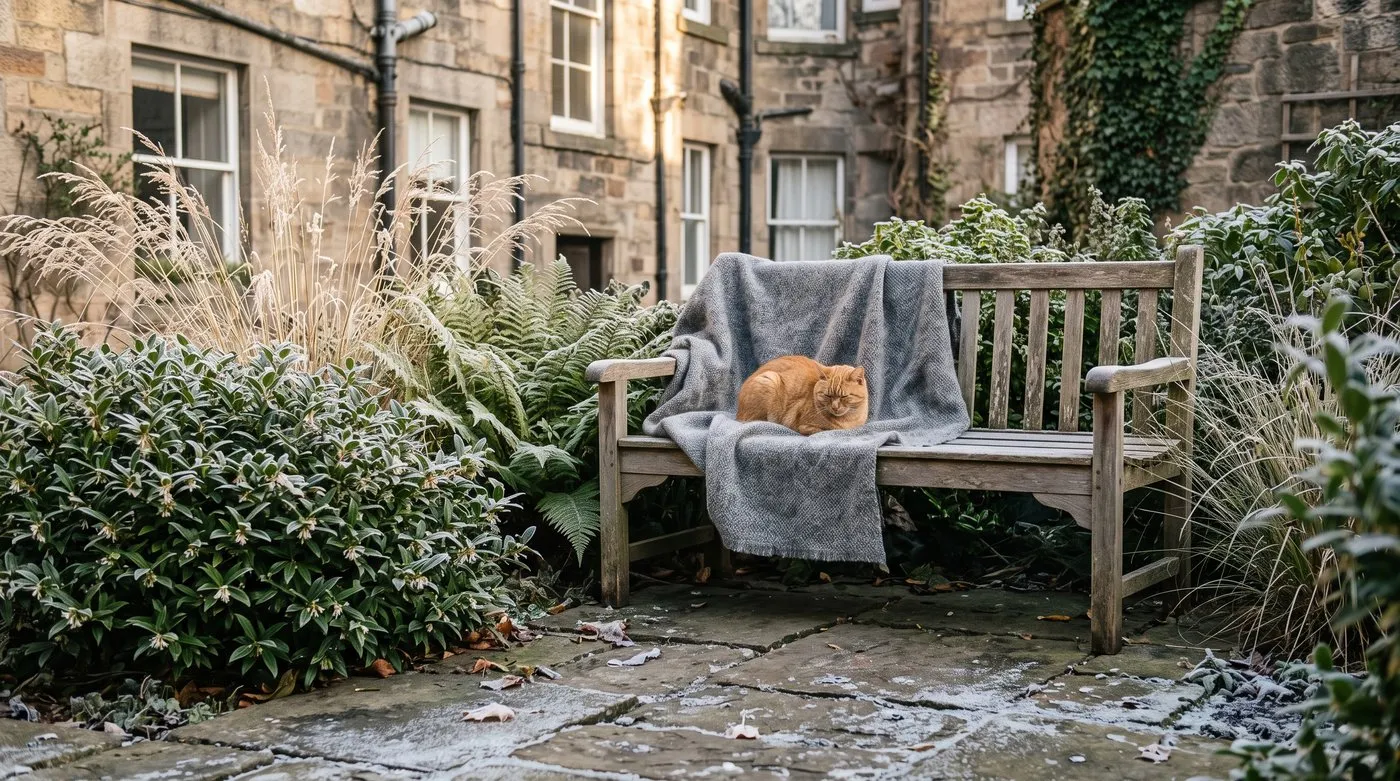
Sweet box, ferns and frosty grasses keep a winter corner looking alive, and the scent is a treat on a cold afternoon.
- Evergreen shrubs such as pittosporum, box-leaved holly or Viburnum tinus keep the corner green. The guide to evergreen shrubs for year-round interest has more ideas.
- Ferns such as the soft shield fern stay fresh-looking through most winters.
- Grasses such as Calamagrostis or Miscanthus hold their shape and catch the lights.
- Winter scent from sarcococca (sweet box) or Daphne bholua, planted close to the seat. Daphne is poisonous if eaten, so site it away from pets and children.
Leave seedheads standing over winter. They look lovely with frost on them and feed birds too.
Hygge on a balcony or small patio
Small spaces suit hygge perfectly, because they already feel tucked in. Put a screen or tall pots on the windiest side. Add two chairs with cushions and a blanket each, and a few warm battery or solar lanterns.
Skip open fire on a balcony. Many flats and leases ban it, and it isn’t safe near walls and railings. A hot drink, a blanket and good lighting are plenty. The guide to balcony gardening ideas covers pots and plants that cope with wind up high.
Common hygge garden mistakes
Choosing the windiest spot for the view. You won’t sit there in October. Pick shelter first.
Bright white lights. They feel cold and clinical. Swap them for warm white.
Leaving cushions out in the rain. Damp cushions are the opposite of cosy. Use a storage box.
Putting the fire too close. Fences, furniture and blankets need at least a metre of clear space.
Spreading it too thin. One finished corner beats five half-done ones.
Frequently asked questions
What is a hygge garden?
It’s a garden space made to feel cosy, warm and welcoming. Hygge is a Danish word for comfort and contentment. Outside, that means shelter, soft lighting, a bit of heat and snug seating. It’s a feeling you build up from small things, not a planting style you buy.
How do you make a garden cosy on a budget?
Start with shelter and warm light, which cost little. A trellis panel or a group of tall pots slows the wind. A string of warm-white solar lights and a few lanterns change the mood straight away. Add blankets from home or a charity shop, cushions kept in a waterproof box and a simple fire bowl.
How can I use my garden in winter?
Shelter one corner, add heat and warm light, and dress the seat for cold weather. A fire bowl or chiminea, a wind screen, and cushions with wool blankets let you sit out on dry winter evenings. Evergreens and a few lanterns keep the corner looking alive when the borders are bare.
Are fire pits allowed in UK gardens?
Yes, you can use a fire pit in your own garden. Just don’t let the smoke become a nuisance to neighbours. Burn dry, seasoned wood, keep the fire well away from fences, sheds and overhanging branches, and never leave it unattended. Have water or a lid ready to put it out.
What plants suit a hygge garden?
Evergreens for winter green, plus soft grasses and scented plants. Evergreen shrubs and ferns frame the seat all year. Grasses add movement and keep their shape into winter. Winter-flowering shrubs such as sarcococca bring scent right when you sit out on cold evenings.
Can you create hygge on a balcony or small patio?
Yes, small spaces are ideal because they feel snug already. Use a screen on the windiest side, a couple of chairs with cushions and blankets, and warm battery or solar lanterns. Skip open fire on a balcony. Many buildings ban it, and a blanket and a hot drink do the job.
Once your cosy corner is ready, browse more garden design ideas or plan a winter film night with these garden cinema ideas.
Our team produces practical UK gardening guidance from source research, contributor records and established horticultural practice. Editorial standards are overseen by Matt W.