Key takeaways
- A thick corten steel bowl is the best long-term pick for UK weather
- Stainless steel is cheap and light but can warp and discolour
- Cast iron lasts well but needs a cover to keep rust at bay
- Always stand a fire pit on slabs or gravel, never lawn or decking
- Burn dry, seasoned hardwood and look for the Ready to Burn logo
- Keep it at least 3m from fences and sheds, and never leave it unattended
A garden fire pit turns a patio into a cosy outdoor room on chilly evenings. For most UK gardens, a thick corten steel bowl of about 90cm is the best all-rounder. It gives warmth to a family-sized circle of chairs and copes well with British weather. Here’s how the main types compare, plus how to use one safely.
The 10 best UK fire pits 2026
Prices below are typical for each type, so shop around.
1. Corten steel bowl 90cm, about £290 (top pick)
Material: thick corten (weathering) steel. Size: about 90cm across.
The best all-rounder. Corten steel rusts to an orange-brown coat that protects the steel underneath. It looks better with age, gives heat all the way round and is heavy enough to stay put in the wind.
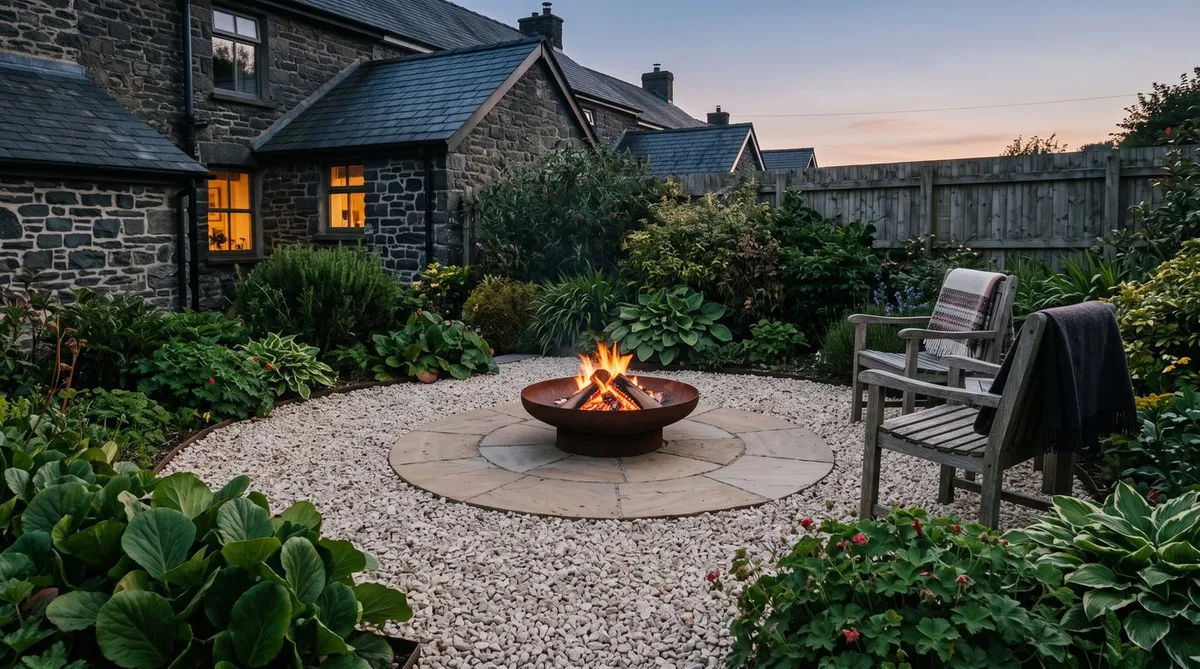
 A 90cm corten steel bowl burning seasoned ash. The rusty coat protects the steel from the weather.
Pros: very tough, good heat, ages beautifully, no yearly treatment.
Cons: it stains paving underneath, so use a steel pad or gravel base. For the first few months, rain washes orange rust off it, so keep it away from decking and pale stone.
2. Corten steel cube 60cm, about £220
Material: corten steel. Size: about 60cm cube.
An open-fronted cube with a modern look. It throws heat out of the front rather than all round, so it works best against a wall, not in a circle of chairs.
Best for: modern gardens, narrow spaces and spots against a wall.
3. Cast iron bowl 70cm, about £175
Material: cast iron. Size: about 70cm across.
The heaviest bowl here. It stays warm after the fire dies down, which is lovely late in the evening. The surface rusts over winter, so give it a wire brush and some stove polish each spring.
Pros: holds heat, classic look, very hard-wearing.
Cons: heavy to move, needs a cover and a little care, and the legs rust faster than the bowl.
 A cast iron fire pit after a UK winter. Rust on the legs is normal; brush it off and polish each spring.
4. Stainless steel bowl 76cm, about £120
Material: stainless steel. Size: about 76cm across.
The cheapest dependable choice. It’s light and doesn’t rust, but the rim can warp after hot fires, and the metal turns blue and gold with heat.
Pros: cheap, light, rust-free.
Cons: can warp, discolours quickly, and thin metal gives off less heat than thick corten or cast iron.
5. Mild steel fire pit with cooking grate 75cm, about £160
Material: mild steel. Size: about 75cm across, with a cooking grate and poker.
A practical fire pit that doubles as a barbecue once the flames die down. Mild steel rusts quickly without a cover, so expect to replace it sooner than a corten or cast iron pit.
Best for: heat and cooking on a budget.
6. Solo Stove Bonfire 19.5, premium price
Material: stainless steel. Size: about 49cm across.
The premium choice. Its double-walled design burns so hot that it makes very little smoke. It’s lovely to sit around but pricey for its size.
Pros: very little smoke, quick to get going, compact.
Cons: expensive for the size, gets through wood quickly, and burns too hot for easy cooking.
7. Cube design large 80cm, about £380
Material: thick corten or mild steel. Size: about 80cm cube.
A bold, architectural look, open on one or two sides. It’s heavy and stays where you put it. It suits a modern or formal garden more than a cottage one.
8. Tripod fire pit 70cm, about £140
Material: mild steel bowl on a tripod with handles. Size: about 70cm across.
The one you can carry, so it’s handy for camping trips too. Keep it covered, as mild steel rusts. The tripod can wobble on uneven ground.
9. Brick-built permanent fire pit, about £200 in materials
Material: fire bricks with a steel rim. Size: built to suit, often about 90cm.
A permanent, built-in fire pit. Materials cost about £200, plus a bricklayer if you don’t fancy doing it yourself. Built well, it lasts for decades.
Pros: permanent, looks designed, very long-lasting.
Cons: can’t be moved, takes a day to build, needs planning.
10. Chiminea (traditional clay) 1.2m tall, about £85
Material: clay. Height: about 1.2m.
Not strictly a fire pit, as the flames go up a chimney. That means less heat comes out towards you. Clay can crack in frost if left out uncovered. Cheap and pretty, but limited.
What to look for - the 6 buying criteria
Material thickness
For mild or corten steel, thicker is better. Thin steel warps in the heat. Thick steel costs more but lasts much longer.
For stainless steel, a good grade such as 304 or 316 holds up better than cheaper kinds.
Bowl diameter
| Size | Best for |
|---|---|
| 50-60cm | 2-4 people |
| 70-80cm | 4-6 people |
| 90-100cm | 6-10 people |
| 120cm+ | Big gatherings |
About 90cm suits most households: enough warmth for a family without swamping a normal patio.
Drainage holes
These are a must. Without them, rain collects in the bowl and rusts the bottom. Look for small holes in the base, or drill a few yourself if they’re missing.
Stand height
A bowl raised a little off the ground is best. Very low bowls scorch the slabs underneath, while very tall ones don’t warm you at chair height.
Weight (and portability)
Light pits are easy to move but can tip in a strong wind. A medium weight is the happy middle: you can still shift it, but it stays put.
Lid or spark guard
A mesh spark guard catches sparks while it’s burning. A solid lid keeps rain out when it’s not in use. Both are worth having, and some pits come with one.
 Five fire pits side by side: stainless steel, cast iron, a corten bowl, a corten cube and a tripod.
Fuel - what to actually burn
Dry, seasoned hardwood gives the best heat and the least smoke. Wet wood smoulders, smokes and gives little warmth.
| Wood | Heat | Burns for | Good to know |
|---|---|---|---|
| Oak (well seasoned) | High | Long | Great all-rounder |
| Ash | High | Long | Burns well |
| Beech | High | Medium | Lovely embers for cooking |
| Hornbeam | Very high | Long | Dense and slow |
| Birch | Medium to high | Short to medium | Pretty flames, burns fast |
| Apple or cherry | Medium | Medium | Nice for cooking |
| Pine (softwood) | Low | Short | Spits sparks, so avoid |
| Spruce (softwood) | Low | Short | Spits sparks, so avoid |
| Treated wood | No | No | Harmful fumes, never burn |
| MDF or plywood | No | No | Harmful glues, never burn |
Good to know: The Woodsure scheme certifies dry firewood, so look for the Ready to Burn logo on bags of logs. In England, firewood sold in small amounts must carry this certification.
Setting up safely
Distance from structures
Keep it at least:
- 3m from fences, sheds and anything wooden
- 5m from overhanging trees
- 2m from chairs
- well away from the house if the wind blows sparks that way
Base material
Never put a fire pit on a lawn, on decking or straight on paving without protection. The base gets very hot and damages whatever is under it. Gravel makes a great firebreak, as our gravel garden guide explains.
Good bases:
- Stone slabs reaching about 50cm past the bowl all round
- Pea gravel about 50mm deep on weed membrane over firm hardcore
- A steel fire pit pad made to sit on top and protect what’s beneath
- Natural stone such as granite or slate, reaching about 50cm past the bowl
 Pea gravel is the cheapest safe base. Spread it on membrane over firm hardcore, reaching about 50cm past the bowl.
Wind direction
Place the fire pit so smoke drifts away from your house and your neighbours. In much of the UK the wind usually comes from the south-west, so a spot on the north-east side of your seating often works. The same thinking applies to an outdoor kitchen or BBQ area.
Children and pets
Keep children and dogs well back while it’s burning. A mesh spark guard adds extra peace of mind. Never leave a fire pit burning on its own.
Cooking on a fire pit
Most fire pits take a cooking grate that sits over the bowl. Wait until the flames have died back to glowing embers, usually the best part of an hour after lighting. For a proper cooking space, see our guide to designing an outdoor kitchen.
 A cooking grate over glowing embers: the right heat for sausages and chops.
What cooks well:
- Steaks, chops and sausages: straight on the grate over the embers
- Whole fish wrapped in foil: at the edge of the grate
- Veg skewers: on the grate
- Bread on a stick: twist dough round a stick and hold it over the embers
- Marshmallows: of course
What doesn’t:
- Delicate fish fillets, which fall through the grate
- Anything that needs an exact temperature
- Anything that takes a long time, as the fire dies down
Storage and winter care
Cover it when you’re not using it. A weatherproof cover keeps rain off and slows rust.
Empty the ash after every use. Wet ash holds damp against the bowl and speeds up rust. Tip it into a metal bucket, never a plastic bin, as ash stays hot for hours.
Move it under cover for winter if you can. A garage, shed or log store helps it last much longer. Corten can stay out, but mild steel and cast iron are better tucked away.
Touch up the paint on mild steel each spring with heat-resistant stove paint. Don’t paint stainless steel or corten.
Best UK fire pit 2026 - the verdict
For most gardens, a 90cm corten steel bowl is the best buy. It gives good heat, looks better with age and needs little more than a cover.
On a tight budget, a stainless steel bowl does the job, but it won’t last as long.
For something permanent, a brick-built fire pit looks great and lasts for decades.
For carrying about, a tripod fire pit can go camping with you too.
For cooking, a mild steel pit with a grate is good value, though you’ll replace it sooner.
Once your fire pit is in place, plan some fire-safe planting around a fire pit with the right gaps.
Now you’ve got the model
Pick your spot, lay a safe base, stock up on dry hardwood and invite some friends round. Enjoy those long autumn evenings.
Frequently asked questions
What is the best fire pit material for UK weather?
Corten steel is one of the best choices for UK weather. It forms a stable rust layer that protects the steel underneath. Cast iron is heavy and long-lasting but needs a cover to limit rust. Thin mild steel rusts through fastest. Whatever you pick, a cover and winter shelter help it last.
Can you put a fire pit on grass?
No, never put a fire pit straight on grass. The heat scorches the lawn and kills the grass. Stand it on a heatproof base instead, such as stone slabs, a gravel pad or a fire pit mat. Make the base wider than the pit all round to catch sparks and embers.
Can you cook on a garden fire pit?
Yes, many fire pits take a cooking grate. Wait until the flames have died down to glowing embers before you start, as that gives steadier heat. Oak, ash and beech are great for cooking. Never cook over treated or painted wood, or sappy softwood.
How long does a fire pit last in the UK?
It depends mostly on the material and how you look after it. Thick corten steel and cast iron can last for many years, while thin mild steel may rust through in a few seasons. Covering it and keeping it under shelter in winter make the biggest difference. Empty the ash after each use, as wet ash speeds up rust.
What wood should you burn in a fire pit?
Burn dry, well-seasoned hardwood like oak, ash, beech or birch. Dry wood burns hotter and makes much less smoke. Softwoods like pine spit sparks. Never burn treated or painted wood, MDF, plywood or stamped pallets, as they give off harmful fumes. Look for the Ready to Burn logo on bagged logs.
Are fire pits allowed in UK gardens?
Yes, in most UK gardens they are. There’s no general ban on garden fires, but councils can step in if smoke becomes a nuisance to neighbours. Check your tenancy agreement or property deeds, which may limit open fires. Burn only dry wood and keep the pit well away from fences, sheds and trees.
Our team produces practical UK gardening guidance from source research, contributor records and established horticultural practice. Editorial standards are overseen by Matt W.