Key takeaways
- Keep about 2m of gravel or paving around the pit with nothing that burns
- Site the pit at least 3m from fences, sheds, decking and overhanging branches
- Low, fleshy, well-watered plants such as bergenia and hostas suit the ring beyond that
- Keep pampas grass, conifers, leylandii, eucalyptus and bamboo well away
- Use gravel or slate as mulch near the pit, never bark or wood chip
- Fit a spark guard, keep water handy and never leave the fire unattended
Fire-safe planting around a fire pit is mostly about distance. Keep a clear ring of gravel or paving around the pit, then plant low, fleshy, well-watered plants beyond it. Keep anything dry, oily or feathery well away. Embers drifting onto dry material are the real risk, not the flames themselves.
This guide covers where to put the pit and what to plant around it. If you’re still choosing a fire pit, see our round-up of the best fire pits for UK gardens.
How far should a fire pit be from a fence or shed?
At least 3m from fences, sheds, summerhouses, decking and the house is a sensible minimum. Timber can catch from drifting embers, and from heat over a long evening. Allow more on a windy, exposed plot, and always check the distances in your fire pit’s instructions.
Look up as well. Never put a fire pit under overhanging branches, a pergola or a gazebo. Rising heat dries the leaves above and sparks can lodge in them.
Set the pit on a non-combustible base such as paving slabs or a stone circle, not straight onto lawn or decking. Lawn underneath will scorch, and decking is dry timber that catches easily.

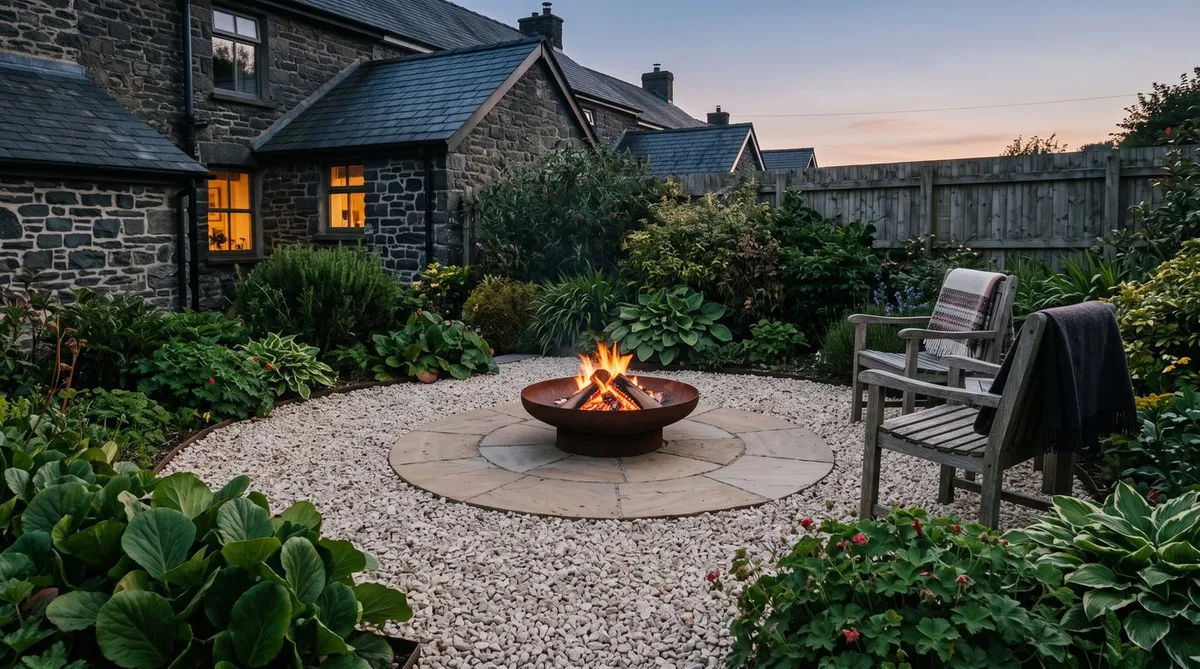
A wide ring of gravel and paving keeps planting and the fence well back from any drifting embers.
What makes a plant safe or risky near a fire?
Safe plants are low, fleshy and full of water. Risky plants are dry, oily or feathery, or hold lots of dead material.
- Water in the leaves: thick, juicy leaves like those of sedum and bergenia are hard to light. Dry, crispy leaves catch fast.
- Oils and resins: conifers and eucalyptus contain flammable oils that flare up quickly.
- Dead material: pampas grass and leylandii hold lots of dead leaves or needles inside the plant.
- Fine, feathery shapes: thin plumes and papery leaves catch faster than broad, fleshy ones.
The same plant can change through the year. An ornamental grass that’s soft and green in June can be dry straw by September. That’s why watering matters too.
Which plants should you keep away from a fire pit?
Keep pampas grass, conifers, leylandii, eucalyptus, bamboo and dry ornamental grasses well away from any fire pit, barbecue or chiminea.
Leylandii and other conifers have resinous needles and a layer of dead brown needles inside the hedge that never rots. Eucalyptus leaves are full of flammable oil. Bamboo canes dry out to a papery, hollow tinder. Pampas grass holds masses of dry plumes and old leaves, so a single ember can set it alight. If you’re growing pampas elsewhere in the garden, our pampas grass guide covers keeping it tidy and safe.

Dry pampas plumes this close to a fire are an accident waiting to happen. Keep them well away.
How to lay out planting around a fire pit
Think of the space around the pit as three rings.
Inner ring, up to about 2m: nothing that burns. Use gravel, paving, slate or stone. No plants in the ground and no bark mulch. An ember that lands on gravel just goes out. If you want greenery, stand pots of sedum or sempervivum at the outer edge and move them back before lighting.
Middle ring, about 2-5m: low, green, well-watered plants. Bergenia, hostas, hardy geraniums and heuchera work well here. Keep them below knee height, cut out dead leaves and water them in dry spells.
Outer ring, beyond 5m: normal planting. Shrubs, borders and trees are fine here. Just keep the risky plants listed above further back still, especially on a windy plot.

Gravel in the middle, then a ring of low, leafy hostas, with taller borders further back.
Best plants for around a fire pit
Every safe choice is low, fleshy and green. Every risky one is tall, oily, dry or feathery.
| Plant or material | Why | Near a fire pit? |
|---|---|---|
| Sedum and sempervivum | Fleshy, low, full of water | Yes, in pots you can move back |
| Bergenia | Thick, leathery, evergreen leaves | Yes, from about 2m |
| Hosta | Broad, soft, moist leaves | Yes, from about 2m |
| Hardy geranium | Low, green ground cover | Yes, from about 2m |
| Heuchera | Low, evergreen, fleshy leaves | Yes, from about 2m |
| Low grasses, kept watered | Fine while green | Only if kept green, 2m+ away |
| Leylandii and other conifers | Resin and dead inner needles | No, keep well away |
| Eucalyptus | Oily, flammable leaves | No, keep well away |
| Pampas grass | Dry plumes and old leaves | No, keep well away |
| Bamboo | Dries to papery canes | No, keep well away |
| Bark or wood-chip mulch | Catches embers and smoulders | No, use gravel instead |
Our guide to growing sedum has plenty of varieties for pots around a seating area.

Pots of sempervivum and sedum look great around a fire bowl. Move them back to the edge of the gravel before you light it.
How to keep planting near a fire pit green
Well-watered, green plants are hard to light. The same plants, drought-stressed and crispy, become fuel. In a dry summer, water beds within about 5m of the pit deeply once or twice a week.
Choose plants that stay plump without much fuss, such as bergenia, hosta and heuchera. Cut out dead leaves and old flower stems near the pit. After a long dry spell, give nearby beds a good soak a few hours before you light up. During a hosepipe ban, use stored rainwater. Our guide to watering in hot weather has more tips.

Bergenia’s thick, leathery leaves make it one of the best plants for the ring beyond the gravel.
How to use a fire pit safely
Most garden fires start the same way. An ember drifts on the wind, lands on something dry and smoulders until it flares. Too little distance from a fence or branch is the other common cause.
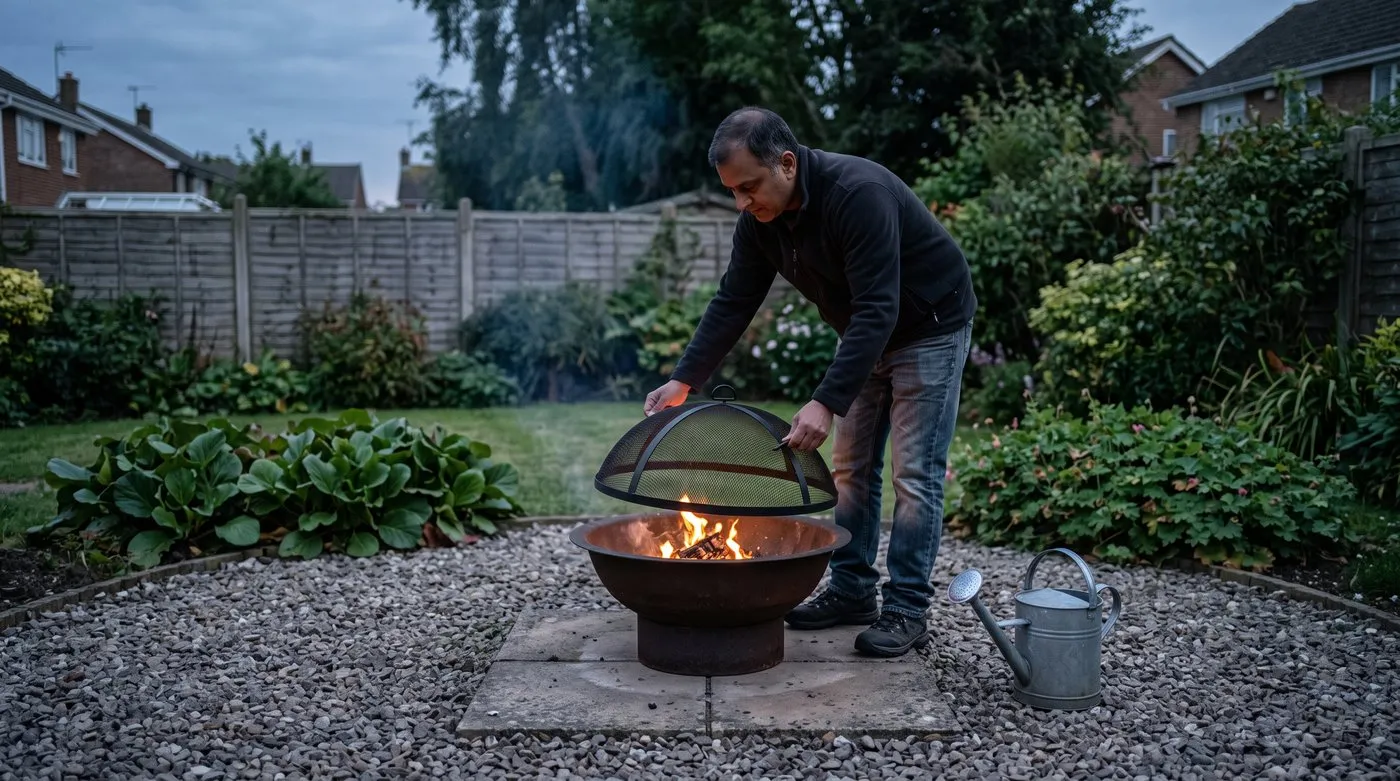
A spark guard catches rising embers, and a can of water close by means you’re ready if one escapes.
- Fit a spark guard over the bowl to catch rising embers.
- Check the wind before lighting. Don’t light up if it’s blowing towards a fence, shed or dry bed.
- Keep water or a hose handy, and never leave the fire unattended.
- Burn dry, seasoned wood for less smoke and fewer sparks, and think about your neighbours.
- Check log piles before moving them, as hedgehogs, toads and other wildlife often shelter inside.
- Put the fire out fully before you go in, and let the ashes cool completely before you move them.
If you need a screen where an old conifer hedge once stood, our hedge planting guide covers broadleaved alternatives. Keep any new hedge well back from the pit.
Common fire pit planting mistakes
Planting pampas or feathery grasses as a feature by the pit. They look lovely in summer, then dry to straw by autumn. Keep them well away.
Using bark mulch around the pit. It catches drifting embers and can smoulder for hours. Use gravel or slate instead.
Putting the pit on decking or lawn. Always use a non-combustible base, such as paving slabs.
Siting it under branches. Heat rises and dries the leaves above. Keep the sky clear over the pit.
Leaving pots right by the bowl. Heat scorches them. Move them back before lighting.
Now your fire pit corner is safe, make it cosy with our hygge garden ideas, or browse more on the garden design hub.
Frequently asked questions
What plants are safe to grow near a fire pit?
Low, fleshy, well-watered plants are the safest choice. Bergenia, hostas, hardy geraniums, heuchera and sedums hold plenty of water and have little oil or dead material. Keep them at least 2m from the bowl and water them well in dry spells.
How far should a fire pit be from a fence?
At least 3m is a sensible minimum. Timber fences, trellis and sheds can catch from drifting embers or heat over a long evening. Allow more on windy sites, and always follow the distances in your fire pit’s instructions.
Is pampas grass a fire risk near a fire pit?
Yes, it’s one of the worst plants to have nearby. Its dry, feathery plumes and old leaves catch very easily and burn fiercely. Keep it well away from fire pits, barbecues and chimineas.
Can you put a fire pit on decking?
It’s best not to. Decking is dry timber that catches embers and heat. If you must, use a proper heat-proof base or paving slabs under the pit, fit a spark guard and check the maker’s instructions. A gravel or paved area is much safer.
What mulch is safe near a fire pit?
Gravel, stone chippings and slate are the safe choices. They don’t burn, so an ember that lands on them just dies. Bark, wood chip and straw catch embers and can smoulder unseen for hours.
Do fire pits damage plants nearby?
Yes, heat can scorch plants within a metre or two. Leaves brown and the soil dries out fast. Keep beds at least 2m back, move pots away before lighting, and water nearby plants well after a long fire.
Our team produces practical UK gardening guidance from source research, contributor records and established horticultural practice. Editorial standards are overseen by Matt W.


