Key takeaways
- Brightness matters more than screen size, especially if you start before full dark
- In June it isn't dark enough until about 10pm, while in December you can start at teatime
- September gives the best mix of early darkness and mild evenings
- Use a tensioned screen or a flat pale wall, not a creased bedsheet
- Run mains kit through a 30mA RCD and bring it all in before the dew settles
- Point the speaker at your seats, keep the volume low and give the neighbours a heads-up
A garden cinema needs less kit than you might think: a projector, a flat pale screen, a decent speaker and safe outdoor power. Add blankets and popcorn and any UK garden becomes a cosy movie night. The two things that make or break it are timing and brightness. Start too early, or with too dim a projector, and you’ll be squinting at a washed-out grey rectangle.
This guide covers what you need to get right: projector brightness, screen size, when the sky gets dark enough, sound, safe power and keeping everyone warm. If you’d like the garden to feel snug every evening, not just on film nights, the hygge garden ideas are a good place to start.
How bright does an outdoor projector need to be?
It depends on when you want to start. Once the sky is properly dark, a modest projector gives a watchable picture. To start while there’s still a glow in the sky, you need a much brighter one.
Projector brightness is given in lumens. Look for the ANSI lumen figure, which is a standard test. Cheap projectors sometimes print very large “lumen” numbers that don’t match what you see, so treat those with suspicion.
A brighter projector buys you time. It lets you start earlier, use a bigger screen and cope with a neighbour’s security light. If you’ll mostly watch in late autumn and winter, when it gets dark early, a cheaper projector will do.

The same screen and projector, a little while apart. Waiting for proper darkness makes a bigger difference than a bigger screen.
Choosing a screen and working out the size
A 100-inch screen suits most gardens. It feels like a proper cinema but stays bright from an ordinary projector. In a small courtyard, an 80-inch screen looks brighter and fits better.
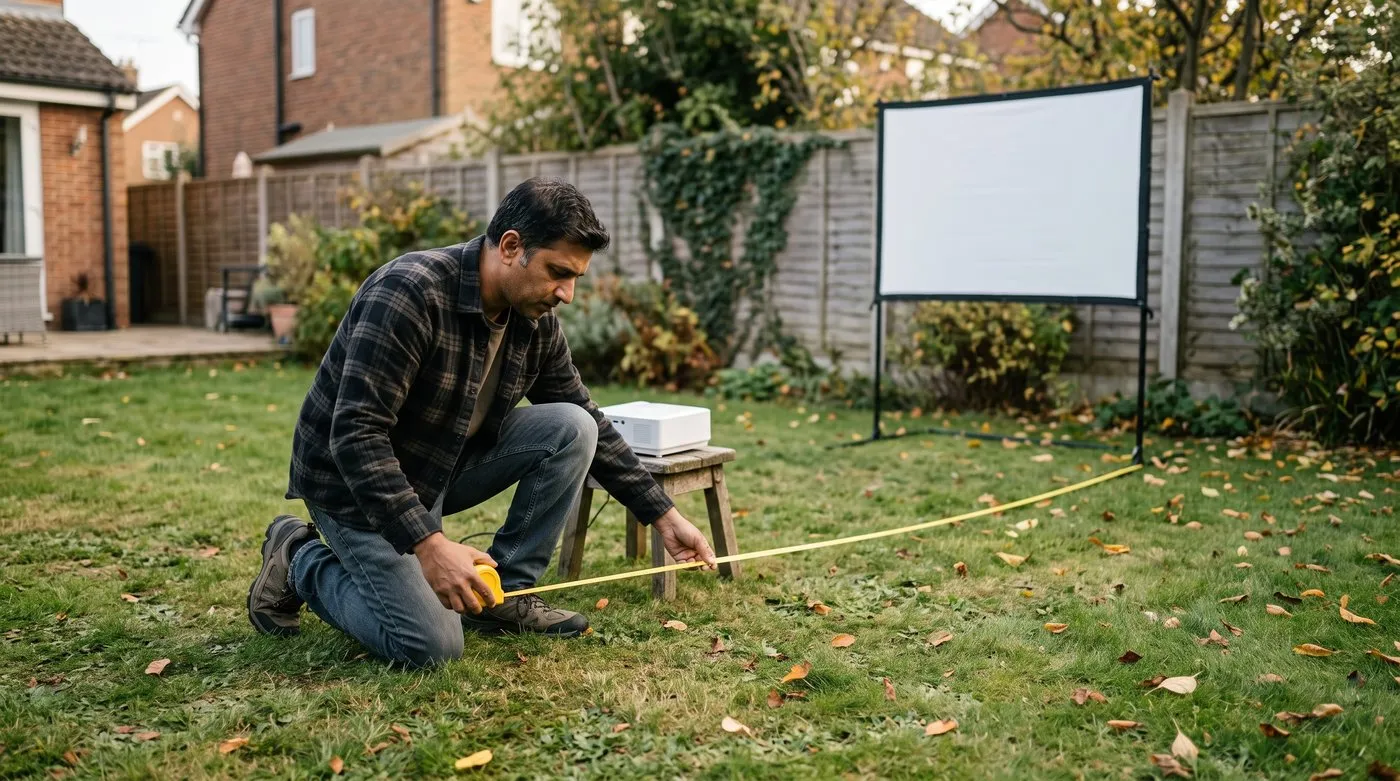
Measure from projector to screen before you buy. That distance decides how big a picture you can fill.
How big a picture you get depends on the throw distance: how far the projector sits from the screen. Every projector has a throw ratio in its manual, and most makers have an online calculator. Measure your space first, then check the projector can fill your screen from there. Short-throw projectors fill a big screen from close up, which helps in a tight garden.
Your screen options:
- Pop-up or pull-up screen: quick to set up and pack away, with a flat surface
- Blackout cloth on a frame: cheap, but it must be pulled tight
- A smooth pale wall: no creases at all, ideal for courtyards
- A bedsheet: works at a pinch if it’s stretched tight and ironed
Keep the front row back from the screen. Sitting too close to a big picture is tiring on the eyes.

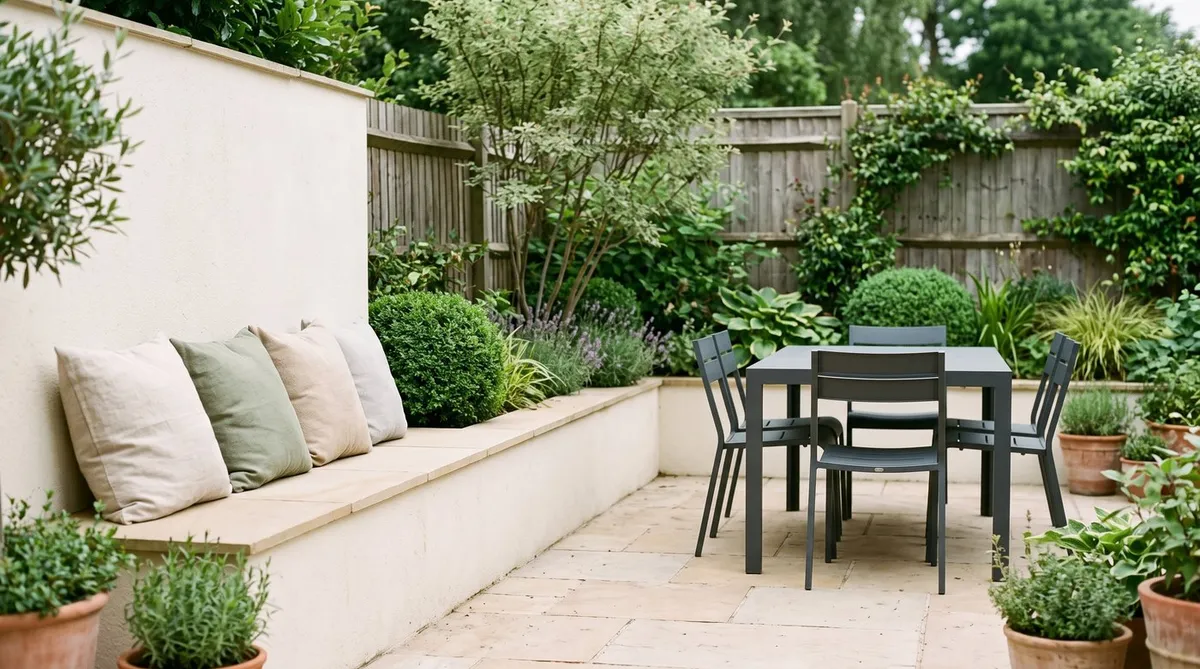
A smooth pale wall makes a crease-free screen. It’s ideal for a small courtyard with no room for a frame.
When is it dark enough for a garden cinema?
Wait until 30-60 minutes after sunset. Until then the sky is still too bright and the picture looks grey. In high summer that means a late start. In winter you can start at teatime.
These are rough start times for southern England. Further north, summer evenings stay light for longer, so add a bit more time. Your weather app will give you the sunset time for your town.
| Month | Rough start time | Notes |
|---|---|---|
| January | 5.30pm | Early start, wrap up very warm |
| February | 6.15pm | A family film after tea works well |
| March | 7pm | Good evenings before the clocks change |
| April | 8.45pm | Later once the clocks go forward |
| May | 9.30pm | Past young children’s bedtime |
| June | 10pm | The latest start of the year |
| July | 9.45pm | A little earlier than June |
| August | 9pm | Warm and getting earlier |
| September | 8pm | The best mix of darkness and mild air |
| October | 7pm | Cooler, so bring extra blankets |
| November | 5.15pm | Early, cold and very cosy |
| December | 5pm | Dark by teatime |
September is the pick of the year. It’s dark by about 8pm, the evenings are often still mild, and the timing suits children.
Getting the sound right without upsetting the neighbours
A projector’s built-in speaker is rarely loud enough outdoors. Sound drifts away in the open air, so use a separate speaker.
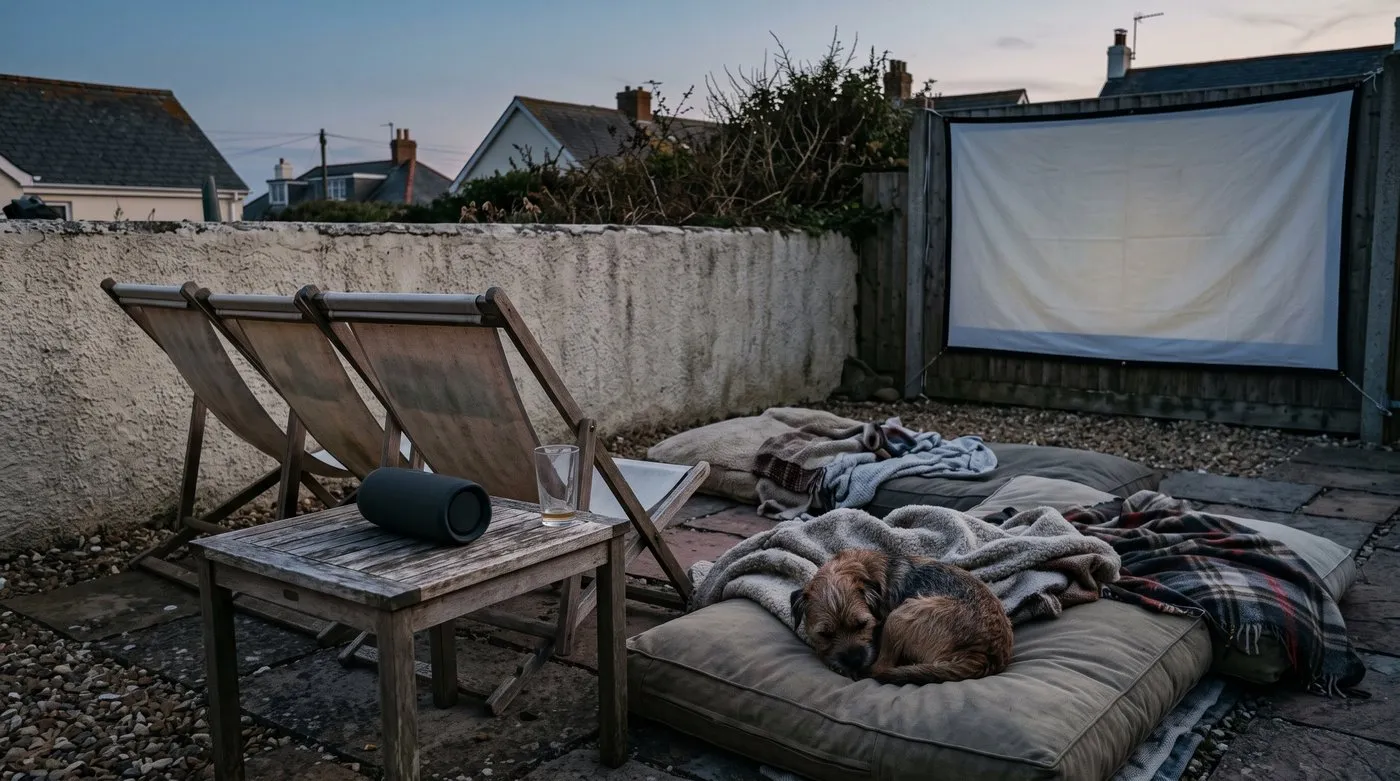
Keep the speaker close to the seats and pointing at them. You’ll hear every word with the volume turned down.
A portable Bluetooth speaker is the easiest option. A pair of small powered speakers gives a wider sound. A soundbar suits a set-up you use often.
Point the speaker at your seats, not at the fence, and keep it close to the audience. That way you can keep the volume lower. Tell the neighbours before a film night and finish at a sensible hour. Late-night noise is the quickest way to fall out with the people next door.
Gardener’s tip: Wireless headphones for the children let you keep the main speaker low. Younger viewers love having their own sound.
How to power a garden cinema safely
Run everything through a 30mA RCD. An RCD (residual current device) cuts the power fast if something goes wrong. Many modern fuse boxes have one built in, but a plug-in RCD adapter makes sure.
Use an outdoor-rated extension lead, not an indoor one trailed through a window. Unwind it fully, as a lead left coiled on its drum can overheat. Keep plugs and sockets off the wet grass by putting them in a weatherproof box or up on a brick. Don’t run leads across paths where people will trip in the dark.
Warning: Unplug everything at the first drop of rain and bring the kit inside. Water and mains electricity don’t mix, and no film is worth the risk.
A battery-powered projector and speaker avoid mains leads altogether, which is handy in a garden with no outdoor socket.
Dealing with dew and packing away
On clear nights, dew settles on the garden as the air cools. It coats screens, speaker grilles and projector vents with moisture, which electronics hate.
Bring everything indoors as soon as the film ends. Don’t leave it out “just for ten minutes” on a clear, still night. Let the projector run its cool-down cycle before you pack it into its bag. Dry a damp screen indoors before folding it, or it may get mildew spots.

Dew forms fast on clear nights. Unplug and bring the kit in the moment the credits roll, not the next morning.
Cosy seating, blankets and keeping midges away
Comfort keeps people watching to the end. Bean bags, a garden sofa, floor cushions and picnic blankets all work. Put the low seats at the front and chairs behind, so nobody blocks the view.
Even summer evenings turn chilly once the sun goes down. Put out more blankets than you think you’ll need, and a groundsheet under the bean bags keeps the damp off. A flask of hot chocolate turns a cool night into a treat. If you have a fire pit, the guide to choosing a fire pit covers safe placement, and soft garden lighting helps people find their way back to the house.
Midges and mosquitoes gather at dusk near still water and damp, long grass. Set up on an open, slightly breezy patch, away from ponds and water butts. A small fan blowing across the seats keeps them off on still evenings.
For a permanent spot, the outdoor seating ideas cover comfy heights and layouts. Planting nicotiana for evening scent near the seats adds a lovely perfume as the light fades.

Bean bags, tartan blankets and a flask make all the difference. Evenings cool down fast once the sun has gone.
Common garden cinema mistakes
Choosing screen size over brightness. A huge dim picture looks worse than a smaller bright one. Match the screen to your projector.
Starting too early. If the sky still glows, the picture looks grey. Wait until 30-60 minutes after sunset.
Using a creased sheet. Wrinkles and folds show up on screen. Pull the fabric tight, or use a wall.
Leaving kit out after the film. Dew gets into vents and speaker grilles. Pack away straight after the credits.
Forgetting the neighbours. A loud soundtrack late at night travels. Keep the speaker low and aimed at your seats.
Frequently asked questions
How bright does an outdoor projector need to be?
Bright enough for the light you’ll be watching in. Once the sky is fully dark, a modest projector looks fine. To start while there’s still a glow in the sky, you need a much brighter one, so check its ANSI lumen rating.
What time does it get dark enough for a garden cinema in the UK?
About 10pm in June and around 5pm in December. Wait 30-60 minutes after sunset for a solid picture. Northern gardens get dark later in summer than southern ones.
What size screen do I need for a garden cinema?
A 100-inch screen suits most gardens. Smaller screens look brighter from the same projector, so an 80-inch screen is great for a courtyard. Check the projector’s throw distance before you buy a screen.
How do I power a projector safely in the garden?
Run everything through a 30mA RCD and keep plugs off wet ground. Use an outdoor-rated extension lead, fully unwound, and keep it off paths. Unplug at the first sign of rain.
Can I use a bedsheet as an outdoor screen?
You can, but it needs to be pulled tight. Creases and folds show up badly in the picture. A tensioned blackout cloth, a pop-up screen or a smooth pale wall all give a sharper image.
How do I stop midges spoiling an outdoor movie night?
Sit somewhere open and breezy, away from ponds and damp long grass. Midges and mosquitoes like still air at dusk. A small fan blowing across the seats makes it much harder for them to settle.
Want more evenings outside after the film? See our outdoor kitchen and BBQ area ideas for the next project, or browse the garden design hub.
Our team produces practical UK gardening guidance from source research, contributor records and established horticultural practice. Editorial standards are overseen by Matt W.