
Key takeaways
- Do the main prune in August or early September, after flowering
- Cut off about a third of the plant, shaping it into a dome
- Never cut into bare, woody stems, as lavender can't regrow from them
- A light trim in April tidies frost damage, but isn't the main prune
- English lavender takes a firm trim, French lavender prefers a gentle one
- A very woody, leggy plant is usually best replaced
A quick trim each year is the secret to lavender that stays bushy and full of flowers. Get it right and one plant will give you years of colour, scent and bees. Skip it and you’ll soon be pulling out woody, leggy plants and buying new ones.
When should you prune lavender in the UK?
Lavender gets two trims a year. The main one is in August to early September, straight after flowering. This is the one that keeps it compact. The second is a light tidy in April to snip off any frost-damaged tips.
Keep the April trim light. Cut hard in spring and you’ll hold back the flowers.
What is the one-third rule for pruning lavender?
After flowering, cut off about a third of the plant’s height with sharp shears. On a 60cm plant, that’s about 20cm. You should be cutting through green, leafy stems, with leaves still showing below the cut.
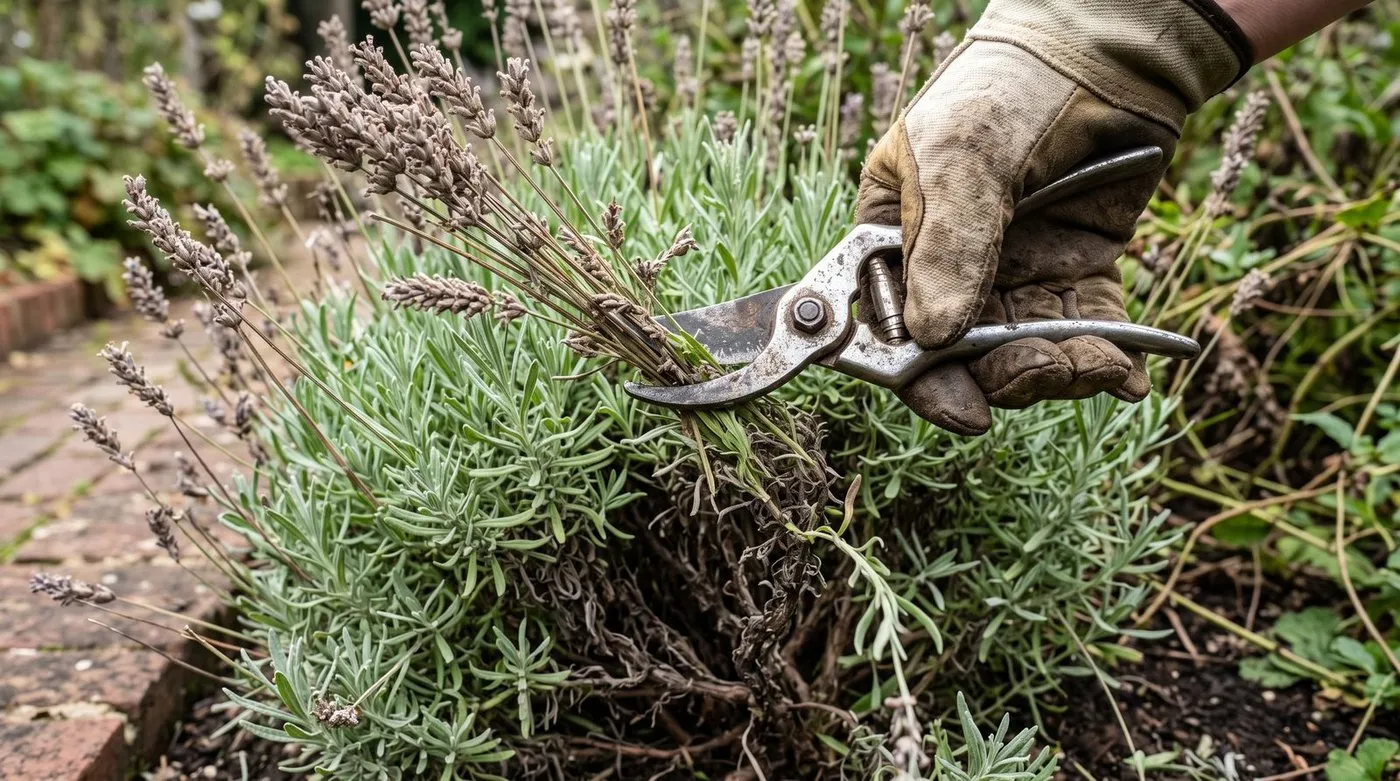
Cut through green growth only, leaving about two-thirds of the plant with leaves below the cut.
Shape it into a neat dome as you go. A rounded top lets rain run off, so the middle doesn’t stay wet and rot over winter.
The golden rule: never cut into old wood
This is the big one. Lavender can’t regrow from old, bare, woody stems. Cut below the lowest green leaves into the brown wood at the base, and that part won’t grow back.
That makes it very different from roses or buddleja, which happily sprout again after a hard prune.
Before you start, look at where the green leafy growth begins. Keep your cut a good 2-3cm above that line. If in doubt, cut less. You can always take more off next year, but you can’t put it back.

Keep the cut well above where the bare wood starts, leaving 2-3cm of green below the shears.
Step-by-step pruning method
Here’s how to do the main August prune.
1. Wait for flowering to finish. A few late spikes round the edge don’t matter. If it’s still covered in flowers, give it another week.
2. Pick your tool. Hand shears for plants over 30cm wide, bypass secateurs for small or young ones. Sharp tools make clean cuts.
3. Gather the stems. On a bigger plant, bunch the top growth in one hand while you cut with the other, so no stems flop out and get missed.
4. Cut off a third. Work round the plant in a smooth curve, cutting through green stems to make a dome. Take off all the old flower stalks and the top third of leafy growth in one go.
5. Clear up the clippings. Pick up the bits from round the base. A mat of clippings holds damp against the stems.
6. Stand back and check. Tidy any uneven bits or missed stems with secateurs. You’re aiming for a smooth dome.
How to prune different types of lavender
The three main kinds of lavender each like a slightly different approach, so check which you have first. Our guide to the best flowering shrubs for UK gardens covers more shrubs that need careful pruning.
English lavender (Lavandula angustifolia)
The toughest of the three, and the one that takes the firmest trim. It flowers from June to August and is happy with the full one-third cut in August. Hidcote and Munstead stay compact and take a yearly trim in their stride.
French lavender (Lavandula stoechas)
French lavender, with its little “ears”, flowers for much longer, from May to September. Instead of one big prune, snip off faded flower spikes regularly through summer to keep it flowering. Give it a light trim all over in September. It’s less hardy than English lavender, so don’t prune it after early October, as frost will kill any soft new growth.
Lavandin (Lavandula x intermedia)
Lavandins like Grosso and Phenomenal are bigger plants, reaching 80-120cm. Prune them in August with the one-third rule, using long-handled shears for an even cut. They’re fairly hardy and take a firm trim well. Good secateurs help tidy stray stems.
Lavender type pruning comparison
| English (L. angustifolia) | French (L. stoechas) | Lavandin (L. x intermedia) | |
|---|---|---|---|
| Main prune | August, cut a third | September, light trim | August, cut a third |
| Deadheading | Not needed | All summer | Not needed |
| How hard | Firm | Gentle | Firm |
| Spring trim | April, light tidy | April, light tidy | April, light tidy |
| Hardiness | Very hardy | Needs a sheltered spot | Hardy |
| Regrows from old wood? | No | No | No |
The RHS lavender growing guide has more on looking after each type.
Can you save a leggy, overgrown lavender?

Lavender left unpruned for years. The bare woody base won’t sprout again, however you prune it.
If there’s still some green growth low down, it’s worth a try. Cut back to just above the lowest green shoots in August. It may thicken up over a couple of seasons. Give it a gravel mulch and don’t feed it.
If there’s more than 10cm of bare wood with only a tuft of green on top, it’s past saving. Dig it out, improve the drainage if needed, and plant a new one. Prune it every August from the first year. A young plant soon fills out, and you’ll enjoy it far more than nursing an old one.
This goes for all types. None of them regrow from bare wood. For other shrubs with similar quirks, see our general shrub pruning guide.
What tools do you need?
You don’t need much.
Bypass secateurs for small plants, single stems and tidying up after shearing. Choose bypass (scissor-action), as anvil secateurs squash soft lavender stems.
Methylated spirit and a cloth to wipe the blades before and after pruning.
What to do with lavender cuttings
Don’t throw the clippings away. They’re useful.
Dry the flowers for little scented bags and drawer fresheners. Tie the stems in bunches and hang them upside down somewhere warm and dry for two or three weeks. Then rub the buds off into muslin bags.
Take cuttings in August or September for free plants. Choose non-flowering side shoots about 10cm long, strip the lower leaves, and pop them into a half-and-half mix of perlite and compost.
Compost the rest. Lavender stems are woody and slow to rot, so chop them up first.
Lavender is one of the best drought-tolerant plants for UK gardens and a must for a Mediterranean-style planting scheme. Russian sage (perovskia) makes a lovely partner, so see our guide on how to grow Russian sage. Ten minutes of trimming a year is all lavender asks in return.
Frequently asked questions
When is the best month to prune lavender in the UK?
August, once it has finished flowering. Cut off about a third with sharp shears, shaping it into a dome. Give it a lighter trim in April to tidy any frost-damaged tips. Don’t prune hard in autumn or winter.
Can I cut lavender back hard to the ground?
No, that will kill it. Lavender can’t regrow from bare, woody stems. Only cut off about a third, and always stay in the green, leafy part. If the base is already bare and woody, it’s best to replace the plant.
Why has my lavender gone woody and bare at the base?
Almost always because it hasn’t been pruned each year. Without a yearly trim, lavender keeps stretching its old stems instead of bushing out. After a few years the base goes bare for good. Pruning every August from the start stops it happening.
Should I prune lavender in spring or autumn?
Neither is the main time. The big prune is in late summer, straight after flowering. Spring is only for a light tidy. Autumn pruning is risky, because any new shoots may not toughen up before the frosts.
How do I prune French lavender differently from English?
Deadhead French lavender regularly while it flowers. It flowers from May to September, so snip off the faded spikes every few weeks. Give it a light trim all over in September. It’s less hardy than English lavender, so don’t prune it after early October.
Can I save a leggy, overgrown lavender plant?
Only if there’s still some green growth low down. Try cutting back to just above the lowest green shoots in August. If there’s more than 10cm of bare wood with no leaves, it won’t recover. Replace it and prune the new one every year.
What tools do I need to prune lavender?
Sharp hand shears for the main prune. They give a quick, even cut over the whole dome. Use bypass secateurs for single stems or small plants. Keep the blades sharp and clean, as blunt ones squash the stems.
Our team produces practical UK gardening guidance from source research, contributor records and established horticultural practice. Editorial standards are overseen by Matt W.


