
Key takeaways
- Prune buddleja hard in March, cutting stems back to 30 to 60cm
- It flowers on new growth, so hard pruning means better flowers
- Butterflies love it from July to September
- It grows in poor, chalky or rubbly soil where little else will
- Deadhead faded spikes so it doesn't seed itself everywhere
- Summer cuttings root easily, giving you free plants
Buddleja is one of the easiest and most rewarding shrubs you can grow. Plant it in rubble, chalk or heavy clay and it’ll still give you long flower spikes covered in butterflies from July to September. Peacocks, red admirals, painted ladies, small tortoiseshells and commas all pop by.
It only has one real need: a hard prune every March. Cut it back to 30 to 60cm and it shoots back up to 2 to 3m, with its best flowers on the new growth. Skip the pruning and you’ll soon have a tall, leggy shrub with flowers out of sight at the top. Below you’ll find varieties, planting, pruning, cuttings and how to stop it seeding everywhere. For more butterfly favourites, see our guide to best plants for butterflies.
What soil and position does buddleja need?
Buddleja grows in almost any soil, but it does need sun. That’s why you see it on railway banks and old building sites. It isn’t fussy about drainage or how rich the soil is.
Give it at least five hours of direct sun a day. South or west-facing spots are perfect. In shade it grows leaves but far fewer flowers.
On chalk or thin soil where little else will grow, buddleja is brilliant. Once settled, it copes well with drought. In very rich soil it can grow even bigger and leafier, which makes it harder to keep in check.
Best buddleja varieties for UK gardens
A named variety gives you a plant of known size and colour. It’s worth knowing about Buddleja alternifolia too, a different species that needs pruning at a different time.
Buddleja davidii varieties
Black Knight has the darkest purple flowers of all, lovely against its silvery leaves. It’s a big plant but takes hard pruning well.
Royal Red has rich red-purple spikes and is a little more compact. It’s one of the most popular varieties and holds an RHS Award of Garden Merit.
White Profusion is a great white buddleja with large, faintly honey-scented spikes. Moths visit it as well as butterflies, so it’s lovely for evening wildlife.
Nanho Blue is naturally smaller, with narrow leaves and slender lavender-blue spikes. It looks lighter and more graceful, so it’s ideal for smaller gardens.
Buzz series (Ivory, Lavender, Purple, Sky Blue and others) are dwarf buddlejas that stay around 1.2m. They’re made for small gardens, pots and patios, and still give good-sized flowers. For more small-garden shrubs, see our guide to best flowering shrubs for UK gardens.
Buddleja alternifolia
Buddleja alternifolia is a different plant altogether. It has graceful, arching, weeping stems covered in small, scented lilac flowers in June. Unlike davidii, it flowers on last year’s stems. So never prune it in March, or you’ll cut off every flower bud. Instead, prune straight after flowering in late June or July. It looks great as a big weeping shrub or trained on a single clear stem.
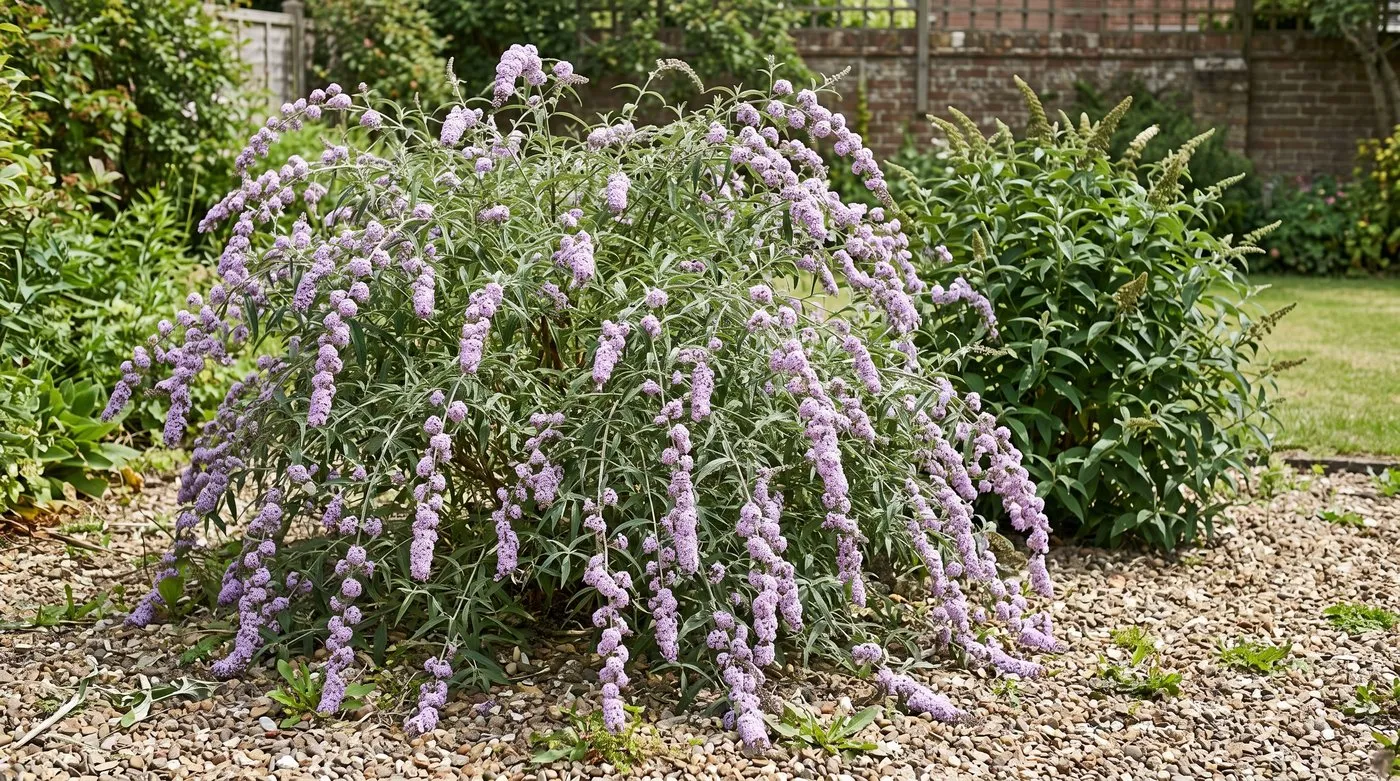
Buddleja alternifolia flowers on last year’s stems, so it’s pruned after flowering in summer, never in March like the common butterfly bush.
Variety comparison table
| Variety | Size after pruning | Colour | Flowers | Best use |
|---|---|---|---|---|
| Black Knight | Large | Dark purple | July to September | Big borders |
| Royal Red | Large | Red-purple | July to September | Borders, wildlife gardens |
| White Profusion | Large | White | July to September | Evening gardens |
| Nanho Blue | Medium | Lavender-blue | July to September | Smaller gardens |
| Buzz series | Small, about 1.2m | Various | July to September | Pots, small gardens |
| B. alternifolia | Large | Lilac | June | Weeping feature shrub |
How and when to prune buddleja davidii
Cut all the stems back to 30 to 60cm above the ground in March. Use loppers or a pruning saw for thick stems. It sounds drastic, but buddleja flowers on new growth. A hard prune gives strong new stems, each topped with a big flower spike.
March is the sweet spot. Earlier, and frost can nip the new shoots. Later, and you shorten the growing season.
After pruning, scatter a slow-release feed round the base and mulch with compost. For more on pruning other shrubs, see our guide to how to prune shrubs in the UK.
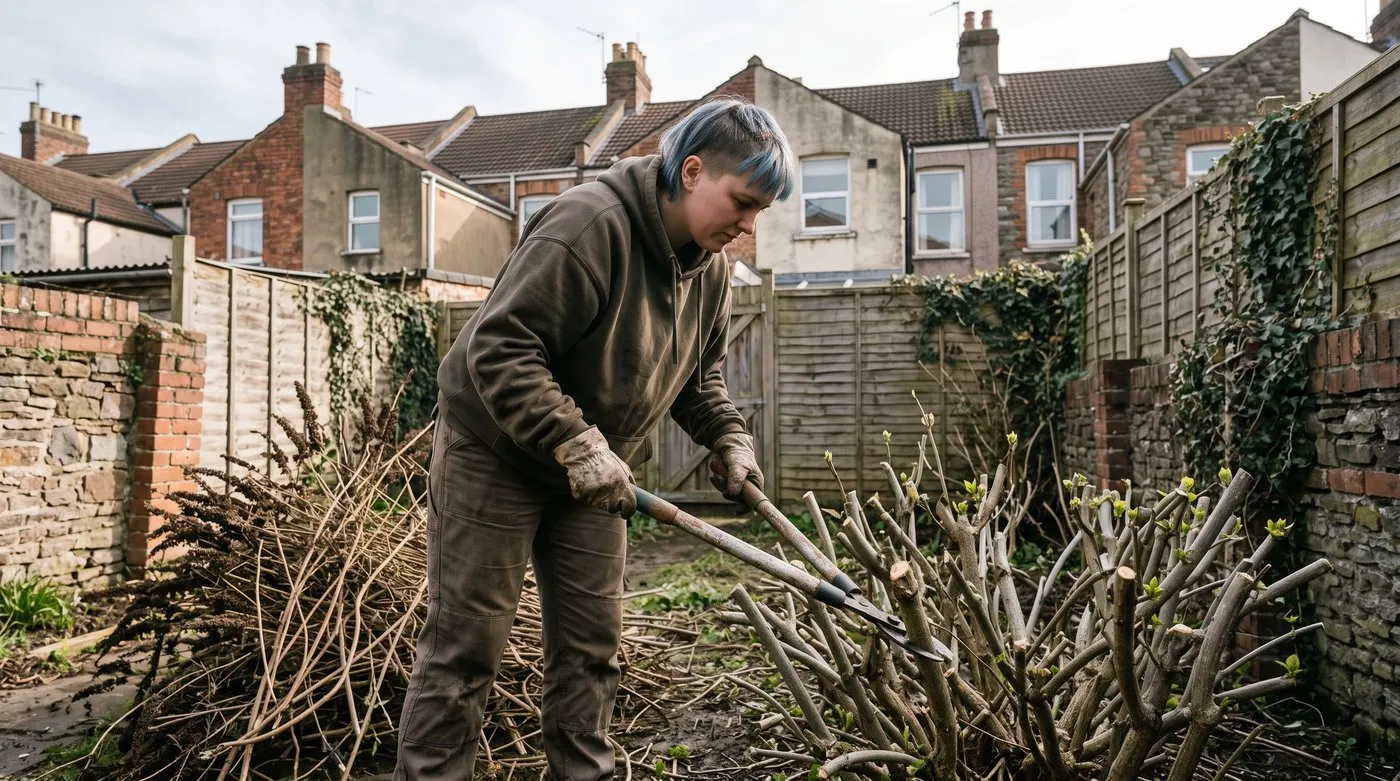
Cutting back to 30 to 60cm feels drastic, but the new stems shoot up to full height by summer with big flower spikes at eye level.
What about autumn pruning?
You can tidy in autumn, but save the hard prune for March. On windy sites, shortening very tall stems by about half in autumn stops them rocking the roots loose over winter. Then do the proper hard prune to 30 to 60cm in March, before new growth starts.
Pruning buddleja alternifolia
Prune alternifolia only after it flowers, in late June or early July. Cut each flowered stem back to a strong new shoot lower down. Don’t prune it in spring. For other seasonal jobs, see our guide to spring gardening jobs in the UK.
Month-by-month buddleja care calendar
| Month | What to do |
|---|---|
| January | Nothing to do. Leave the old stems for now |
| February | Plan where to plant. Order named varieties |
| March | Hard prune davidii to 30 to 60cm. Feed and mulch |
| April | New growth races away. Good time to plant |
| May | Just keep weeds down round the base |
| June | Alternifolia flowers. Prune it once flowering ends |
| July | Davidii starts flowering. Butterflies arrive. Take cuttings |
| August | Peak flowering. Deadhead faded spikes |
| September | Keep deadheading. Take more cuttings |
| October | Flowering ends. Shorten very tall stems on windy sites |
| November | Check summer cuttings for roots |
| December | Pot on rooted cuttings. Keep them in a cold frame or sheltered spot |
How to plant buddleja
Plant pot-grown buddleja in spring for the best start, though any time the soil is workable is fine. Spring planting gives the roots a whole season to settle before winter.
Dig a hole twice as wide as the pot. Most soils need nothing more. On very hard ground, loosen the bottom of the hole. Set the plant at the same depth it was in its pot, backfill, firm in and water well. Water once a week in the first summer if it’s dry. After that, buddleja rarely needs watering.
It’s a great starting point for a dry, poor-soil garden. Pair it with lavender, rosemary and sedum for a border that almost looks after itself. Our guide to drought-tolerant plants for UK gardens has more ideas.
Managing self-seeding and invasive spread
Deadhead faded spikes before they set seed. Buddleja makes huge amounts of tiny, wind-blown seed. In the garden that means seedlings in paths, walls and borders. Further afield, it spreads onto railway lines, waste ground and riverbanks.
Cut each spike back to the next pair of leaves or side shoots as soon as the flowers fade. Bonus: regular deadheading also encourages more, smaller spikes, so flowering carries on into September.
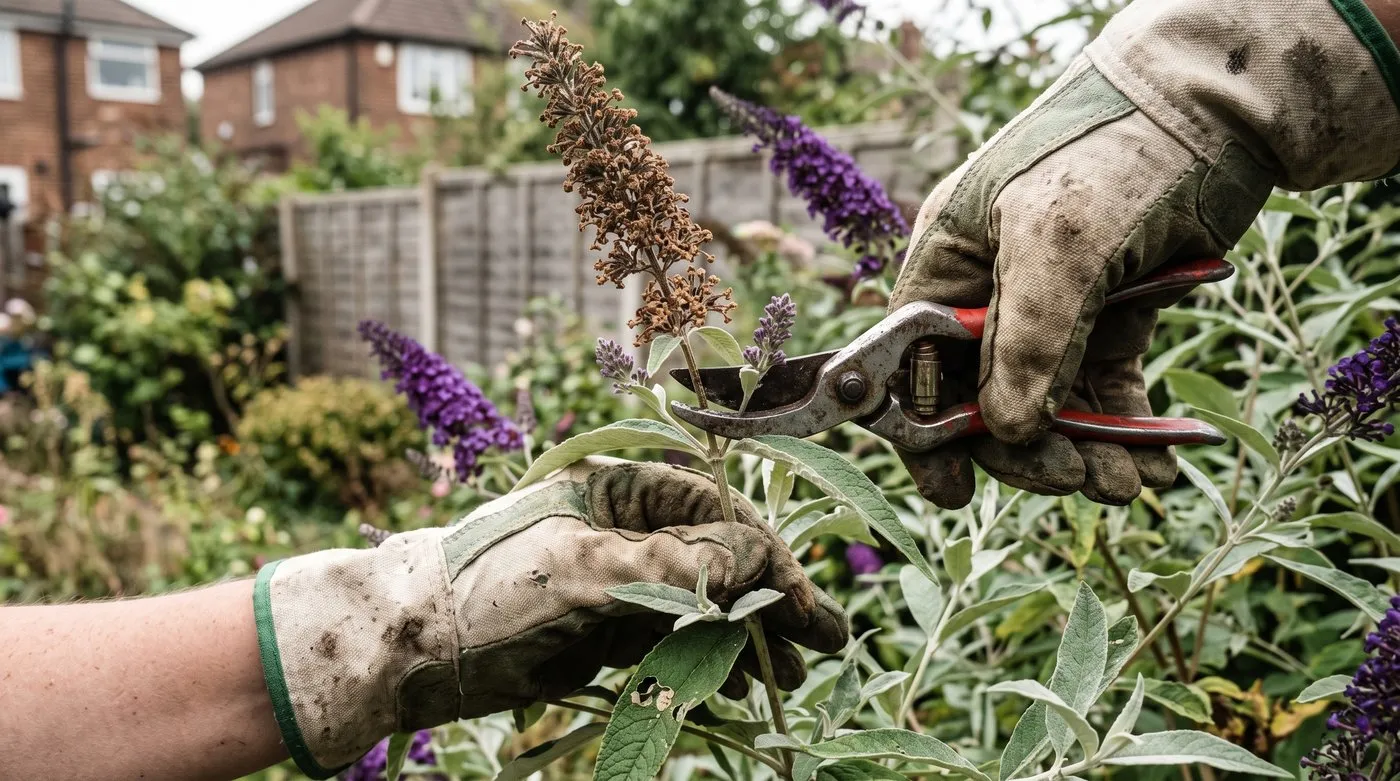
Snip off faded spikes before they set seed. You’ll stop seedlings popping up everywhere, and get more small spikes into September.
How to take buddleja cuttings
Buddleja cuttings are some of the easiest to root. They’re perfect if you’re new to taking cuttings.
Take cuttings from July to September. Choose side shoots without flowers, 10 to 15cm long, firm at the base but still bendy at the tip. Cut just below a leaf joint, strip off the lower leaves and leave two or three pairs at the top. Pinch out the soft tip.
Push them 3 to 4cm deep into small pots of half multipurpose compost, half perlite. Water, then cover with a propagator lid or a clear bag held on with an elastic band. Keep on a windowsill or in a cold greenhouse, out of hot midday sun.
Roots usually form in four to six weeks. Give a gentle tug: if it resists, roots are growing. Pot each one into its own 9cm pot and keep them in a cold frame over winter. Plant out next April. Our guide to how to sow seeds indoors covers more basics of raising young plants.
Buddleja and butterflies
It’s called the butterfly bush for good reason. The flower spikes are packed with nectar and easy for butterflies to land on and feed.
Peacocks, red admirals, painted ladies, small tortoiseshells, commas, brimstones and gatekeepers are regular visitors. Whites and holly blues stop by too. On a warm August day, a buddleja in full flower is a real treat to watch.
Now you’ve got buddleja sorted, read our guide on the best plants for butterflies in the UK for a full wildlife-friendly planting plan.
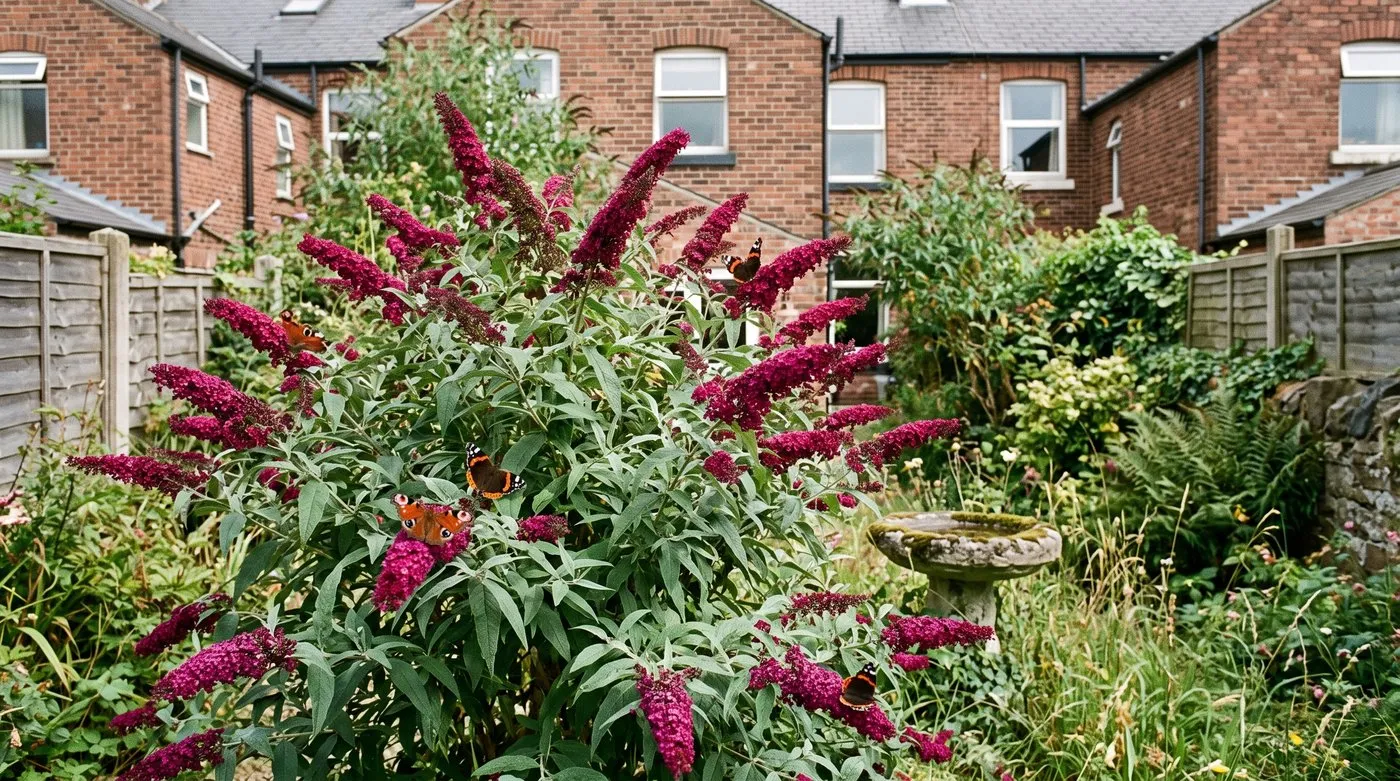
On a warm August day a buddleja in full flower can be busy with butterflies. A sunny spot gives the most nectar, and the most visitors.
Frequently asked questions
When should I prune buddleja in the UK?
Prune buddleja in March, cutting all stems back hard to 30 to 60cm. It flowers on new growth, so a hard spring prune gives strong new stems that flower from July to September. You can shorten very tall stems in autumn to stop them rocking in the wind, but save the main prune for March.
How big does buddleja grow in one year?
A hard-pruned buddleja usually regrows 2 to 3m in one season. That’s very fast for a shrub, which is why yearly pruning matters. Without it, the plant soon outgrows its space and the flowers end up high above your head.
Is buddleja invasive in the UK?
It seeds itself very freely, so it can spread. You’ll see it on railway banks, waste ground and old walls. It isn’t illegal to grow, but it’s kind to deadhead the faded spikes before the seed ripens, so it doesn’t spread into the wild.
Can I grow buddleja in a pot?
Yes, dwarf types like the Buzz series grow well in big pots. Use a pot 40 to 50cm across with John Innes No. 3 compost and good drainage. Prune hard each March just like a garden plant. Pots dry out fast, so water often in hot weather.
What is the difference between Buddleja davidii and Buddleja alternifolia?
Davidii flowers on new growth, while alternifolia flowers on last year’s stems. Davidii is the common butterfly bush, pruned hard in March and flowering July to September. Alternifolia is the weeping buddleja that flowers in June. Never prune alternifolia in spring, or you’ll cut off the flowers. Prune it straight after flowering instead.
Why is my buddleja not flowering?
Usually it’s too shady or hasn’t been pruned in spring. Buddleja needs at least five hours of direct sun a day. In shade it makes leaves, not flowers. Move shaded plants somewhere sunnier, or prune hard in March and give it a season.
How do I take buddleja cuttings?
Take 10 to 15cm cuttings from July to September. Cut just below a leaf joint and strip off the lower leaves, leaving two or three pairs at the top. Push them into pots of half compost, half perlite, water and cover with a clear bag. Keep them bright but out of direct sun. Roots usually form in four to six weeks.
Our team produces practical UK gardening guidance from source research, contributor records and established horticultural practice. Editorial standards are overseen by Matt W.


