Key takeaways
- Aeoniums are not frost hardy, so bring pots under cover before nights fall towards 5C
- They grow mainly from autumn to spring and rest in hot summer weather
- Water when the compost has dried out, and keep them much drier in summer
- Plenty of light keeps rosettes compact and colourful, especially Pink Witch and Schwarzkopf
- Use gritty, free-draining compost in a pot with drainage holes
- Stem cuttings root easily and are the best way to rescue a leggy plant
Aeoniums are tender succulents with neat rosettes of fleshy leaves, from lime green to almost black. In the UK they live in pots: outside in summer, under cover in winter. The two things to remember are that they can’t take frost, and they grow in the cooler months and rest in summer. Get those right and they’re easy.
This guide covers aeoniums specifically. For succulents that can stay out all year, see the guide to hardy cacti and succulents. For general indoor succulent care, the guide to succulents indoors has more.
Why aeoniums grow in winter
Most succulents grow in summer and rest in winter. Aeoniums do the opposite. They come mainly from the Canary Islands, where summers are hot and dry. They rest through the heat and grow when it’s cooler and damper.
In hot weather a resting aeonium curls its leaves into a tighter rosette and may drop some lower leaves. That’s normal. From autumn to spring, the rosettes open out and put on new growth.
This cycle shapes everything: when you water, when you feed, and what’s normal. Water more in the growing season, much less in summer.
Choosing aeonium varieties
Most aeoniums sold in the UK are easy to grow. The coloured ones need more light to keep their colour.
| Variety | Colour | Habit | Notes |
|---|---|---|---|
| Pink Witch | Pink, cream and green | Compact | Needs lots of light to stay pink |
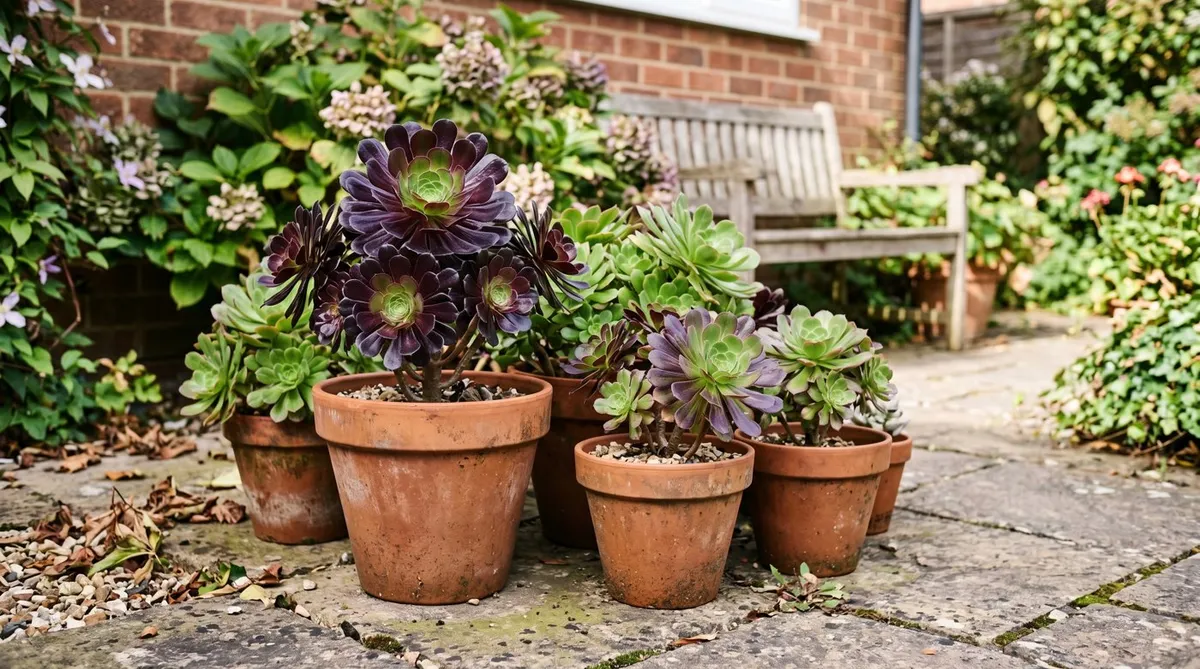
| Schwarzkopf (also sold as Zwartkop) | Very dark purple, almost black | Tall and branching | Darkest in full sun |
| Sunburst | Cream and green stripes, pink edges | Large rosettes | Slower growing |
| Mardi Gras | Red, green and yellow | Compact | Colours brightest in good light |
| Kiwi | Yellow and green with red edges | Compact, branching | Easy and colourful |
| Aeonium arboreum | Plain green | Branching, shrubby | A good, easy starter |
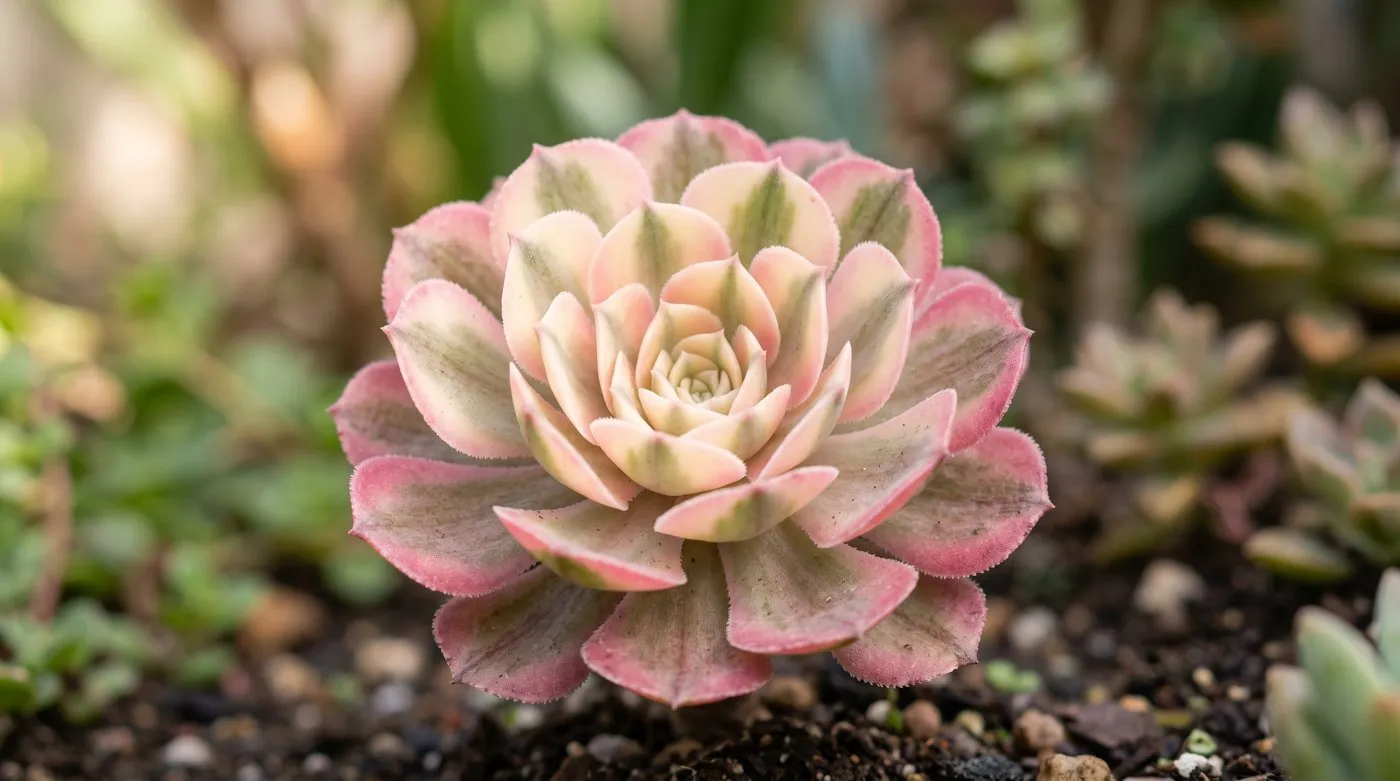
Pink Witch shows its best pink and cream colouring in bright light. In shade it fades towards green.
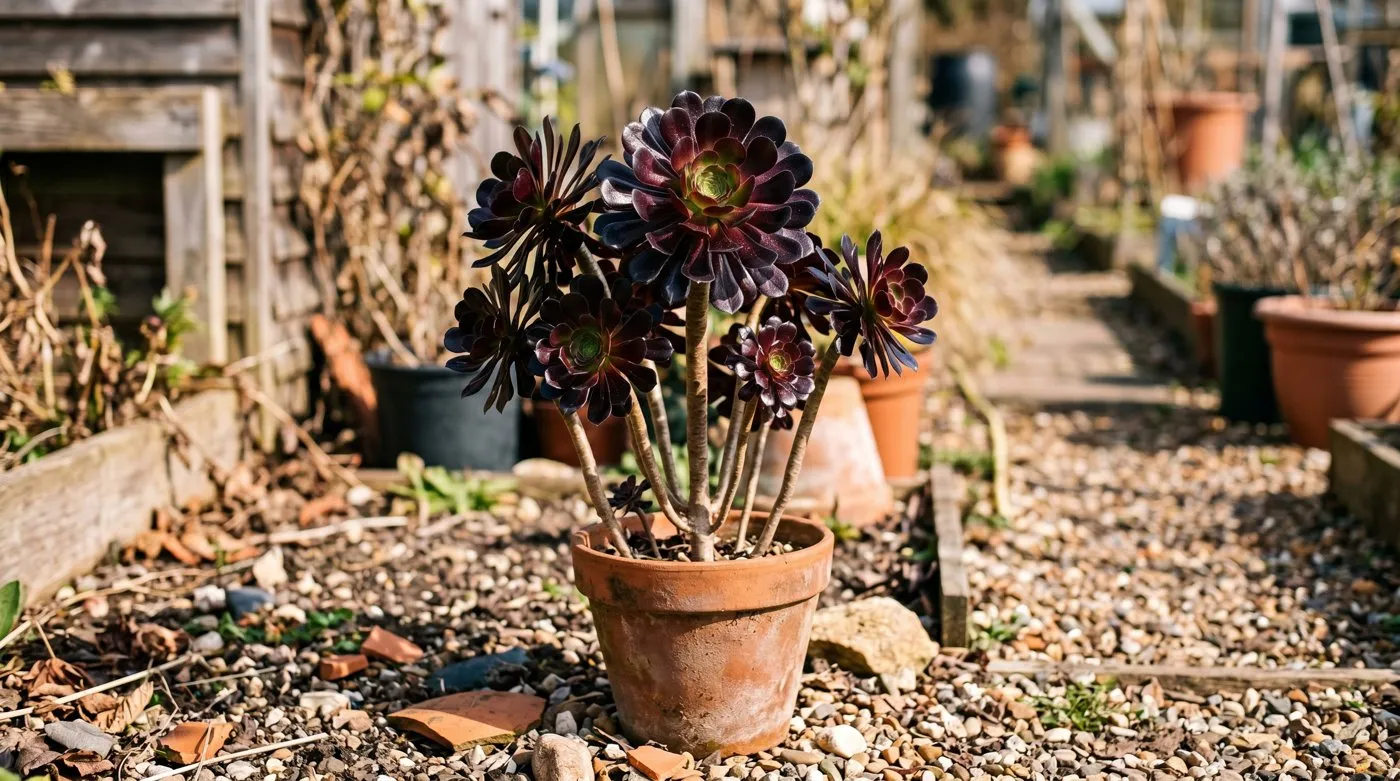
Schwarzkopf is darkest in full sun. In shade the rosettes turn greener.
How to water aeoniums
Water during the growing season, from autumn to spring, whenever the compost has dried out. Push a finger in: if the top few centimetres are dry, water well and let the extra drain away.
In summer, when the plant is resting, water much less. Give a small drink only if the rosettes look shrivelled. Wet compost in warm weather is the quickest way to rot, where the stem base turns soft and brown.
In winter under cover, growth slows in low light, so water lightly and less often. Water the compost, not the middle of the rosette, and never leave the pot standing in water.
How much light do aeoniums need?
Give aeoniums as much light as you can. Good light keeps the rosettes tight and the colours strong.
Too little light causes etiolation: the stem stretches and the rosette gets smaller and paler. A stretched stem won’t shrink back, but you can cut the rosette off and root it as a cutting.
Indoors, use a south- or west-facing windowsill or a conservatory. Outdoors in summer, a sunny, sheltered spot is ideal. When moving plants outside, give them a week or two in light shade first so the leaves don’t scorch.
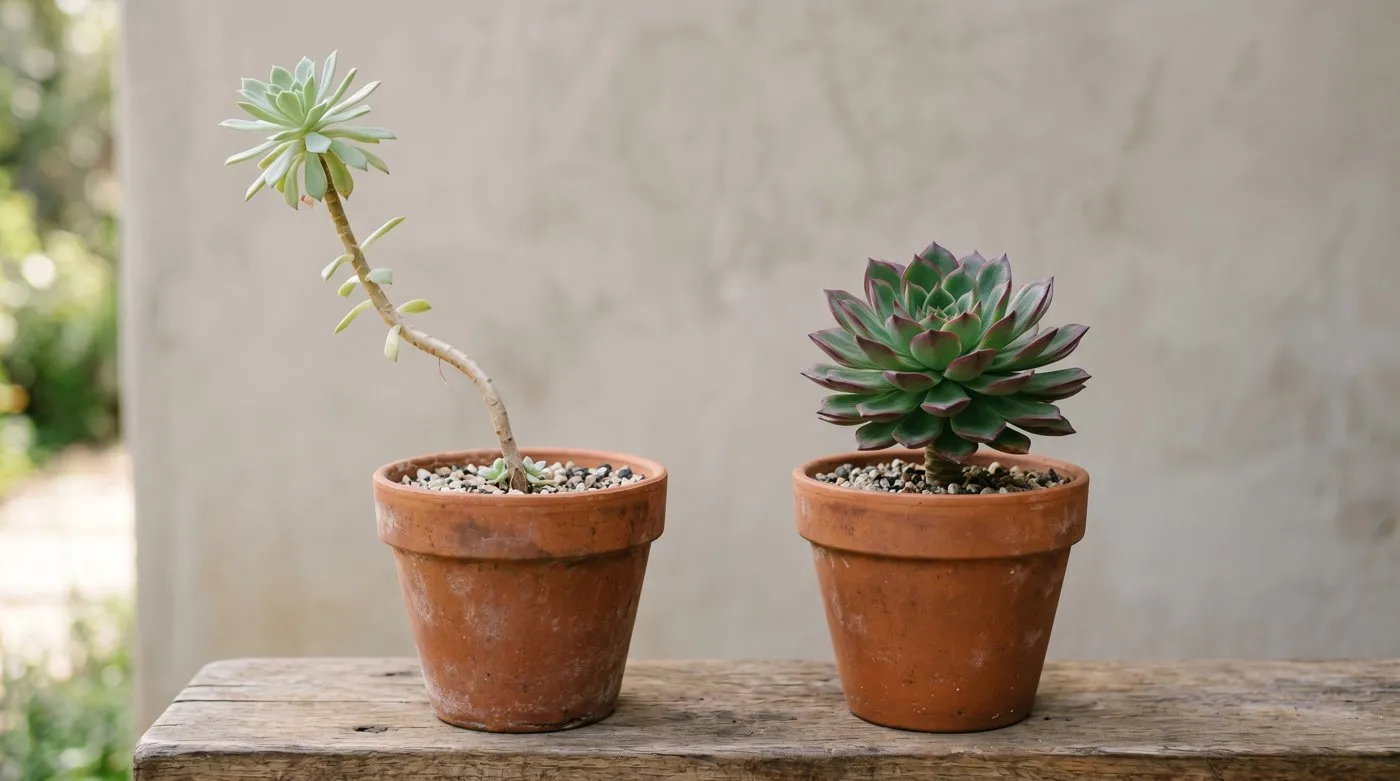
A plant short of light stretches (left). Plenty of light keeps the rosette tight and compact (right).
Best compost and pots for aeoniums
Use a gritty, free-draining compost. Mix two parts peat-free multipurpose compost with one part horticultural grit or perlite. Aeoniums rot in heavy, wet compost.

Mix in plenty of grit or perlite and use a pot with drainage holes. Aeoniums hate sitting in wet compost.
Terracotta pots are a good choice because the clay helps the compost dry out between waterings. Always use a pot with drainage holes. A layer of grit on top keeps the stem base dry.
Grow aeoniums in pots rather than borders. That way you can move them under cover before the first frost.
Feeding aeoniums
Aeoniums don’t need much feeding. During the growing season, give a liquid feed at half strength about once a month. Don’t feed in summer while they’re resting.
Too much feed gives soft, floppy growth that rots more easily. Plants in fresh compost rarely need feeding for the first few months. The guide to feeding houseplants explains the basics.
How to overwinter aeoniums
Bring aeoniums under cover before nights drop towards 5C, usually in October, or earlier in Scotland and the north. Frost kills them.
Give them a bright, cool, frost-free spot. A frost-free greenhouse, porch, conservatory or cool bright windowsill all work. A dark garage won’t do: aeoniums keep growing in winter and stretch badly without light.
Keep them cool rather than warm. A warm, centrally heated room gives soft, stretched growth. Water lightly in winter, and put them back outside once all risk of frost has passed in late May or June. The guide to overwintering plants covers other tender plants that need the same care.
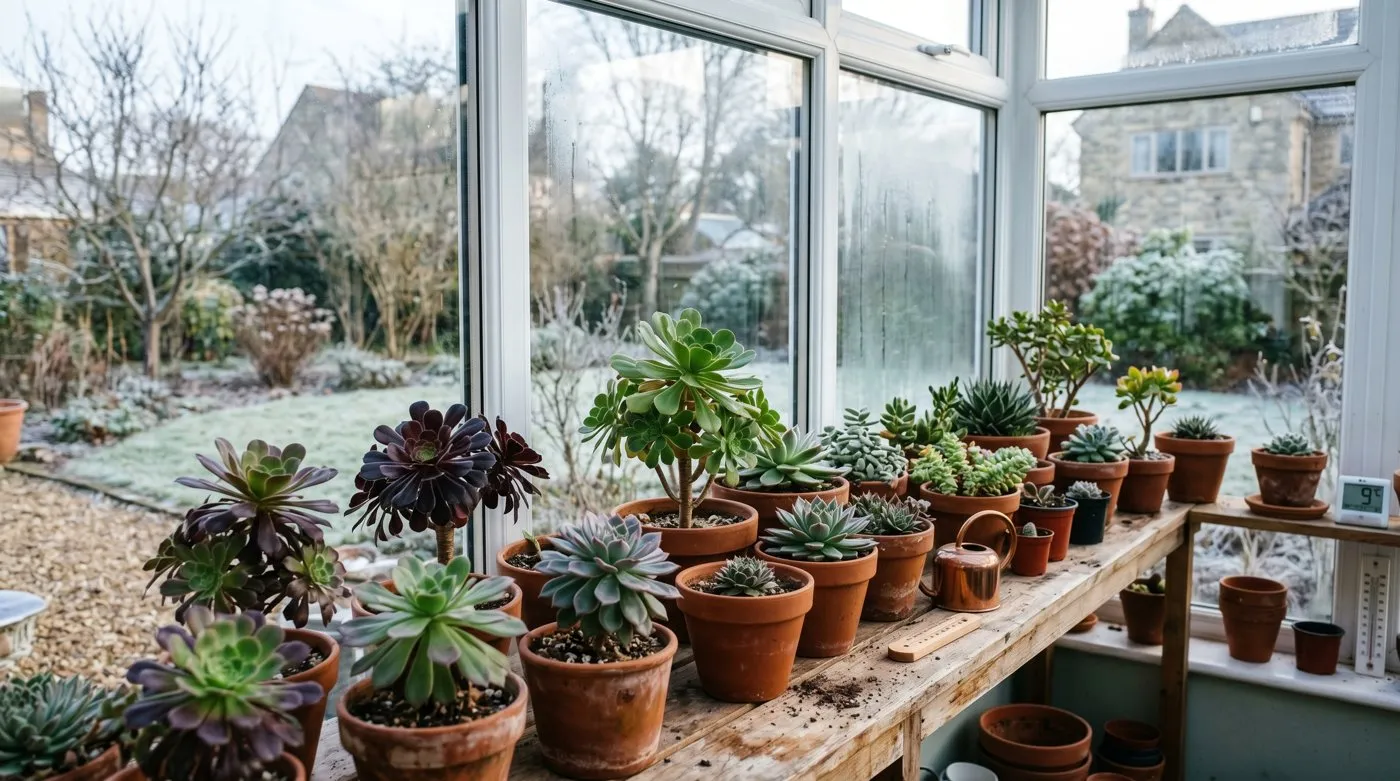
A bright, cool, frost-free spot keeps aeoniums growing steadily through winter without stretching.
How to take aeonium cuttings
Aeoniums are very easy to grow from stem cuttings. It’s the best way to rescue a leggy plant and make more.
- In spring or autumn, cut off a rosette with 5-10cm of stem using clean secateurs.
- Pull off the lowest few leaves.
- Leave the cutting somewhere dry and shady for a few days until the cut end dries and seals.
- Push the stem into gritty compost and water lightly.
- Keep it in bright light, out of fierce sun. Water sparingly until it roots.
Roots usually form within a few weeks. A gentle tug that meets resistance means it has rooted. The leftover stump often sprouts new rosettes too. The guide to plant propagation covers cuttings of all kinds.

Cut a rosette with a short length of stem, let the cut end dry for a few days, then pot it up in gritty compost.
Flowering and leaf drop
Leaf drop in summer is normal. A resting aeonium sheds some lower leaves and tightens its rosette. Only worry if the stem or rosette turns soft or mushy, which points to rot.
Flowering is a mixed blessing. A mature rosette may send up a tall cone of yellow flowers, usually in spring. After flowering, that rosette dies. On branching plants, the other rosettes carry on. On single-rosette plants, take cuttings from any side shoots so you keep the plant going.
Aeonium pests
Aeoniums are fairly trouble-free, but a few pests can turn up, especially indoors in winter.
- Mealybugs: white, woolly clusters in leaf joints. Wipe them off with a damp cotton bud and check weekly. The guide to mealybugs covers bigger outbreaks.
- Aphids: clusters on new growth and flower stems. Squash them or wash them off.
- Vine weevil: grubs eat the roots, so the plant wilts or wobbles. Check the roots when repotting. The guide to vine weevil explains biological controls.
Month-by-month aeonium calendar
| Month | What to do |
|---|---|
| January to February | Keep cool, bright and frost-free. Water lightly when dry |
| March to April | Growth picks up. Water when dry. Repot if needed. Take cuttings |
| May | Feed monthly at half strength. Move outside after the last frost, in light shade first |
| June to August | Resting. Water sparingly. No feed. Expect some lower leaf drop |
| September | Growth restarts as nights cool. Water when dry. Take cuttings |
| October | Bring under cover before nights fall towards 5C |
| November to December | Bright, cool spot. Water lightly. Watch for mealybugs |
Common mistakes with aeoniums
Watering a lot in summer. Resting plants sitting in warm, wet compost rot. Keep them on the dry side.
Leaving them out too late. One frost can kill them. Bring them in early in autumn.
Too little light. Dim spots give leggy, pale plants. Use your brightest spot.
Heavy compost. Plain multipurpose stays too wet. Add grit or perlite.
Panicking at summer leaf drop. It’s normal resting behaviour. Don’t water or feed more.
Frequently asked questions
Are aeoniums hardy in the UK?
No, aeoniums are not frost hardy. Grow them in pots and move them into a bright, frost-free greenhouse, conservatory or cool room before nights drop towards 5C, usually in October.
Why does my aeonium grow in winter and stop in summer?
Aeoniums are winter growers, unlike most succulents. In their Canary Islands home, summers are hot and dry, so they rest then and grow in the cooler, damper months. That’s why you water more from autumn to spring.
Why is my aeonium leggy and losing its colour?
It isn’t getting enough light. In dim spots the stems stretch and coloured types fade to green. Move it somewhere brighter. A stretched stem won’t shrink, but you can cut off the rosette and root it as a cutting.
How do you keep Pink Witch aeonium pink?
Give it as much bright light as you can. Its pink and cream colouring is strongest in good light and fades in shade. A sunny windowsill, conservatory or sheltered sunny patio in summer works well.
Why are the lower leaves of my aeonium falling off?
Losing a few lower leaves in summer is normal. The plant is resting and tightens up its rosette. Only worry if the rosette or stem turns soft and mushy, which usually means rot from too much water.
Do aeoniums die after they flower?
Yes, the rosette that flowers dies afterwards. On branching plants the other rosettes carry on. On single-rosette plants, take cuttings or keep any side shoots so you don’t lose the plant.
What compost do aeoniums need?
Use a gritty, free-draining mix. Two parts peat-free multipurpose compost to one part horticultural grit or perlite works well. Terracotta pots with drainage holes help the compost dry out between waterings.
Aeoniums look great with other sun-lovers. For more bright, airy companions under glass, read the guide to conservatory houseplants, or browse more plant guides.
Our team produces practical UK gardening guidance from source research, contributor records and established horticultural practice. Editorial standards are overseen by Matt W.