Key takeaways
- Winter wet kills more outdoor succulents than cold, so drainage matters most
- Houseleeks, hardy sedums and Yucca filamentosa cope with UK rain in a gritty bed
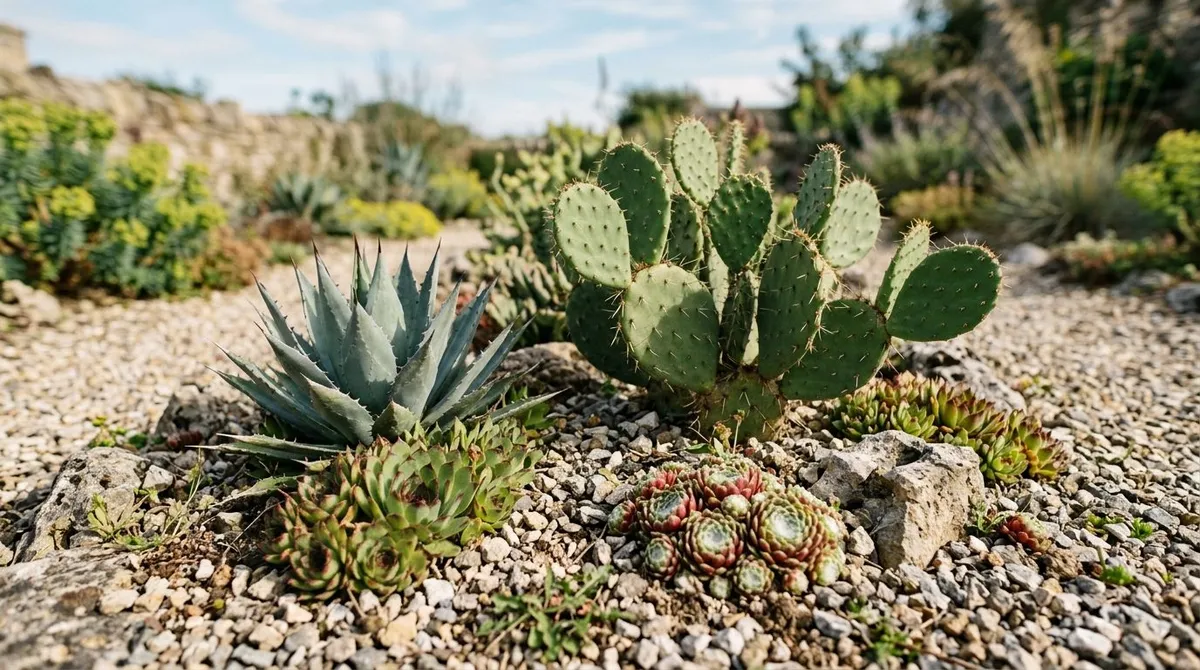
- Hardy prickly pears, Agave and hedgehog cacti need dry roots and a winter rain cover
- Build a raised bed of roughly half sharp grit, in the sunniest spot you have
- Echeveria, Aeonium and most Crassula are tender and must come indoors for winter
- Don't water outdoor succulents from autumn to spring; the shrivelled look is normal
You can grow cacti and succulents outside in the UK, and some will take hard frosts without a fuss. The trick is keeping them dry. Winter rain sitting around their roots kills far more of them than cold ever does.
Many hardy succulents come from high, dry places where winter nights are freezing but the soil stays dry. Give them the same, with sharp drainage and a bit of cover from rain, and they’ll do well. This guide covers which ones to choose, how to plant them and how to get them through winter. Tender rosettes like aeoniums are different: see our guide to growing aeonium for keeping those in pots.
Why winter wet kills succulents, not cold
A hardy succulent can sit through a hard frost if its roots are dry. Put the same plant in cold, soggy soil and it rots, even in a mild winter.
That’s why hardiness labels can mislead. A plant described as hardy to a certain temperature usually means hardy with dry roots. In a wet February, it can rot long before it gets that cold. So when choosing and siting a plant, ask two questions. Will it stand UK rain? And can you get the water away from its crown?
Everything below follows from that. Grit and rain covers do more good than fleece or heaters. The same principles apply to other drought-tolerant plants, but succulents need them even more.
Which cacti and succulents are hardy in the UK?
The most reliable are houseleeks (Sempervivum), hardy sedums, hardy ice plants (Delosperma), Yucca filamentosa, hardy prickly pears (Opuntia), hedgehog cacti (Echinocereus) and a few tough Agave.
| Plant | Copes with UK rain? | Best for |
|---|---|---|
| Houseleeks (Sempervivum) | Yes | Anywhere, including Scotland. The easiest start |
| Hardy sedums | Yes | Gravel, walls, roofs and borders |
| Yucca filamentosa | Yes | Architectural shape in a sunny bed |
| Hardy ice plant (Delosperma) | Mostly, in sharp drainage | Wall tops and bank edges in sun |
| Opuntia humifusa and O. phaeacantha | No, needs dry roots | Raised gritty beds with a winter rain cover |
| Opuntia fragilis | Borderline | Colder gardens, in very sharp drainage |
| Hedgehog cactus (Echinocereus) | No | Mild gardens, raised beds or pots under cover |
| Agave montana and A. parryi | No | Mild gardens, gravel slopes or movable pots |
Read the rain column first. Plants marked “No” need a rain cover in winter, or a pot you can move under shelter.
Houseleeks are where everyone should start. They ignore cold and rain and slowly spread into tight clumps of rosettes. They grow on wall tops, in troughs and even on roofs. Our guide to growing sedum covers the other easy, rain-proof option, and growing yucca covers the bold, spiky one.
Hardy prickly pears are the cactus most people picture. In autumn the pads shrivel and flop. That isn’t death: the plant is drying itself out to cope with the cold. They plump up again in spring and may flower yellow in summer.
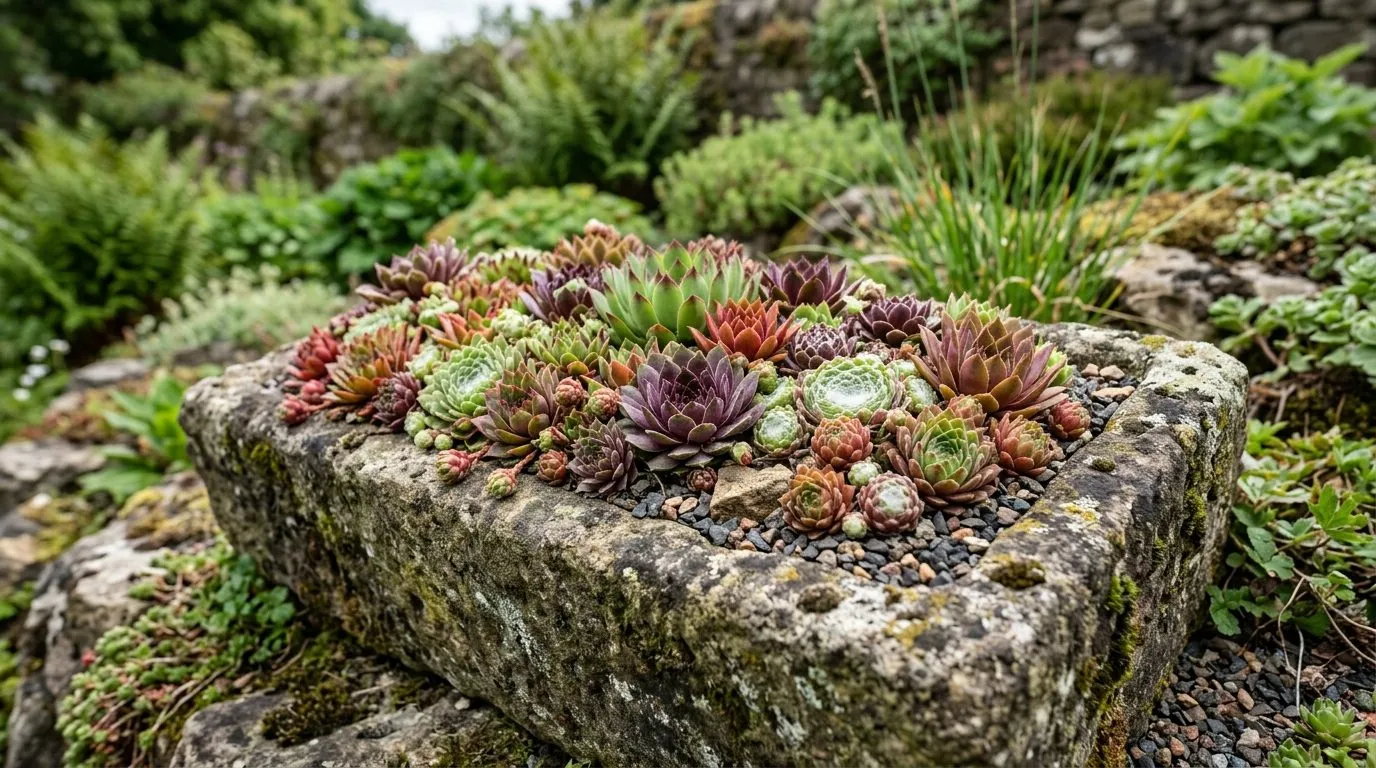
A trough of houseleeks is about as easy as gardening gets. They shrug off frost and rain and slowly fill every gap.
How to build a gritty bed for outdoor succulents
Build a raised bed of roughly half sharp grit, sitting above the surrounding ground. This matters most on heavy clay, which holds water all winter.
- Pick the sunniest, driest spot you have. A south-facing wall behind it helps.
- Raise the bed at least 20cm above ground level, more on clay. A gentle slope helps rain run off.
- Add a base of rubble or broken brick if your soil is heavy.
- Fill with a mix of about half angular horticultural grit and half topsoil. Don’t use builder’s sand, which packs down and holds water.
- Plant so the crowns sit slightly above the soil, never in a dip.
- Top with a layer of grit or stone chippings to keep the necks of the plants dry.
A crevice bed, with stone slabs set on edge and grit packed between, takes this further. Roots run deep and cool while the surface stays dry. Our guide to building a crevice garden shows how.
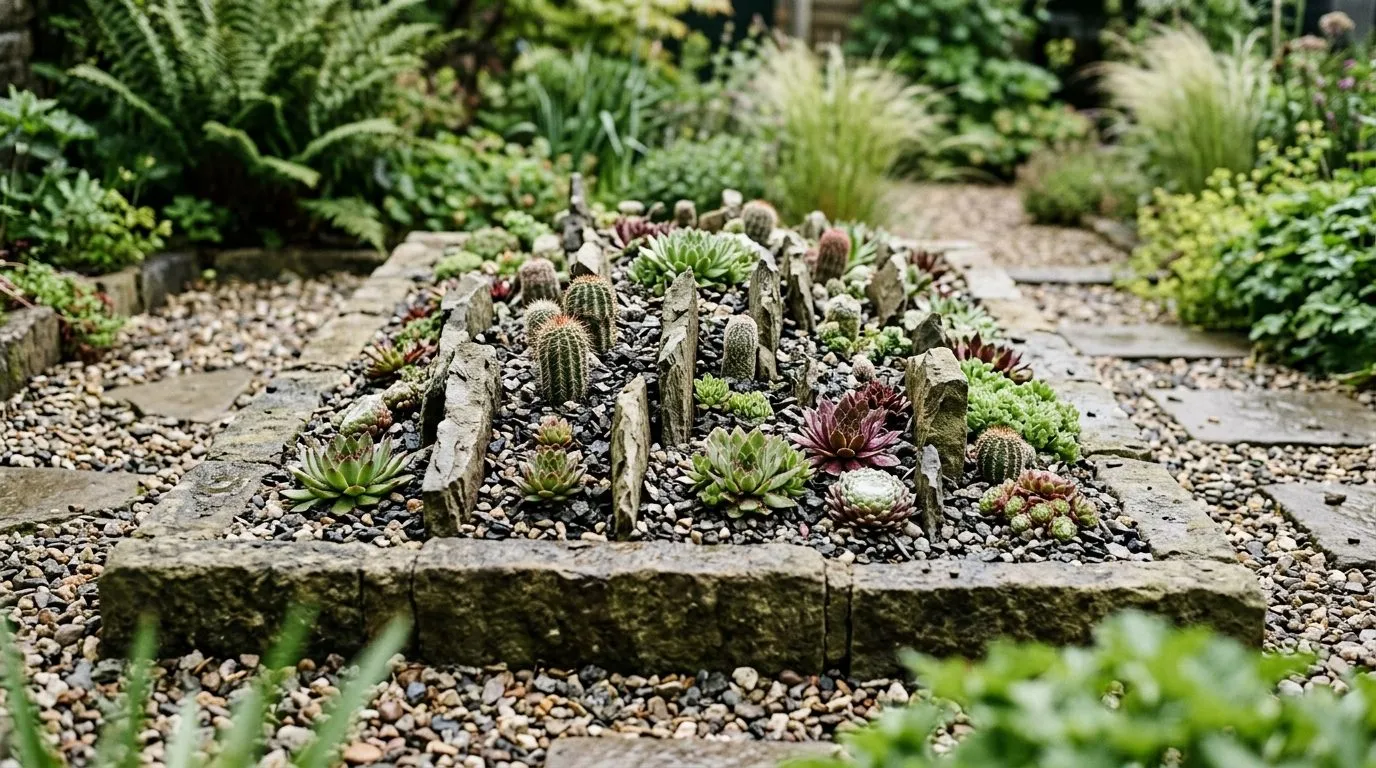
Stone slabs set on edge with grit in between keep the surface bone dry. Small cacti and houseleeks tuck neatly into the gaps.
Planting succulents in rockeries and gravel gardens
A sunny rockery or gravel garden is a natural home for hardy succulents. The gravel keeps crowns dry, keeps weeds down and holds a little warmth from the sun.
Tuck rosettes and pads into pockets of grit between stones. Avoid hollows where rain collects. This style mixes well with sun-lovers like lavender, cistus and grasses. For the full method, see our guide to creating a gravel garden. In a small space, a stone or alpine trough on a sunny patio does the same job in miniature.
Hardy ice plants earn their place for flowers. They carpet a wall top or bank with bright daisy-like blooms through summer, then come through winter if the spot drains really sharply.
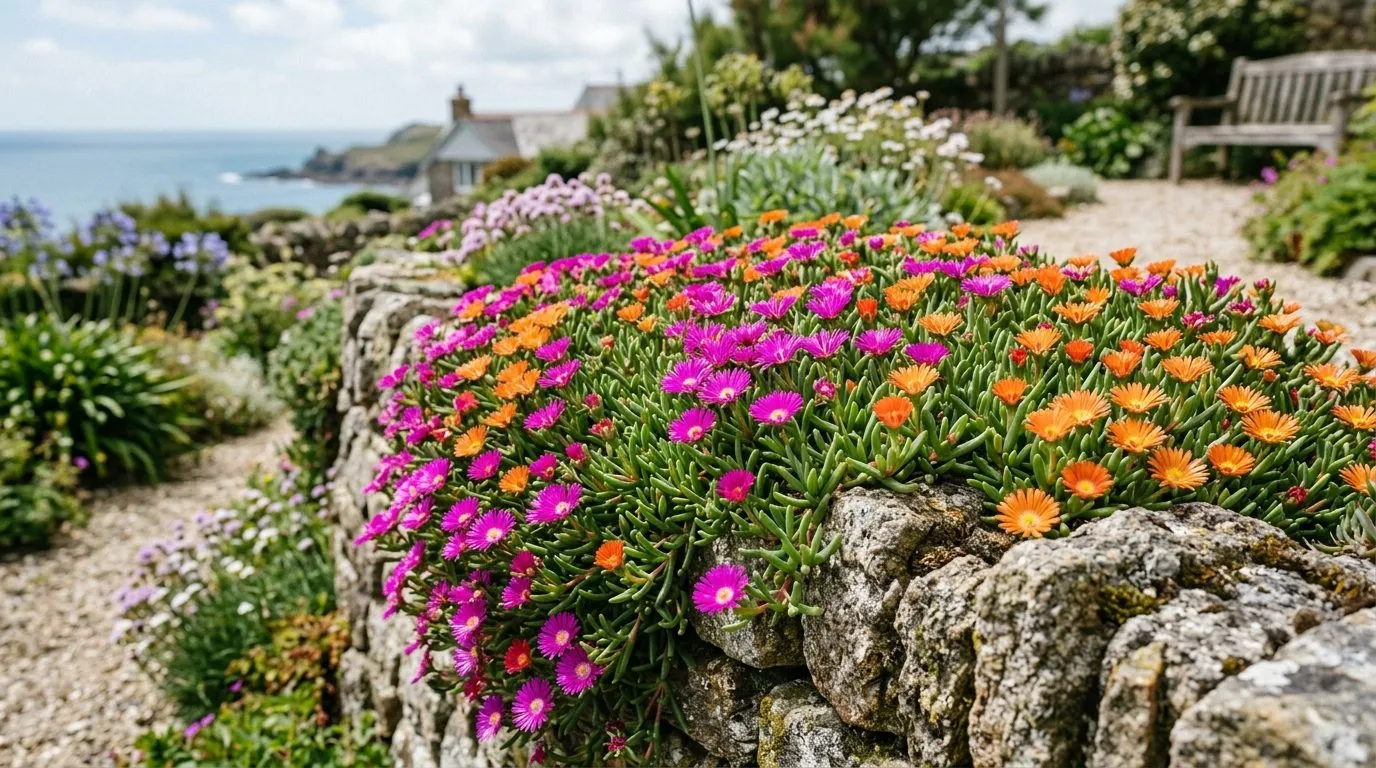
Hardy ice plants love tumbling over a sunny wall, where winter rain drains straight away. Mild coastal gardens suit them especially well.
Growing hardy cacti and succulents in pots
Pots drain best, but roots in a pot get colder than roots in the ground. The big advantage is that you can move them under cover for winter.
Use terracotta, which lets moisture escape through the sides. Fill with a gritty mix of about half grit and half peat-free compost. Stand every pot on feet so it never sits in water, and skip the saucer.
For the worst of winter, move pots of Agave and hedgehog cacti into a porch, under the eaves of the house or into a cold greenhouse. They don’t need heat. They just need their compost kept almost dry until spring.
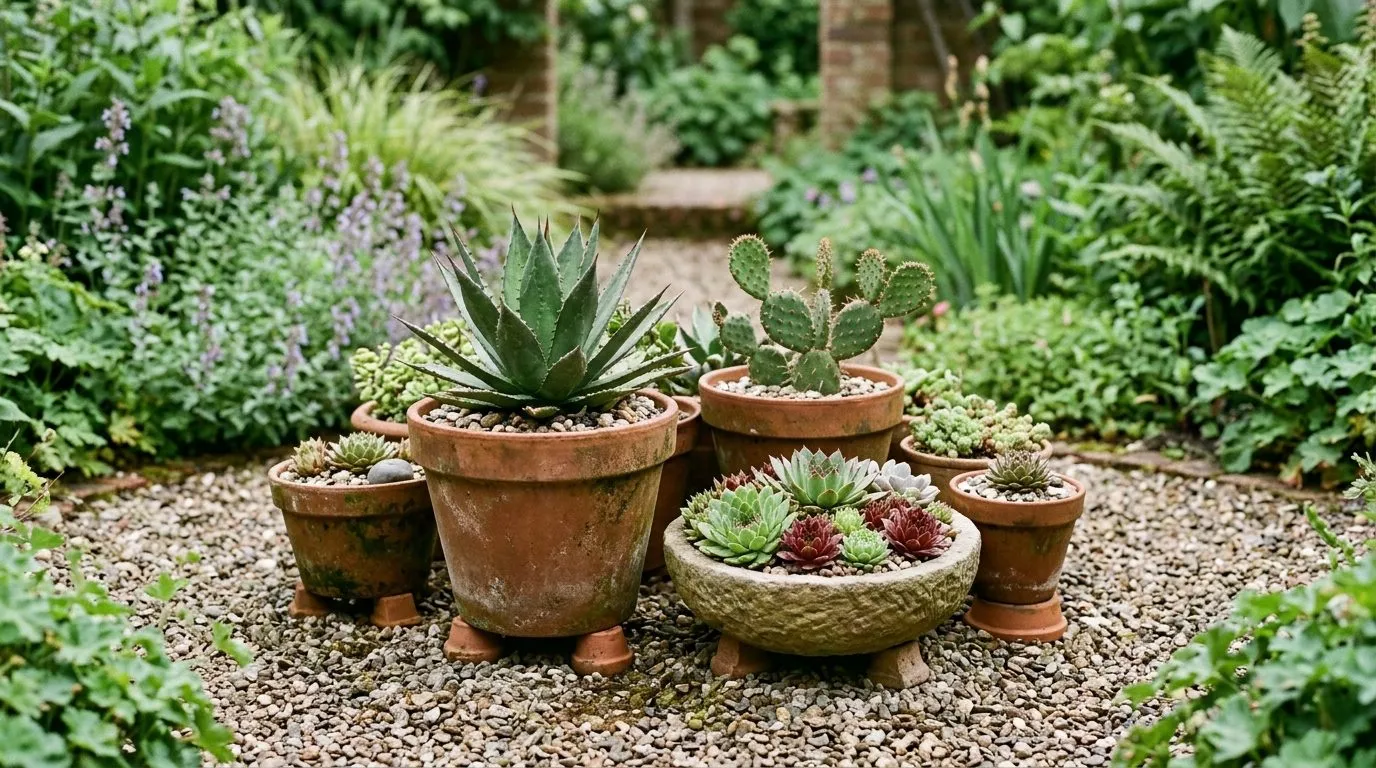
Raise pots on feet so water drains freely. Terracotta helps too, because it dries out faster than plastic.
How to protect outdoor succulents from winter rain
Fit a clear overhead rain cover from November to March over anything that doesn’t like rain. Leave the sides open so air can move.
A propped cold-frame lid, a sheet of clear plastic on bricks or a low frame, or a cloche all work. The aim is keeping rain off the crowns, not keeping them warm. If you close the sides, damp air hangs around and causes mould.
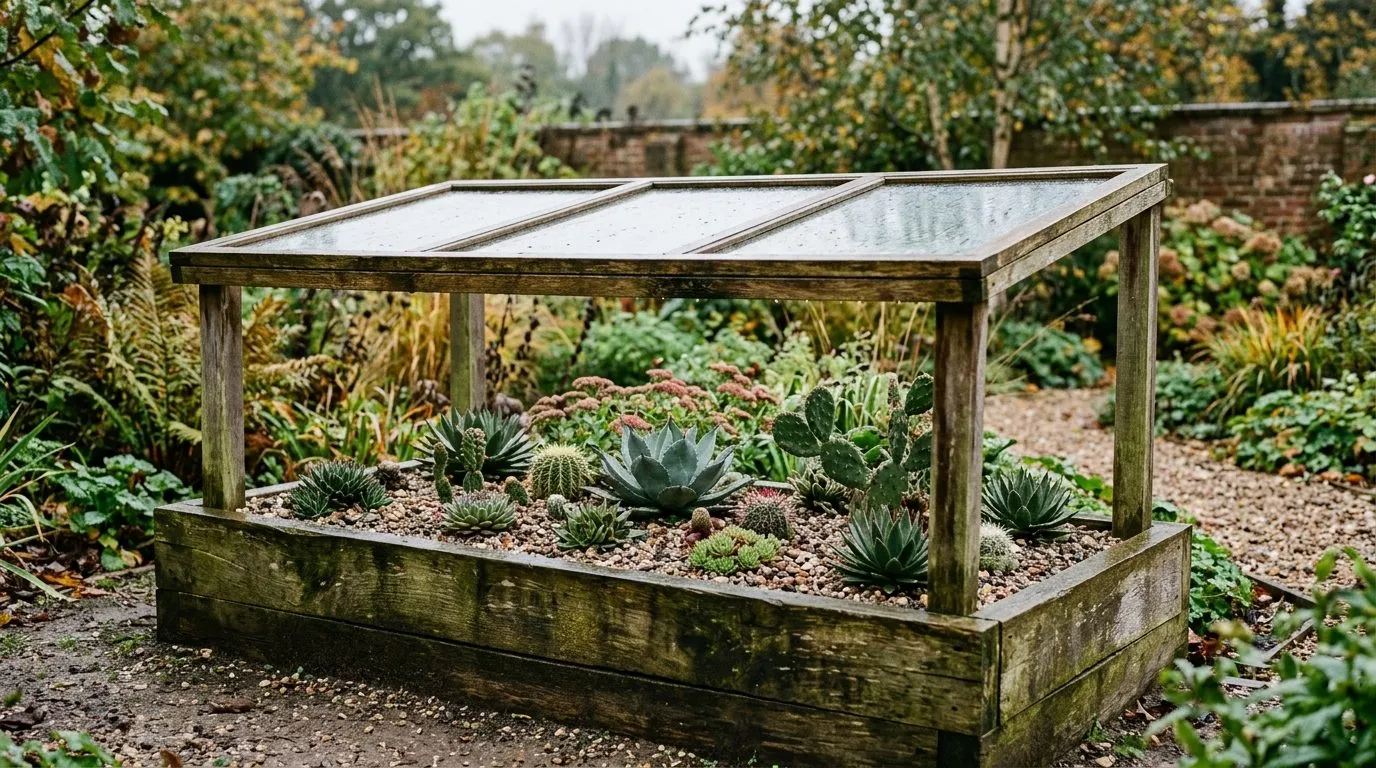
A simple clear roof with open sides keeps winter rain off without trapping damp air. Put it up in November and take it down in March.
What can you grow where you live?
Where you live sets the limit on what will survive without a greenhouse.
Mild coastal and south-west gardens have short, light frosts. Agave, hedgehog cacti and some chollas (Cylindropuntia) can live outside here with good drainage.
Most of England gets harder frosts. Stick to houseleeks, sedums, Yucca filamentosa, hardy ice plants and hardy prickly pears in a raised gritty bed, with a rain cover for the cacti.
Northern England, Scotland and cold inland gardens are the toughest. Houseleeks and sedums thrive. Opuntia fragilis is one of the hardiest cacti to try. Grow Agave and hedgehog cacti in pots you can move under cover.
Safety tip: Prickly pears and chollas have tiny barbed spines that are hard to remove from skin. Plant them away from paths and where children and pets play, and wear thick gloves when handling them.
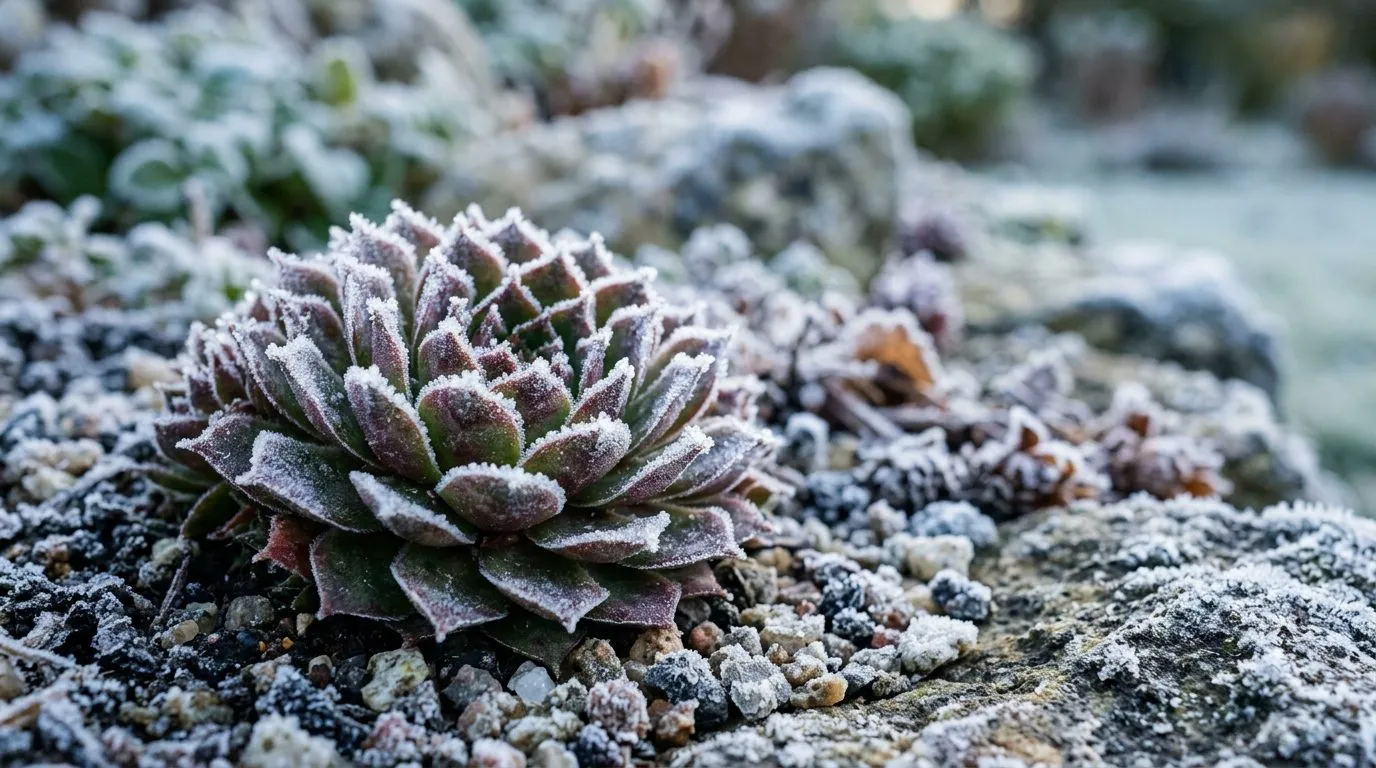
Frost on a houseleek looks dramatic, but it’s no problem as long as the gravel underneath drains well.
Common mistakes with outdoor succulents
Planting in ordinary compost. Multipurpose compost holds too much water and rots roots in winter. Mix in plenty of grit.
Skipping the rain cover. A cactus labelled hardy can still rot in a mild, wet winter. Anything that doesn’t like rain needs cover from November to March.
Planting in a dip. Low spots collect rain from all around. Always plant on a mound or slope.
Watering in winter. Outdoor succulents need almost no water from October to March. The shrivelled look is normal.
Choosing on cold-hardiness alone. Check a plant copes with wet as well as cold. Houseleeks and sedums pass both tests.
Growing the tender ones too? Our guide to caring for succulents indoors covers the types that never go outside. For more tough plants, browse the plants section.
Frequently asked questions
Can cacti survive winter outdoors in the UK?
Yes, a few hardy cacti survive UK winters outside if kept dry. Hardy prickly pears such as Opuntia humifusa are the easiest. Plant them in a raised gritty bed in full sun and keep winter rain off them, and they’ll cope with hard frosts.
Are succulents hardy in the UK?
Some are fully hardy, but many popular ones are not. Houseleeks, hardy sedums and hardy ice plants (Delosperma) can stay out all year. Echeveria, Aeonium and most Crassula are tender and need bringing in before the first frost.
What kills succulents outdoors in winter?
Cold, wet soil kills far more succulents than frost does. Water sitting around the roots and crown leads to rot, especially when it freezes. Sharp drainage and a cover to keep off rain prevent most winter losses.
Do hardy cacti need to come indoors?
No, truly hardy cacti can stay outside all year. They need dry roots rather than warmth. Cacti in pots are more exposed to cold and wet, so move them under the eaves, into a porch or into a cold greenhouse for the worst months.
What is the best drainage for outdoor succulents?
A raised bed of roughly half sharp grit and half topsoil drains best. Use angular horticultural grit, not builder’s sand, which packs down. Raise the bed above the surrounding ground so water runs away from the plants.
Which succulents survive a Scottish winter outdoors?
Houseleeks and hardy sedums are the safest bets for Scotland and the north. They shrug off frost and wet. Opuntia fragilis is one of the toughest cacti, but still needs very sharp drainage. Grow Agave in pots you can move under cover.
How do I protect outdoor succulents from winter rain?
Put a clear cover over them from November to March and leave the sides open. A sheet of clear plastic on a low frame, a propped cold-frame lid or a cloche all work. The aim is keeping rain off, not trapping warmth.
Our team produces practical UK gardening guidance from source research, contributor records and established horticultural practice. Editorial standards are overseen by Matt W.