Key takeaways
- Several yuccas are hardy outdoors in the UK. The houseplant yucca is not
- Full sun and sharp drainage matter most. Soggy winter soil causes rot
- Plant on a raised, gritty mound if your soil is heavy clay
- Established plants need no watering or feeding
- Tall spikes of white flowers appear in summer once plants are a few years old
- Wear gloves and eye protection, as the leaf tips are very sharp
Hardy yuccas give your garden bold, spiky drama for almost no effort. These evergreen rosettes of sword-shaped leaves love sun, shrug off drought and come through British winters. They’re not the soft houseplant you see in supermarkets. Outdoor yuccas are tough, spiky and built to last.
Once settled in free-draining soil, they need nothing from you: no watering, no feeding, no fuss. After a few years you’ll get a towering spike of white bell-shaped flowers. Here’s which types to grow, how to plant them, and how to avoid the one thing that kills more yuccas than cold: soggy soil.
Which yuccas are hardy in the UK?
Four types grow well outdoors in British gardens. The common houseplant yucca, Yucca elephantipes, is not one of them. Keep that one indoors.
| Type | How hardy | Size | Leaves | Flowers |
|---|---|---|---|---|
| Y. filamentosa | The toughest | Compact, about 1m | Soft, with curly white threads | Creamy white spikes |
| Y. gloriosa | Very hardy | 1.5-2m, forms a trunk | Stiff, dark green, very sharp | White, sometimes purple-tinged |
| Y. recurvifolia | Hardy in most of the UK | 1.5-2m | Softer, blue-green, arching | White |
| Y. rostrata | Hardy, hates winter wet | 2-3m trunk | Narrow, blue-grey | White |
Yucca gloriosa (Spanish dagger) is the one you’ll see most often. It slowly forms a stout trunk, with stiff, dark green leaves and very sharp tips. Older plants grow several heads. It does well by the coast and in town gardens.
Yucca filamentosa (Adam’s needle) is the toughest of all, so it’s the best pick for colder northern gardens. It stays low and compact without a trunk, and is the most likely to flower. The name comes from the curly white threads along the leaf edges. ‘Bright Edge’ and ‘Color Guard’ are popular striped varieties.
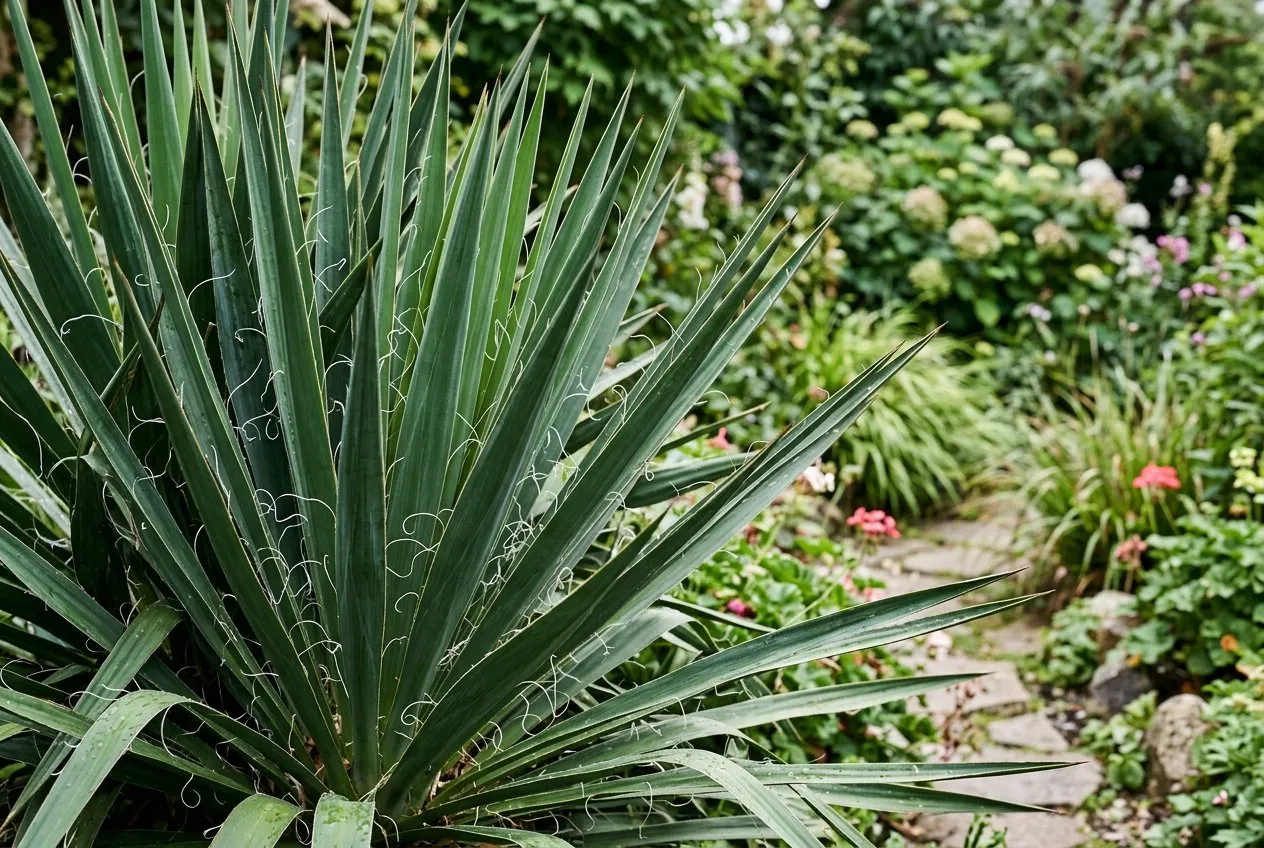 Yucca filamentosa is the toughest yucca and the most reliable for flowers.
Yucca recurvifolia has softer, arching blue-green leaves, so it’s less prickly to be near. It forms a short trunk with age and copes with winters in most of England and in sheltered spots elsewhere.
Yucca rostrata (beaked yucca) is the showstopper, with a tall trunk topped by a neat ball of narrow, blue-grey leaves. It handles cold well but dislikes long, wet winters.
Where to plant yucca
Full sun and sharp drainage. Get those two right and yucca is easy. Yuccas come from dry, sunny parts of the Americas. In shade they grow weakly and rarely flower.
Drainage matters most in the UK. Most yuccas that die here are killed by soggy winter soil, not cold. Heavy clay holds water around the roots for weeks, and they rot. Even the toughest yucca will die in a waterlogged clay bed.
Here’s the fix. Dig out a hole about 60cm wide and 40cm deep. Fill the bottom half with a 50:50 mix of sharp grit and topsoil. Plant so the crown sits 10 to 15cm above the surrounding soil, then top with gravel. This raised, gritty mound copies the rocky slopes where yuccas grow wild.
Sunny south-facing walls, gravel gardens and raised beds are perfect. Avoid shady spots, frost pockets and anywhere puddles form after rain.
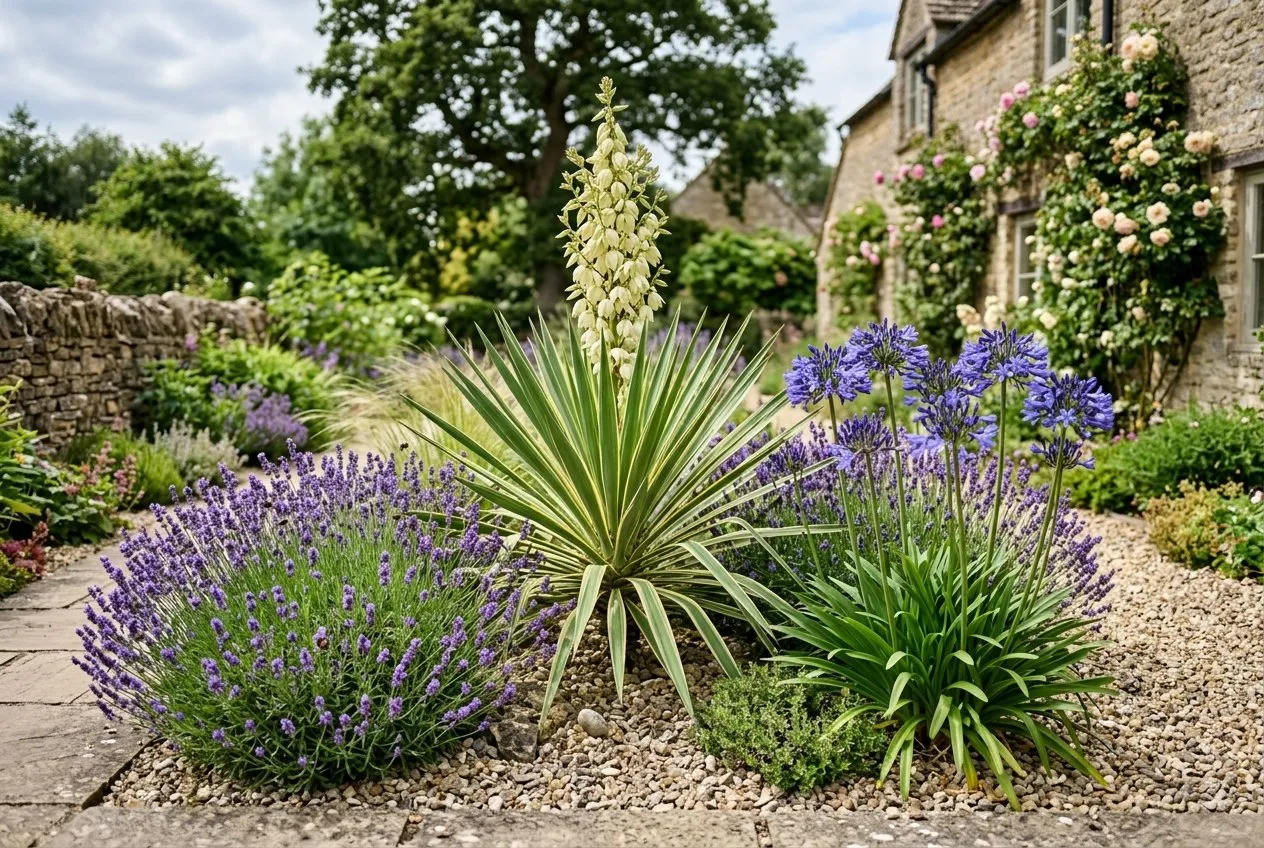 A raised gravel bed by a sunny wall gives yuccas the warmth and drainage they love.
How to plant a yucca outdoors
Plant in spring (April to May) or early autumn (September). Spring is best, as it gives the plant the longest time to settle before winter.
Prepare the hole as above. Take the yucca out of its pot and gently tease out any circling roots. Plant at the same level as in the pot, or slightly higher. Backfill with the grit mix and water once to settle it. After that, only water in a long dry spell during the first summer.
Handle yuccas with care. Wear thick gloves and eye protection, as the tips of Y. gloriosa and Y. rostrata are sharp enough to cause real injuries. Pushing a wine cork onto the leaf tips is a handy trick when you’re working close by. Plant them away from paths and where children play.
For pots, use a container of at least 40 litres with good drainage holes. Fill with half John Innes No. 3 and half grit, and top with gravel. Stand the pot on feet over winter so water drains away.
How to look after yucca
Established yuccas need almost nothing, which makes them a gift for low-maintenance gardens.
Watering: don’t water yuccas growing in the ground once they’re settled. British rain is plenty, and too much water is the quickest way to kill one. In pots, water every couple of weeks in summer and not at all from October to March.
Feeding: yuccas like poor soil. Rich soil makes soft growth that rots more easily. Most grow perfectly well without any feed.
Dead leaves: lower leaves turn brown and papery as the plant grows. Leave them as a skirt, or cut them off close to the trunk in spring for a tidier look. Don’t pull them, as that can tear the bark.
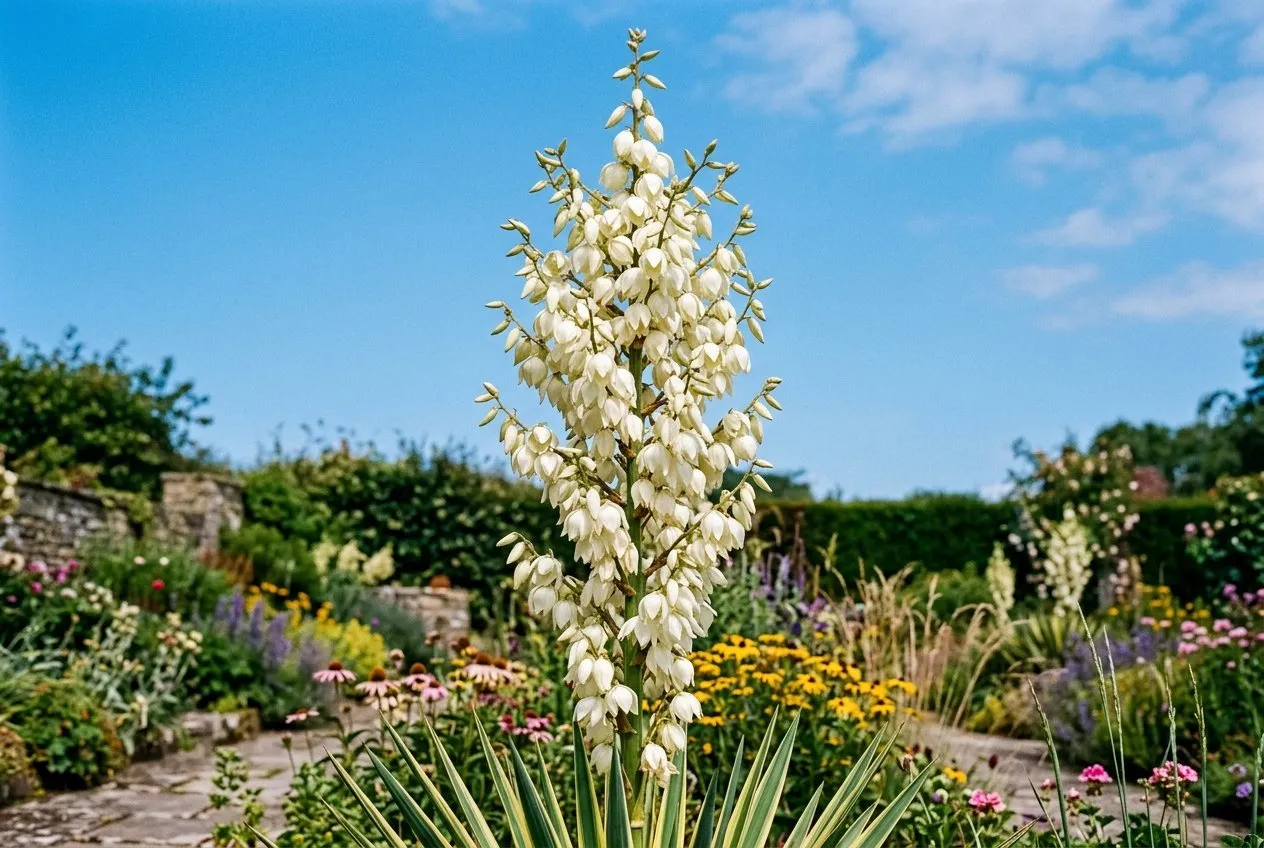 A Yucca gloriosa flower spike packed with white bells in July.
When do yuccas flower?
In summer, once the plant is a few years old. A spike shoots up from the middle of the rosette, usually in July, and grows fast to 1.5 to 2m. It carries lots of white or cream bells, sometimes tinged with purple.
A hot summer helps a yucca build up the energy to flower the next year, so flowering varies from year to year. Y. filamentosa flowers most reliably, often every year once mature. Other types may flower less often, and Y. rostrata can take many years.
In the wild, yuccas are pollinated by a special yucca moth that doesn’t live here, so they rarely set seed in the UK. Cut the spike off once it’s finished, or leave it to dry and remove it in autumn.
How to get more yucca plants
Yuccas grow little offsets, or pups, around the base. Wait until a pup is at least 15 to 20cm tall with its own roots. In spring, slice it away from the parent with a sharp spade. Pot it in gritty compost and keep it somewhere sheltered for its first winter.
You can also root sections of trunk from Y. gloriosa and Y. recurvifolia. Cut a 30cm piece, let the cut end dry for about a week, then push it into gritty compost. Roots and shoots should appear within a few months.
Y. filamentosa also grows from root cuttings. In spring, cut a thick root into 10cm pieces and lay them flat on a tray of gritty compost.
Common yucca problems
Root rot
The number one killer. It’s caused by soggy soil, especially clay in winter. You’ll see soft brown tissue at the base, collapsing leaves and a nasty smell. Once the crown rots, the plant can’t be saved, so good drainage from the start is everything.
Leaf spot
Brown or grey spots on leaves in damp weather. Remove spotty leaves and give the plant more space for air. It rarely does much harm.
Scale insects
Small brown bumps on the leaves, mostly in sheltered spots. Wipe them off with a damp cloth. Our organic pest control guide has more ideas. Heavy attacks are rare outdoors.
Wind damage
Y. rostrata’s long, narrow leaves can snap in strong gales, so give it some shelter. Y. gloriosa and Y. filamentosa have stiffer leaves and cope better.
Designing with yuccas
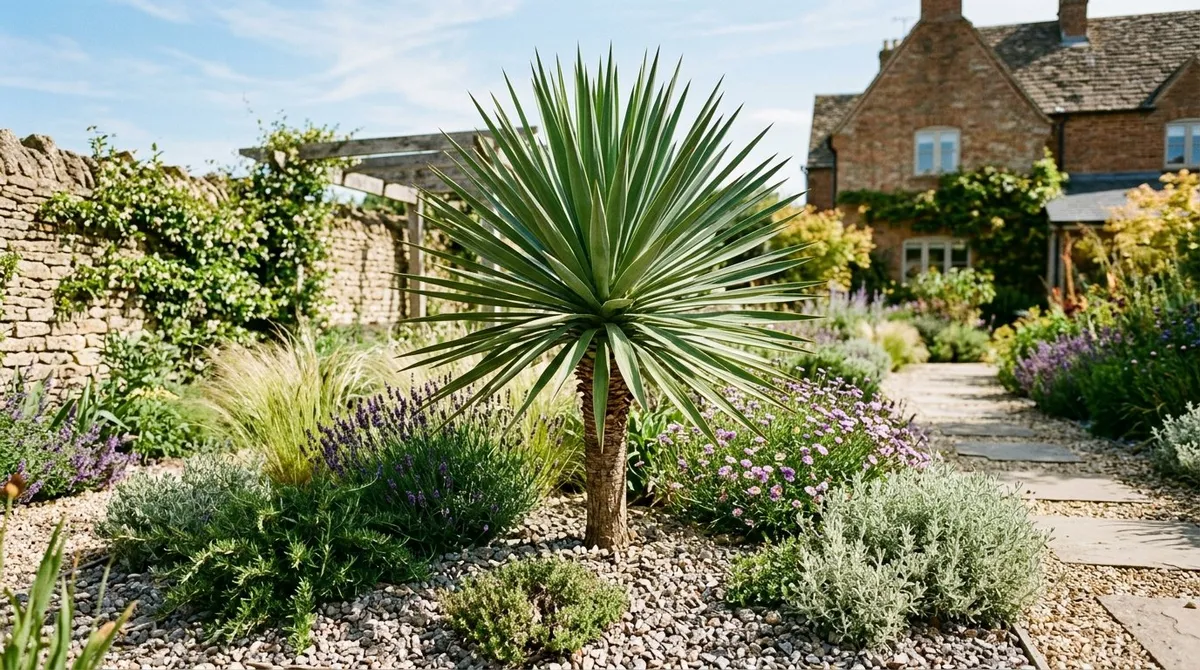
Yuccas make great centrepieces in dry gardens. Pair them with lavender, rosemary, santolina and ornamental grasses. The stiff, spiky shape looks brilliant next to soft, swaying grasses like Stipa tenuissima and Miscanthus.
In a gravel garden, try them with phormium and cordyline, plus agaves in pots brought in for winter, for a subtropical feel. By a warm wall, underplant with Mexican fleabane (Erigeron karvinskianus) and Verbena bonariensis for a relaxed Mediterranean look.
Yuccas also look great in big pots on patios and balconies. Being evergreen, they give year-round structure when other plants are bare.
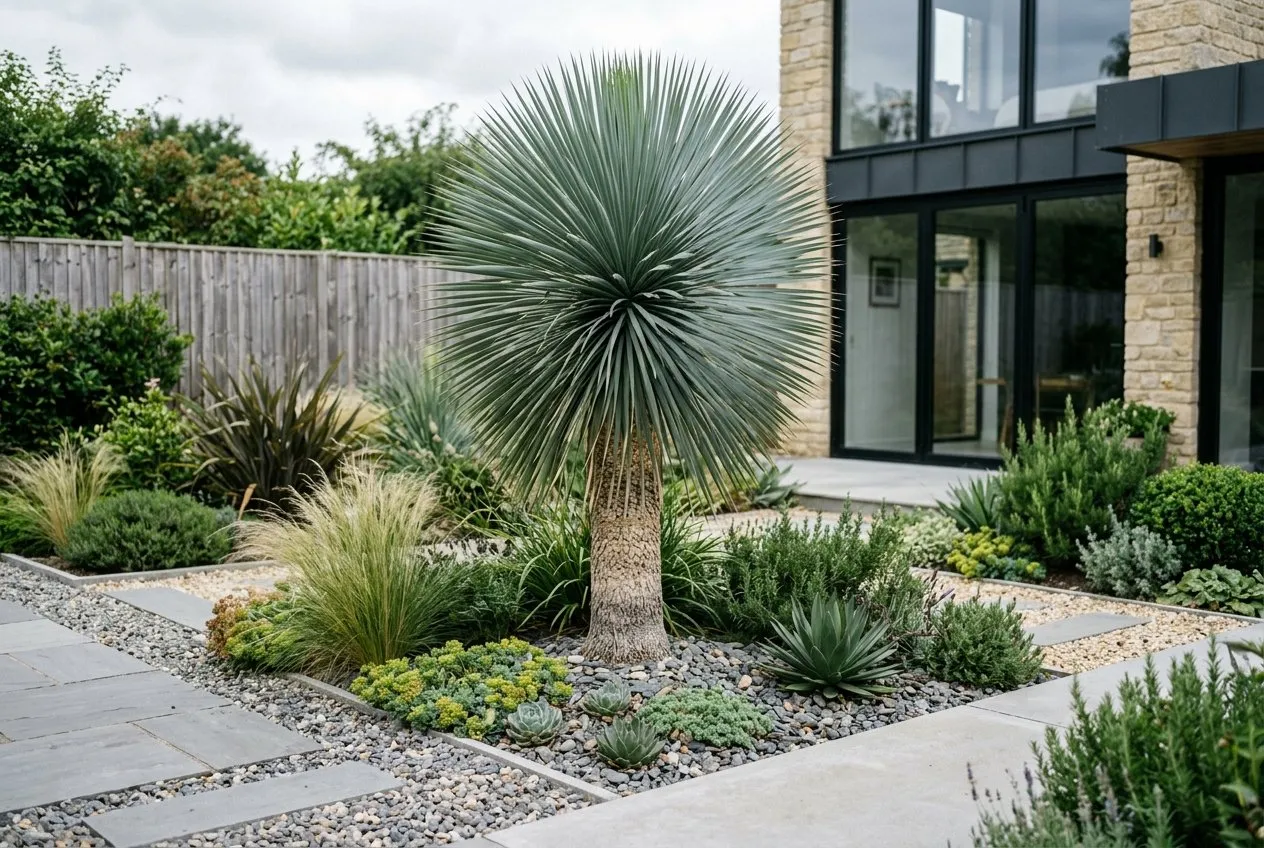 Yucca rostrata’s ball of blue-grey leaves makes a striking centrepiece in gravel.
Frequently asked questions
Can yucca grow outside in the UK?
Yes, several hardy types grow outdoors all year. Yucca filamentosa, Y. gloriosa, Y. recurvifolia and Y. rostrata all cope with UK winters. They need full sun and free-draining soil. The houseplant yucca, Y. elephantipes, isn’t hardy and must stay indoors.
How long does it take a yucca to flower in the UK?
Usually a few years after planting. Y. filamentosa tends to flower soonest and most reliably. The spike shoots up quickly in summer, reaching 1.5 to 2m with lots of white bells. Not every plant flowers every year, and a hot summer helps.
Why is my outdoor yucca dying?
Root rot from soggy soil is the usual cause. Yuccas can’t stand wet roots in winter. Plant on a raised mound with plenty of sharp grit mixed in. A soft, brown centre usually means the crown has rotted and can’t be saved. Some brown lower leaves in winter are normal.
Do I need to protect yucca in winter in the UK?
Y. filamentosa and Y. gloriosa don’t need protection. Y. rostrata appreciates a little cover from rain in very wet areas, as it minds wet more than cold. Don’t wrap hardy yuccas in fleece, as it traps moisture and can cause rot.
How do you remove dead leaves from a yucca?
Cut them off close to the trunk in spring. Wear thick gloves, as the leaf tips are very sharp. Leave a short stub rather than pulling leaves off, which can tear the bark. You can also leave the dry skirt of leaves on for a natural look.
Can I grow yucca in a pot outdoors?
Yes, in a pot of at least 40 litres. Use half John Innes No. 3 and half grit, and raise the pot on feet in winter. Water every couple of weeks in summer and not at all in winter. Yuccas in pots stay smaller and flower less than those in the ground.
Our team produces practical UK gardening guidance from source research, contributor records and established horticultural practice. Editorial standards are overseen by Matt W.