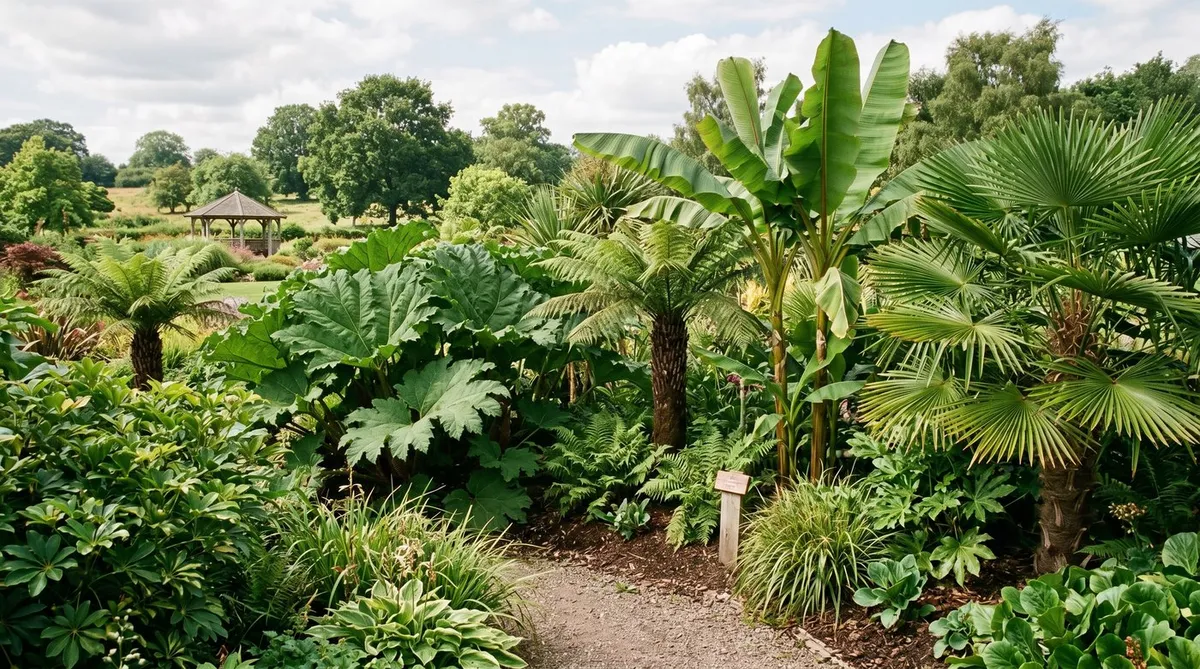
Key takeaways
- The Chusan palm (Trachycarpus fortunei) is the toughest palm for UK gardens
- Wet, cold roots kill more palms than frost does, so drainage is key
- Trachycarpus wagnerianus has stiffer leaves that cope better with wind
- The Canary Island date palm isn't reliably hardy, so keep it for mild coasts or pots
- Fleece the crown and mulch the roots of young palms in hard frosts
- Cordylines and tree ferns give the palm look but aren't true palms
Yes, palms can survive a UK winter, and the right one will give your garden a holiday feel all year. The secret is choosing a genuinely hardy species and giving it sharp drainage. Most palms that die in Britain are killed by cold, wet roots, not by frost alone.
This guide ranks the palms worth growing, from the toughest to those that need a mild coast. It also covers how to plant them and protect young ones in winter. For other plants to build an exotic scheme around them, see our guide to hardy exotic plants.
The hardiest palm: Trachycarpus fortunei
The Chusan palm, also called the windmill palm, is the one to plant if you only plant one. It comes from the mountains of China, so it’s used to cold and wind. Its trunk is wrapped in hairy brown fibre, and its big fan-shaped leaves stand up to most gales.
It grows across most of the UK, including cold inland gardens, once it’s settled in. It takes sun or part shade, though it grows lankier in shade. Growth is slow, so buy the biggest plant you can afford if you want a trunk quickly.

The hairy fibre on a Chusan palm’s trunk helps protect it from cold. Good drainage at the roots matters even more.
Why wet roots kill palms, not frost
Palms in the UK rarely die from a single cold night. They die from cold, waterlogged soil over winter. The growing point at the top of the trunk rots, the central spear loosens and then pulls out. By then it’s usually too late.
The fix is drainage. Dig a wide planting hole and mix horticultural grit into the soil on heavy ground. Plant so the top of the rootball sits slightly above the surrounding soil, so rain runs away from the trunk. In a wet area, a raised bed or slope helps even more.
Which palms grow in the UK?
Not every palm is equally tough. Some thrive inland. Others need a mild coastal garden or a big pot you can move under cover. Two on this list aren’t true palms but give the same look.
| Plant | Hardiness in the UK | Best site |
|---|---|---|
| Chusan palm (Trachycarpus fortunei) | Hardy in most areas | Almost anywhere, sun or part shade |
| Trachycarpus wagnerianus | Hardy in most areas | Windy, exposed gardens |
| European fan palm (Chamaerops humilis) | Fairly hardy with shelter | A warm, sheltered south wall |
| Blue Mediterranean fan palm (Chamaerops humilis var. cerifera) | A little less hardy | Warm, sheltered courtyards |
| Jelly palm (Butia capitata) | Borderline | Mild or coastal gardens, sharp drainage |
| Chilean wine palm (Jubaea chilensis) | Fairly hardy but very slow | Mild gardens with lots of space |
| Canary Island date palm (Phoenix canariensis) | Not reliably hardy | Pots, conservatories or mild south-west coasts |
| Cabbage palm (Cordyline australis), not a true palm | Hardy when mature | Coastal and milder gardens |
| Tree fern (Dicksonia antarctica), not a palm | Needs winter protection | Shade and shelter |
Start at the top of the list if you garden inland. Save the bottom half for mild gardens, big pots or a sheltered courtyard.
Trachycarpus wagnerianus and the European fan palm
Trachycarpus wagnerianus is a close relative of the Chusan palm with smaller, stiffer leaves. They don’t flop or tear in the wind, so it’s the better choice for an exposed garden. It also looks neater in a small space.
The European fan palm (Chamaerops humilis) comes from the Mediterranean. It stays bushy and spreads sideways rather than growing a tall trunk. It’s fairly hardy but does best against a warm, south-facing wall. The blue form, var. cerifera, has stunning silvery leaves but is a little more tender.

A European fan palm loves the shelter of a warm brick wall. It spreads sideways, so give it room to fill out.
Both look at home in a Mediterranean planting scheme, surrounded by gravel, lavender and herbs.
Palms for mild and coastal gardens
The sea softens frost, so coastal gardens in the south and west can grow palms that would struggle inland.
The jelly palm (Butia capitata) has arching blue-grey, feather-shaped leaves. It needs sharp drainage and a mild spot, or a big pot you can shelter in winter. The Chilean wine palm is fairly tough but incredibly slow and huge in the end, so only plant one if you have space and patience.
The Canary Island date palm is the one people want and the one that most often disappoints. It’s not reliably hardy in the UK. Grow it in a large pot and move it into a conservatory or porch for winter. Only risk it in the ground in the mildest south-west coastal gardens.

A jelly palm suits a mild seaside garden. The blue-grey arching leaves look superb against the sea.
Cordylines and tree ferns for the palm look
The cabbage palm (Cordyline australis) gives an instant palm shape, though it isn’t a palm at all. Mature plants are fairly tough and thrive by the coast. A hard winter can kill the top, but it often regrows from lower down. Our cordyline guide has the details.

Cabbage palms are a classic sight in seaside towns. That fountain of spiky leaves reads as tropical from across the street.
The tree fern Dicksonia antarctica is the other stand-in. It has a soft, fibrous trunk and a crown of huge feathery fronds. It needs shade, shelter and a damp spot, plus protection for the crown in hard frost. Our guide to tree fern winter protection shows how.

Tree ferns love damp shade, where palms would sulk. Together they give a lush, layered exotic look.
How to plant a hardy palm
Get three things right: sun, shelter and drainage.
- Pick a sunny spot. A south or west-facing position is ideal.
- Find shelter. Cold wind scorches leaves. Plant by a warm wall, behind a hedge or in a courtyard.
- Dig a wide hole, about twice the width of the rootball.
- Improve drainage by mixing horticultural grit into the soil on heavy ground.
- Plant slightly proud, with the top of the rootball a little above the surrounding soil.
- Water well through the first two summers, then only in long dry spells.
Spring is the best time to plant, so the palm has a whole growing season to settle before its first winter. Feed with a balanced fertiliser in spring and summer to keep it growing.
How to protect young palms in winter
Established Chusan palms in most of the UK need no protection. Young palms and less hardy kinds benefit from help in hard frosts.
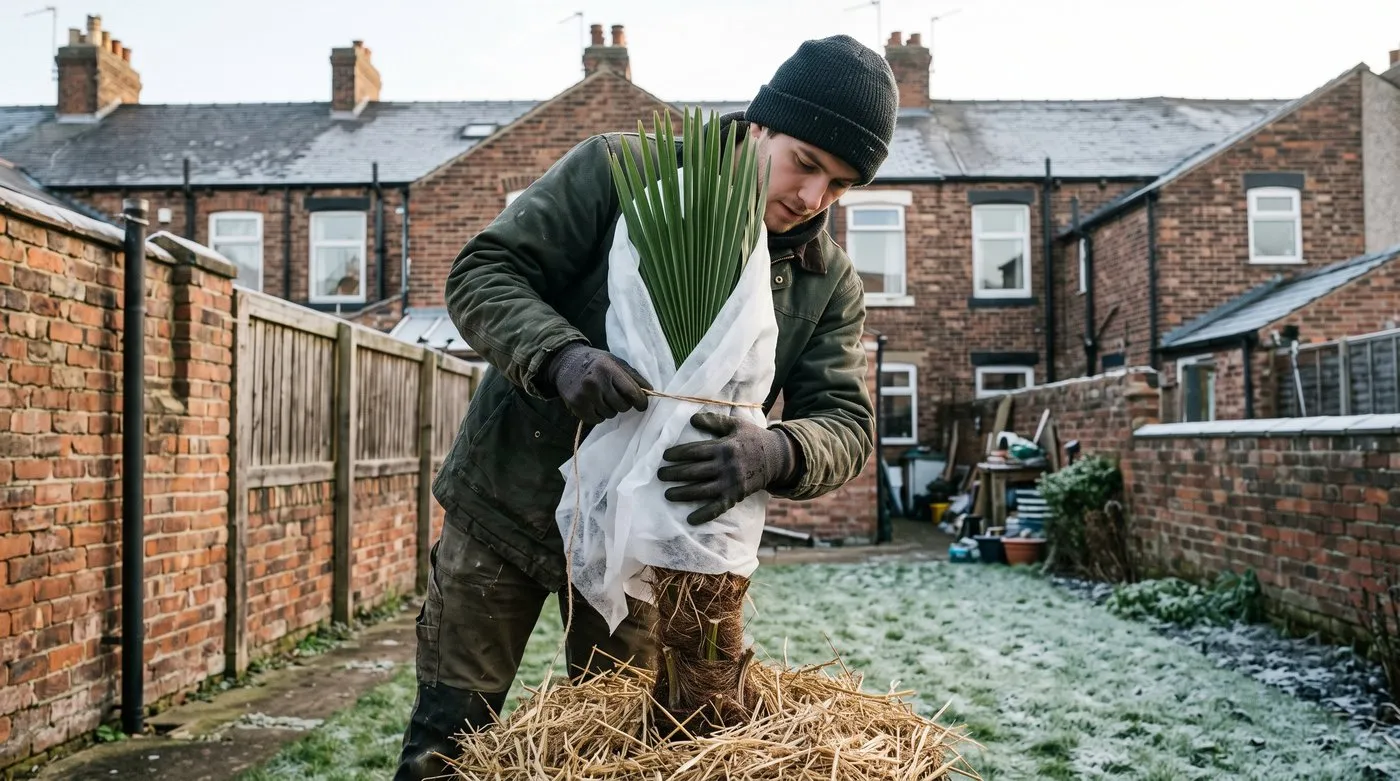
Tie the leaves up loosely, wrap the crown in fleece and mulch the roots. Take it all off again once the hard frosts are over.
- Tie the leaves up loosely into a bundle to shelter the crown.
- Wrap the crown and top of the trunk in horticultural fleece, never plastic, which traps damp.
- Mulch the roots with a thick layer of bark or straw.
- Move palms in pots against the house wall or into a porch.
Take the wrapping off in spring once hard frosts have passed, and remove it in mild spells too. Trapped damp can do more harm than the cold.
Common problems with hardy palms
Brown lower leaves. Normal ageing. Cut off fully dead leaves close to the trunk.
Scorched leaf tips. Cold, drying wind. Give shelter or plant a windbreak.
Soft, rotting crown with a sour smell. Winter waterlogging. Improve drainage and keep the crown dry.
Central spear pulls out. Crown rot, usually fatal. It’s caused by cold and wet together.
Very slow growth. A cool summer or hungry plant. Feed and water through the growing season.
For a bed of tough plants to go with your palm, try hardy cacti and succulents at the front. Then plan the whole scheme with our tropical and tiki garden ideas, or browse more in the plants section.
Frequently asked questions
What is the hardiest palm for a UK garden?
The Chusan or windmill palm (Trachycarpus fortunei) is the hardiest. It grows across most of the UK, including cold inland gardens. Once established it copes with frost and wind without protection.
Can palm trees survive a UK winter outdoors?
Yes, several palms survive UK winters outside. The Chusan palm and the European fan palm are reliable in most areas. The Canary Island date palm isn’t, so it needs a mild coastal garden or a frost-free spot in winter.
Do hardy palms need winter protection in the UK?
Established Chusan palms usually need none. Young palms and less hardy kinds benefit from help in hard frosts. Tie the leaves up, wrap the crown in fleece and mulch the roots, then remove the wrap in spring.
Why are my palm fronds going brown?
Usually cold wind, frost damage or wet roots. The lowest leaves browning with age is normal, so trim off only fully dead ones. If the central spear pulls out easily and smells sour, the crown is rotting from winter wet.
How fast do hardy palms grow in the UK?
Slowly. A Chusan palm takes many years to build a tall trunk. European fan palms stay bushy and spread sideways. Feeding and watering through spring and summer helps all palms grow faster.
Our team produces practical UK gardening guidance from source research, contributor records and established horticultural practice. Editorial standards are overseen by Matt W.