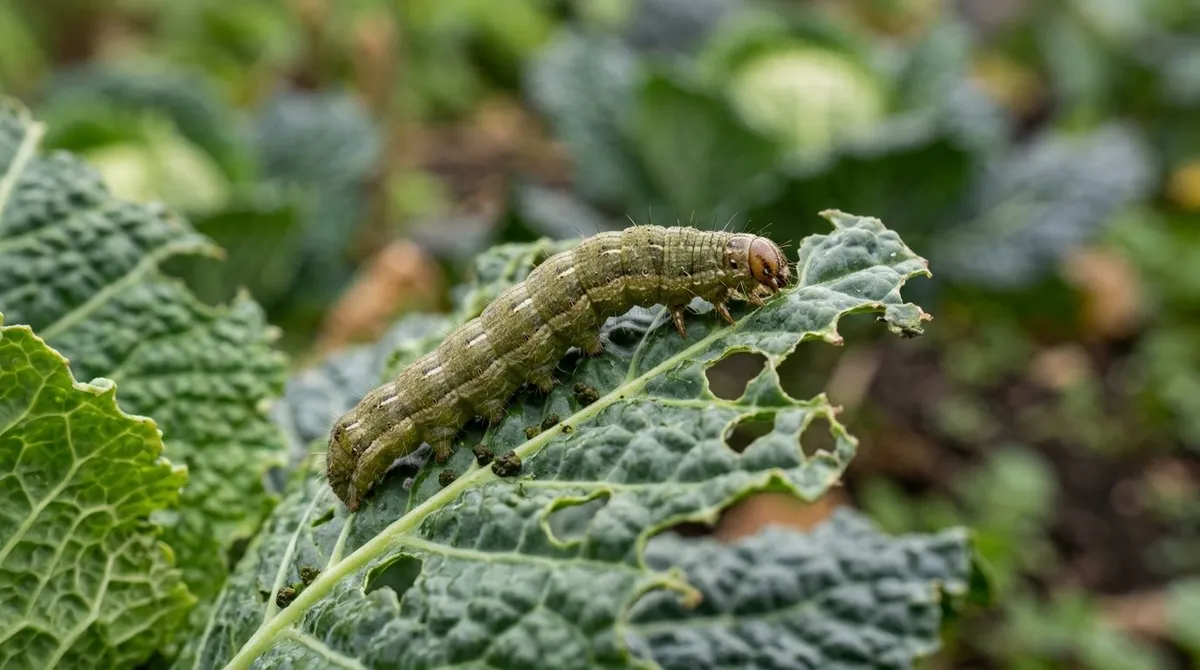
Key takeaways
- Codling moths fly from late May to July and lay eggs on young apples and pears
- A small hole and brown, crumbly droppings round the core are the giveaway
- Pheromone traps hung in late May show you when the moths are about
- Corrugated cardboard bands round the trunk from July catch caterpillars looking for a winter home
- Pick up windfalls twice a week from August, and use nematodes in September or October
- Grease bands are for winter moth, not codling moth
Codling moth is the most common cause of maggoty apples in UK gardens. You’ll rarely see the little brown moth, but its caterpillars tunnel into young fruit and feed in the core for weeks. By the time you bite into an apple and find the brown mess, the caterpillar has usually moved out.
It goes for apples, pears and sometimes quinces and walnuts, all over the UK. There’s one main generation a year, with moths flying from late May into July. Because the caterpillars hide inside the fruit, the trick is good timing and a mix of simple methods.
What does codling moth look like?
The adult moth is small and grey-brown, with a coppery patch near each wing tip. At rest it folds its wings flat and looks like a bit of bark. It flies at dusk and at night, so you’ll hardly ever spot one.
Moths come out once evenings warm up in late May. The females lay single eggs on young fruit and nearby leaves.
| Stage | What it looks like | When you’ll find it |
|---|---|---|
| Moth | Grey-brown, coppery wing tips | Late May to July |
| Egg | Tiny flat, see-through disc on fruit or leaves | June to early July |
| Young caterpillar | Tiny, cream with a dark head | Mid-June onwards |
| Grown caterpillar | Pinkish-white, brown head, up to 2cm | July to September |
| Winter stage | Caterpillar in a silky cocoon under bark | Autumn to May |
How do codling moth caterpillars damage apples?
Tiny caterpillars bore into the young fruit, often near the “eye” end, and feed in the core for a few weeks. They eat the pips and flesh round them and fill the middle with brown, crumbly droppings.
The way in is a tiny hole that’s easy to miss. From outside, the apple may look fine until you spot the exit hole or it colours up too early. Lots of affected fruit drops in August and September, well before picking time.
Once fully grown, the caterpillar chews its way out and heads for the trunk. It spins a silky cocoon under loose bark, in old pruning cuts or in rubbish at the base of the tree. It stays there over winter and turns into a moth the next spring.
Holed apples often go on to rot, because brown rot gets in through the tunnel. Damaged fruit won’t store.
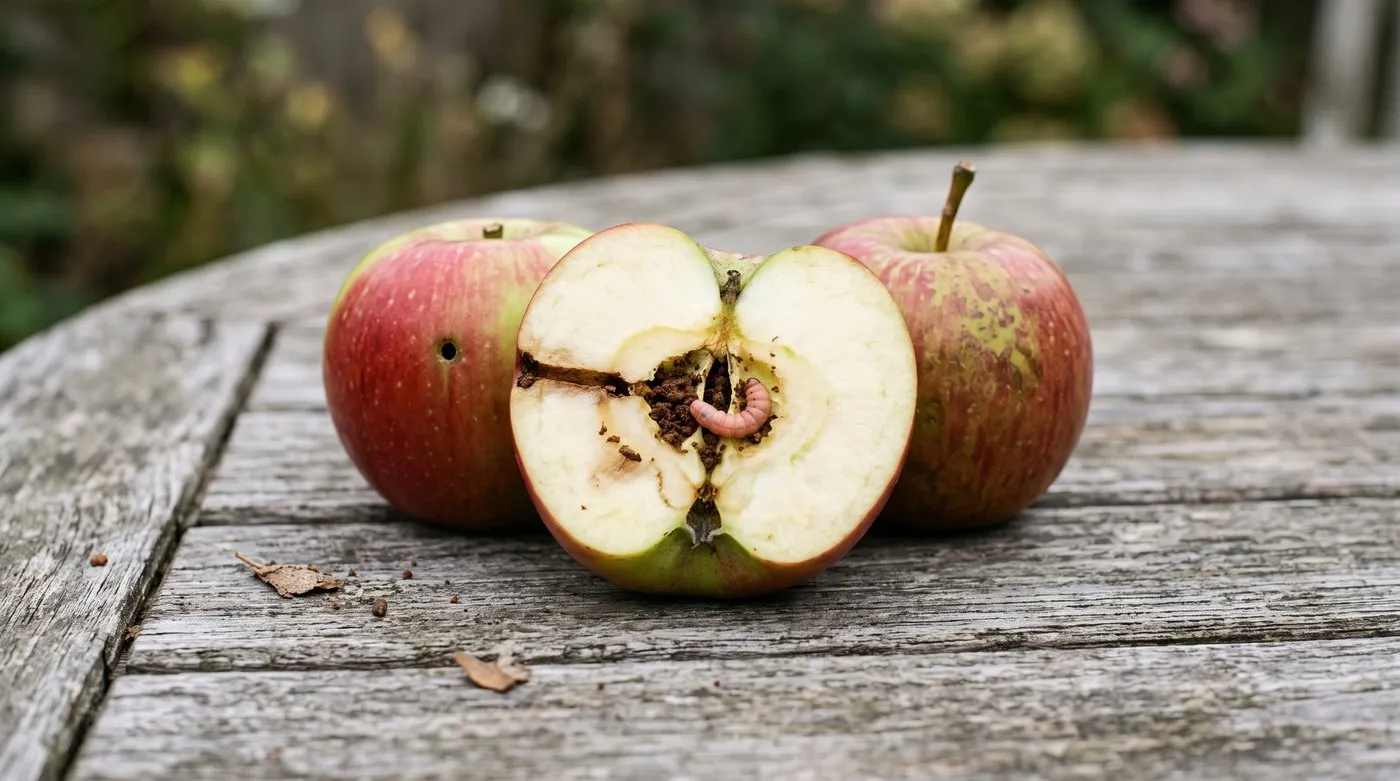
From outside the apple can look fine. Cut it open and the brown, crumbly core gives codling moth away.
When do codling moths fly in the UK?
Moths fly from late May to mid-July, with the busiest time in mid-June. They’re about a week or two earlier in southern England and a couple of weeks later in northern England and Scotland.
Females lay eggs a few days after mating, usually on the sunny side of the fruit. When the eggs hatch, the tiny caterpillars spend less than a day on the outside of the apple before boring in. That short moment is the only time a spray can reach them.
How do pheromone traps help control codling moth?
Pheromone traps tell you when the moths are flying, but they don’t get rid of them. They use a scent that copies the female moth, so they only catch males.
Hang a trap at head height in the branches in late May. One trap is enough for a garden with one or two apple trees. It’s a sticky tent-shaped trap with a scent capsule inside. Swap the capsule as the pack says, and check the trap once a week.
If you’re catching a handful of moths every week, you’ve got enough about to do some damage. That’s your cue to use the other methods below.
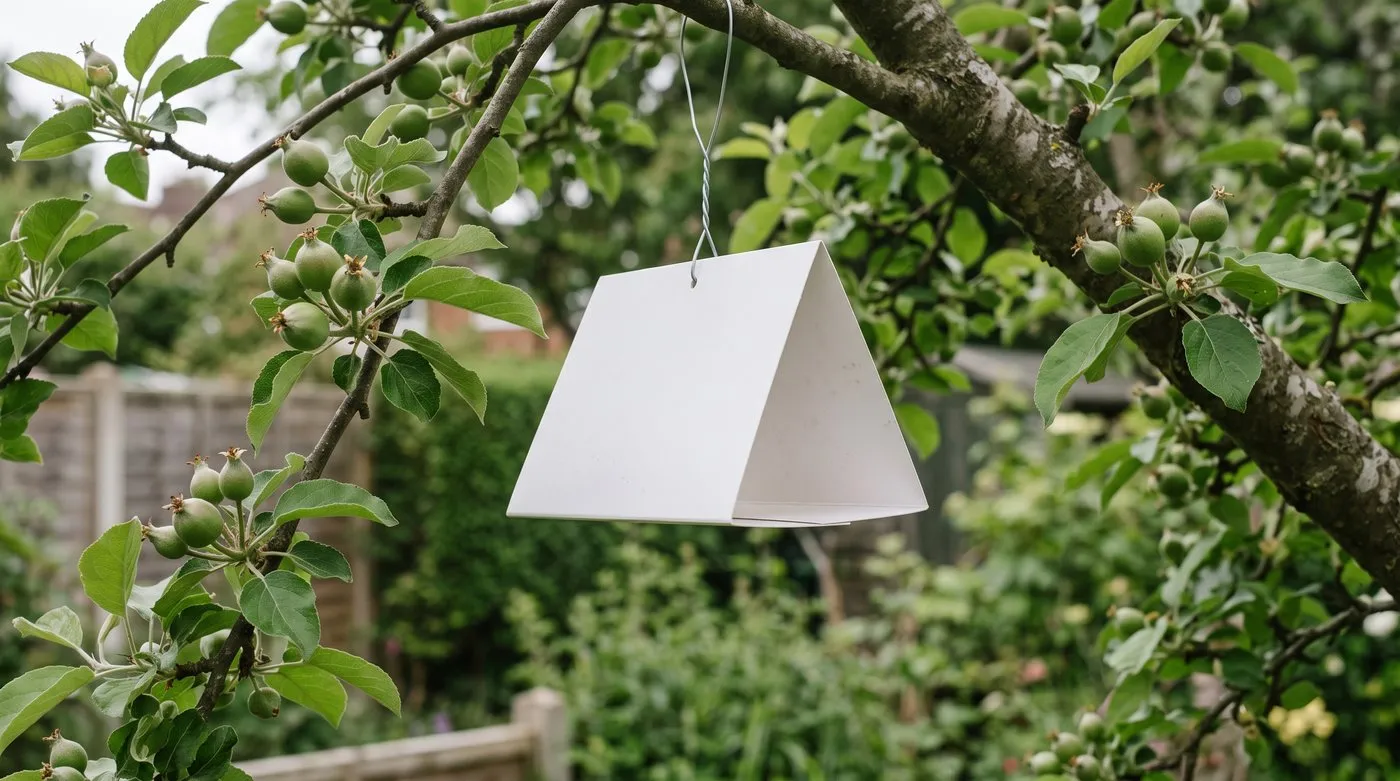
One trap at head height is enough for a tree or two. A steady weekly catch tells you it’s time to act.
How does codling moth granulovirus spray work?
Granulovirus is a natural virus that only affects codling moth caterpillars. The tiny caterpillars pick it up as they crawl over sprayed fruit, before they bore in. It doesn’t harm bees, birds or other insects.
Products come and go, so check that any you buy is sold for home garden use in the UK and follow the label.
Timing is everything. Spray when your trap catch is at its highest, usually mid-June, then again two weeks later. Sunlight breaks the virus down, so the second spray covers the rest of the hatching time. It does nothing to caterpillars already inside the fruit.
| What | When or how |
|---|---|
| First spray | When trap catches peak, often mid-June |
| Second spray | Two weeks later |
| Time of day | Evening |
| If it rains | Spray again if rain falls soon after |
| Storing | Follow the label, usually in the fridge |
How do corrugated cardboard bands trap codling moth?
Grown caterpillars looking for a winter home crawl into the ridges of a cardboard band and spin their cocoons there. In autumn you take the band off and get rid of them.
Cut a strip of corrugated cardboard 10-15cm wide and wrap it round the trunk about 50cm off the ground. Tie it snugly with string, with the ridges facing the bark.
Put bands on in mid-July, before the first caterpillars leave the fruit. Leave them until late September or early October. Then bag them up for the bin or burn them. Don’t put them in the compost.
Shop-bought bands are fine, but strips cut from an old cardboard box work just as well.
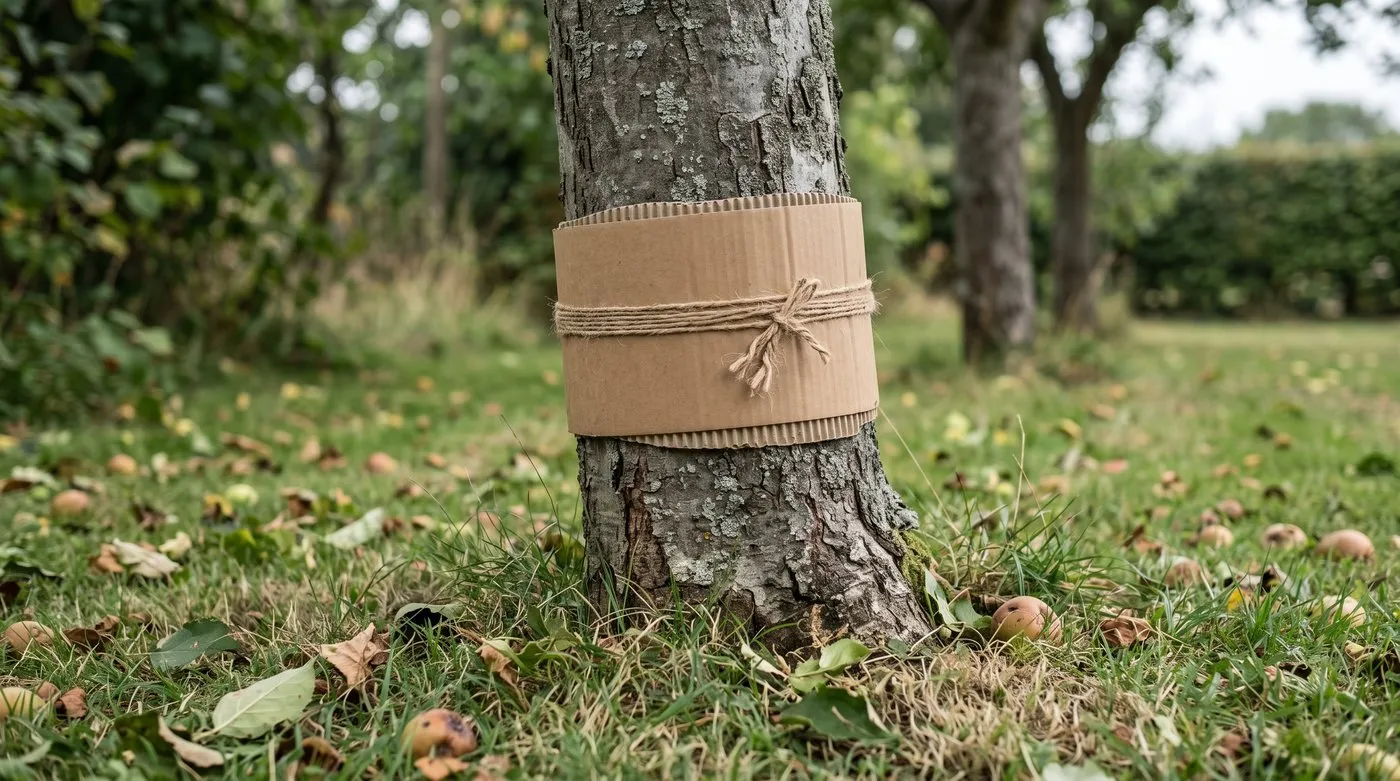
Put bands on in mid-July and take them off in early autumn. Bin or burn them, as any caterpillars inside go with them.
Can nematodes reduce codling moth populations?
Yes. Nematodes are tiny natural worms that hunt out caterpillars hiding in bark for the winter. Spray them onto the trunk, main branches and the soil under the tree in September or October.
That means fewer moths next spring.
Apply in the evening when the bark is damp and the weather is still mild. Soak the trunk from the ground up to the first big branches, and water the soil in a circle about 1 metre round the base. Order them for September delivery, keep them in the fridge and use them quickly. They’re safe for other beneficial insects and wildlife.
Comparison of codling moth control methods
Each method tackles a different stage, so using two or three together works best.
| Method | When | What it does |
|---|---|---|
| Pheromone traps | Late May onwards | Shows when moths are flying |
| Granulovirus spray | Mid-June, two sprays | Hits tiny caterpillars before they bore in |
| Cardboard bands | July to October | Catches caterpillars looking for a winter home |
| Nematodes | September to October | Finds caterpillars hiding in bark |
| Winter tidy-up | November to March | Clears hiding places |
| All of the above | May to October | Tackles every stage |
Should I pick up fallen apples to reduce codling moth?
Yes. Many windfalls still have a caterpillar inside, so picking them up stops it finishing its life cycle.
Check under your trees twice a week from early August. Gather all fallen and damaged fruit. Composting may not kill every caterpillar, so seal windfalls in a black bag and leave it in the sun for a couple of weeks.
If you keep chickens, let them scratch about under the trees. They’ll happily eat caterpillars from fallen fruit. It’s an old trick in traditional apple tree growing.
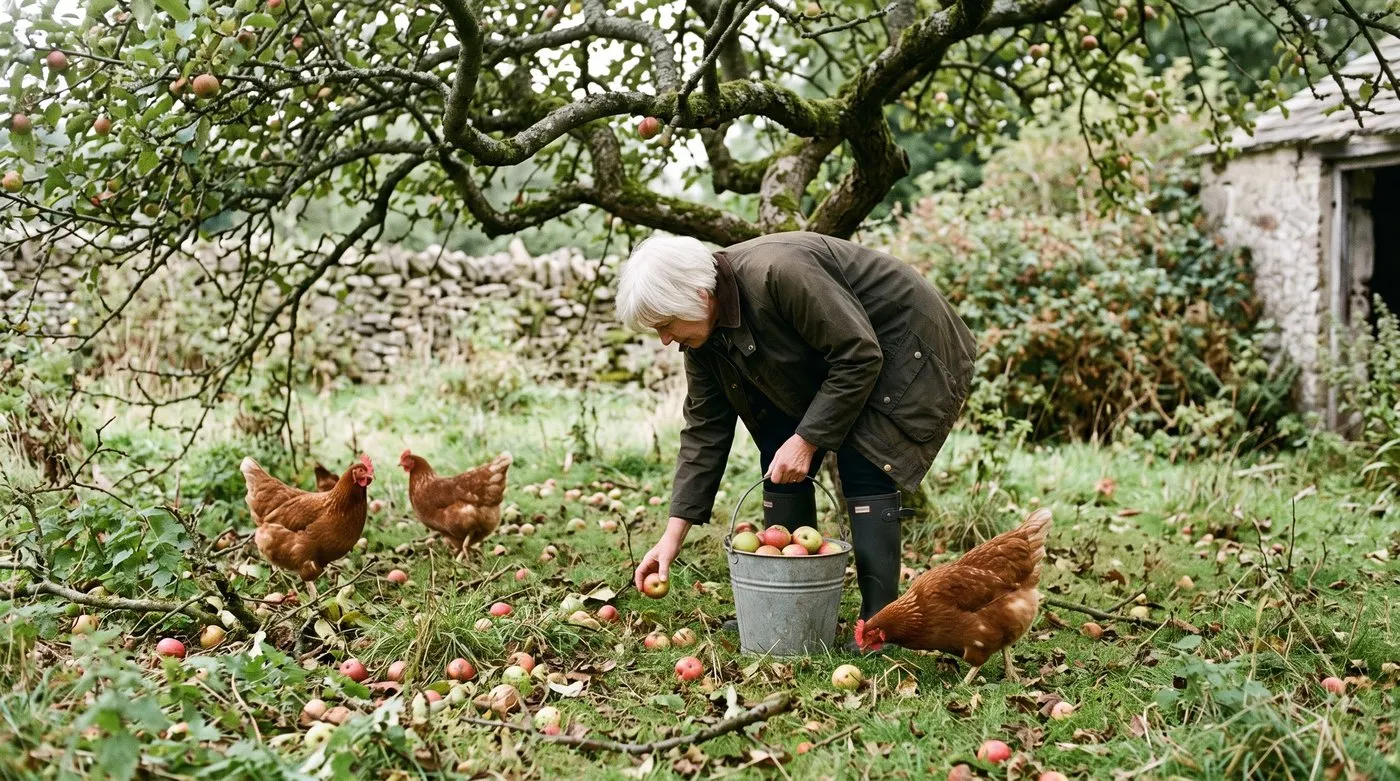
Gather windfalls twice a week from August so caterpillars can’t finish their life cycle. Hens will happily help with the clear-up.
How do I prevent codling moth without spraying?
Use cardboard bands, nematodes and a strict fruit tidy-up. It’s not quite as effective as adding a spray, but it suits gardeners who’d rather not spray at all.
Put on cardboard bands in July, use nematodes in September or October, and pick up fallen fruit twice a week from August. In January, scrub loose bark off the trunk with a stiff brush so birds can find hidden cocoons.
This keeps codling moth at a level most people can live with, which suits anyone growing heritage apple varieties organically. You’ll probably still get a few holed apples. Just cut away the damaged bit and the rest tastes fine.
Good fruit tree pruning helps too. An open tree dries faster and has fewer hiding places. Take out crossing branches, upright shoots and dead wood each winter.
Does codling moth affect other fruit trees?
Apples are its favourite, but it also attacks pears, quinces and walnuts. In pears, the caterpillar feeds inside the fruit just as it does in apples. If young pears turn black and drop while still small, it’s more likely pear midge, which is a different pest.
Plums, cherries and other stone fruit aren’t affected. Caterpillars in plums or damsons are plum moth, a different species, and codling moth traps won’t catch it.
For other fruit tree problems like canker, scab and woolly aphid, see our pest and disease guides. The RHS codling moth page has more photos to help with identification.
Walnuts are only lightly attacked, so they rarely need treating. Quinces get hit more often, especially in the warmer south. Use the same traps and timings as for apples.
Frequently asked questions
How do I know if my apples have codling moth?
Look for a small hole with brown, crumbly droppings round it. Cut the apple open and you’ll see a tunnel to the core, packed with droppings. You may find a pinkish-white caterpillar up to 2cm long. Affected apples often drop early, in August and September.
When should I hang codling moth pheromone traps?
Hang them in late May, before the moths start flying. Put one trap among every few trees, at head height in the branches. Check it once a week. The catch tells you when moths are busy so you can time other treatments. Traps only catch males, so they won’t solve the problem on their own.
Does codling moth granulovirus spray actually work?
It can help if the timing is right. The virus only affects tiny caterpillars as they crawl over the fruit, before they bore in. Spray when your trap catch peaks, usually mid-June, and again two weeks later. Check the product is sold for home garden use in the UK, as availability changes.
Can nematodes help against codling moth?
Yes, in September or October. Mix them with water and spray onto the trunk bark and the soil under the tree. They hunt out caterpillars hiding in bark cracks for the winter. Apply in the evening when the bark is damp and the weather is still mild.
Will codling moth damage my pear trees too?
Yes, pears get attacked as well. The caterpillar tunnels to the core in just the same way, leaving droppings and causing early fruit drop. Quinces and walnuts can be hit too. The same traps, bands, nematodes and tidying up all work.
Do codling moth grease bands work?
No, grease bands are for winter moth. Winter moth females can’t fly, so they crawl up trunks in autumn and winter and get stuck. Codling moths fly, so they skip the band. For codling moth, tie corrugated cardboard bands round the trunk from July instead.
How many codling moth generations occur in the UK?
Usually just one a year. Moths fly from late May to July, caterpillars feed in the fruit through summer, then leave to overwinter under bark. In a very warm year a small second batch can appear in southern England, but it’s unusual.
Our team produces practical UK gardening guidance from source research, contributor records and established horticultural practice. Editorial standards are overseen by Matt W.