
Key takeaways
- 'Vranja' is a reliable, popular variety for UK gardens
- Plant bare-root trees from November to March in a sunny, sheltered spot
- Quince needs only light pruning in winter, so don't shorten the young shoots
- Expect the first fruit about 3-4 years after planting
- Pick when the fruit turns golden and smells sweet, usually in October
- Quince is almost always cooked, and turns a lovely pink in jelly or membrillo
Quince trees are one of the easiest fruit trees you can grow in the UK. They need less pruning than apples, cope with heavier soil, and give you armfuls of golden, scented fruit in autumn.
The quince (Cydonia oblonga) has grown in British gardens since the Middle Ages. The Tudors loved it, and the word marmalade first meant quince paste. It’s hardy across most of the UK, with pretty blossom in spring. The RHS guide to growing quince is a handy extra read. If you like old-fashioned fruit, have a look at the medlar too.
Which quince variety should I plant?
Go for ‘Vranja’ if you want one reliable tree. It holds an RHS Award of Garden Merit and gives large, pear-shaped fruit. ‘Meech’s Prolific’ is another good choice, with lots of medium-sized fruit.
Most nurseries sell just a handful of named varieties. They’re grafted onto a rootstock, which decides how big the tree grows (more on that below).
 Quince blossom opens in late spring. A single tree can set fruit on its own.
When and how should I plant a quince tree?
Plant bare-root trees between November and March, while they’re dormant. Pot-grown trees can go in at any time, but bare-root ones are cheaper and settle in well.
Pick the spot carefully. Quinces like:
- Full sun, ideally most of the day
- Shelter from cold north and east winds, so a sunny wall is perfect
- Soil that drains well, as they hate sitting in water
- Room to spread, about 4-5m across for a full-size tree
How to plant:
- Dig a hole about 60cm wide and 45cm deep
- Knock a stake into the hole before the tree goes in
- Spread the roots over a small mound of soil in the bottom
- Keep the graft union (the knobbly bump on the stem) about 10cm above the soil
- Fill back in with the soil you dug out and firm it gently with your foot
- Fix the tree to the stake with a tree tie
- Water well, then mulch with compost, keeping it clear of the trunk
Our guide to planting bare-root trees goes through each step with pictures.
What rootstock should I choose?
Pick the rootstock to suit your space. It decides how big the tree gets.
Quince A gives a medium tree of about 3-5m. It’s the usual choice for a garden tree and crops well for years.
Quince C gives a smaller tree, about 2.5-3.5m. It can fruit a year or so earlier. It suits small gardens, pots and fans on a wall, but likes good soil and regular feeding.
Quince BA29 turns up now and then at specialist nurseries. It makes a strong tree that copes with heavier soil, though Quince A does just as well in most gardens.
How do I prune a quince tree?
Quinces need much less pruning than apples or pears, so don’t worry if fruit tree pruning feels daunting. The fruit forms at the tips of shoots, so leave young shoots their full length.
In the first three years:
- Choose 4-5 well-spaced branches to make the main framework
- Remove branches growing into the middle of the tree
- Aim for an open, goblet shape that lets light reach everywhere
From year four:
- Prune in winter, between December and February
- Take out dead, diseased and crossing branches first
- Thin the middle to keep it open and airy
- Remove suckers growing from below the graft
- Don’t take off more than about a fifth of the tree in one year
 Plant bare-root quince trees from November to March, with the graft union sitting above the soil.
Month-by-month quince care calendar
| Month | What to do |
|---|---|
| January | Winter prune. Check tree ties. Order bare-root trees. |
| February | Finish pruning before the buds break. Give a potash feed at the rate on the pack. |
| March | Mulch with compost, clear of the trunk. Last chance for bare-root planting. |
| April | Look out for brown spots on leaves (leaf blight) and pick them off. |
| May | Blossom time. Water new trees weekly if it’s dry. |
| June | If the fruit is crowded, thin to one or two per cluster. Keep watering new trees. |
| July | Water in dry spells. |
| August | Fruit swelling. Pick off any rotting fruit. |
| September | Prop up heavy branches so they don’t snap. |
| October | Pick when the fruit turns golden and smells sweet. Handle gently. |
| November | Plant new trees. Clear fallen leaves. |
| December | Start winter pruning once the leaves are down. Check stakes and ties. |
For care tips on other fruit, see our fruit tree growing guide.
How do I know when to harvest quince?
Pick when the skin turns from green to golden-yellow and the fruit smells sweet. In central England that’s usually late October. In the south it can be mid-October, and further north early November.
Signs it’s ready:
- Golden-yellow all over
- Smells sweet and honey-like
- The fuzz on the skin rubs off easily
- Comes away with a gentle upward twist
Handle the fruit gently. It looks tough, but it bruises easily and bruised fruit won’t keep. A bucket lined with a towel works well.
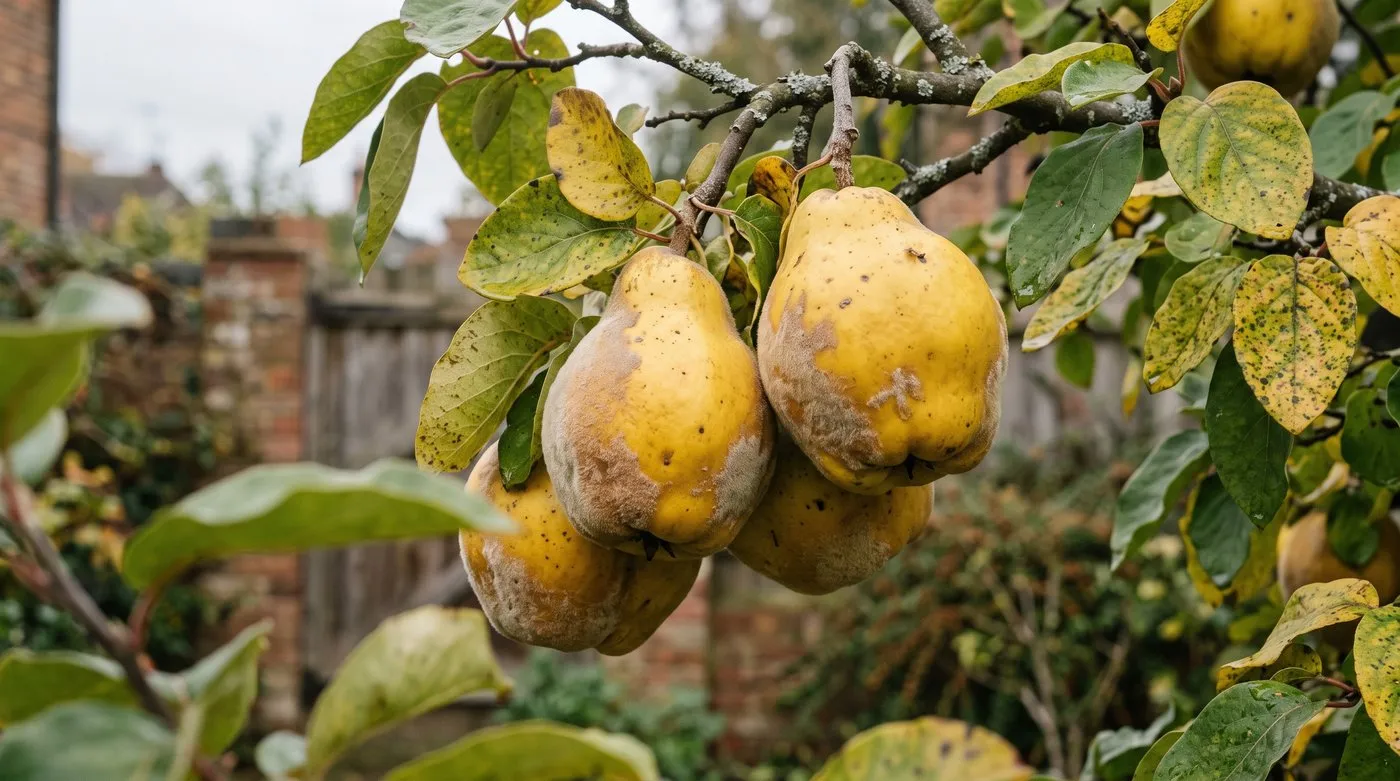
Golden skin, a sweet honey smell and fuzz that rubs off easily all mean quince is ready. Handle them gently, as they bruise more easily than they look.
What can I make with quince fruit?
Quince is a cooking fruit, and it’s magic in the pan. The pale, hard flesh turns rosy pink and tastes of honey and pear.
Quince jelly is the classic. The fruit is full of pectin, so it sets easily without any added. Our guide to jam and jelly making shows you how.
Membrillo is a firm Spanish quince paste, lovely with cheese. Cook the pulp with sugar until thick enough to set as it cools.
You can also make quince cheese, quince butter or poached quince. See our guide to preserving fruit and vegetables for more ideas.
 Freshly picked quince with homemade jelly. All that natural pectin makes it great for preserving.
What pests and diseases affect quince in the UK?
Quince has fewer problems than apples or pears. These are the ones to watch for.
Quince leaf blight is the most common. Brown spots appear on the leaves from late spring, and leaves drop early. Pick off and bin affected leaves, rather than composting them. Thin the branches so air can move through, and clear fallen leaves in autumn.
Brown rot makes fruit go brown with rings of pale spots. Remove rotten fruit straight away, including any shrivelled fruit left on the tree over winter.
Fireblight is a more serious bacterial disease. Shoot tips blacken and curl over like a shepherd’s crook. Cut out affected wood well below the damage, and wipe your tools clean between cuts.
Codling moth sometimes attacks quince, though it’s much more of a problem on apple trees. Pheromone traps hung in the tree from May show whether the moths are about.
Can I grow quince in a container?
Yes, if you choose a tree on Quince C rootstock. Use a pot at least 45cm across and deep, filled with John Innes No. 3 with some grit or perlite mixed in. A potted quince stays smaller and gives a smaller crop.
Feed with tomato feed every two weeks from April to August, and water often in summer. Repot every few years into fresh compost.
Roots in a pot feel the cold more than roots in the ground. In winter, move the pot against a sheltered wall and wrap the pot (not the tree) in bubble wrap.
Growing quince as a trained tree
Quince makes a lovely fan against a sunny south or west-facing wall. It’s a great choice for a small garden or a cooler spot, as the wall gives warmth and shelter.
How to start a fan:
- Begin with a young single-stemmed tree
- In the first winter, cut the main stem to about 45cm above the graft
- Choose two strong side shoots and tie them to canes at 45 degrees on wires
- Over the next few years, tie in more branches to fill the fan
- Let fruiting shoots grow from the framework
A fan needs a wall space about 3m wide and 2.5m tall. Our guide to espalier and trained fruit trees covers the method in full.
Common mistakes when growing quince
Soggy soil on clay. Quinces cope with heavy soil, but standing water around the trunk rots them. Plant on a slight mound and sort the drainage first. Our guide to improving clay soil can help.
Pruning it like an apple. Hard pruning cuts off the shoot tips where the fruit forms. A light trim each winter is all it needs.
Biting into a raw one. It’s hard, dry and sour. Cook it slowly instead and it’s a different fruit.
Ignoring leaf blight. Left alone, it weakens the tree year after year. Pick off spotty leaves and clear fallen ones in autumn.
Now you know how to grow and enjoy quince, why not try growing pear trees as well?
Frequently asked questions
When is the best time to plant a quince tree in the UK?
Plant bare-root trees from November to March. That’s when they’re dormant, so the roots settle in over winter. Pot-grown trees can go in at any time of year. Just avoid frozen or waterlogged ground.
How long does a quince tree take to fruit?
Usually about 3-4 years after planting. Trees on the smaller Quince C rootstock can start a little sooner. Once a tree settles in, it should crop well most years.
Do quince trees need a pollination partner?
No, one tree on its own will fruit. Quince is self-fertile, and bees do the work. A second variety nearby can help a little, but you don’t need one.
Can you eat quince raw?
Not really, as most are hard and sour raw. Cooking changes everything. Slowly cooked quince turns soft and pink with a honeyed, pear-like flavour. ‘Aromatnaya’ is a softer variety, but UK-grown fruit still tastes best cooked.
What is the best quince variety for the UK?
‘Vranja’ is a reliable choice for most gardens. It has an RHS Award of Garden Merit and gives large, pear-shaped fruit that cooks beautifully. ‘Meech’s Prolific’ is a good pick too, with plenty of medium-sized fruit.
How do you prune a quince tree?
Prune lightly in winter, between December and February. Take out dead, diseased and crossing branches, then thin the middle to let in light and air. Quinces fruit at the tips of shoots, so don’t shorten the young shoots.
Why is my quince tree not fruiting?
Usually it’s just too young. Give it 3-4 years. Too much shade, a late frost on the blossom, soggy soil or too much high-nitrogen feed can also stop it fruiting.
Our team produces practical UK gardening guidance from source research, contributor records and established horticultural practice. Editorial standards are overseen by Matt W.


