
Key takeaways
- Milder springs mean many trees leaf and flower earlier than they used to
- Late frosts in April and May still happen, and open blossom is easily damaged
- Cover small fruit trees with fleece on frosty nights and remove it in the morning
- Avoid planting fruit in frost pockets at the bottom of slopes
- Later-flowering varieties, such as apple 'Edward VII', are less likely to be caught by frost
- Anyone can log blossom dates with the Woodland Trust's Nature's Calendar
Trees across the UK are coming into leaf and blossom earlier than they used to. Milder winters and springs bring them on sooner. The catch for gardeners is that late frosts haven’t gone away. Early blossom on fruit trees is more likely to be caught open by a cold night in April or May.
This guide explains what’s going on, how to protect blossom from frost, which fruit varieties flower later, and how to record your own garden’s spring. For planning a whole garden around warmer, wetter and drier spells, see the guide to climate-proofing your UK garden.
Why are UK trees blossoming earlier?
Trees use warmth as one of their cues to wake up in spring. When late winter and early spring are mild, buds open sooner. Many trees also need a spell of winter cold first, but most UK winters still give them that.
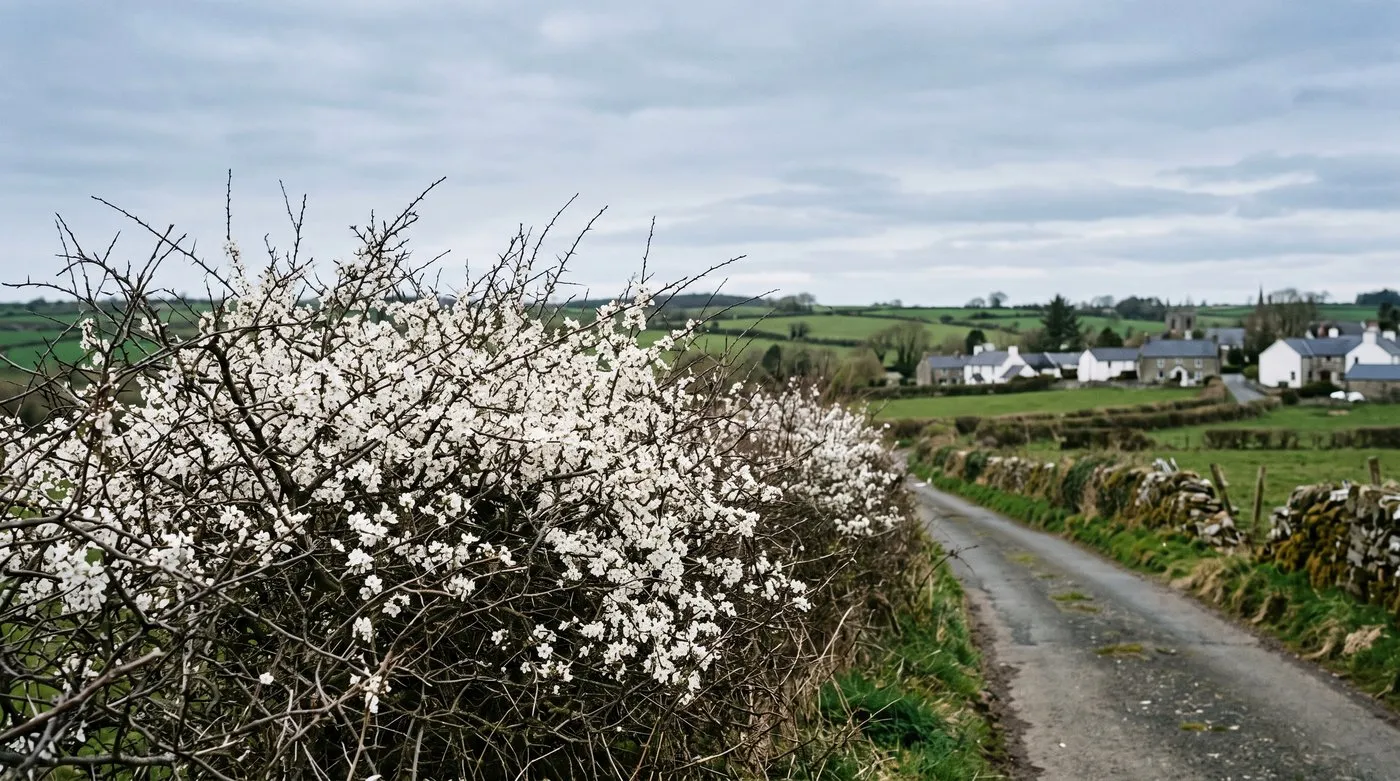
Blackthorn flowers on bare twigs and is one of the spring events people record each year. Keep an eye on when it opens near you.
The study of the timing of natural events like this is called phenology. The UK has some of the longest records of it anywhere. A Norfolk landowner, Robert Marsham, began noting spring events in 1736. Today the Woodland Trust’s Nature’s Calendar collects records from thousands of people.
Those records show that many spring events, such as oak leafing, hawthorn flowering and frogspawn appearing, now tend to happen earlier than they did a few decades ago. The exact timing still changes from year to year. A cold spring can still hold things back.
Why early blossom is risky for fruit trees
Late frosts still happen, and open blossom is the most easily damaged stage. A single frosty night when the flowers are open can wipe out much of that year’s crop.
Closed buds cope with cold far better than open flowers. Once blossom opens, a frost can kill the centre of the flower. You’ll see it a day or two later as a brown or black middle, and no fruit develops from that flower.
The earlier a tree flowers, the more frosty nights it may have to get through. Apricots, peaches, almonds, pears and early plums flower earliest, so they’re most at risk. Apples flower later, but even they can be caught.

Frost-killed blossom turns brown or black in the centre. Flowers like this won’t set fruit, but later flowers on the same tree often still do.
How to protect blossom from late frost
Horticultural fleece is the simplest protection for small fruit trees. It keeps off a light frost and is easy to put on and take off.
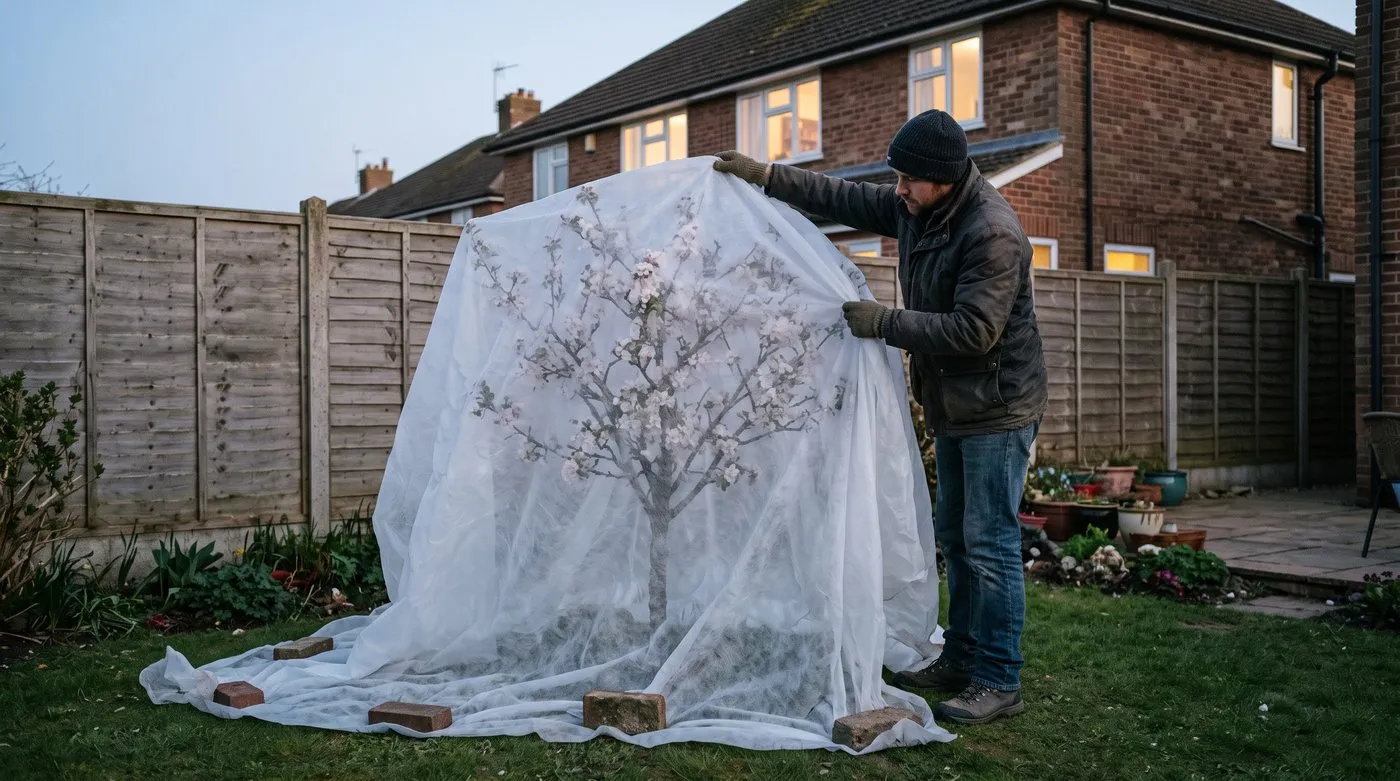
Cover the whole tree right down to the ground before dusk, then take the fleece off in the morning for the bees.
- Watch the forecast from March to May. If a frost is forecast and your tree is in flower or at pink bud, it’s a fleece night.
- Cover before dusk. Put the fleece on in the late afternoon or early evening, while the ground still holds some of the day’s warmth.
- Cover the whole tree. Drape fleece over the top and sides, right down to the ground. Weigh down the edges with bricks or pegs so wind can’t lift it.
- Take it off in the morning. Bees and other pollinators need to reach the flowers. Fleece left on all day stops them.
- Repeat each frosty night. Cold spells often last several nights in a row.
Wall-trained fruit, such as fans and espaliers, is the easiest to protect. Hang fleece from the top of the wall like a curtain on cold nights. Trees in pots can be moved into a shed, garage or greenhouse overnight.
Damp, bare soil under the tree gives off a little more warmth overnight than dry soil or long grass. Water the soil if it’s dry and a frost is forecast.
Don’t use plastic sheeting. It gives very little protection and blossom touching it can still freeze. The garden fleece guide explains which weight to buy.
Which fruit varieties flower later?
Choosing a later-flowering variety is the best long-term answer to frost. Nurseries sort fruit trees into flowering groups, numbered from early to late. A higher number means later blossom.
| Fruit | Later-flowering choices | Worth knowing |
|---|---|---|
| Apple | ’Edward VII’, ‘Court Pendu Plat’, ‘Crawley Beauty’ | All flower late in the apple season |
| Plum | ’Marjorie’s Seedling’ | Late-flowering and self-fertile |
| Pear | Choose a later flowering group from the nursery | Pears flower earlier than apples, so site matters more |
| Cherry | ’Morello’ | A sour cherry that flowers fairly late and suits a north wall |
Most fruit trees need a pollination partner that flowers at the same time. So when you choose a late-flowering apple, check its flowering group and pick a partner in the same or a neighbouring group. The guides to the best apple varieties and cherry pollination groups explain how partners work.

Two trees, two timings. The plum has already finished flowering while the apple is in full blossom. Later blossom has fewer frosty nights to get through.
Where to plant fruit trees to dodge frost
Avoid frost pockets. Cold air flows downhill like water and settles in low spots. The bottom of a slope, a dip in the lawn or the low side of a solid fence or hedge can all be several degrees colder on a still night.
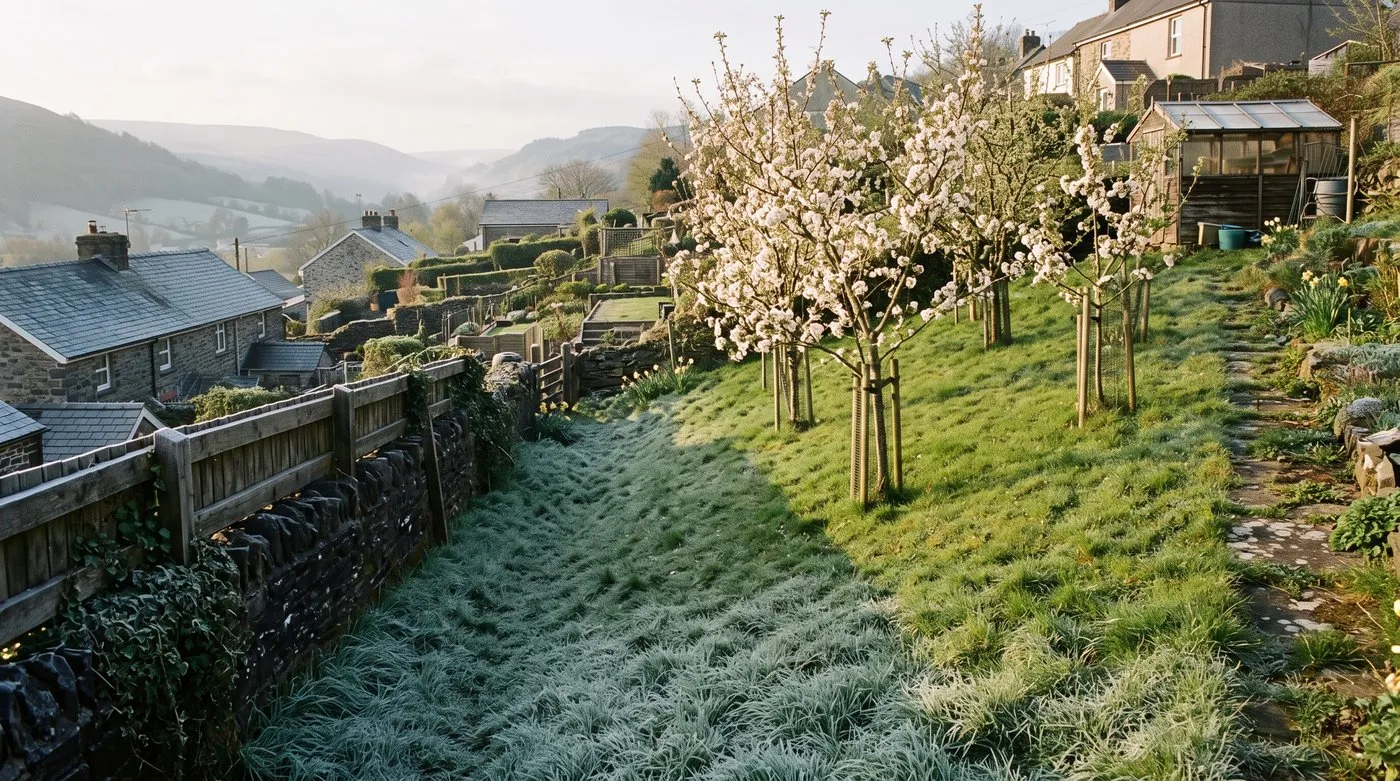
Frost settles where cold air pools at the bottom of a slope. Fruit trees a little higher up often escape it.
Plant fruit on a gentle slope or higher ground where cold air can drain away. A sheltered spot against a south- or west-facing wall gives extra warmth. Be aware that a very warm, sunny wall can also bring blossom on earlier.
The wider guide to protecting plants from frost shows how to spot the coldest corners of your garden.
How to record your garden’s spring with Nature’s Calendar
Anyone can log seasonal events with the Woodland Trust’s Nature’s Calendar. It’s free, takes a few minutes and adds to a record going back centuries.
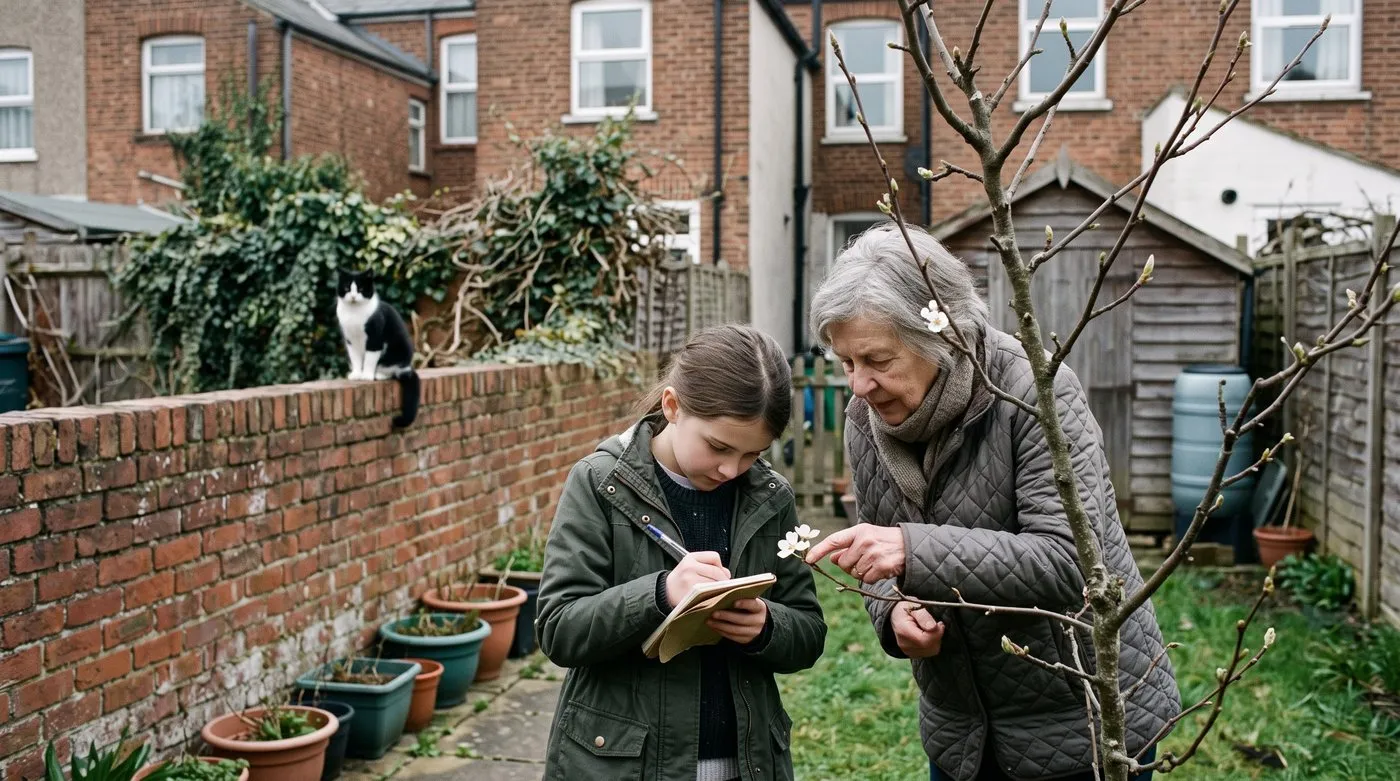
Jot down the date the first flowers open each spring. Over a few years you’ll know exactly when to have the fleece ready.
- Sign up on the Nature’s Calendar website.
- Choose a few events to watch, such as first leaf on an oak, first flower on blackthorn or hawthorn, or apple blossom.
- Note the date each time you see the event for the first time that year.
- Log it online and keep watching the same trees each spring.
Watching the same trees year after year is what makes the records useful. It also helps you get to know your own garden. If your apple tree tends to flower in mid-April, you’ll know when to have the fleece ready.
Common mistakes with early blossom and frost
Leaving it until damage shows. By the time flowers turn brown, it’s too late for that blossom. Watch the forecast as soon as buds start to show pink.
Leaving fleece on during the day. It keeps pollinators off the flowers. Take it off each morning.
Covering only the top of the tree. Warmth escapes from the sides and base. Take fleece right down to the ground.
Planting in a frost pocket. No variety does well where cold air pools every spring. Choose the site first.
Planting just one early variety. If you have room for more than one tree, choose varieties with different flowering times. A frost is then less likely to catch them all.
Pruning off frosted flowers. Leave the tree alone. Later flowers and those deeper in the canopy often set fruit. If you need to prune later, the guide to pruning fruit trees covers timing.
Now you know how to keep your blossom safe, read the guide to growing fruit trees next. For more seasonal jobs, browse the how-to hub.
Frequently asked questions
Why are UK trees blossoming earlier each year?
Mostly because winters and springs are getting milder. Trees time their leaves and flowers partly by warmth, so a mild spring brings them on sooner. Long-running UK records of first leaf and first flower show many spring events now arrive earlier than they used to.
Does earlier blossom mean more frost damage to UK fruit?
It can do, because late frosts still happen. Open blossom is much more easily damaged than closed buds. If a tree flowers earlier and a frost arrives in April, the flowers are more likely to be caught open.
Which fruit varieties are best where late frost is a problem?
Choose varieties that flower late in the season. Late-flowering apples include ‘Edward VII’, ‘Court Pendu Plat’ and ‘Crawley Beauty’. ‘Marjorie’s Seedling’ is a late-flowering plum. Check pollination partners before you buy.
How do I protect blossom from late spring frost?
Cover small trees with horticultural fleece on frosty nights. Drape it over the whole tree down to the ground and weigh down the edges. Take it off in the morning so bees can reach the flowers. Wall-trained fruit is easiest to cover.
What is Nature’s Calendar and how do I take part?
It’s a citizen science project run by the Woodland Trust. Anyone can log the dates of seasonal events, such as first leaf, first flower and ripe fruit. The records help track how the seasons are changing across the UK.
Our team produces practical UK gardening guidance from source research, contributor records and established horticultural practice. Editorial standards are overseen by Matt W.


