Key takeaways
- Expect both extremes: hot, dry summers and wet, mild winters with heavier downpours
- Mulch borders 5-8cm deep to hold moisture in summer and protect soil in winter
- Fit a water butt to every downpipe you can, and water deeply but less often
- Put sun-loving, drought-tolerant plants on free-draining ground and moisture lovers in wet spots
- Turn the soggiest corner into a rain garden instead of fighting it
- Keep fleece handy, as late frosts still hit plants that start growing early
UK gardens now face both extremes: hotter, drier summers and milder, wetter winters, with rain often arriving in heavy bursts. The good news is that a few simple changes help with all of it. Better soil, stored rainwater and the right plant in the right spot do most of the work.
This guide looks at the whole garden: what is changing, which plants struggle, how to handle water at both ends of the year, and the new pests to watch for. For a longer plant list, see our guide to climate-resilient plants for UK gardens.
How is the UK climate changing for gardeners?
Summers are getting hotter and drier, and winters milder and wetter. Heatwaves are more frequent, and rain often comes as heavy downpours rather than steady showers.

Long dry spells hit lawns, pots and thirsty shrubs first. Lawns usually green up again once the rain returns.
For gardeners that means three things. Plants face longer dry spells in summer, especially in pots and on light soil. Heavy rain runs off hard ground or sits on clay, so winter waterlogging is more common. And the growing season starts earlier and runs later, which is great until a late frost hits the new shoots.
The Met Office’s UK climate projections explain what’s expected in more detail.
Which garden plants struggle in hot, dry summers?
Plants that like cool, moist soil suffer most. That doesn’t mean you have to give them up. Move them to the right spot and look after the soil.
- Delphiniums and lupins prefer cool summers and need staking and steady moisture.
- Hostas and astrantia scorch in hot afternoon sun. Grow them in part shade with plenty of mulch.
- Hydrangeas wilt fast in heat and need watering in dry spells.
- Newly planted trees and shrubs need regular deep watering for their first two summers.
- Lavender and rosemary love heat but can rot in wet winter clay. Plant them in raised or gritty spots.
Keep moisture lovers in the shadier, damper parts of the garden. Give the sunniest, driest beds to plants that enjoy those conditions.
Which plants handle the new UK summers?
Drought-tolerant perennials, grasses and Mediterranean shrubs do well in sunny, free-draining spots. Most need watering only while they settle in.
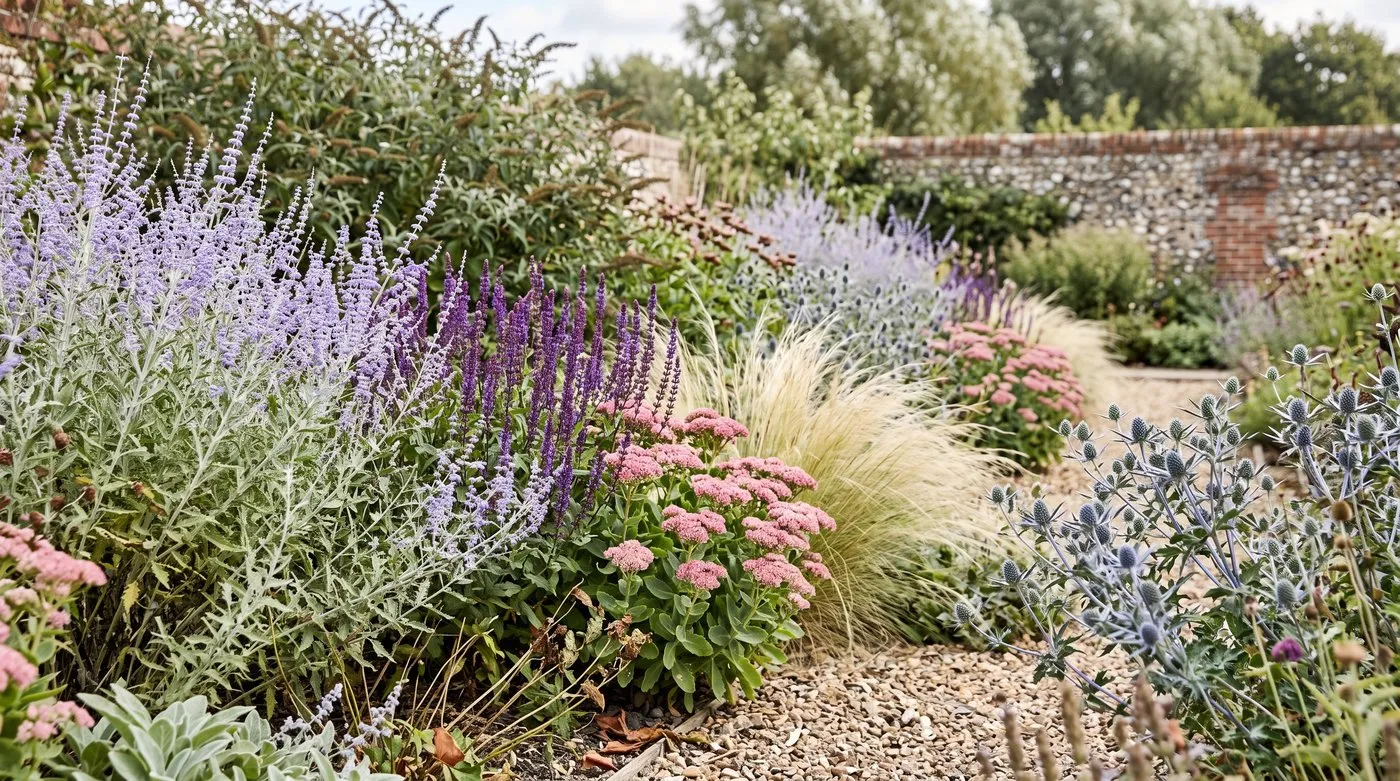
Silvery leaves, grasses and spiky blue flowers stay happy through dry summers once they’re settled in.
- Russian sage (Perovskia) for silvery leaves and blue haze from late summer.
- Salvia nemorosa ‘Caradonna’ for deep purple spikes that bees love.
- Sedum (Hylotelephium) for late flowers and winter seedheads.
- Stipa tenuissima for soft, moving grass.
- Euphorbia characias for evergreen structure on dry soil.
- Eryngium and Echinops for spiky blue flowers that pollinators adore.
- Cistus for papery summer flowers on poor soil.
- Verbena bonariensis for tall purple flowers that self-seed.
Plant them in autumn or spring so roots establish before summer. Our guides to drought-tolerant plants and creating a gravel garden take this further.
How do you look after soil in a changing climate?
Mulch is the single most useful thing you can do. A 5-8cm layer of garden compost, leaf mould or bark holds moisture in summer and protects the soil surface from heavy rain.
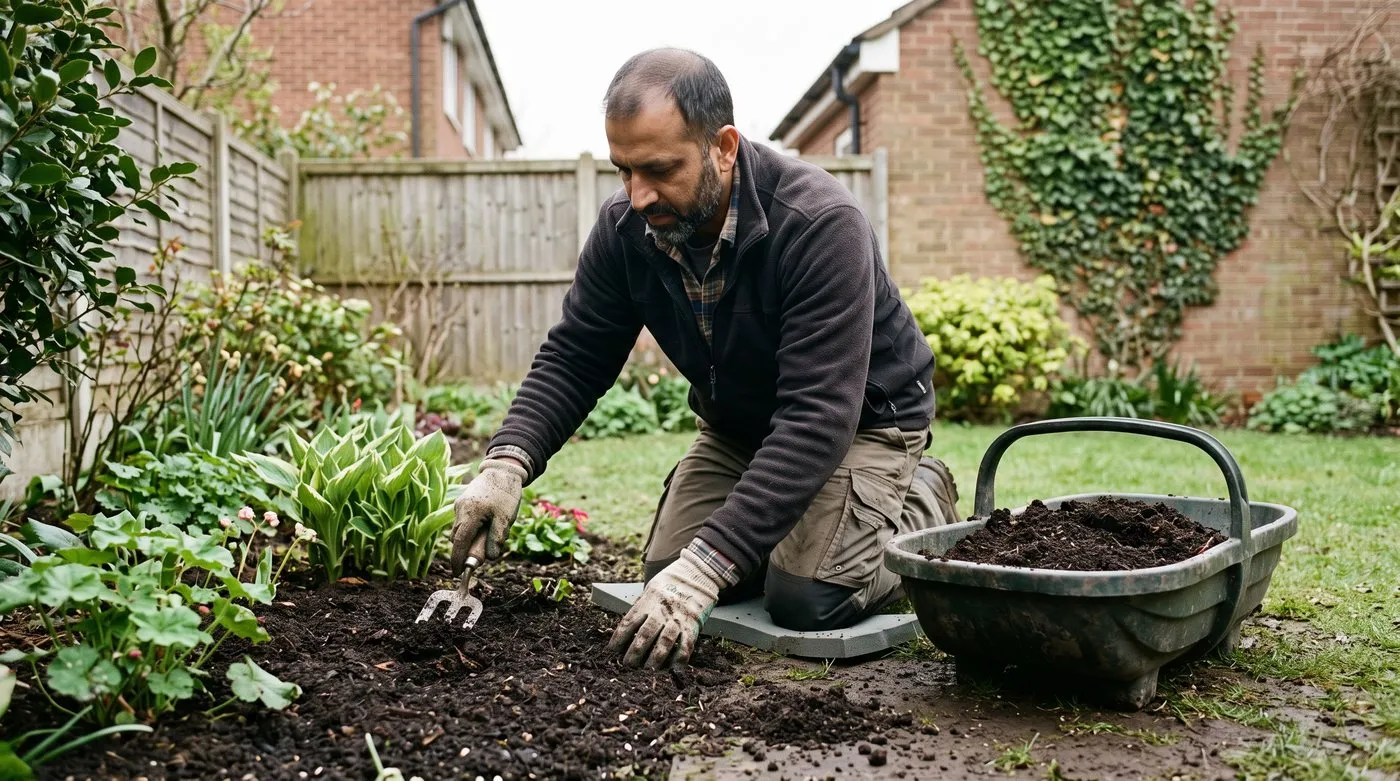
A thick layer of mulch keeps moisture in during summer and protects the soil from winter downpours.
Spread it on moist soil in spring or autumn, keeping it clear of plant stems. Top it up each year. Over time, worms pull it down and improve the soil structure, so it drains better in winter and holds more water in summer.
Avoid leaving soil bare. Ground cover plants and dense planting shade the soil and cut evaporation. On heavy clay, adding organic matter year after year does far more than grit. Our guide to improving clay soil explains how.
How do you store winter rain for summer?
Fit a water butt to every downpipe you can, including sheds and greenhouses. Rainwater is free, and plants prefer it.
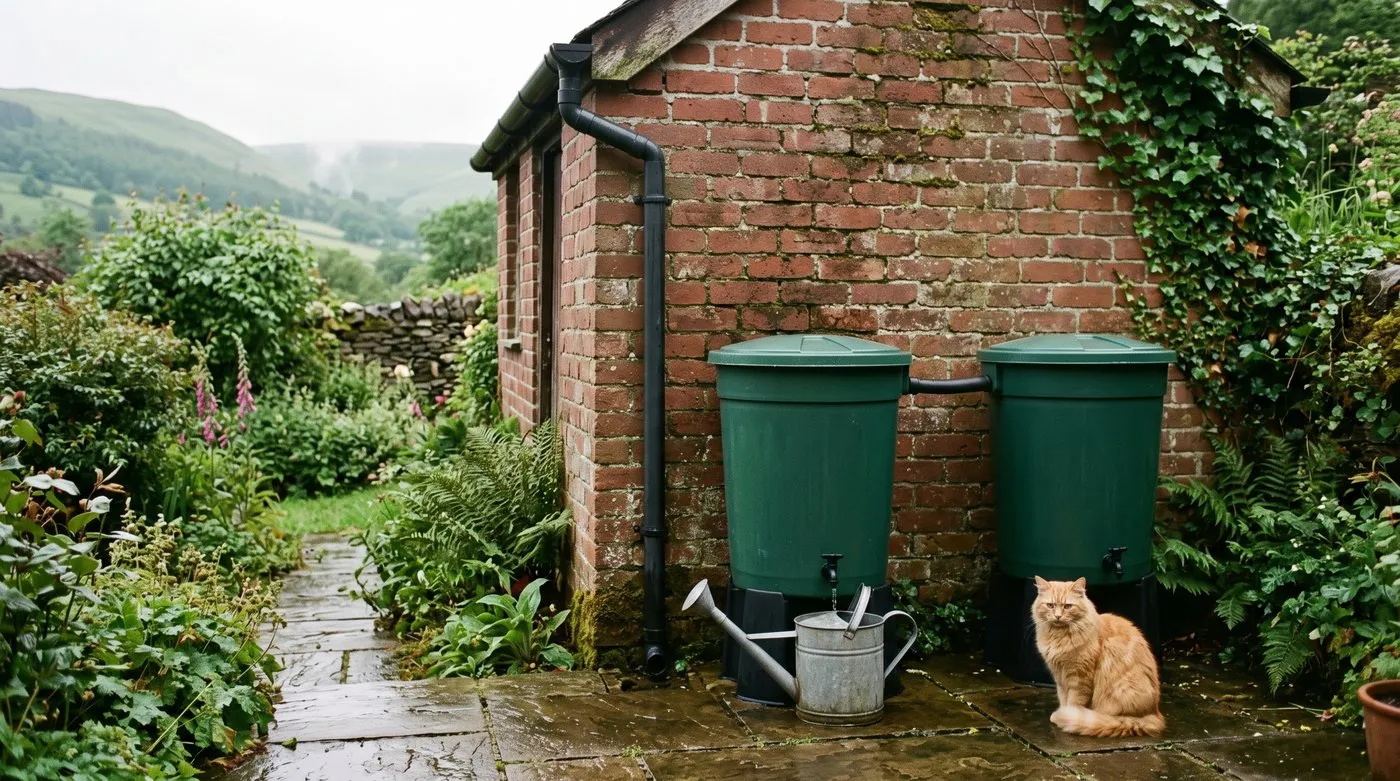
Linking two butts doubles your summer supply. Keep the lids on to stop leaves and wildlife falling in.
Link two or more butts together to store more. Keep lids on to stop mosquitoes, leaves and curious pets getting in. In summer, use stored water for pots, new plants and the greenhouse first, as they need it most.
Water deeply and less often rather than a little every day. A good soak at the base of each plant, early in the morning or in the evening, encourages deep roots that cope better with drought. Our rainwater harvesting guide covers fitting butts and bigger tanks.
What to do about a waterlogged garden in winter
Work with the water rather than fighting it. Find where water sits after heavy rain and plan around those spots.

A rain garden turns a soggy corner into a feature. It fills after heavy rain, then drains away within a day or two.
- Make a rain garden. A shallow, planted dip in the soggiest corner catches water from a downpipe or patio and lets it soak away slowly.
- Plant for wet feet. Siberian iris, sedges, dogwoods and meadowsweet cope with winter wet.
- Raise beds for fussy plants. Lavender, rosemary and many herbs do far better in raised or mounded beds.
- Swap solid paving for permeable surfaces. Gravel and permeable paving let rain soak in instead of running off.
- Keep off wet soil. Walking on it squashes out the air and makes drainage worse.
Our guide on how to make a rain garden walks you through sizing and planting one.
Which new pests are arriving in UK gardens?
Milder winters help some pests survive and spread. Here are the main newcomers to look out for.
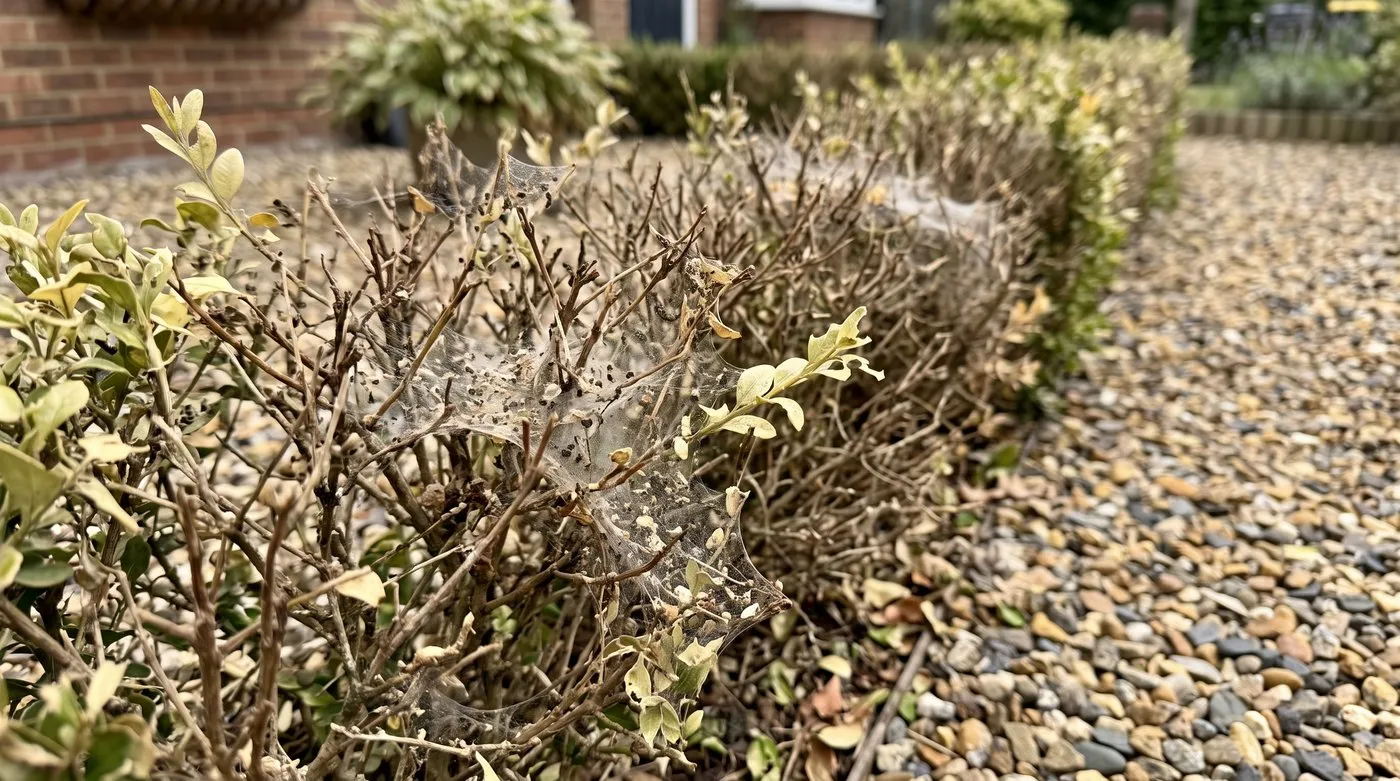
Bare patches and silky webbing are the giveaway signs of box tree moth. Check hedges from spring onwards.
- Box tree moth. First found in the UK in 2008, its caterpillars strip box hedges and topiary in summer. Pick them off, prune out webbing, or replace box with yew or Ilex crenata. Our box tree moth guide has the details.
- Rosemary beetle. Shiny metallic green and purple beetles eat rosemary, lavender, sage and thyme. Shake them onto newspaper and remove them.
- Oak processionary moth. Established in and around London and spreading. The caterpillar hairs irritate skin, eyes and lungs in people and pets. Don’t touch nests, and report sightings to the Forestry Commission’s TreeAlert service.
- Asian hornet. Darker than our native hornet, with yellow legs. It preys on honeybees. Don’t approach a nest. Report sightings using the Asian Hornet Watch app.
Warning: Keep children and dogs away from oak processionary caterpillars and nests. Their hairs can cause rashes and breathing problems.
Do you still need to protect plants from frost?
Yes. Milder winters mean plants often start growing earlier, so a cold snap in April or May can hit soft new shoots and fruit blossom.
Keep horticultural fleece handy from March to May. Cover tender plants and blossom on clear, still nights when frost is forecast. Don’t rush tender plants like dahlias and tomatoes outside until the risk of frost has passed in your area.
Your climate action plan for the next year
- Watch where water sits after heavy rain and mark those spots.
- Add a water butt to any downpipe that doesn’t have one.
- Mulch every border 5-8cm deep in spring or autumn.
- Move or replace plants that keep struggling in the wrong spot.
- Plant drought-tolerant perennials in the sunniest, driest bed.
- Turn the soggiest corner into a rain garden.
- Check rosemary and lavender for rosemary beetle from spring to autumn.
- Swap a solid path or patio for gravel or permeable paving when it needs replacing.
- Shade the greenhouse with paint or netting from early summer.
- Keep a simple diary of first and last frosts in your garden.
Common mistakes when adapting a garden
- Watering little and often. Daily sprinkles keep roots shallow. Water deeply once or twice a week in dry spells.
- Adding sand or grit to clay. You’d need huge amounts. Organic matter works much better.
- Putting drought plants in shade. Mediterranean plants need full sun and free drainage to thrive.
- Leaving soil bare. Bare soil dries out in summer and washes away in winter. Mulch it or plant it.
- Holding on to failing box. If box tree moth or blight keeps coming back, replacing it is often easier.
Frequently asked questions
How is climate change affecting UK gardens?
Summers are hotter and drier, and winters milder and wetter. Rain often falls in heavy bursts, so gardens swing between drought and waterlogging. Mild winters also help some pests survive and spread.
Which plants cope best with the changing UK climate?
Drought-tolerant perennials and grasses handle hot, dry summers best. Try Russian sage, salvias, sedums, Stipa and Euphorbia in sunny, free-draining spots. In wet corners use Siberian iris, sedges and dogwoods.
Is the UK getting warmer?
Yes, Met Office records show the UK has warmed in recent decades. Recent years have brought record-breaking heat, milder winters and longer growing seasons. Frosts still happen, so don’t throw out the fleece.
What new pests are arriving in UK gardens?
Box tree moth, rosemary beetle and oak processionary moth are now well established. Asian hornet is also being found, and sightings should be reported. Milder winters help many pests survive.
Do I still need to protect plants from frost?
Yes, frost protection still matters despite milder winters. Plants often start growing earlier, so a late frost can damage new shoots and fruit blossom. Keep fleece ready from March to May for clear, still nights.
What is a rain garden?
A rain garden is a shallow planted dip that catches rainwater. Water from a roof or patio drains into it and soaks away slowly. Plants that cope with both wet and dry spells, such as iris, sedges and dogwood, suit it.
Are roses still worth growing in the UK?
Yes, choose disease-resistant shrub roses and look after the soil. Mulch them each spring and water deeply in dry spells. Rugosa roses are especially tough in heat and wind.
Next, make every drop count with our guide to garden water conservation, or browse more ideas in the garden design hub.
Our team produces practical UK gardening guidance from source research, contributor records and established horticultural practice. Editorial standards are overseen by Matt W.