Key takeaways
- UK gardens now face dry summers, wet winters, mild spells and late frosts, sometimes all in one year
- Mix native shrubs for toughness with Mediterranean plants for hot, dry spots
- Lavender and rosemary love dry summers but need sharp drainage to get through winter
- Hawthorn, elder, holly and field maple cope with almost anything
- Add 5-8cm of compost or manure each autumn to help soil with both drought and heavy rain
The UK’s weather is getting harder to predict. One year brings a summer drought, the next a soggy winter, and a frost can still nip new growth in May. Gardens planted for mild, damp weather are finding it tough.
The good news? You don’t need to guess what’s coming. Choose plants that handle a bit of everything, look after your soil, and your garden will cope with heatwaves, downpours and cold snaps alike.
What UK gardens are up against
1. Drier summers
Long dry spells and hosepipe bans are now common, especially in the south-east. Bedding plants, shallow-rooted perennials and fine lawns suffer first.
2. Wetter winters
Winters are getting wetter. Soggy soil starves roots of air and they rot. That’s the big risk for Mediterranean plants, which love dry summers but hate sitting wet in winter.
3. Milder autumns and winters
Winters are milder on average. Some fruit trees and bulbs like tulips need a proper cold spell to do well. Pests and diseases also hang around for longer.
4. More frequent late frosts
Mild spring weather tempts plants into early growth, then a late frost in April or May scorches it. Keep fleece handy and don’t rush tender plants outside.
Tough perennials for changeable weather
These perennials take most UK weather in their stride.
| Plant | Dry summers | Wet winters | Frost | Good to know |
|---|---|---|---|---|
| Echinacea purpurea | Good | Fair | Good | Needs soil that drains |
| Rudbeckia fulgida | Good | Good | Good | Flowers for months |
| Verbena bonariensis | Good | Fair | Fair | Self-seeds if winter kills it |
| Hardy geranium | Fair | Good | Good | Easy, spreads into gaps |
| Sedum (Hylotelephium) | Good | Fair | Good | Stores water in its leaves |
| Nepeta (catmint) | Good | Fair | Good | Long season, bees love it |
| Aster | Fair | Good | Good | Late flowers |
| Persicaria | Fair | Good | Good | Happy in damp soil |
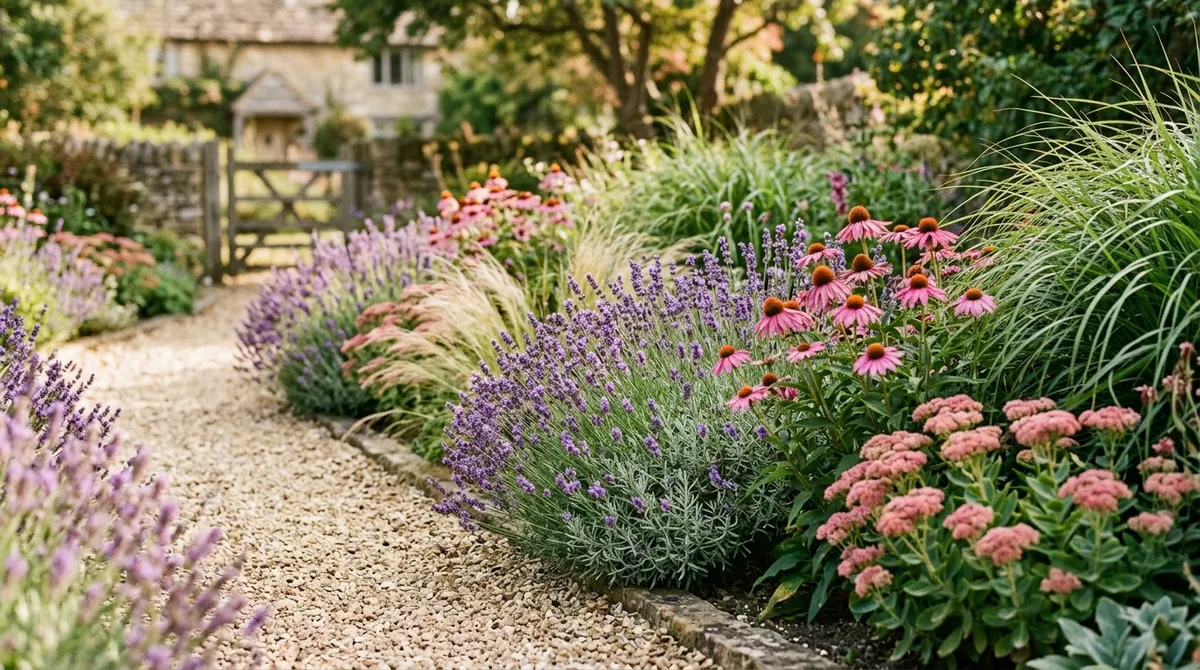
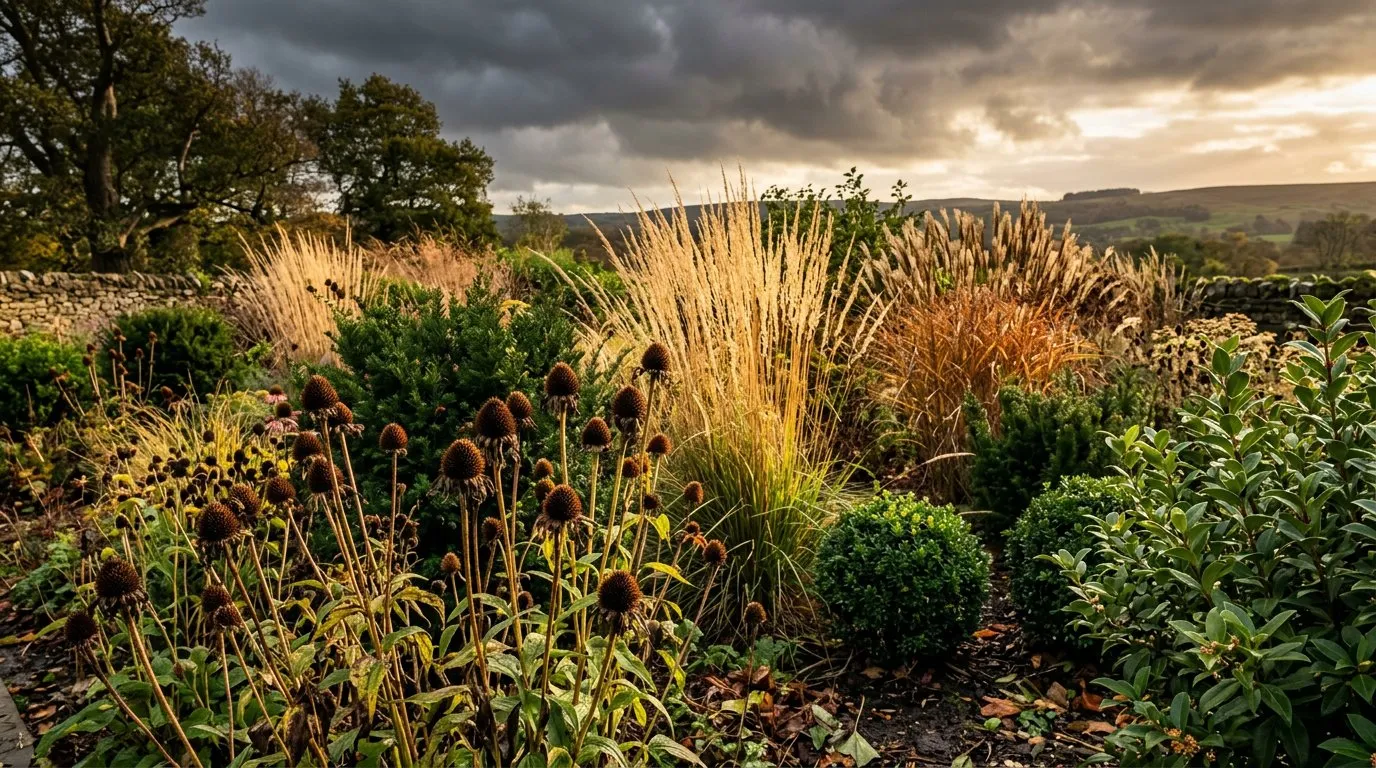 An autumn border of echinacea, grasses and evergreens, ready for whatever the weather does next.
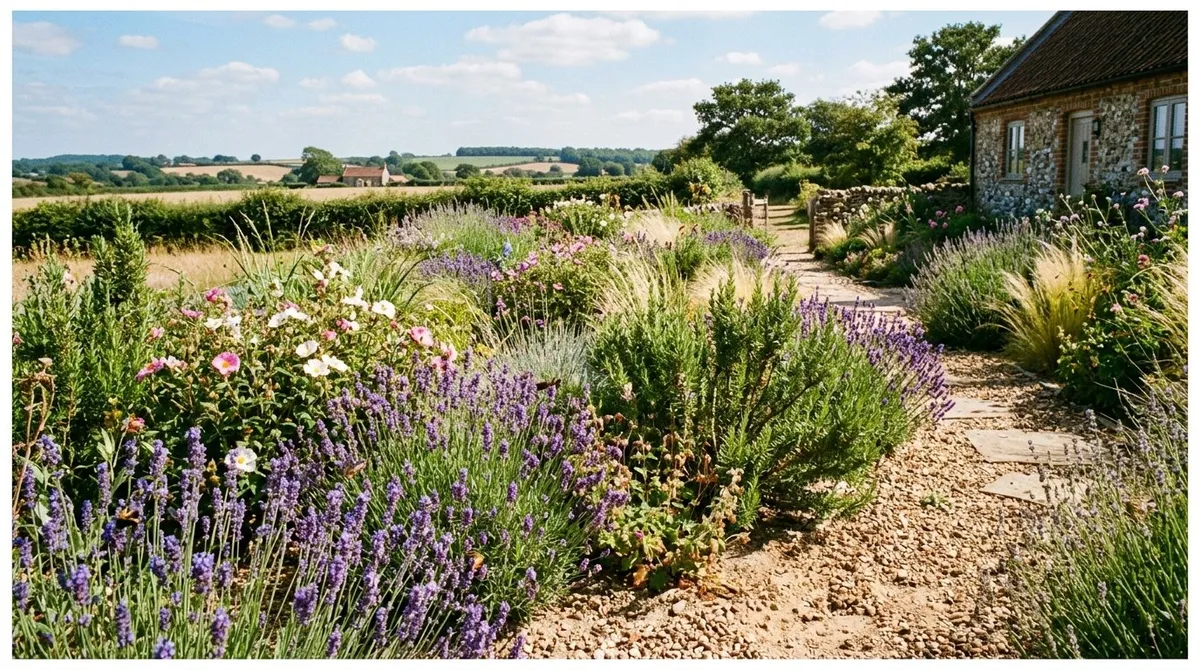
Rosemary and lavender love a dry summer, but they need sharp drainage to survive a wet winter. Plant them in raised beds, gravel or against a sunny south-facing wall.
Shrubs that cope with almost anything
Shrubs give your garden shape all year. These are some of the toughest.
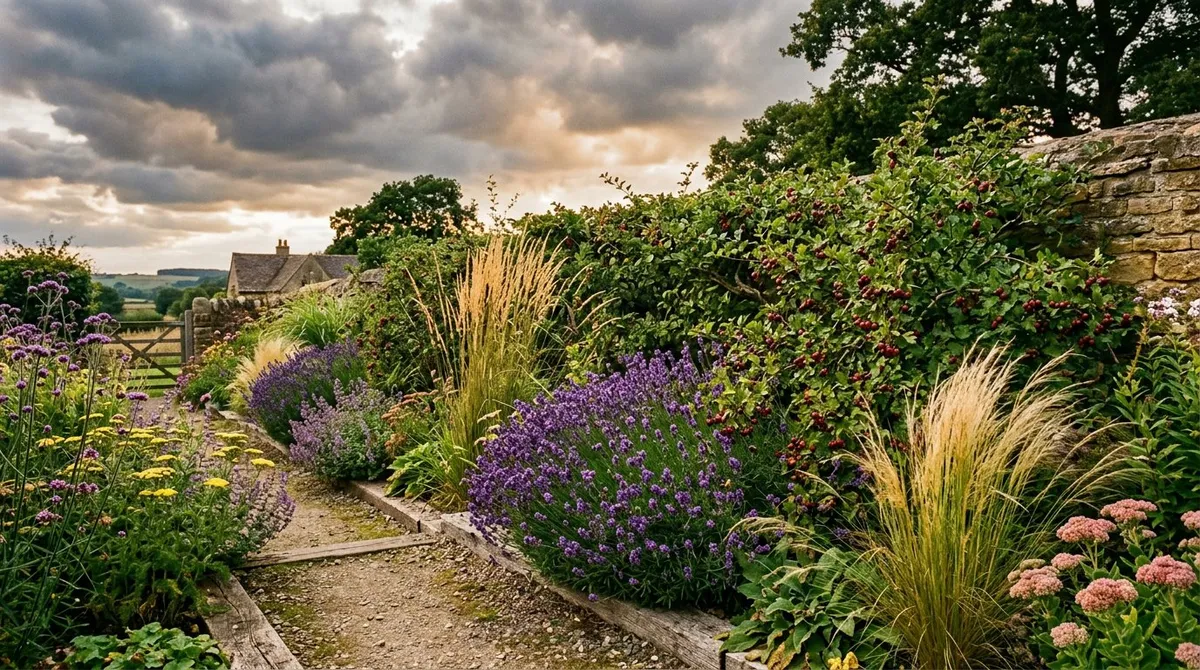
Hawthorn (Crataegus monogyna) is a true survivor. It copes with dry spells, wet ground, frost, wind and poor soil. You get spring blossom, autumn berries and a great home for birds.
Elder (Sambucus nigra) grows fast in almost any soil. It has edible flowers and berries. Cut it hard back each year for fresh leaves.
Hebe is a New Zealand evergreen that copes with seaside spots, dry spells and moderate frost. There are tiny ground-huggers and shrubs up to 2 metres.
Photinia has bright red new growth. It’s fine on clay and copes with dry spells once settled in. It makes a good hedge.
Pittosporum tenuifolium is another New Zealand evergreen. It does better in UK gardens as winters get milder, and copes with salt and dry spells once settled.
Trees for a changing climate
A tree is a long-term friend, so it pays to pick one that will cope with the weather to come.
Native trees that handle everything
- Silver birch: fast, pretty and happy wet or dry
- Rowan: compact, with berries for birds, fine in exposed spots
- Field maple: great autumn colour, grows in most soils
- Holly: evergreen and tough once settled in
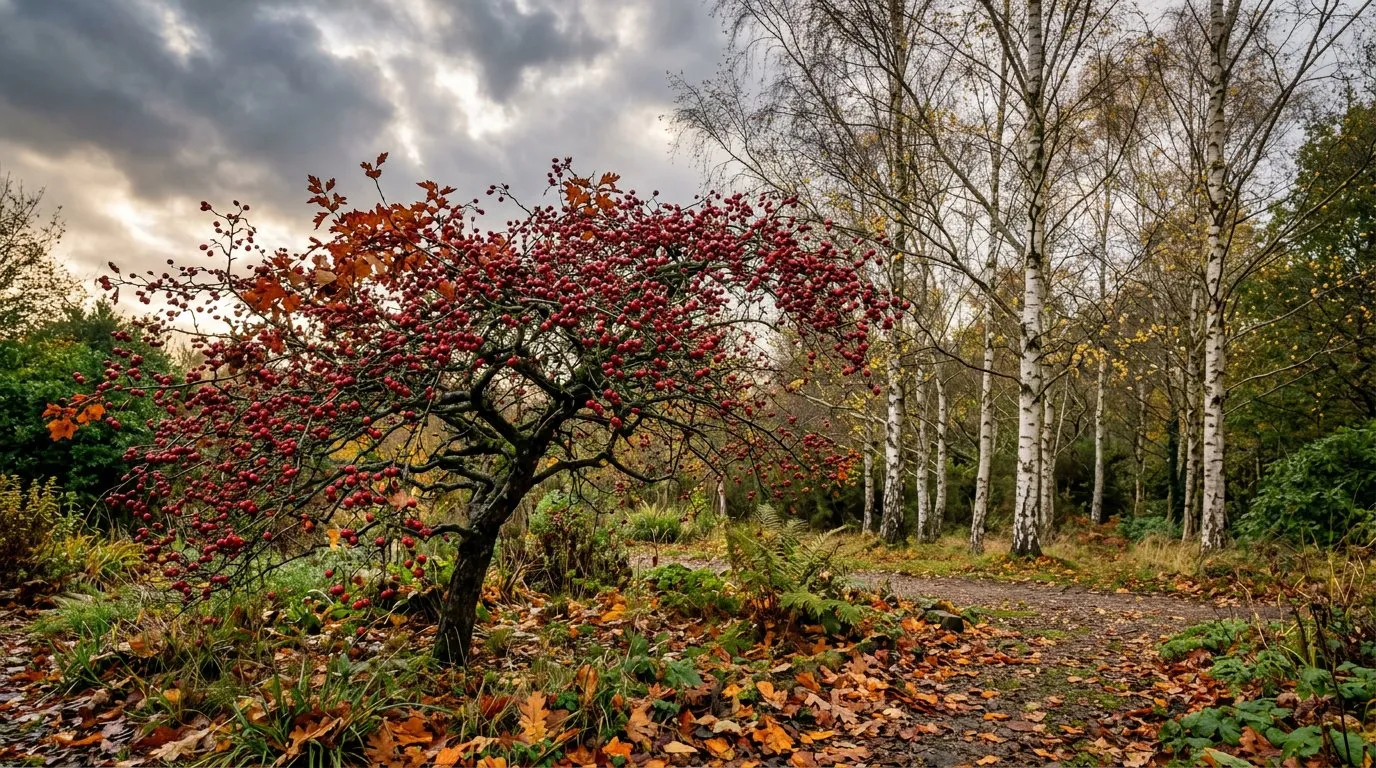 Hawthorn and silver birch shrug off cold, wet, dry and windy weather.
Trees from warmer places that do well here
- Holm oak (Quercus ilex): an evergreen oak from the Mediterranean, now at home in southern England
- Strawberry tree (Arbutus unedo): evergreen, with red autumn fruit
- Pin oak (Quercus palustris): from North America, copes with wet ground
Look after your soil first
Good soil is the best weather protection you can give your garden. It drains in heavy rain and holds water in a drought.
Add organic matter every year. Spread 5-8cm of home-made compost or well-rotted manure on beds each autumn. It helps sandy soil hold water and opens up heavy clay soil.
Cover bare soil. A mulch stops soil drying out in summer and washing away in winter. Bark, gravel or ground cover plants all work.
Keep off the beds. Walk on paths, not soil. Squashed soil can’t soak up rain, so water just runs off.
Planning a garden that copes
Grow lots of different plants
If you grow just a few kinds, one bad season can wipe them out. With a wide mix, some plants will always do well whatever the weather.
Put sun-lovers in dry spots
South and west-facing borders, raised beds and spots by walls dry out first. Use drought-tolerant plants and ornamental grasses there.
Plant for rain gardens in wet spots
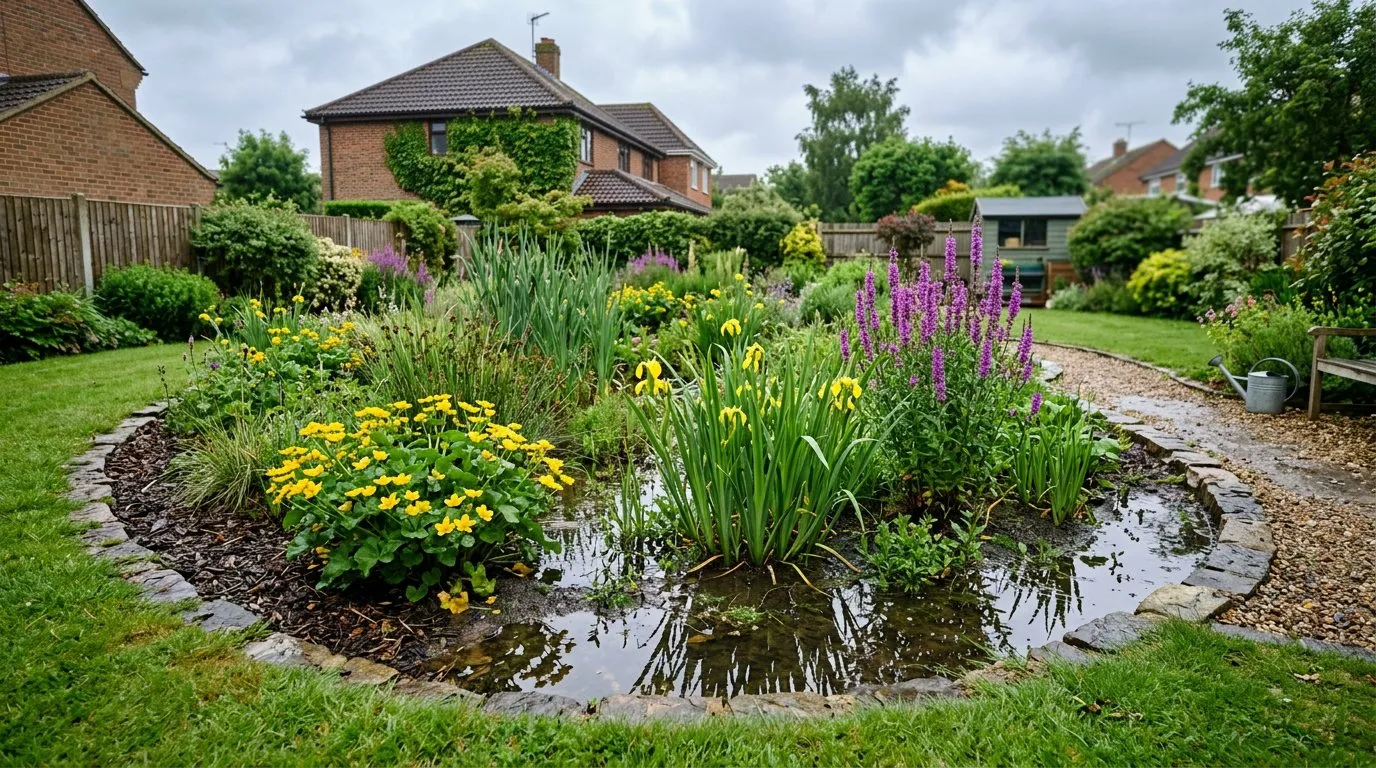 A rain garden turns a soggy corner into a feature. Flag iris and marsh marigold love wet feet.
Low spots where water collects suit marsh marigold, flag iris, purple loosestrife and meadowsweet. A rain garden in your wettest corner turns a problem into something lovely.
Shrink the lawn
Lawns need lots of water and go brown in a drought. Swap a patch for a mini wildflower meadow, gravel planting or ground cover.
Tip: The RHS plant finder is handy for checking whether a plant copes with dry or wet soil before you buy.
Next, have a look at our guide to drought-tolerant plants for UK gardens for more plants that love dry summers.
Frequently asked questions
What does climate-resilient gardening mean?
It means growing plants that shrug off unpredictable weather. That covers dry spells, heavy rain, mild winters and late frosts. It also means looking after your soil and planning your garden so it copes with both too much and too little water.
What plants survive extreme weather in the UK?
Tough native shrubs and trees cope with the widest range. Hawthorn, elder, birch and holly are good examples. Mediterranean plants handle summer drought, and prairie perennials like rudbeckia are happy through most of the year.
Will UK gardens become Mediterranean?
Not quite, as frost isn’t going away. Summers in southern England are getting hotter and drier, but winters still bring cold snaps. A mix of sun-loving plants and hardy natives suits this in-between climate best.
How do I protect my garden from climate change?
Start with your soil. Add compost or manure every year, choose deep-rooted plants and cut back on lawn. Collect rainwater in a water butt, and plant a mix of natives and sun-lovers.
Are native UK plants climate-resilient?
Most native trees and shrubs are very tough. They’ve always lived with Britain’s changeable weather. Hawthorn, silver birch, rowan, elder, field maple and holly all cope with dry spells, frost, wind and poor soil.
What trees are best for climate change in UK gardens?
A mix of native and warm-climate trees works well. Silver birch, rowan and field maple are happy in cold, damp places. Holm oak and strawberry tree like warmth and dry summers. Pin oak copes with wet ground.
Our team produces practical UK gardening guidance from source research, contributor records and established horticultural practice. Editorial standards are overseen by Matt W.