
Key takeaways
- Fit water butts in winter so they're full before the first dry spell
- Mulch beds 5-8cm deep in April or May, while the soil is still damp
- A soaker hose under mulch puts water straight on the roots
- Water deeply once or twice a week rather than a little every day
- Bath and shower water is fine on ornamentals, not on salads or herbs
- An established lawn browns in drought but recovers when rain returns
Garden water conservation is easiest when you treat it as a yearly routine, not a summer panic. A few jobs in winter and spring mean far less watering when the dry weather comes. Fit water butts early, mulch while the soil is damp, put water on the roots, and let the lawn look after itself.
This guide sets out what to do and when, through the whole year. For the everyday habits and tough plants in more detail, see the guide to water-efficient gardening.
Where does most garden water go?
Most garden water goes on lawns, pots and thirsty veg, and a lot is lost to evaporation before it reaches the roots. Sprinklers are the biggest culprit. They wet paths and leaves as much as soil, and much of the spray evaporates on a warm day. On the hottest days of 2026, water demand rose by up to 30% (UK gardening statistics).
So the big wins are simple:
- Stop watering established lawns. They recover by themselves.
- Keep water in the soil with mulch.
- Put water at the roots with a can, soaker hose or drip line.
- Use rain instead of the tap wherever you can.
- Group pots together in light shade so they dry out more slowly.
Each step below fits into a season, so the work is spread across the year.
Winter: fit water butts to every downpipe
Water butts are best fitted in winter, so they fill up on winter and spring rain. Any roof will do: house, garage, shed or greenhouse. Even a small shed roof fills a butt quickly in a heavy shower.
A few placement tips:
- Put the butt on a stand, so a watering can fits under the tap.
- Stand it on firm, level ground, as a full butt is very heavy.
- Fit a lid to keep out leaves, mosquitoes and children.
- Keep it close to the beds it serves, so you aren’t carrying cans far.
One butt soon runs dry in summer, so link two or three together with a connector kit. The overflow from the first fills the next. The step-by-step guide to installing a water butt covers diverter kits and linking. For bigger tanks and pumps, see rainwater harvesting for UK gardens.

Linking two butts doubles your rain store. Raising them on stands leaves room for a watering can under the tap.
Spring: mulch while the soil is damp
Mulching is the single easiest way to cut watering. A 5-8cm layer over the soil slows evaporation, keeps roots cool and smothers thirsty weeds. The key is timing: spread it in April or May, after rain, while the soil is still moist and warming up.
Good mulches for saving water:
- Bark chips for shrub borders and permanent plantings. They last a couple of years.
- Garden compost for veg beds and borders. It feeds the soil as it breaks down.
- Leaf mould, free from your own autumn leaves.
- Woodchip for paths, fruit and shrub beds.
- Straw around strawberries and other summer crops.
Keep mulch a few centimetres clear of stems and trunks. Don’t mulch dry soil, as it locks the dryness in. Top it up each spring.

The mulched bed on the left holds its moisture, while the bare bed on the right has dried and cracked in the sun.
Spring: lay a soaker hose and timer
A soaker hose is a porous pipe that seeps water slowly along its whole length. Laid along a bed and covered with mulch, it puts water straight on the roots with very little lost. It suits rows of veg, hedges and long borders.
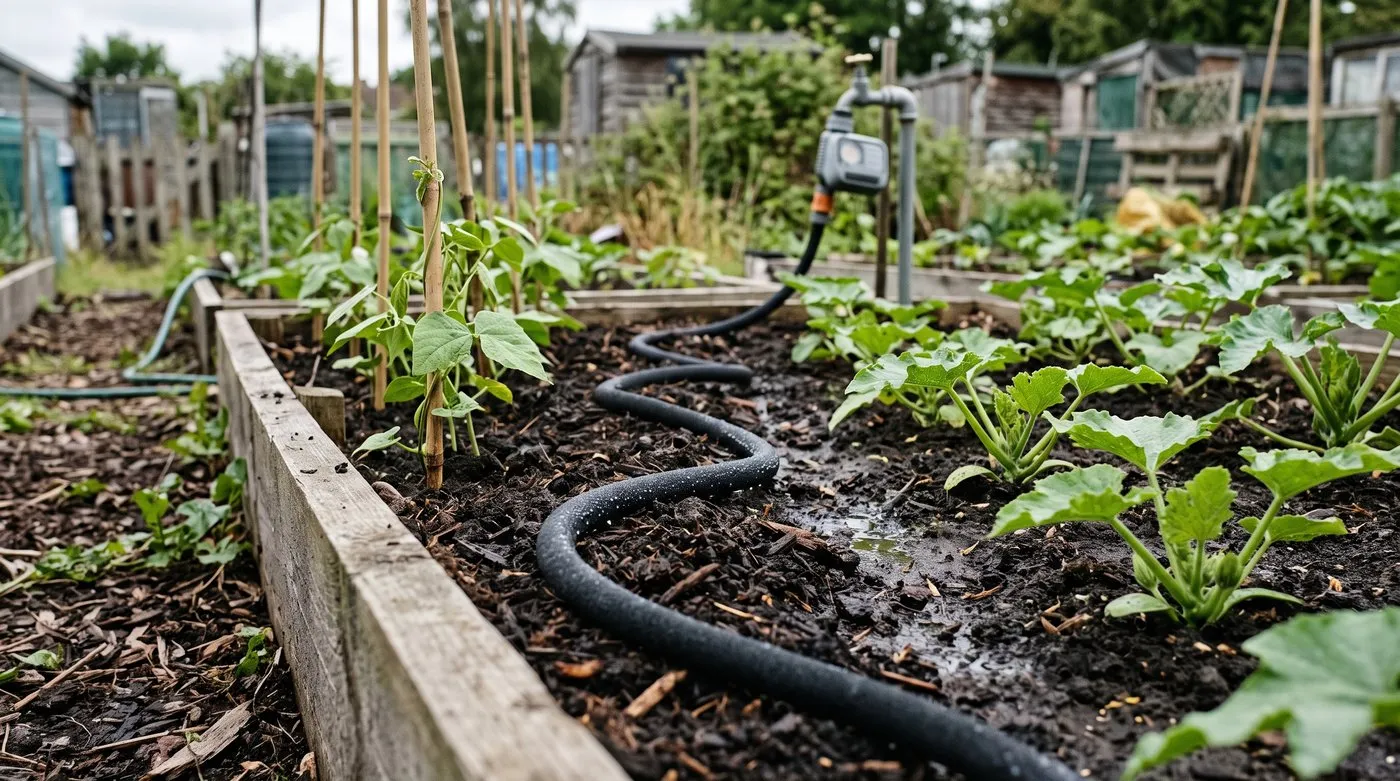
Laid along the row and over mulch, a soaker hose seeps water straight onto the roots with very little lost to the air.
How to set one up:
- Lay the hose along each row, close to the plants.
- Connect it to a water butt pump or the tap, with a timer if you like.
- Cover the hose with mulch to cut evaporation.
- Run it, then dig down a little to check the water has soaked in.
A tap timer lets you water early in the morning or late in the evening without being there. Drip kits use a small dripper at each plant, so they suit pots, growing bags and greenhouses. The guide to drip irrigation kits compares the options. Check your water company’s rules in a hosepipe ban, as some restrict timers fed from the mains.
Summer: water less often, but deeper
In dry weather, give established borders a deep soak once or twice a week rather than a sprinkle every day. Deep watering sends roots down, where the soil stays moist for longer. Light daily watering keeps roots near the surface, where they dry out fast.
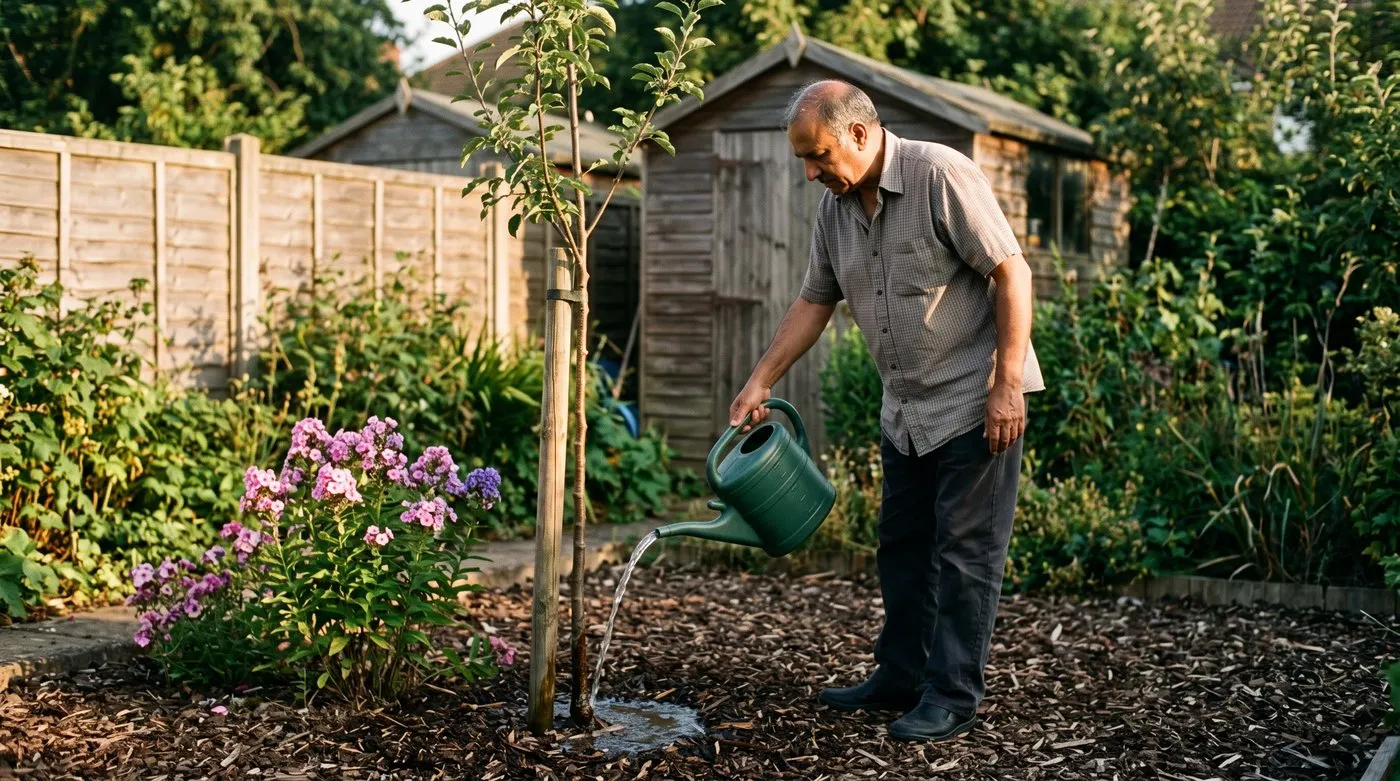
One slow, deep soak at the base on a cool evening does more good than a quick sprinkle every day.
- Check first. Push a finger into the soil. If it’s damp a few centimetres down, wait.
- Water the base, not the leaves. A can without a rose, or a soaker hose, puts it where it’s needed.
- Water early or late. Less is lost to evaporation than in the heat of the day.
- Water slowly, so it soaks in instead of running off.
- Put water where it counts: new plants, pots, fruiting veg and salads come first.
The guide on how to water your garden properly has more on how much each type of plant needs.
Summer: reuse bath and shower water
Grey water is used water from the bath, shower and bathroom basin. It’s useful in a dry spell or a hosepipe ban, and it would only go down the drain otherwise.
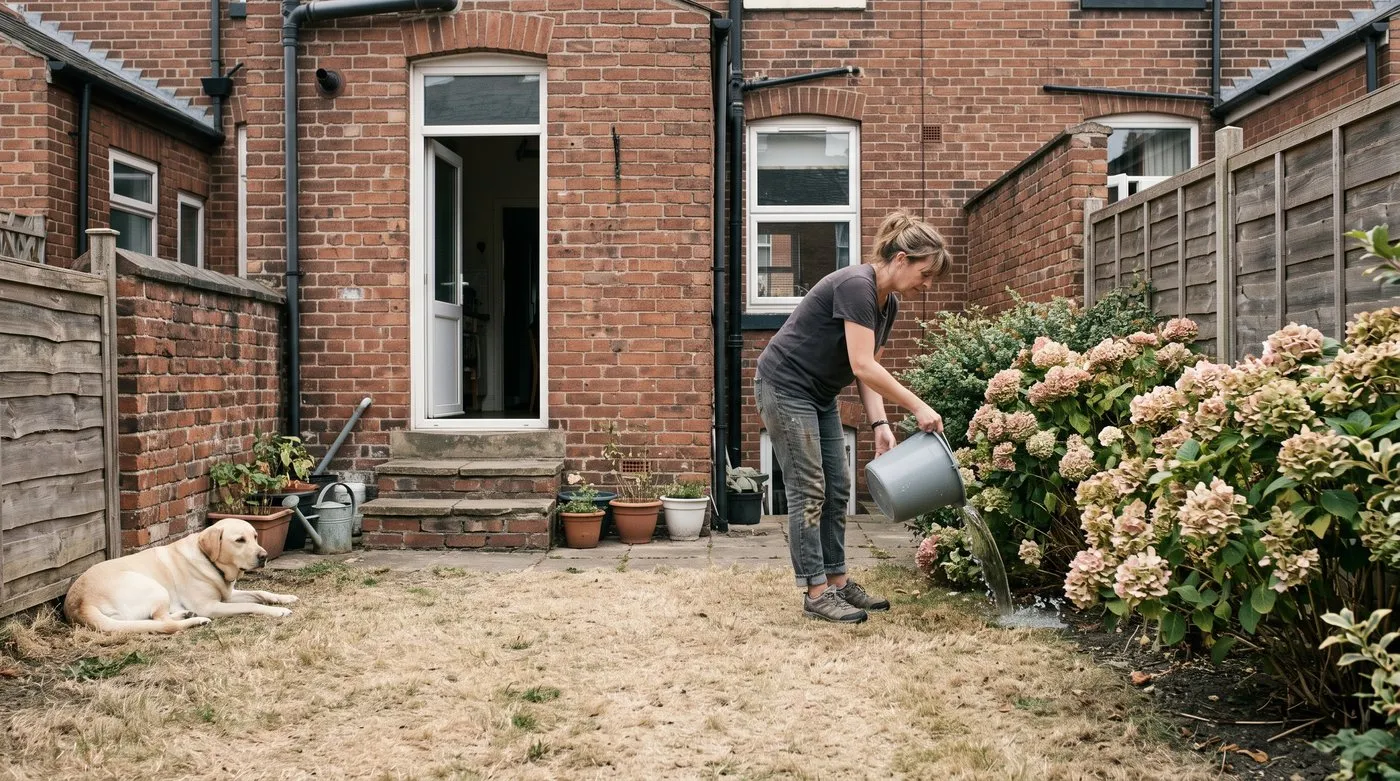
A bucket of bath water poured at the base of shrubs keeps a border going through a dry spell. Keep it off edible crops.
- Use it on ornamentals, shrubs and lawns, not on salads, herbs or other crops you eat.
- Use it the same day. Stored grey water soon turns smelly.
- Skip water with bleach, strong cleaners or dyes, and avoid kitchen sink, dishwasher and washing machine water.
- Move it around the garden rather than pouring it on the same spot each time.
A bucket in the shower and a jug for the bath are all you need. Carry it out in a can and pour at the base of plants.
Summer: let the lawn go golden
An established lawn doesn’t need watering in a drought. The grass goes brown and dormant, then greens up again once the rain returns. Watering a lawn uses a lot of water for little gain.
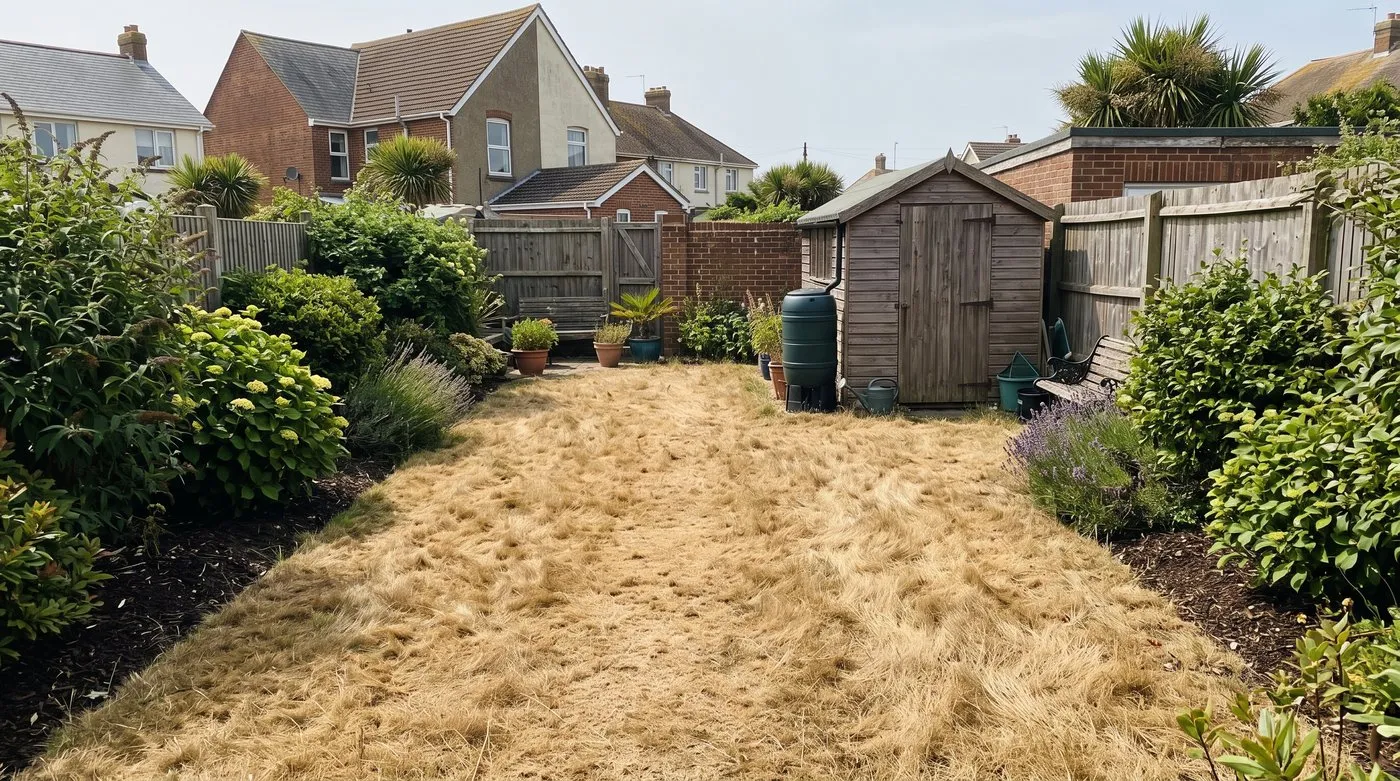
A golden lawn in August isn’t dead, just resting. It greens up again within weeks of the rain coming back.
Help it through by mowing less often and raising the mower blades. Leave the clippings on to shade the soil. Only water new turf or lawn sown this year. The guide to lawn drought recovery covers what to do once the rain comes back.
Autumn: swap thirsty plants for tough ones
Autumn is the best time to plant drought-tolerant plants, as the soil is warm and the rain does the watering for you. Use them in the hottest, driest spots so those areas never need the can.
Good choices for sunny, well-drained spots include rosemary, sage, thyme, Russian sage (Perovskia), sea holly (Eryngium), sedums, Cistus and grasses such as Stipa tenuissima. Lavender and catmint also cope well, but both can upset pets if eaten. Add grit to heavy soil first, as most of these hate sitting wet in winter. Water them in their first summer until they’re settled.
The list of drought-tolerant plants for UK gardens gives plenty more ideas.

Tough, sun-loving plants like lavender, rosemary and sea holly can look good all summer with little or no watering once established.
Garden water conservation calendar
| Month | Job |
|---|---|
| January | Fit new water butts and connector kits so they fill on winter rain |
| February | Check gutters and downpipes are clear. Plan where soaker hoses will go |
| March | Clean out leaf mould bins and gather mulch ready for spring |
| April | Lay soaker hoses. Start mulching beds after rain |
| May | Finish mulching. Group pots together in light shade |
| June | Water deeply once or twice a week in dry spells. Start reusing bath water |
| July | Check pots daily. Leave the lawn to go golden |
| August | Keep butts topped up from every roof. Prioritise new plants, pots and veg |
| September | Plant drought-tolerant plants while the soil is warm |
| October | Clean out butts and lids. Gather leaves for leaf mould |
| November | Drain and store soaker hoses, timers and outdoor taps before frosts |
| December | Plan next year’s butts and beds |
Common water-wasting mistakes
- Using a sprinkler. Much of the spray lands on paths and leaves, or evaporates. Water at the base instead.
- A little every day. It keeps roots shallow. Water deeply, less often.
- Mulching dry soil. It seals the dryness in. Mulch after rain.
- Watering in the midday sun. More is lost to evaporation. Water early or late.
- Watering an established lawn. It recovers by itself. Save the water for pots and veg.
Frequently asked questions
What is the best way to save water in the garden?
Mulch your beds and water deeply but less often. Spread 5-8cm of bark or compost over damp soil in spring. Water thoroughly once or twice a week at the base of plants rather than lightly every day. Collect rainwater in butts so you rely less on the tap.
Should you water plants in the morning or evening?
Either is fine, as long as it’s not the middle of the day. Less water is lost when it’s cool. Morning watering leaves leaves dry by night, which helps against slugs and mildew. Evening watering is handy in hot spells. Aim at the soil, not the leaves.
How often should I water my garden in summer?
Established borders need a deep soak once or twice a week in dry weather. Heavy, occasional watering reaches the roots, while a light daily sprinkle only wets the surface. New plants need watering more often until they settle. Pots often need water every day in hot weather.
Do water butts save money?
Yes, if you’re on a water meter, every can from the butt is free. Even a small shed roof fills a butt quickly in heavy rain. Rainwater also suits lime-hating plants such as blueberries. Linking several butts stores more for dry spells and hosepipe bans.
Is grey water safe for the garden?
Yes, bath, shower and basin water is fine on ornamentals and lawns. Use it the same day rather than storing it. Avoid water with bleach or strong cleaners, and skip kitchen sink and washing machine water. Don’t use it on salads, herbs or other edible crops.
Should I water my lawn in a drought?
No, an established lawn can be left to go brown. The grass goes dormant in dry weather and greens up again once the rain returns. Save your water for new turf, pots, vegetables and recent plantings.
If a dry summer brings restrictions, read the guide to gardening in a hosepipe ban for what you can and can’t do, or browse more how-to guides.
Our team produces practical UK gardening guidance from source research, contributor records and established horticultural practice. Editorial standards are overseen by Matt W.


